
Hear from Our Customers
You stop worrying every time someone walks out the back door. Your kids can use the yard again. You can get into the barn or the shed without scanning the rafters first. That’s what professional hornet removal in Chesaning actually delivers — not just a dead nest, but a property you can move around on without thinking twice.
Chesaning’s older housing stock is one of the biggest factors we see on the job. Homes built decades ago along the village’s tree-lined streets often have deteriorating soffits, aging wood siding, and wall voids that hornets move right into. A nest inside a wall isn’t something a hardware store spray can reaches. It needs the right treatment, applied correctly, or you’re just pushing the problem deeper into your house.
The Shiawassee River running through Chesaning and the wetlands surrounding the area keep humidity high and insect populations strong all summer. That’s exactly the kind of environment where hornet colonies grow fast and get aggressive by August. Getting ahead of it early — or calling the moment you spot activity — makes the job cleaner, faster, and safer for everyone involved.
We’ve been serving mid-Michigan since May 31, 2005 — and 2025 marks twenty years of that. This is a family-owned business, not a franchise. Roger, who leads the company, has 26 years of hands-on pest control experience. That’s not a number pulled from a brochure — it’s the kind of depth that shows up when a technician walks your Chesaning property and already knows what to look for.
One thing that separates us from the national chains serving Saginaw County is the same-technician model. You get the same person every time — someone who learns your property, remembers where the problem spots are, and shows up knowing your history. No call center. No rotating strangers.
We hold Michigan Pesticide Application Business License #250081, have earned awards through both Angie’s List and HomeAdvisor, and carry MDARD-recognized IPM training certification. For Chesaning homeowners near the Shiawassee River corridor or on agricultural properties throughout the township, that certification matters — it means targeted treatment, not a blanket chemical application on land that drains into a watershed.
It starts with a call. When you reach out to us, you’re talking to a company that will actually show up — not a call center routing your job to whoever’s available that day. From there, a trained technician schedules your service and comes prepared, not to assess and reschedule, but to handle the problem.
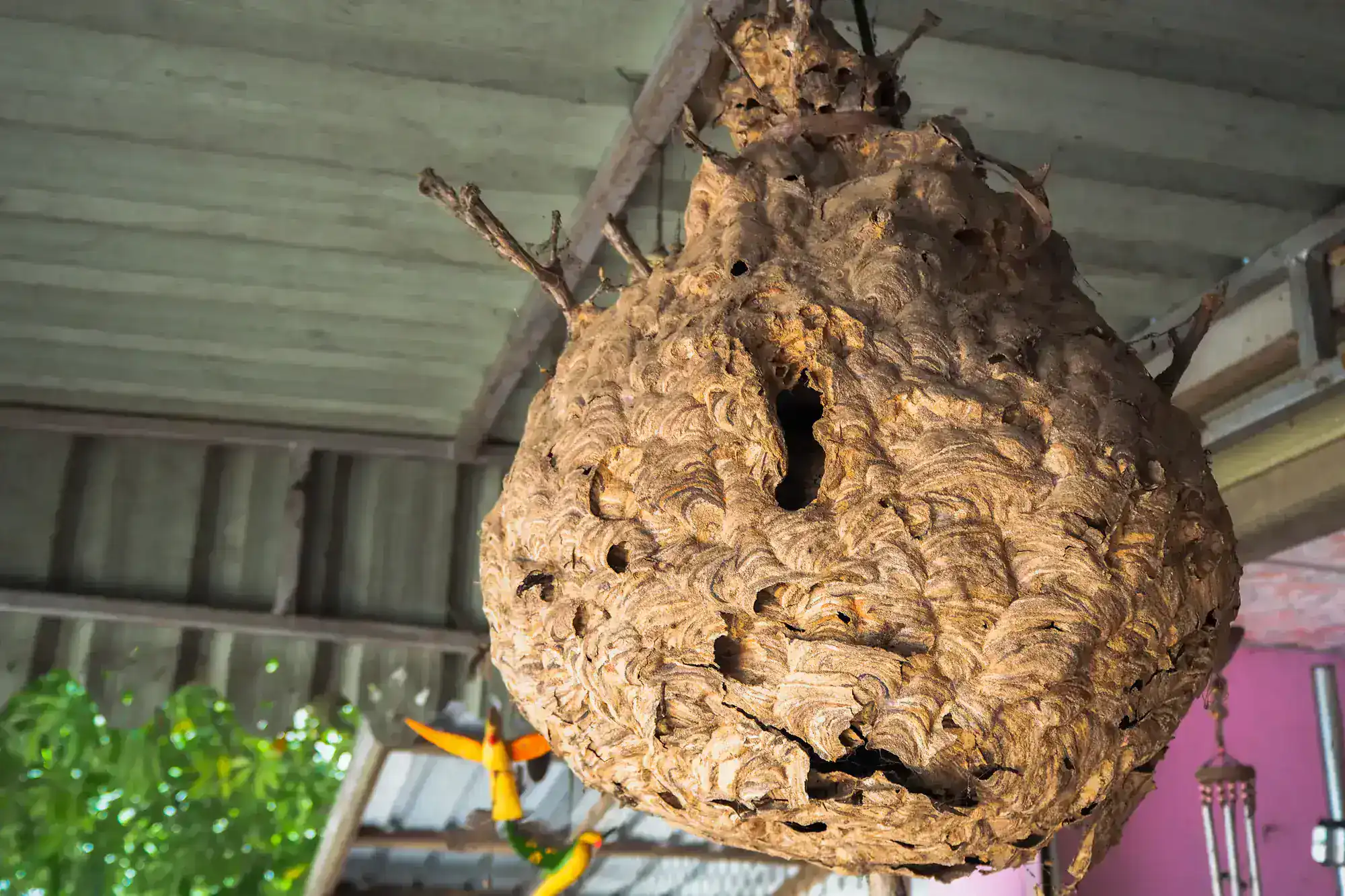
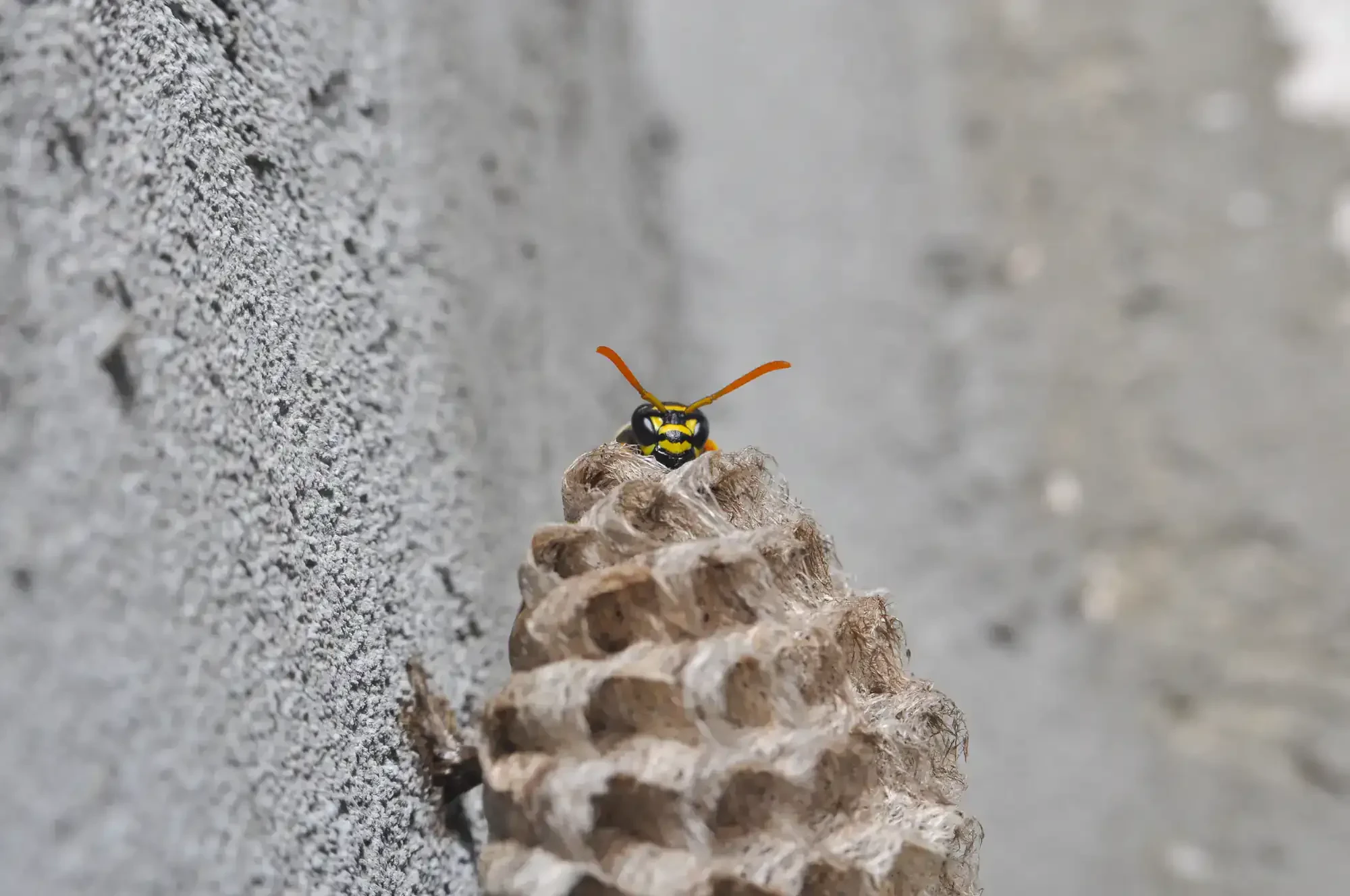
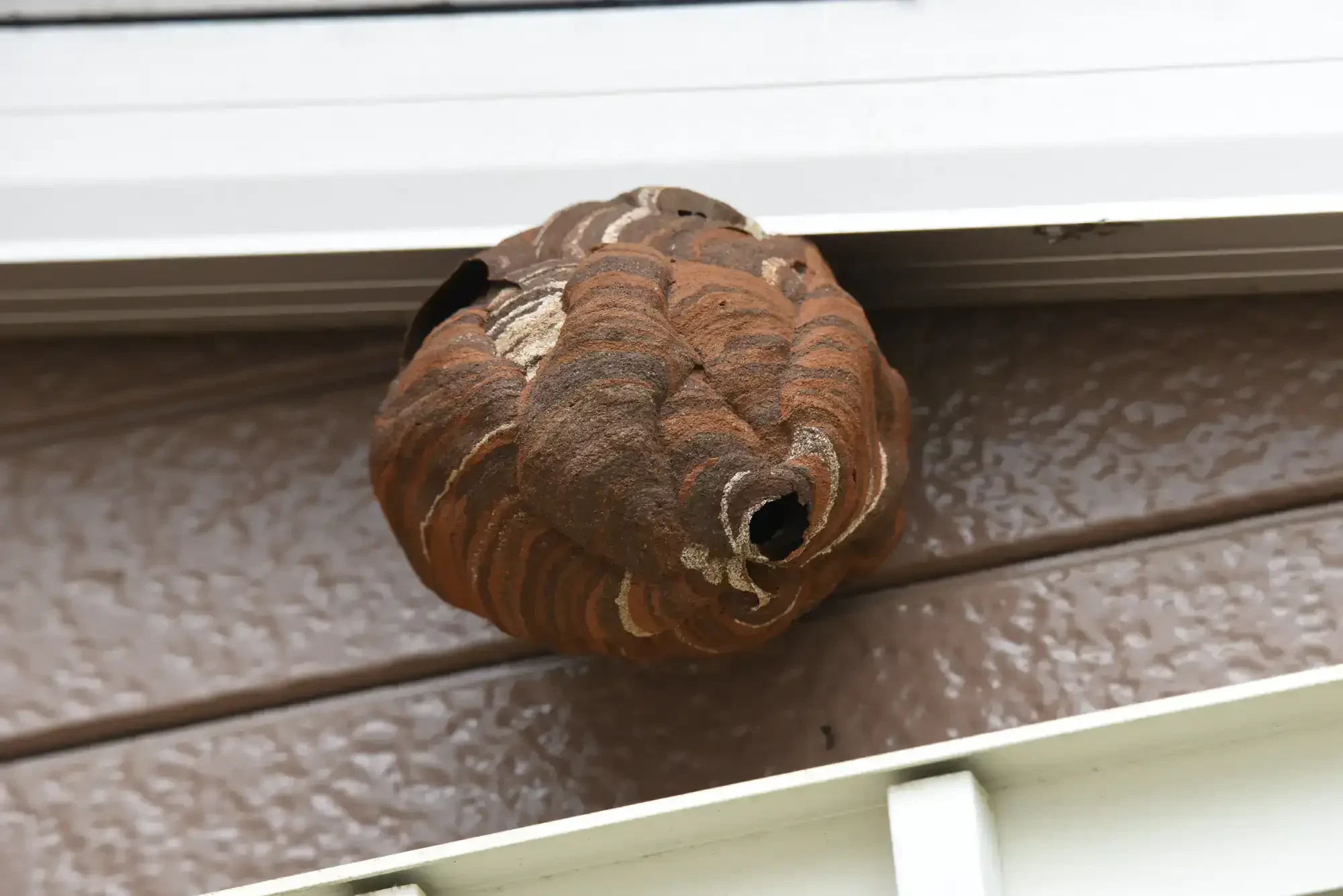
On-site, our technician identifies the species first. That matters more than most people realize. Bald-faced hornets build large enclosed nests in trees and under eaves. European hornets — the only true hornet in North America — nest in wall voids, barn walls, and hollow trees, and they’re active at night. Paper wasps favor open eaves and shed rafters near water sources. Each one requires a different approach, and Chesaning properties — especially older homes and agricultural outbuildings throughout the township — tend to present all three.
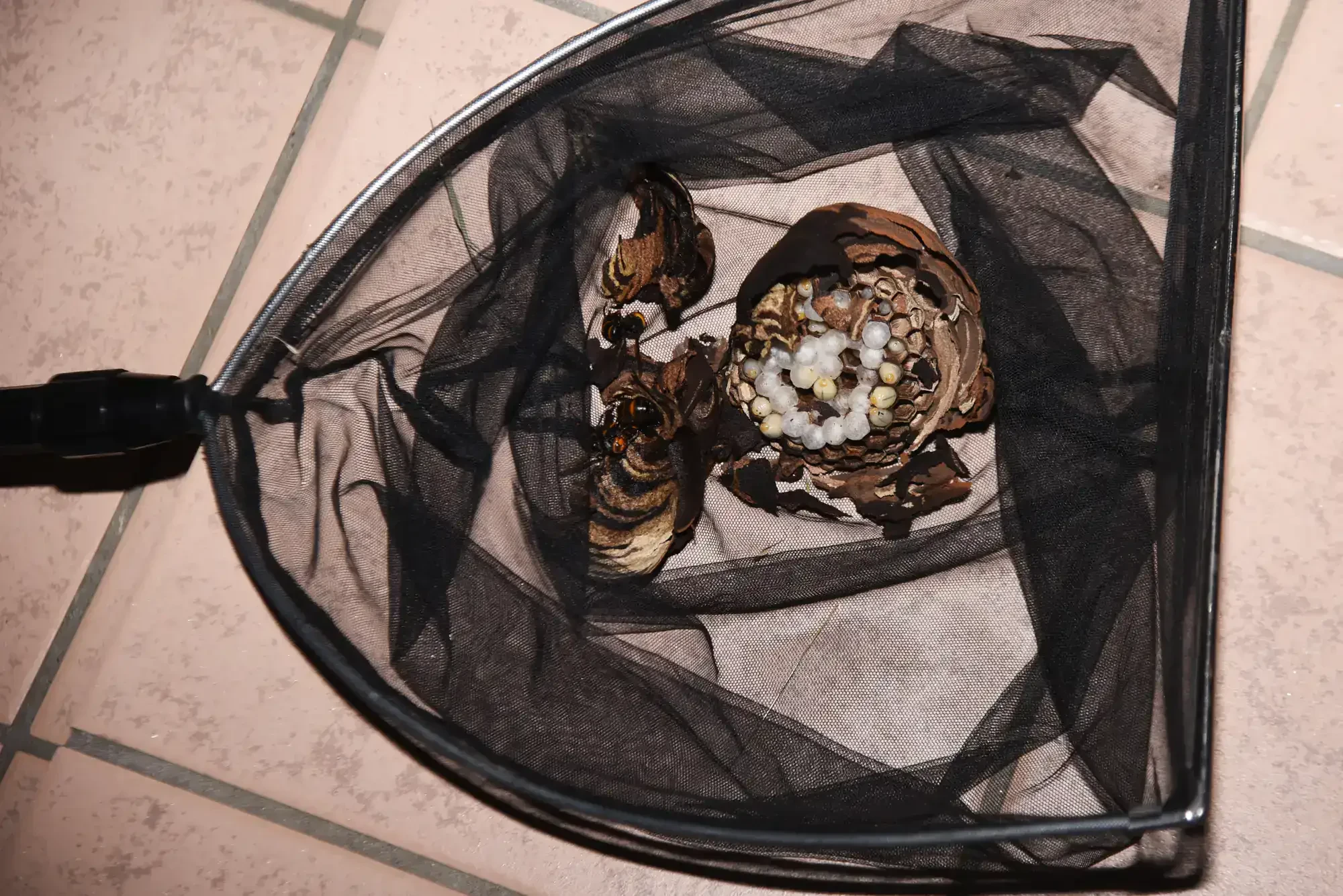
Treatment is applied using the method appropriate for that specific nest type and location. Wall void infestations get dust treatment that penetrates the cavity. Exposed aerial nests are treated directly. After the colony is eliminated, you’ll know what was done, why it was done that way, and what to watch for going forward. If a follow-up visit is needed to fully close out the problem, there’s no additional charge. The job isn’t done until it’s actually done.
Ready to get started?
A lot of pest control companies are set up for cookie-cutter suburban homes. Chesaning isn’t that. Between the older village housing stock, the agricultural properties and outbuildings throughout Chesaning Township, and the wooded and river-adjacent lots near Showboat Park, the pest pressure here looks different — and the service has to match that.
We handle hornet nest removal across all common nesting scenarios: aerial nests in trees and under eaves, enclosed nests in wall voids and attics, and nests in barns, equipment sheds, and other outbuildings. If you’re on a rural property in the township and you’ve found a European hornet colony in a barn wall or a bald-faced hornet nest in a tree line, that’s not an edge case for us — it’s a standard service call. Farmers and rural property owners who need to move through outbuildings safely during harvest season don’t have the luxury of waiting.
Pricing is flat-rate and upfront — you know what you’re paying before the technician arrives. If you’ve received a reasonable quote from another provider, we’ll match it. Discounts are available for seniors, veterans, and first responders, which in a community like Chesaning isn’t a footnote — it’s a real reduction for households that have earned it. No binding contracts, no pressure, and no part-time seasonal workers showing up at your door.
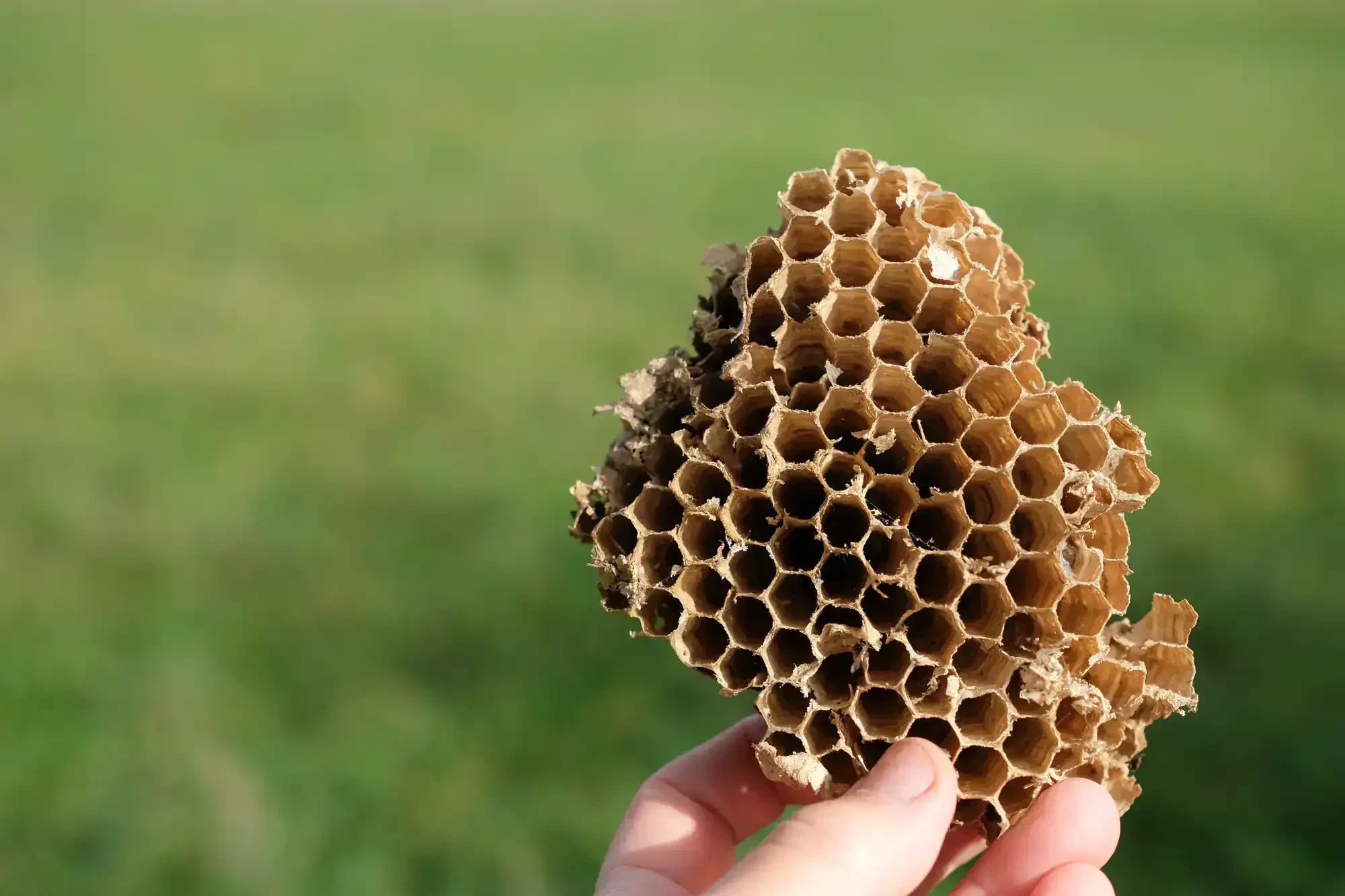
Size and location are the two biggest factors. A nest that’s small — roughly golf-ball sized — early in the season is a very different situation than a basketball-sized colony in late August. By mid-to-late summer, a mature bald-faced hornet colony can house 400 to 700 workers, and they will defend aggressively if they feel threatened. European hornets, which are common in Chesaning’s older structures and agricultural outbuildings, are also active after dark — so if you’re seeing large stinging insects flying toward your porch light at night, that’s a sign worth taking seriously.
Location matters just as much as size. A nest high in a tree away from foot traffic is lower-risk than one tucked into a soffit above your back door, in a wall void inside your home, or in a barn where workers are moving through regularly. If the nest is in a spot where people or animals pass within a few feet of it on a regular basis, don’t wait to call. The risk of a sting incident goes up significantly once a colony reaches full summer size.
Yes, it changes the approach. Hornets and wasps are related, but they nest differently, behave differently, and respond to treatment differently. Bald-faced hornets build the large, gray, enclosed paper nests you’ll often see hanging from tree branches or attached to eaves — they’re aggressive defenders and require direct treatment of the nest structure. European hornets are the only true hornet species in North America, and they prefer enclosed, sheltered spaces: wall voids, barn walls, attics, and hollow trees. They’re also nocturnal, which catches a lot of Chesaning homeowners off guard when they start seeing large insects flying at night.
Paper wasps are a different situation again — they build open, umbrella-shaped nests and tend to favor well-lit areas near water, which means shed eaves, barn rafters, and structures near the Shiawassee River corridor are common spots. Each species requires our technician to assess the nest type, location, and access point before choosing the right treatment method. That’s why a proper identification step at the start of every service call isn’t optional — it’s what determines whether the treatment actually works.
They can, and in Chesaning it’s more common than people expect. The village has a lot of older housing stock — homes built in the early-to-mid 20th century with aging wood siding, deteriorating soffit boards, and structural gaps that give European hornets easy access to wall voids. Once they’re inside, they build a paper nest within the wall cavity, and the colony can grow for weeks before the homeowner notices anything beyond some buzzing or increased insect activity near a specific exterior wall.
Treating a wall void nest is not a job for a store-bought spray can. Spraying into a small gap will rarely reach the nest, and it can cause the colony to move deeper into the wall or emerge through interior gaps into your living space. The correct approach is a professional-grade dust treatment applied directly into the void — it penetrates the cavity, reaches the nest, and eliminates the colony without requiring you to open up your walls. Our technicians carry the equipment and the training to handle wall void infestations correctly, and we’ll confirm the colony is fully eliminated before closing out the job.
Spring is the best time, and most people miss it. Hornet queens emerge from hibernation in April and May and start building their initial nests — at that stage, the colony is small, the nest is manageable, and removal is straightforward. By June and July, worker populations are growing fast. By August and September, you’re dealing with a full-size colony that’s at peak aggression and peak defensive behavior. That’s when most Chesaning homeowners finally call — usually after someone gets stung or a nest is discovered during yard work or harvest-season outbuilding access.
If you spot a nest early in the season, don’t wait to see how big it gets. A quick call in May is a much simpler job than the same nest in late August. That said, if you’re already dealing with a large colony, don’t attempt to remove it yourself — the risk of a mass sting event is real, and the CDC confirms that stings from hornets, wasps, and bees cause an average of 62 deaths per year in the United States. Call a professional, keep people and pets away from the area, and let someone with the right equipment handle it.
Yes, significantly. European hornets specifically seek out sheltered, enclosed spaces for nesting — barns, hollow walls, attics, and equipment sheds are exactly the kind of environments they prefer. Chesaning Township is surrounded by working agricultural land, and properties with outbuildings, grain storage structures, and rural acreage face hornet pressure that suburban homeowners rarely encounter at the same scale. Add in the wooded windbreaks, pond edges, and drainage ditches common to Saginaw County farm properties, and you have conditions that support large stinging insect populations throughout the summer.
The practical risk for farmers and rural property owners is real. Nests discovered during harvest season — when workers are moving through storage buildings and equipment areas that haven’t been accessed in weeks — are a genuine safety concern. A colony that’s been undisturbed all summer in a barn corner or inside a wall can have hundreds of workers ready to defend their space. If you’re opening up outbuildings after a period of inactivity, it’s worth having a professional walk those structures before your crew does — especially heading into late summer when colonies are at their largest.
Yes. We offer discounts for senior citizens, military veterans, and first responders. In a community like Chesaning — where a meaningful portion of residents are on fixed incomes and the average household income runs below the state average — that’s a real difference on a service call, not a rounding error. If you or someone in your household qualifies, just mention it when you call to schedule.
Beyond the discounts, we also offer price matching for reasonable competitor rates. So if you’ve already gotten a quote from another provider serving the Saginaw County area, bring it up — there’s no reason to pay more than you have to for the same quality of work. Pricing is flat-rate and upfront regardless, so you’ll know exactly what the job costs before anyone shows up at your door. No surprises, no upsells, no binding contracts.
Useful Links