
Hear from Our Customers
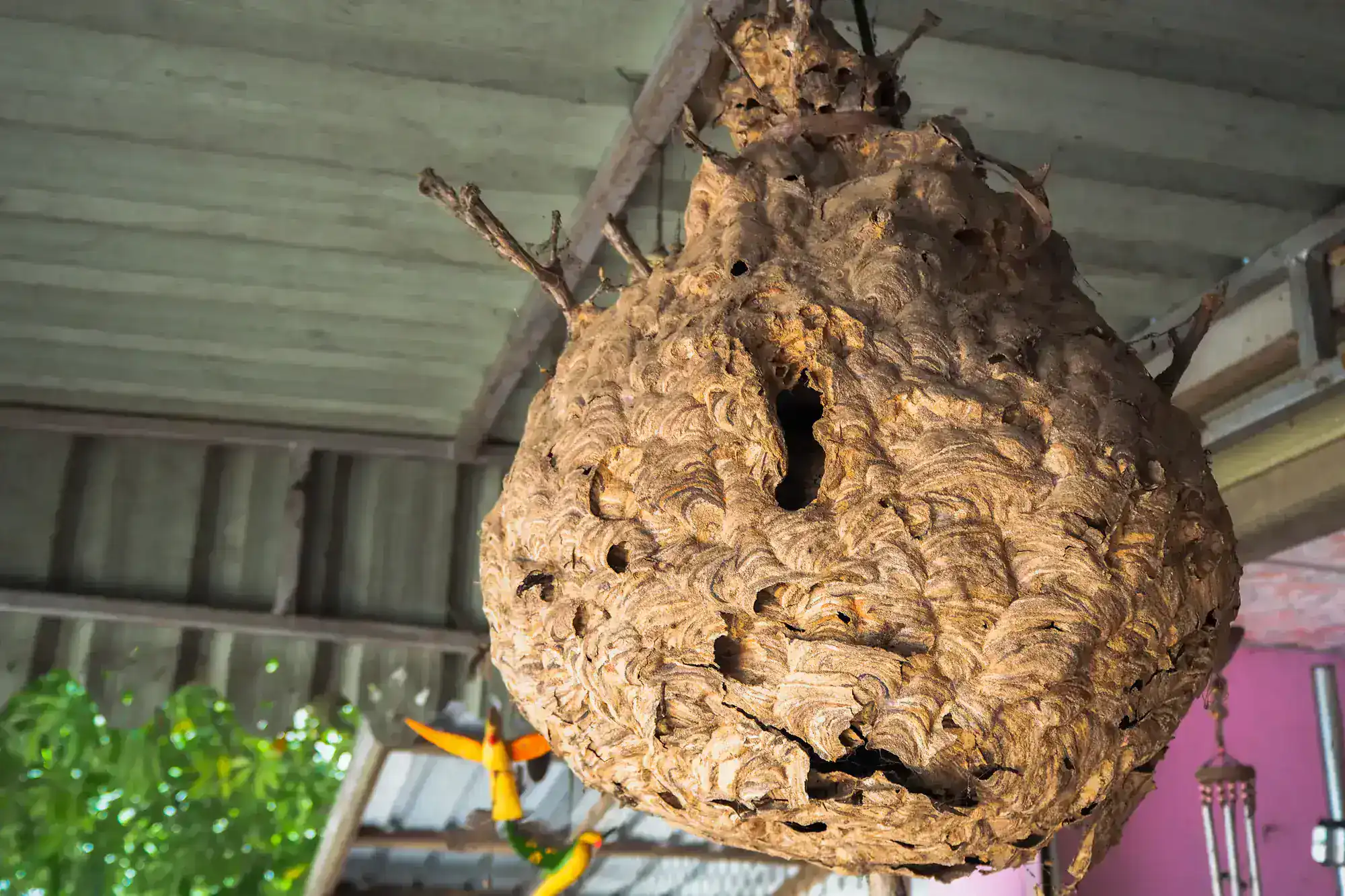
Hartland is the kind of place people move to because they want to actually use their outdoor space. The trails at Settlers Park, the dock at Long Lake, the backyard that finally has enough room — none of that works when a bald-faced hornet colony has claimed a tree branch overhead or nested inside a wall void behind your siding. Bald-faced hornets are one of the most commonly reported outdoor pests in Hartland, and by late summer, a single colony can hold several hundred workers that don’t take kindly to anyone getting close.
Professional hornet nest removal in Hartland means the colony gets eliminated at the source — not irritated, not temporarily scattered, eliminated. That matters here specifically because Hartland’s mix of mature trees, wooded lot edges, lake-adjacent structures, and older Village-area homes gives hornets an unusual number of places to nest out of easy reach. A nest under a second-story eave or inside a wall void isn’t something a can of store-bought spray is going to fix, and a botched DIY attempt on a ladder near an active colony is genuinely dangerous.
When the job is done right, you get your property back. The deck is usable again. The kids can play outside. You’re not timing your trips to the garage around hornet traffic. That’s what this service actually delivers — and in a community built around outdoor living, that’s not a small thing.
We founded First Choice Pest Control on May 31, 2005, which means this year marks twenty years of serving southeast Michigan homeowners — including families throughout Hartland Township and the broader Livingston County area. We’re a family-owned business, not a franchise. Roger, our owner, has 26 years of hands-on pest control experience and built this company on a straightforward idea: send the right person, do the job correctly, and show up the same way every time.
One thing that sets us apart in a real, practical way is our same-technician policy. Your technician learns your property — which eaves tend to attract nests, where the wooded lot edge creates the most risk, which entry points need watching year to year. That kind of continuity doesn’t exist at the national chains. We also hold Michigan Pesticide Application Business License #250081 and IPM Training Certification from MDARD, meaning every treatment is targeted, science-based, and handled by someone who actually knows what they’re doing — not a part-time seasonal hire.
It starts with a call. You describe what you’re seeing — where the nest is, how long it’s been there, whether you’ve noticed activity around a specific entry point or structure. From there, we schedule a visit and send out a trained technician to assess the situation in person. No guesswork over the phone, no one-size-fits-all approach.
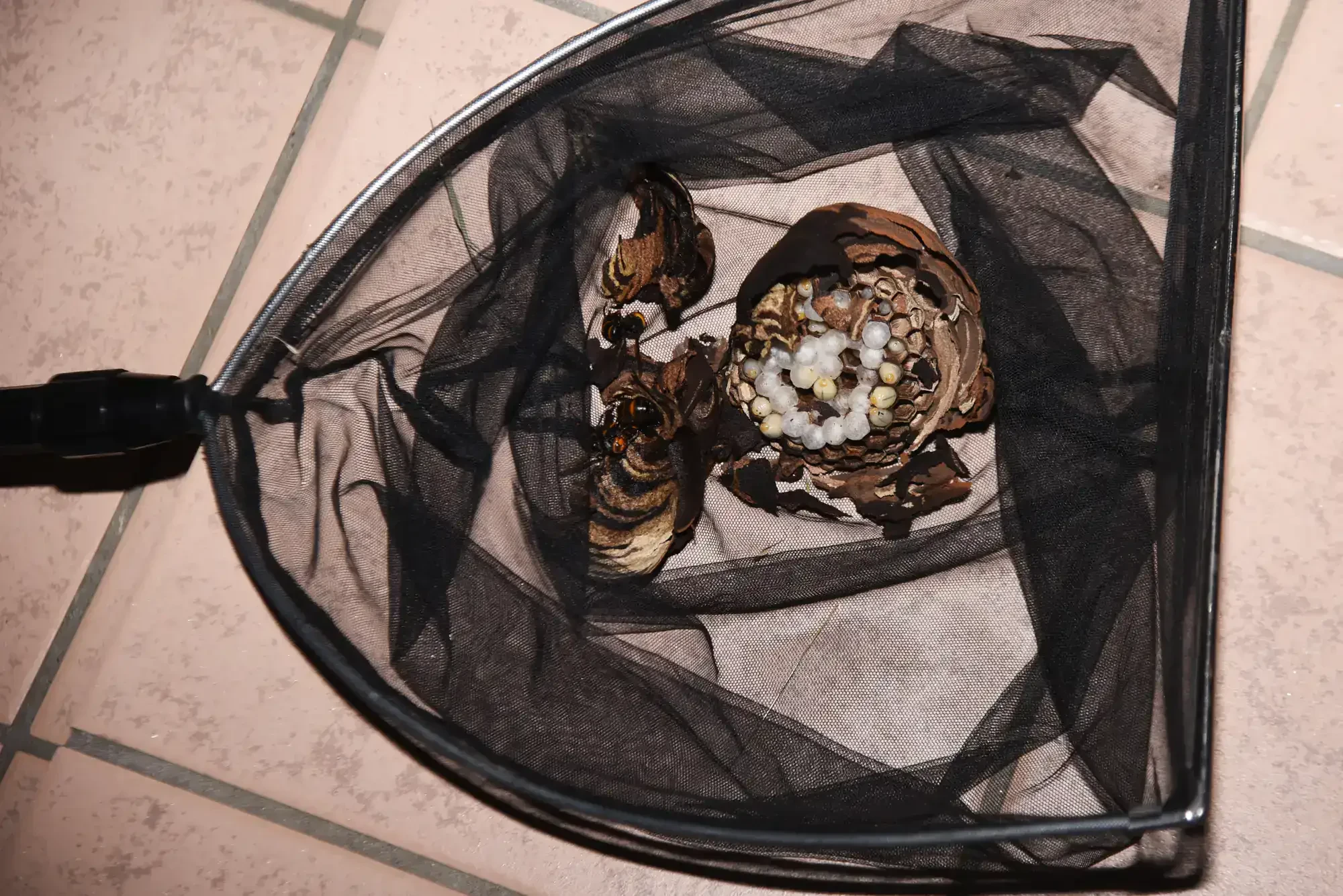
On-site, our technician identifies the species, locates the full extent of the nest, and determines the right treatment method for that specific scenario. In Hartland, that often means working with nests that are elevated — in tree branches overhanging a lake shoreline, under second-story eaves on an older Village-area home, or inside a wall void accessed through a gap in aging siding. Each of those situations requires a different approach: professional-grade dust treatments for wall voids, targeted liquid applications for aerial nests, and proper equipment for working safely at height. The goal is always to eliminate the colony at the source, not push it somewhere else.
After treatment, you’ll get a clear picture of what we did and what to watch for going forward. Because Hartland’s wooded landscape and lake-adjacent properties create recurring nesting pressure, your technician can also flag areas that are likely to attract future activity — so you’re not starting from scratch every August when the colonies hit peak size.
Ready to get started?
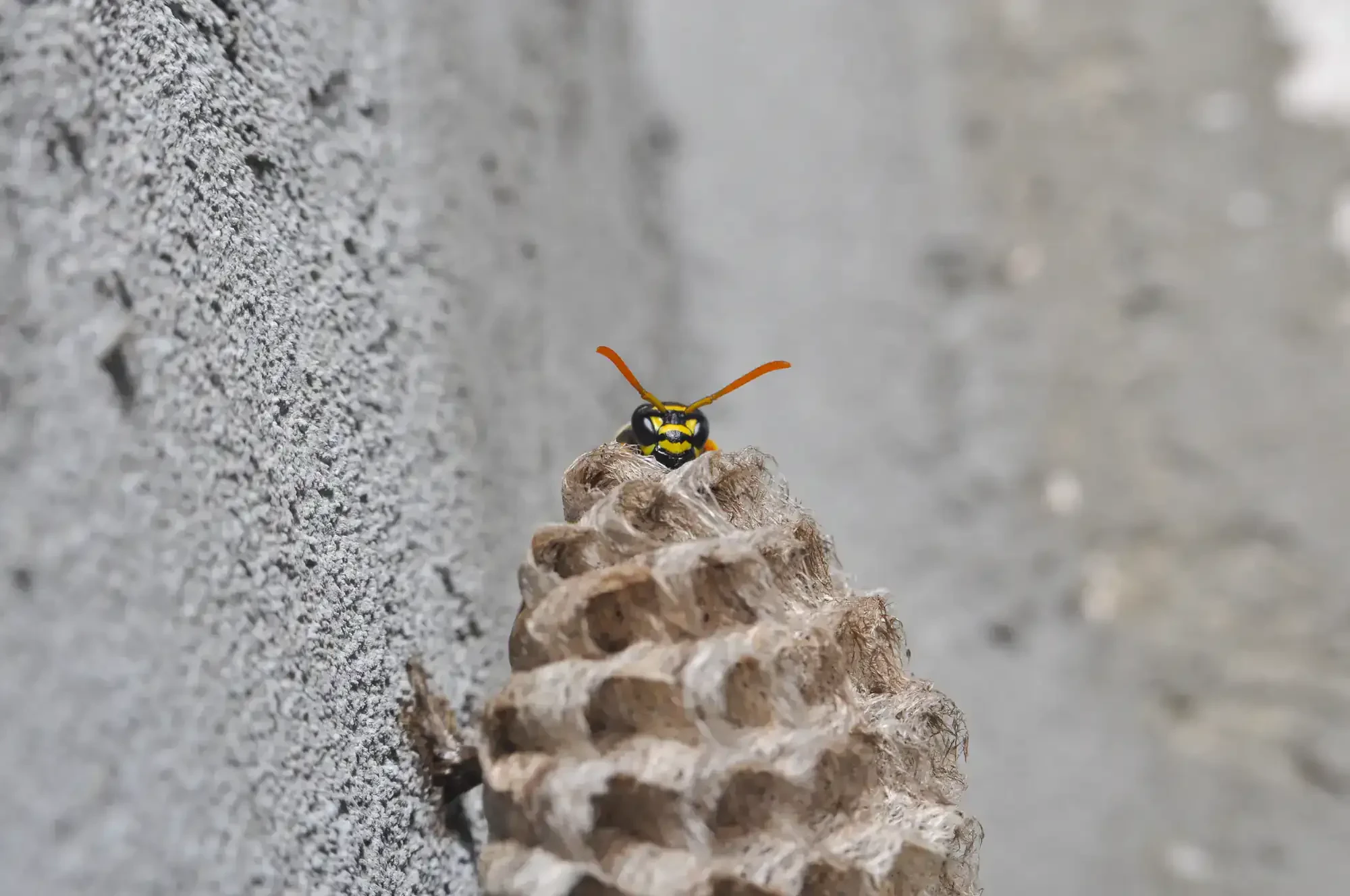
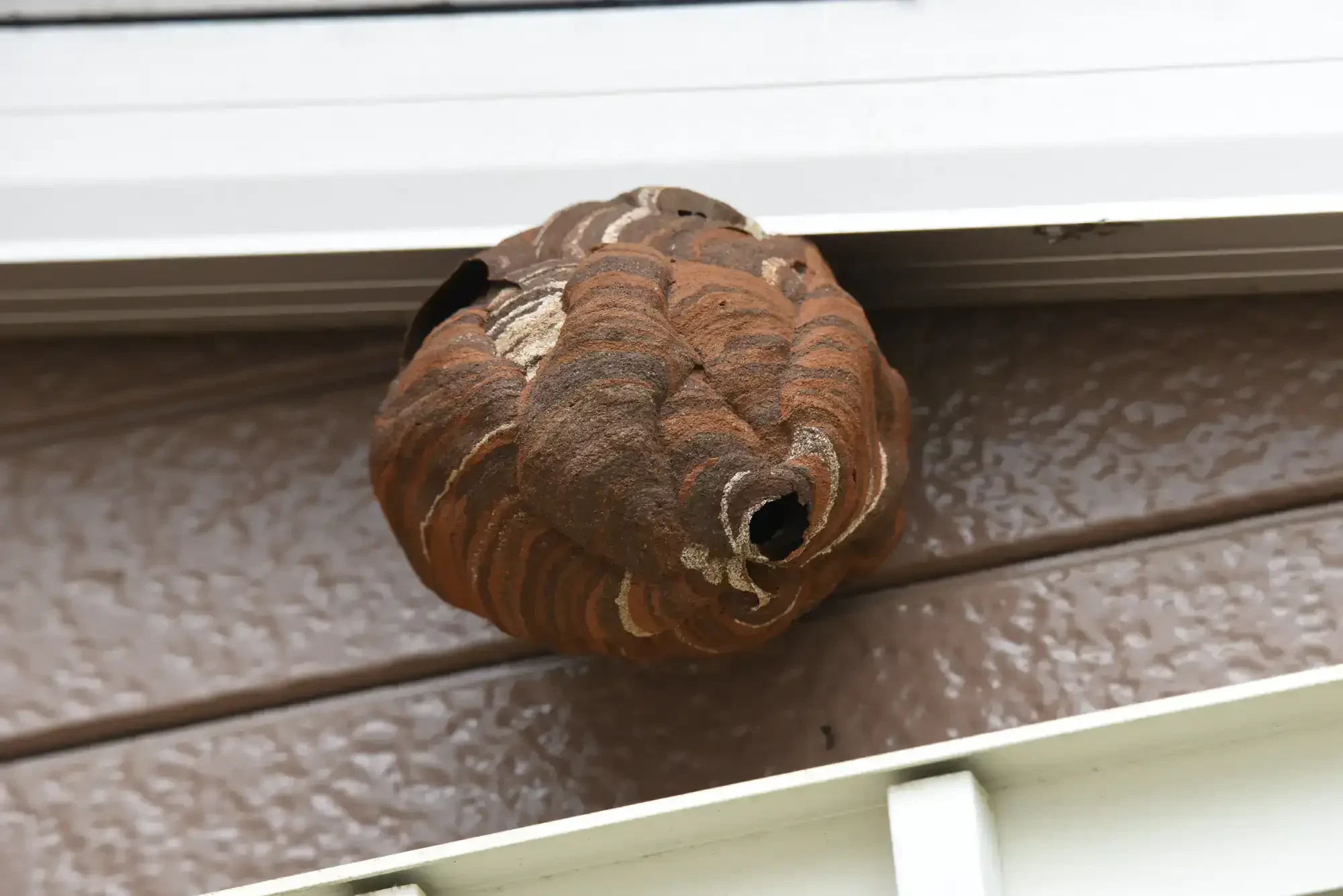
Hartland Township’s roughly 14 lakes, mature tree canopy, and mix of older and newer residential construction create hornet pressure that looks different here than it does in a more urban market. Bald-faced hornets build enclosed paper nests in tree branches, under eaves, and in shrubs — and on a wooded Livingston County lot, those nests can grow to the size of a basketball before a homeowner even notices them. European hornets, which are larger and active into the evening, frequently exploit gaps in older siding and soffits to nest inside wall voids. Yellow jackets go underground. Each of these requires a different treatment protocol, and our technicians are trained on all of them.
Every hornet removal service we provide includes a full property assessment, species identification, targeted treatment at the nest site, and a follow-up plan if needed. We hold Michigan Pesticide Application Business License #250081 and apply all treatments under MDARD’s IPM framework — which means the approach is calibrated to the specific pest and situation, not a blanket spray of whatever’s strongest. That matters if you have children, pets, or a property near one of Hartland’s private lakes where runoff is a real consideration.
We offer discounts for seniors, veterans, and first responders in Hartland and throughout our service area. We also offer price matching for reasonable competitor quotes — so if you’ve already gotten a number from another local provider, it’s worth a conversation before you book.
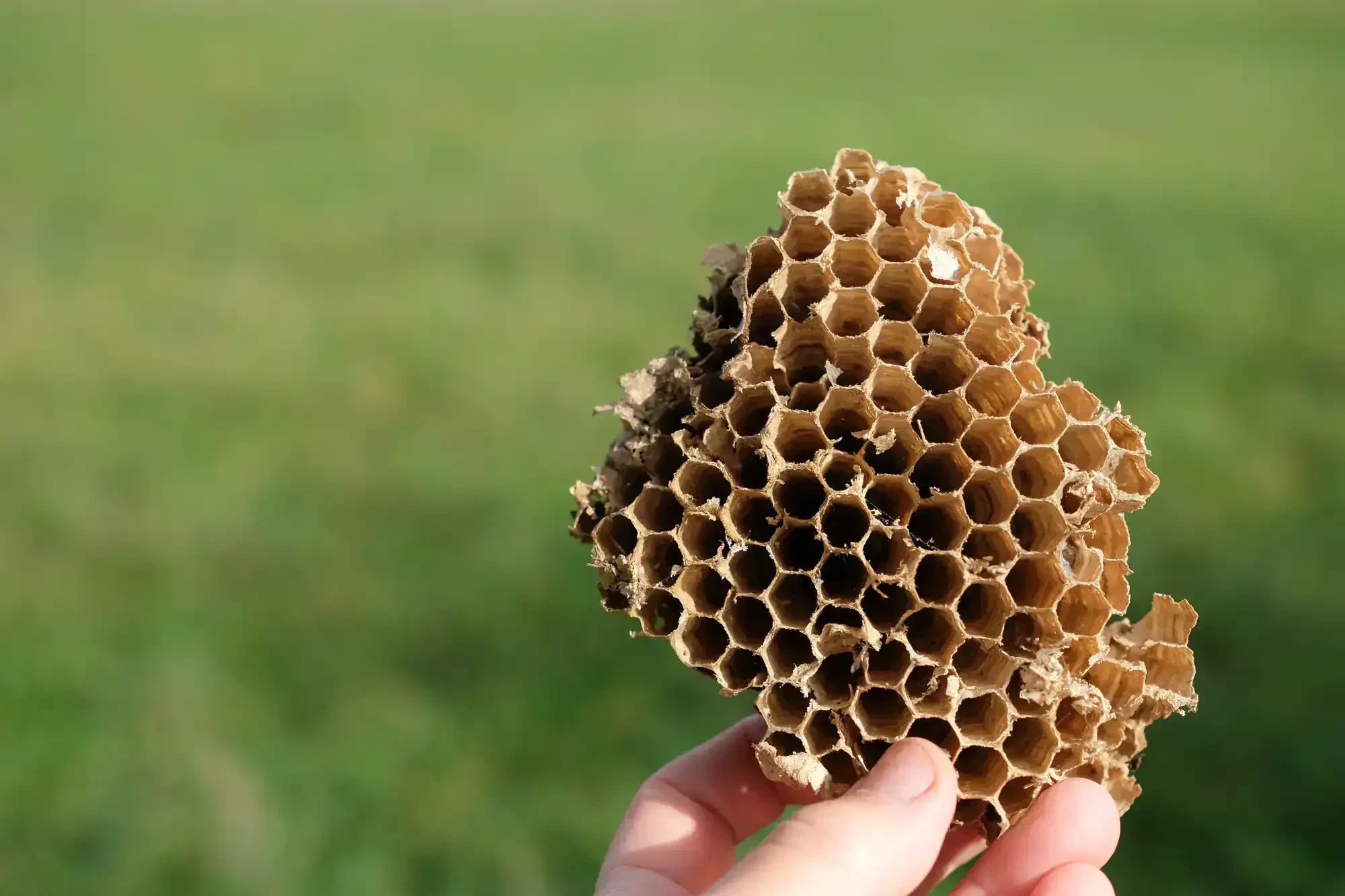
They’re genuinely common here, and it’s not a stretch to say Hartland’s landscape is nearly ideal for them. Bald-faced hornets build their enclosed gray paper nests in elevated, sheltered spots — tree branches, roof overhangs, shrubs, and eaves — and Hartland Township’s mature tree canopy, wooded lot edges, and lake-adjacent properties give them an abundance of exactly that. Multiple pest control sources serving this area specifically call out bald-faced hornets as one of Hartland’s most frequently reported outdoor stinging pests.
Activity typically ramps up through June and July as worker populations grow, and by August the colony can be several hundred strong. That’s when most Hartland homeowners call — after the nest has grown large enough to make the backyard, dock, or trail entrance genuinely unusable. Earlier in the season, when nests are still small, treatment is simpler and less costly. If you’re seeing scout activity in spring, that’s worth a call before it becomes a late-summer emergency.
The treatment approach is completely different, and confusing the two is one of the most common mistakes homeowners make. An aerial nest in a tree branch or under an eave is visible, accessible, and can typically be treated with a targeted liquid or dust application directly at the nest. The colony is exposed, the entry point is obvious, and a trained technician can eliminate it efficiently.
A wall void infestation is a different situation. When hornets — most often European hornets in Michigan — enter through a gap in siding, a soffit seam, or an opening around a utility penetration, they’re building inside the structure of your home. You’ll often hear buzzing before you see anything. Treating a wall void requires professional-grade dust injected into the void through a small access point, which reaches the nest without requiring you to open up the wall. Attempting to seal the entry point before treatment is done can trap the colony inside, which sometimes forces them deeper into the structure or through interior drywall. In Hartland’s older Village-area homes especially, where siding gaps and aging soffits are more common, this is a scenario that needs professional eyes before anything gets sealed.
Early season is always easier. In Hartland, queen hornets emerge from hibernation in April and May and begin building new nests that are still small — often no larger than a golf ball. At that stage, treatment is straightforward, less costly, and carries far less risk than treating a full late-summer colony. If you’re opening up a lake cabin, starting spring yard work, or just doing a walkthrough of your property after winter, that’s the right time to check the usual spots: under eaves, in shrubs near the foundation, in tree branches overhanging the yard or dock.
By August, colonies hit peak size and worker hornets become significantly more defensive. That’s when the calls spike, and it’s also when treatment is more involved. Fall doesn’t bring relief either — as the colony’s biological cycle winds down, workers become more erratic and aggressive, especially around outdoor food sources. Hartland’s active fall culture, from cider runs to lake activities, means people are still spending time outside when hornet aggression is at its worst. The short answer: if you see activity, don’t wait to see if it resolves on its own. It won’t.
For a very small nest in an easy-to-reach location, a store-bought aerosol can work — but the margin for error is narrow, and the consequences of getting it wrong are significant. Bald-faced hornets are aggressive defenders. Disturbing an active colony without eliminating it triggers a mass defensive response, and a partial treatment that kills some workers but not the queen often just makes the remaining colony more aggressive. If the nest is inside a wall void, spraying the entry point without treating the interior of the void can push the colony deeper into the structure.
The bigger concern in Hartland specifically is location. Many hornet nests on wooded, large-lot properties here are elevated — in tree branches 10 to 15 feet up, under second-story eaves, or on structures near the water. Working on a ladder near an active nest is one of the most common causes of serious injury in DIY pest control attempts. A professional technician has the right equipment to work safely at height, the right product for the specific nest type, and the training to handle the situation without turning a manageable problem into a significantly worse one.
Yes — we serve Hartland Township and the surrounding Livingston County area, including lake-adjacent properties along Long Lake, Bullard Lake, and the other private lakes throughout the township. Lake properties present some of the more specific hornet removal challenges in this area: boat houses, docks, and waterfront structures often have gaps and overhangs that hornets use as nesting sites, and treating those locations safely requires equipment and experience that go beyond a standard residential call.
Our technicians are familiar with the property types common throughout Hartland — wooded lots, lakefront homes, older Village-area structures, and newer large-lot subdivisions. Our same-technician model means that if you’ve had service before, the person coming back to your property already knows your specific layout and history. If you’re a lake homeowner and you’re seeing activity near your dock or boathouse as you open up for the season, that’s worth addressing early — before the colony has a full summer to grow.
Yes. We offer discounts for seniors, veterans, and first responders throughout the Hartland service area. Hartland Township has a meaningful population of both longtime residents and military-connected families, and those discounts are a straightforward acknowledgment of that — no hoops, no fine print. When you call to schedule, just mention which discount applies to you.
We also offer price matching for reasonable competitor quotes. If you’ve already gotten a quote from another provider serving Hartland or Livingston County and it’s a fair comparison, bring it up when you call. The goal is to make sure you’re getting quality service at a price that makes sense — not to win the job by being the cheapest option on the list, but to make sure cost isn’t the reason you end up with a company that sends out a less experienced technician. That’s a trade-off Hartland homeowners tend to regret by the second or third callback.
Useful Links