
Hear from Our Customers
A hornet nest near your house isn’t just an inconvenience. It changes how you use your own property — you stop going out the back door, you keep the kids inside, you avoid the shed. That’s not a small thing when you chose Holly specifically because of the space, the yard, and the outdoor lifestyle that comes with it.
Holly’s character works against you here. The wooded lots, the mature tree canopy, the proximity to the Holly Recreation Area and Seven Lakes State Park — all of it is prime habitat for bald-faced hornets, yellow jackets, and European hornets. Large parcels and older homes with aging soffits and eaves mean nests often end up in places you can’t easily see or safely reach. A colony in a wall void or tucked under the fascia of a farmhouse that’s been standing since the 1870s isn’t something a hardware store spray fixes.
When the nest is gone and treated correctly, you get your property back. The deck, the yard, the outbuilding — all of it usable again. Because we address the colony at the source rather than just disturbing it, you’re not dealing with a more aggressive version of the same problem a week later.
We’ve been operating since May 31, 2005 — twenty years of actual work in southeast Michigan, including the wooded, lake-adjacent communities of northern Oakland County like Holly. This isn’t a franchise with a regional call center. We’re a family-owned business where the owner, Roger, has 26 years of hands-on experience and a Michigan Pesticide Application Business License (#250081) that any homeowner can look up and verify.
What makes a real difference in Holly specifically is our same-technician model. Your technician learns your property — the old farmhouse eaves on the east side, the shed at the back of the lot, the tree line where the bald-faced hornets built last summer. That kind of familiarity doesn’t happen when a different person shows up every time.
We’ve earned awards from Angie’s List and HomeAdvisor and hold Integrated Pest Management (IPM) certification recognized by the Michigan Department of Agriculture and Rural Development. Every technician is a trained professional — not a seasonal hire filling a summer route.
When you call us about hornet removal in Holly, MI, the first thing that happens is a real conversation — not a script. You describe what you’re seeing, where the nest is, and how long it’s been there. That context matters, because a nest under a roofline eave in late August on a wooded Holly Township lot is a different situation than a small spring nest in a shrub near the front door.
From there, one of our trained technicians comes out and does a full inspection. In Holly, that means checking beyond the obvious — older homes and farmhouses with gaps in soffits, outbuildings on larger parcels, and tree lines adjacent to state park land all create multiple potential nesting sites that a homeowner might not know about. We identify every active colony, not just the one you called about.
Treatment depends on what we find. Wall void infestations require dust application that reaches the colony without tearing into your walls. Aerial nests in trees or under eaves require the right equipment and timing. Because we use IPM-certified methods, the treatment is targeted — the most effective approach for the specific situation, not a blanket spray across your property. If a follow-up visit is needed, it’s covered. You don’t pay again for the same problem.
Ready to get started?
Our hornet removal service in Holly, MI covers the full scope of what a property like yours actually needs. That starts with a thorough inspection — not a glance at the one nest you pointed out, but a real walkthrough of the structure, the outbuildings, the tree line, and the areas most likely to harbor secondary colonies. Holly’s mix of older housing stock and large wooded parcels means one visible nest is often not the whole picture.
Treatment is matched to the infestation. Bald-faced hornet nests in trees or under the overhangs of older Holly homes require different handling than a yellow jacket colony in a ground burrow or a European hornet working its way into a wall void. Our technicians are trained across all of these scenarios, and every job is backed by a return visit policy — if the problem isn’t resolved after the initial treatment, we come back at no additional charge.
Pricing is flat-rate and upfront. You know the cost before anyone shows up. If you’ve already received a quote from another Holly-area pest control company, we’ll match a reasonable competitor rate. Seniors, veterans, and first responders receive discounts — and with nearly 2,000 senior residents in Holly Township alone, that’s a benefit worth asking about when you call. Every technician serving the Holly area holds the Michigan pesticide application credentials required by state law — something not every company operating in Oakland County can say.
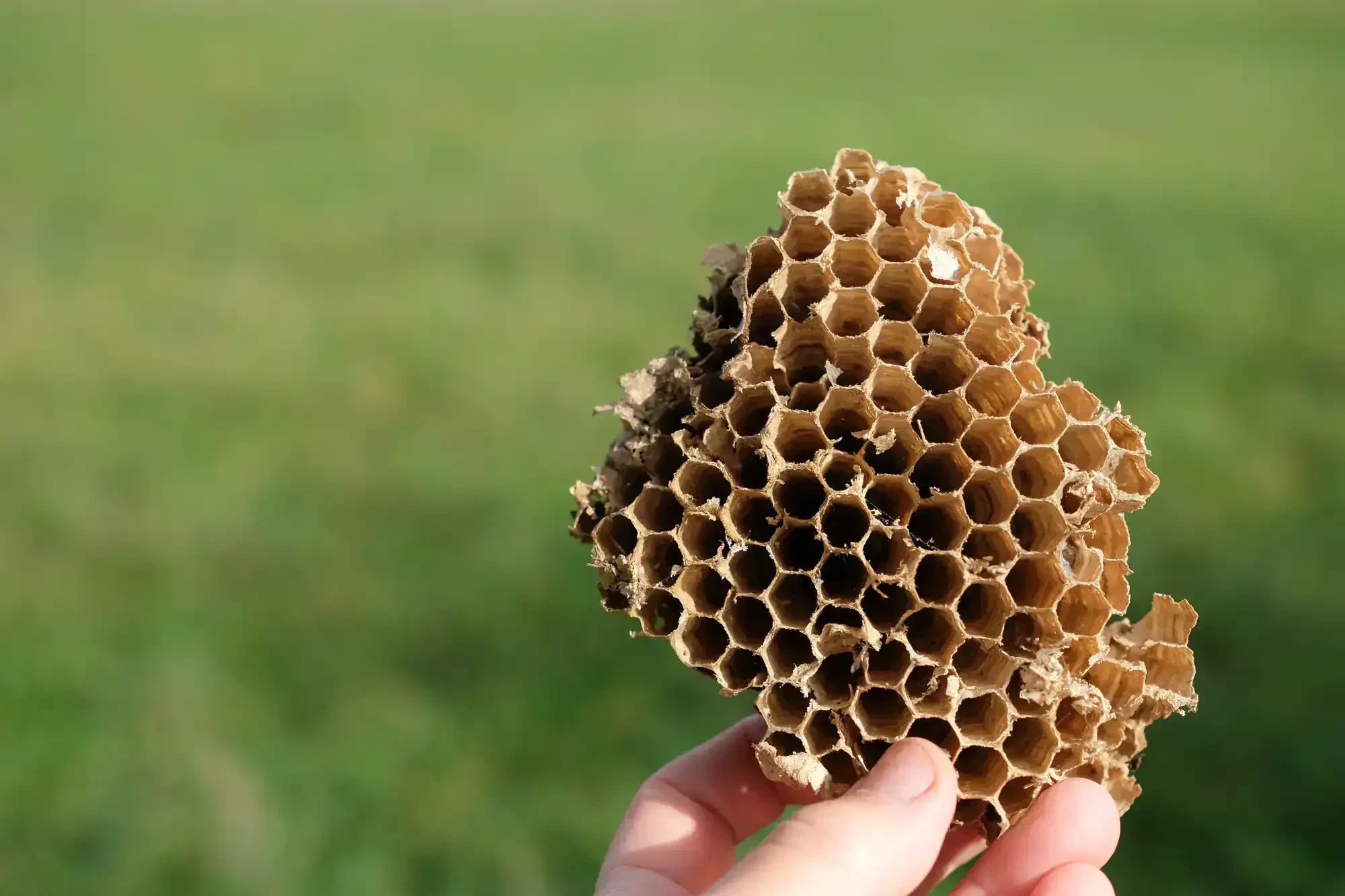
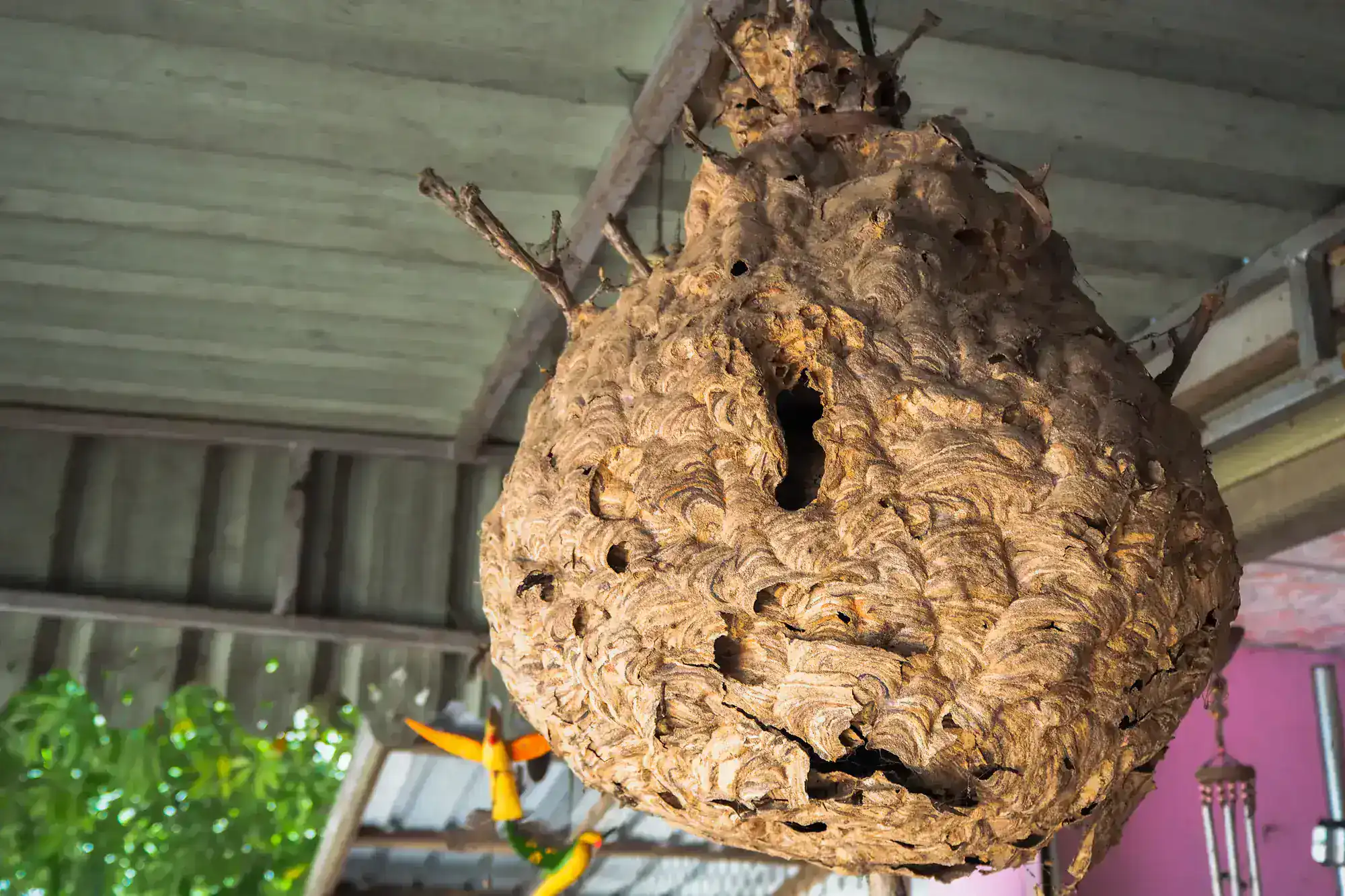
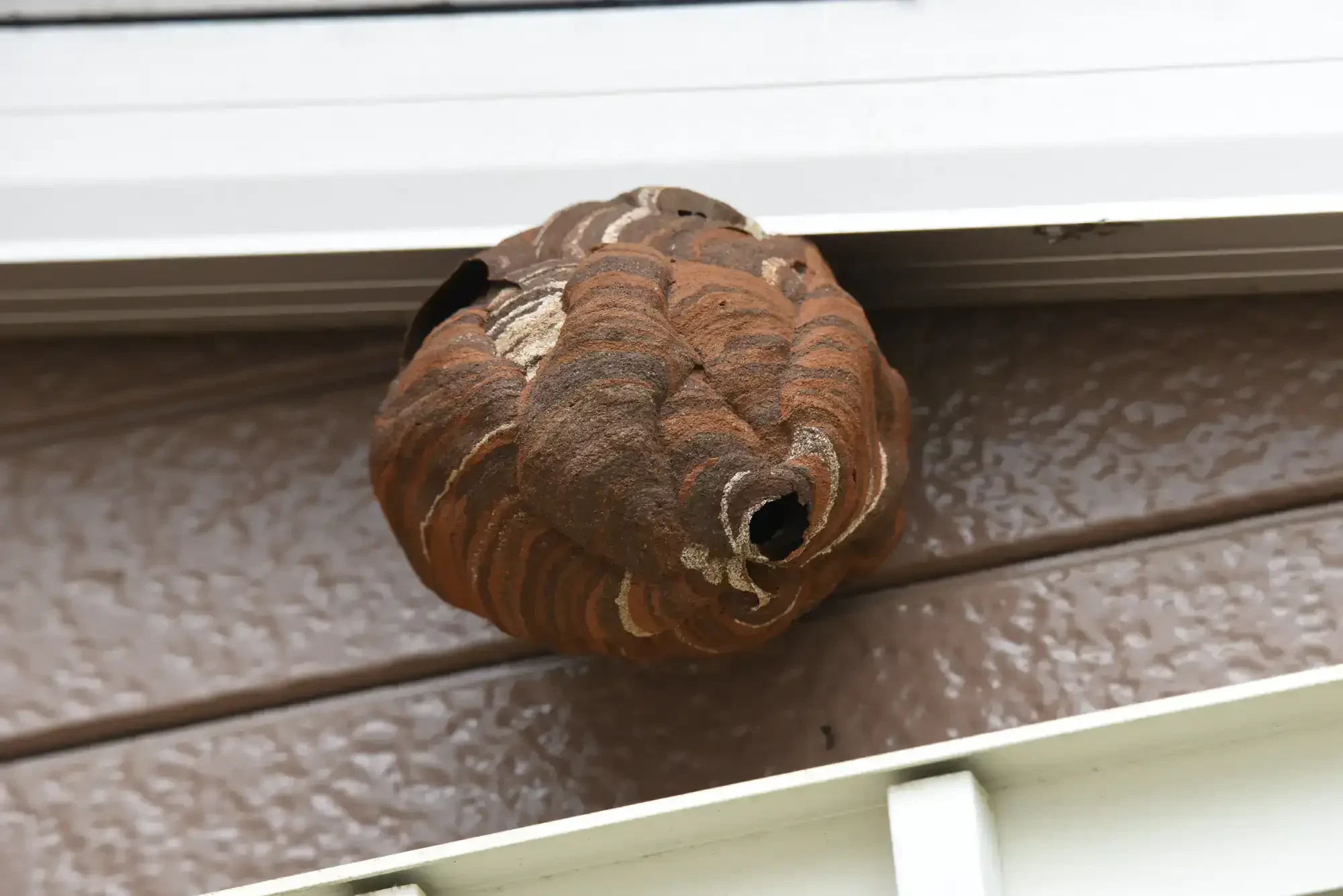
Bald-faced hornets are the most common stinging insect problem on Holly’s wooded lots and acreage properties. They build enclosed, paper-mâché-style nests — usually in trees, shrubs, or under roof overhangs — and a colony can reach 700 workers by late summer. If you’ve seen a gray, football-shaped nest hanging in a tree or tucked under your eaves, that’s almost certainly what you’re dealing with.
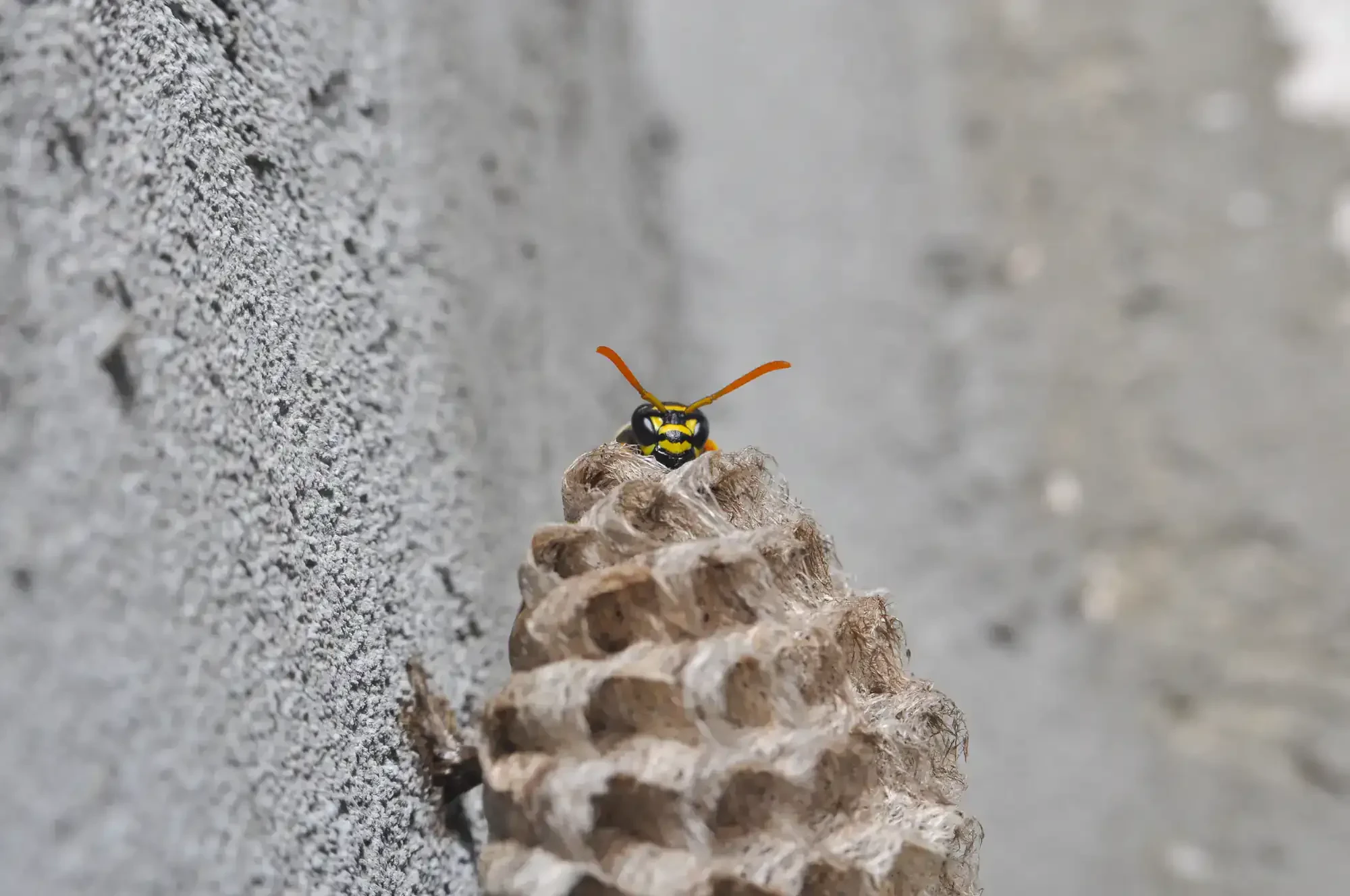
Yellow jackets are the second most frequent call we receive in the Holly area, particularly on larger parcels with outbuildings and ground-level vegetation. They nest underground or inside wall voids, which makes them harder to spot and more dangerous to treat without the right approach. European hornets are less common but do show up in northern Oakland County — they’re larger, they nest inside hollow trees and structural cavities, and they’re active at night, which surprises a lot of Holly homeowners who didn’t expect to see hornet activity after dark. Knowing which species you have changes how the job gets done.
This is one of the most common calls we get. When you spray a hornet nest and don’t fully eliminate the colony, the surviving workers go into a defensive response. They become significantly more aggressive, they may relocate deeper into a wall void or structural cavity, and in some cases the disruption causes them to split and establish a secondary nest nearby. What started as one problem becomes two — and both are now harder to treat.
The other issue is that most store-bought sprays are contact killers. They knock down what they hit, but they don’t penetrate a wall void or reach the queen deep inside an enclosed nest. Without eliminating the queen and the core of the colony, the nest rebuilds. If you’ve already disturbed a nest on your Holly property and the situation has gotten worse, the right move is to stop and call us. The longer you wait after a failed DIY attempt, the more aggressive the colony becomes — especially in late summer when worker populations are at their peak.
Nationally, professional hornet removal averages between $300 and $700, with bald-faced hornet removal — the most common scenario in Holly’s wooded, tree-heavy environment — averaging around $625 due to the elevated nest locations and colony sizes typical of the species. Your actual cost depends on where the nest is located, how large the colony is, and whether there are multiple nesting sites on your property.
Wall void infestations and structural nests in older Holly homes tend to be on the higher end of that range because they require specialized dust treatment and more time to address properly. Ground-level yellow jacket colonies and smaller aerial nests in accessible locations are generally less involved. We provide flat-rate, upfront pricing before any work begins — no surprises when the job is done. If you’ve gotten a quote from another pest control company serving the Holly area, ask about our price-match option. The goal is to give you a fair number before anyone sets foot on your property.
The most common signs of a wall void infestation are a steady stream of hornets entering and exiting through a small gap — usually around a soffit, a gap in fascia, a crack near a window frame, or a utility penetration. You might also hear a faint buzzing or chewing sound inside the wall, particularly in older Holly homes where the structural materials have aged and gaps have developed over decades.
Do not seal the entry point. This is the instinct most homeowners have, and it almost always makes things worse. If you trap an active colony inside a wall, the hornets will chew through drywall or interior surfaces to find a way out — into your living space. The correct approach is to treat the void with a professional-grade dust that penetrates the cavity and reaches the colony, then allow the dead nest to be addressed after the colony is fully eliminated. Our technicians handle wall void infestations regularly in Holly’s older housing stock, and the process is designed to resolve the problem without tearing into your walls.
Spring is the best window — specifically April through early June, when overwintered queens have just started building new nests and colony sizes are still small. A nest treated in May might have a few dozen workers. That same nest left until August could have 500 to 700. The difference in risk, treatment complexity, and cost is significant.
Holly’s position in northern Oakland County, with its wooded lots and proximity to the Holly Recreation Area, means overwintering queens have abundant shelter in tree hollows, ground debris, and under bark — and they return to the same territory each spring. If you had a nest removed last year without preventative treatment, there’s a real chance a new queen is already building in the same area this spring. The worst time to call is late August or September, when colonies are at peak size and workers are at their most aggressive. That’s also, unfortunately, when most Holly homeowners finally pick up the phone — after a sting or a close call near the back deck. Earlier is always better.
Yes. We offer discounts for seniors, veterans, and first responders. Holly Township has close to 2,000 senior residents, and a meaningful portion of the calls for hornet removal come from older homeowners who recognize — correctly — that attempting to treat a nest themselves isn’t worth the risk. The discount is straightforward: mention it when you call, and it gets applied to your service.
Veterans and first responders in the Holly area qualify as well. Holly has a working-class, community-rooted identity, and these discounts reflect that — they’re not a promotional footnote, they’re part of how we’ve operated for twenty years in communities like this one. If you’re unsure whether you qualify, just ask when you call. The pricing conversation happens before any work is scheduled, so you’ll know exactly what you’re paying before anyone comes out to your property.
Useful Links