
Hear from Our Customers
A hornet nest doesn’t just make your yard uncomfortable — it makes it dangerous. Whether it’s under the eaves of your garage, tucked into a shrub along the fence line, or buzzing inside a wall void you can hear but can’t see, the longer it sits, the worse it gets. By late summer, a colony that started with one queen can have several hundred workers defending it aggressively. That’s not a hardware store problem anymore.
For homeowners in Laingsburg and the surrounding Sciota Township area, the pressure is real and it’s seasonal. Your property sits in a green corridor between Sleepy Hollow State Park to the northwest and the Rose Lake State Wildlife Research Area to the east. Both are large, undisturbed natural areas where hornet colonies establish every spring and grow without interference. As summer builds, those colonies send workers farther out — right into your yard, your driveway, and your outbuildings.
What you get after professional hornet removal isn’t just a treated nest. It’s the ability to use your outdoor space again without watching where you step. It’s your kids playing in the backyard without you holding your breath. It’s knowing the problem was handled correctly the first time, by someone who understands what’s driving it — not just someone who sprayed and left.
We’ve been serving southeast Michigan since May 2005 — which means we’ve been handling hornet problems in Shiawassee County longer than some of the national chains have had a Michigan presence at all. We’re family-owned and led by Roger, who brings 26 years of hands-on pest control experience to every job we take on. This isn’t a call center operation. When you reach out to us in Laingsburg, you’re reaching a real local company with real accountability.
One thing that sets us apart in a market full of rotating technicians and seasonal hires: you get the same technician every visit. That matters more than it sounds. A tech who has been to your Laingsburg property before knows where hornets have nested, which spots on your structure are high-risk, and what’s worked in the past. That kind of continuity doesn’t exist with the big national chains — and it’s the kind of thing neighbors in Laingsburg notice and talk about.
We’re Michigan-licensed (Pesticide Application Business License #250081), IPM-certified, BBB Accredited, and have earned recognition from both Angie’s List and HomeAdvisor. We offer discounts for seniors, veterans, and first responders.
It starts with a call or a booking — no lengthy intake process, no pressure. You describe what you’re seeing, and we’ll ask the right questions to understand the situation before anyone shows up. Where is the nest? How long has it been there? Have you noticed activity inside a wall or ceiling? These details matter because the treatment approach changes depending on what you’re dealing with.
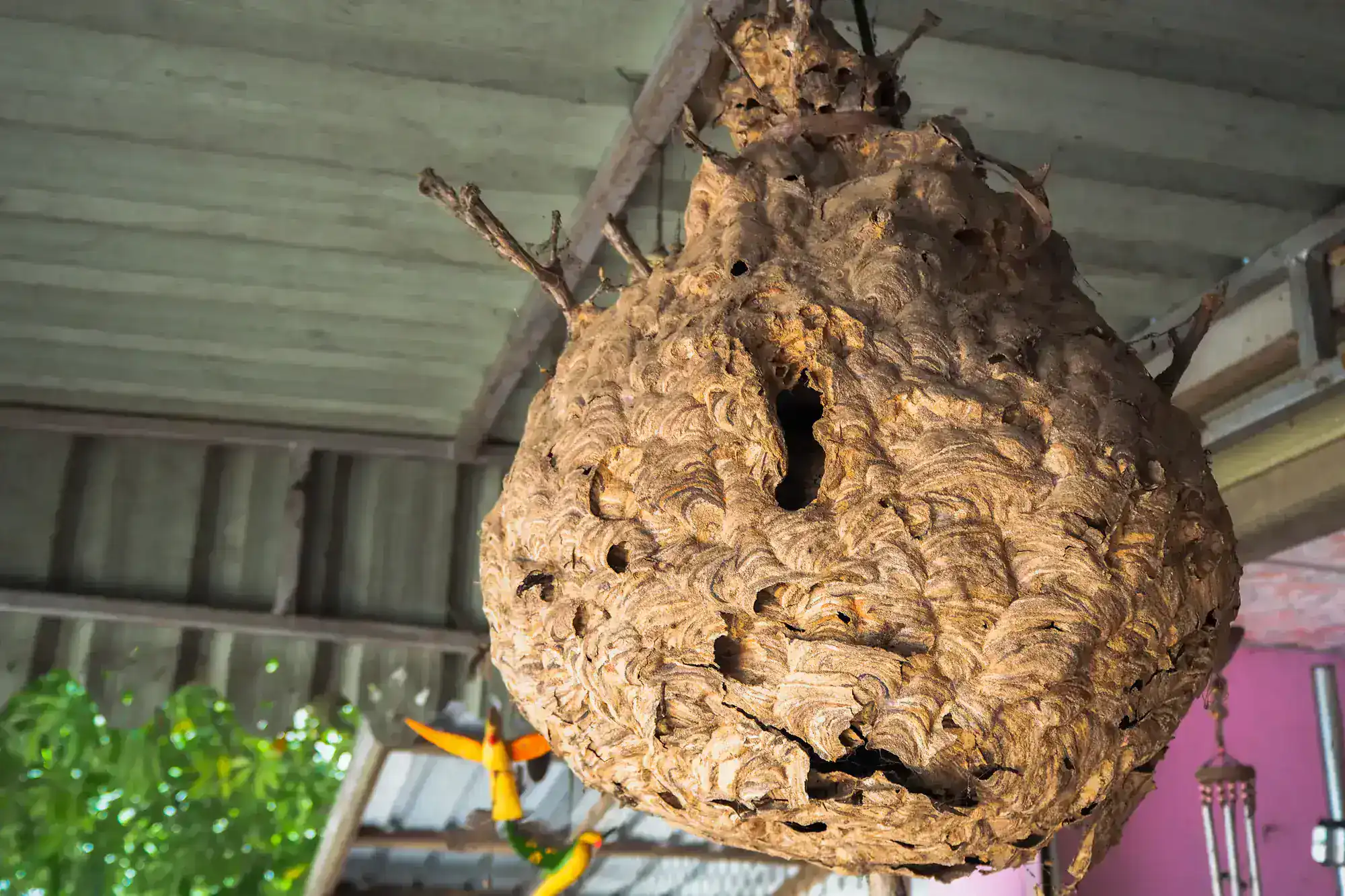
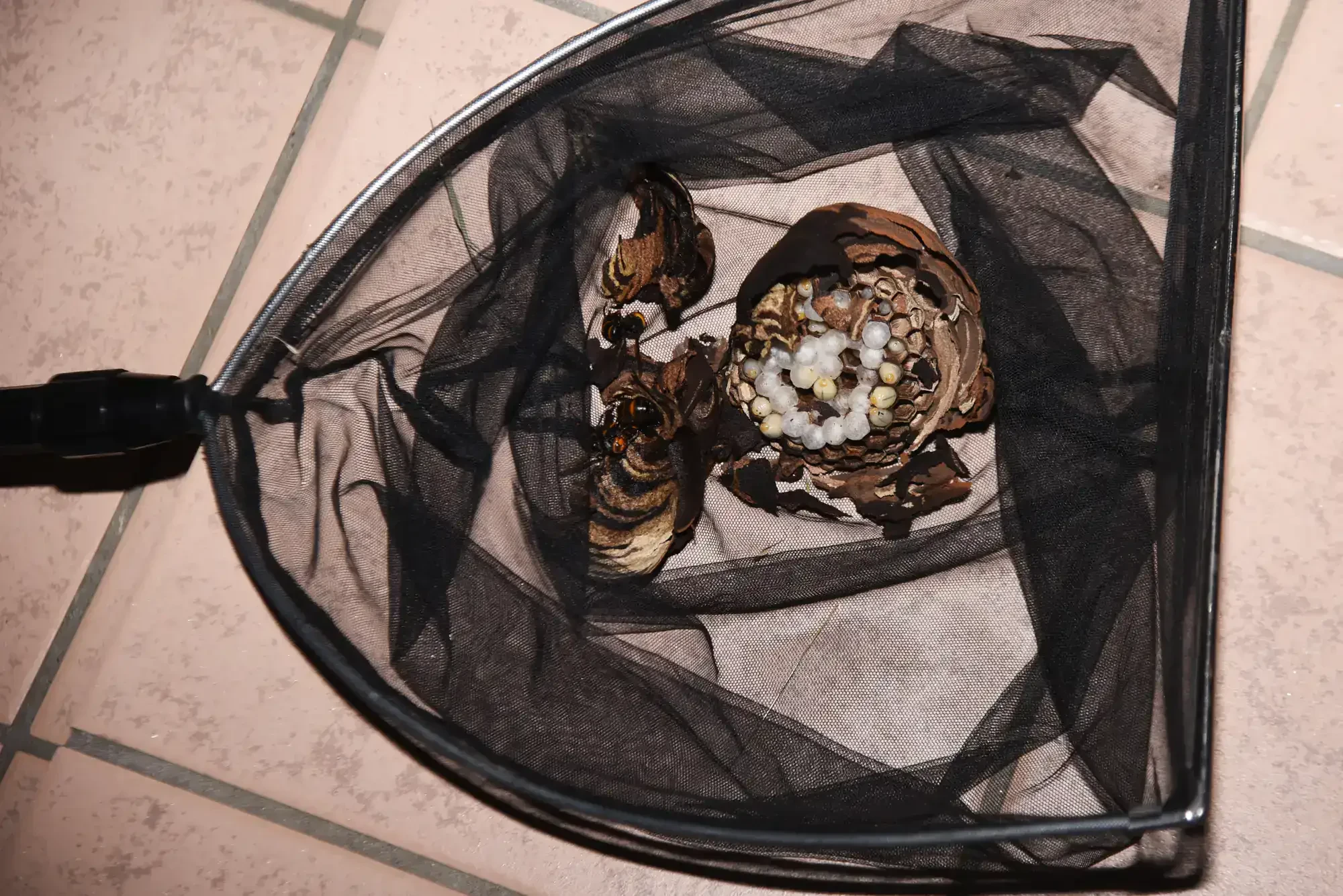
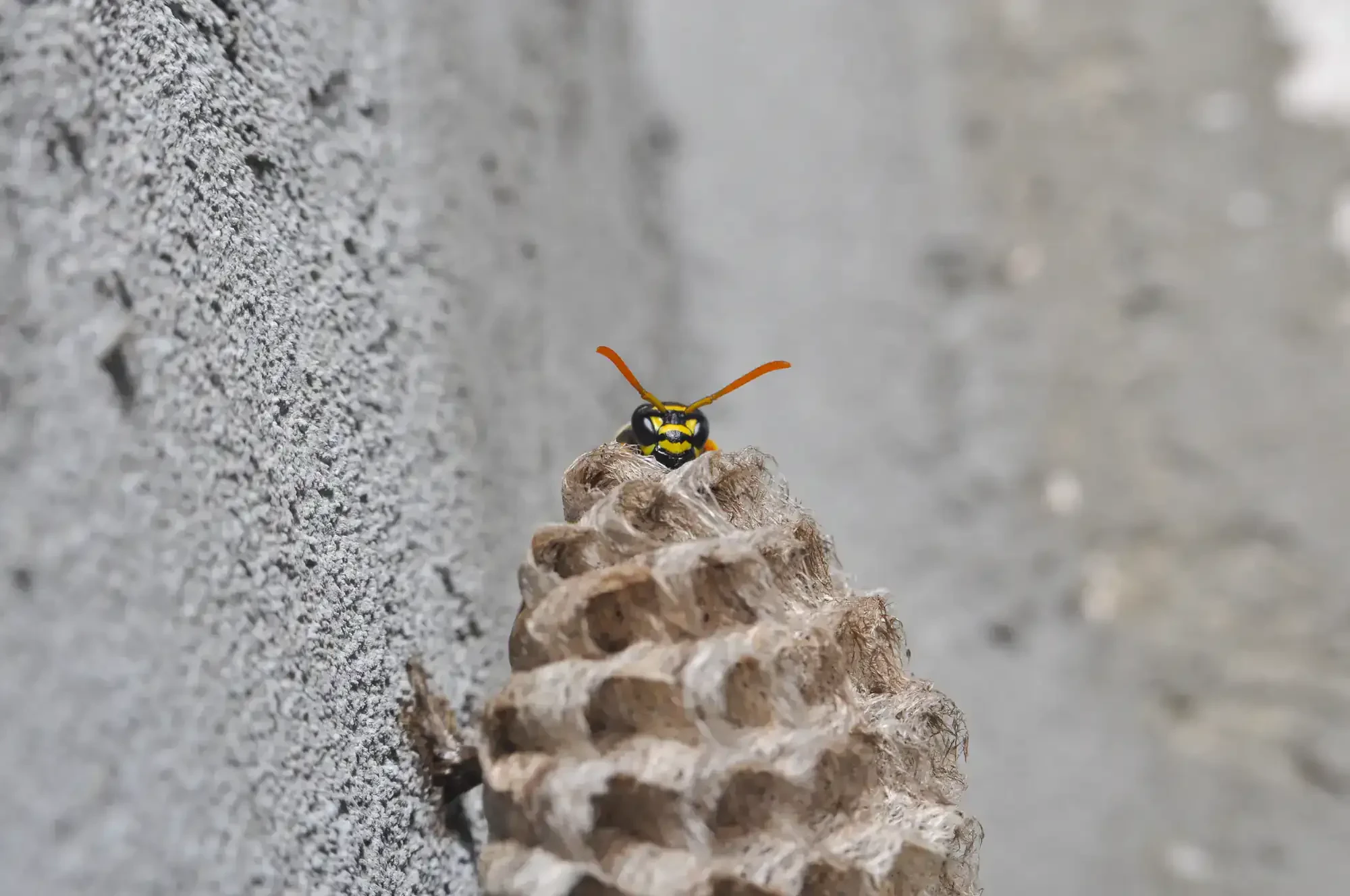
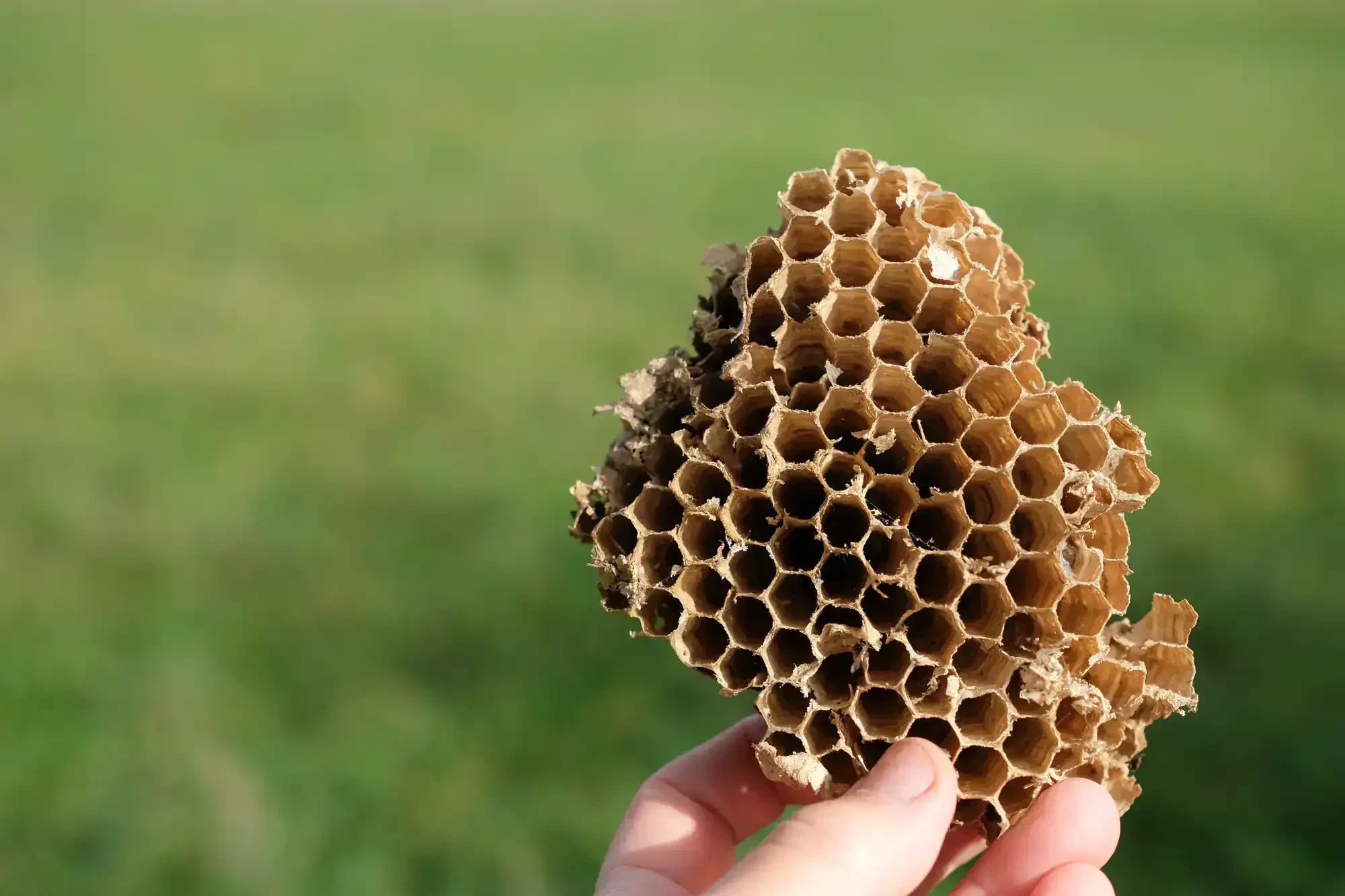
When our technician arrives, the first step is a proper inspection. Not a glance from the driveway — a real assessment of the nest location, the species involved, and how the colony is accessing the structure. Bald-faced hornets build those large, enclosed paper nests you see hanging from trees or under eaves. European hornets prefer wall voids, hollow trees, and attic spaces, and they’re active at night, which surprises a lot of homeowners. Each one requires a different treatment method. For nests inside wall voids — which are common in the older rural and semi-rural housing stock throughout the Laingsburg area and Sciota Township — that typically means a dust treatment that penetrates the void and eliminates the colony without unnecessary structural damage.
After treatment, your technician will walk you through what to expect over the next 24 to 72 hours, what signs to watch for, and what steps reduce the likelihood of a colony establishing in the same spot next season. If the problem persists, we’ll return. That’s not a sales line — it’s the standard.
Ready to get started?
Hornet removal in the Laingsburg area isn’t one-size-fits-all. Properties near the US-127 corridor and Sleepy Hollow State Park tend to see bald-faced hornet activity in trees and upper eaves. Properties deeper into Sciota Township — with older outbuildings, barns, and mature tree lines along agricultural fields — are more likely to deal with European hornets nesting in wall voids or hollow wood. Our technicians are trained to identify the species, locate the nest correctly, and apply the right treatment for the specific situation rather than defaulting to a generic spray-and-go approach.
All treatments are performed under Michigan Pesticide Application Business License #250081 and follow Integrated Pest Management (IPM) protocols — meaning the treatment is targeted, the chemical exposure is minimized, and the approach is appropriate for homes where children and pets are present. IPM isn’t a buzzword here; it’s a Michigan MDARD-recognized methodology that we hold actual certification in.
Pricing is flat-rate and upfront. You’ll know the cost before our technician starts, and if you’ve received a quote from another licensed provider, we’ll match any reasonable competitor’s rate. There are no binding contracts and no pressure to commit to an ongoing program you don’t need. If the nest comes back after treatment, so do we — at no additional charge.
This is one of the most common questions from homeowners in Laingsburg, and the answer is geographic. Your property sits between two large, undisturbed natural areas — Sleepy Hollow State Park to the northwest and the Rose Lake State Wildlife Research Area to the east. Both provide ideal overwintering habitat for hornet queens. Each fall, newly mated queens leave the dying colony and seek protected spots to hibernate through winter: wall voids, attic spaces, hollow trees, and the gaps in older outbuildings common throughout Sciota Township. Come spring, those queens emerge and start building right where they feel comfortable — which is often the same general area, sometimes the exact same spot, as the previous year.
Removal alone breaks the current season’s cycle, but it doesn’t prevent next year’s queen from finding the same eave, the same tree hollow, or the same gap in your garage trim. A proper post-treatment conversation about exclusion and prevention — sealing entry points, addressing structural vulnerabilities — is what actually reduces the recurrence rate over time. That’s part of what we cover after every treatment.
The honest answer is that it depends on where the nest is and how large the colony has grown — which is why calling early in the season makes a real financial difference. A nest discovered in May or early June, when the colony is still small and accessible, typically costs less to treat than the same nest found in August when it’s reached peak population and is buried inside a wall void or tucked under a second-story eave.
Nationally, professional hornet removal runs between $300 and $700 for most residential jobs. Bald-faced hornet removal — which often involves elevated nests requiring ladder access — tends to come in at the higher end of that range. A nest that costs $200–$300 to treat in spring can realistically triple in cost by late summer, simply because the job is harder and the risk is higher. We offer flat-rate, upfront pricing so you know exactly what you’re paying before anything starts. And if you’ve gotten a quote elsewhere from a licensed competitor, we’ll match any reasonable rate.
Yes — and the risk is higher than most people expect before they’ve tried it. Hornets don’t lose their stinger the way honey bees do, which means a single hornet can sting multiple times. When a colony is disturbed, the defensive response is fast and coordinated. A colony at peak summer size can have several hundred workers, and they communicate the threat to the entire nest almost instantly.
The CDC reports an average of 62 deaths per year in the United States from hornet, wasp, and bee stings — most of which involve people who were stung multiple times or had an unknown allergy. For homeowners near Sleepy Hollow State Park or along the wooded lot lines of Sciota Township, where colonies can grow large and undisturbed through the summer, the risk of a DIY attempt going wrong is not small. Beyond the physical danger, a failed DIY treatment often splits or agitates the colony without eliminating it — which can scatter workers and make the problem significantly harder to treat afterward. A licensed technician has the protective equipment, the right product, and the experience to do it without turning a manageable situation into an emergency.
It does matter, because the species determines where they nest, how aggressive they are, and how they need to be treated. In the Laingsburg area and throughout mid-Michigan, the two most common species homeowners deal with are the bald-faced hornet and the European hornet.
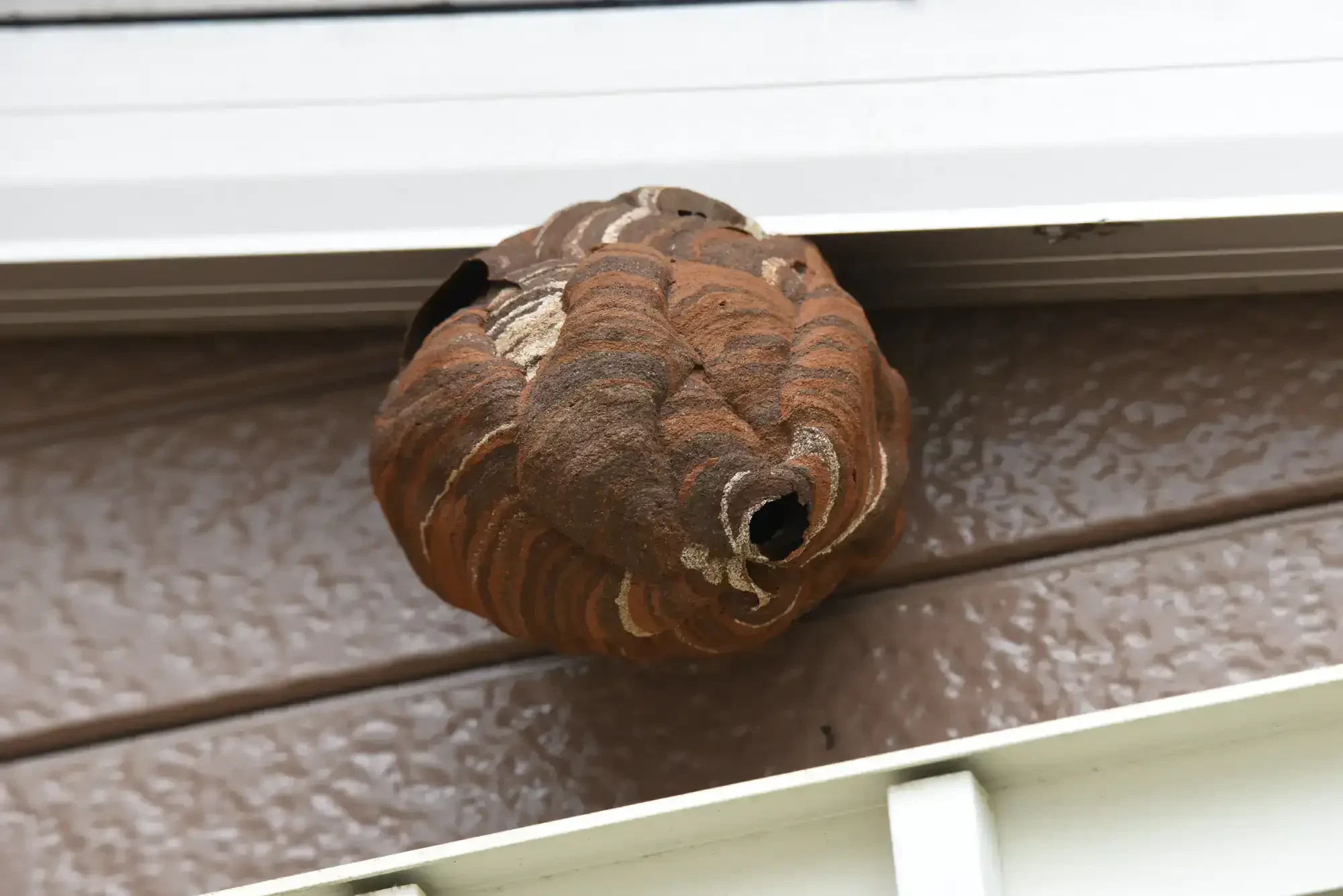
Bald-faced hornets build those large, enclosed, football-shaped paper nests you typically see hanging from tree branches, shrubs, or under roof eaves. They’re highly defensive of the nest and will sting without much provocation once the colony reaches full size in late summer. European hornets are the only true hornet species in North America. They’re larger than bald-faced hornets, prefer to nest in hollow trees, wall voids, and attic spaces, and — unlike most stinging insects — they’re active at night. That nighttime activity is often the first clue homeowners notice: buzzing inside a wall after dark, or hornets flying around porch lights in the evening. Properties in the Laingsburg area with older housing stock, detached garages, or tree lines bordering agricultural fields are particularly common sites for European hornet nesting. Identifying the species before treatment is the first step to treating it correctly.
The most common sign is sound — a low, persistent buzzing coming from inside a wall, ceiling, or soffit, especially in the evening when European hornets are most active. You might also notice hornets entering and exiting through a small gap around a window frame, a crack in the siding, a gap where a utility line enters the house, or a space under a roof overhang. If you’re seeing hornets consistently near one specific exterior point but can’t find an exposed nest, there’s a reasonable chance the colony is inside the wall cavity.
This is one of the more serious scenarios because a nest inside a wall void can grow to a significant size before it’s discovered, and treating it incorrectly — or not at all — can result in hornets chewing through drywall from the inside. In the Laingsburg area, older homes and rural properties throughout Sciota Township often have more entry points than newer construction, making wall void nesting more common. The correct treatment for an in-wall nest is typically a professional dust application through the entry point, which works its way through the void and eliminates the colony. This is not a job for store-bought spray, which won’t penetrate the void and will likely agitate the colony without resolving it.
Yes. We offer discounts for seniors, veterans, and first responders. In a community like Laingsburg — where the school district draws strong voter support and neighbors look out for each other — these aren’t afterthoughts. They’re a straightforward acknowledgment that the people who contribute most deserve a fair deal when they need help with something like this.
If you’re a senior homeowner managing a property in Laingsburg or the surrounding Sciota Township area, a veteran, or a first responder, just mention it when you call. Beyond those specific discounts, we also offer price matching for reasonable competitor quotes — so if you’ve already gotten a number from another licensed provider, bring it up. The goal is to make sure cost isn’t the reason a nest goes untreated until it becomes a much bigger problem.
Useful Links