
Hear from Our Customers
A hornet nest that goes untreated through a Millington summer doesn’t stay small. Queens start building in April or May, and by August — when Michigan’s humidity is doing its thing and your family is trying to use the yard — that colony can have hundreds of workers and zero tolerance for anything that gets close. That’s not a problem you want to poke at with a hardware store can.
For homeowners in Millington and the surrounding township, the challenge is often location. Properties out here aren’t suburban ranch houses with one eave to check. You’ve got barns, pole buildings, sheds, detached garages, and wooded lots that back up toward the Murphy Lake State Game Area corridor. Nests end up in wall voids, under metal roofing, in tree canopies — places where a spray can won’t reach and where a missed treatment just makes things worse.
When the job is done right, you get your property back. You can walk to the barn without watching your step. Kids can play outside again. The nest is gone, the colony is treated, and if anything comes back, we return — at no extra charge. That’s the outcome. No drama, no guesswork.
We’ve been doing this since May 31, 2005 — which makes 2025 our 20th year serving Millington, the surrounding Tuscola County area, and southeast Michigan. Roger, who leads the company, has 26 years of personal pest control experience. That’s not a number pulled from a brochure. It means he’s seen every variation of a hornet problem this region produces, and the technicians we train are held to that same standard.
You won’t get a rotating cast of seasonal workers here. We keep the same technician assigned to your property year after year — which matters in a place like Millington, where a technician who’s been to your property before already knows where the old barn is, which eaves have had problems, and what to check that a first-timer would miss. We’re BBB accredited, hold Michigan Pesticide Application Business License #250081, and have earned awards from both Angie’s List and HomeAdvisor. Those aren’t participation trophies — they reflect 20 years of showing up and doing the job right.
It starts with a call. You describe what you’re dealing with — where the nest is, how long it’s been there, whether anyone’s been stung — and we’ll give you a straight answer on what needs to happen and what it costs. No vague estimates, no surprises on the invoice. If you’ve already gotten a quote from someone else, we’ll match it if it’s reasonable.
When our technician arrives, the first thing we do is assess the situation fully before touching anything. That means identifying the species — bald-faced hornets, yellow jackets, and paper wasps each require a different approach — and locating any secondary nests that aren’t immediately visible. On rural Millington properties, that second part matters. A nest on the front eave is obvious. The one inside the barn wall or under the shed overhang is the one that gets people stung after they think the problem is solved.
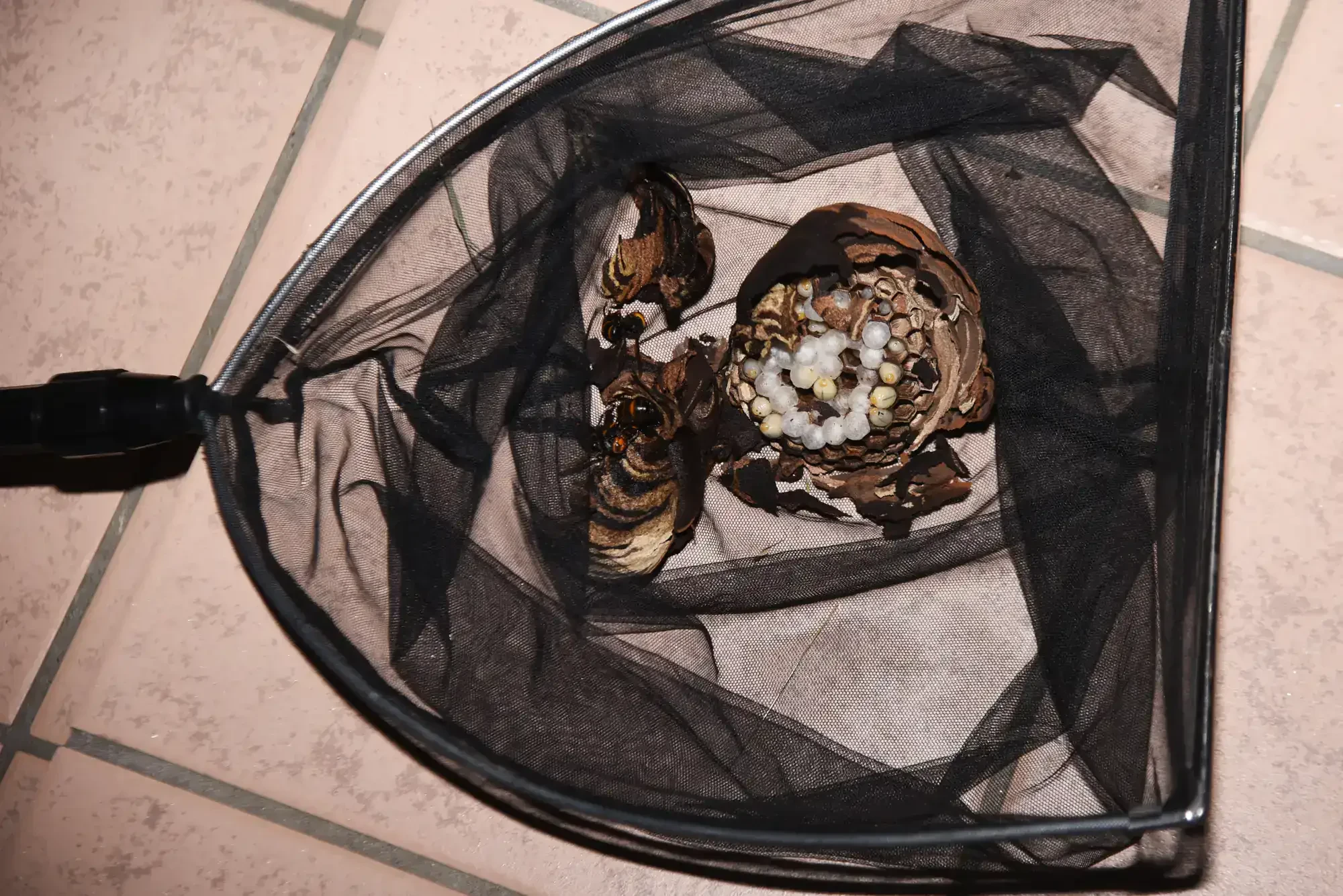
Treatment depends on what’s in front of us. Exposed nests get a direct insecticide application. Nests inside wall voids — common in the older agricultural structures throughout Millington Township — get a specialized dust treatment that penetrates where liquid can’t reach. After treatment, we confirm the colony is neutralized and walk you through what to watch for. If anything comes back, you call us and we return. That’s the guarantee.
Ready to get started?
Most hornet removal services are built around a suburban home — one nest, one eave, done. That’s not always how it works in Millington. Properties in this area often include multiple structures, wooded acreage, and outbuildings that haven’t been closely inspected in months. That changes the scope of the job, and a technician who isn’t prepared for it will miss things.
We hold IPM training certification recognized by MDARD — Michigan’s own Department of Agriculture and Rural Development. In practical terms, that means our treatments are targeted. If you’ve got a garden, chickens, or pets on your property, we’re not blanketing the area with chemicals. We identify the pest, assess the infestation, and apply the most effective treatment for that specific situation. That approach matters more on a Tuscola County rural lot than it does in a subdivision.
Our pricing is flat-rate and upfront. The national average for bald-faced hornet removal runs around $300 to $700, and a nest that costs $200 in the spring can cost significantly more by late August when the colony is at full size. We’ll tell you the number before we start. Seniors, veterans, and first responders receive a discount — and in a community like Millington, where those households are well represented, that’s not a footnote. It’s something we mean.
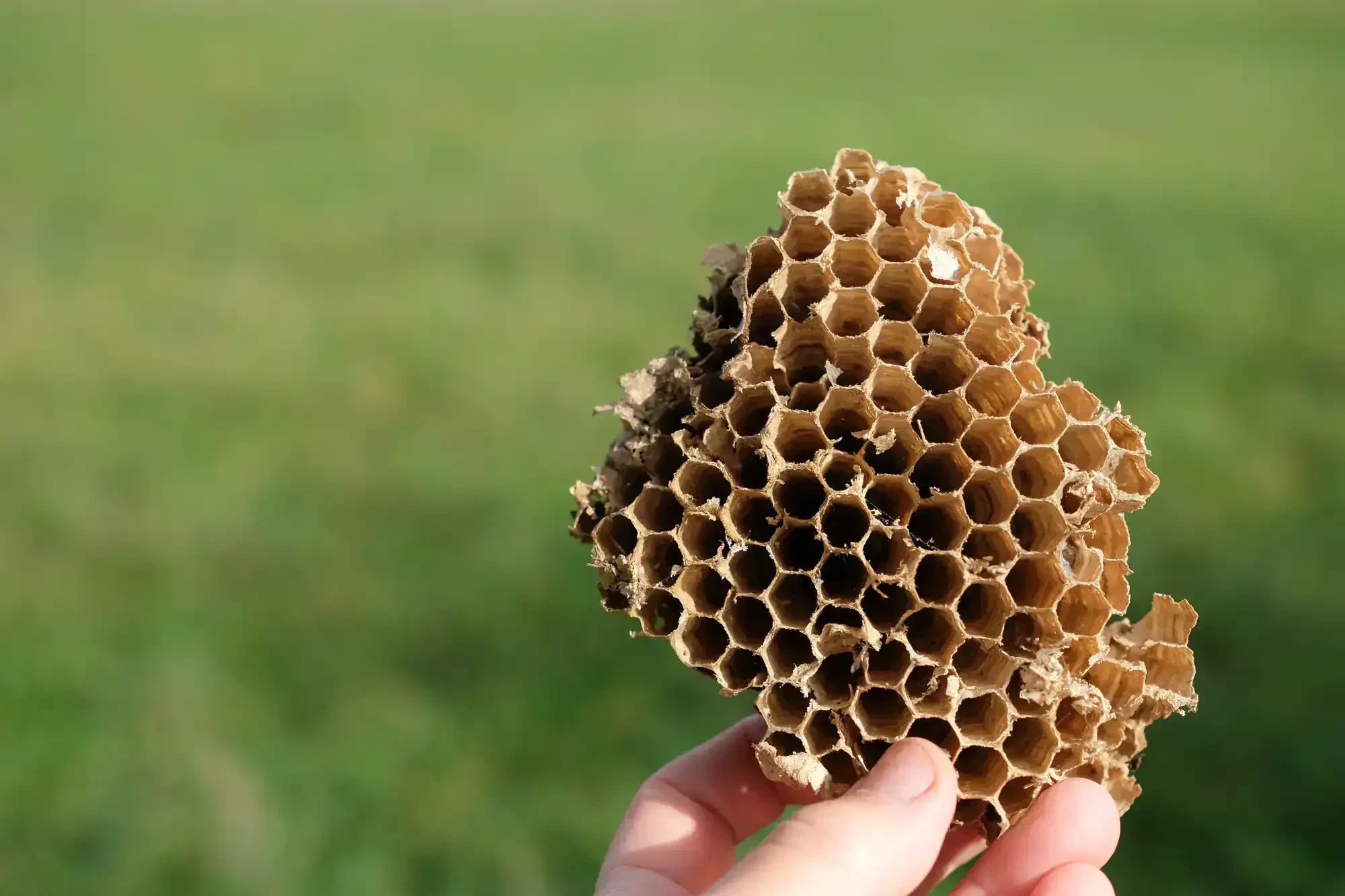
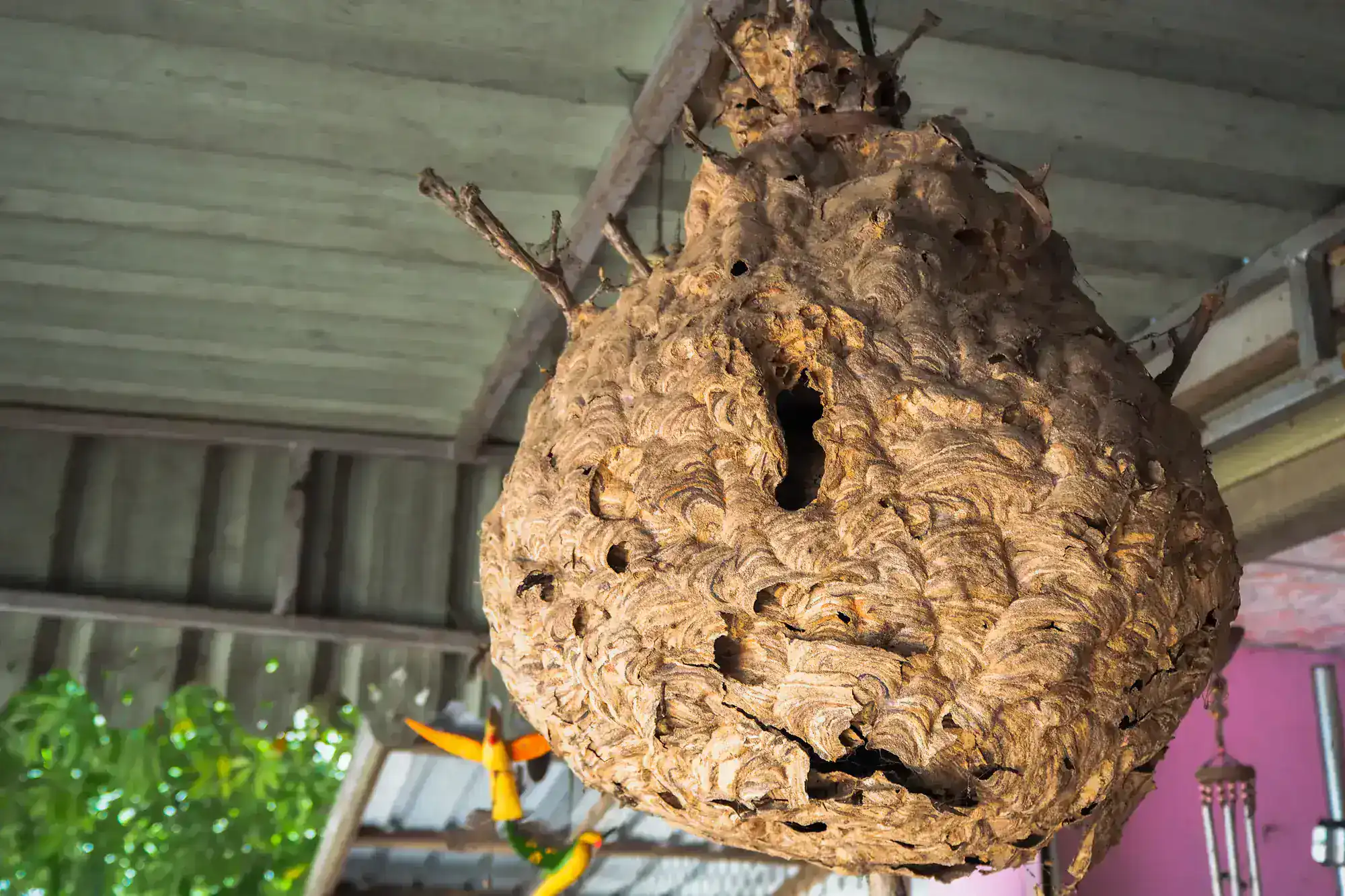
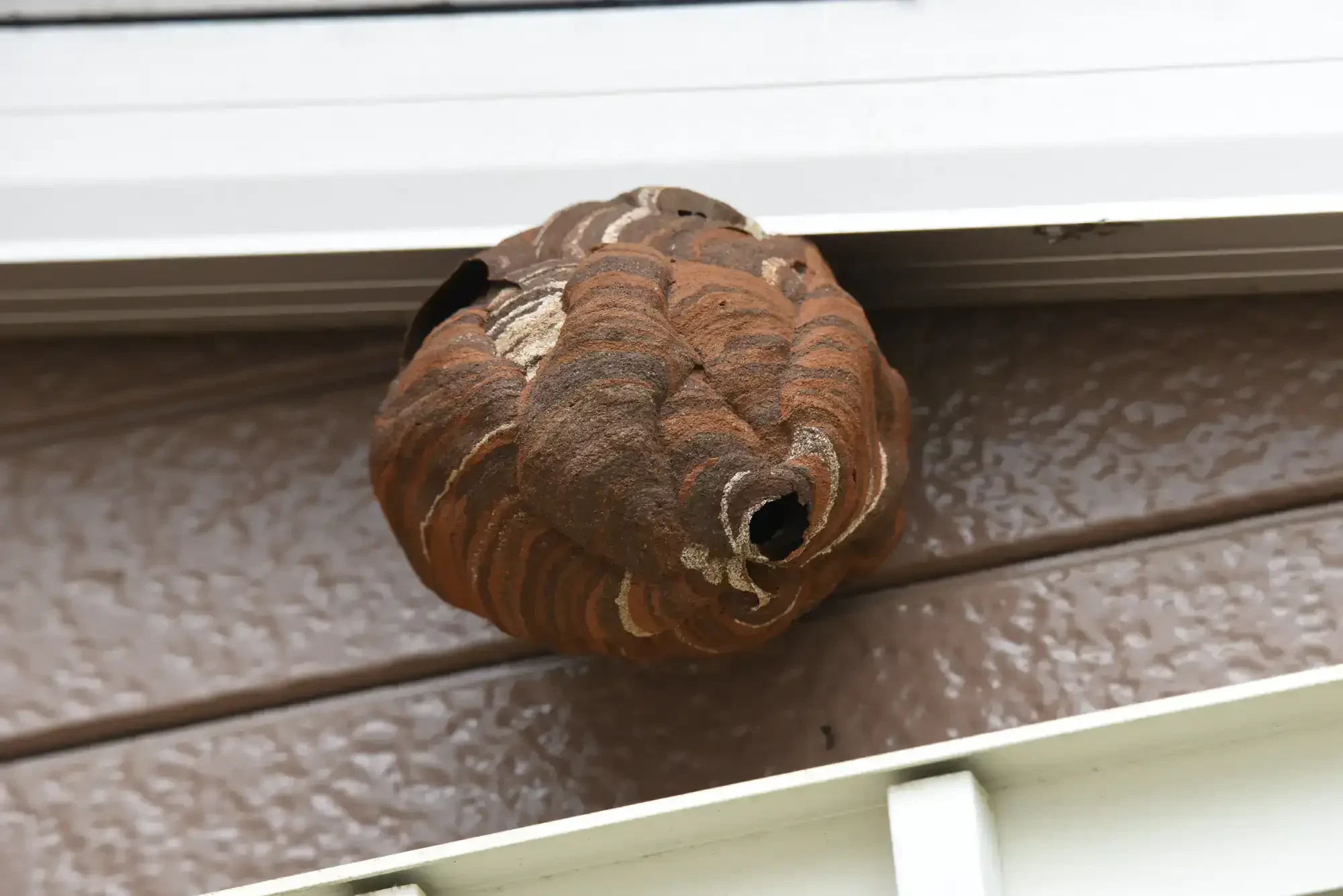
Bald-faced hornets are the most common stinging insect we deal with on Millington-area properties. They build large, enclosed paper nests — often football-shaped — that hang from tree branches, eaves, and the overhangs of barns and outbuildings. By late summer, a single colony can hold several hundred workers and will defend aggressively if disturbed. They’re not technically hornets in the strictest biological sense, but they behave like them and require the same level of professional treatment.
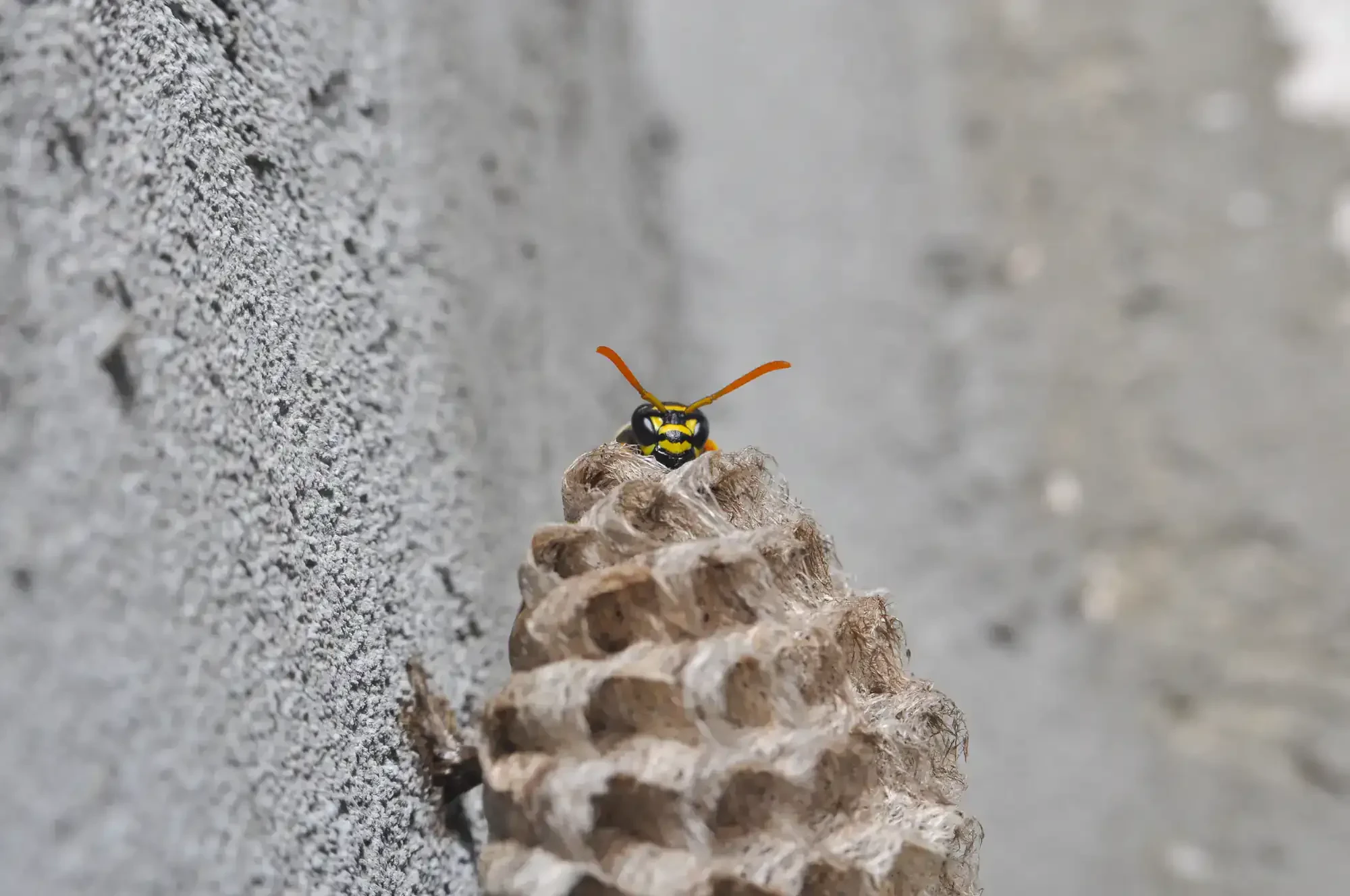
Yellow jackets are also prevalent in this area, particularly on rural properties with older structures. They tend to nest in ground cavities, wall voids, and inside the walls of agricultural buildings — which is common throughout Millington Township. Paper wasps show up frequently under porch overhangs and around window frames. Each species has different behavior patterns and responds to different treatment methods, which is why a proper identification before treatment is the first step, not an afterthought.
Most DIY hornet removal attempts fail — and they often make the situation more dangerous before they make it better. A can of hardware store spray has a limited range and doesn’t penetrate wall voids or enclosed nests. If you disturb a bald-faced hornet colony without fully neutralizing it, the workers will swarm, and they will sting multiple times. The CDC reports an average of 62 deaths per year in the US from hornet, wasp, and bee stings — and the majority of serious incidents involve people who tried to handle a nest without proper equipment or training.
On Millington-area properties, the risk is compounded by the types of structures where nests tend to build. A nest inside a barn wall or under metal roofing on a pole building isn’t accessible with a spray can. Attempting to treat it without the right equipment can drive the colony deeper into the structure, where it’s harder to reach and more likely to cause ongoing problems. We use the right product for the right location — and back the work with a guarantee.
The honest answer is that it depends on where the nest is and how large the colony has grown. Nationally, professional hornet removal averages between $300 and $700, with bald-faced hornet removal on the higher end of that range because of the nest locations and colony size involved. A nest treated in May when it’s still small costs significantly less than the same nest treated in August when it’s reached full size and the colony is at peak aggression.
For Millington homeowners, the location of the nest on the property also affects the job. A nest on an accessible eave is straightforward. A nest inside the wall of a barn or under the roofline of a pole building requires a different approach and more time. We provide flat-rate, upfront pricing — you’ll know the cost before we start. If you’ve received a quote from another company, we’ll match it if it’s a reasonable competitor’s rate. Seniors, veterans, and first responders also qualify for a discount, so mention that when you call.
Yes — and this is one of the most important things to understand about hornet control on rural Michigan properties. Hornets don’t reuse old nests, but the queens that survive winter will return to the same general area to build new ones the following spring. If your barn eave or wooded lot edge hosted a nest this year, it’s a likely candidate again next year. The overwintering queens find sheltered spots — often in the same agricultural structures or wooded margins that produced this year’s colony — and emerge in April or May to start the cycle over.
Removing the physical nest in fall or winter is safe to do once the colony has died off, but it doesn’t prevent a new queen from choosing the same location next spring. The most effective long-term approach involves preventive treatment around known nesting sites before the new season begins. For properties in Millington Township — especially those with multiple outbuildings, mature tree lines, or proximity to the Murphy Lake State Game Area corridor — a recurring prevention plan is worth considering. It’s significantly less expensive than emergency removal in August.
The most common sign of a wall void nest is high hornet or yellow jacket traffic around a small gap, crack, or opening in the exterior of a structure — without a visible nest attached to the outside surface. You might notice workers entering and exiting a gap in the siding, a crack in the mortar, or a hole in the fascia board. You may also hear a low buzzing sound from inside the wall, particularly in the morning when the colony is most active.
Wall void nests are especially common in older agricultural structures throughout Millington Township — barns, sheds, and outbuildings with weathered wood siding, gaps around windows, or deteriorating trim. These nests are not treatable with a spray can. The correct method is a dust application — insecticide in powder form — pumped into the void through the entry point. The dust travels through the cavity and reaches the colony where liquid products can’t. It’s a slower process than a direct nest spray, but it’s the only method that reliably eliminates a colony that’s built inside a wall. Our technicians carry the equipment and products to handle this on the first visit.
Yes. We offer discounts for seniors, veterans, and first responders. Millington is a working-class community with a strong military and public service presence, and these discounts reflect how we’ve operated for 20 years — treating customers like neighbors rather than line items on a route sheet. When you call to schedule, just mention that you qualify and we’ll apply it to your service.
Beyond the discount itself, our pricing structure is flat-rate and transparent from the start. You’ll know what you’re paying before our technician arrives — no adjustments after the job, no fees that weren’t discussed upfront. For households in Millington where every dollar is accounted for, that predictability matters as much as the discount. If you’ve already received a quote from another local company, we’ll match it if it’s a reasonable rate. The goal is to make sure cost is never the reason a dangerous nest goes untreated on your property.
Useful Links