Hear from Our Customers
Russellville isn’t a suburb. The properties out here sit on wooded lots, back up to tree lines, and often include a detached garage, a barn, or a lake-adjacent structure that hasn’t been closely inspected in years. That kind of landscape is exactly where hornet colonies establish themselves quietly — and grow fast. By the time most homeowners in Barry County notice a nest, it’s already well past the easy-removal stage.
What changes after professional hornet removal isn’t just that the nest is gone. You can walk your property again, let the kids play in the yard, and stop planning your route around a section of your own home. That matters on a rural lot where the backyard, the shed, and the woodline are all part of daily life — not just scenery.
If you’re one of the many Russellville-area residents commuting out to Grand Rapids or Kalamazoo for work, there’s a real chance a nest has been building all week while you’ve been gone. Southwest Michigan’s Lake Michigan-moderated climate means hornet queens emerge earlier in spring and stay active later into fall than in counties further inland. The window for a simple, lower-cost removal is shorter than most people realize — and waiting costs more than just money.
We founded First Choice Pest Control on May 31, 2005 — which means this year marks 20 years of solving real pest problems for Michigan homeowners, including those throughout Russellville and Barry County. Roger, our owner, brings 26 years of personal, hands-on experience to every job. That’s not a tagline. That’s the person accountable for the work.
What makes a difference for Russellville and Barry County residents specifically is consistency. We assign the same technician to your property year after year. Your tech learns your lot — where the mature oaks are, which eaves have historically been trouble, where the old woodpile sits near the back of the property. That familiarity produces better results than starting fresh every season.
We hold Michigan Pesticide Application Business License #250081, issued by MDARD, and have earned awards from both Angie’s List and HomeAdvisor based on verified customer reviews — not paid placement. For a rural community like Russellville, where your options are genuinely limited and reputation travels fast, that track record means something.
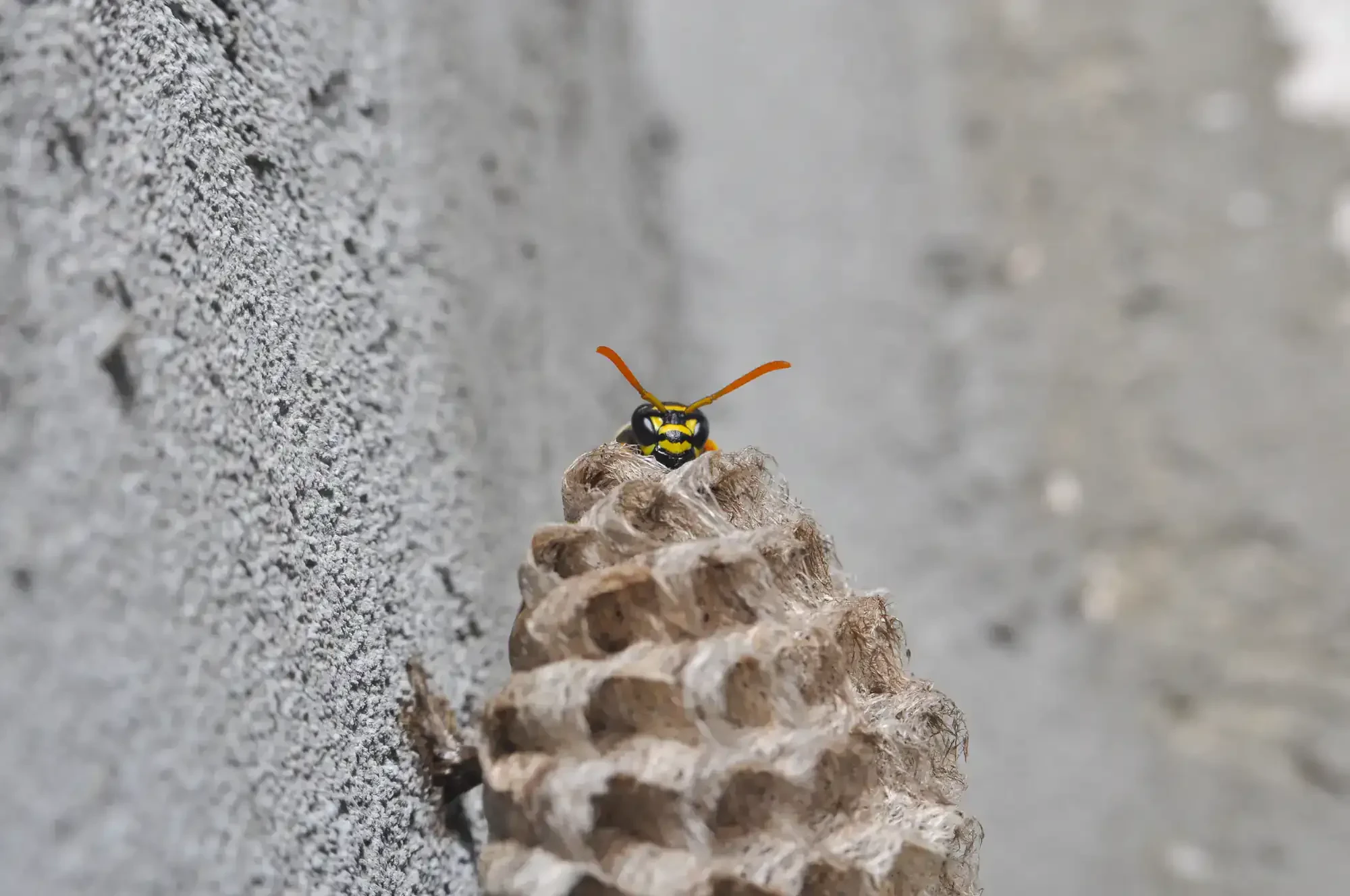
It starts with a proper assessment. Before any treatment happens, your technician identifies the species, locates the nest or entry points, and evaluates the scope of the infestation. This matters more than most people realize — a bald-faced hornet nest in a tree requires a completely different approach than a European hornet colony that’s established itself inside a wall void of your farmhouse or outbuilding. Treating the wrong scenario the wrong way doesn’t fix the problem. It makes it worse.
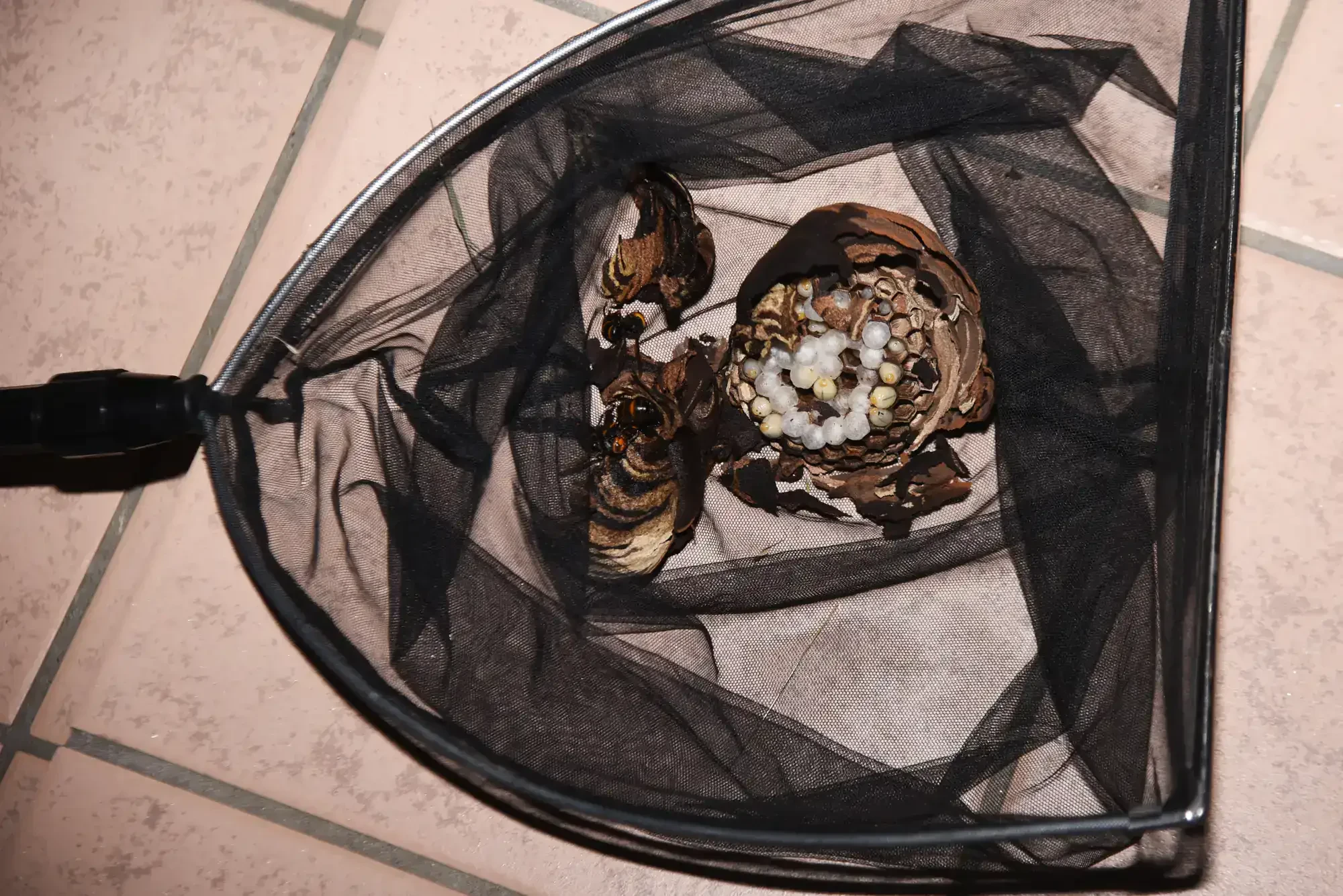
Once the nest is located and the species confirmed, we apply treatment with the right method for that specific situation. Aerial nests get treated directly. Wall void infestations — common in older rural structures throughout Barry County — require specialized dust application to penetrate the cavity and eliminate the colony without tearing into your walls. Our technicians are trained and equipped for both. No part-time seasonal workers, no guesswork, no shortcuts.
After treatment, you’ll know what to expect: how long before activity slows, what normal post-treatment behavior looks like, and whether a follow-up visit is warranted. Every service comes with flat-rate, upfront pricing — no surprise charges when the invoice arrives. And if something isn’t right, we come back. That’s not a promotional promise. It’s just how we operate.
Ready to get started?
Professional hornet removal in Russellville means more than spraying a nest and leaving. We handle the full range of stinging insect scenarios that Barry County properties present — bald-faced hornet nests in mature hardwoods, European hornet colonies in wall voids and hollow trees, and ground-nesting yellow jackets hiding in overgrown areas or near old stumps on rural acreage. Each situation gets treated based on what it actually is, not a one-size-fits-all approach.
We hold IPM training certification through MDARD, which means treatment is targeted to the specific pest and applied in the least invasive way that gets the job done. For Russellville homeowners with kids, dogs, or livestock on the property — and plenty of Barry County properties have all three — that approach matters. You’re not getting a blanket chemical application across your yard. You’re getting a precise treatment for a specific problem.
Seniors, veterans, and first responders in the Russellville area can ask about available discounts when scheduling. We also offer price matching for reasonable competitor quotes, so if you’ve already called around, bring that number to the conversation. Pricing is flat-rate and disclosed upfront. No contracts, no hidden fees, no pressure. Just a licensed professional who shows up, handles the problem, and stands behind the result.
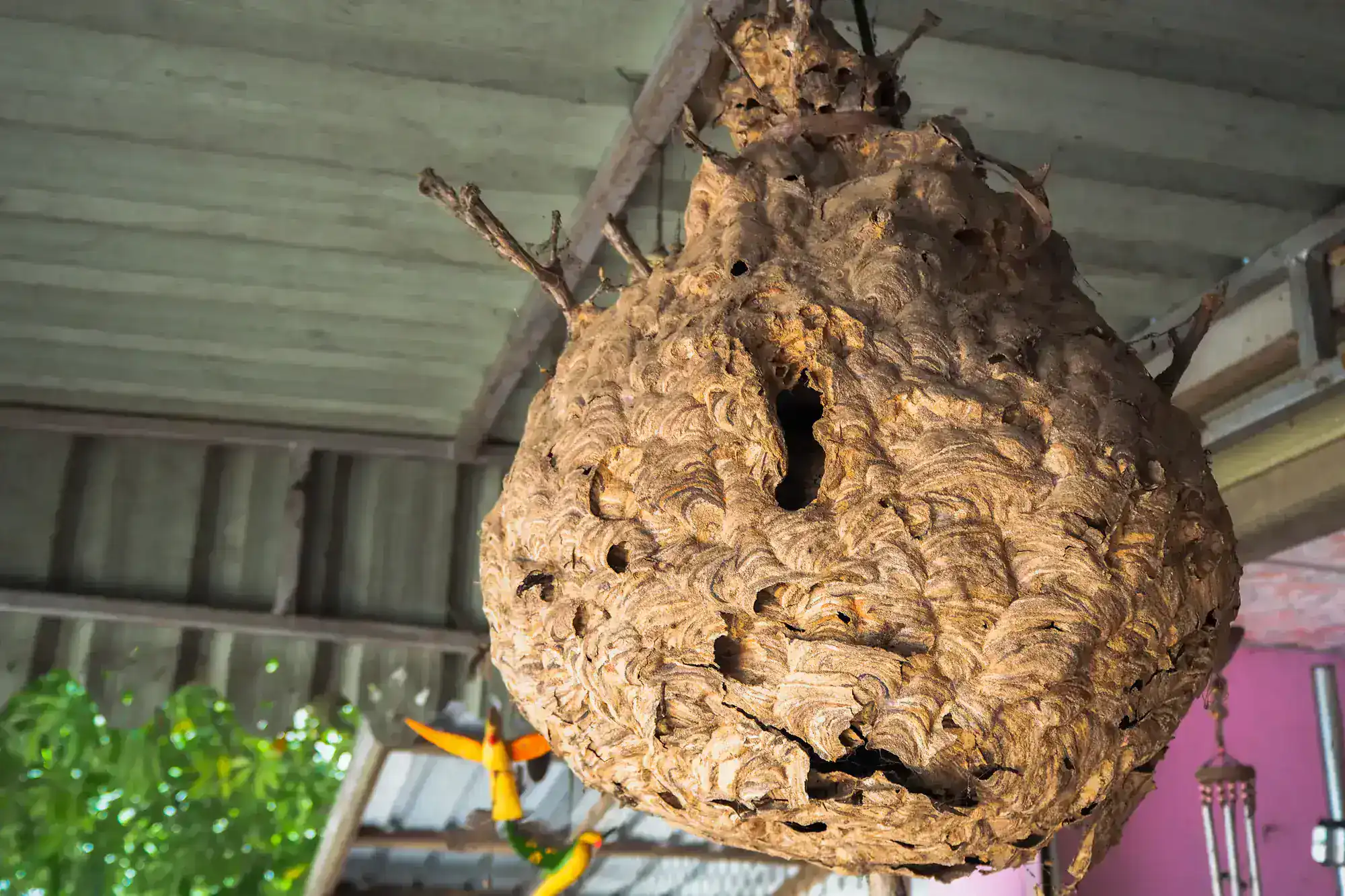
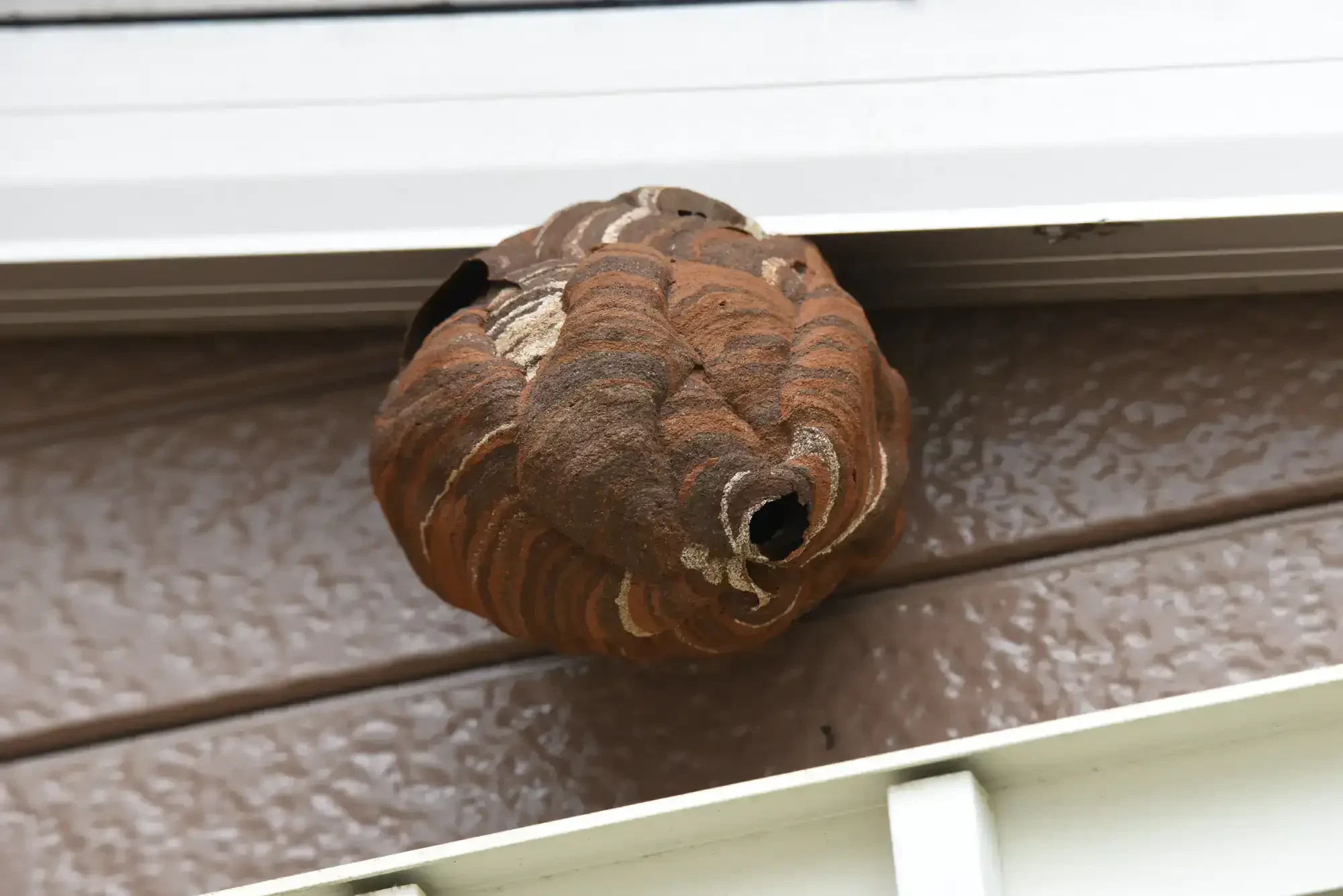
The most common stinging insect you’ll encounter on a Russellville-area property is the bald-faced hornet. Despite the name, it’s technically a yellow jacket — but it behaves like a hornet in every way that matters. It builds large, gray, paper-like aerial nests in trees, on eaves, and under overhangs. Colonies can reach 400 or more workers by late summer, and they’re aggressive defenders of the nest perimeter. On Barry County properties with mature hardwoods and wooded lot lines, these nests can grow to basketball size before a homeowner even notices them.
The European hornet is the only true hornet species in North America, and it’s also present in Michigan. It’s larger than most stinging insects, active at night, and prefers to nest inside wall voids, hollow trees, and building cavities — which makes it particularly common in older rural structures like the farmhouses and outbuildings found throughout Barry County and Russellville. If you’re hearing buzzing inside a wall or noticing large insects entering through a gap in your siding after dark, a European hornet colony is a likely explanation.
For most homeowners, the honest answer is no — and the risk goes up significantly on rural properties. A bald-faced hornet colony at peak late-summer population can mobilize hundreds of workers in seconds when the nest is disturbed. Unlike honey bees, hornets can sting repeatedly without losing their stinger, and they will pursue a perceived threat well beyond the nest site. On a rural Russellville lot where you might be 30 feet up a ladder or working near an outbuilding with limited escape routes, that’s a serious physical danger.
The other issue is that DIY aerosol sprays — the kind you buy at a hardware store — are designed for small, accessible nests in the open. They don’t work on wall void infestations, which require dust application to penetrate the cavity. Spraying the entry point of a wall void nest without eliminating the colony often traps hornets inside, which can push them further into the structure or cause them to chew through interior walls. If you’ve already tried a DIY approach and the problem persists, call a licensed professional before it compounds further.
Spring is the ideal window — April through early May — when a newly established nest is small, the colony is minimal, and removal is faster, safer, and less expensive. In southwest Michigan, Barry County’s proximity to Lake Michigan means slightly warmer spring temperatures compared to counties further inland, which translates to hornet queens emerging from hibernation a bit earlier than in other parts of the state. That means the active season in Russellville can start sooner than homeowners might expect.
By August, a colony that could have been handled in an hour in May may now require more involved treatment, more protective measures, and a higher cost. Professional hornet removal nationally averages $300–$700, with bald-faced hornet removal averaging around $625 due to the elevated nest locations typical of this species. A spring removal often comes in well below that range. If you’ve spotted a developing nest on your property — even a small one — the best time to call is before the colony reaches full size, not after.
There are a few reliable signs. The most obvious is hearing a faint buzzing or crackling sound inside a wall, especially in warmer parts of the day when the colony is most active. You might also notice hornets entering and exiting through a small gap in your siding, soffit, or eave — often a crack no wider than a finger. On older rural structures common throughout Barry County, these entry points are easy to miss because the exterior may already have gaps from age or weathering.
Another sign is finding dead or disoriented hornets inside your home, particularly near windows or light fixtures on the interior wall adjacent to where you suspect the nest is located. This happens when the colony expands and individual hornets find their way through insulation or drywall gaps into the living space. Do not attempt to seal the entry point yourself before treatment — trapping an active colony inside a wall can force them deeper into the structure or cause them to chew through to the interior. A licensed technician needs to treat the void first, then seal the entry point once the colony is eliminated.
The original colony won’t return — hornet workers die off each fall, and the nest itself is not reused. But that doesn’t mean the location is permanently safe. Fertilized queens from a destroyed colony, or new queens from neighboring colonies, may scout the same site the following spring because it previously offered favorable nesting conditions: shelter from wind, proximity to food sources, structural gaps that provide easy access. On Russellville properties with older eaves, barn structures, or mature trees, those conditions don’t change just because one nest was removed.
The best way to prevent re-establishment is to address the conditions that made the site attractive in the first place — sealing structural gaps, trimming branches that overhang rooflines, and scheduling a follow-up inspection in early spring before new queens have a chance to establish. Our technicians can walk through your property and identify high-risk areas after treatment, so you’re not just solving this season’s problem and hoping for the best next year.
Yes. We offer discounts for seniors, veterans, and first responders. Barry County has a strong tradition of military service and community involvement, and for a family-owned business that has been operating in Michigan for 20 years, extending those discounts isn’t a policy decision — it’s a straightforward reflection of who we serve and how we operate. If you or someone in your household qualifies, just mention it when you call to schedule.
Beyond the discount itself, our pricing structure is flat-rate and disclosed upfront before any work begins. There are no hidden charges, no add-ons that appear on the invoice after the fact, and no binding contracts. If you’ve received a quote from another licensed hornet exterminator serving the Russellville area, we’ll match a reasonable competitor rate. The goal is to make the decision easy — not to create friction around cost when you’re already dealing with a stinging insect problem that needs to be handled.
Useful Links