
Hear from Our Customers
You moved to Waterstone for the lakes, the trails, the golf, and the kind of outdoor life that’s actually worth living. A hornet nest near your dock, your deck, or your walking path doesn’t just create a hazard — it shuts down the whole reason you’re here. When that nest is gone, your yard is yours again. Your kids can play outside. Your guests can sit on the patio. You stop planning your day around avoiding one corner of your property.
Waterstone’s environment — wooded lake edges, mature landscaping, 600 acres of open space — is exactly the kind of setting where hornet colonies establish and grow fast. Bald-faced hornets especially love the tree lines bordering Stoney Lake and North Mirror Lake, and by late summer a single colony can hold hundreds of workers that will defend their nest aggressively. That’s not a job for a hardware-store spray can.
The newer homes throughout Golf Highlands, The Bluffs, and West Lake also create real nesting opportunities that most homeowners don’t think about — deep eaves, decorative soffits, wall voids behind exterior cladding. A professional inspection finds what you can’t see. A licensed treatment eliminates it completely, not temporarily.
We’ve been serving southeast Michigan since May 31, 2005 — the same era when many of Waterstone’s newer sub-communities were still being built in Oxford Township. That’s two decades of field experience in this region, earned job by job, not handed over by a franchise.
Roger, who leads our company, brings 26 years of hands-on pest control experience to every service call. We hold Michigan Pesticide Application Business License #250081, an Integrated Pest Management certification recognized by MDARD, and have earned awards from both Angie’s List and HomeAdvisor. These aren’t decorations — they’re the result of doing the work correctly for a long time.
One thing that sets us apart in a real, practical way: you get the same technician every visit. Not a rotating crew. Not a seasonal hire. Someone who knows your Waterstone property, knows the pest pressure patterns in your neighborhood, and shows up prepared. That consistency matters when you’re dealing with a stinging insect problem on a property you’ve invested in.
It starts with a thorough inspection. Hornets in Waterstone don’t always nest where you can see them. Our technician checks the obvious spots — eaves, soffits, tree branches — but also the less obvious ones: wall voids, attic spaces, garage door frames, and the wooded edges of your property near the lake or trail line. Knowing where the colony actually is determines how it gets treated.
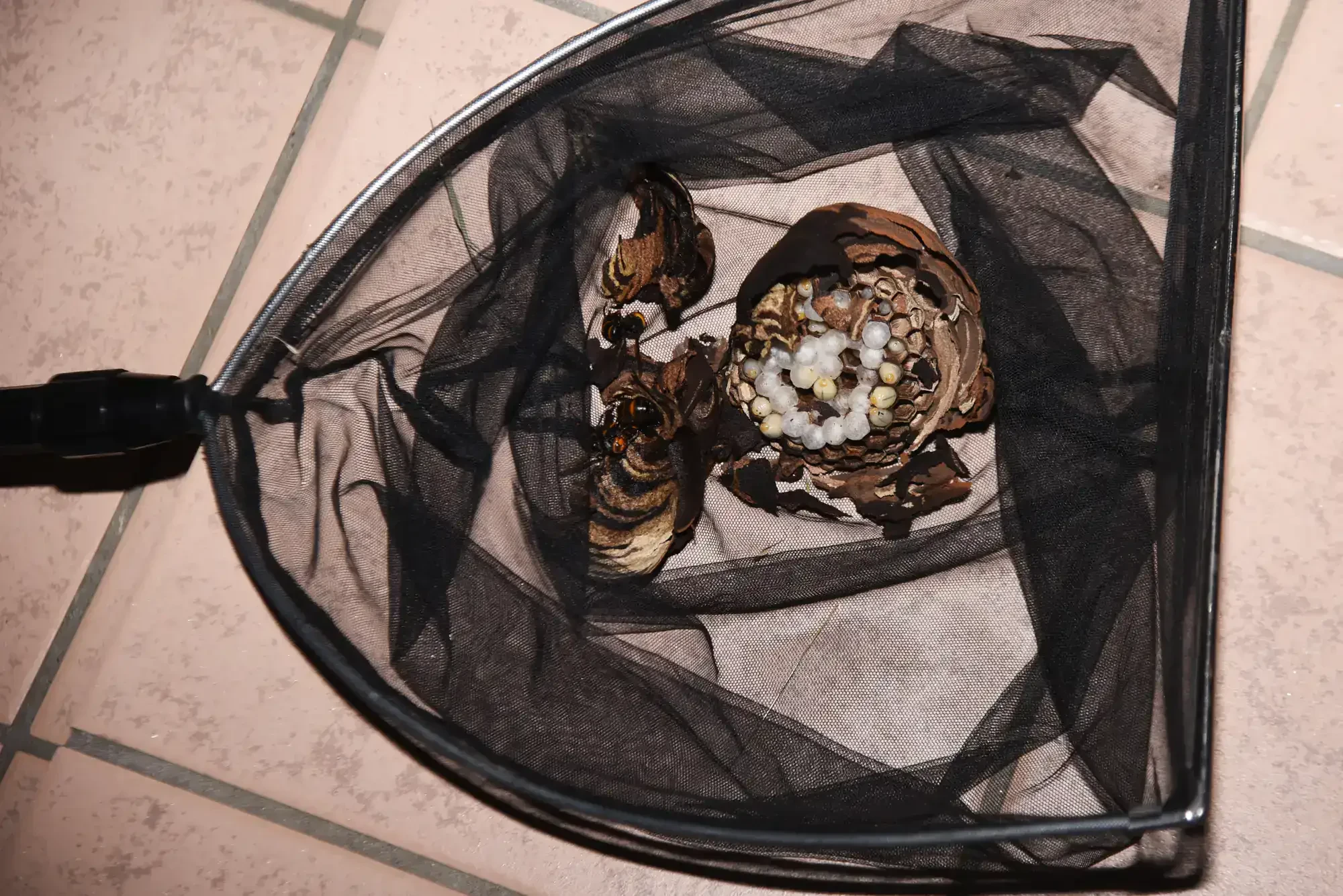
Once the nest is located and the species is confirmed, we apply treatment using professional-grade materials appropriate for that specific situation. A nest in an open tree gets handled differently than one inside a wall void or tucked under a second-story eave. Michigan hornet colonies hit peak population in late summer — right when Waterstone residents are using their outdoor spaces most — which means timing matters. Waiting rarely makes it easier or safer.
After treatment, your technician walks you through what was done, what to watch for, and whether a follow-up visit makes sense based on the size and location of the colony. There’s no vague handoff. You’ll know exactly what happened and what to expect next. Flat-rate pricing means what you were quoted is what you pay — nothing added on after the fact.
Ready to get started?
This isn’t a spray-and-leave situation. Hornet removal in Waterstone involves a licensed technician — not a part-time hire — who inspects your full property, identifies the nest location and species, and applies the right treatment for that specific scenario. We hold Michigan Pesticide Application Business License #250081, which means every treatment is legally authorized and performed to MDARD standards. That matters, and it’s worth verifying before you hire anyone.
Our IPM certification means treatments are targeted and appropriate — not a blanket chemical application across your yard. For Waterstone families with children using the trails, pets on the walking paths, or residents at Independence Village with elevated sensitivity to stings, that distinction is genuinely important. You’re not trading a hornet problem for a pesticide concern.
We also serve commercial properties throughout the Oxford area, so if you manage a property or business along the M-24 corridor, the same licensed team handles that too. Senior residents at Independence Village qualify for a discount, as do veterans and first responders — a straightforward acknowledgment of the community that’s supported us for 20 years. If you’ve received a quote from another Oakland County pest control company, we’ll match it if it’s reasonable. No pressure, no games — just a fair shot at earning your business.
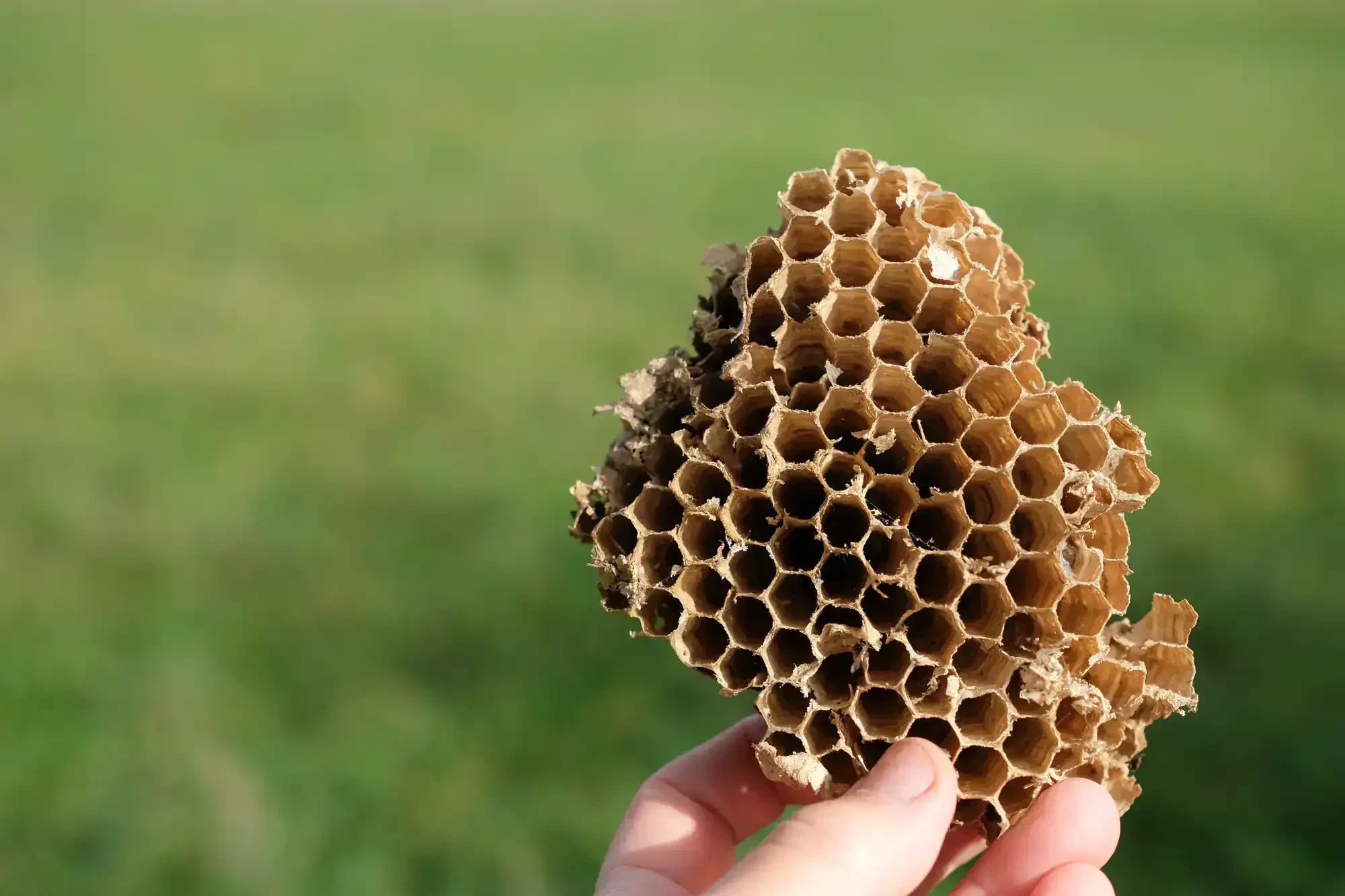
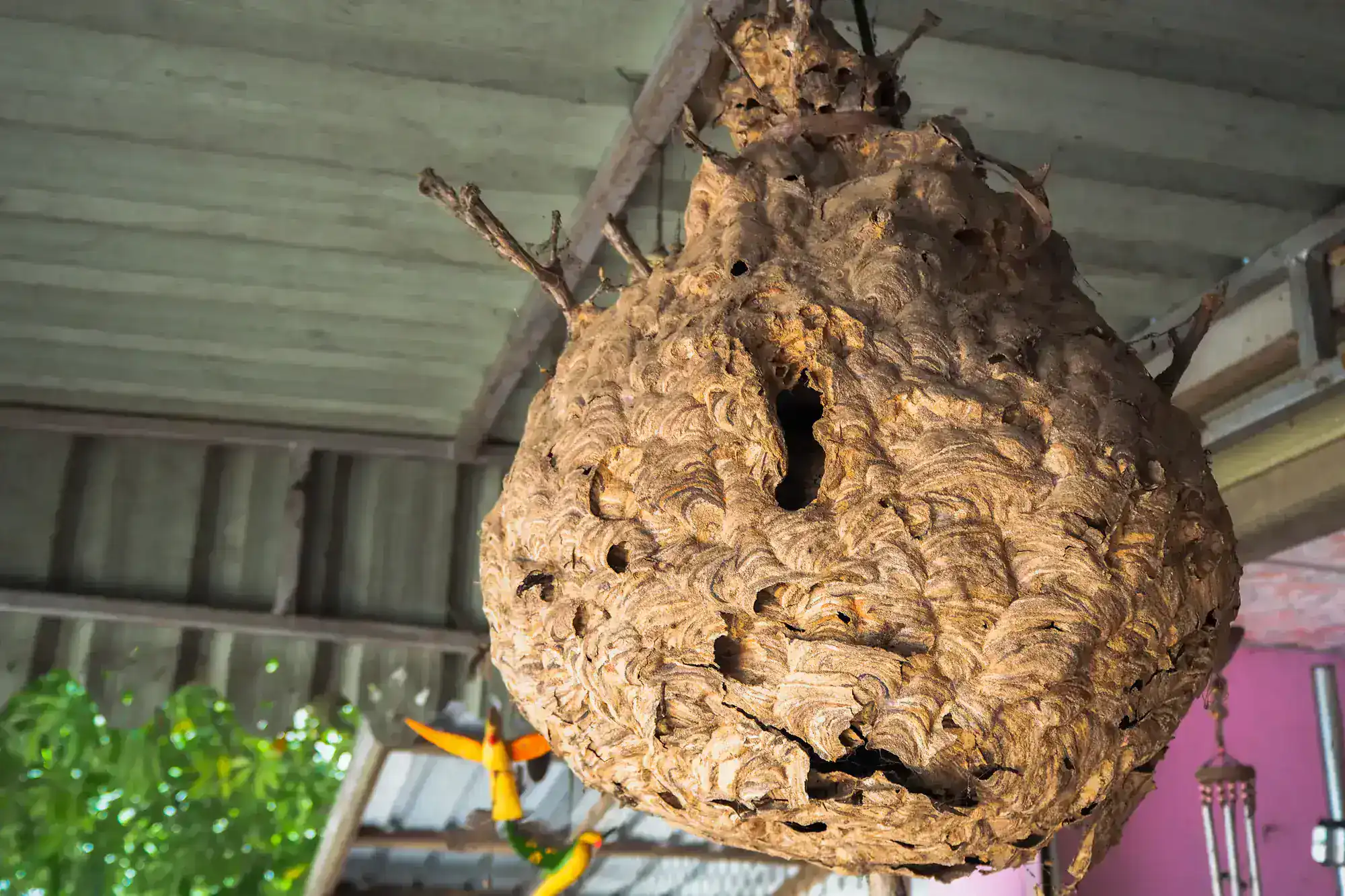
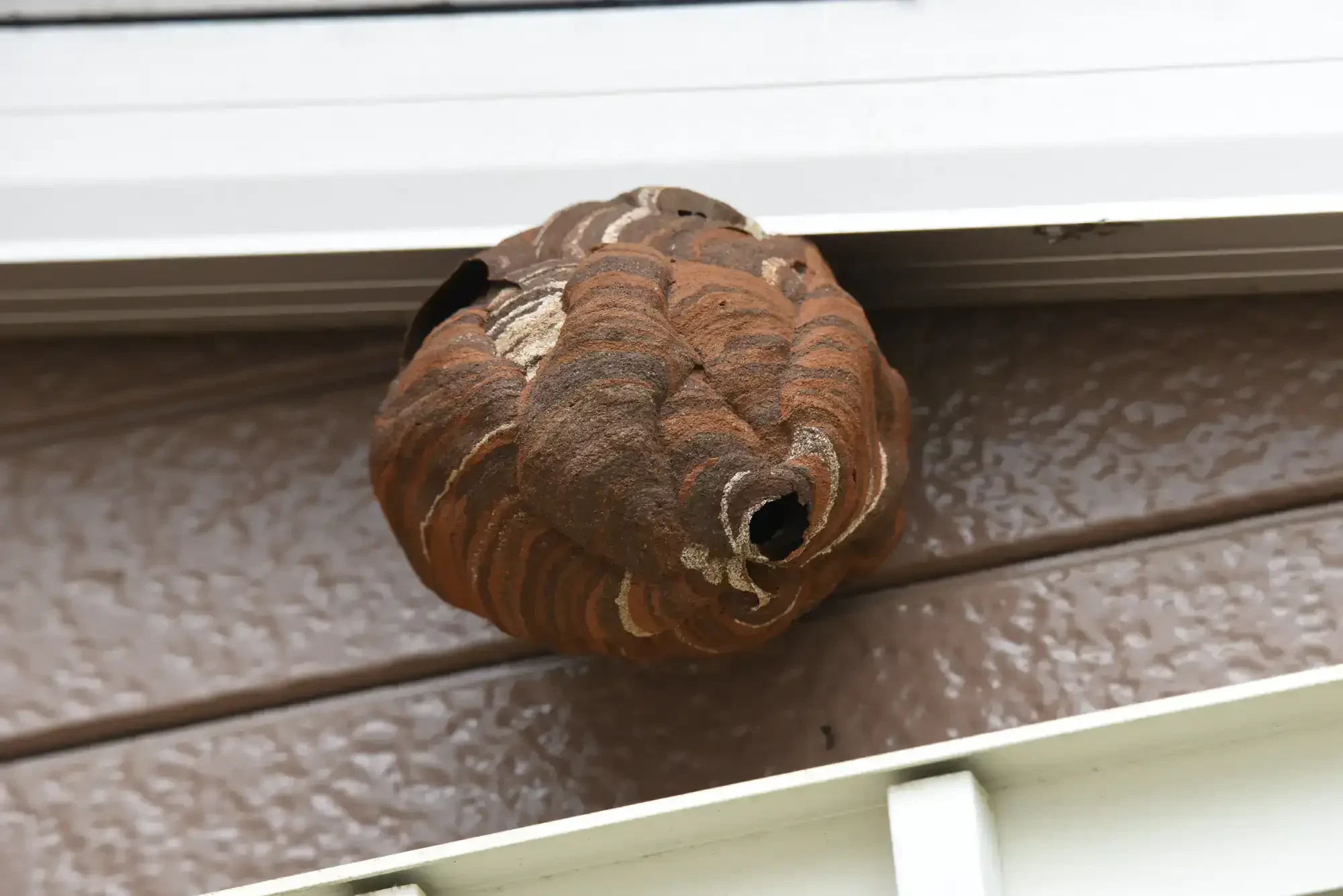
The most common stinging insect you’ll encounter in Waterstone is the bald-faced hornet — black body, bold white markings, large enclosed paper nest usually found in trees, shrubs, or under eaves. They’re considered the most aggressive stinging insect in Michigan, ranking above yellow jackets and paper wasps when it comes to defensive behavior. A colony at peak late-summer population can hold several hundred workers, all capable of stinging multiple times.
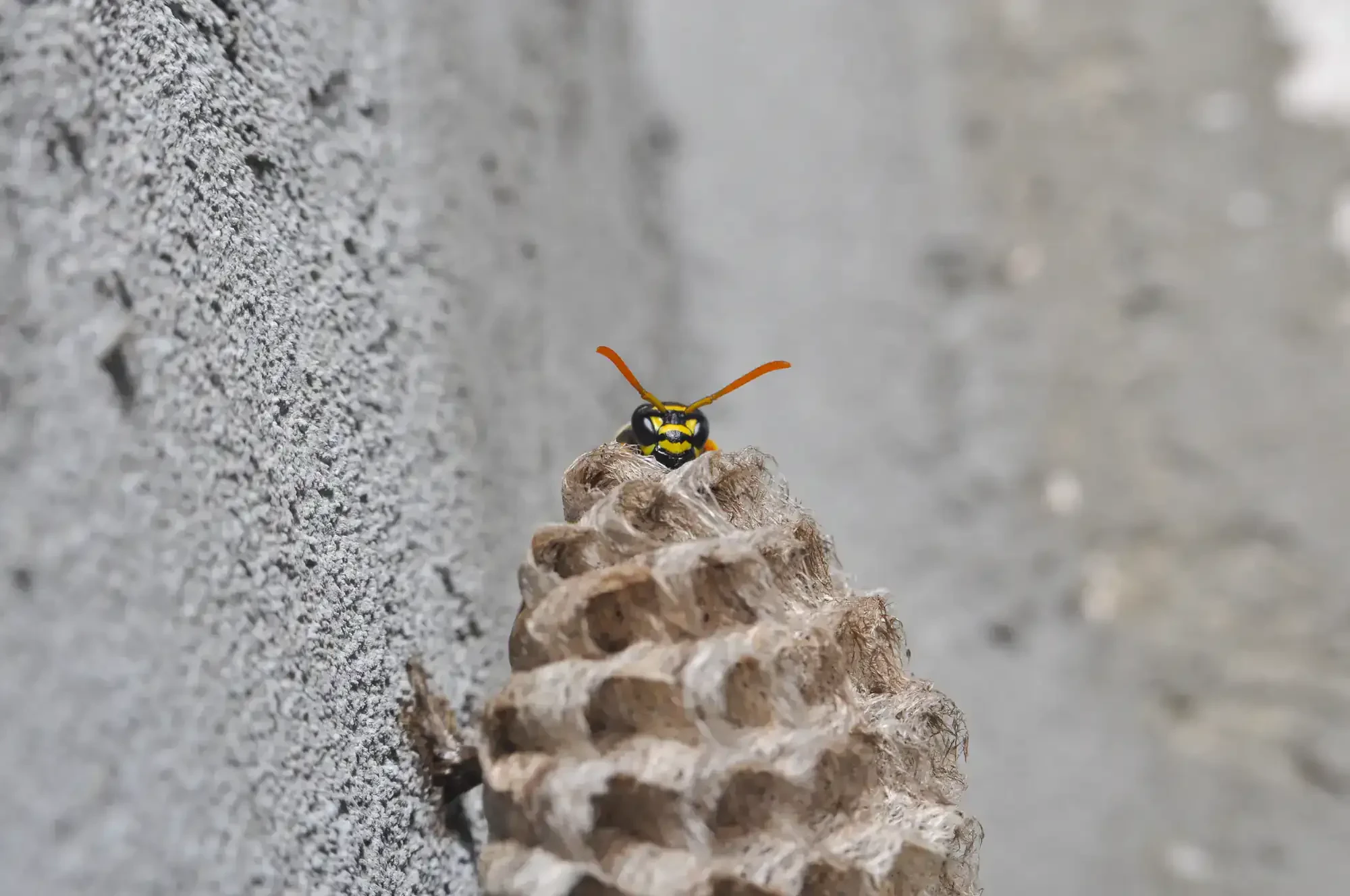
European hornets are also present in northern Oakland County, and yellow jackets — which technically aren’t hornets but behave similarly — are common near the golf course fairways in Waterstone, where ground disturbance from mowing and maintenance can drive them toward adjacent residential structures. If you’re seeing large, fast-moving insects near your eaves or finding a papery, enclosed nest in your tree line, you’re likely dealing with bald-faced hornets. Any of these species become more aggressive as summer progresses, which is why late August and September calls tend to be more urgent than early-season ones.
The honest answer is that DIY hornet removal works sometimes — and goes badly other times. A small, early-season nest that’s easy to access and away from foot traffic is a different situation than a mature late-summer colony inside a wall void or under the eave of a two-story home. The risk scales with the size of the colony, the location of the nest, and how defensive the insects are at that point in the season.
In Waterstone specifically, a lot of the homes in Golf Highlands, The Bluffs, and similar sub-communities have architectural features — deep eaves, complex rooflines, finished attic spaces — that make nest access difficult and treatment angles awkward. Hardware-store sprays work on direct contact but often don’t reach the full colony, which means you’ve agitated the nest without eliminating it. A licensed technician uses professional-grade materials, knows the right application method for the nest type, and has the protective equipment to do it safely. If the nest is in a hard-to-reach spot, inside a wall, or larger than a softball, call a professional.
Hornet colonies in Michigan start building in spring when the queen emerges and begins establishing a nest. Through June and July the colony grows steadily, but it’s late summer — August and September — when populations peak and behavior becomes most aggressive. That’s also exactly when Waterstone residents are using their outdoor spaces most: docks, patios, trail walks, beach access, evening entertaining. The timing collision between peak hornet aggression and peak outdoor activity is what makes late-summer calls the most urgent.
By early fall, colonies begin to decline naturally as temperatures drop, but they don’t disappear overnight. Workers remain active and defensive until the first hard frost. The nest itself doesn’t go dormant — it just eventually empties. One thing worth knowing: an old nest from a prior season won’t be reused by a new colony the following year, but the same location can attract a new queen looking for a sheltered spot to start fresh. If you had a nest removed from your eaves or attic last year, it’s worth having that area inspected again in spring.
Lakefront and near-lakefront properties in Waterstone — along Stoney Lake, North Mirror Lake, West Lake, and the other named lakes throughout the development — tend to have more hornet pressure than standard suburban lots. The wooded shoreline vegetation, dense shrub lines, and mature tree canopies along the water create ideal nesting habitat for bald-faced hornets in particular. Nests often establish in the tree line between a homeowner’s yard and the lake edge, which puts them close to docks, outdoor seating areas, and high-traffic zones.
The inspection process for these properties covers more ground than a standard suburban call. Our technician checks the tree canopy along the shoreline, the vegetation bordering the property, any dock structures or lakeside storage, and the home’s exterior. Treatment near water requires careful product selection — our IPM certification means treatments are chosen based on what’s appropriate for the specific environment, not just what’s fastest. If you’re dealing with a nest near your dock or in the trees overlooking your lake access, this isn’t a job where a generic spray approach is the right call.
Hornet removal pricing in the Oakland County area varies based on a few factors: the size of the colony, the location of the nest, and how accessible it is. A visible nest in a tree or shrub is a straightforward job. A nest inside a wall void, in an attic space, or under a second-story eave takes more time and more specialized treatment, which affects the cost.
We use flat-rate, upfront pricing — you’ll know what you’re paying before our technician starts. There are no add-ons after the fact and no invoice surprises. If you’ve already received a quote from another pest control company serving the Oxford or Oakland County area, we’ll match it if it’s reasonable. Senior residents at Independence Village, veterans, and first responders also qualify for a discount. The best way to get an accurate number for your specific situation is to call and describe what you’re seeing — nest location, approximate size, how long it’s been there — and we’ll give you a straight answer.
Yes — we actively serve Waterstone and the broader Oxford Township area in northern Oakland County. We’ve been operating throughout southeast Michigan since 2005, and our technicians have direct field experience with the specific residential environments Waterstone presents: newer construction with complex rooflines, wooded lake-edge properties, golf course–adjacent lots, and the range of property types across sub-communities like Golf Highlands, The Bluffs, Lake Ridge, and West Lake.
Oxford Township falls under Michigan state pesticide licensing requirements, and we hold Michigan Pesticide Application Business License #250081 — confirming we’re fully authorized to perform professional hornet removal throughout the area. If you’re a senior resident at Independence Village, a veteran, or a first responder living anywhere in Waterstone, you qualify for a discount on service. We serve both residential homeowners and commercial properties, so whether you’re managing a home or a business along the M-24 corridor in Oxford, one call connects you to the same licensed, experienced team.
Useful Links