
Hear from Our Customers
You moved to Andersonville for the outdoor life — the wooded lot, the lake access, the backyard that doesn’t look like every other subdivision in Oakland County. A wasp nest doesn’t just sting you. It takes all of that away. The deck becomes off-limits. The dock feels risky. The kids can’t play in the yard without you watching every step. That’s not a minor inconvenience — that’s the whole reason you live here, gone for the season.
When a yellow jacket nest gets treated properly — not just sprayed and left — you get your property back. Not just the visible spaces, but the wooded edges, the outbuilding, the area under the deck where a ground nest can sit undetected until someone steps too close. In Andersonville, where larger wooded lots and older homes with structural gaps are common, that kind of thorough treatment matters more than it would on a quarter-acre suburban lot.
The difference between a real fix and a temporary one comes down to whether the colony was fully eliminated, whether the nest structure was removed, and whether the entry points were sealed. If any of those steps get skipped, you’re looking at the same problem — or a worse one — by the following season.
We’ve been serving Andersonville and the surrounding Oakland County communities since 2005. That’s two decades of showing up, doing the job right, and earning the next call through the work — not a contract. I’m Roger Chinault, the founder, and I bring 26 years of hands-on pest control experience to every service we do. This isn’t a franchise where a different tech shows up every time with a clipboard and a spray can. You get the same technician, year after year, who knows your property and what it needs.
Andersonville sits right in the middle of some of the most wasp-active landscape in Oakland County — wooded lots near the Shiawassee River headwaters, lake-adjacent properties, older homes with the kinds of structural gaps that yellow jackets find before you do. We’ve worked in communities exactly like this long enough to know what to look for and how to handle it. Angie’s List and HomeAdvisor have recognized us for consistent quality. No binding contracts, price matching on reasonable competitor rates, and discounts for seniors, veterans, and first responders.
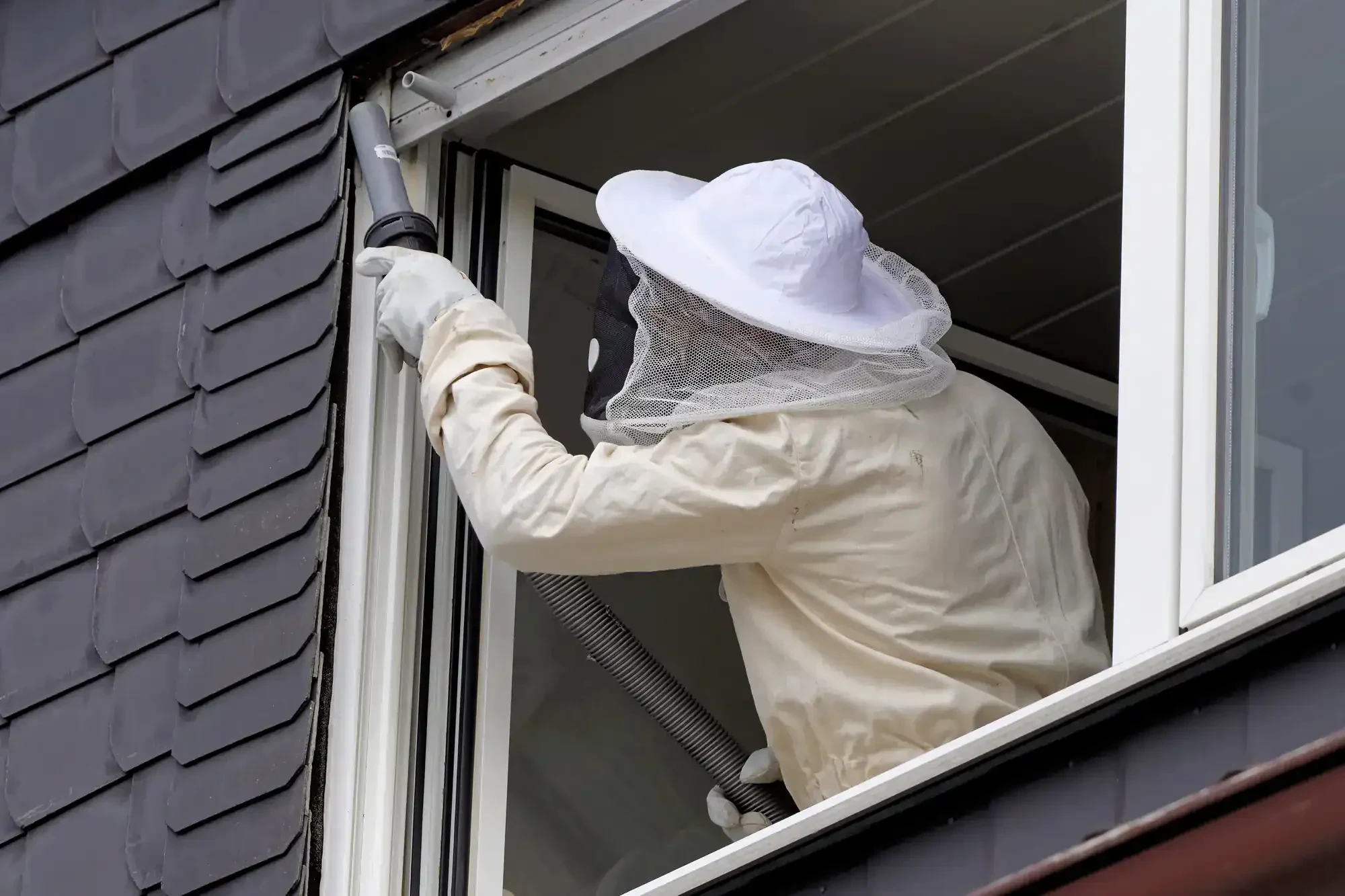
The first thing that happens is an inspection — not a glance at the visible nest, but a real look at your property. In Andersonville, that means checking structural voids in older siding, eave gaps, attic access points, ground-level openings around foundations, and wooded areas where yellow jackets establish ground nests that homeowners don’t find until a mower or a dog triggers a response. The inspection shapes the treatment. One approach doesn’t work for every nest, and a ground nest near the River Run Preserve treeline requires a different method than a paper wasp nest under a second-floor eave.
Once the nest location and species are confirmed, we apply treatment directly to the colony. For yellow jackets — the most aggressive and most common problem species in this area — that means getting the product into the nest structure itself, not just around the perimeter. After the colony is eliminated, we physically remove the nest and seal entry points to prevent re-colonization in the same spot next season.
Before we leave, you’ll get a clear answer on when it’s safe to go back outside — specific timing for children, pets, and anyone with a known allergy. That’s not something you should have to ask twice. You’ll know exactly what was done, what was found, and what to watch for going forward.
Ready to get started?
Our wasp nest removal covers the full job — not just the nest you can see. That means a property inspection that accounts for the specific conditions common to Andersonville and the surrounding area: older homes with aging fascia and siding gaps, detached garages and outbuildings, wooded lot edges where ground nests go unnoticed, and lake-adjacent outdoor living spaces where yellow jacket foraging peaks hard in August and September. If there’s more than one nest or more than one species present, we address it — not defer it to a second visit.
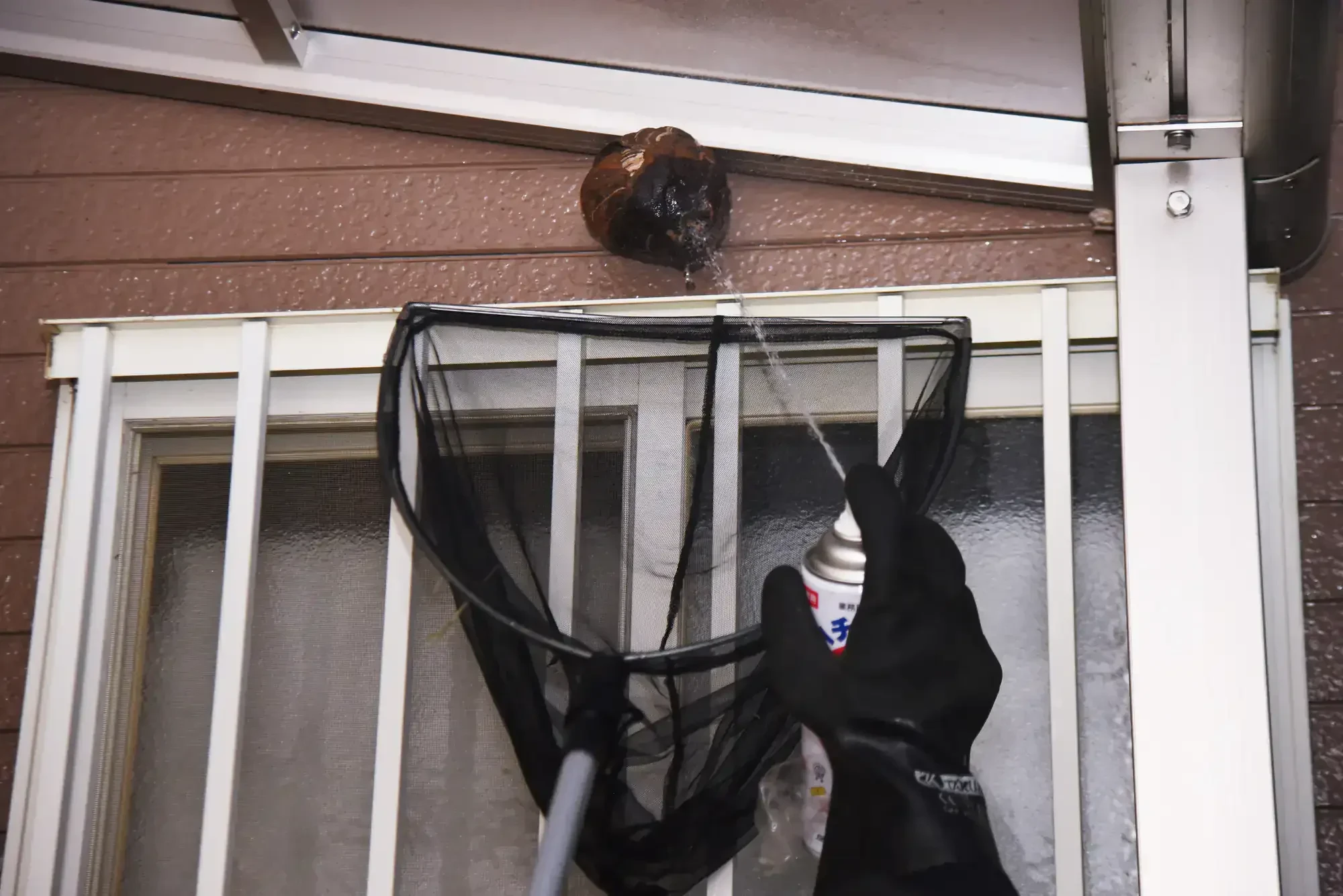
Treatment targets the colony directly, using methods appropriate to the nest type and location. Ground nests, aerial nests, and wall void nests each require a different approach, and our technician assigned to your property has the experience to make that call on-site. After elimination, we remove the nest structure and seal vulnerable entry points to reduce the chance of re-infestation in the same location.
We serve both residential homeowners and commercial property owners throughout Oakland County. If stinging insect activity returns after treatment, we come back to address it — that’s not a promotional line, it’s just how we back our work. No binding service contracts are required, and we match reasonable competitor rates so cost doesn’t become the reason you put off a job that genuinely needs to get done.
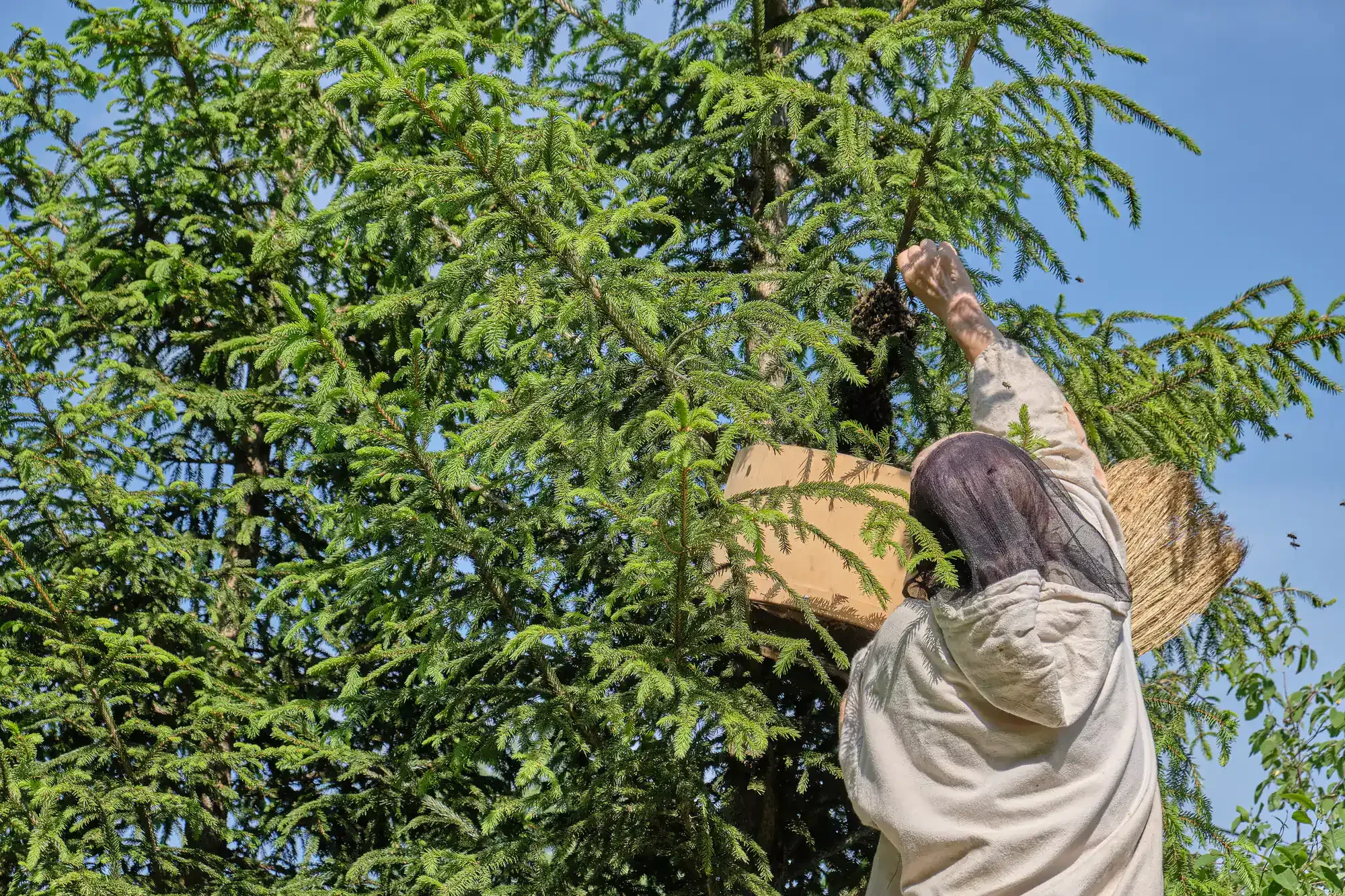
The species matters because it changes how the nest gets treated and how urgently you need to act. Yellow jackets are the most aggressive wasp species in Michigan and the most common problem in Andersonville-area properties. They nest underground, in wall voids, and in structural gaps — places you often don’t find until the colony is already large. If you’re seeing wasps flying in and out of a hole in the ground, a gap in your siding, or a crack near your foundation, yellow jackets are the most likely culprit.
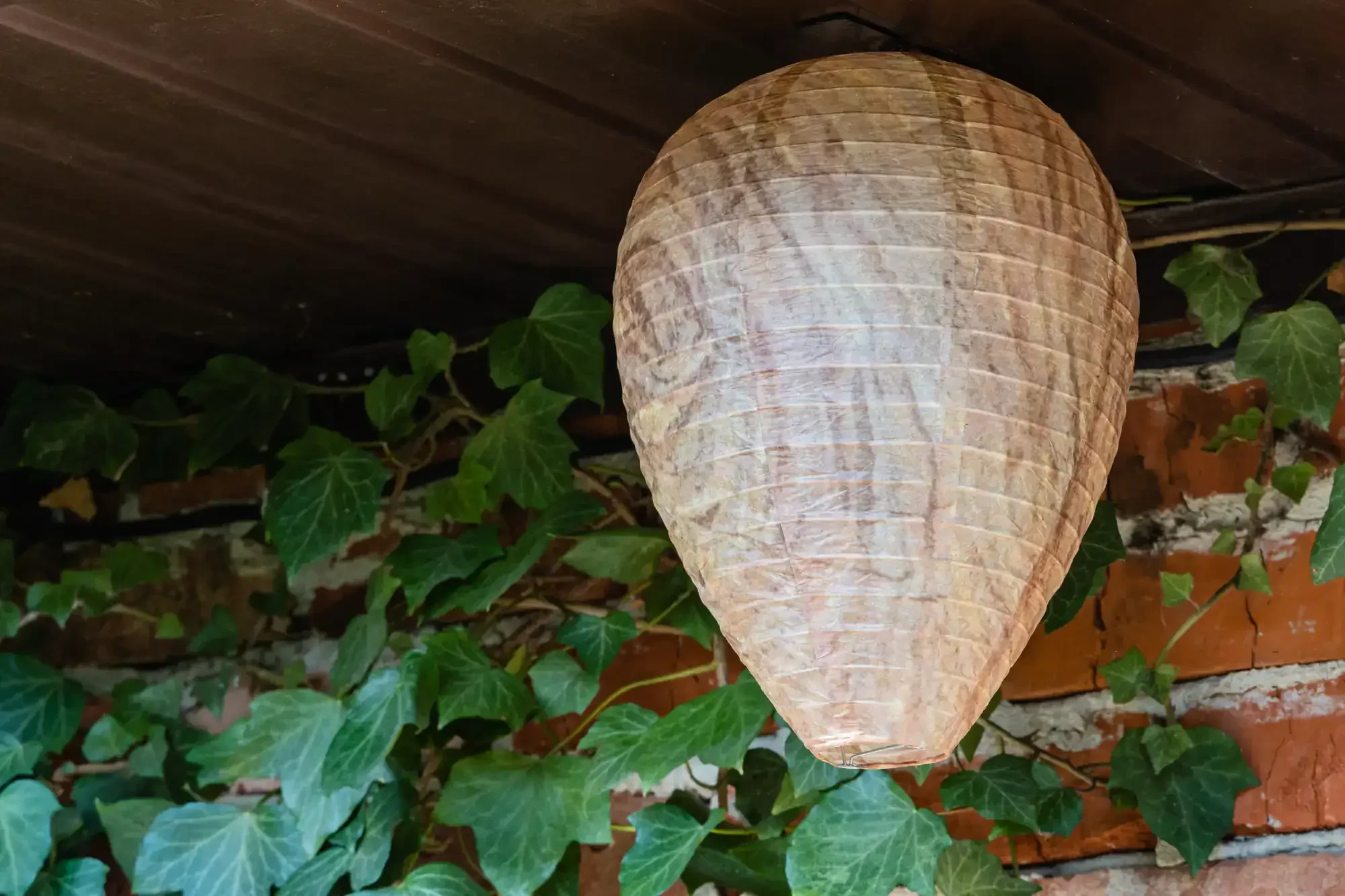
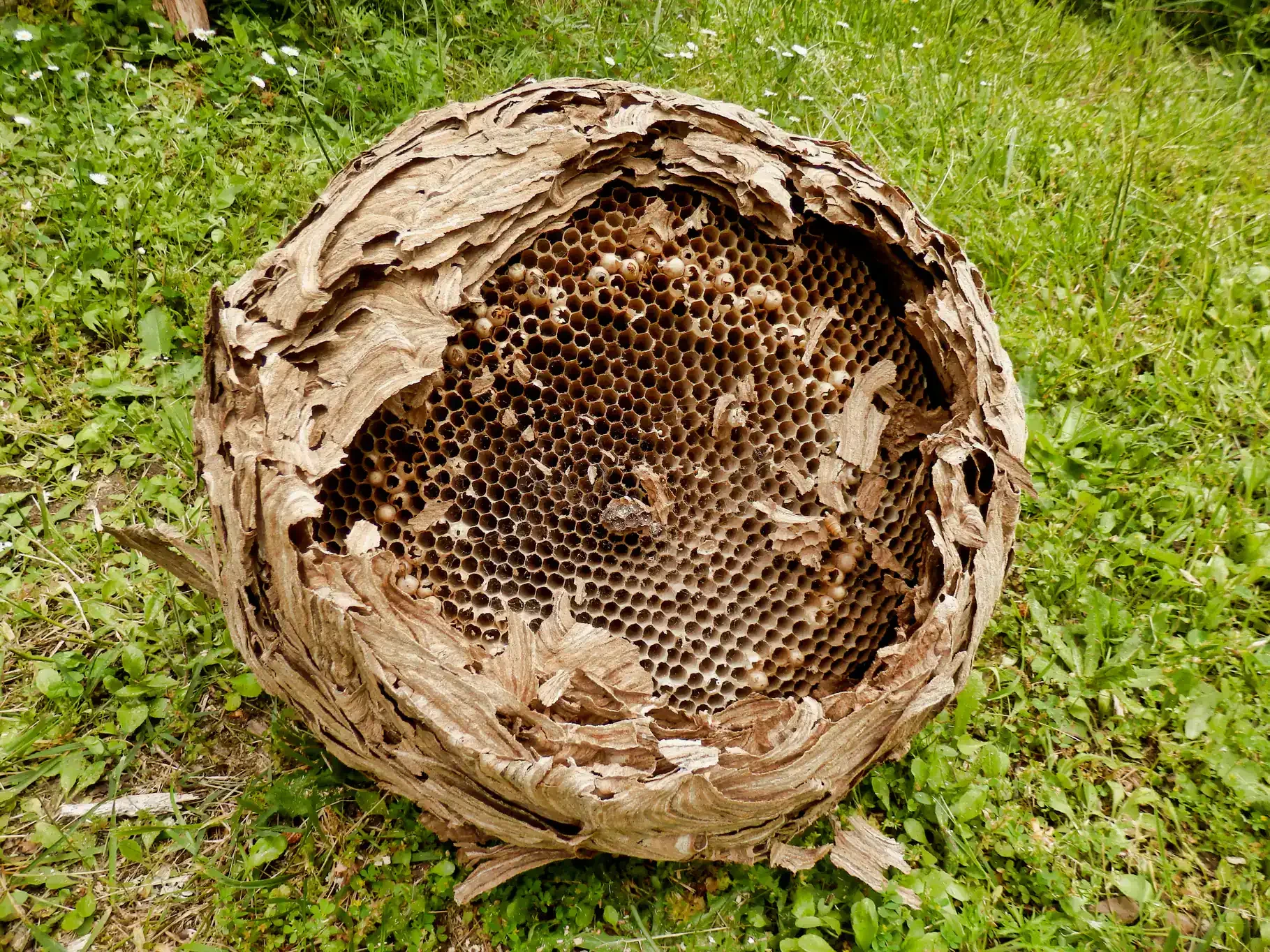
Paper wasps build the open, umbrella-shaped nests you typically see under eaves, on deck railings, or in sheltered corners. They’re less aggressive than yellow jackets but will sting if the nest is disturbed. Bald-faced hornets build the large, gray, enclosed paper nests often found in trees or on the sides of structures — they’re highly defensive and should not be approached. A professional inspection will confirm the species and location before any treatment begins, which is the only reliable way to make sure the right method gets used.
Most homeowners who call us have already tried a DIY approach — usually a can of hardware-store spray — and watched the wasps rebuild or become more aggressive afterward. The reason that happens is straightforward: over-the-counter products agitate the colony without eliminating the queen. Workers defend the nest, the queen continues laying, and within days you’re back to a full, now-hostile colony in the same location.
For yellow jacket ground nests specifically — which are common on the larger, wooded lots throughout Andersonville — a failed DIY attempt can be genuinely dangerous. Yellow jackets release alarm pheromones when threatened, which triggers a coordinated defensive response from thousands of workers simultaneously. If the nest is near a frequently-used area of your yard, near a door, or in a location where children or pets could disturb it, the risk of a bad outcome from a failed attempt is real. Professional treatment gets the product into the nest structure itself, eliminates the colony at the source, and removes the nest so the location doesn’t get reused.
The honest answer is that you should call as soon as you find a nest — but if you’re asking when the risk is highest, it’s August and September. That’s when yellow jacket colonies in Michigan reach their peak population, anywhere from 5,000 to 15,000 workers depending on the colony. At the same time, their natural food sources start to decline, which pushes foraging workers toward sugary foods — your outdoor dining area, your garbage cans, your dock cooler. That combination of a massive colony and aggressive foraging behavior is what makes late summer the most dangerous period.
In Andersonville, the wooded landscape and proximity to natural areas like the River Run Preserve means queen wasps have abundant overwintering habitat nearby, which contributes to strong colony establishment every spring. By June and July, nests are visible and growing. By August, they’re at full strength. Calling in June or July — before the colony peaks — makes the removal faster, safer, and typically less complicated than waiting until September when the colony is at maximum size and maximum aggression.
Cost varies based on the species, nest location, and how accessible the nest is. For a standard aerial wasp or paper wasp nest in a reachable location, professional removal typically runs in the $375–$525 range nationally. Yellow jacket removal tends to cost more — often up to $725 — because ground nests and wall void nests require more labor, more product, and a more involved process to fully eliminate the colony rather than just treat the surface.
For Andersonville-area properties, the variables that most commonly affect price are nest location (ground nests and wall void nests are more complex than visible aerial nests), property size, and whether there are multiple nests present. We match reasonable competitor rates, so if you’ve received another quote from a licensed provider in Oakland County, it’s worth asking about price matching before you book. The more important cost to think about is the one you don’t see — a failed DIY attempt, a rebuilt colony, or a sting incident that sends someone to the emergency room. Getting it done right the first time is the cheaper outcome.
If the job is done correctly, the colony won’t come back to the same nest. Yellow jacket colonies don’t reuse old nests — once a colony is eliminated and the nest is removed, that specific structure won’t be re-occupied. The real question is whether a new queen will establish a new colony in the same location the following spring, which is a separate issue from re-infestation of the treated nest.
That’s why entry point sealing matters. On older homes throughout Andersonville — the kind with aging fascia boards, gaps in siding, or foundation cracks — the same structural vulnerabilities that allowed the first colony to establish will attract the next queen if they’re left open. We seal those entry points as part of the removal process, which significantly reduces the likelihood of the same spot becoming a problem again next season. If activity does return after treatment, we come back to address it. You’re not left managing the follow-up on your own.
Yes — we offer discounts for seniors, veterans, and first responders. Andersonville has a meaningful population of residents who fall into those categories, and the discount is a straightforward acknowledgment of that. It’s applied at booking — just mention it when you call.
Beyond the discount programs, we also match reasonable competitor rates. Oakland County has no shortage of pest control options. If you’ve gotten a quote from another licensed provider and it’s lower, ask about price matching. The goal is to make sure cost isn’t the reason someone delays dealing with a nest that’s already a problem. A yellow jacket colony at peak season on a wooded Andersonville lot isn’t something that gets better with time — and the longer it’s left, the more complicated and expensive the removal tends to become.
Useful Links