
Hear from Our Customers
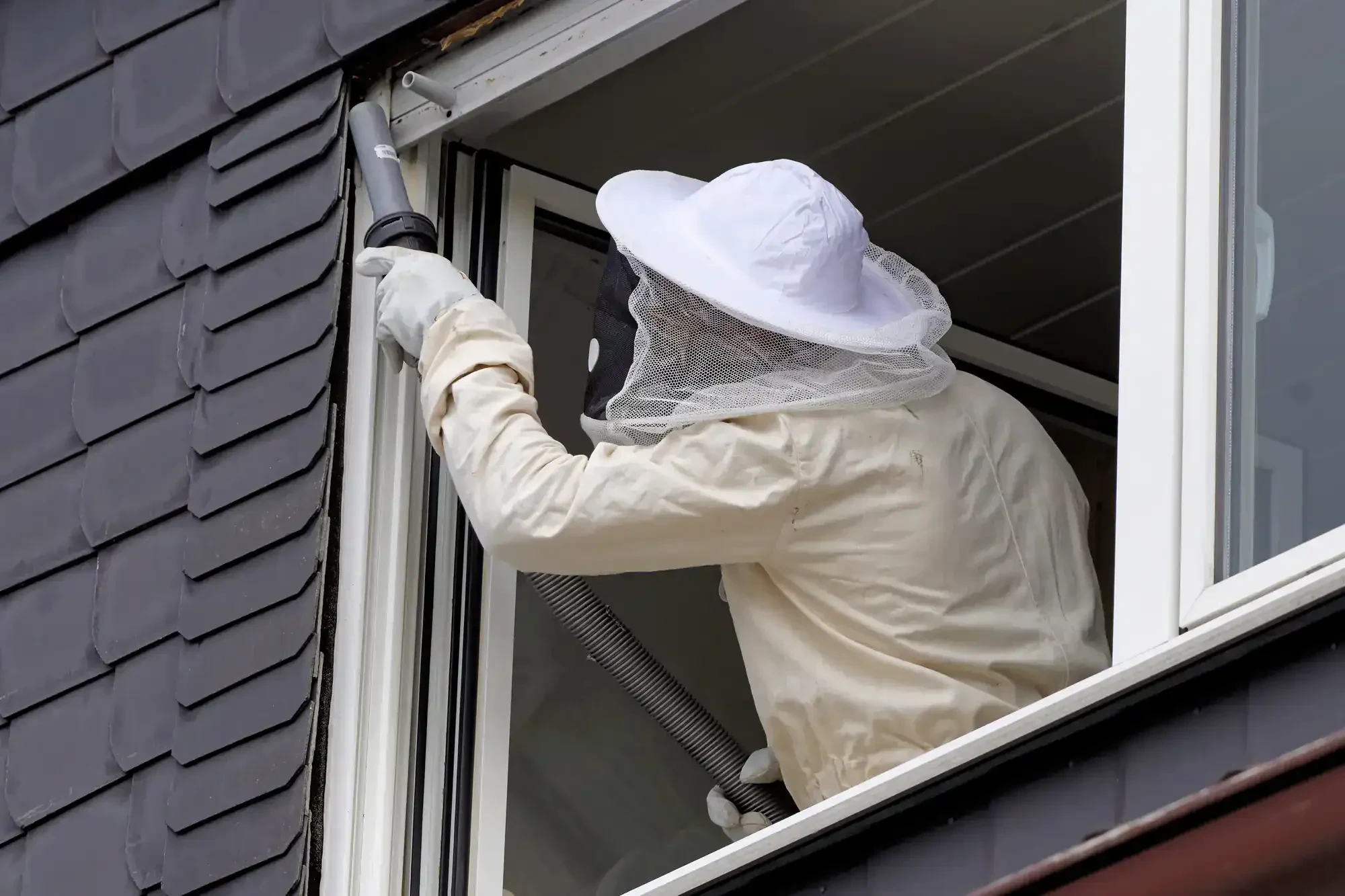
When you’re dealing with a wasp nest on a rural Taymouth Township property near Burt, the stakes are different than a typical suburban situation. You’ve got a dog running the back forty. Kids in a yard that doesn’t end at a fence line. A barn or detached garage you need to get into every single day. A nest in the wrong spot doesn’t just make you nervous — it shuts down part of how you use your property.
That’s the real cost people don’t talk about. It’s not just the sting risk. It’s the outbuilding you’ve been avoiding for two weeks, the corner of the yard you’ve been steering the mower around, the deck you stopped using in August when the wasps got bad. Once the colony is eliminated and the nest is removed, you get those spaces back — and you stop making your daily routine around a pest problem.
Rural properties in Burt also tend to see recurring pressure year after year. The farmland surrounding most homes in the 48417 area provides exactly the insect-heavy environment that sustains large wasp colonies through summer. Old ranch-style homes with aging soffits, open eave gaps, and wall voids give those colonies a place to establish. Professional removal — done right, with the full colony addressed — breaks that cycle instead of just delaying it.
We’ve been serving Michigan homeowners since May 31, 2005 — twenty years of Michigan summers, twenty August yellow jacket peaks, and twenty seasons of learning exactly what pest pressure looks like on properties like yours in Saginaw County and around Burt. This isn’t a franchise branch that opened a few years ago. We’re a family-owned company built around one standard: the same technician, the same property, year after year.
Roger Chinault founded First Choice Pest Control with 26 years of hands-on experience and a straightforward belief — that pest control works better when the person treating your property actually knows it. No rotating crews. No part-time seasonal hires. Career professionals who treat your Burt property like it’s the only one on our route.
We hold Angie’s List and HomeAdvisor awards, carry full MDARD licensing, and are trained in Integrated Pest Management — meaning treatments are targeted, not blanket. And there are no binding contracts. You stay because the service works.
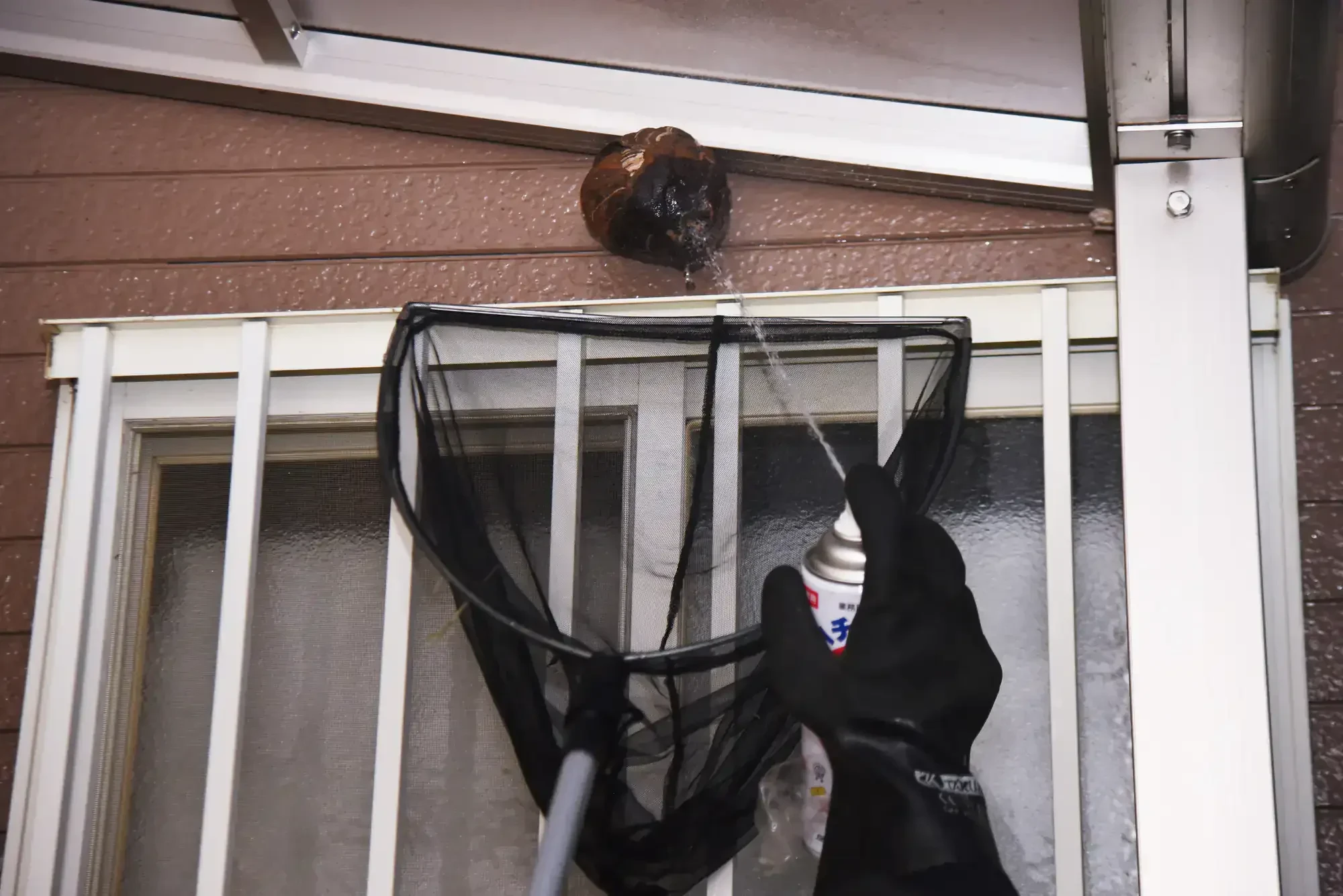
It starts with a call and a property walkthrough. When a technician arrives at your Burt home, we’re not just looking at the nest you already found — we’re checking the eaves, the outbuildings, the tree line, and the yard. Rural properties in Taymouth Township have more potential nesting sites than most, and a treatment that misses the secondary nest in the barn while handling the one under the deck is an incomplete job. The inspection covers the whole property.
Once the nesting sites are identified, the treatment is applied using professional-grade products that reach the full colony — not just the entrance. For ground nests, that means penetrating the underground chambers where the queen lives. For aerial nests in trees or under eaves, it means eliminating the colony before removing the physical nest structure. This matters because a nest left in place — even a dead one — can attract new activity the following spring, especially in older structures with open gaps and wall voids common in Burt’s housing stock.
After treatment, your technician will tell you exactly when it’s safe to re-enter treated areas, including outbuildings, and what to watch for in the following 24 to 48 hours. Michigan’s wasp season peaks in August and September, when colonies can reach thousands of workers. If you’re calling during that window, expect the colony to be at maximum size — and expect the treatment to account for that.
Ready to get started?
Wasp pest control on a Burt property covers more ground than a standard suburban service call — literally. The inspection includes the main structure, attached and detached garages, barns, sheds, and the surrounding yard. Ground nests along fence lines, in garden beds, and in undisturbed soil near compost areas are among the most commonly missed nesting sites on rural properties, and they’re also the most dangerous — invisible until someone walks over them while mowing or doing yard work.
The species matters too. Bald-faced hornets build large paper nests in trees and under eaves — aggressive defenders that will respond fast if the nest is disturbed. European hornets prefer wall voids, attics, and hollow trees, which are abundant in the older ranch-style homes and outbuildings throughout the 48417 area. Yellow jackets frequently push through deteriorated drywall or flooring when nesting inside wall voids. Each species requires a different approach, and a technician who’s been treating rural Michigan properties for years knows the difference before they ever open a product.
We also offer price matching for reasonable competitor rates, plus discounts for seniors, veterans, and first responders — because in a community like Burt, those aren’t marketing gestures. They’re the right thing to do. No contracts required, no pressure, and if wasps return after treatment, so does your technician.
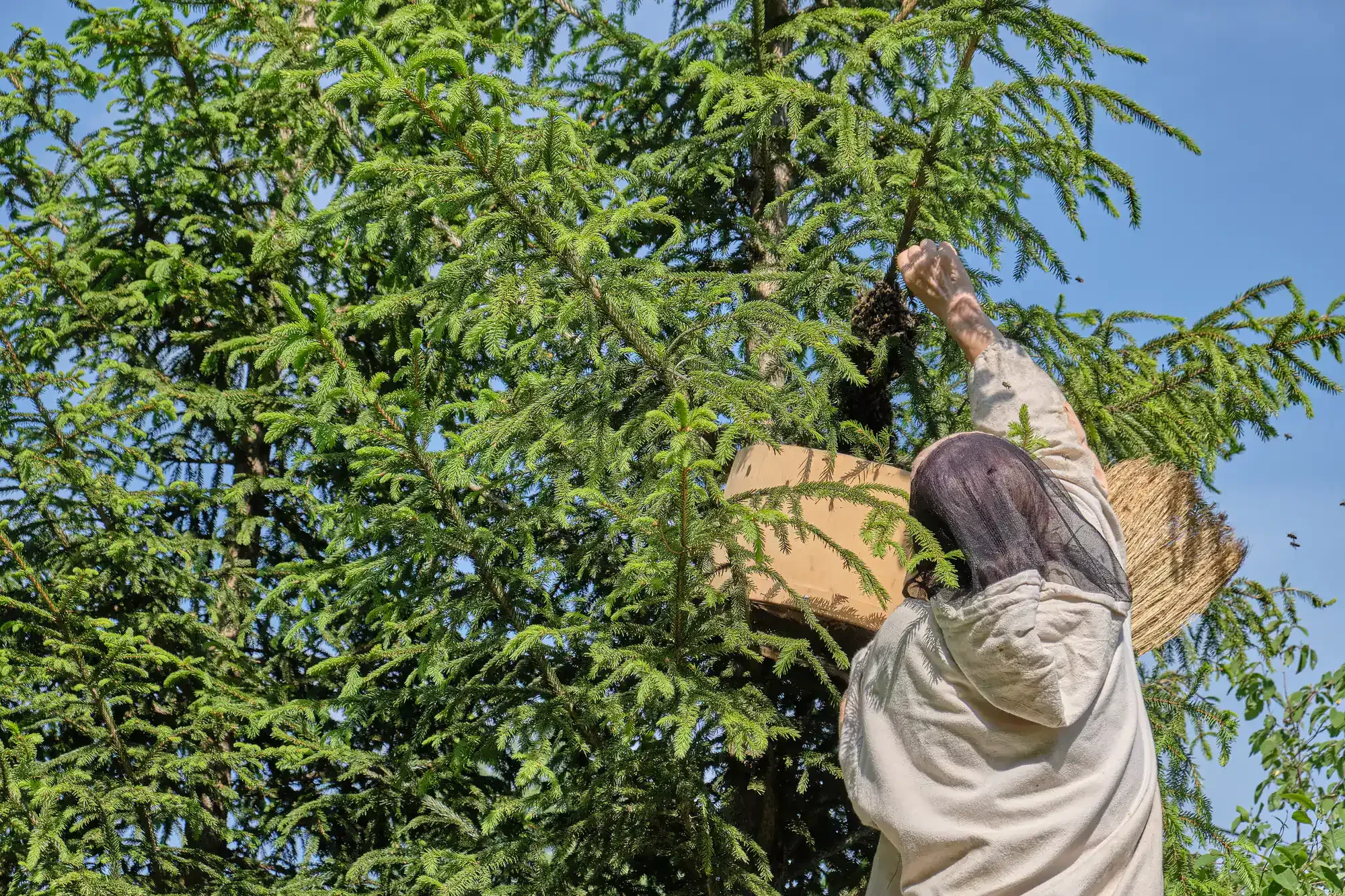
The short answer: if you’re asking, don’t approach it yet. Bald-faced hornets and yellow jackets are both capable of mounting a fast, aggressive defense when they sense a threat near the nest — and in a barn or outbuilding, you’re often working in a confined space with limited exits. A colony that’s been building since May can have several thousand workers by late summer, and disturbing the entrance without eliminating the colony is one of the most common reasons people end up with multiple stings before they can get clear.
The safest move is to note the location, keep people and pets away from that area, and call a professional. When we arrive at your Burt property, we’ll assess the nest, identify the species, and treat it using professional-grade products that reach the full colony — not just the surface. Once the colony is eliminated, the nest is removed and the entry points are addressed so the same location doesn’t get recolonized next spring. You’ll know exactly when the outbuilding is safe to use again before we leave your property.
Hardware-store aerosols are designed to knock down visible workers at the nest entrance. What they can’t do is penetrate the underground chambers of a yellow jacket ground nest, reach the queen in a wall void, or eliminate the full colony in a large aerial nest. If you sprayed and the activity slowed for a day or two and then came back, that’s exactly what happened — you disrupted the entrance without touching the colony core. The workers that survived simply resumed normal activity once the residual effect wore off.
This is one of the most common situations people describe when they call us. There’s no reason to feel embarrassed about it — those products are marketed as solutions, and for small, accessible nests in early season, they sometimes work. But by August in Saginaw County, when colonies are at peak size and the workers are at their most defensive, a can of spray is rarely enough. Professional treatment uses products and application methods that reach the full colony, which is the only way to actually solve the problem rather than delay it.
In Michigan, wasp colonies start small in spring — a queen emerges in April or May and begins building a nest that might have a few dozen workers by June. Most people don’t notice anything unusual at that stage. The problem becomes visible in July and gets serious in August and September, when colonies that started small have grown to thousands of workers. That’s the window when yellow jackets become noticeably aggressive, when you start seeing wasps around your deck, your trash, your garden — anywhere there’s food.
The good news is that worker wasps die off after the first hard frost, typically in late October in this part of Saginaw County near Burt. Nests are abandoned after that and are safe to remove without treatment. The catch is that wasps tend to return to the same favorable locations the following spring — especially on older rural properties with open eave gaps, deteriorated siding, and undisturbed soil areas that make ideal nesting spots. Removing the nest and sealing entry points after the season ends is a smart move if you want to reduce the chances of the same problem next year.
Yes — but the timing matters, and a good technician will give you specific guidance rather than a vague “give it a few hours.” The re-entry window depends on the product used, the location of the nest, and how the treatment was applied. For outdoor aerial nests or ground nests in open yard areas, treated zones are typically safe for people and pets within a few hours once the product has dried. For nests inside wall voids, attics, or enclosed outbuilding spaces, the timeline may be longer.
On rural properties in Burt — where dogs often roam large yards and kids have room to spread out — it’s especially important to know which specific areas are off-limits and for how long. Your technician will walk you through that before they leave. If you have a dog that needs to be let out, livestock that requires barn access, or a child who uses a particular part of the yard, say so at the start of the appointment. That information shapes how the treatment is applied and what the re-entry guidance looks like for your specific property.
It matters more than most people realize, because the species determines where the nest is, how large the colony gets, and how the treatment needs to be applied. Yellow jackets are the most common call we get in the 48417 area during late summer. They build ground nests in undisturbed soil — along fence lines, in garden beds, near compost areas — and they’re the ones most likely to be discovered by someone mowing or walking the property. They’re also the most aggressive defenders and the most likely to sting repeatedly.
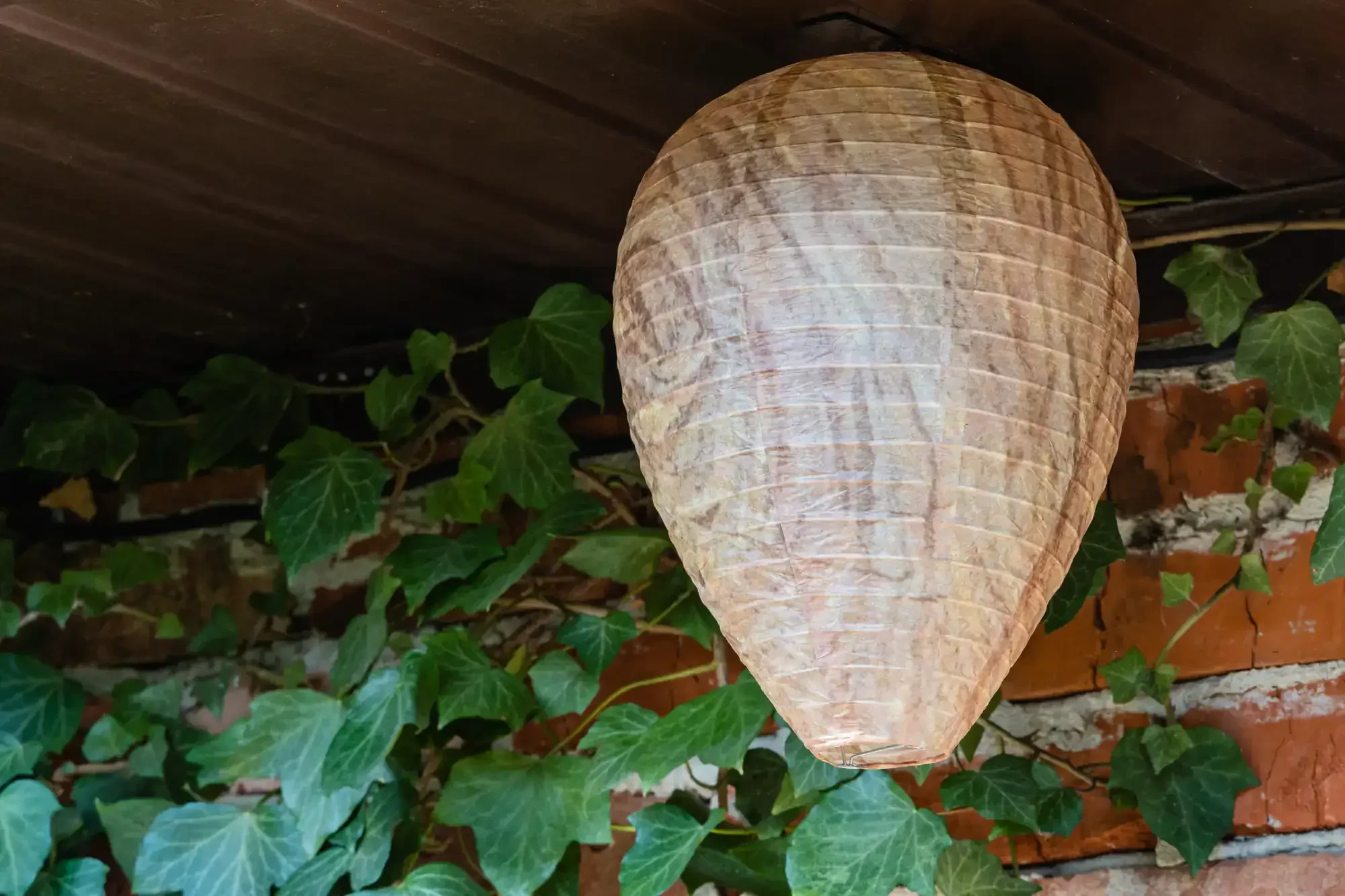
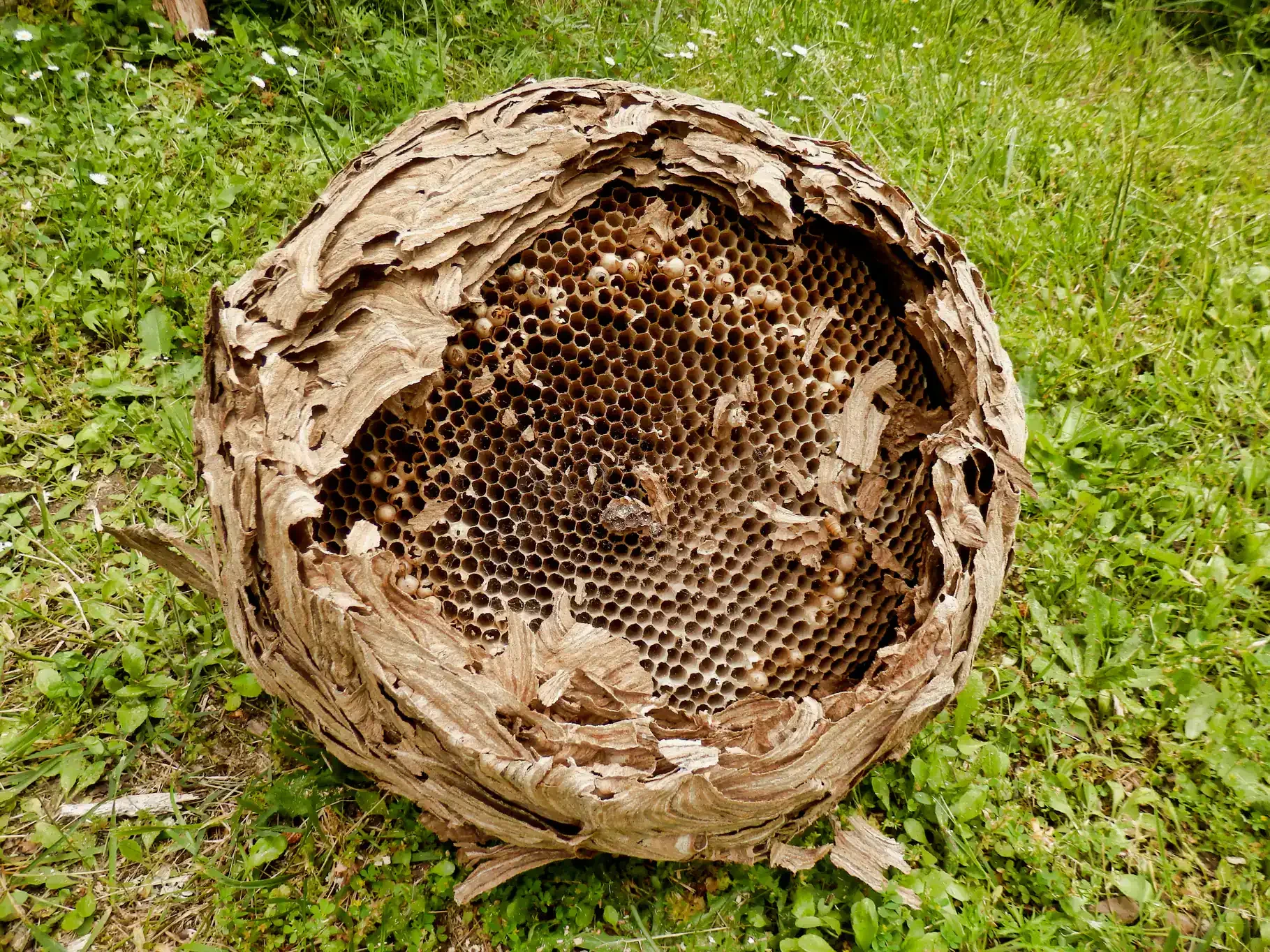
Bald-faced hornets build the large, gray, papery aerial nests you’ll see in trees, shrubs, and under eaves. They’re noticeably larger than yellow jackets and extremely defensive within about three feet of the nest. European hornets — Michigan’s only true hornet — prefer enclosed spaces like wall voids, attics, and hollow trees, which makes them harder to detect until the colony is well established. On older ranch-style homes and outbuildings throughout Taymouth Township, European hornets are a more common find than most homeowners expect. Each species requires a specific treatment approach, which is why identification comes before anything else.
Yes — we offer discounts for seniors, veterans, and first responders. Taymouth Township has a strong contingent of longtime homeowners, retired residents, and people who’ve spent their careers serving this community and this country. Offering a discount to those groups isn’t a checkbox — it’s a reflection of who we are and who we serve. If you or someone in your household qualifies, just mention it when you call and it’ll be applied to your service.
Beyond the discount, we also match reasonable competitor rates. So if you’ve gotten a quote from another provider serving the Burt area and you’re trying to decide, call us with that number. The goal isn’t to be the cheapest option — it’s to make sure price isn’t the reason you end up with a less experienced technician treating your property. Twenty years of serving Michigan homeowners, no binding contracts, and a callback guarantee if the problem returns — that’s what you’re getting when you book with us.
Useful Links