
Hear from Our Customers
Clio summers don’t last long. Between the Firemen’s Homecoming parade — a tradition this community has kept going every year since 1937 — and the concerts at the amphitheater off Mill Street, summer here is meant to be lived outside. A wasp nest changes that fast, especially when you’ve got kids, a dog, or elderly family members sharing that same space.
What most Clio homeowners don’t realize is how quickly a colony grows. A nest that looks small in June can hold thousands of workers by August. And because many residents are commuting south on M-54 toward Flint during the day, they’re not home to notice the early signs. By the time the nest is discovered, it’s usually already past the point where a hardware store spray is going to cut it.
Professional wasp nest removal means the colony is eliminated — not just disturbed. The nest is treated at the source, entry points are identified, and you get a clear answer on when it’s safe to go back outside. No guessing, no second trip to the store, no getting stung again while trying to finish the job yourself.
We founded First Choice Pest Control on May 31, 2005, and have been serving Genesee County homeowners for 20 years. Roger Chinault, our founder, has 26 years of hands-on pest control experience — and when you call, you’re getting that experience applied directly to your property, not handed off to a part-time tech hired for the season.
We’re based in Swartz Creek, about 15 miles south of Clio via M-54. That’s not a detail that changes much on paper, but it matters in practice. We know this county’s pest season, know what Michigan’s late-summer yellow jacket surge looks like in suburban neighborhoods like those surrounding the Clio Area School District, and have been treating properties in communities like yours for two decades.
We hold awards from Angie’s List and HomeAdvisor, are fully licensed through MDARD, and are trained in Integrated Pest Management — meaning treatment is targeted and deliberate, not a broad chemical application across your yard. No binding contracts, price matching on reasonable competitor rates, and discounts available for seniors, veterans, and first responders.
It starts with a call. You describe what you’re seeing — where the nest is, how long it’s been there, whether anyone’s been stung — and we’ll give you a straight answer on what’s involved. No vague estimates, no pressure to book a full-season package if that’s not what you need.
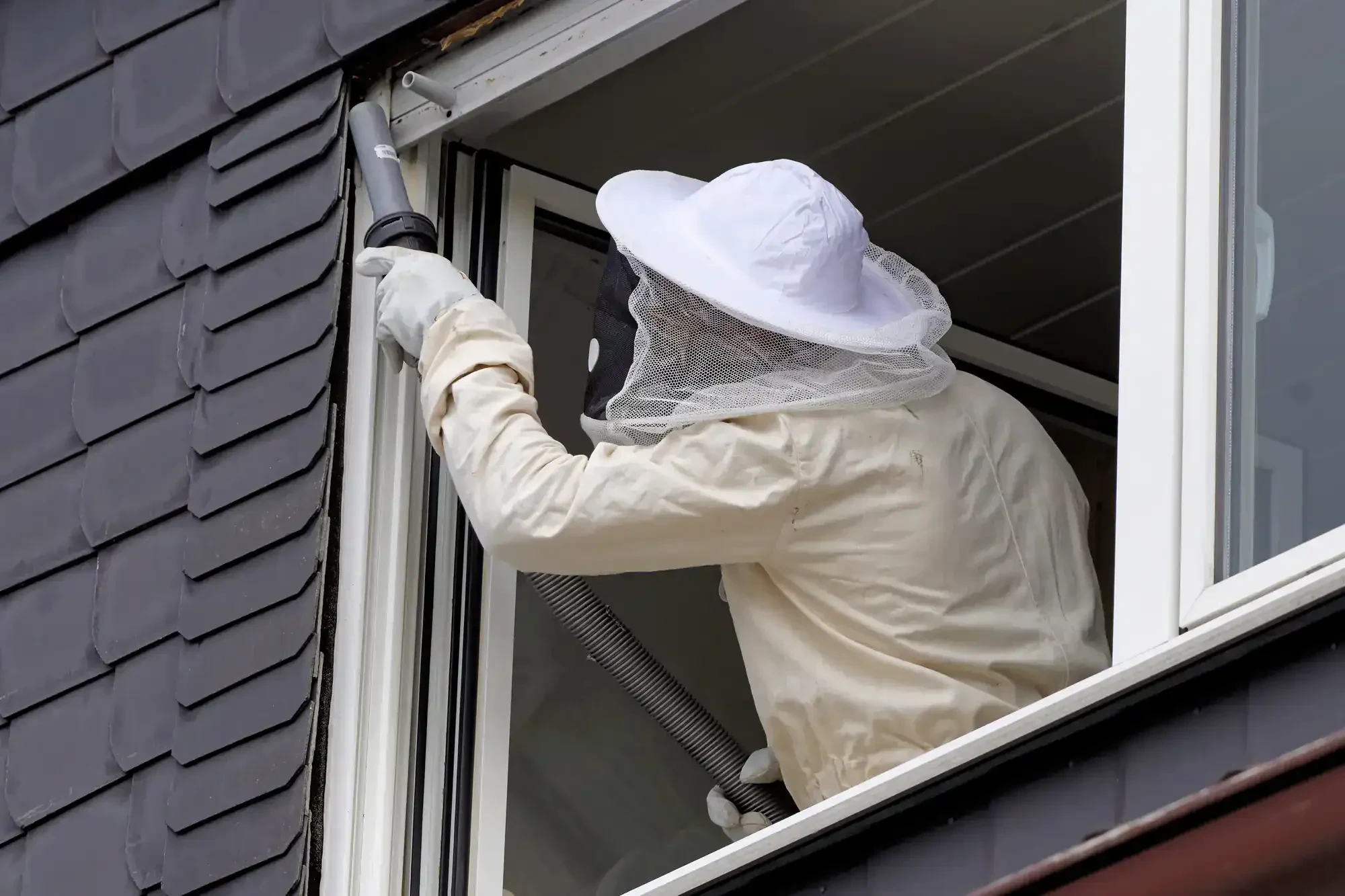
When our technician arrives, the first step is a thorough inspection of the nest site and the surrounding area. In Clio’s established housing stock — many homes with older wood siding, aging eaves, and mature landscaping — that inspection matters. German yellowjackets, which MSU Extension identifies as the most troublesome wasp pest in Michigan, often nest inside wall voids and attics rather than in visible paper nests. If the colony has moved into your structure, the treatment approach is different than an exposed nest under a deck rail, and that distinction gets made before anything is applied.
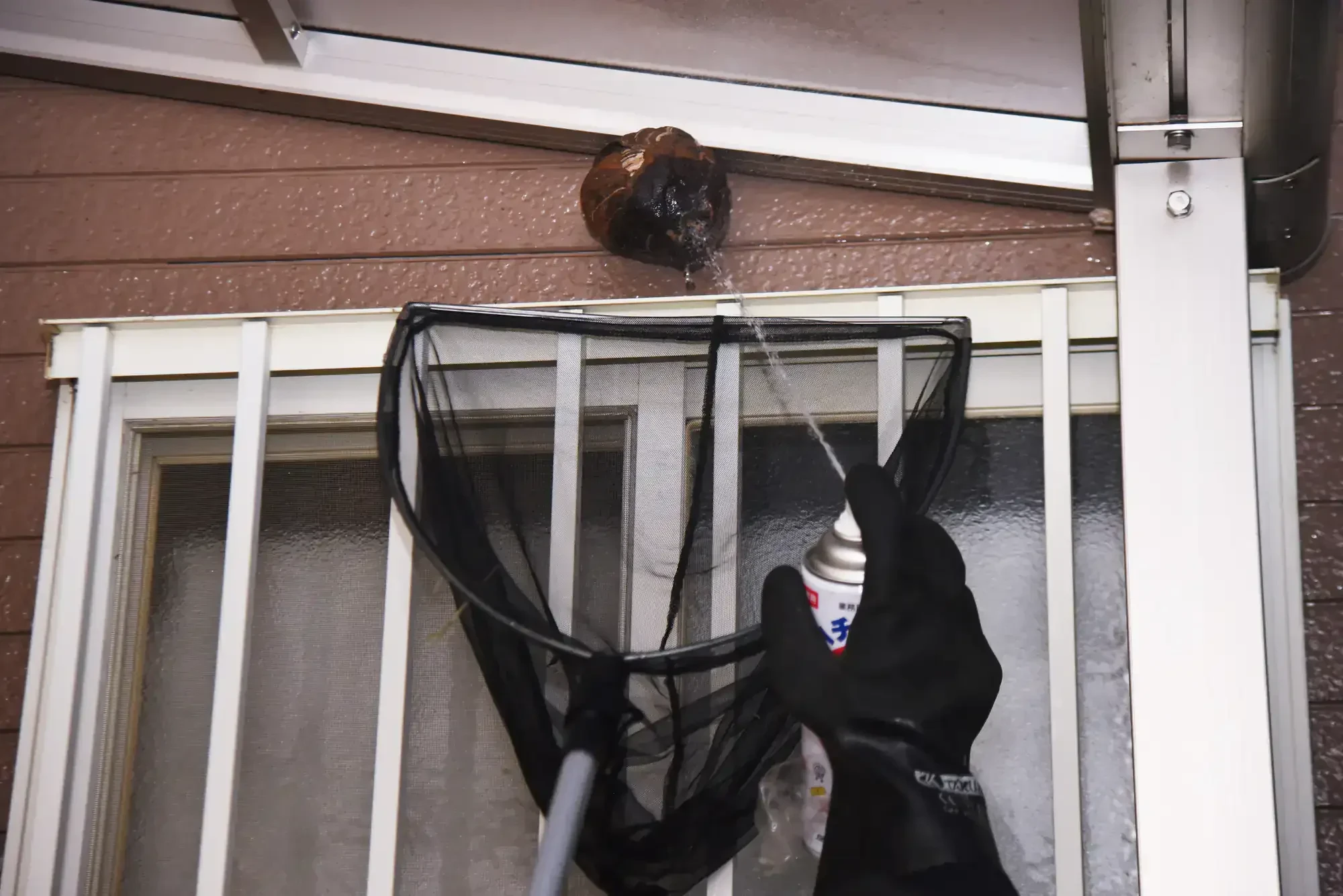
Treatment is targeted to the nest and the colony — not a blanket spray across your property. After treatment, you’ll get a specific re-entry window for your kids and pets, not a vague “give it a few hours.” If the situation warrants a follow-up, that gets communicated clearly before the technician leaves. The same technician is assigned to your account year after year, so if something comes back next season, they already know your property’s history.
Ready to get started?
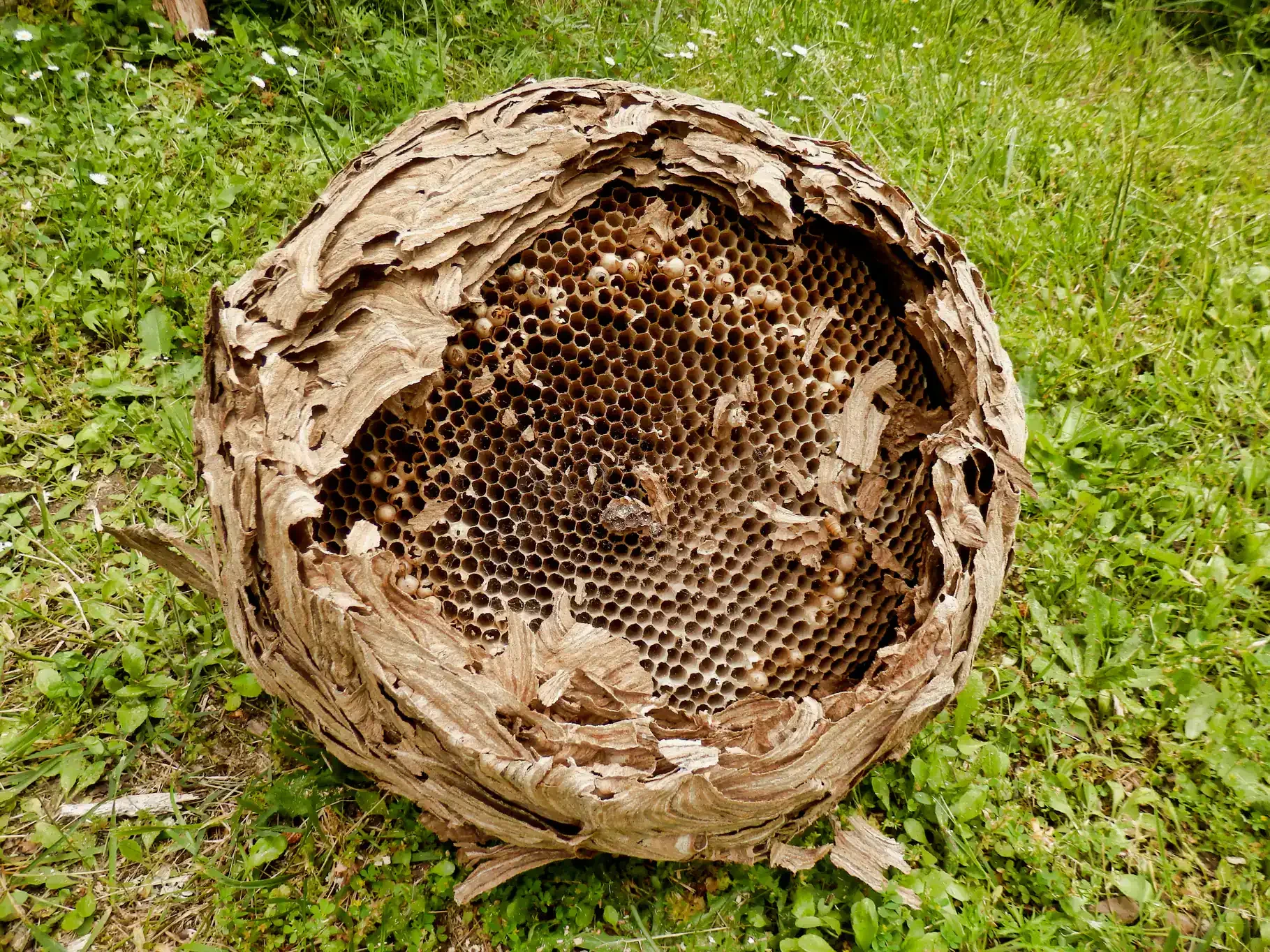
Wasp nest removal in Clio covers the full range of stinging insect problems that show up in this area — paper wasps building under eaves and deck railings, bald-faced hornets constructing large aerial nests in trees or on structures, and ground-nesting yellow jackets that Clio homeowners often discover the hard way while mowing on a Saturday afternoon. Each species behaves differently, nests differently, and requires a different treatment approach. That’s not a technicality — it’s the difference between a job that works and one that leaves an active colony in your wall.
Every service call includes a site inspection, targeted treatment, and a clear post-treatment walkthrough. If the nest is inside a wall void or structural cavity — which is common in the older homes throughout Clio and the surrounding Vienna Township area — that’s addressed directly, not glossed over. We use IPM-trained methods, so the treatment is proportionate to the problem and applied with your household in mind, including children and pets.
We also handle the broader picture. If you’re dealing with wasps now but have questions about mosquitoes, fleas, ticks, or rodents on the same property, those conversations happen in one place. Our mosquito program includes flea and tick treatment at no extra charge — something most companies in Genesee County don’t offer. You’re not being upsold. It’s just how we build our service.

If the nest is larger than a golf ball, located near a door or high-traffic area, or if you’ve already been stung once trying to deal with it, professional removal is the right call. At that stage, the colony is established enough that a store-bought spray — applied without protective equipment, from the wrong distance, at the wrong time of day — is more likely to agitate the colony than eliminate it.
In Clio specifically, the bigger concern is often what you can’t see. German yellowjackets, which are the most common wasp problem in Michigan suburbs, frequently nest inside wall voids, attics, and crawlspaces. If you’re seeing wasps coming in and out of a gap in your siding or soffit but can’t find an exposed nest, there’s likely a colony inside the structure. That’s not a situation a consumer product is designed to handle, and attempting it without knowing the nest’s location can drive the colony deeper into the wall or cause them to chew through interior drywall.
It matters quite a bit. Yellow jackets are a type of wasp, but they behave differently from paper wasps or bald-faced hornets in ways that directly affect how a nest gets treated. Paper wasps build open, umbrella-shaped nests and are generally less aggressive unless the nest is disturbed directly. Yellow jackets — especially the German yellowjacket, which MSU Extension identifies as the most troublesome species in Michigan — are significantly more defensive, more likely to sting repeatedly, and more likely to nest in hidden locations like wall voids, underground burrows, or inside the cavities of older structures.
By late August, a yellow jacket colony in a Clio yard can contain several thousand workers. They’re also scavenging more aggressively at that time of year because natural food sources are declining, which is why late-summer yellow jackets seem more erratic and confrontational near outdoor food and drinks. Treatment for a ground nest or structural nest requires different access, different product application, and often a different follow-up timeline than an exposed aerial nest. Knowing which species you’re dealing with before treatment starts is a basic part of doing the job correctly.
Wasp colonies in Michigan start building in May when overwintered queens emerge and begin establishing nests. Through June and July, the colony grows steadily as workers emerge and forage. By August, most colonies are at or near peak size — and that’s when the behavior shifts. Workers become more defensive, more likely to sting unprovoked, and more aggressive around food sources. For Clio homeowners, that peak danger window lines up almost exactly with the height of outdoor season — the weeks when you’re most likely to be in the backyard, hosting people, or letting your kids play outside.
The short answer: call as soon as you notice a nest. A colony treated in June is smaller, less aggressive, and easier to eliminate than the same colony in late August. Waiting doesn’t make the problem go away — it gives the colony more time to grow. If you’ve already made it to September and the nest is still active, don’t assume the first frost will solve it quickly enough to matter. A mature colony can remain active and dangerous well into fall depending on the year’s temperatures.
Yes — when it’s done correctly and you follow the re-entry guidance you’re given. The products we use in professional wasp nest removal are applied in targeted locations, not broadcast across your entire yard. Our technician will give you a specific window before the treated area is safe for children and pets — and that window is based on the actual products used and the location of the nest, not a generic estimate.
For Clio households with dogs that use the backyard regularly or kids who play near the treated area, the most important thing is to follow that re-entry timeline and avoid disturbing the nest site for the first 24 to 48 hours after treatment. Dead and dying workers may still be present near the nest entrance during that period, and a dog that investigates them can still get stung. Once the colony is eliminated and the re-entry window has passed, normal backyard use can resume. If you have a household member with a known allergy to stings, mention that when you call — it’s relevant context for how the job gets prioritized and scheduled.
For a very small, early-stage nest in an accessible location — say, a paper wasp nest the size of a quarter under a deck rail — some homeowners handle it without incident, usually by treating at night when the colony is less active and workers are clustered on the nest. That’s a narrow set of circumstances where DIY is relatively low-risk.
Most of the calls we receive in Clio are not that situation. They’re homeowners who already tried the hardware store spray, got stung in the process, and now have an agitated colony that’s harder to approach than before. Or they’ve found a nest inside a wall or in the ground, where the colony isn’t visible and a surface-level spray does nothing to reach the queen or the bulk of the workers. The risk with DIY isn’t just getting stung once — it’s the possibility of triggering a full defensive response from a colony of hundreds or thousands of insects, which is a medical emergency for anyone with a sting allergy and a serious situation even for people without one. Stinging insects send roughly 220,000 people to emergency rooms in the U.S. every year. Professional removal isn’t overcautious — it’s just the smarter call when the nest is established.
Yes. We offer discounts for seniors, veterans, and first responders. Clio has a long tradition of honoring the people who serve this community — the Firemen’s Homecoming parade has run every year since 1937, and that kind of continuity says something about how this town values the people who show up for it. Extending a discount to first responders and veterans is a straightforward reflection of that same value.
If you or someone in your household qualifies, mention it when you call. We also offer price matching for reasonable competitor rates, so if you’ve already received a quote from another wasp removal company in the Genesee County area, bring it to the conversation. The goal is to make sure cost isn’t the reason a family in Clio leaves an active nest untreated — because that’s a risk that compounds quickly as the season progresses and the colony grows.
Useful Links