
Hear from Our Customers
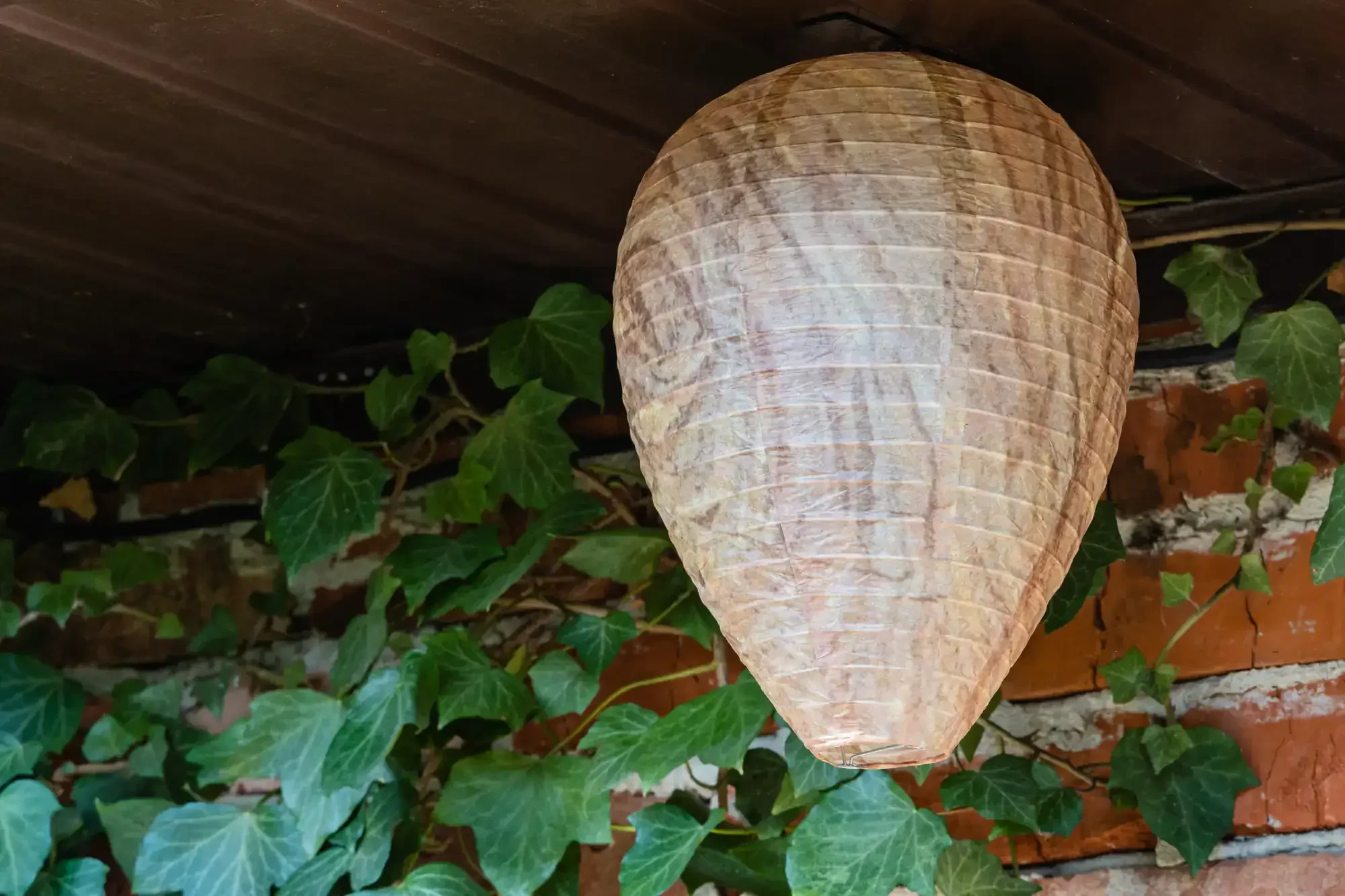
When you find a wasp nest in Clyde, the problem usually isn’t just the nest you can see. On a property that backs up to the Port Huron State Game Area or runs along the Black River corridor, there’s often more going on — ground nests tucked into field edges, colonies building inside old outbuilding walls, or paper wasp nests stacked up under eaves you haven’t checked since last fall. A single can of store spray handles none of that.
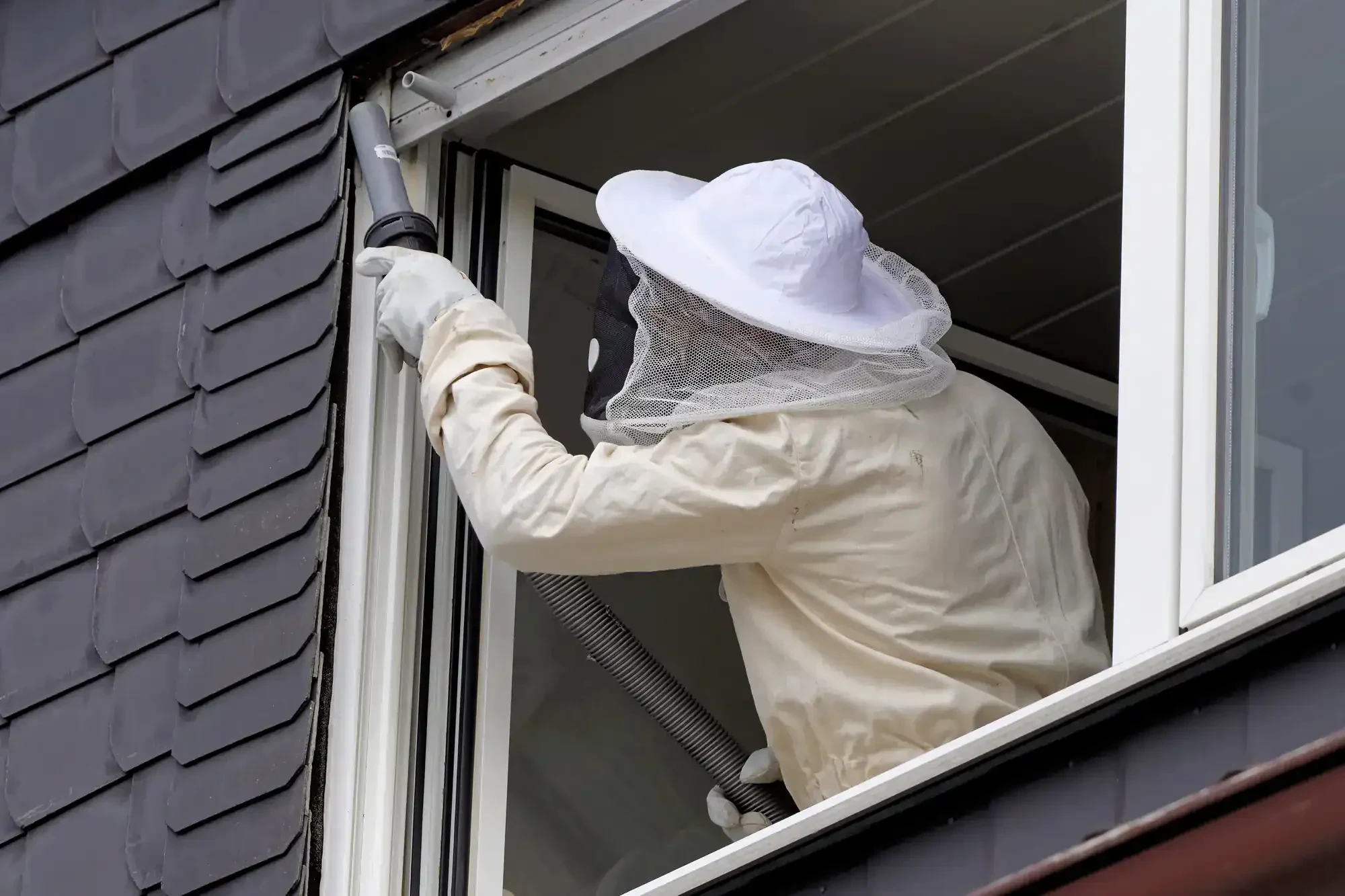
What professional wasp nest removal actually gives you is confidence. You know the nest is gone — not just quieted down for a few days. You know the treatment was applied correctly, with the right product for the specific species and nesting location. And you know your yard, your deck, and your outbuildings are safe to use again without the mental math of “is that area still active?”
For Clyde Township homeowners with horses, dogs, or kids who use the property heavily, that peace of mind isn’t a luxury. It’s the whole point of calling. Older homes throughout Clyde — the mid-century ranch-styles with aging siding and unscreened attic vents — are especially vulnerable to wall void and attic nests that are completely invisible from outside until the colony pushes through. Getting ahead of that is always better than dealing with it in August when a colony of thousands is fully established and aggressive.
We’ve been operating since May 31, 2005 — which means we’ve been protecting Michigan homes longer than most of the national franchises advertising in St. Clair County have had a local presence. We’re family-owned, led by Roger Chinault, who brings 26 years of hands-on pest control experience to every job. That’s not a corporate bio line — that’s the person accountable for the work done on your property.
What sets us apart in a rural township like Clyde isn’t just experience. It’s the same-technician model. Once a technician is assigned to your property, they stay with you. They know your outbuildings, your lot layout, the brush line where you’ve had nests before. That continuity is something no rotating-crew franchise can offer — and in a community like Clyde where trust is built over time, it matters.
We hold MDARD licensing, carry full insurance, and have earned recognition from both Angie’s List and HomeAdvisor. We also offer discounts for seniors, veterans, and first responders — because in a township like Clyde, those aren’t marketing categories. They’re neighbors.
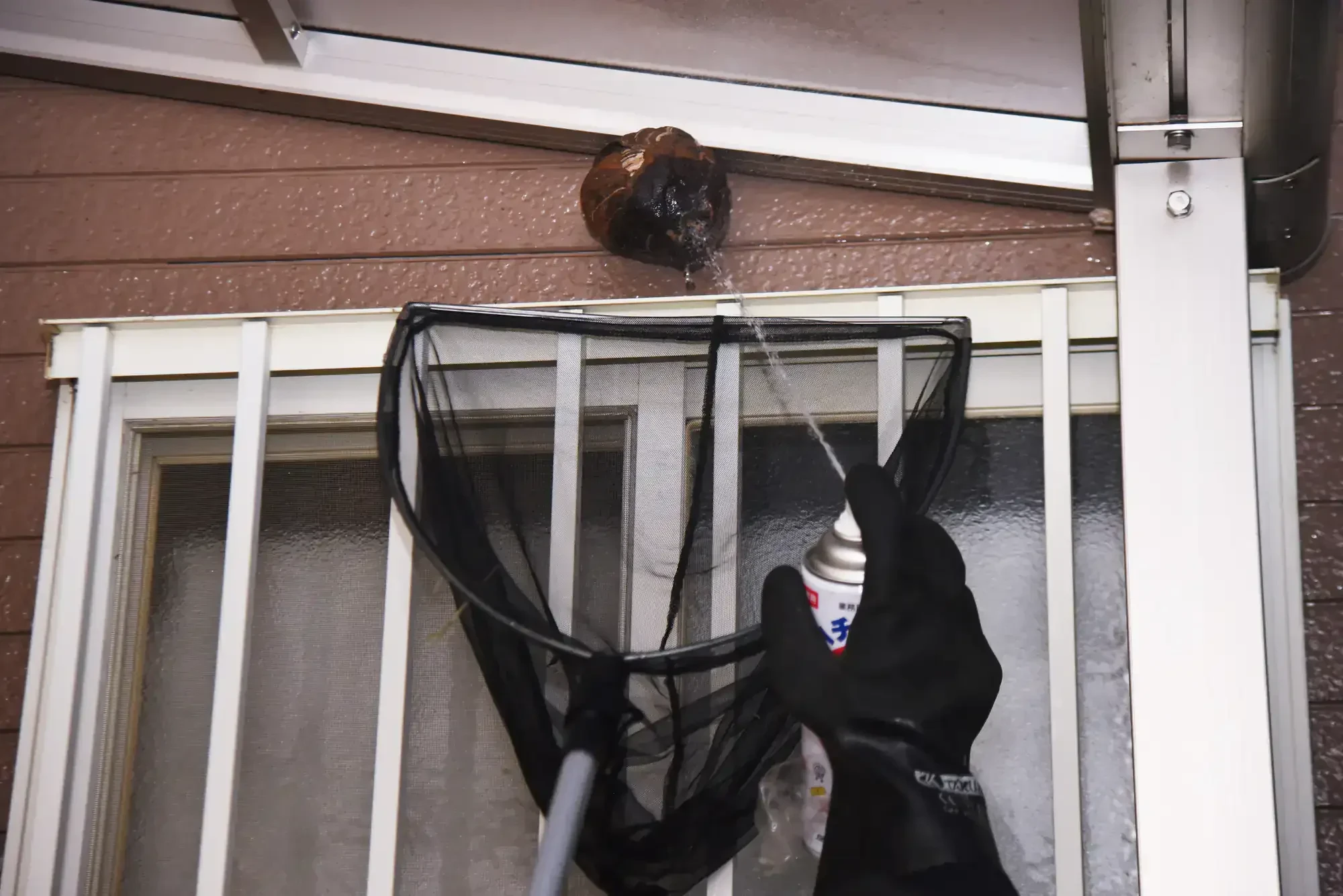
It starts with a thorough inspection of your entire property — not just the nest you already know about. On a Clyde Township lot, that means checking every outbuilding, every eave, every wood pile, and every ground-level void along the yard edges and brush lines. Yellow jackets in particular are notorious for establishing ground colonies in soil cavities and old mouse burrows — exactly the kind of nesting sites that are common in the agricultural and game-area-adjacent land throughout this township. If there’s more than one active site, you’ll know before any treatment begins.
Treatment is matched to the species and the nesting location. Aerial nests from paper wasps or bald-faced hornets get treated differently than a yellow jacket colony living inside a wall void or a ground cavity. We use professional-grade insecticidal dust for ground and wall nests because it penetrates the colony rather than just knocking down surface workers. Liquid treatments are applied to aerial nests and structural entry points. One thing that never happens: sealing an exterior wall opening before the colony is eliminated. That forces wasps inward — toward your living space — and it’s a mistake that costs homeowners far more to fix than the original nest would have.
After treatment, you’ll get clear, specific guidance on re-entry timing — for you, your kids, your dogs, and if applicable, your livestock. In St. Clair County, where colonies can stay active slightly later into fall due to the Lake Huron moderating effect, timing matters. You’ll know when it’s safe to be back in the yard, not just a vague estimate.
Ready to get started?
We handle the full range of stinging insect problems common to Clyde Township — yellow jackets, paper wasps, bald-faced hornets, and ground-nesting colonies. Our service isn’t limited to the single nest you called about. The inspection covers your entire property, which on a rural Clyde lot can mean a half-acre to well over ten acres of yard, outbuildings, fence lines, and field edges. If there are additional active nests or structural entry points that put your home at risk, you’ll know about them.
Because Clyde’s housing stock includes a significant number of older homes with aging siding, deteriorating eave boards, and construction gaps that newer builds don’t have, wall void and attic nesting is a recurring issue here — not a rare one. Our approach to these situations is methodical: locate the entry point, treat the colony internally, and address the structural vulnerability so the same spot doesn’t become a new colony site the following spring.
There are no binding contracts. We offer price matching for reasonable competitor rates, so you’re not overpaying simply because you live in a rural area with fewer options nearby. If you’re a senior homeowner, a veteran, or a first responder, ask about the discount when you call — it applies here, and it’s straightforward.
The cost depends on the type of nest, the species involved, and where the nest is located on your property. A straightforward aerial nest from paper wasps — visible, accessible, and away from the structure — is typically on the lower end of the range. Yellow jacket removal, especially from ground cavities or wall voids, is more involved and costs more because the treatment has to penetrate the colony, not just the surface.
Nationally, professional wasp nest removal averages between $375 and $525, with yellow jacket removal averaging closer to $725 when the nest is inside a wall or in the ground. For Clyde Township homeowners, the relevant comparison isn’t the cost of one service call — it’s the cost of a failed DIY attempt followed by a professional call anyway, or the cost of an ER visit if someone with an undiagnosed allergy gets stung. We also offer price matching for reasonable competitor rates, so if you’ve gotten another quote, it’s worth asking.
The honest answer is: it depends on what you’re dealing with. A small paper wasp nest on an outbuilding eave, caught early in the season when it’s the size of a golf ball and has fewer than a dozen workers, is manageable with the right spray and the right distance. That’s not most of the calls we get in Clyde.
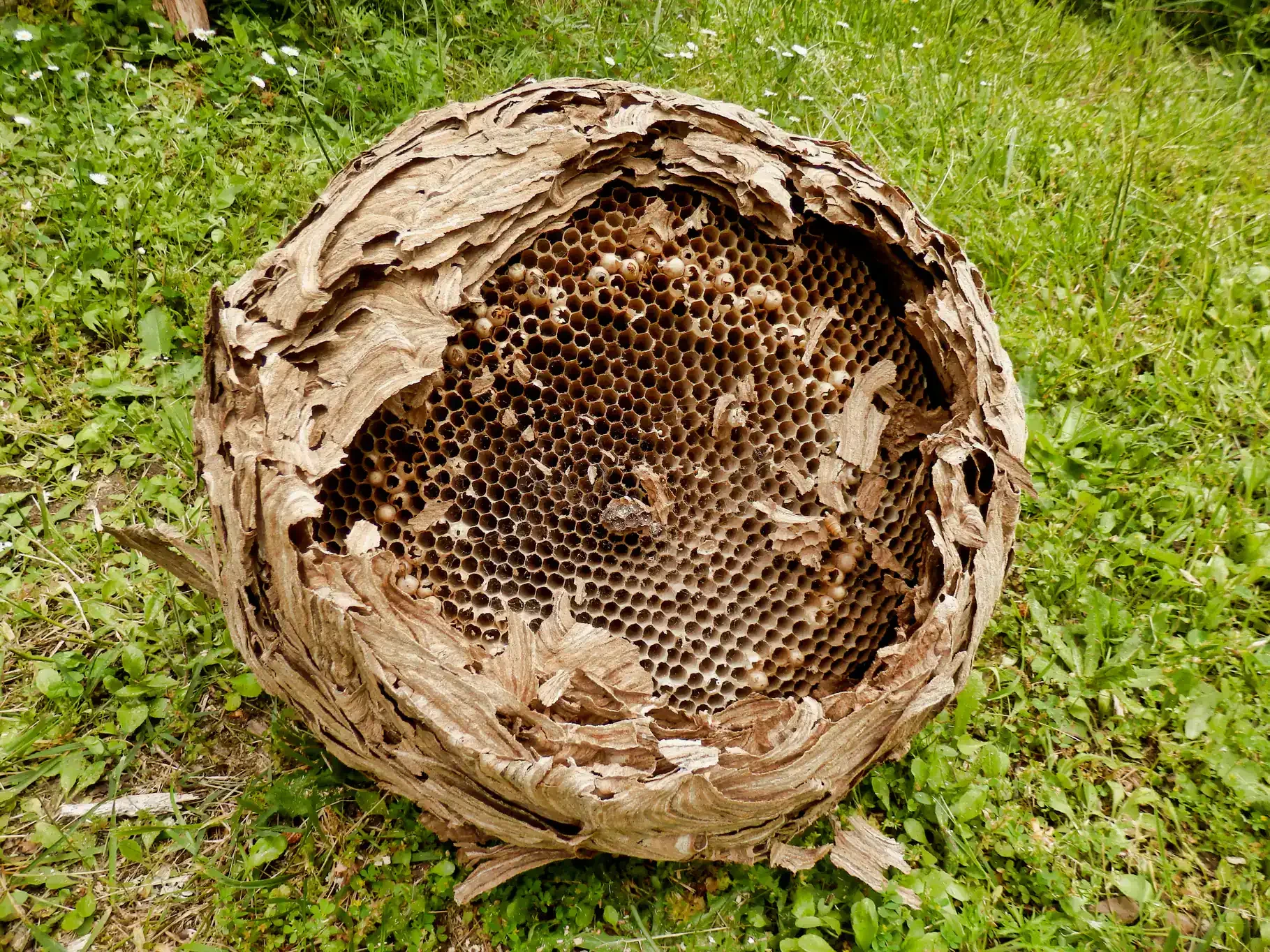
What’s genuinely dangerous is a ground nest in a yard or field edge — which is extremely common on the kind of large rural lots that define Clyde Township. You can walk over a ground colony without any visible warning, and a disturbed yellow jacket colony can mobilize thousands of workers in seconds. There’s no safe distance for a DIY approach to a fully established ground nest. Wall void nests are equally risky to attempt yourself, especially in older Clyde homes where the construction gaps give wasps multiple exit routes. Sealing the entry point without eliminating the colony first forces wasps to chew through your drywall into the living space — a scenario that’s expensive to fix and genuinely alarming to deal with.
Yellow jacket colonies in Michigan start from a single overwintered queen in spring and build steadily through summer. By late August, a colony that had a few dozen workers in June can have anywhere from 5,000 to 15,000 workers — all of them defensive and aggressive, especially if the nest is near a high-traffic area of your property.
In St. Clair County specifically, the proximity to Lake Huron creates a slightly moderated climate compared to inland counties. That lake effect can keep colonies active and aggressive into October in some years, beyond the typical late-September wind-down you’d see further inland. The practical takeaway: if you notice a nest in May or June, calling then is almost always faster, safer, and less expensive than waiting until August when the colony is at full size. Early treatment means a smaller colony, a shorter job, and less risk during the process.
Yes — and it’s more common in older homes than most people expect. Clyde Township has a meaningful share of mid-century ranch-style homes and older structures with construction gaps, aging siding, deteriorating eave boards, and attic vents that were never properly screened. These are exactly the entry points yellow jackets use to establish colonies inside wall voids and attics.
The warning signs are subtle at first: a steady stream of wasps entering and exiting a small gap in the siding, a faint buzzing sound inside a wall, or wasps appearing inside a room without an obvious source. If you’re seeing any of these, don’t seal the entry point yourself. Plugging the exterior opening before the colony is eliminated forces the wasps to chew through whatever is in their way — including drywall — to find another exit. That turns a wall void nest into an interior infestation. The correct approach is to treat the colony from the outside first, confirm elimination, and then address the structural entry point.
This is one of the most common questions from Clyde Township homeowners, and it deserves a straight answer rather than a vague “give it a few hours.” The products we use for professional wasp nest removal are applied in targeted, controlled amounts — not broadcast sprayed across your entire yard. Once the product has dried and the treated area has been ventilated, the risk to animals is minimal.
That said, the specific re-entry timing varies depending on what was used, where it was applied, and what animals you have on the property. Horses and livestock have different sensitivities than dogs or cats, and the guidance your technician gives you will be specific to your situation — not a generic disclaimer. You’ll know exactly how long to keep animals away from the treated area before it’s safe, and why. If you have livestock or multiple animals on a large property, mention that when you call so the technician can plan accordingly.
Yes. We serve residential and commercial customers across St. Clair County, including Clyde Township and the surrounding communities in the 48049 ZIP code — whether your mailing address reads Clyde, Ruby, or North Street. We’re based in Michigan and have been operating continuously since 2005, which means we understand the specific landscape, housing stock, and seasonal pest patterns of rural St. Clair County — not just the suburban markets closer to Flint or Detroit.
Clyde Township’s combination of wooded corridors, game-area-adjacent land, large rural lots, and older housing stock creates a specific set of wasp and stinging insect challenges that a generic service call from a national franchise isn’t really built to address. We assign the same technician to your property year after year, so once they’ve been to your land along the Black River corridor or out near Ruby, they know it. That familiarity is worth something when you’re dealing with a pest problem on a property with multiple outbuildings, large lot lines, and brush edges that a first-time tech would just be guessing about.
Useful Links