
Hear from Our Customers
You stop worrying every time someone walks out the back door. That’s the real outcome. Not just a sprayed nest, not a temporary fix — a yard, a porch, or a property entrance that feels safe again. For families in Lapeer who use their outdoor spaces seriously — backyard cookouts, kids playing near the fence line, evenings on the deck — that peace of mind is the whole point.
Lapeer’s proximity to the south branch of the Flint River and the city’s 13 parks means a lot of residential properties here back up to wooded lots, drainage corridors, or green space edges. Those are exactly the conditions where ground-nesting yellow jackets thrive. If you’ve ever hit a nest while mowing and had to run, you already know how fast that situation turns dangerous. Getting the nest fully removed — not just treated — means that specific threat is gone, not dormant.
Older homes in Lapeer’s established neighborhoods also tend to have more entry points: gaps in soffits, aging fascia boards, unscreened vents. Wasps find those spots before most homeowners do. When a nest is inside a wall void or tucked into the eave of a 1940s bungalow near downtown Lapeer, treating the workers without removing the structure just delays the problem. Proper removal closes the chapter.
We founded First Choice Pest Control on May 31, 2005 — which means in 2025, we turn 20. That’s two decades of showing up across Genesee and Lapeer Counties, doing the work, and standing behind it. Roger Chinault, our founder, brings 26 years of hands-on pest control experience to every job. This isn’t a franchise with rotating seasonal staff. It’s a named person with a real track record in your community.
We hold Integrated Pest Management training credentials and have earned awards from both Angie’s List and HomeAdvisor. We’re fully licensed through the Michigan Department of Agriculture and Rural Development and carry appropriate insurance — no shortcuts, no gray areas. And because we operate without binding contracts, every visit has to earn your trust on its own.
Lapeer County residents near McLaren Lapeer Region Hospital, along M-24, or out in the surrounding townships know what it means to work with a company that actually knows the area. We’re not calling from a national center and routing someone to your door. We’re a regional Michigan operation that understands this specific landscape — and that makes a difference when the problem is in your yard.
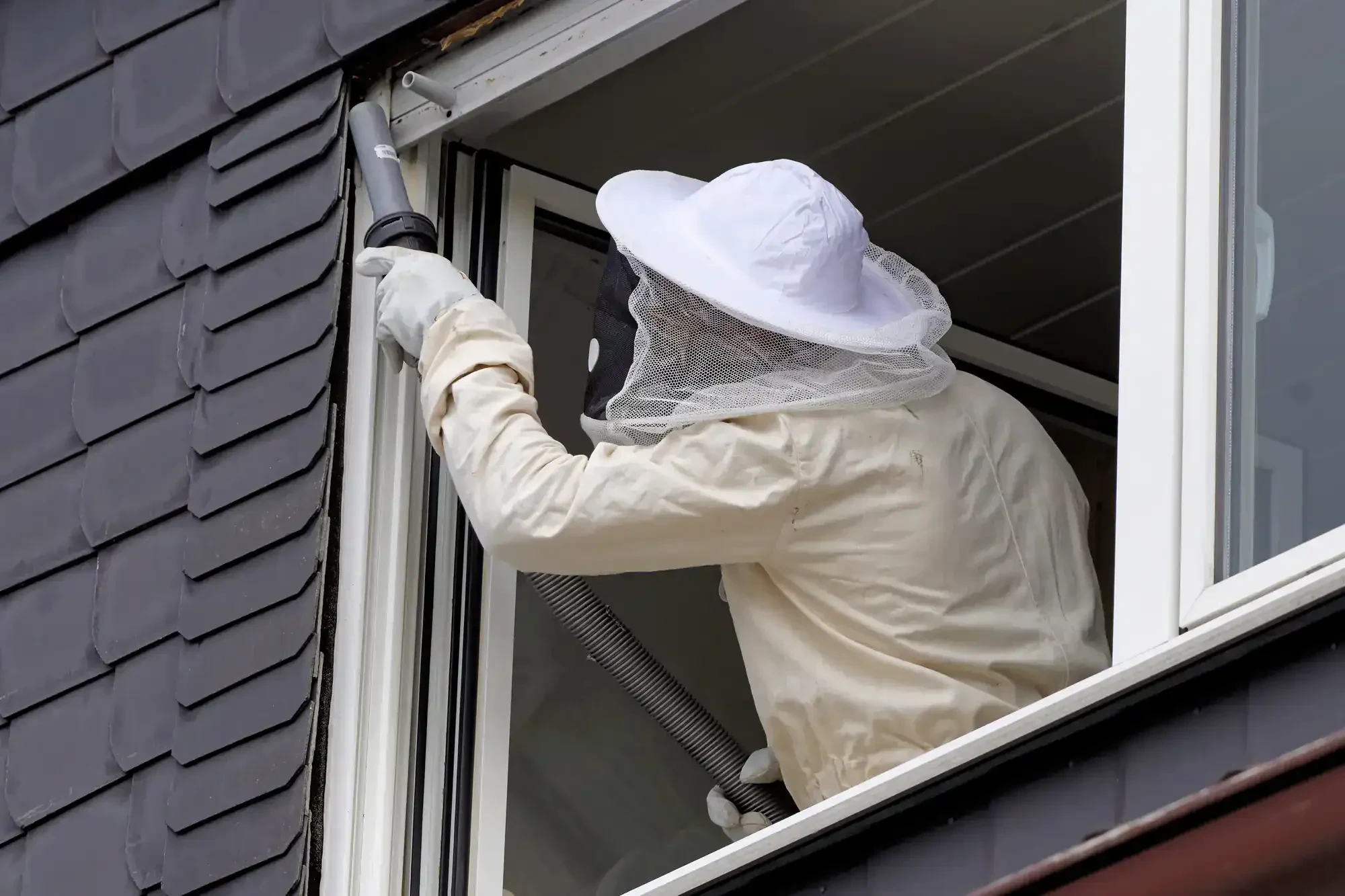
It starts with a call. You describe what you’re seeing — where the nest is, how long it’s been there, whether anyone’s been stung. From there, we schedule a visit and send the same trained technician who will learn your property and stick with your account going forward. Not a temp. Not a different face every season. Someone who actually knows what they’re walking into.
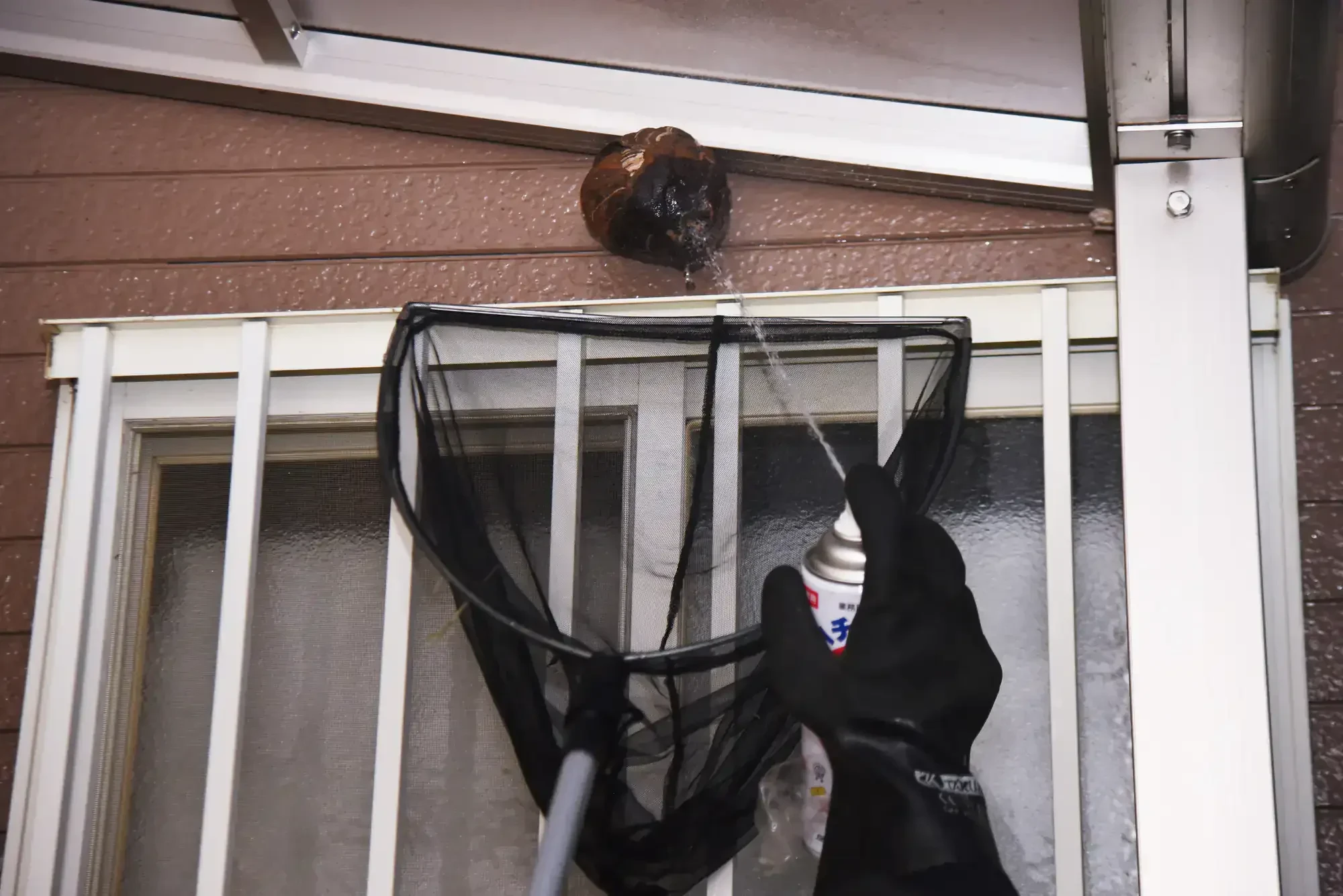
On-site, our technician identifies the nest type and location — visible or hidden. In Lapeer, that often means checking wall voids in older homes, ground depressions near fence lines and landscaping edges, and eave gaps that are common in the city’s pre-war and mid-century housing stock. Treatment timing matters too. Yellow jacket colonies are treated when the workers are in the nest — typically at night or early morning — which is when the treatment is most effective and the risk of agitation is lowest.
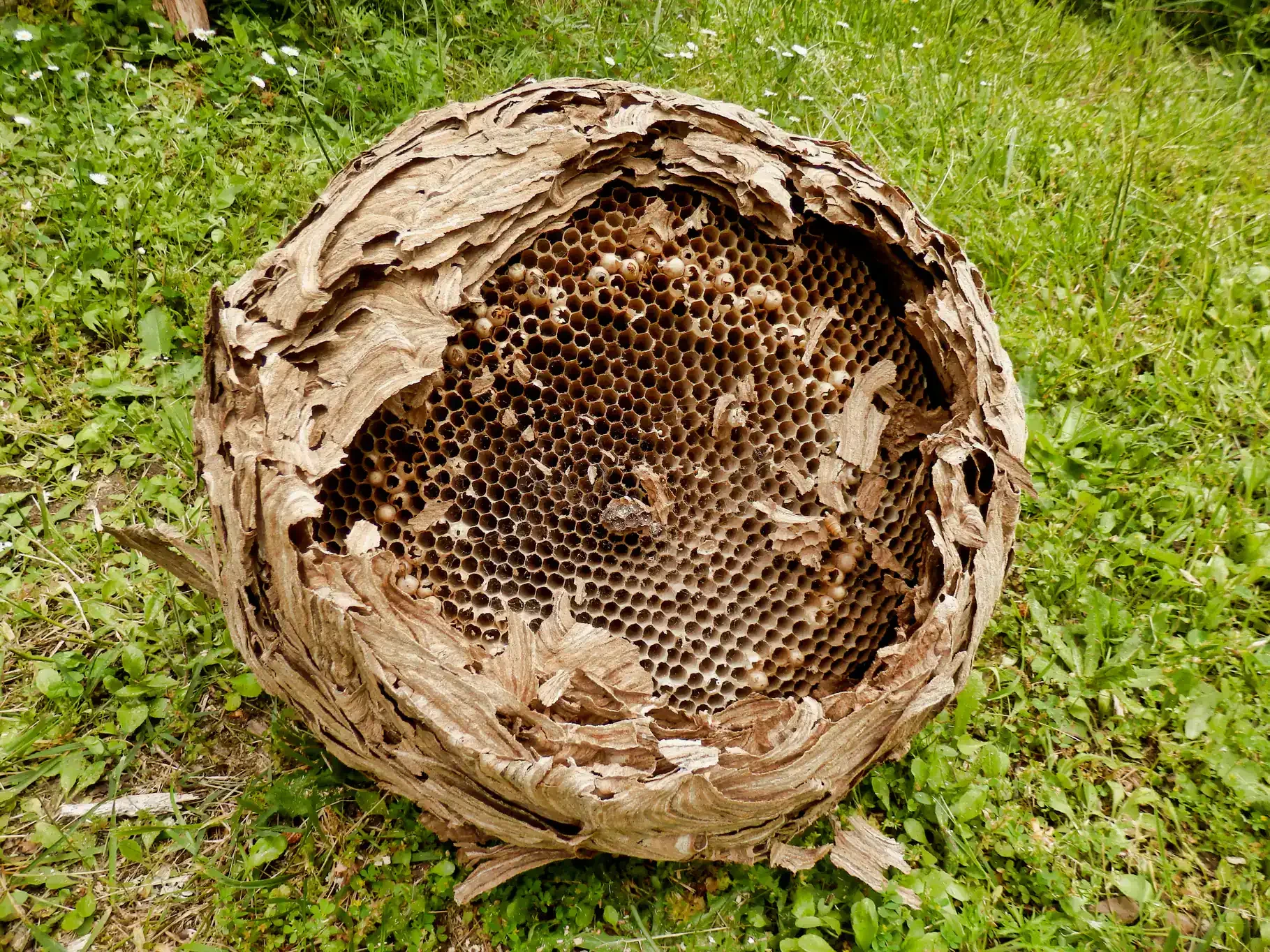
After the colony is eliminated, we remove the nest structure and seal entry points to prevent a new queen from finding the same spot next spring. Michigan wasps don’t reuse old nests, but they absolutely return to favorable sites. Sealing those gaps is what separates a permanent fix from a seasonal repeat. If anything comes back after treatment, we do too — that’s our callback guarantee, and it means the job isn’t done until it’s actually done.
Ready to get started?
Our wasp nest removal covers the full scope: colony treatment, physical nest removal, and entry-point sealing. That’s not always standard. Some providers spray the exterior and leave. We remove the structure and address the site so it doesn’t become a problem again in the same location next season — which is a real pattern in Lapeer’s older residential neighborhoods where favorable nesting sites get selected year after year.
We cover the full range of stinging insects common to Lapeer County — yellow jackets, paper wasps, bald-faced hornets, and ground-nesting species. Ground nests are particularly common in properties near the Flint River corridor, near parks, and along wooded lot lines throughout Lapeer and surrounding townships like Elba and Mayfield. If the nest is in a wall void, attic space, or structural cavity — which happens frequently in Lapeer’s older downtown and near-downtown housing stock — our technician adjusts the approach accordingly rather than applying a one-size treatment.
We also offer price matching for reasonable competitor quotes, so if you’ve already gotten a number from someone else, bring it. Seniors, veterans, and first responders receive discounts — and in a community where McLaren Lapeer Region Hospital employs a significant portion of the local workforce and veterans are a meaningful part of the population, that’s not a footnote. Every service is covered by our callback guarantee. If the wasps return after treatment, so do we.
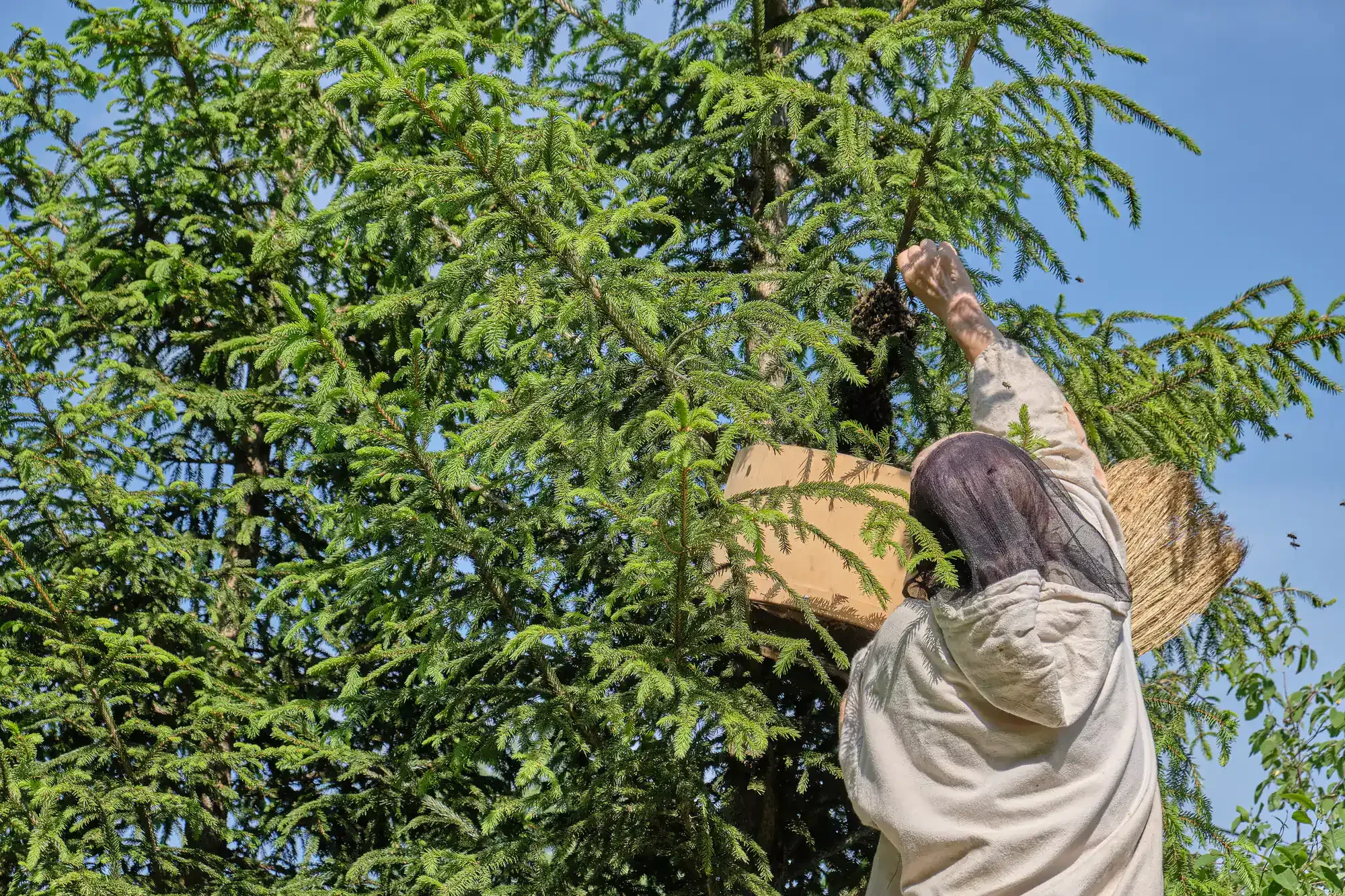
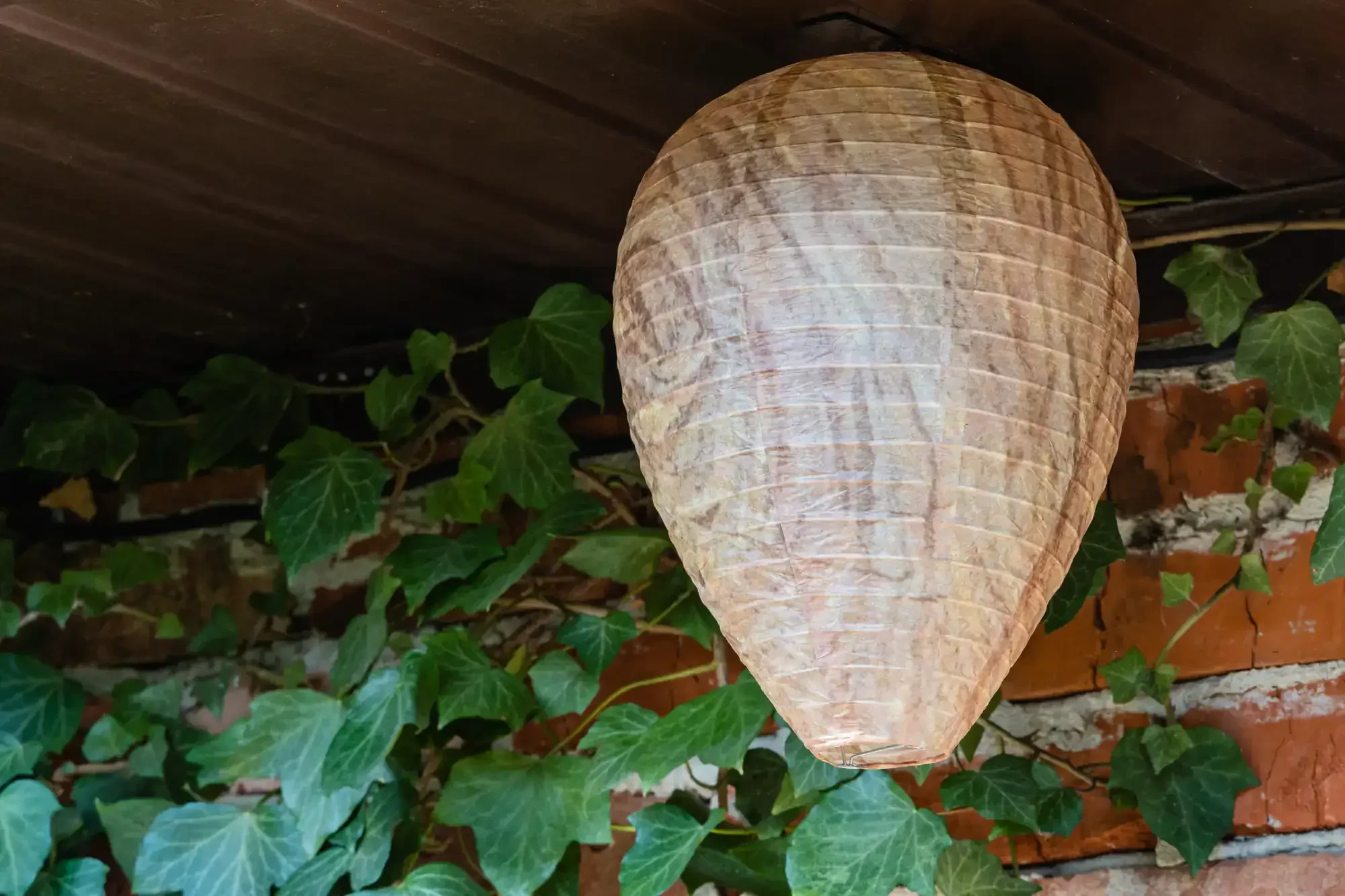
The behavior and location tell you a lot before you ever see the nest itself. Yellow jackets in Lapeer tend to nest in the ground — under grass, near tree roots, along fence lines, or in the landscape edges common around the city’s residential lots and park-adjacent properties. They’re aggressive when disturbed and will chase. Paper wasps, on the other hand, build the open, umbrella-shaped combs you often see under eaves, in garage door tracks, or tucked into the soffits of older homes throughout Lapeer. They’re less aggressive unless you get close to the nest directly.
The distinction matters because treatment and removal differ between species. A ground nest requires locating the entry point and treating the colony inside the soil chamber — not just spraying what you can see. A paper wasp comb can often be removed more directly once the colony is treated. If you’re not sure what you’re dealing with, don’t try to get closer for a better look. Call and describe what you’re seeing — where it is, how the insects are flying, whether they’re entering the ground or a structure — and our technician can help you identify it before the visit.
Wasp season in Lapeer runs from roughly April through October, but the danger window peaks hard in August and September. That’s when yellow jacket colonies in Michigan can reach 5,000 to 15,000 workers. By late summer, natural food sources start to decline and the workers shift to scavenging — which is why they’re suddenly at your picnic table, near your garbage cans, and flying aggressively around anyone who walks near the nest. It’s not that there are more wasps in August; it’s that the ones that exist are more aggressive and the colony is at maximum size.
The practical advice is to call as soon as you notice activity — not when it gets bad. A nest with 50 workers in June is a manageable problem. That same nest in August is a colony crisis. Lapeer homeowners who use their backyards for summer entertaining, who have kids in outdoor programs, or who have properties near any of the city’s 13 parks are especially exposed during this window. Early treatment is faster, cheaper, and significantly safer than waiting until the colony reaches full strength.
Hardware store sprays work in very specific circumstances — a small, newly established paper wasp comb that’s fully visible and easily accessible, treated at night when the colony is inactive. Outside of that narrow window, DIY removal tends to make things worse. Spraying a yellow jacket ground nest during the day, or hitting a wall void nest with a can of foam, usually agitates the colony without eliminating it. Workers that survive disperse, sometimes into the interior of the home, and the remaining colony rebuilds.
The risk isn’t just ineffectiveness — it’s physical danger. Disturbing a large colony without proper protective equipment, professional-grade product, and knowledge of the nest’s full extent is how people end up in the McLaren Lapeer Region Hospital emergency department. Approximately 220,000 emergency department visits happen nationally each year from stinging insect encounters, and roughly 1 to 3 percent of adults can develop a life-threatening allergic reaction. If you’ve already been stung once and had a stronger-than-normal reaction, the stakes on a second sting are significantly higher. Professional removal is not just more effective — for many people, it’s genuinely the safer call.
The colony itself won’t return — worker wasps die off after the first hard frost, typically in late October or early November in this part of Michigan, and the nest is abandoned. But the site that attracted them in the first place still exists. A gap in the soffit, a ground depression near the fence, an unscreened vent in an older Lapeer home — those don’t go away on their own. New queens emerge from overwintering each spring and actively scout for protected nesting locations. If the entry point or ground site isn’t sealed after removal, there’s a real chance a new queen selects the same spot the following April or May.
This is why physical nest removal and entry-point sealing are part of what we include — not optional add-ons. Lapeer’s older housing stock, particularly in the downtown and near-downtown neighborhoods, has more of these structural vulnerabilities than newer construction. Addressing them after treatment is what turns a one-time removal into a lasting fix rather than an annual repeat.
Cost depends on the nest type, location, and size of the colony. A standard paper wasp nest removal — visible, accessible, caught early in the season — typically runs in the lower range of professional pricing. Yellow jacket nest removal tends to cost more because of the complexity involved: locating a ground or wall void nest, treating a colony that may have thousands of workers, removing the physical structure, and sealing the entry point. Nationally, yellow jacket removal averages around $725 for full-service treatment, though local pricing varies.
We offer price matching for reasonable competitor quotes in Lapeer and the surrounding Lapeer County area. If you’ve already gotten a number from another provider, bring it — there’s no need to choose between the local, experienced option and a fair price. Seniors, veterans, and first responders also receive discounts, which matters in a community where healthcare workers, military veterans, and first responders make up a meaningful share of the local population. Our callback guarantee is included — if wasps return after treatment, the follow-up visit doesn’t cost you extra.
Yes. We serve residential and commercial customers throughout Lapeer County, not just within the city limits. That includes surrounding townships like Elba, Mayfield, and Lapeer Township, as well as communities like Almont, Attica, Columbiaville, Dryden, Imlay City, Metamora, North Branch, and others across the county. Lapeer County covers 88,619 residents across a mix of rural, semi-rural, and small-town properties — and the pest pressure in those areas, particularly for ground-nesting yellow jackets near wooded lots and agricultural edges, is just as real as it is inside the city.
For properties in the more rural parts of Lapeer County, ground-nesting species are especially common. Larger lot sizes, wooded tree lines, and proximity to drainage corridors and fields create ideal conditions for yellow jacket colonies that go undetected until someone disturbs them. Our technicians are familiar with this landscape — it’s the same east-central Michigan terrain we’ve been working in for two decades. If you’re outside the city and unsure whether you’re in our service area, call and ask. The answer is almost certainly yes.
Useful Links