
Hear from Our Customers
The moment a wasp nest gets removed correctly, your property stops being a hazard and starts being yours again. You can mow the lawn without watching your back. Kids can play outside. The deck gets used again. That’s what this is really about — getting back to normal without wondering if something’s about to go wrong.
Perry’s mix of older homes and agricultural surroundings makes this a little more complicated than it sounds. A lot of the housing stock here was built when weatherproofing wasn’t exactly a priority, which means gaps around soffits, aging wood eaves, and worn siding give yellow jackets and paper wasps easy access to wall voids and structural spaces that most homeowners don’t even know exist. By the time you notice activity, the colony has often been building for weeks.
Add in the open farmland and woodlots surrounding Perry — which support large yellow jacket populations all summer — and you’ve got a situation where a nest that looks manageable in June can become a serious problem by August. Getting ahead of it, or handling it the moment you find it, is always the smarter move.
We’ve been serving Shiawassee County and Perry since 2005 — that’s twenty years of Michigan summers, twenty wasp seasons, and a track record built entirely on repeat customers and word of mouth. Roger Chinault founded the company and brings 26 years of hands-on pest control experience to every job. This isn’t a franchise routing your call through a regional dispatch center. It’s a real local operation where the person who shows up actually knows what they’re doing.
One thing that sets us apart from most other companies is the same-technician policy. The professional who handles your Perry property this season will know your property next season. No re-explaining the situation. No new face every visit. That kind of continuity matters, especially in a community like Perry where trust is earned the old-fashioned way.
We’re MDARD-licensed, fully insured, and trained in Integrated Pest Management — meaning treatments are targeted and evidence-based, not just a spray-and-hope approach. We also offer discounts for seniors, veterans, and first responders, because some things just make sense to do.
It starts with a call. You describe what you’re seeing — where the nest is, how much activity there is, whether anyone’s been stung — and we give you a straight answer about what you’re dealing with and what the next step looks like. No runaround, no upsell pressure.
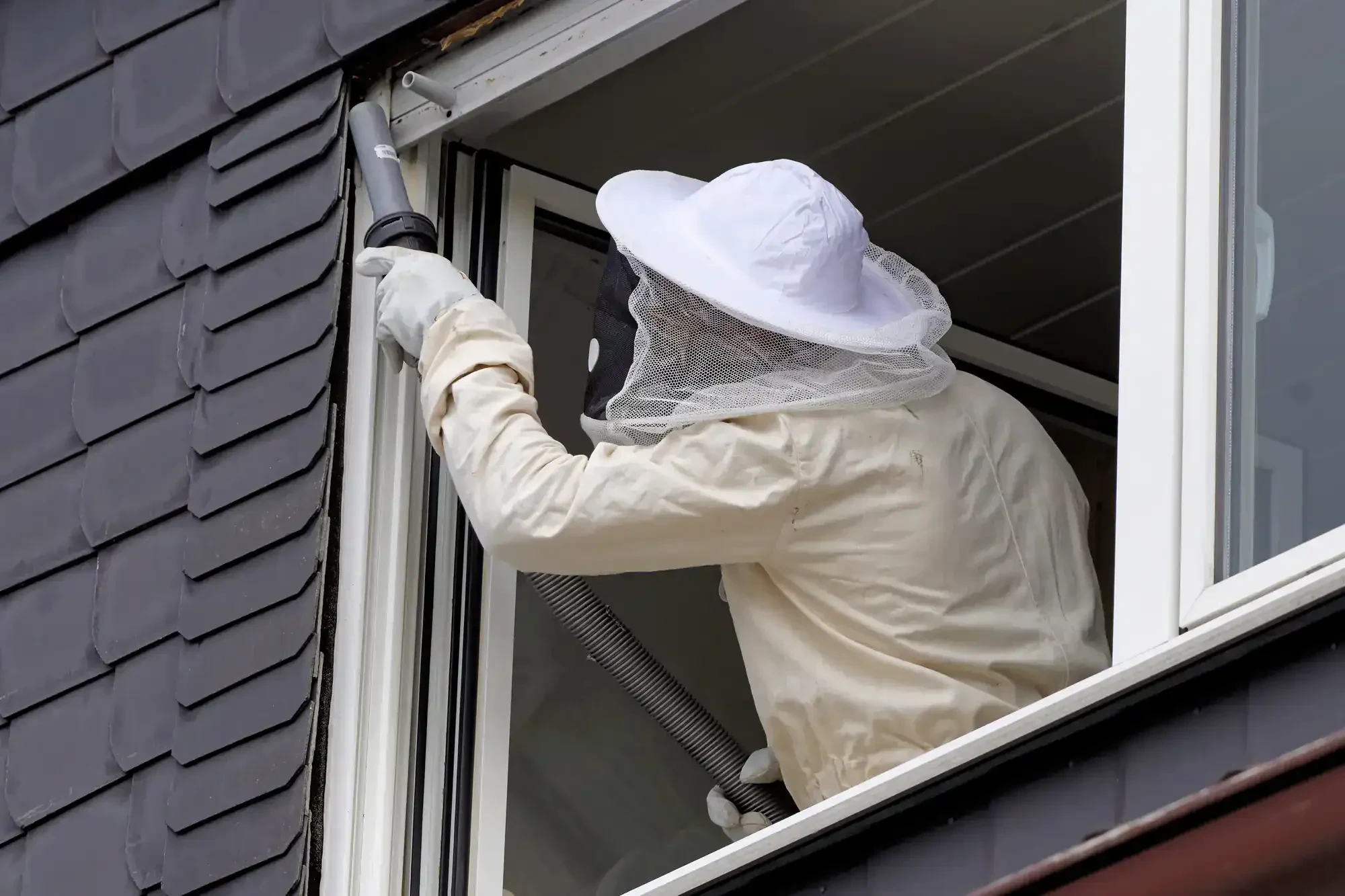
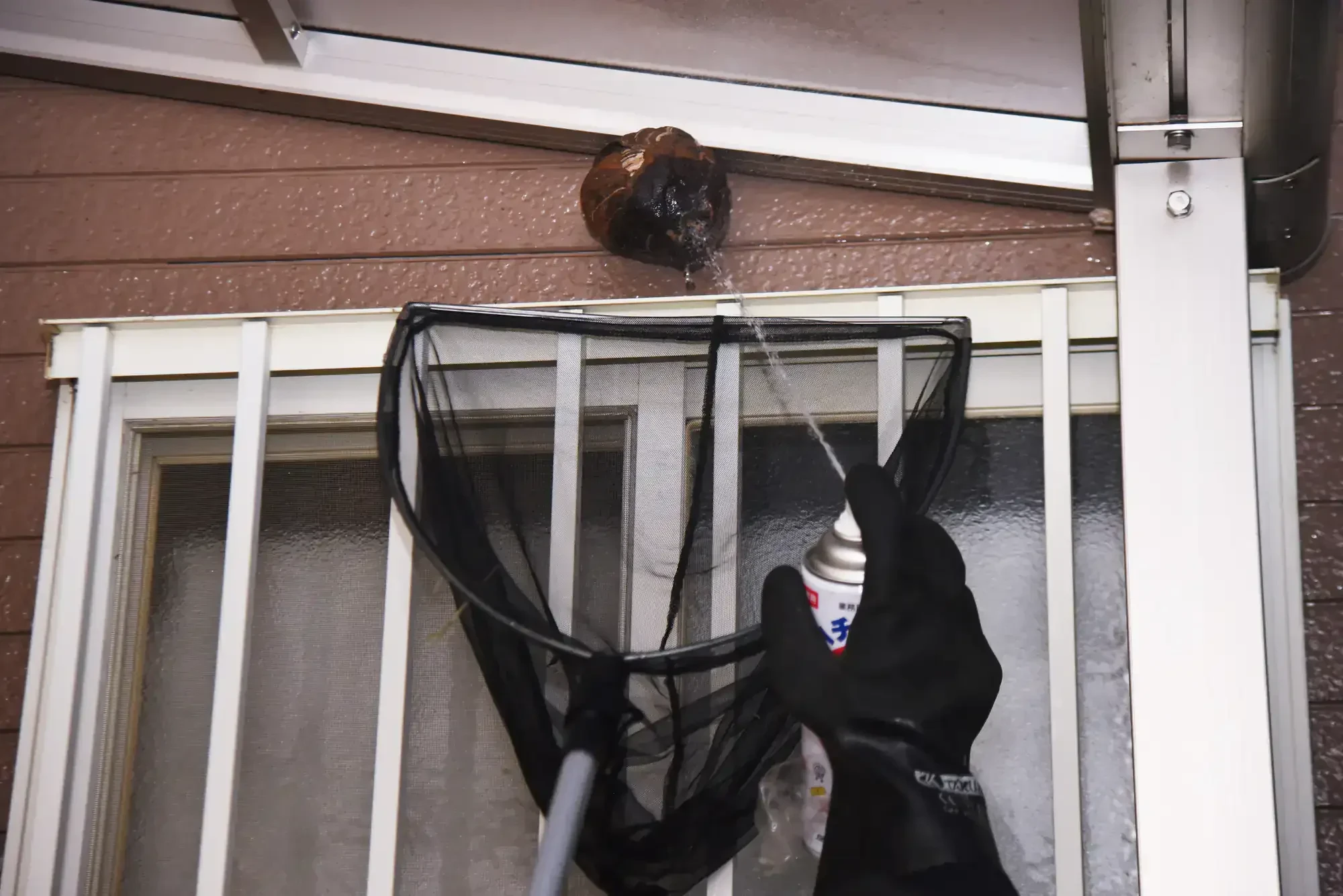
When our technician arrives, the first thing we do is assess the full picture. In Perry, that often means checking more than just the visible nest. Older homes along the city’s residential streets frequently have multiple potential entry points — gaps around trim, deteriorating soffits, or cracks in siding that wasps use to access wall voids. If there’s a structural entry point involved, that gets identified during the inspection, not discovered later. Treatment is then applied directly to the nest and any active entry points, using methods appropriate to the nest type — whether that’s a paper wasp colony under an eave, a yellow jacket ground nest near a garden bed, or a bald-faced hornet nest in a tree line.
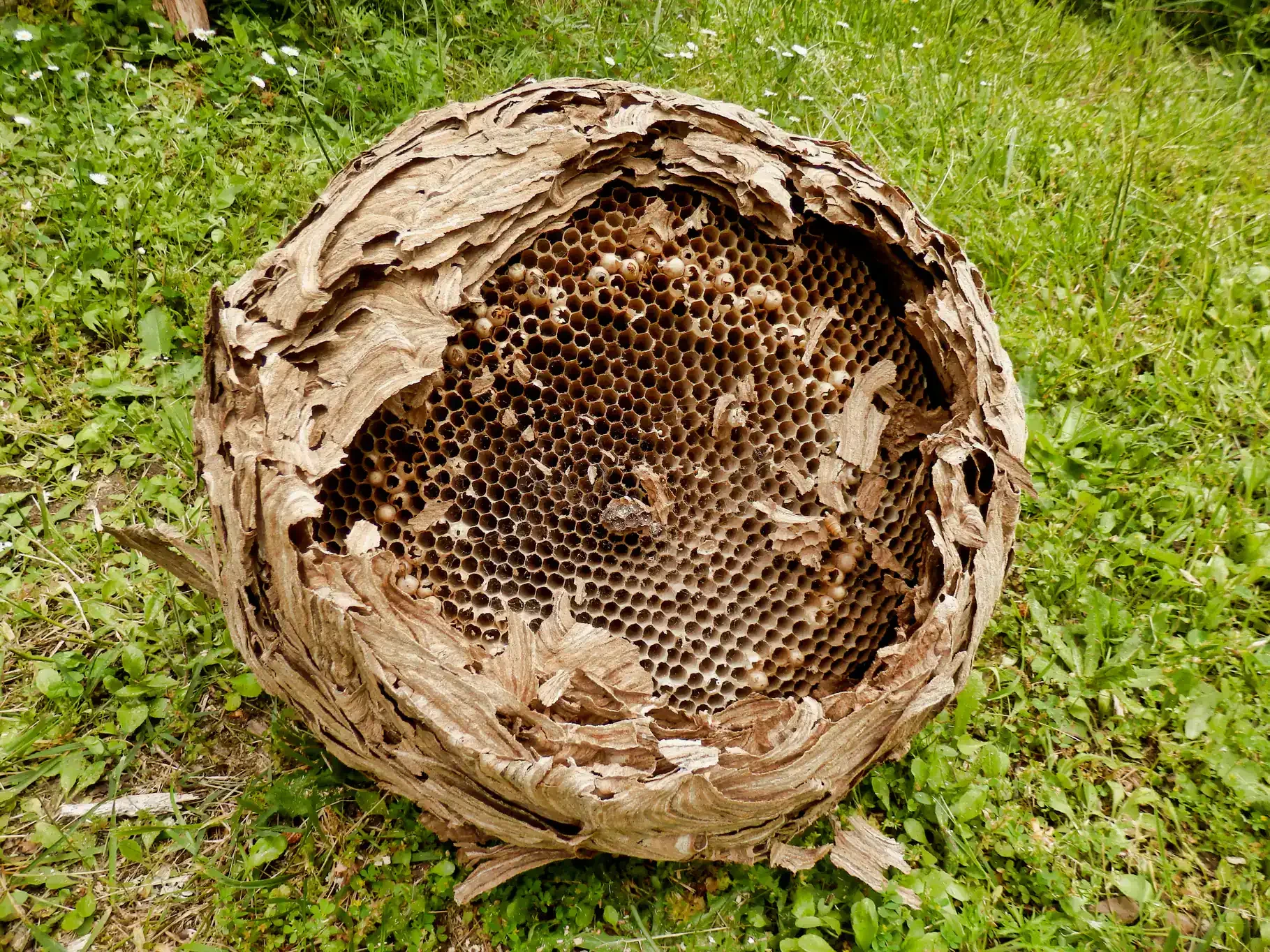
After the colony is eliminated, the nest structure is removed and entry points are sealed to prevent re-nesting. If anything comes back after treatment, we do too — that’s our callback guarantee. The goal isn’t just to get rid of what’s there today. It’s to make sure you’re not calling again next month.
Ready to get started?
We handle the full range of stinging insect problems Perry homeowners and business owners run into — paper wasps, yellow jackets, bald-faced hornets, and ground-nesting colonies. The service isn’t a one-size treatment. It’s built around what’s actually on your property, which matters more here than it might in a newer suburban development.
In Perry, that means accounting for the specific conditions that drive stinging insect pressure locally. Properties near the farmland and woodlots surrounding Perry Township see heavier yellow jacket activity in late summer as colonies peak and workers shift to scavenging. Homes along older residential streets — particularly those with wood eaves and aging exterior trim — are more likely to have wall void nests that require a different approach than a visible eave nest. Commercial properties along the Lansing Road corridor near the I-69 interchange face their own set of concerns, especially when nests develop near entrances or outdoor workspaces. We serve both residential and commercial customers across the area with the same level of care.
Every service includes inspection, targeted treatment, physical nest removal, and entry point sealing where applicable. We also offer price matching against reasonable competitors’ rates, so you’re not overpaying just because you didn’t call three companies first. No binding contracts, no annual commitments — just work that gets done right.
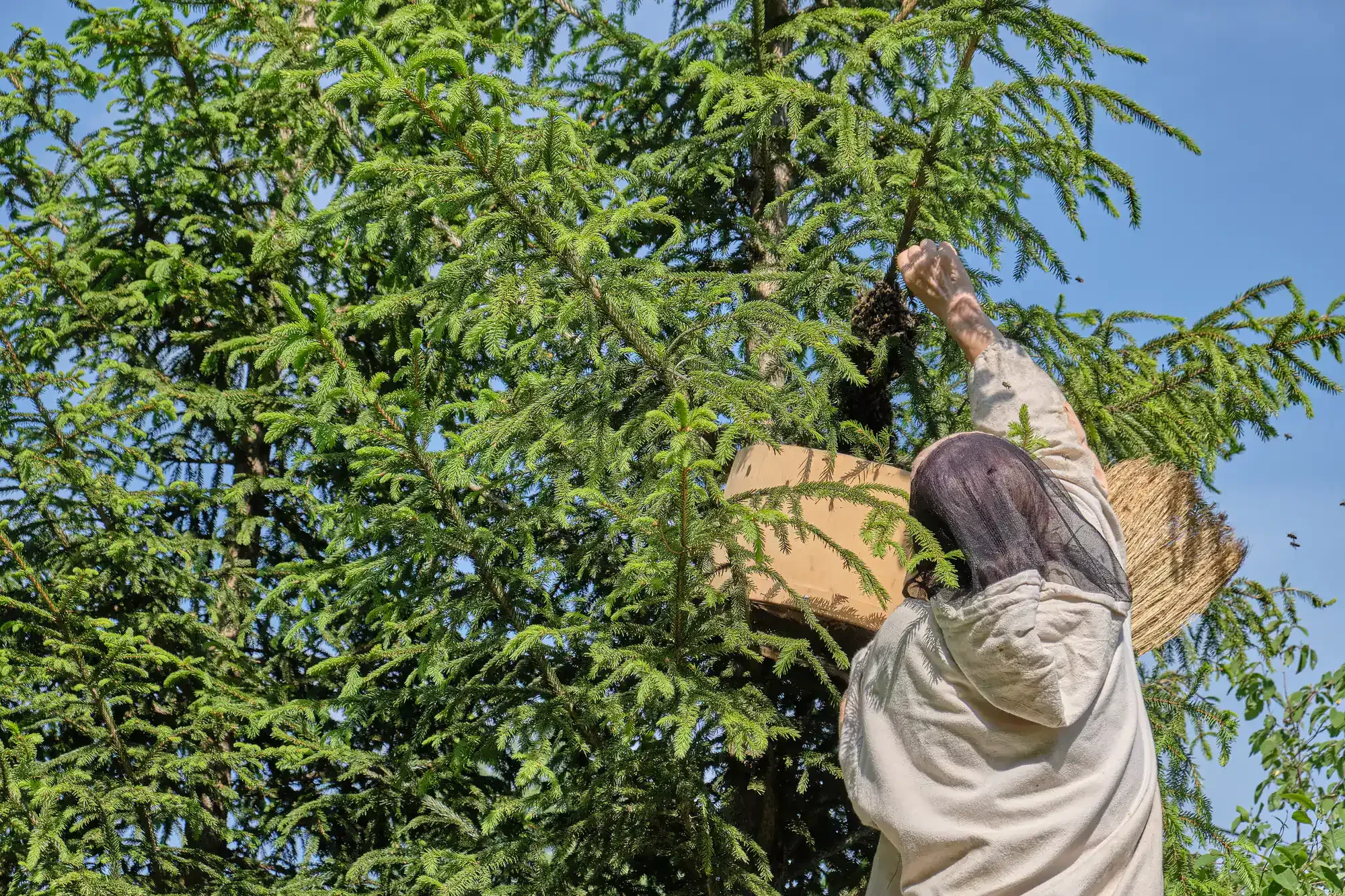
Size and location matter more than species alone. A small paper wasp nest under an eave with minimal activity is a very different situation from a yellow jacket colony in a ground burrow near a mowing path or a bald-faced hornet nest in a shrub line your kids walk past every day. The general rule is this: if the nest is within ten to fifteen feet of a door, walkway, play area, or anywhere people or pets pass regularly, it’s worth treating regardless of how calm it looks right now.
The other factor that Perry homeowners specifically should watch for is wall void activity. If you’re seeing wasps entering and exiting a gap in your siding, a crack around a window frame, or a hole near your soffit — and there’s no visible external nest — there’s a good chance the colony is building inside the wall. That’s a situation where a DIY spray almost never works and can actually make things worse by trapping an agitated colony inside your home. A professional inspection will tell you exactly what you’re dealing with before any treatment happens.
Yes, it changes the approach significantly. Paper wasps are the ones most people picture — they build the open, honeycomb-style nests under eaves and overhangs, and while they’ll sting if threatened, they’re generally less aggressive than yellow jackets. Treatment on an exposed paper wasp nest is usually straightforward and can often be completed in a single visit with minimal disruption.
Yellow jackets are a different situation. They’re more aggressive, they nest in the ground or inside wall voids, and their colonies can reach thousands of workers by late summer — which is exactly when they become most defensive because food sources are getting scarce. In the agricultural areas surrounding Perry Township, yellow jacket pressure tends to run high from August through September for this reason. Ground nests especially require direct treatment into the nest entrance, and disturbing one without the right approach can trigger a mass response. Bald-faced hornets, which build the large enclosed paper nests you’ll often see in tree lines and shrubs around Perry’s woodlots, are arguably the most aggressive of the three and should always be handled professionally.
The honest answer is: as soon as you find it. A queen wasp building a small nest in April or May is managing a colony of maybe a dozen workers. That same colony left untreated through a Michigan summer can reach several thousand workers by August — and that’s when stings happen, that’s when ER visits happen, and that’s when a manageable problem becomes a genuine hazard.
For Perry residents who commute to Lansing via I-69 and are away from home during daylight hours, it’s easy to miss early nest-building activity. Wasps are most active during the day when a lot of people aren’t home, so by the time a nest becomes visible or activity becomes obvious, the colony is often already well established. If you spot a nest in spring or early summer, that’s the best possible time to call — treatment is simpler, the colony is smaller, and the risk to anyone on the property is much lower. Waiting until fall to avoid the problem means living with it through the entire peak season.
This is one of the most common questions we get, and it deserves a straight answer. The treatments we use are applied directly to the nest and entry points — not broadcast across your yard or living space. Our technicians are trained in Integrated Pest Management, which means the approach is targeted. The goal is to use the least amount of product necessary to eliminate the colony effectively, applied precisely where it needs to go.
Re-entry times vary depending on what was used and where, but your technician will give you a specific window before leaving — not a vague “let it dry” answer. For most exterior treatments, that window is relatively short. If the treatment involved an interior wall void or an enclosed space, the guidance will be more specific to that situation. Perry families with young children or pets should feel comfortable asking for that detail upfront, and we’ll give you a clear answer before the job starts, not after.
They can try. Wasps don’t return to an old nest — once a colony is eliminated and the nest is removed, that specific structure won’t be reused. But if the conditions that made that spot attractive in the first place haven’t changed, a new queen can find it the following spring and start building again. This is especially common in Perry’s older homes, where gaps around soffits, deteriorating wood trim, and aging siding create entry points that stay open season after season.
That’s why entry point sealing is part of the process, not an optional add-on. After the colony is treated and the nest is removed, we identify and seal the structural access points that allowed the nest to form. This doesn’t guarantee that wasps will never find a new entry point — no honest company would promise that — but it significantly reduces the likelihood of the same problem recurring in the same location. If something does come back after treatment, our callback guarantee means you’re not starting over from scratch on your own dime.
Yes. We offer discounts for seniors, veterans, and first responders. Perry is a community that takes its Veterans Memorial Park seriously and has a genuine respect for the people who’ve served — offering a real discount to that group isn’t a marketing line, it’s just the right thing to do. If you or someone in your household qualifies, mention it when you call and it gets applied to your service.
Beyond that, we offer price matching against reasonable competitors’ rates. Perry’s cost of living runs well below the national average, and we understand that homeowners here are practical about what they spend. If you’ve already gotten a quote from another licensed pest control company serving the area and it’s lower, bring it up. The goal isn’t to be the cheapest option — it’s to make sure you’re not overpaying for work that’s done correctly. No binding contracts means you’re not locked in regardless of how the first visit goes. You stay because the service is worth it, not because there’s paperwork keeping you there.
Useful Links