
Hear from Our Customers
A wasp nest doesn’t stay small. What looks manageable in June — a nest the size of a golf ball tucked under your eave or along your fence line — can house thousands of workers by the time August rolls around. That’s how yellow jacket colonies grow in Michigan, and Thomas Township gives them everything they need to do it.
The rural-suburban mix here matters. Properties along the edges of the Tittabawassee River corridor, near the Nature Center and Preserve, or backing up to the agricultural land out toward Dice and Frost sit right at the boundary where stinging insect pressure is highest. Wooded edges, undisturbed ground, older homes with gaps in soffits and siding — it all adds up. Many homes in Thomas Township were built between the 1960s and 1990s, and those decades of settling create the exact entry points that yellow jackets exploit to nest inside wall voids where you can’t see them and can’t safely reach them.
When the nest is gone and the entry points are sealed, you get your yard back. Your kids can play outside again. Your dog isn’t circling something in the corner of the lawn. And you’re not rescheduling the backyard plans you’ve been looking forward to all spring.
We’ve been serving Michigan homeowners since 2005 — that’s two decades of wasp seasons, yellow jacket calls, and properties protected across Saginaw County and beyond. Roger Chinault founded First Choice Pest Control and brings 26 years of hands-on pest control experience to it. This isn’t a franchise. There’s no rotating cast of seasonal hires showing up at your door. Every technician we send is a trained, career pest control professional — not a part-time college student picking up summer work.
The same technician handles your Thomas Township property year after year. That means they already know your home — where the problem areas are, what was treated before, and what to watch for next season. For homeowners in Thomas who’ve been in their homes for years and expect that kind of consistency from the people they trust, that model makes a real difference.
We hold awards from Angie’s List and HomeAdvisor, are trained in Integrated Pest Management, and offer discounts for seniors, veterans, and first responders — because this community earns that.
It starts with a thorough inspection. Before anything is treated, your technician looks at the full picture — where the nest is, what species you’re dealing with, how accessible it is, and whether there are secondary entry points that need to be addressed. In Thomas Township, that inspection often turns up more than one issue. Older homes along the township’s established subdivisions frequently have multiple entry points along rooflines, soffits, and siding that aren’t obvious until someone who knows what to look for actually walks the property.
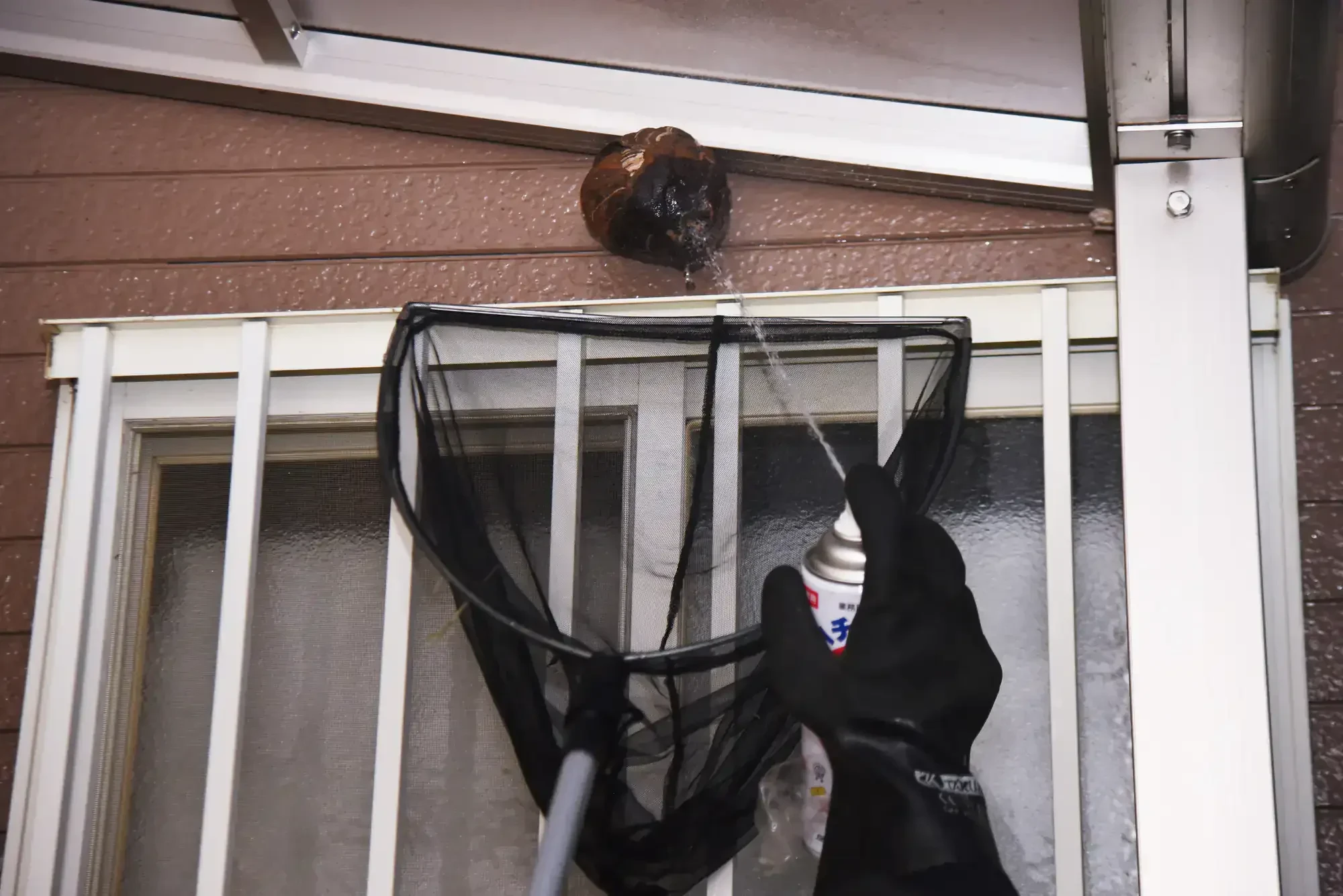
Treatment follows the inspection, and the approach depends on what’s there. Paper wasp nests under eaves are handled differently than a yellow jacket ground nest in your backyard or a colony that’s worked its way into a wall void. Yellow jacket ground nests, which are common in the yards and wooded edges throughout Thomas Township, require treatment at night when the colony is clustered — that’s not something a can of hardware store spray can safely replicate. We use professional-grade products that aren’t available over the counter, applied by someone who does this for a living.
After treatment, the nest structure is removed and entry points are sealed to reduce the chance of a new colony moving into the same spot next season. You’ll know what was done, what to expect in the days following, and when it’s safe to use your yard again.
Ready to get started?
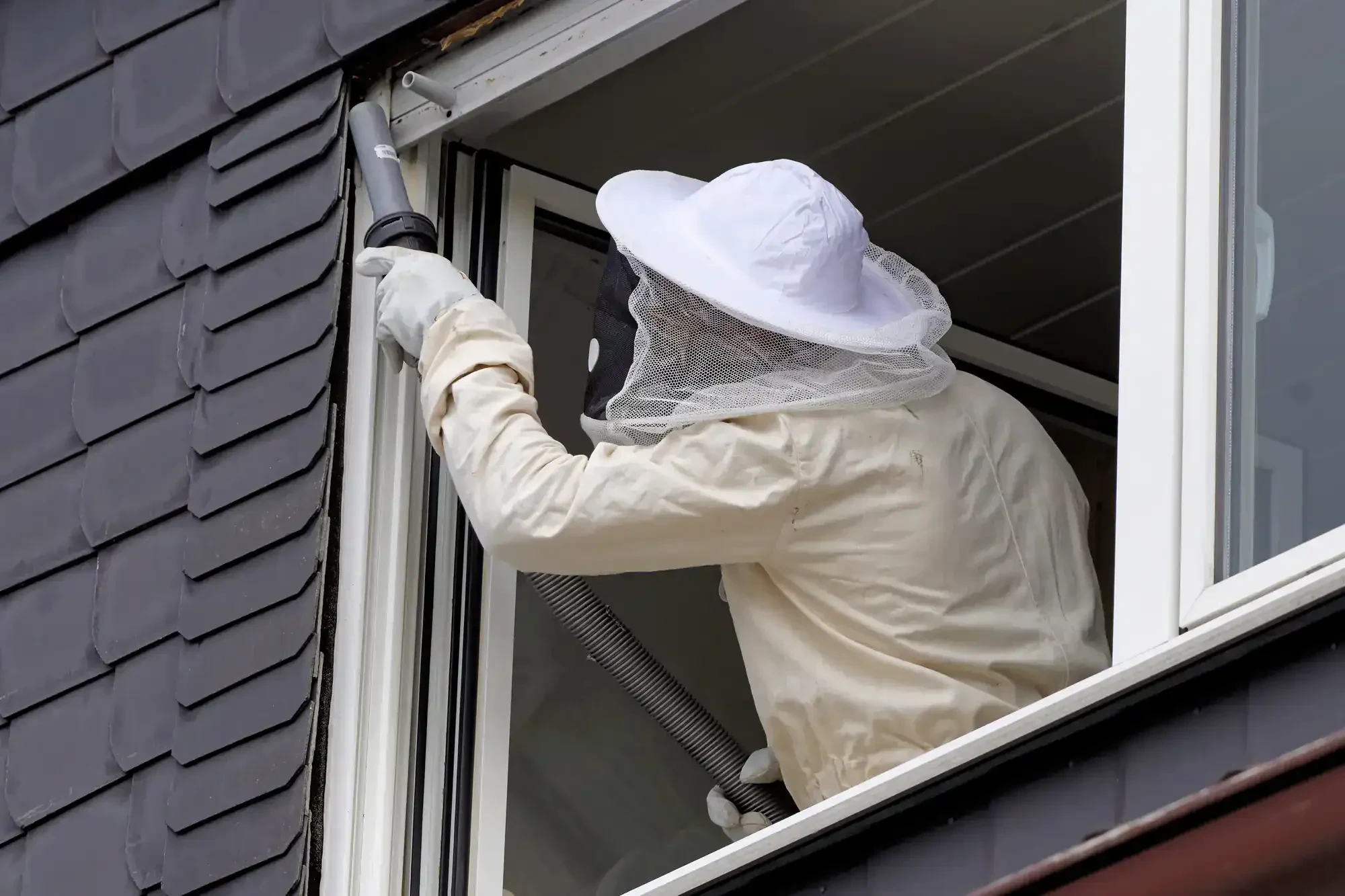
Our wasp nest removal service covers the full job — not just the visible nest. Your technician inspects the property, identifies the species, treats the colony at the source, removes the nest structure, and seals the entry points that made your home a target in the first place. That last part matters more in Thomas Township than people often realize. Homes built in the 1960s through 1990s — which make up a significant portion of the housing stock here — accumulate gaps in fascia boards, soffits, and window frames over the decades. Without sealing those points after treatment, you’re likely to see activity return in the same spot the following season.
We handle the full range of stinging insects common to Saginaw County: paper wasps, yellow jackets, bald-faced hornets, and mud daubers. Each one behaves differently, nests differently, and requires a different approach. You get a technician who knows the difference — not someone reading off a checklist.
All services are backed by a no-contract policy. You’re not locked into anything. We also price-match reasonable competitor rates, so if you’ve gotten a quote from another company serving the Thomas area, bring it up. There are no binding agreements and no pressure — just the work, done right.

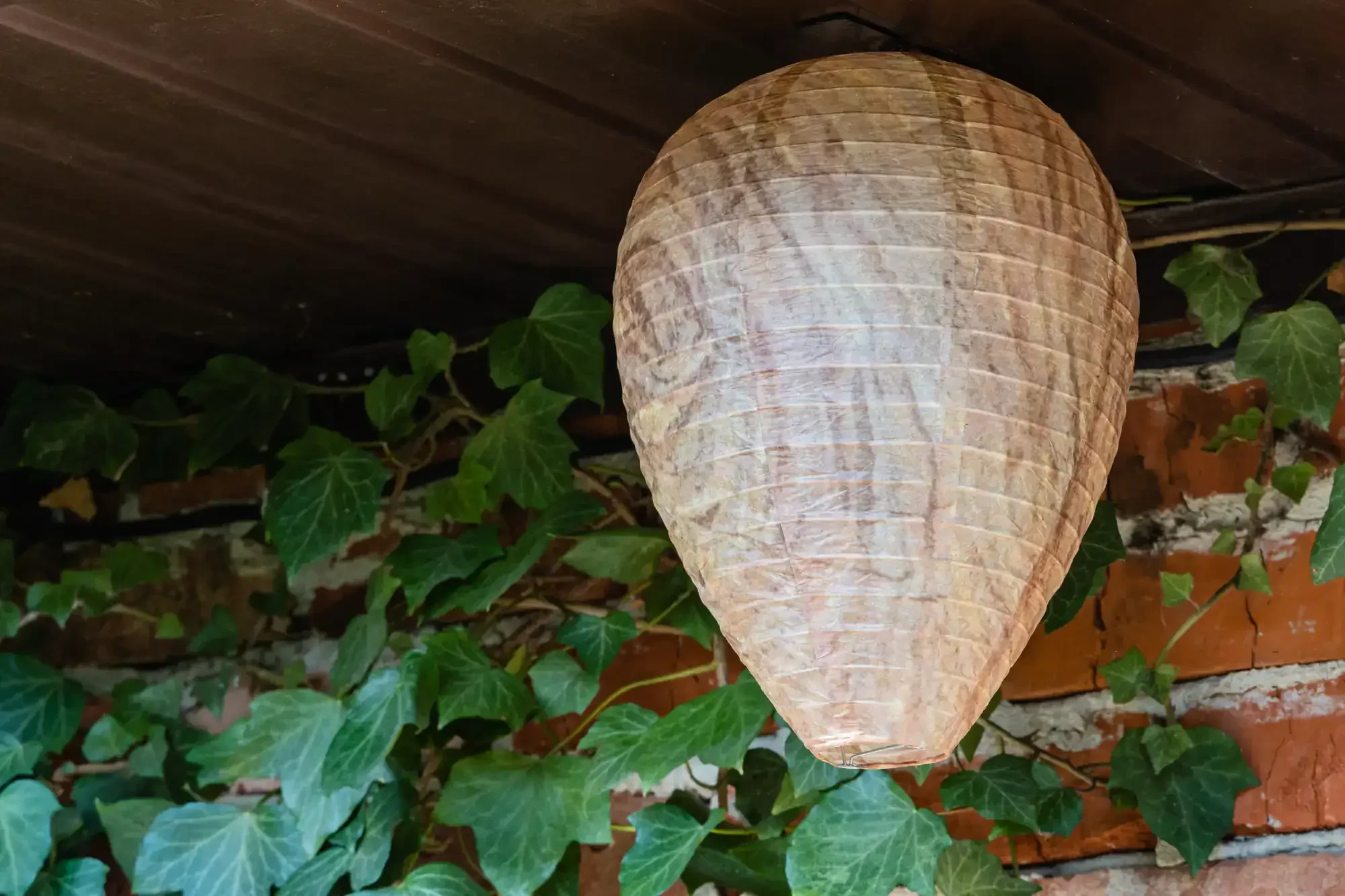
The two most common stinging insects Thomas Township homeowners deal with are paper wasps and yellow jackets, and they behave very differently. Paper wasps build the open, umbrella-shaped nests you typically see hanging under eaves, on deck railings, or inside the rafters of a garage or outbuilding. They’re relatively easy to spot and generally less aggressive unless the nest is disturbed directly.
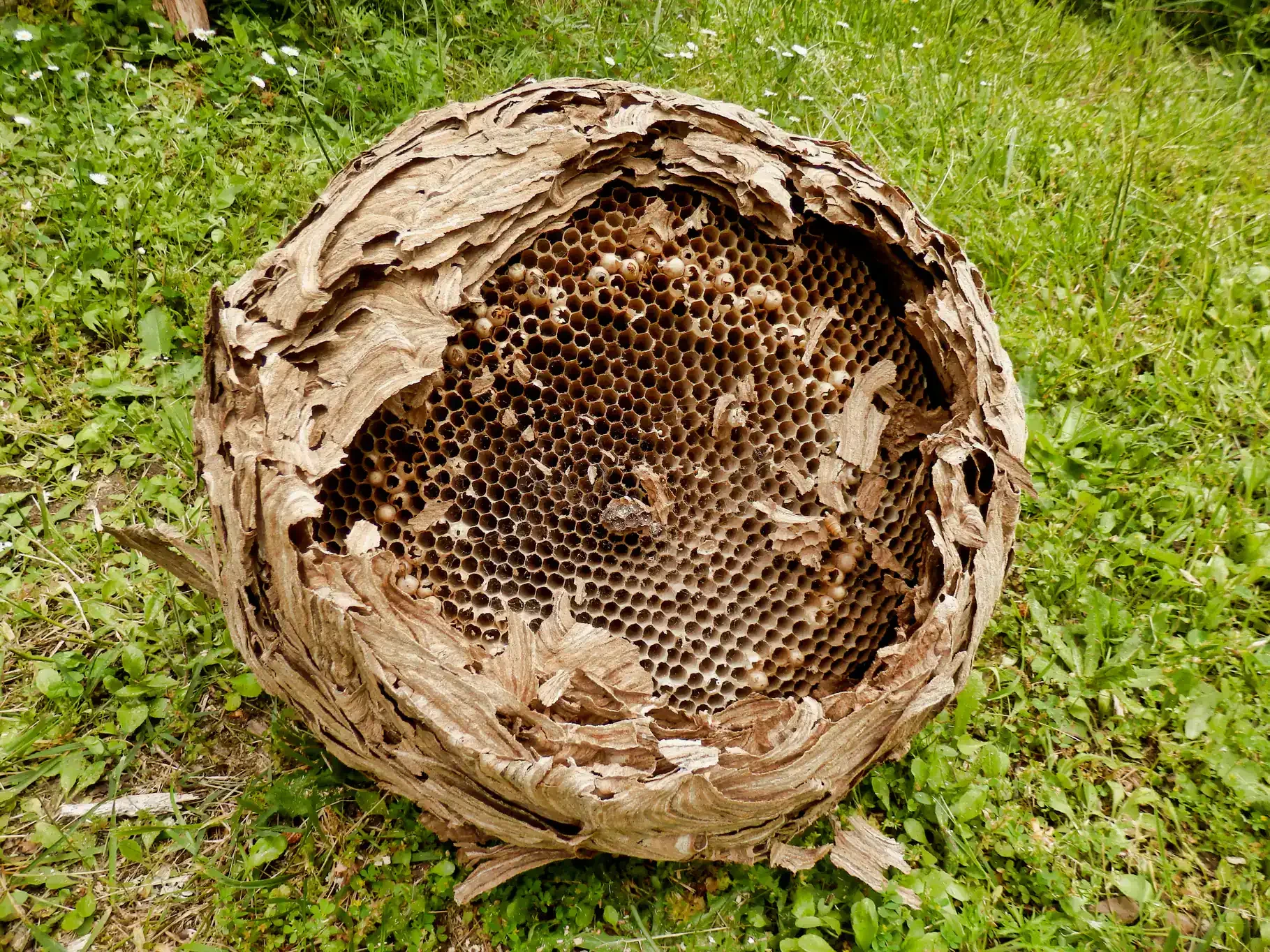
Yellow jackets are a different situation. They often nest underground — in abandoned rodent burrows, beneath landscaping timbers, or in the root zones of shrubs — which means you may not see a nest at all. What you notice instead is a stream of wasps flying in and out of a hole in the ground, or sudden aggressive activity when you’re mowing the lawn or working in the yard. In Thomas Township, where properties frequently border wooded areas, the Tittabawassee corridor, or open agricultural land, ground-nesting yellow jackets are extremely common. If you’re not sure what you’re dealing with, don’t try to get closer to find out. A professional inspection will identify the species and the scope of the problem before any treatment begins.
DIY removal is one of the more common mistakes homeowners make with stinging insects, and it usually ends one of two ways — either the colony isn’t fully eliminated and comes back, or someone gets stung badly enough to need medical attention. Over-the-counter sprays can work on small, exposed paper wasp nests if you catch them early in the season. But by mid-summer in Michigan, most colonies are large enough that a partial treatment just agitates the nest without eliminating it.
Yellow jacket colonies are the most dangerous to attempt on your own. A ground nest that’s been growing since spring can contain thousands of workers by August, and disturbing it — even accidentally while mowing — can trigger a mass stinging event. For anyone with a known allergy, that’s a medical emergency. Even without a known allergy, the CDC estimates that stinging insects send roughly 220,000 people to emergency rooms each year in the U.S. The cost of professional removal is significantly less than an ER visit, and the result is actually complete. If the nest is anywhere near a door, a play area, or a space your family uses regularly, professional removal is the right call.
In Thomas Township and throughout Saginaw County, the peak danger window for stinging insects runs from late July through September. Colonies that started with a single queen in April have been building all spring and early summer, and by August they can hold anywhere from 5,000 to 15,000 workers. That’s also when natural food sources start to decline, which makes yellow jackets more aggressive and more likely to show up where people are — around garbage cans, outdoor dining areas, and fallen fruit from backyard trees.
The timing lines up directly with when most Thomas Township families are spending the most time outside. Backyard gatherings, lawn care, kids playing outside after school — all of it happens during the same window when colonies are at maximum size and maximum aggression. The practical takeaway is this: if you notice wasp activity in June or early July, that’s the best time to call. The nest is smaller, the colony is easier to eliminate, and you won’t lose half your summer waiting to see if it gets worse.
Yes, and it’s more common in Thomas Township than many homeowners expect. A significant portion of the homes here were built between the 1960s and 1990s, and over decades, the small gaps that develop in soffits, fascia boards, siding seams, and around window and door frames become accessible entry points for yellow jackets and paper wasps looking for a protected nesting site. Wall void nests are particularly problematic because they’re hidden, they can grow large before anyone notices, and they’re impossible to treat safely without professional equipment and experience.
Signs of a wall void nest include a steady stream of wasps entering and exiting a small gap in your exterior siding or trim, a buzzing sound inside a wall, or in some cases, wasps appearing inside the house as the colony expands. Treating a wall void nest requires getting the product into the void itself — not just spraying the entry point — and then sealing that entry point after the colony is eliminated. If the entry point is sealed without treatment, the wasps will find another way out, sometimes into the living space of the home. This is a job that needs to be done in the right order, by someone who’s done it before.
We offer discounts for seniors, veterans, and first responders. Thomas Township has a median age of nearly 50, which means a significant portion of the community includes long-term homeowners who are retired or approaching retirement — people on fixed incomes who are managing home maintenance costs carefully. The senior discount is a direct acknowledgment of that reality, not a promotional footnote.
The veteran and first responder discounts reflect the same thinking. Thomas Township takes its community members seriously, and we operate with the same set of values. If you or someone in your household qualifies, just mention it when you call. There’s no paperwork process or fine print. We also price-match reasonable competitor rates, so if you’ve already gotten a quote from another pest control company serving the Saginaw County area, that’s worth bringing up as well.
Wasps don’t return to a nest that’s been properly eliminated and removed — the colony is gone. But that doesn’t mean a new colony won’t attempt to nest in the same location the following spring, especially if the entry points or conditions that made your property attractive in the first place haven’t been addressed. In Thomas Township, where older housing stock, wooded lot edges, and proximity to the Tittabawassee River corridor create persistent stinging insect pressure season after season, this is a real consideration.
That’s why we seal entry points after treatment — not just remove the nest. A soffit gap or siding seam that hosted a yellow jacket colony this summer is an open invitation for a new queen next April if it’s left unsealed. Beyond that, the same technician returns to your property year after year, which means they already know your home’s history and problem areas going into the next season. That kind of continuity — knowing what was treated, where, and what to watch for — is what actually reduces repeat problems over time.
Useful Links