
Hear from Our Customers
When yellow jackets are gone — really gone, not just quieted down for a week — everything changes. You can mow the back field without scanning the ground first. Your kids can run through the yard. You can work in the garden or head out to the barn without that low-level dread that’s been sitting in the back of your head since August. That’s what a proper yellow jacket nest removal in Burt, MI actually delivers.
The rural character of Taymouth Township creates conditions that most pest control companies don’t fully account for. Properties here aren’t tidy suburban lots — they’re larger, older, and full of the gaps, outbuildings, fence lines, and undisturbed ground that yellow jackets use to build colonies out of sight until it’s too late. The Flint River corridor running through the township adds riparian vegetation and moist embankments that ground-nesting species love. By the time most Burt homeowners realize there’s a nest, it’s late summer, the colony is at peak size, and the wasps are actively aggressive.
Getting the right exterminator matters here because the fix isn’t one-size-fits-all. A ground nest in an open field and a colony inside the wall of a century-old farmhouse require completely different approaches. Treating one like the other doesn’t solve the problem — it usually makes it worse. When the job is done correctly, you stop reacting and start living on your property again.
We founded First Choice Pest Control on May 31, 2005 — which means 2025 marks 20 years of serving mid-Michigan homeowners, including families across Saginaw County and the Taymouth Township area around Burt. Roger Chinault, our owner, has 26 years of personal, hands-on pest management experience. We built this company around a simple idea: the person treating your home should actually know what they’re doing and actually know your property.
That’s why we keep the same technician assigned to the same customers year after year. If you called last summer about a ground nest near your outbuilding off Burt Road, the person who comes back this year already knows your property’s history. You don’t have to explain it again. We also don’t staff up with inexperienced seasonal help during the summer rush — every technician is a trained professional, not someone filling a summer slot.
We hold MDARD Pesticide Application Business License #250081, have completed Integrated Pest Management training, and have earned awards from both Angie’s List and HomeAdvisor. No binding contracts. No corporate runaround. Just a licensed, experienced team that shows up and gets it done.
The first thing that happens when you call First Choice is simple — a real person picks up or calls you back fast. Our customers consistently mention the response time as one of the things they notice first, and in a rural community like Burt where you’re not exactly surrounded by local pest control offices, that matters.
Before any treatment happens, our technician identifies exactly what you’re dealing with. This step is more important than most people realize. Burt and the surrounding Taymouth Township area are home to two primary yellow jacket species with very different nesting behaviors. The Eastern Yellowjacket builds underground nests — often in abandoned animal burrows in open fields or garden beds, exactly the kind of undisturbed ground that’s common on larger rural properties here. The German Yellowjacket goes inside structures — wall voids, attics, crawlspaces — and is especially common in the older farmhouses and rural homes throughout this area. Misidentifying which one you have leads to a failed treatment and a more aggressive colony. Getting that identification right is where the job actually starts.
Once the nest is located and the species is confirmed, we apply treatment using targeted, IPM-certified methods — meaning the right product, in the right place, in the right amount. After treatment, you’ll receive guidance on what to expect over the following days and how to reduce the chances of yellow jackets returning to the same spot the following season. Every treatment is backed by a 1-year service guarantee — if they come back within the guarantee period, so do we.
Ready to get started?
Yellow jacket pest control near you in Burt, MI through First Choice covers the full scope of the problem — not just the visible part. That means species identification, nest location, targeted treatment, and a follow-up guarantee. Whether the nest is in the ground along a field edge, inside the wall of an older home, tucked into a barn or shed, or up in an attic, we build our process around what’s actually there — not a standard template applied to every job.
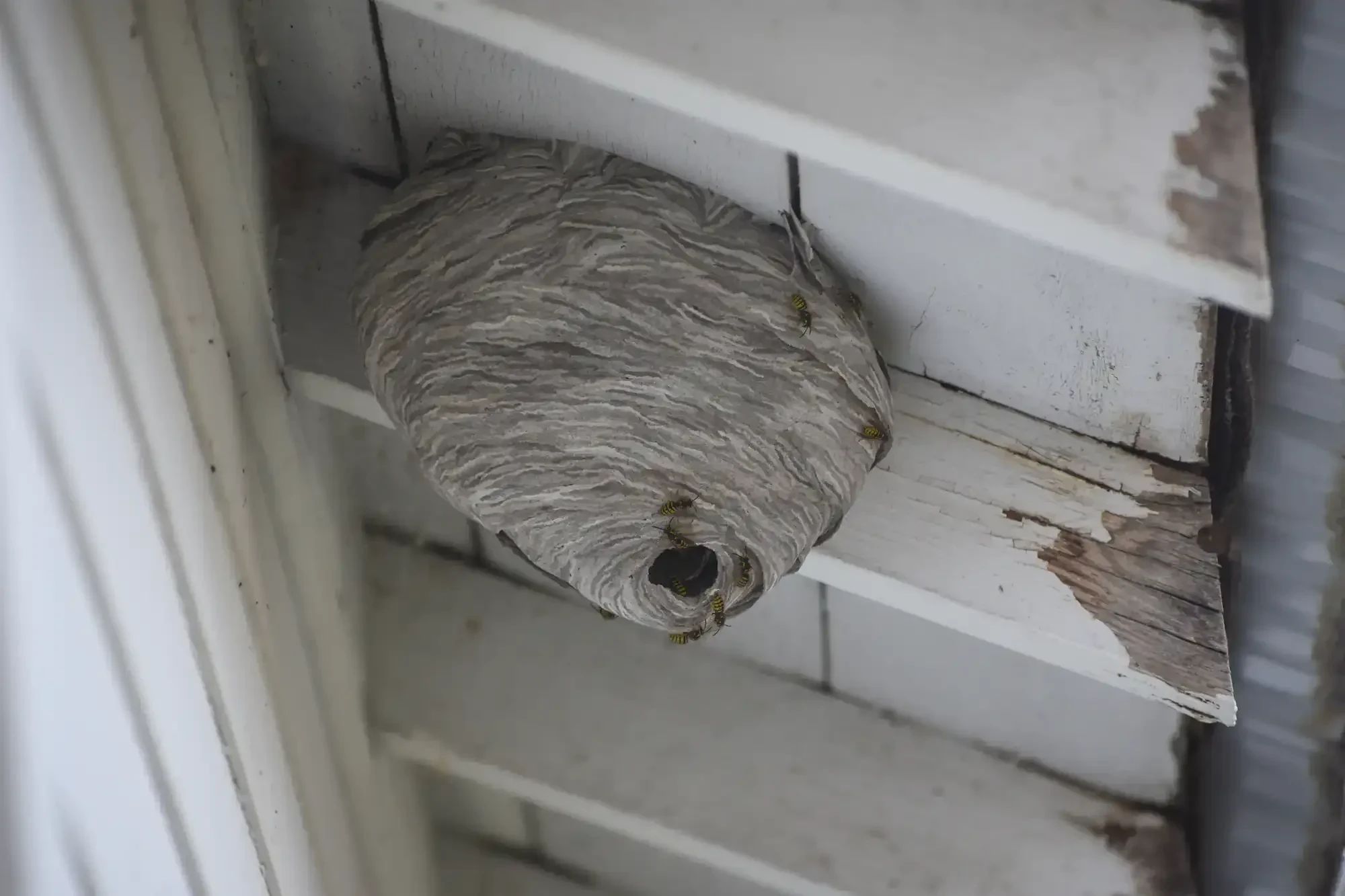
For Burt-area homeowners, attic yellow jacket removal and wall-void treatments are among the more common calls, particularly from older homes in Taymouth Township where aging soffits, deteriorating siding, and gaps around chimneys give German Yellowjackets easy access. These are the infestations that tend to go undetected the longest — until wasps start coming through the drywall or emerging inside the house. At that point, the colony is usually large and the structural risk is real. We treat these situations with the same hands-on approach regardless of how far along the infestation is.
We also serve commercial properties in the Burt area — farms, outbuildings, agricultural operations, and small businesses. Discounts are available for seniors, veterans, and first responders, which is worth mentioning in a community where the demographic skews older and where Burt-area families have deep roots. If you’ve received a quote from another licensed provider, we will match reasonable competitor rates. No contracts required.
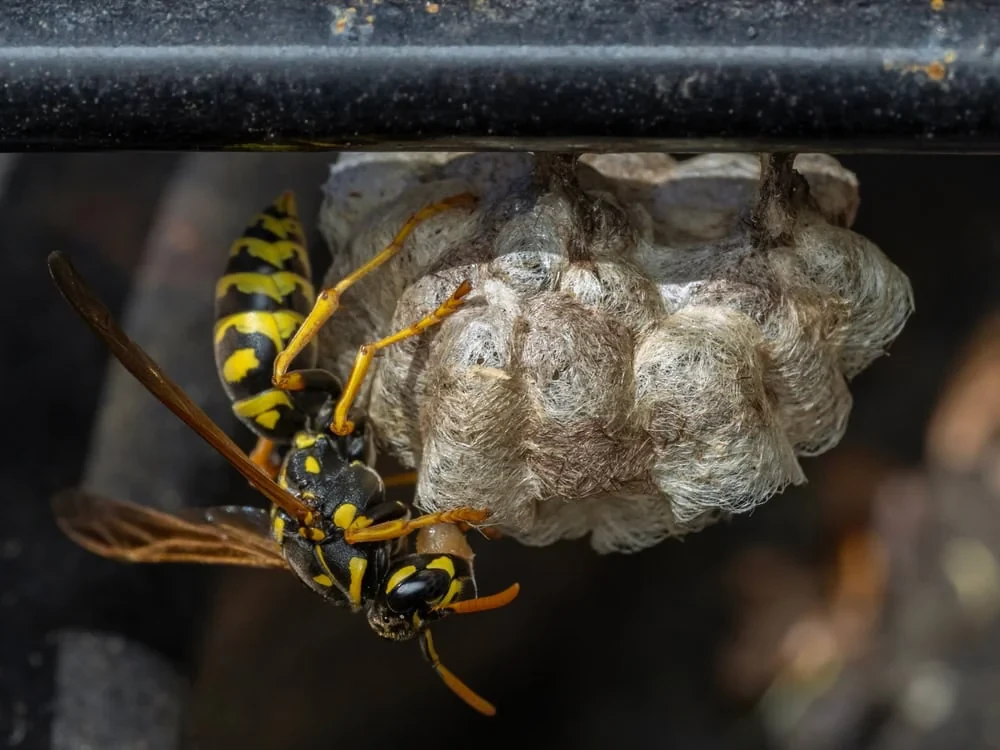
The most common sign is a consistent line of yellow jacket traffic going in and out of a specific gap or crack in your siding, soffit, eave, or foundation — usually the same spot, over and over. You might also hear a low buzzing or crackling sound coming from inside a wall, especially in a quiet room. In some cases, homeowners don’t notice until wasps start appearing inside the house, which means the colony has grown large enough to chew through the drywall from the inside out.
This is more common in Burt and Taymouth Township than people expect, because the older housing stock throughout the area — farmhouses and rural homes with aging exteriors — gives German Yellowjackets plenty of entry points. If you’re seeing yellow jackets entering your home’s structure rather than flying around the yard, don’t wait. Wall-void colonies grow fast through the summer and become significantly harder to treat by September. Call a licensed exterminator to get eyes on it before the colony expands further.
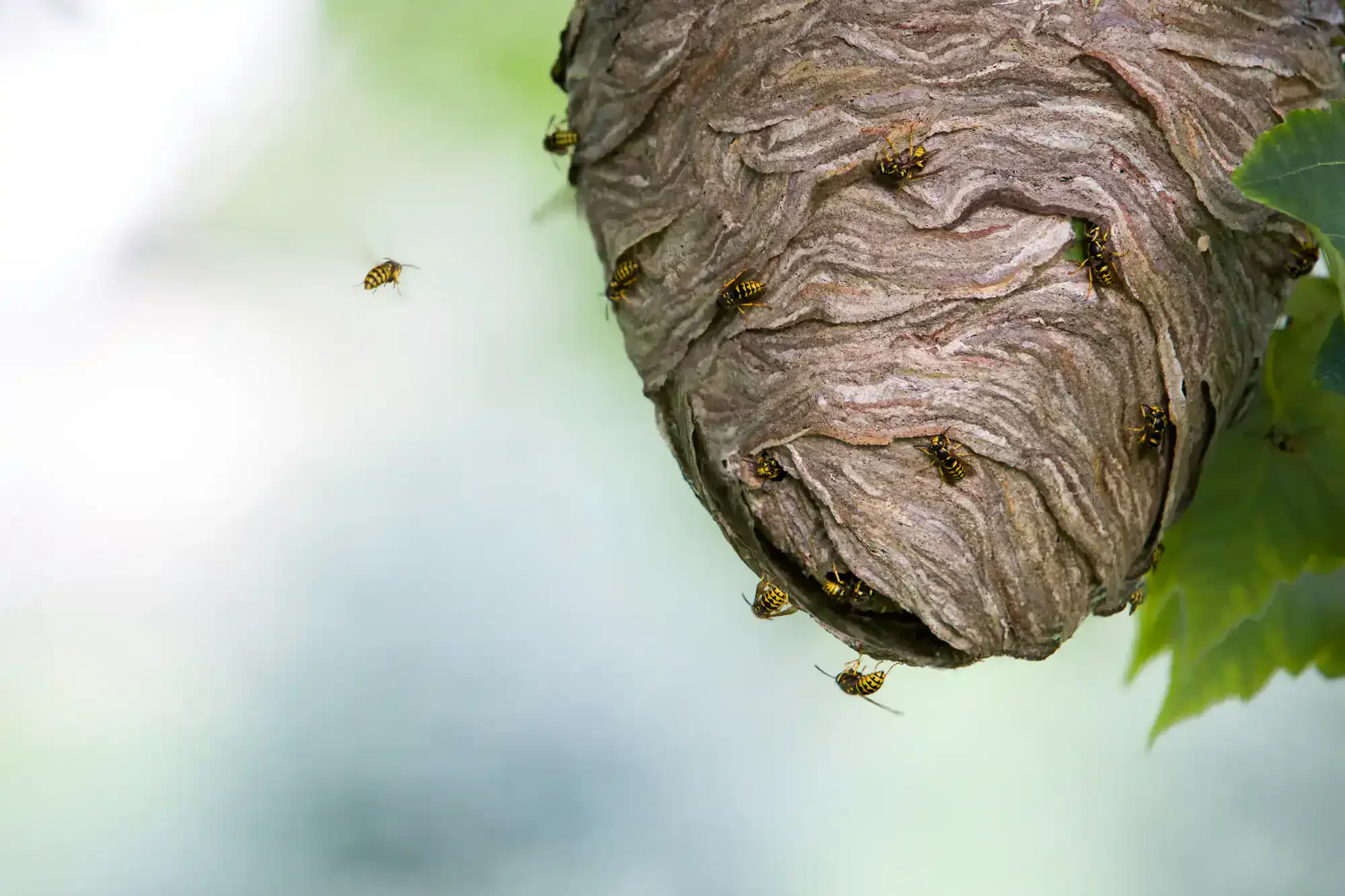
It matters more than most people think, because the species determines where the nest is, how large it gets, how aggressive the colony behaves, and what treatment approach actually works. Yellow jackets are a specific type of wasp — compact, bright yellow and black, and far more aggressive than most other stinging insects. They’re also the ones most likely to sting repeatedly and without much provocation, especially in late summer when colonies are at peak size and workers are actively foraging for food.
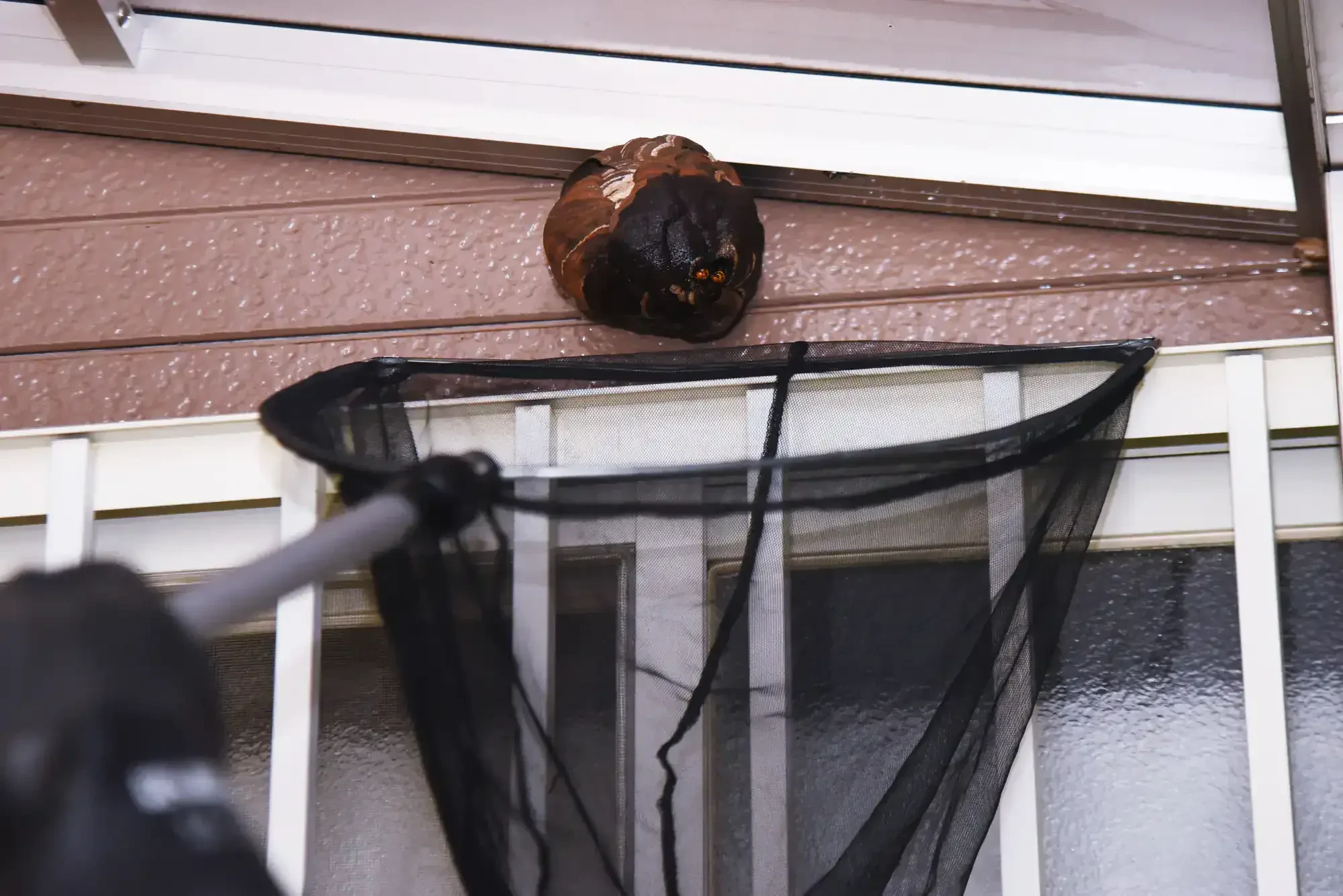
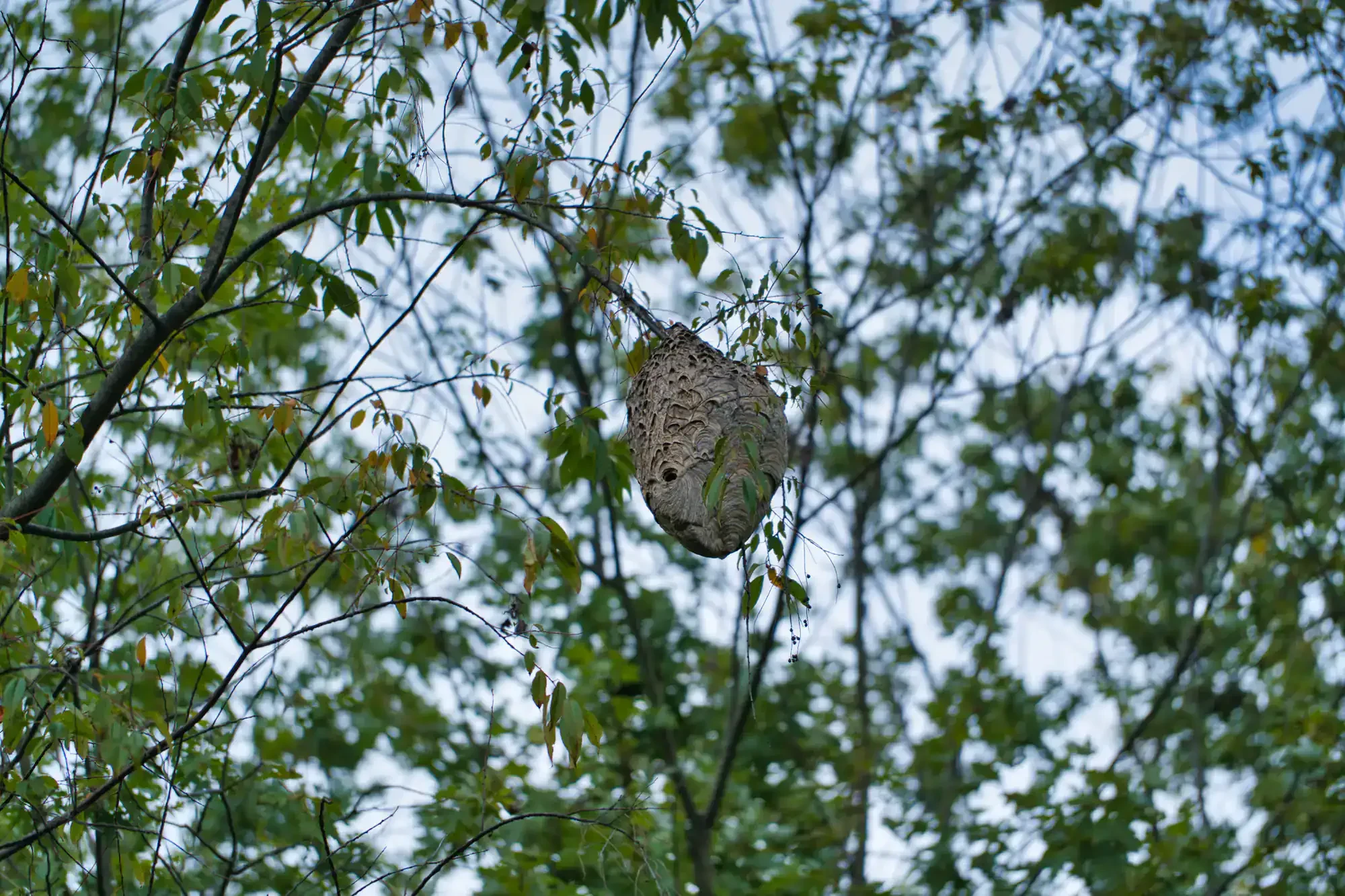
In Burt and the surrounding Saginaw County area, the two species you’re most likely to encounter are the Eastern Yellowjacket, which nests underground, and the German Yellowjacket, which nests inside structures. Paper wasps, by comparison, build the open, umbrella-shaped nests you might see under an eave — they’re less aggressive and generally easier to treat. Hornets are larger and typically nest in trees or shrubs. Treating a yellow jacket infestation with the same approach you’d use on a paper wasp nest is a common DIY mistake. Getting a proper identification before treatment is the starting point for any job that’s actually going to work.
Most people who call us have already tried. A can of spray foam over the entry hole, a store-bought wasp killer applied at night, pouring something down a ground nest — these approaches either don’t reach the queen, don’t treat the full colony, or seal the nest in a way that forces yellow jackets to find a new exit point, which sometimes means through your living space. The result is usually a more agitated colony and a bigger problem.
The risk isn’t just a failed treatment. Yellow jackets send over 500,000 people to emergency rooms nationwide every year, and between half a percent and four percent of the population experiences anaphylaxis — a severe allergic reaction — from stings. Many people don’t know they’re in that group until it happens. On a rural Burt property where a ground nest might be in the middle of a field or tucked under an outbuilding, disturbing a colony without the right protective equipment and treatment approach can trigger a mass defensive response fast. For a wall-void nest, improper treatment can drive thousands of workers deeper into the structure or into your home. A licensed exterminator with the right tools and experience handles this in a way that’s both safer and more effective than DIY.
Yellow jacket season in Michigan runs from late spring through early fall, but the danger window in Burt peaks in August and September. That’s when colonies have reached their maximum size — anywhere from 1,000 to 5,000 workers — and when yellow jackets shift from hunting insects to seeking out sugary foods. It’s also when they’re most defensive and most likely to sting with little warning. If you’re doing late-summer yard work, harvesting a garden, or just spending time outside on your property, that’s the overlap where most stings happen.
The important thing to know is that the colony started in spring with a single queen. By the time you notice yellow jacket activity in your yard or structure in July or August, the nest has been growing for months. Calling early — as soon as you notice consistent traffic around a specific spot — gives you a better outcome than waiting until the colony is at full strength. Michigan’s shoulder seasons can also extend activity later than expected. A warm September or October in Saginaw County means yellow jackets stay active and aggressive longer than the calendar might suggest, so don’t assume the problem has resolved itself just because summer is technically over.
The colony itself doesn’t survive winter — workers and the original queen die off in the fall. But new queens that mated in late summer will overwinter and emerge in spring looking for a place to start a new nest. If the original nest site is still accessible — an unsealed gap in siding, an undisturbed area of ground, an opening in a soffit — a new queen may choose the same location the following season. It’s not the same colony, but the result looks the same to the homeowner.
On rural Burt properties, this is especially common with ground nests in open fields, fence lines, and garden areas that don’t get disturbed over winter. For wall-void nests, old nest material left inside the wall can also attract other pests — including rodents and certain flies — after the yellow jackets are gone. After treatment, we provide guidance on sealing entry points to reduce the likelihood of a new colony establishing in the same spot next spring. The 1-year service guarantee also covers you if yellow jacket activity returns within the guarantee period — we come back and re-treat at no additional charge.
Yes — we offer discounts for seniors, veterans, and first responders. In a community like Burt, where the population skews older and where a lot of residents have deep roots in Taymouth Township, those discounts apply to a meaningful portion of the people calling. If you or someone in your household qualifies, just mention it when you call and ask about current availability.
We also match reasonable competitor rates. If you’ve already gotten a quote from another licensed pest control provider serving the Burt or Saginaw County area, bring it to the conversation. The goal is to make sure cost isn’t the reason you end up going with a provider you’re less confident in. You’re not locked into any contract either way — no annual agreements, no recurring billing you didn’t ask for. You call when you have a problem, the job gets done right, and it’s backed by a 1-year guarantee. That’s the whole arrangement.
Useful Links