
Hear from Our Customers
Out here in Clyde Township, properties aren’t small. You’ve got wooded edges, open fields, maybe a barn or shed that doesn’t get checked often — and that’s exactly where yellow jackets set up. A colony that started in an abandoned ground burrow along your property line in April can house thousands of workers by August. By the time you find it, it’s not a small problem anymore.
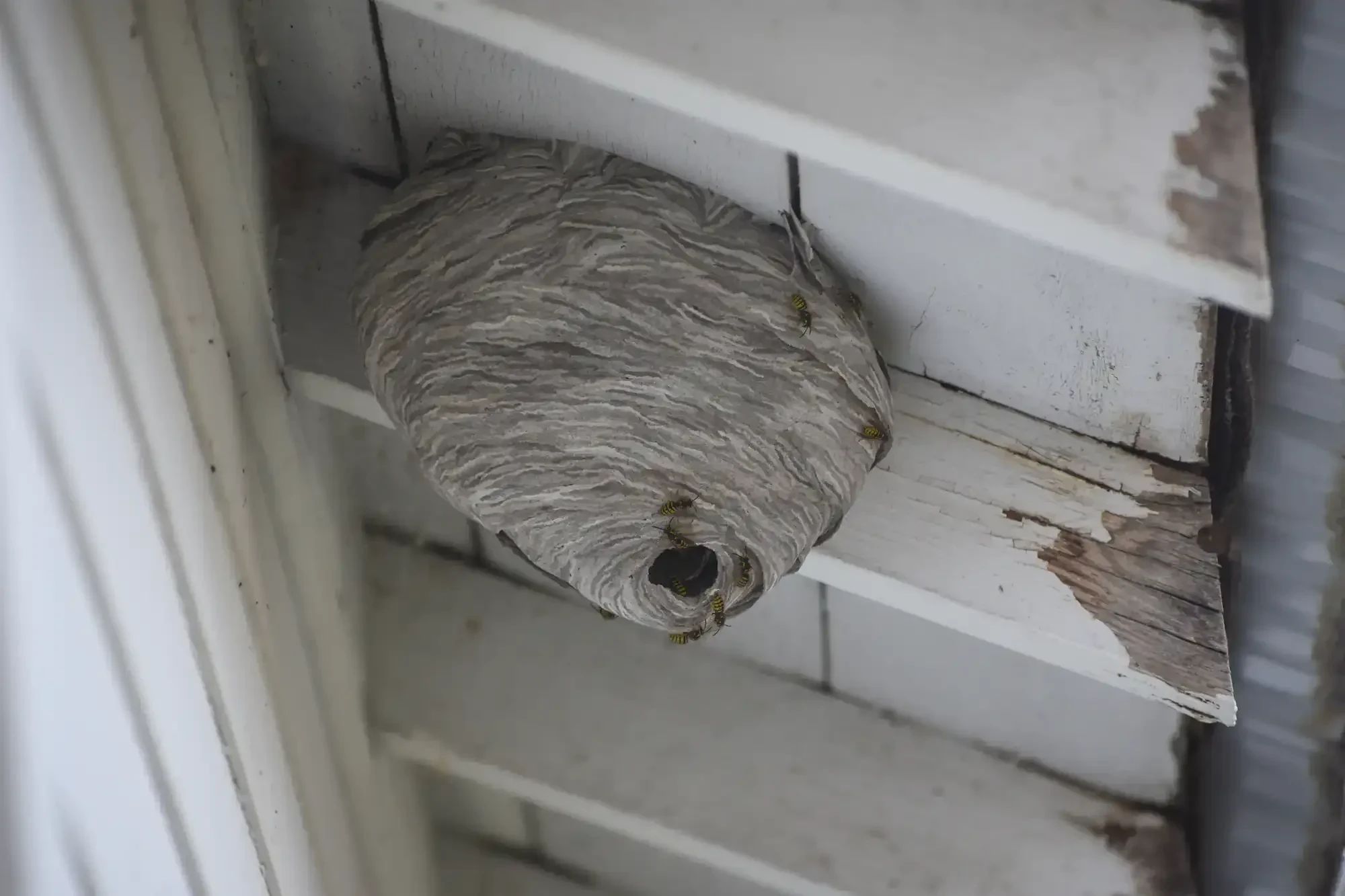
The older homes throughout North Street and the Ruby area come with their own risks. Aging soffits, gaps around utility penetrations, deteriorating siding — these are open invitations for German Yellowjackets looking for a wall void to call home. Once they’re inside, they chew through insulation and drywall to expand. Homeowners often don’t realize it until yellow jackets start showing up through interior vents or outlets.
Getting this handled correctly means you can walk your property again, use your outbuildings without hesitation, and let your kids and pets outside without watching every step. It also means your walls stay your walls — not a nesting site. That’s the outcome. That’s what a proper yellow jacket exterminator in Clyde, MI actually delivers.
We’ve been operating in Michigan since May 31, 2005 — and in 2025, that’s 20 years of doing this work the right way. Roger Chinault, our founder, brings 26 years of personal pest management experience to every job. That’s not a corporate bio line — that’s the man who built this company still leading it.
What makes us different for Clyde Township homeowners isn’t just the experience. It’s the consistency. You get the same technician year after year. That technician learns your property — where the vulnerabilities are, what’s been treated before, what to watch for along your wooded lot or near the Black River corridor. That kind of familiarity doesn’t happen at a national chain.
We hold MDARD Pesticide Application Business License #250081, have completed Integrated Pest Management training, and carry a 4.7 out of 5 rating on Angi backed by real verified reviews. No binding contracts. We price match for reasonable competitor rates. We offer discounts for seniors, veterans, and first responders — which matters in a community where the median age runs close to 50 and people have earned those benefits.
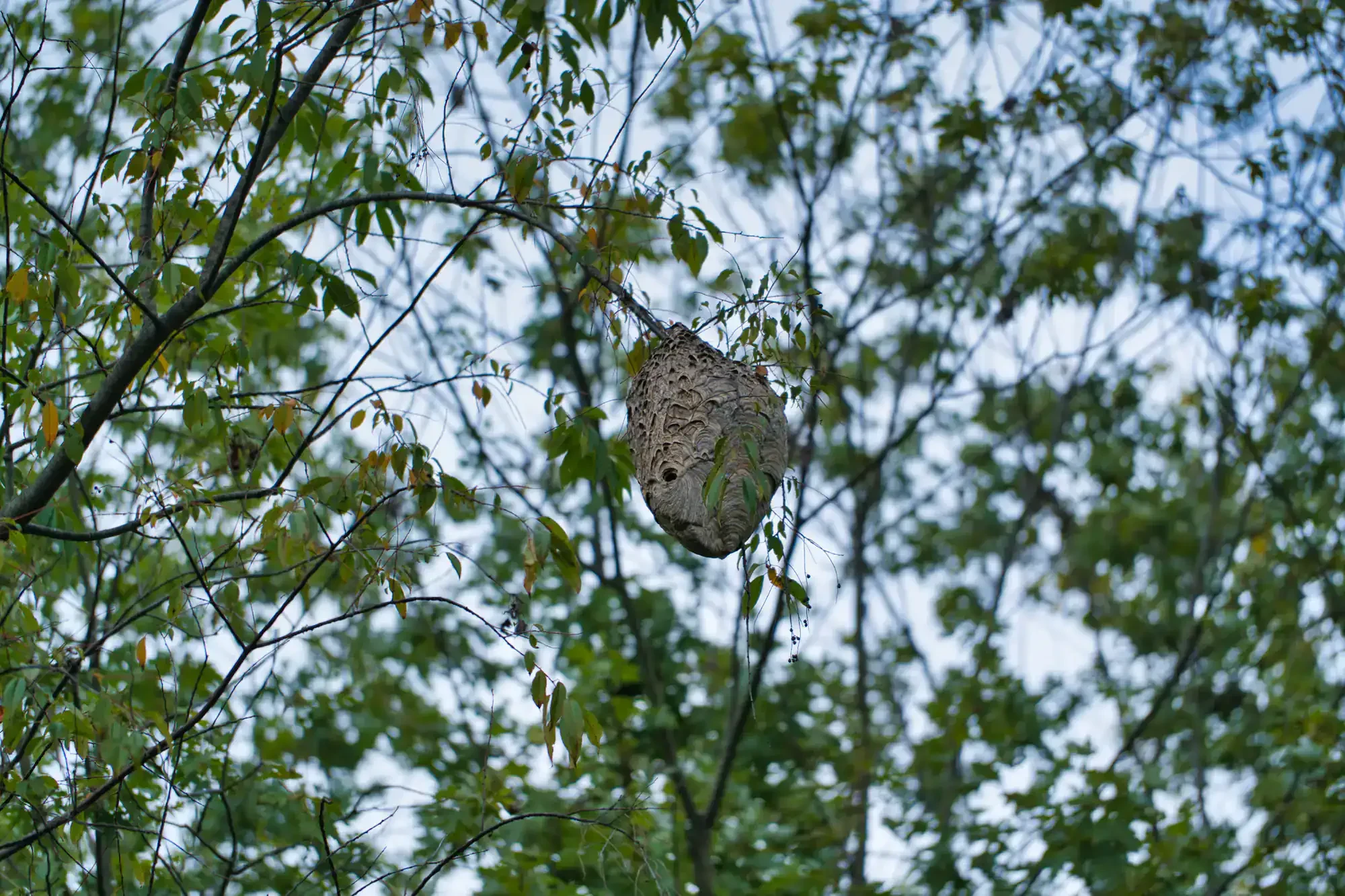
The first thing our technician does when they arrive at your Clyde Township property is identify exactly what you’re dealing with. That matters more than most people realize. Michigan has two primary yellow jacket species with very different nesting habits — the Eastern Yellowjacket builds underground, favoring the open fields and wooded margins common on larger rural lots throughout the township. The German Yellowjacket nests inside structures, exploiting the gaps and aging entry points found in mid-1900s homes throughout North Street and the surrounding area. Treating the wrong species the wrong way doesn’t solve the problem — it often makes it worse.
Once the species and nest location are confirmed, we select treatment based on what’s actually there — not a one-size-fits-all approach. Ground nests, wall voids, attic colonies, and outbuilding nests each require a different method. For wall-void infestations especially, application has to be precise. A careless treatment can drive a colony deeper into your home’s structure or force workers into your living space. Our IPM-trained technicians know the difference, and we treat accordingly.
After treatment, you’ll know what was done, what to expect in the following days, and what’s covered under our 1-year service guarantee. If yellow jacket activity returns within the guarantee period, we come back at no additional charge. For properties near the Port Huron State Game Area — where new queens establish colonies on neighboring residential land every spring — that guarantee isn’t a formality. It’s real protection.
Ready to get started?
Yellow jacket pest control in Clyde Township isn’t a one-type problem. The combination of large rural lots, older homes, agricultural outbuildings, and proximity to the Port Huron State Game Area creates multiple nesting scenarios that show up on the same property. We handle all of them — ground nests discovered while mowing, wall-void colonies in farmhouses with aging siding, attic yellow jacket removal in homes where wasps have been entering through gaps in the roofline, and nests in barns or sheds that haven’t been opened since early spring.
Every service includes a thorough inspection of the main structure and the surrounding property — not just the one spot you called about. On rural Clyde Township properties, secondary nests in outbuildings or along wooded edges are common and often missed. Finding them before they become a separate emergency matters.
Our 1-year service guarantee covers you if activity returns after treatment. We also offer price matching for reasonable competitor rates, so if you’ve already gotten a quote from another St. Clair County provider, bring it — we’ll work with you. Seniors, veterans, and first responders receive discounts, and there are no binding contracts required. The service stands on its own results, not paperwork that locks you in.
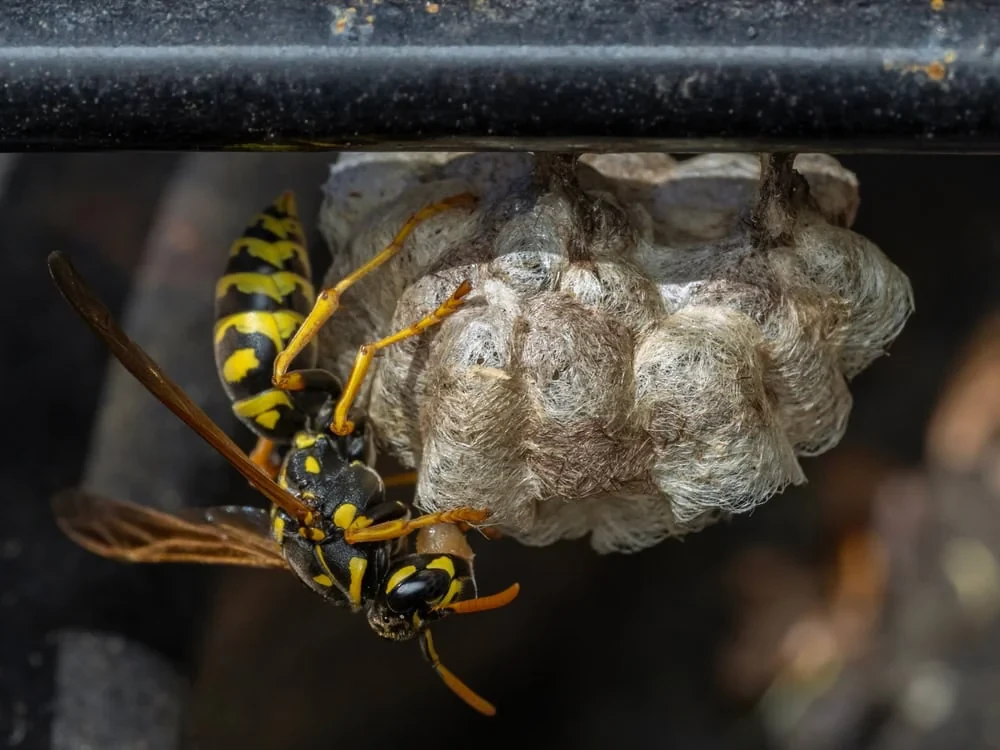
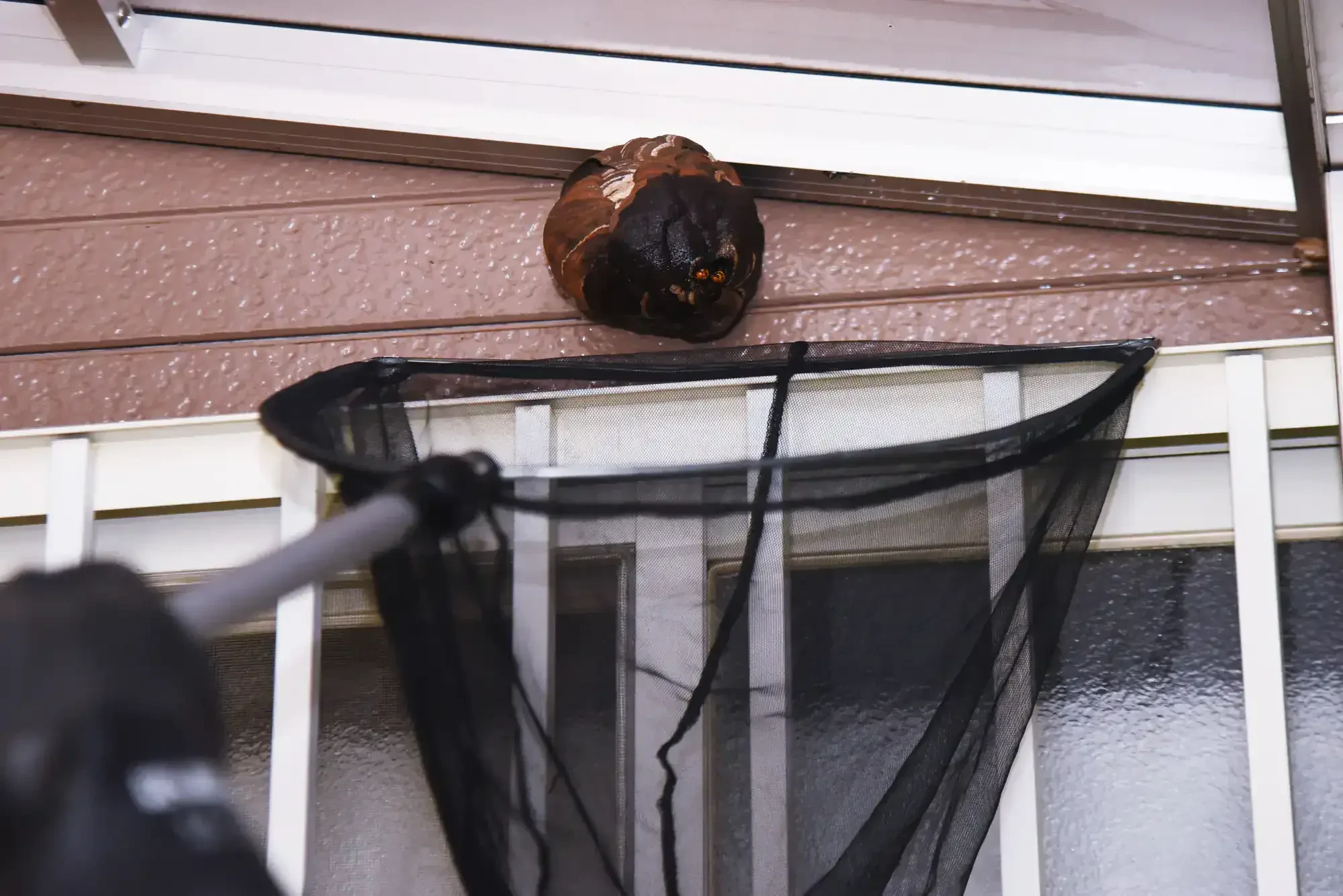
The most common sign is seeing yellow jackets entering and exiting a small gap in your siding, soffit, or around a window frame — usually in the same spot repeatedly. Inside the home, you might hear a faint buzzing or chewing sound coming from the wall, especially in a quiet room. In more advanced cases, workers start appearing inside through electrical outlets, ceiling vents, or gaps around light fixtures.
In Clyde Township, the mid-1900s housing stock throughout North Street and the Ruby area is particularly vulnerable. Older wood siding, deteriorating soffit boards, and aging chimney mortar create the exact entry points German Yellowjackets look for. If you’re seeing any of these signs in late July through September, the colony is likely already well-established. That’s not the time for DIY aerosol spray — that can drive the colony deeper into the wall cavity or force workers into your living space. A professional inspection is the right first call.
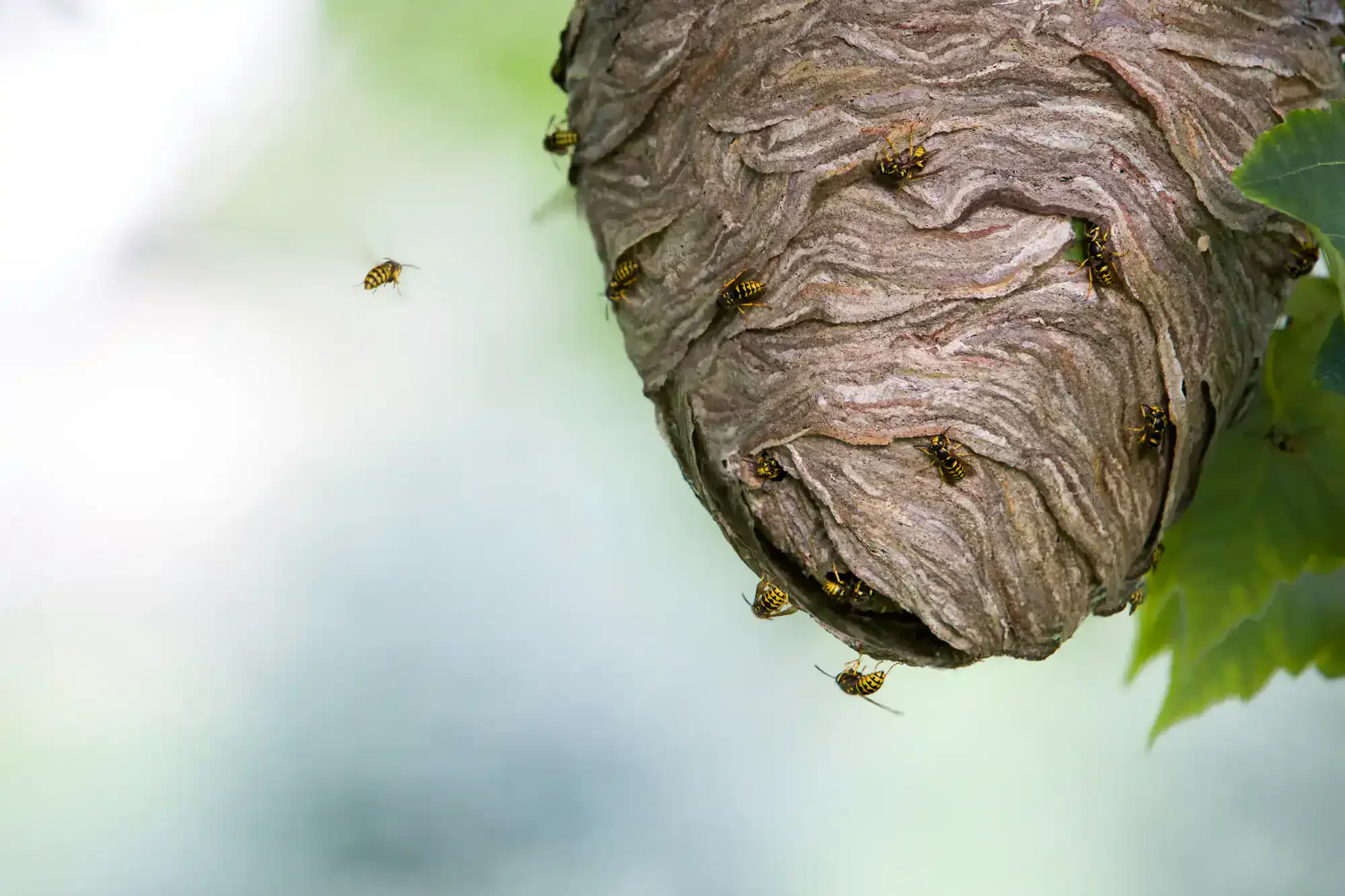
It matters a lot, and it’s one of the most common points of confusion homeowners run into. Yellow jackets are a type of wasp, but they behave differently from paper wasps or hornets in ways that directly affect how they’re treated. Paper wasps build the open, umbrella-shaped nests you typically see under eaves — those are usually straightforward to treat. Yellow jackets nest in enclosed spaces: underground burrows, wall voids, attics, and hollow trees. They’re also significantly more aggressive, especially in late summer when colonies are at peak size and workers are protecting new queens.
Misidentifying the species and applying the wrong treatment is a common DIY mistake. A foam or aerosol product aimed at a paper wasp nest won’t penetrate a wall-void yellow jacket colony — and disturbing the entry point without treating the nest can trigger a defensive response that sends thousands of workers looking for the threat. Our technicians identify the exact species before selecting any treatment approach, which is the only way to get it right the first time.
Late summer is when yellow jacket colonies hit their peak population — anywhere from 1,000 to 5,000 workers in a mature colony — and the workers are under biological pressure to protect new queens that will carry the colony into next year. At the same time, their natural food sources are declining, which drives them to forage more aggressively for sugars. That combination makes August and September the most dangerous months by far.
The Black River corridor and the Port Huron State Game Area create a large adjacent reservoir of yellow jacket habitat — wooded edges, open fields, and undisturbed ground that support high colony density. Residents who hike the Wadhams to Avoca Trail, use Jake Simpson Wilderness Park, or simply spend time near the river in late summer are moving through territory where foraging yellow jackets are common and on edge. If you’ve noticed increased yellow jacket activity on your property in August, it’s not coincidence — colonies from adjacent wildland areas regularly establish nests on neighboring residential lots in Clyde, and the pressure builds every year as the season progresses.
For a small, exposed paper wasp nest under a rarely-used eave, a store-bought aerosol at dusk might be reasonable. For yellow jackets — especially a ground nest on a large rural lot or a wall-void colony in an older Clyde home — the risk of a DIY attempt going wrong is real and significant. Yellow jackets are fast, they communicate threat signals to the entire colony almost instantly, and a disturbed nest in a wall void can send workers into your living space through interior gaps.
The structural risk is also worth considering. Applying the wrong product to a wall-void colony without sealing entry points correctly can trap workers inside, leading them to chew through drywall or plaster looking for an exit. On Clyde Township properties with mid-1900s construction, that kind of damage is expensive to repair. A professional treatment costs a fraction of what structural repair runs — and it comes with a 1-year guarantee. If the nest returns, we come back. That’s not something a can of spray from the hardware store offers.
Most treatments are completed in a single visit, though the timeline depends on nest size, location, and accessibility. A ground nest on an open lot is typically faster to treat than a wall-void colony in a two-story farmhouse that requires locating all entry points and treating through multiple access areas. Our technician will give you a realistic time estimate based on what they find during the inspection.
As for timing, the best window for treatment in Clyde Township is typically July through September — which is also, not coincidentally, when yellow jackets are most dangerous. Treating earlier in the season, when colonies are smaller, is easier and carries less risk, but most homeowners don’t discover a nest until it’s already large. Clyde’s location near Lake Huron can extend the active season slightly compared to more inland Michigan areas — the lake’s moderating effect on temperatures can delay the first hard frost, keeping colonies active into October. Don’t assume the problem resolves itself once the calendar turns to fall. Large colonies can remain aggressive well into autumn.
Yes — we offer discounts for seniors, veterans, and first responders. In Clyde Township, where the median age sits close to 50 and many residents have served in the military or work in public safety roles commuting to Port Huron, these discounts apply to a meaningful portion of the community. When you call to schedule, just mention which discount applies to you and the team will confirm current availability.
Beyond the discounts, we don’t require binding contracts — which is worth noting because some pest control companies in the St. Clair County area lock customers into multi-year agreements before they’ve seen a single result. We also price match reasonable competitor rates, so if you’ve already gotten a quote from another local provider, bring it to the conversation. The goal is straightforward: give you the most qualified service at a fair price, with a 1-year guarantee backing the work. No contracts, no pressure, no surprises on the invoice.
Useful Links