
Hear from Our Customers
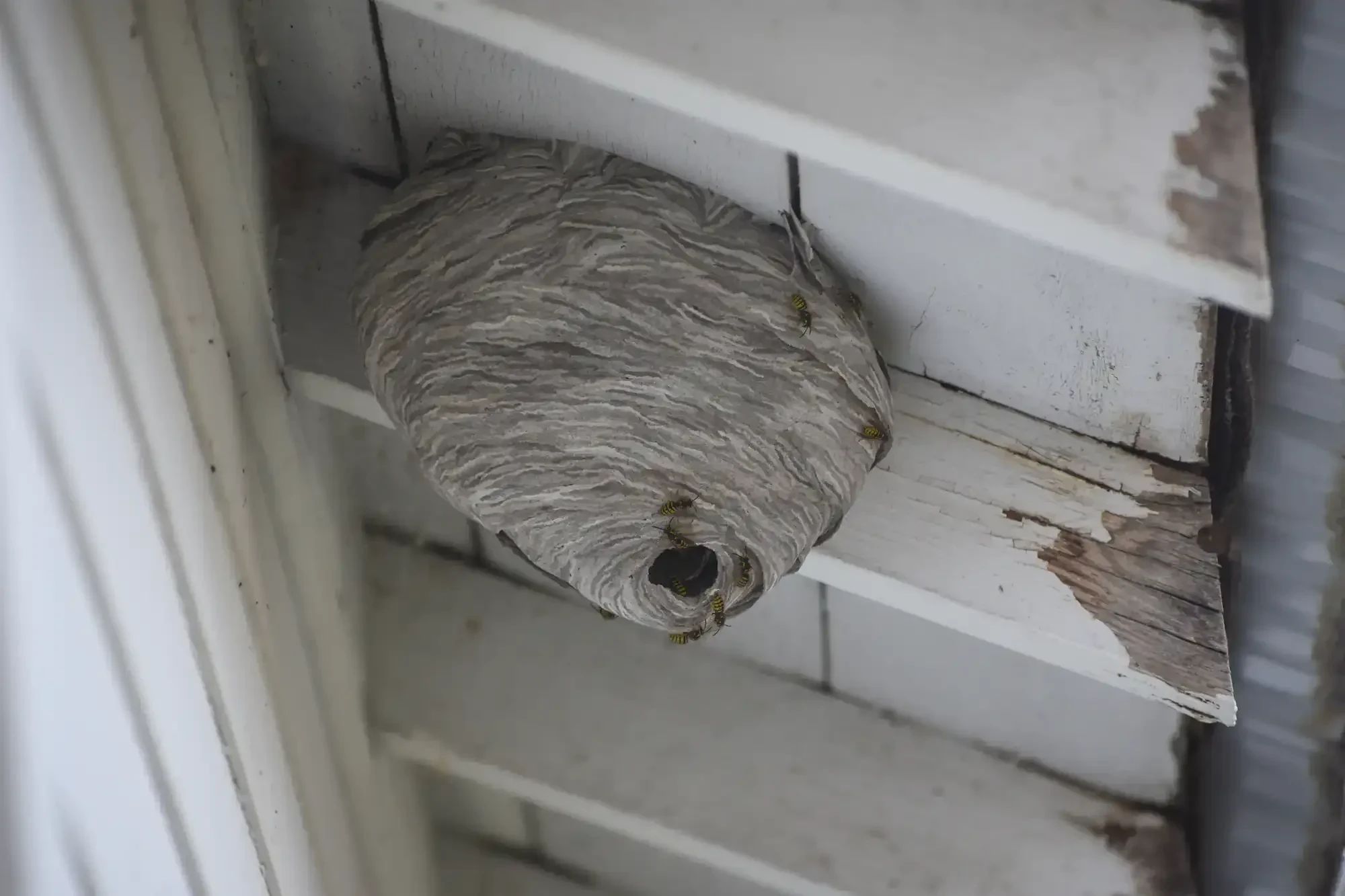
Yellow jackets don’t just sting — they take over. Once a colony gets established in a wall void, under a deck, or in the ground near your outbuilding, the whole area around it becomes theirs. You stop using the back porch. You stop letting the kids play near the shed. You start planning your yard around a pest instead of your own life.
That changes fast when the nest is gone and the entry points are sealed. For homeowners in Fowlerville’s village core — where older homes with aging soffits, loose fascia boards, and gaps around chimney flashing are common — that means no more wasps pushing through the same wall crack every August. For families on acreage out in Handy Township, it means ground nests in the meadow edges and outbuildings are handled before someone steps on one without knowing it’s there.
Late July through September is when yellow jacket colonies in this area hit their peak size and their peak aggression. That’s also when the Fowlerville Family Fair draws thousands of people to Grand River Avenue — and when foraging workers are ranging far and wide looking for food. Getting ahead of the problem before it reaches that point is always easier. But if you’re already in the middle of it, a trained technician who knows Livingston County’s specific pest pressure and housing conditions makes all the difference between a treatment that works and one that doesn’t.
We were founded on May 31, 2005 — which means this year marks 20 years of protecting Michigan homes and businesses. Roger Chinault, our founder, brings 26 years of personal, hands-on pest management experience to every job. That’s not a number pulled from a marketing sheet. It’s the kind of experience that means he’s already seen your exact situation — probably dozens of times.
What sets us apart from the regional chains that show up in Fowlerville search results is straightforward: you get the same technician assigned to your property year after year. They learn your home. They know where the problem spots are. You don’t have to re-explain your situation to someone new every season. We also don’t hire part-time seasonal workers to cover summer demand — every technician is a trained professional, not a college student filling a summer slot during the exact months when yellow jacket colonies are most dangerous.
We hold MDARD Pesticide Application Business License #250081, have completed Integrated Pest Management training, and carry a 4.7 out of 5 rating on Angi with verified reviews and awards from both Angie’s List and HomeAdvisor. Seniors, veterans, and first responders receive special discounts — because in a community like Fowlerville, that matters.
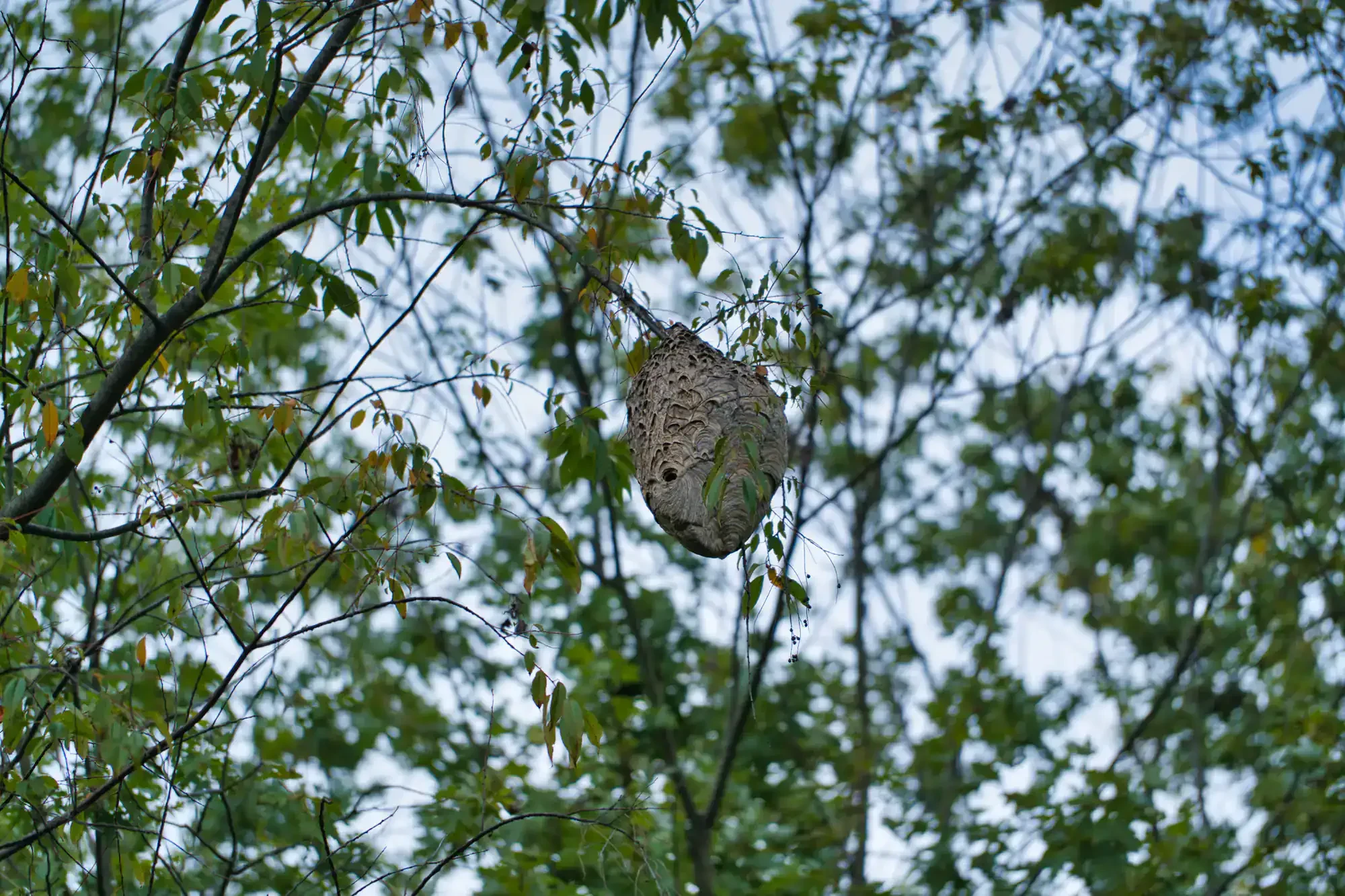
It starts with identification — and this step matters more than most people realize. Michigan is home to multiple yellow jacket species, and the two most common in the Fowlerville area behave very differently. The German Yellowjacket prefers wall voids, attics, and enclosed spaces — the kind of nesting sites common in the older homes throughout Fowlerville’s village core. The Eastern Yellowjacket nests underground in soil and abandoned mammal burrows — exactly the conditions found on acreage properties throughout Handy Township. Treating both the same way leads to treatment failure and a colony that’s now agitated and deeper in your wall. Correct species identification comes first, every time.
Once the nest location and species are confirmed, we apply treatment directly and precisely — not broadcast across your whole property. For wall-void and attic nests, that means targeted application at the entry points and nest site, followed by guidance on sealing those gaps to prevent re-entry. For ground nests, it means treating the colony at the source. Our IPM-based approach is designed to resolve the problem without unnecessary chemical exposure to the rest of your home, your yard, your pets, or your children.
After treatment, you’ll know exactly what was used, when it’s safe to return to treated areas, and what to watch for over the following days. Every yellow jacket treatment we provide comes with a 1-year service guarantee — if activity returns within the guarantee period, we return at no additional charge. No haggling, no fine print, no new service call fee.
Ready to get started?
We handle yellow jacket infestations across the full range of property types that make up the Fowlerville area. That includes in-village homes along the older residential streets near downtown, rural and semi-rural properties in Handy Township with outbuildings and acreage, and commercial properties along the Grand River Avenue corridor — including food-service businesses, manufacturing operations like those near the Ventra facility, and any outdoor workspace where yellow jacket activity creates a liability.
For residential customers in Fowlerville, common service scenarios include attic yellow jacket removal in older homes where deteriorating soffits or chimney flashing have created entry points, ground nest treatment in yards and meadow edges, wall-void infestations that have gone undetected through the spring and early summer, and nest removal from decks, sheds, and detached garages. For commercial customers, the focus is on resolving yellow jacket activity near loading docks, outdoor break areas, dumpster enclosures, and customer-facing spaces where stings create real risk.
All treatments are performed by a licensed, experienced technician — not a seasonal hire — and are backed by our 1-year service guarantee. We offer price matching on reasonable competitor rates, so you’re not leaving money on the table by choosing experience over a cheaper quote. If you’re a senior, veteran, or first responder in the Fowlerville area, ask about current discount availability when you call.
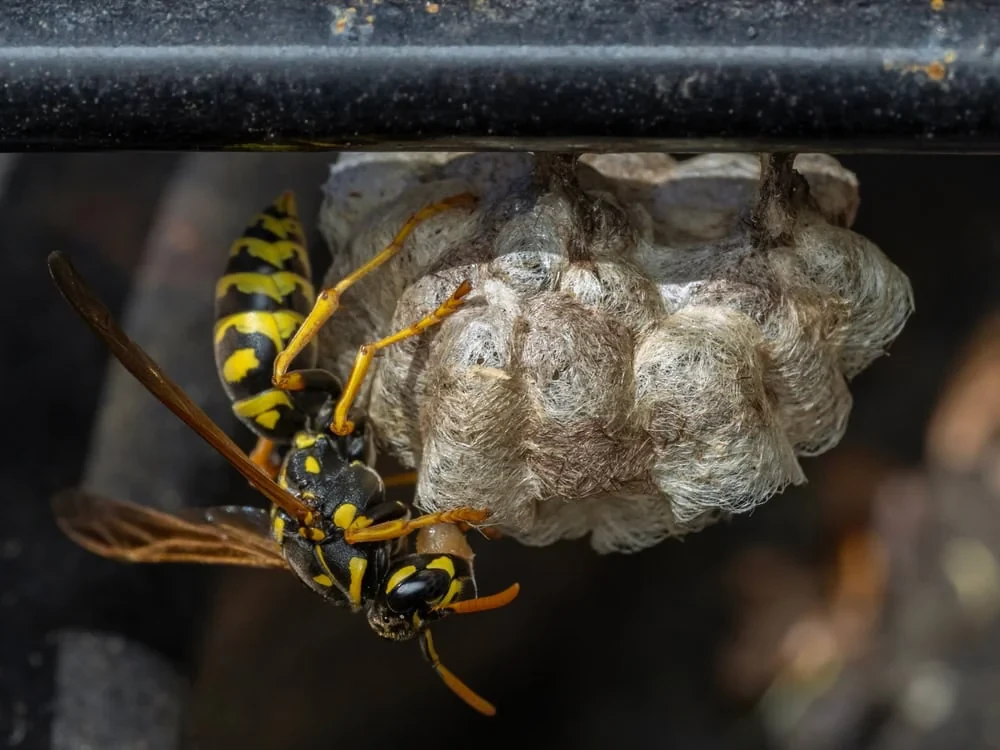
The most common sign is consistent wasp traffic in and out of a single small gap — a crack in the siding, a gap around a window frame, a space where the soffit meets the fascia board. If you’re seeing five or more yellow jackets entering or exiting the same spot repeatedly, especially in the morning and midday hours, there’s almost certainly an active nest on the other side of that wall. You might also hear a faint buzzing or chewing sound from inside the wall cavity, particularly in older homes where the insulation is thin or absent.
In Fowlerville’s village core, where a significant portion of the housing stock dates back to the early-to-mid 20th century, wall voids are especially common nesting sites. Older construction means more gaps, more deteriorated wood framing, and more opportunities for German Yellowjackets to establish colonies inside the structure. By the time you notice wasps coming through a light switch plate or a baseboard gap on the interior, the colony is typically already large and well-established. That’s not a situation for a hardware store spray — it requires a trained technician who can locate the nest, treat it correctly, and seal the entry point so the same spot isn’t re-colonized next spring.
Store-bought wasp sprays can work on small, exposed aerial nests that you can see clearly and reach safely from ground level. But they’re not designed for wall-void infestations, ground nests in soil, or any situation where the nest is inside a structure. Spraying a consumer product into a wall gap without knowing where the nest is located often drives the colony deeper into the wall — or causes workers to push through into the interior of your home through gaps around outlets, baseboards, or light fixtures.
Beyond the structural issue, yellow jackets are uniquely aggressive when disturbed. Unlike honeybees, they can sting multiple times, and a colony of 1,000 to 5,000 workers defending a threatened nest is a serious physical danger — especially if you or anyone in your family has an unknown sensitivity to venom. Stinging insects send more than 500,000 people to the emergency room in the U.S. every year, and between 0.5% and 4% of the population experiences anaphylaxis from stings. For a ground nest on Handy Township acreage or a wall-void colony in an older Fowlerville home, the risk of a botched DIY attempt is real. A licensed technician with the right treatment approach resolves the problem once, correctly, without putting anyone in danger.
Yellow jacket colonies in Livingston County follow a predictable seasonal pattern. Queens emerge in late March and April and begin building new nests. Through May and June, the colony is growing but relatively small and not particularly aggressive toward people. By mid-July, worker populations are large enough that the colony becomes noticeably active — and this is exactly when the Fowlerville Family Fair is running at the Livingston County Fairgrounds on Grand River Avenue. The combination of outdoor food, crowds, and agricultural activity during the fair creates conditions that attract foraging yellow jackets from a wide area.
August and September are the most dangerous months. Colonies reach their maximum size during this window, and as natural food sources shift, yellow jackets become increasingly aggressive in pursuing sugary food and protein near people. This is when most sting incidents happen and when the majority of calls for yellow jacket extermination in the Fowlerville area come in. October brings a natural die-off of the colony, but nests left inside walls or attics still create problems — dead nest material attracts rodents and other pests, and the entry points remain open for a new queen to re-establish the following spring. Treating the nest and sealing entry points before winter is the right move.
The national average for yellow jacket exterminator services runs around $725, with wall-void and attic infestations typically ranging from $500 to $1,300 depending on nest location, accessibility, and colony size. Ground nest treatment on open property tends to be on the lower end of that range. Nests inside walls, attics, or other enclosed spaces — which are more common in Fowlerville’s older housing stock — typically require more involved treatment and fall toward the higher end.
The more useful way to think about cost is to compare it against the alternatives. An emergency room visit after a sting incident runs $1,000 or more before insurance. Drywall and insulation repair after a wall-void nest is left untreated — or after a failed DIY attempt drives the colony deeper — can run $2,000 to $10,000 or more depending on how far the damage extends. We offer price matching on reasonable competitor rates, so if you’ve gotten a quote from another licensed provider in Livingston County, bring it up when you call. You’ll get 20 years of experience, a licensed technician, and a 1-year service guarantee at a competitive price.
Yellow jackets themselves don’t eat wood the way termites or carpenter ants do, but an untreated nest inside a wall void or attic can still cause real structural problems over time. As the colony grows through summer, workers chew through insulation, drywall, and sometimes wood framing to expand the nest cavity. By late August, a mature colony can occupy a surprisingly large space inside a wall — large enough that the damage becomes visible from the interior as a bulging or discolored section of drywall.
After the colony dies off in fall, the abandoned nest material — which is moist and organic — attracts rodents, flesh flies, and other secondary pests looking for a food source. In older Fowlerville homes where attic insulation and wall cavities may already be compromised, this secondary pest activity can compound an already frustrating situation. The entry points that yellow jackets used to access the wall or attic also remain open through winter, giving next year’s overwintering queens a ready-made nesting site in the spring. A complete treatment addresses the active colony, and sealing those entry points afterward is what prevents the cycle from repeating in the same location year after year.
Yes — we offer discounts for senior citizens, military veterans, and first responders. Fowlerville is a tight-knit community where a lot of people have put in years of service — to their country, to their neighbors, to the people around them — and this is one straightforward way to make professional pest control more accessible for those households. When you call to schedule, just mention that you qualify and ask about current availability.
Beyond the discount, it’s worth knowing that we don’t require binding contracts. You’re not locked into anything. The work earns your continued business, not a signed agreement. For homeowners in the Fowlerville area who are weighing options between a regional chain and a family-owned company with two decades of experience in Southeast Michigan, that combination — fair pricing, no contracts, a 1-year service guarantee, and a technician who stays assigned to your property year after year — is a meaningful difference. Call, get a quote, and see for yourself.
Useful Links