
Hear from Our Customers
Linden is built for outdoor living — cookouts near Byram Lake, walks through Eagles Wooden Park, evenings at the Mill Pond Gazebo. Yellow jackets don’t care about any of that. By late August, a mature colony can hold up to 5,000 workers, and they’re not foraging anymore — they’re scavenging, aggressive, and defending every inch of their territory. That’s when the calls come in, and that’s exactly when you need someone who can move fast.
What changes after professional yellow jacket pest control in Linden isn’t just the absence of a nest. It’s using your backyard again without scanning the ground before every step. It’s letting your kids and dog out without a second thought. It’s hosting people without someone getting stung before the food hits the table.
Linden’s marshy, lowland terrain — the soft soil along the Shiawassee River corridor, the wooded edges of Linden County Park — creates ideal burrowing conditions for Eastern Yellowjackets. The older homes throughout Linden, particularly those in and around the historic district with aging soffits and weathered siding gaps, are exactly where German Yellowjackets set up wall-void colonies that grow undetected for weeks. Both situations need a different approach, and knowing which one you’re dealing with before treatment starts is what separates a fix from a failure.
We founded First Choice Pest Control on May 31, 2005, and have been serving homeowners across Genesee County — including Linden and the surrounding Argentine Township area — for two full decades. Roger Chinault leads the company with 26 years of hands-on pest management experience. This isn’t a franchise with rotating staff and a call center two states away. It’s a family-owned operation where the same trained technician comes back to your property year after year.
We hold Michigan Department of Agriculture and Rural Development Pesticide Application Business License #250081, have completed Integrated Pest Management training, and have earned recognition from both Angie’s List and HomeAdvisor — carrying a 4.7 out of 5 rating on Angi from verified customers. No binding contracts. No part-time technicians learning on your property. And if yellow jackets return within the guarantee period, we come back — at no additional charge.
Seniors, veterans, and first responders receive special discounts, because the people who give the most to communities like Linden deserve straightforward pricing in return.
It starts with identification. Not every stinging insect is a yellow jacket, and not every yellow jacket nest is treated the same way. The two species most common in the Linden area — the Eastern Yellowjacket and the German Yellowjacket — behave differently and nest differently. Eastern Yellowjackets build underground in the soft, burrow-friendly soil throughout Linden’s lowland terrain. German Yellowjackets move into wall voids, attics, and crawlspaces, which is a particular concern in Linden’s older homes near the historic district. Getting the species right before anything else happens is what makes the treatment work.
Once we locate the nest and confirm the species, treatment happens after dark. That’s not a scheduling preference — it’s strategy. The full colony is inside at night, which means the treatment reaches every worker, not just the ones guarding the entrance. For structural nests in walls or attics, we apply insecticide dust directly into the cavity. For ground nests, we treat the entry point and surrounding area thoroughly. Spraying the hole with a can of store-bought wasp killer is how you make a yellow jacket problem worse — it kills the front line, drives the colony deeper, and increases aggression from every worker that survived.
After treatment, we address entry points to reduce the chance of a new colony finding the same access next spring. You’ll receive clear guidance on when it’s safe to resume normal activity in the treated area — no vague timelines, no assumptions.
Ready to get started?
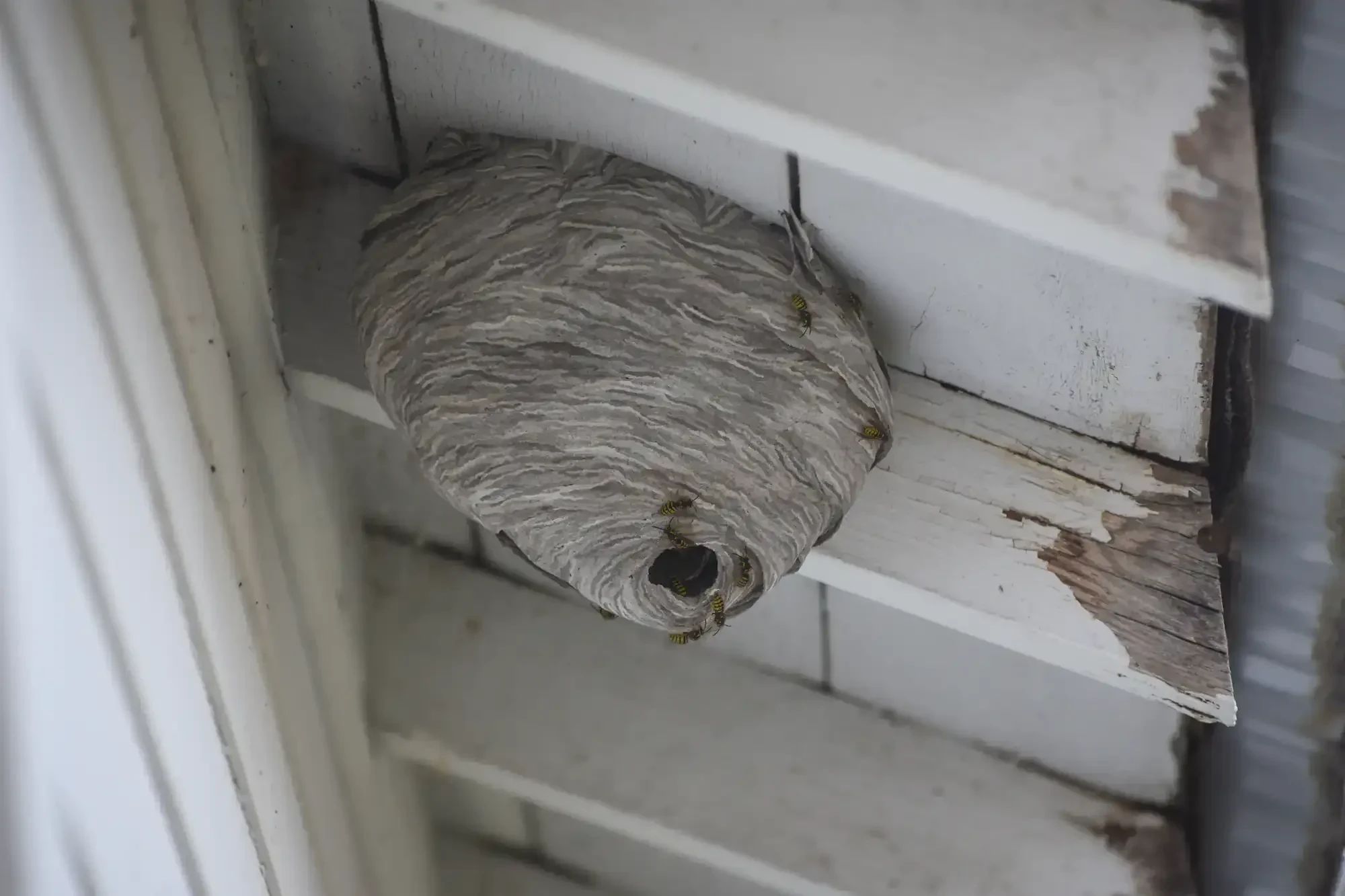
Yellow jacket removal in Linden covers more than the nest itself. Every job begins with a proper inspection — entry points, species identification, nest location, and an honest assessment of the structural situation. For homes in and around Linden’s older neighborhoods, that inspection matters more than most people expect. Aging siding, deteriorating fascia boards, and gaps around utility penetrations are common in homes built before 1980, and they’re exactly the access points a German Yellowjacket colony exploits to establish itself inside your walls before you even know it’s there.
Attic yellow jacket removal in Linden follows the same process — inspection first, nighttime treatment, dust application into the cavity, and post-treatment guidance. If the colony has been active long enough to expand the nest through insulation or drywall, that structural reality is communicated clearly so you know what you’re working with. We serve both residential and commercial properties throughout the Linden area, including properties in Argentine Township and the broader southern Genesee County corridor.
All work is performed under MDARD Pesticide Application Business License #250081. We also offer price matching for reasonable competitor rates, so if you’ve already received a quote from another licensed company serving Linden, bring it. You’ll get the same price with 20 years of local experience behind the work.
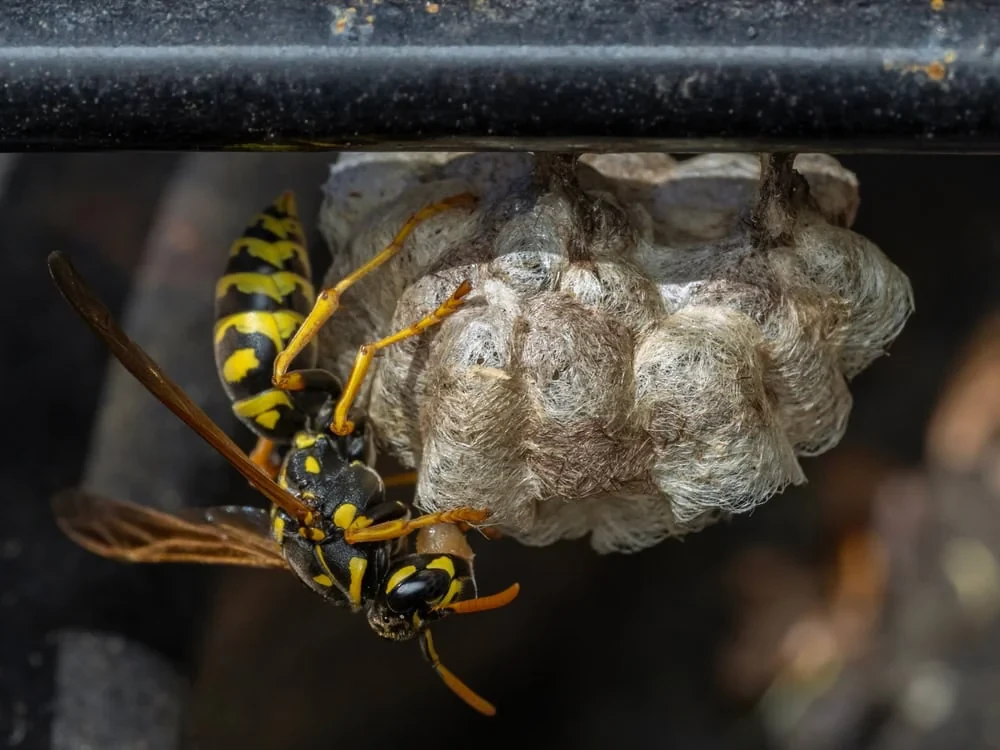
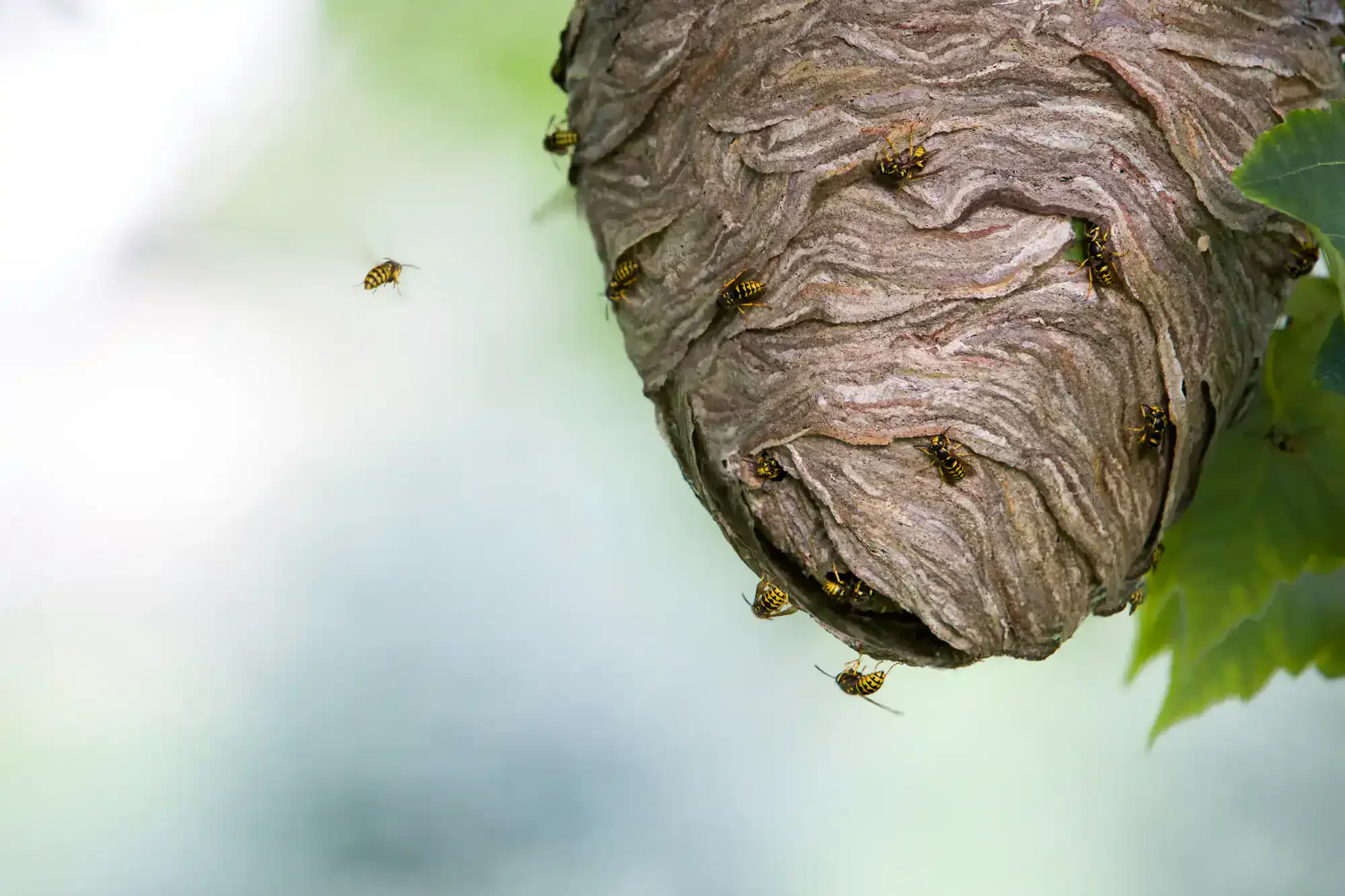
Yellow jacket behavior shifts significantly between early summer and late August. Early in the season, colonies are small and workers are focused on hunting insects to feed larvae — they’re largely indifferent to humans. By late summer, the colony has reached its peak size, the larvae have pupated, and workers are no longer receiving the sugar reward they got from feeding young. That drives them to scavenge — your food, your drinks, anything sweet or protein-rich within range.
Linden’s parks and natural areas accelerate this problem. Eagles Wooden Park, the wooded margins of Linden County Park, and the Shiawassee River corridor provide abundant ground-nesting habitat for Eastern Yellowjackets throughout the spring and summer. By the time families are most actively using those spaces in August and September, colonies nearby have grown to thousands of workers in a highly defensive state. If a nest is within range of your yard, patio, or a park path you use regularly, the risk is real — and it doesn’t get better on its own before October.
This is one of the most common mistakes, and it usually makes the situation worse before it gets better. Store-bought aerosol sprays applied to a wall-void entry point kill the workers closest to the opening — but the rest of the colony, which can number in the thousands by late summer, survives. The surviving workers don’t leave. They retreat deeper into the wall cavity and become significantly more aggressive. In some cases, they begin chewing through drywall or interior surfaces trying to find a new exit, which means workers start emerging inside the living space.
For Linden homeowners with older homes — particularly those in or near the historic district with aging siding, plaster walls, or older insulation — this is a structural risk, not just a nuisance. A failed DIY attempt on a wall-void colony can result in interior emergence, increased structural damage, and a colony that’s now harder to treat because it’s moved deeper into the wall. If you’ve already tried spraying and it didn’t work, call before the situation compounds further.
The signs are different enough that most homeowners can distinguish them once they know what to look for. A ground nest in the yard typically shows up as a small hole in the soil — often in a lawn edge, garden bed, or near a wooded margin — with a steady stream of yellow jackets flying in and out at low altitude. You may disturb it accidentally while mowing or gardening before you ever see it.
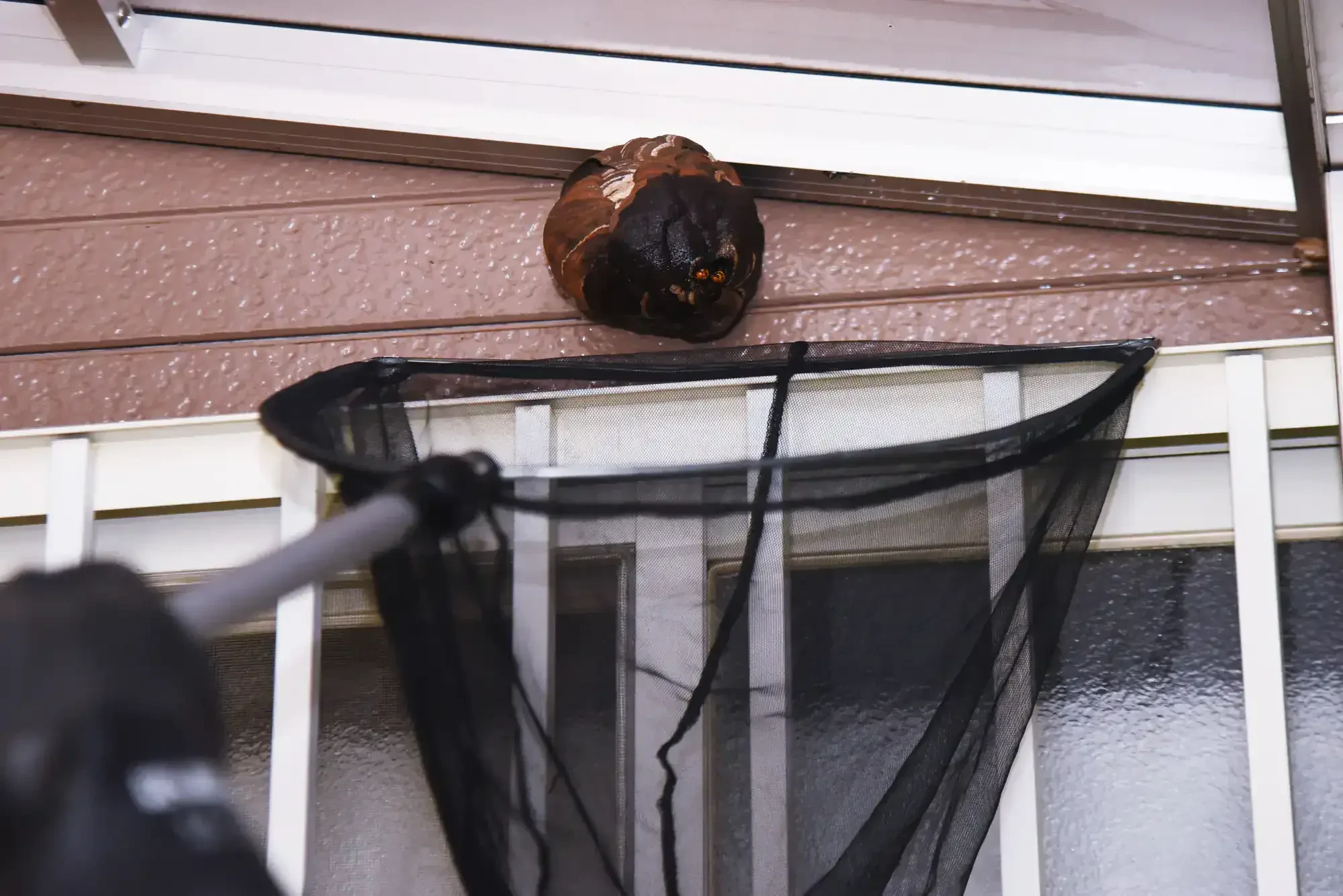
A wall-void or attic infestation presents differently. You’ll often notice yellow jackets entering and exiting through a gap in the siding, a soffit vent, a space around a utility penetration, or a gap near the roofline. Inside the house, you might hear a faint buzzing or chewing sound from within the wall. In more advanced infestations, workers may begin appearing inside the home through electrical outlets, light fixtures, or gaps around window frames. If you’re seeing yellow jackets entering your Linden home’s exterior and you can’t find a ground nest nearby, the colony is almost certainly inside the structure — and that requires a different treatment approach than a yard nest.
Yes — but the timeline matters, and it depends on where the nest was located and what treatment was applied. For outdoor ground nests, treated areas are typically safe to resume normal use within a few hours after treatment, once the insecticide has dried and any remaining workers have dispersed or died. Your technician will give you a specific timeframe based on the product used and the conditions at the time of treatment — not a generic estimate.
For wall-void and attic treatments, the guidance is slightly different. Insecticide dust applied inside a structural cavity stays within the cavity and doesn’t create a surface exposure risk in living areas. However, there may be a brief period of increased activity near the entry point as surviving workers return to the nest and contact the treatment. During that window — typically 24 to 48 hours — it’s worth keeping children and pets away from the treated exterior area. We walk you through exactly what to expect after every job, including what normal post-treatment activity looks like versus what would warrant a follow-up call.
Yellow jackets don’t reuse old nests — the colony dies off each fall, and the paper nest itself is abandoned. But the entry point that allowed the colony in doesn’t disappear on its own. In Linden’s older homes, those gaps and cracks in siding, soffits, and around utility penetrations can remain open through winter, and a new queen emerging in spring may find the same access point and establish a new colony in the same wall cavity or attic space.
This is why post-treatment exclusion work matters. After we eliminate the colony, sealing the entry points that allowed access in the first place significantly reduces the chance of recurrence the following year. We address this as part of the service, and the 1-year guarantee provides coverage if yellow jacket activity returns within the guarantee period. For Linden homeowners with homes built before 1980 — where exterior gaps and aging materials are more common — this step is especially worth taking seriously.
Yes. We offer discounts for seniors, veterans, and first responders. Linden has a tight-knit community with deep roots — VFW Post 4642 has been part of this area for years — and these discounts reflect a straightforward recognition that the people who’ve served and continue to serve this community deserve fair pricing without having to negotiate for it. If you fall into one of these categories, just mention it when you call.
We also offer price matching for reasonable competitor rates. If you’ve received a quote from another licensed pest control company serving the Linden area, bring it to the conversation. You’ll get the same price backed by 20 years of Genesee County experience, a consistent technician assigned to your property, and a 1-year service guarantee. There are no binding contracts — if the work doesn’t hold up, we come back and make it right.
Useful Links