
Hear from Our Customers
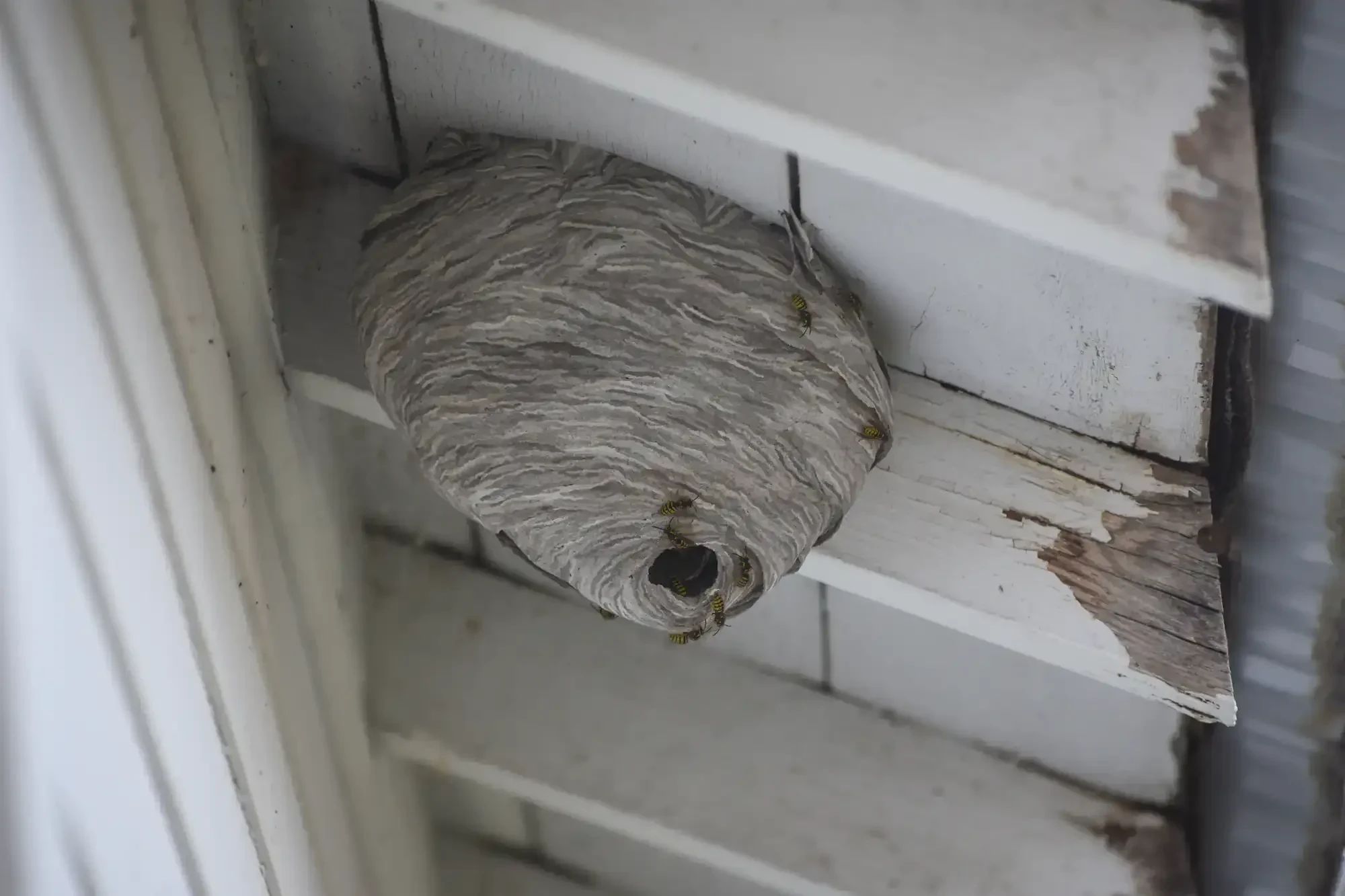
In Millington, yellow jackets are not just a nuisance — they are a real seasonal threat. The Tuscola County farmland and wooded corridors surrounding the township create ideal ground-nesting conditions for Eastern Yellowjackets, and the older housing stock throughout Millington gives German Yellowjackets every crack and gap they need to move into your walls. By late August, a single colony can hold up to 5,000 workers. That is not a problem you want to leave alone.
When the nest is gone, the difference is immediate. You can use your backyard again. Kids can play outside without you scanning the tree line. Guests can sit on the porch without someone jumping up mid-conversation. For Millington families who spend their evenings and weekends at home — this community is a bedroom community for a reason — that matters more than it might somewhere else.
Getting it done right also protects the home itself. Wall-void nests in older Millington farmhouses can expand through insulation and drywall if left untreated, turning a pest problem into a structural one. Handling it early, with the correct treatment for the correct species, keeps a manageable situation from becoming an expensive one.
We have been operating since May 31, 2005 — a family-owned business now in its 20th year serving Millington and the surrounding Tuscola County area. Roger Chinault, who founded the company, brings 26 years of hands-on pest control experience to every job. That is not a number pulled from a company bio. It means he has dealt with wall-void infestations in aging Millington farmhouses, ground nests along rural property lines, and every variation in between.
One thing that sets us apart is the same-technician model. The person who treats your Millington property this season will be the one who comes back next year. They will know your home, your entry points, and your history — no re-explaining, no starting from scratch with a stranger.
We hold MDARD Pesticide Application Business License #250081, have completed Integrated Pest Management training, and have earned recognition from both Angie’s List and HomeAdvisor, where we carry a 4.7 out of 5 rating based on verified reviews. No binding contracts, and no part-time seasonal technicians sent to figure it out on your property.
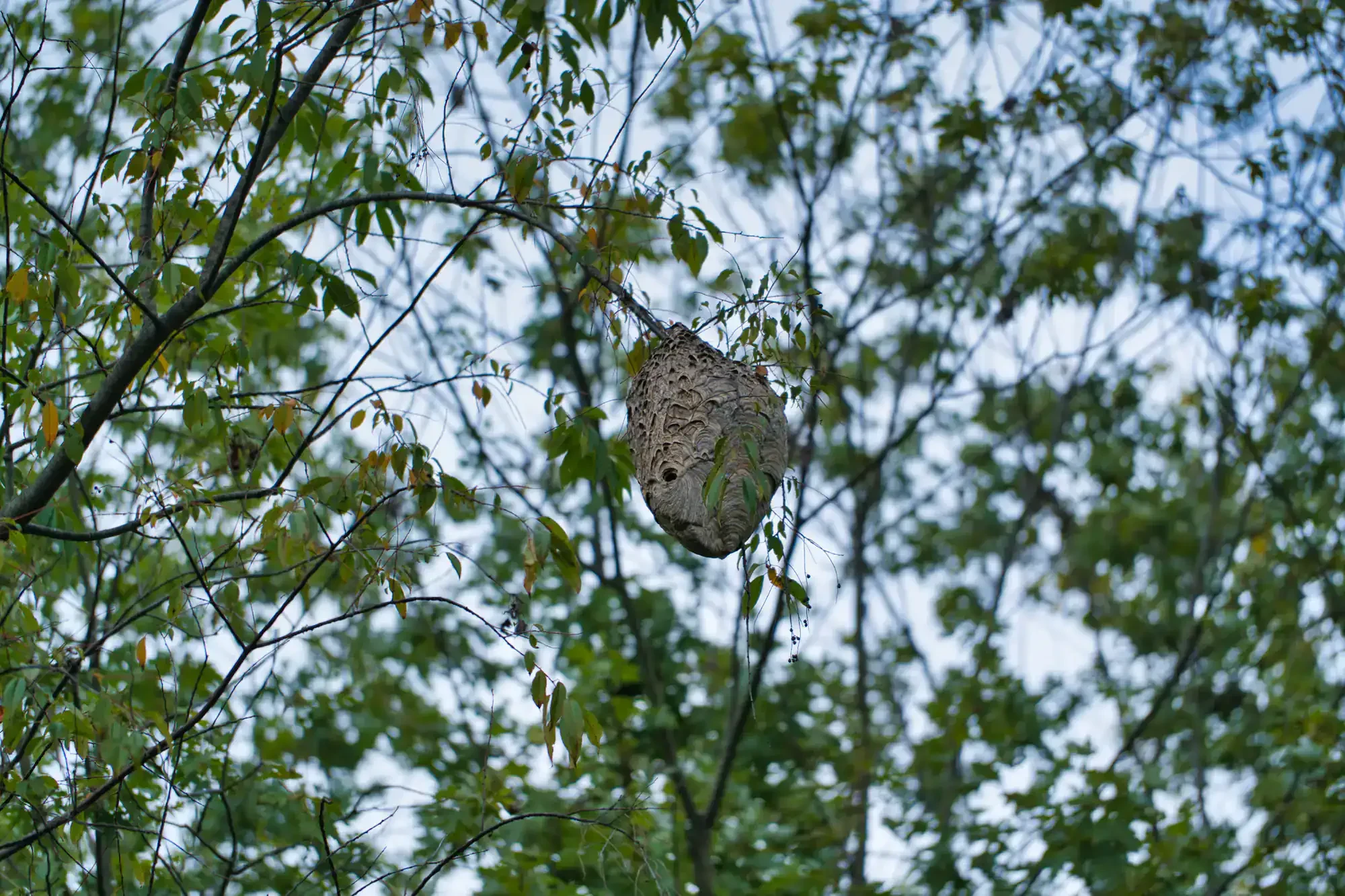
It starts with identifying exactly what you are dealing with. Millington and the surrounding Tuscola County area are home to two primary yellow jacket species that behave differently and require different treatment approaches. The German Yellowjacket tends to nest inside structures — wall voids, attics, crawlspaces — and is especially common in older homes throughout Millington where gaps in soffits, siding, or around utility lines give them an easy entry point. The Eastern Yellowjacket goes underground, often in abandoned animal burrows along the farm field margins and wooded edges that border so many Millington properties. Treating the wrong species the wrong way — especially with a store-bought spray — can drive the colony deeper and make the situation significantly harder to resolve. That is the most common reason people call us after a DIY attempt.
Once the species and nest location are confirmed, we apply the right treatment directly and efficiently. You will know what was found, what is being done, and how long before the area is fully safe. After treatment, our technician walks through what entry points should be sealed to prevent a new queen from finding the same spot next spring — a step that matters especially in Millington’s older homes, where there is rarely just one gap to worry about.
Our 1-year guarantee means that if yellow jacket activity returns within the guarantee period, we come back and re-treat at no additional charge. One call, one experienced technician, and a result that holds.
Ready to get started?
Yellow jacket extermination in Millington is not a one-size situation. We build our service around what is actually found on your property — species, nest location, access points, and the specific conditions of your home. For wall-void and attic infestations common in Millington’s older homes, that means targeted treatment that addresses the colony where it lives without pushing it further into the structure. For ground nests along rural property lines and farm-adjacent yards throughout the township, it means a different approach entirely.
Every service includes a full property assessment before any treatment begins, correct species identification, targeted application using IPM-certified methods, and a post-treatment walkthrough that covers what to expect and how to prevent recurrence. We also offer price matching for reasonable competitor rates — so if you have received a quote from another licensed provider serving Millington or Tuscola County, bring it and we will work with you on pricing. Discounts are available for seniors, veterans, and first responders, which reflects the makeup of this community.
No contracts are required. We serve residential and commercial properties throughout Millington and the surrounding township.
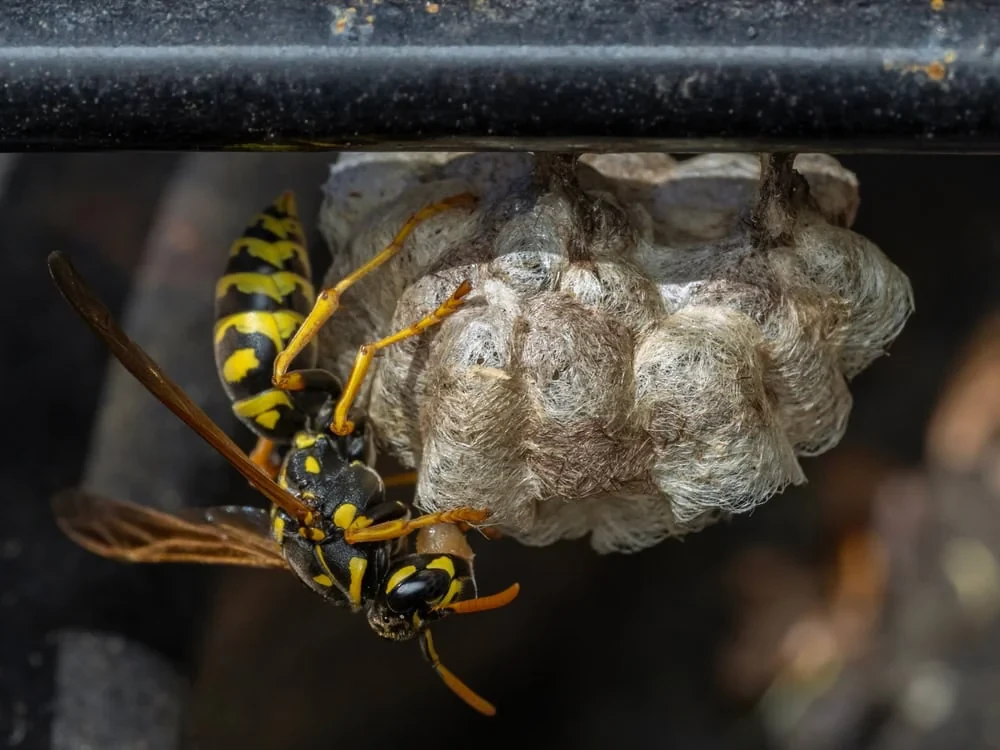
The most telling sign is consistent yellow jacket activity near a specific point on your home’s exterior — a gap in the soffit, a crack in the siding, a space around a utility line — especially if you are seeing workers entering and exiting rather than just flying past. You may also hear a faint buzzing or chewing sound from inside the wall, particularly in older Millington homes where wall cavities are accessible from multiple exterior gaps.
What makes wall-void nests tricky is that the visible activity outside often underrepresents what is happening inside. By mid-August in Tuscola County, a colony that started in April can be several thousand workers strong, and the comb structure can extend through insulation and into adjacent cavities. If you have noticed yellow jackets inside the house — coming through an outlet, a light fixture, or a gap around trim — that is a strong indicator the nest is inside the wall and the colony is large enough to be pushing through interior surfaces. That is the point where calling a professional is not optional.
This is one of the most common scenarios that leads to a call. When you spray a yellow jacket nest — especially a wall-void or ground nest — without fully eliminating the colony, the surviving workers become significantly more aggressive and the remaining population often relocates deeper into the structure or further into the ground. In some cases, the disruption causes the colony to split, which can make the infestation harder to locate and treat.
Store-bought sprays are designed for surface nests that are fully exposed and accessible. They are not formulated or intended for the enclosed, established colonies that are most common in Millington’s older homes and rural properties. If you have already attempted a DIY treatment and the problem has gotten worse, stop applying additional product — layering treatments without knowing the colony’s current location and size can complicate professional treatment. We can assess what happened, locate where the colony has moved, and apply the correct treatment from there.
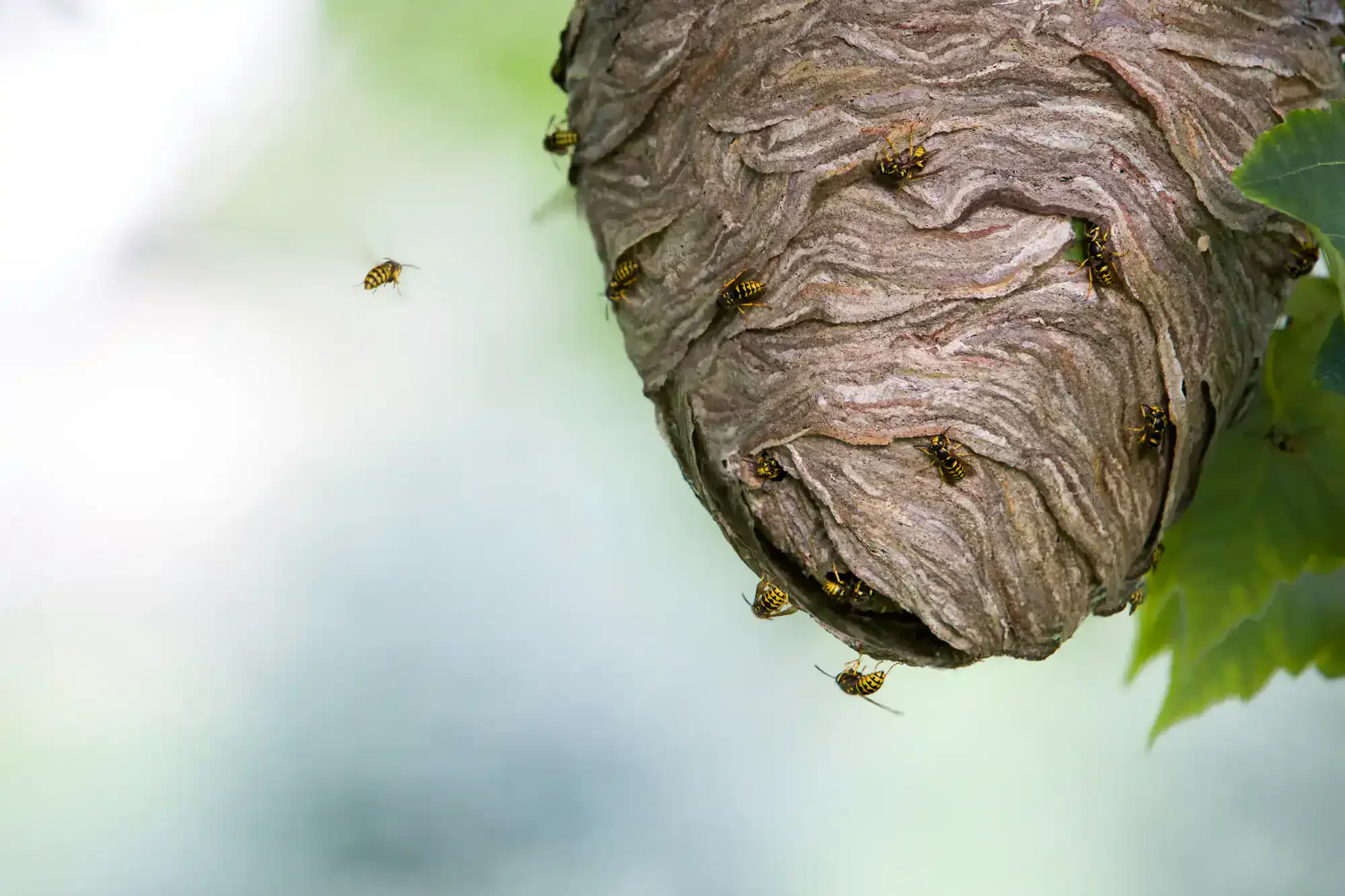
Late August through mid-September is the peak danger window in Millington and throughout Tuscola County. Michigan’s humid continental summers allow yellow jacket colonies to grow steadily from spring through midsummer, but it is in late summer that colonies hit their maximum size — anywhere from 1,000 to 5,000 workers — and worker behavior shifts from hunting insects to scavenging for sugary foods. Outdoor gatherings, garden harvests, fruit trees, and compost piles all become targets during this period.
The timing matters for Millington residents specifically because late summer is when outdoor living is at its peak. Evening cookouts, weekend yard work, and use of the Southern Links Trailway corridor — which passes through farmland, wetlands, and wooded stretches that are prime yellow jacket habitat — all put residents in closer contact with foraging workers at exactly the time those workers are most defensive and least tolerant of disturbance. If you are noticing heavy yellow jacket activity around your property in August, the colony is already at or near full size, and waiting it out is not a realistic strategy.
Yes, and the damage can go beyond what most homeowners expect. Yellow jackets do not eat wood the way termites do, but an active colony inside a wall void will expand its comb structure as the population grows, pushing through insulation, pressing against drywall, and potentially compromising the integrity of the wall cavity itself. In older Millington homes — where insulation may already be aged and wall cavities may have limited structural reinforcement — this expansion can cause visible bulging or soft spots in drywall before the homeowner realizes the extent of what is behind it.
There is also the issue of what happens after the colony dies off in fall. Dead nest material left inside a wall attracts secondary pests — rodents looking for nesting material, and flesh flies that feed on the decaying comb. The entry point that yellow jackets used to access the wall remains open through winter, which means a new queen can find it in spring and start the cycle again in the same location. Treating the nest and sealing the entry point together is the only way to fully resolve the problem rather than just pause it.
Yes. We back our yellow jacket extermination service with a 1-year guarantee. If yellow jacket activity returns to the treated area within the guarantee period, we come back and re-treat at no additional charge. This is not a limited or conditional promise — it is a straightforward commitment that the job gets done until it is done.
The guarantee matters in Millington because recurring infestations are genuinely common here. Older homes throughout the township have multiple potential entry points, and a property that has hosted a yellow jacket colony once is often attractive to new queens the following spring if entry points are not properly sealed after treatment. The combination of correct treatment, post-treatment prevention guidance, and a 1-year guarantee is what separates a single-season fix from a long-term solution. If you have dealt with yellow jackets in the same location more than once, that pattern tells you the entry point was never properly addressed — and that is exactly the kind of situation this guarantee is built for.
We offer discounts for seniors, veterans, and first responders. Millington and the surrounding Tuscola County area have a meaningful population of all three — longtime homeowners who have spent decades in this community, veterans who settled here after service, and the first responders who cover a rural township where response times and community trust carry real weight. The discounts exist because those are the people we have been serving for 20 years, and it makes sense to acknowledge that directly.
We also offer price matching for reasonable competitor rates. If you have received a quote from another licensed pest control provider serving Millington or Tuscola County, bring it and we will work with you on pricing. The goal is to make sure cost is not the reason someone puts off a treatment that genuinely needs to happen — especially in a situation involving stinging insects near a home where children, elderly family members, or anyone with a venom sensitivity is present. Call and ask about current availability when you book.
Useful Links