
Hear from Our Customers
When yellow jackets take over, the impact is immediate — kids can’t play outside, you’re watching every step near the pole barn, and one wrong move near the mower could send someone to the ER. That’s not a minor inconvenience. That’s your summer held hostage by an insect that can sting repeatedly and doesn’t need much of a reason to do it.
What changes after professional yellow jacket nest removal isn’t just the absence of the nest — it’s the return of normal life. You mow the lawn without scanning the ground first. You let the kids run in the yard again. You open the pole barn without bracing yourself. That shift matters, and it happens faster than most people expect when the job is done correctly.
Morrice’s older homes — most built around 1979 — create a specific problem that goes beyond the backyard. Weathered siding, aging soffits, and decades of freeze-thaw gaps give German Yellowjackets exactly what they need to move into your wall voids and attics. Left untreated, they chew through drywall and insulation as the colony grows through late summer. And with the Looking Glass River corridor running right alongside the village, the surrounding wooded habitat keeps stinging insect pressure elevated all season long. This isn’t a problem that resolves on its own — and in a home you’ve invested in, it’s not one worth gambling on.
First Choice Pest Control was founded on May 31, 2005 — which means we’re marking 20 years in business this year. Roger Chinault, our founder, has 26 years of hands-on pest management experience and built this company on a straightforward idea: show up, do the job right, and treat people fairly. That’s still how we work today.
We serve residential and commercial customers across Mid-Michigan, including Morrice and the surrounding Shiawassee County area. When you call us, you’re not reaching a national dispatch center. You’re reaching a real Michigan company with a named technician, a verifiable MDARD license (#250081), IPM certification, and a 4.7 out of 5 rating on Angi from customers who hired us and came back.
One thing that sets us apart in a community like Morrice: you’ll see the same technician year after year. Not a rotating hire, not a seasonal college student filling a summer slot — the same trained professional who knows your property, your entry points, and your situation. In a village of under 1,000 people where reputation matters, that consistency is something we take seriously.
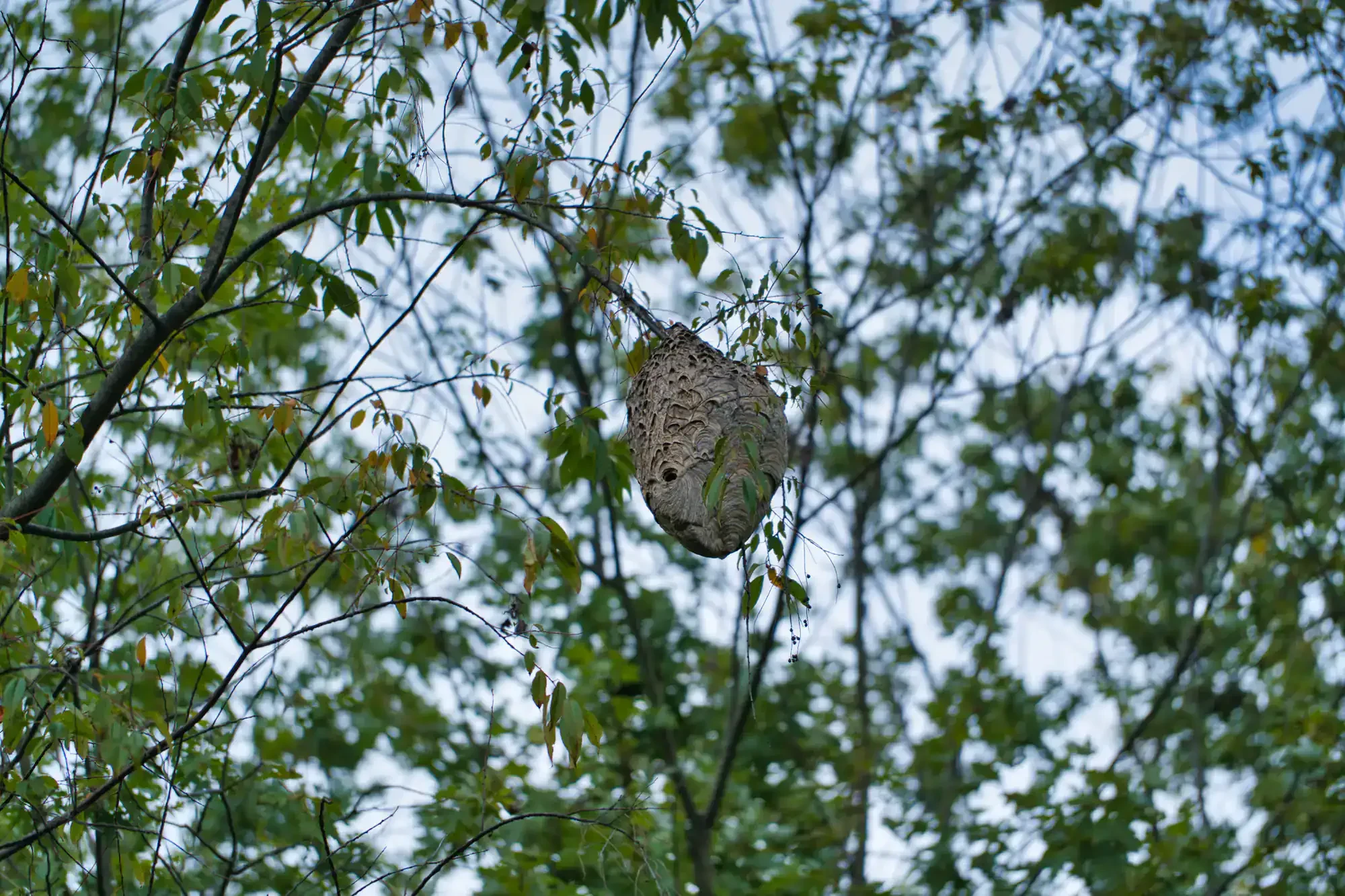
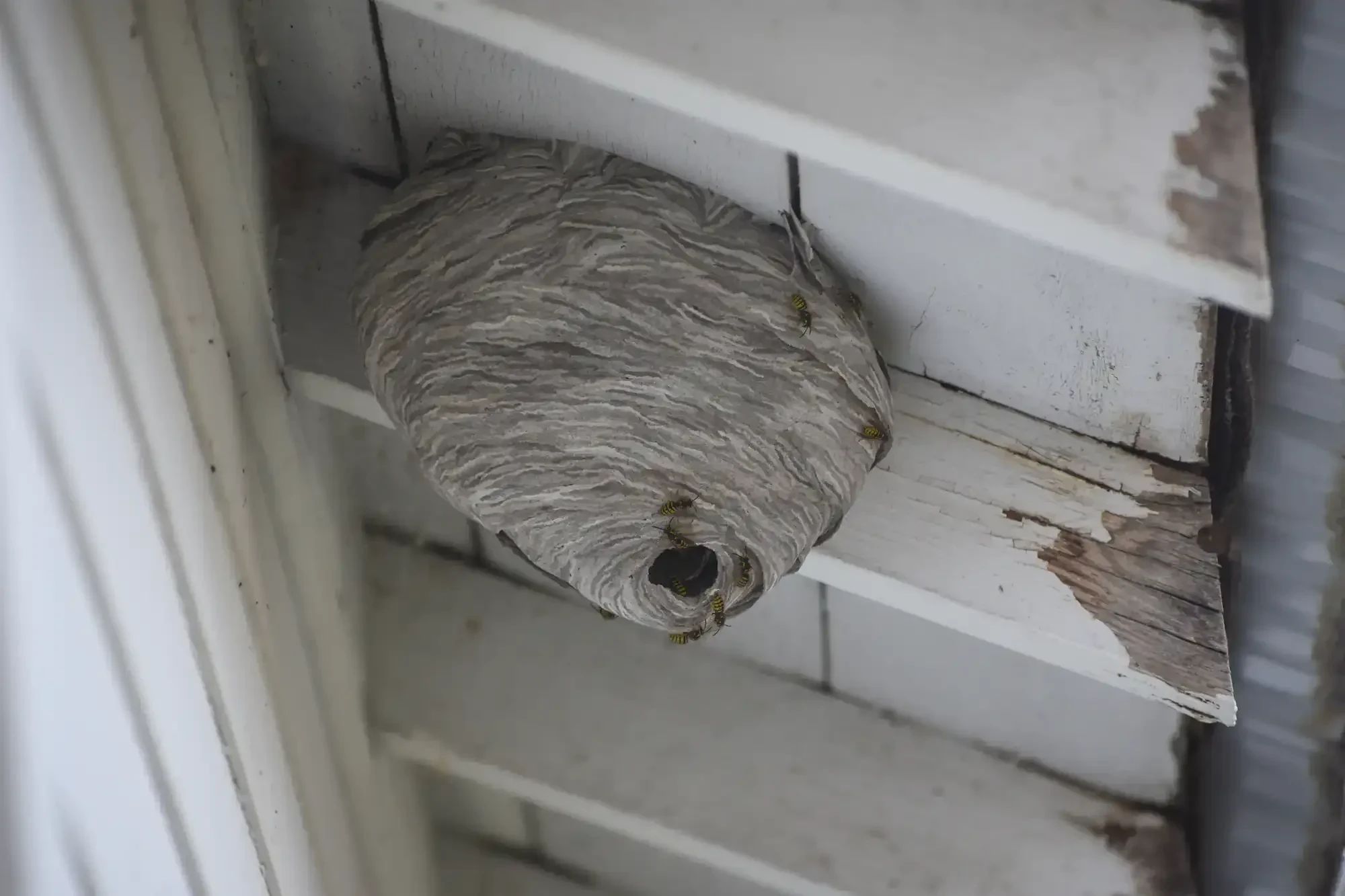
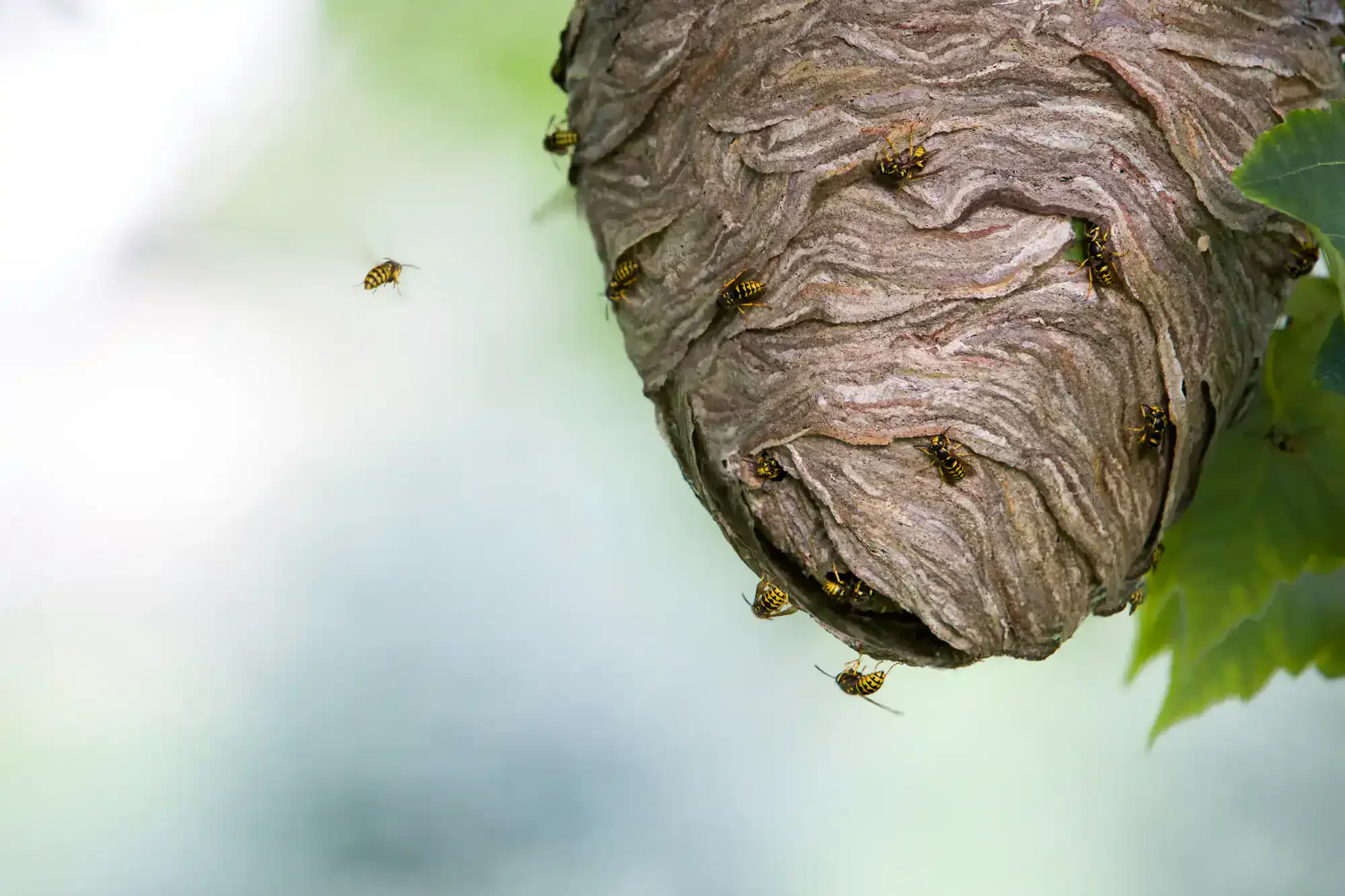
The first thing we do is identify what you’re actually dealing with. That sounds basic, but it matters more than most people realize. Michigan has two primary yellow jacket species — the German Yellowjacket, which nests in wall voids, attics, and crawlspaces, and the Eastern Yellowjacket, which nests underground in abandoned burrows. They behave differently, they respond differently to treatment, and treating the wrong one the wrong way can drive the colony deeper into your structure or increase aggression. We identify the species and locate the nest before any treatment begins.
Once we know what we’re dealing with, we apply the right treatment for the right situation. Ground nests get treated directly. Wall-void and attic colonies — which are common in Morrice’s older housing stock — require a more targeted approach that reaches the colony without pushing it further into the structure. For manufactured homes in Morrice Meadows, we account for the specific access limitations of crawl space skirting and underbelly gaps that make these treatments more complex than a standard house call.
After treatment, we walk you through what to expect — including any re-entry timelines and what to watch for over the following days. Every job is backed by our 1-year service guarantee: if yellow jackets return within the guarantee period, we come back and re-treat at no additional charge. That’s not a footnote — it’s the standard.
Ready to get started?
Our yellow jacket exterminator service covers the full scope of what Morrice-area properties actually deal with — not just the obvious nest you can see, but the hidden colonies that are doing the real damage. That includes ground nests in yard and field margins, wall-void and attic infestations in older homes, eave and roofline colonies, and outbuilding nests in pole barns and sheds that are common on rural Perry Township properties.
Every treatment starts with a proper inspection and species identification — because the approach for a German Yellowjacket colony chewing through the wall of a 1970s farmhouse is different from treating an Eastern Yellowjacket ground nest at the edge of a field. We use targeted, IPM-certified methods that focus on eliminating the colony at its source rather than just disrupting it. For attic and wall-void situations specifically, that means reaching the nest without causing the colony to scatter into your living space.
We also offer price matching on reasonable competitor rates, and we provide discounts for seniors, veterans, and first responders — which matters in a community where the Morrice Community Senior Center is an active gathering place and where service to others is genuinely lived. No binding contracts. No surprises on the invoice. Just straightforward service from a licensed Michigan company that has been doing this work for two decades.
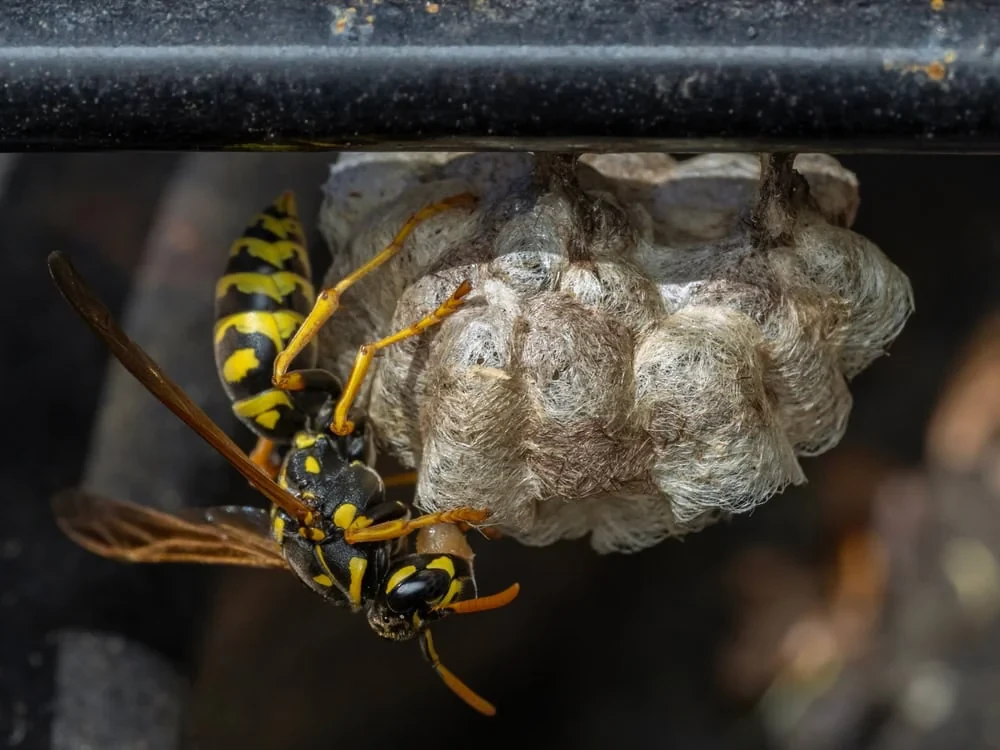
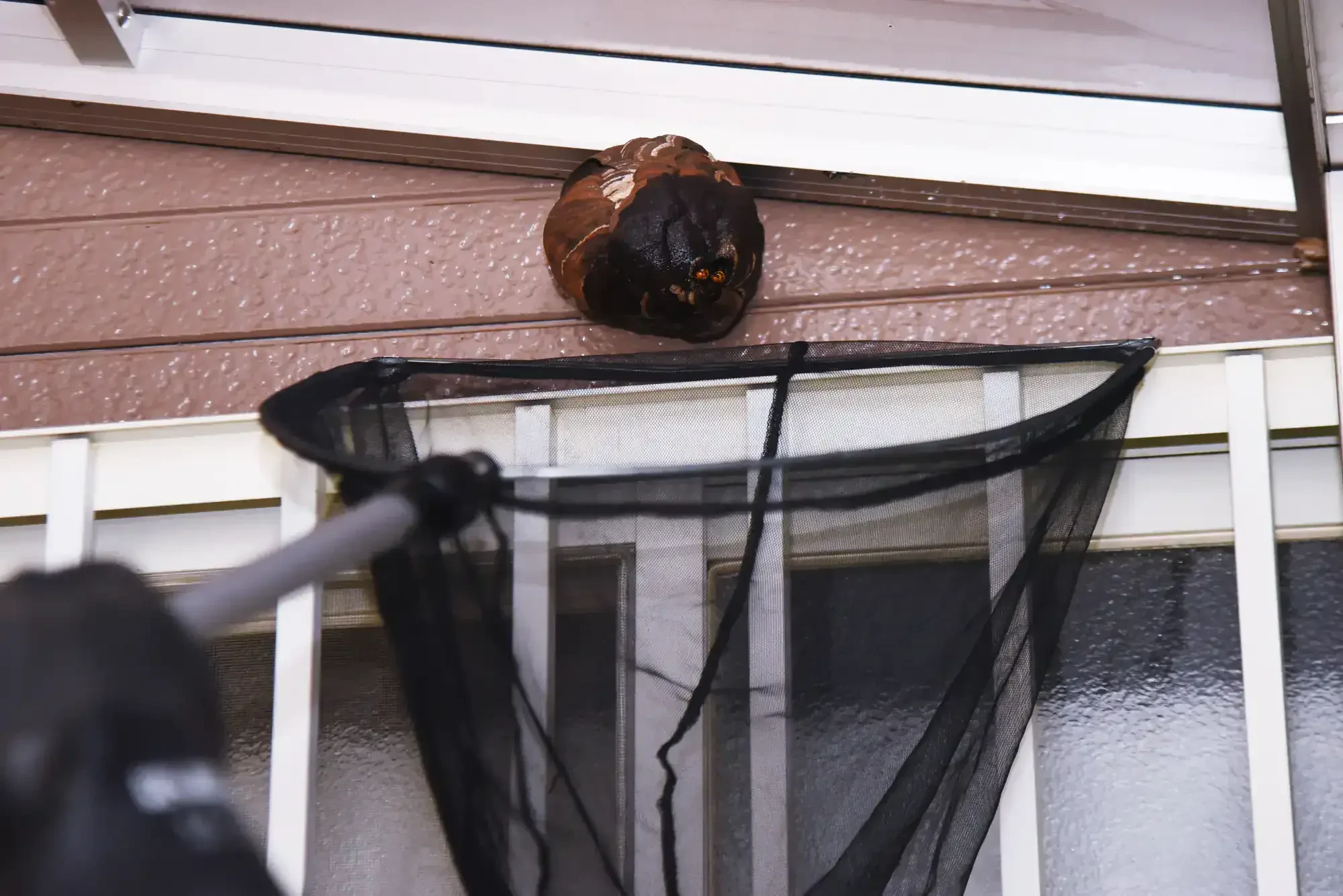
The most telling sign is seeing yellow jackets entering and exiting a small gap in your siding, soffit, eave, or around a window frame — especially if it’s the same spot repeatedly. Inside the house, the warning signs are harder to connect at first: yellow jackets appearing near electrical outlets, ceiling fixtures, or interior walls are often coming from a colony that’s established in the wall void behind them. You might also hear a faint buzzing from inside the wall if the colony is large enough.
In Morrice, this is a particularly common scenario because most homes in the area were built around 1979 or earlier. Decades of Michigan winters create freeze-thaw expansion in wood framing, siding gaps widen, and soffit seals deteriorate — all of which give German Yellowjackets easy access to the interior wall cavities they prefer for nesting. If you’re seeing yellow jackets inside the house and can’t find an obvious outdoor nest, a wall-void colony is the likely explanation and it needs professional treatment, not a store-bought spray.
For a small, exposed nest early in the season — maybe late May or June — a store-bought aerosol can sometimes work if you apply it correctly and at the right time of day. But by the time most people in Morrice notice a yellow jacket problem, it’s typically late summer, and that changes the equation significantly. A mature colony in August or September can contain anywhere from 1,000 to 5,000 workers. Disturbing that nest — especially with an incomplete treatment — triggers an alarm pheromone response that recruits the entire colony to defend it.
For wall-void and attic nests, DIY treatment is particularly risky. Spraying into a gap without knowing the colony’s exact location often drives yellow jackets deeper into the structure or pushes them to find a new exit — sometimes into your living space. The same applies to ground nests near field margins or in yards, where a partial treatment leaves an aggressive, disrupted colony with no clear nest to defend and workers looking for a target. If you’ve already tried a spray and it didn’t work, that’s the moment to call — not after the second attempt.
The peak danger window in mid-Michigan — including Morrice and the surrounding Shiawassee County area — is August through September. That’s when the colony has reached its maximum size, the food source shifts from insects to sugars (which is why yellow jackets crash your outdoor meals and garbage areas), and the workers are at their most aggressive.
Waiting it out is a common instinct, but it’s worth understanding what “waiting” actually costs you. If the nest is in your yard or on an outbuilding, waiting means two more months of a colony at full aggression before cold weather kills it off. If the nest is in a wall void or attic, the colony continues expanding — and chewing through drywall, insulation, and wood framing — until temperatures drop. The nest itself will die, but the structural damage it caused doesn’t undo itself, and the entry point remains open for a new queen next spring. Treating the problem in late summer eliminates the colony and gives you the window to seal entry points before the cycle repeats.
Yes — and this is one of the more underappreciated risks of a wall-void or attic infestation. German Yellowjackets, which are the species most commonly found nesting inside structures in Michigan, actively chew through drywall, insulation, and wood framing to expand the nest as the colony grows. A colony that starts in a small wall void in June can cause significant structural damage by September if it’s left untreated. The first sign many homeowners notice is yellow jackets emerging inside the living space — often through an electrical outlet or a ceiling fixture — which means the nest has already grown large enough to breach the interior wall.
Pole barns are a separate but equally real concern for rural properties in the Morrice and Perry Township area. The wall voids, roof overhangs, and interior rafters of a pole barn offer ideal nesting conditions, and a colony that establishes itself in a barn you use for equipment storage or vehicles can make the space genuinely dangerous to access by late summer. Structural repair costs for drywall and insulation damaged by a wall-void colony can run well into the thousands — which puts the cost of professional yellow jacket exterminator service in a very different light.
Yellow jacket exterminator service nationally averages around $725, with most jobs falling in the $500 to $1,300 range depending on nest location, colony size, and accessibility. Ground nests in a yard tend to be on the lower end of that range. Wall-void and attic infestations — which are more common in Morrice’s older housing stock — typically run higher because they require more precise treatment methods to reach the colony without pushing it further into the structure.
The more useful comparison isn’t between pest control companies — it’s between the cost of treatment and the cost of not treating. An ER visit for an anaphylactic reaction from a stinging insect sting can run $1,000 or more. Structural repair for drywall and insulation damaged by a wall-void colony can reach $2,000 to $10,000 depending on how far the damage has spread. We also offer price matching on reasonable competitor rates, so if you’ve gotten a quote from another licensed company serving the Shiawassee County area, bring it to us. You shouldn’t have to choose between quality and fair pricing.
Yes — First Choice Pest Control offers discounts for seniors, veterans, and first responders. In Morrice, where the Community Senior Center is an active part of village life and where service to others is genuinely valued, these discounts reflect something real about how we operate. If you or someone in your household qualifies, just mention it when you call and we’ll apply it to your service.
Beyond the discounts, we also offer price matching on reasonable competitor rates. So if you’re comparing quotes from other licensed pest control companies serving the Morrice and Shiawassee County area, we’re not going to make you choose between a company you trust and a price that works for your budget. The goal is straightforward: get the job done right, treat you fairly, and make sure you’re not dealing with the same problem again next season — which is exactly what the 1-year service guarantee is there for.
Useful Links