
Hear from Our Customers
You stop dreading your own backyard. That sounds simple, but if you’ve been avoiding the back corner of your property or keeping kids away from the barn because of yellow jacket activity, you know exactly what that’s worth. When the nest is properly identified, treated, and sealed — not just sprayed and hoped for — you get your property back.
For homeowners in Nicholson and the surrounding Conway Township area, that matters more than it might in a subdivision. Properties here typically run anywhere from one to ten acres, with farmhouses, outbuildings, sheds, and barns that have been accumulating gaps, cracks, and aging siding for decades. Those are exactly the conditions that German Yellowjackets look for when they’re searching for a wall void to build inside. A colony established in your farmhouse wall in April can reach several thousand workers by August — and they will chew through insulation and drywall to expand.
The other thing that changes when yellow jacket nest removal is done right: you don’t deal with it again next spring. A treated nest with a sealed entry point doesn’t invite the next queen back in. That’s the difference between a one-time fix and an annual problem you never quite solve.
We’ve been operating in Michigan since May 31, 2005 — which means we’ve been through twenty yellow jacket seasons in this state, and Roger has been doing this work personally for twenty-six years. This isn’t a franchise with rotating technicians and a call center somewhere out of state. We’re a family-owned operation where the same professional comes back to your Nicholson-area property year after year, knows your land, and remembers where you’ve had problems before.
That continuity is something rural homeowners around Conway Township actually notice. When you’re on a larger rural property off East Lovejoy Road and you’ve got multiple outbuildings to account for, having a technician who already knows your setup is genuinely useful — not just a nice-sounding promise. We hold MDARD Pesticide Application Business License #250081, have earned awards through Angie’s List and HomeAdvisor, and carry a 4.7 out of 5 rating on Angi from verified customer reviews.
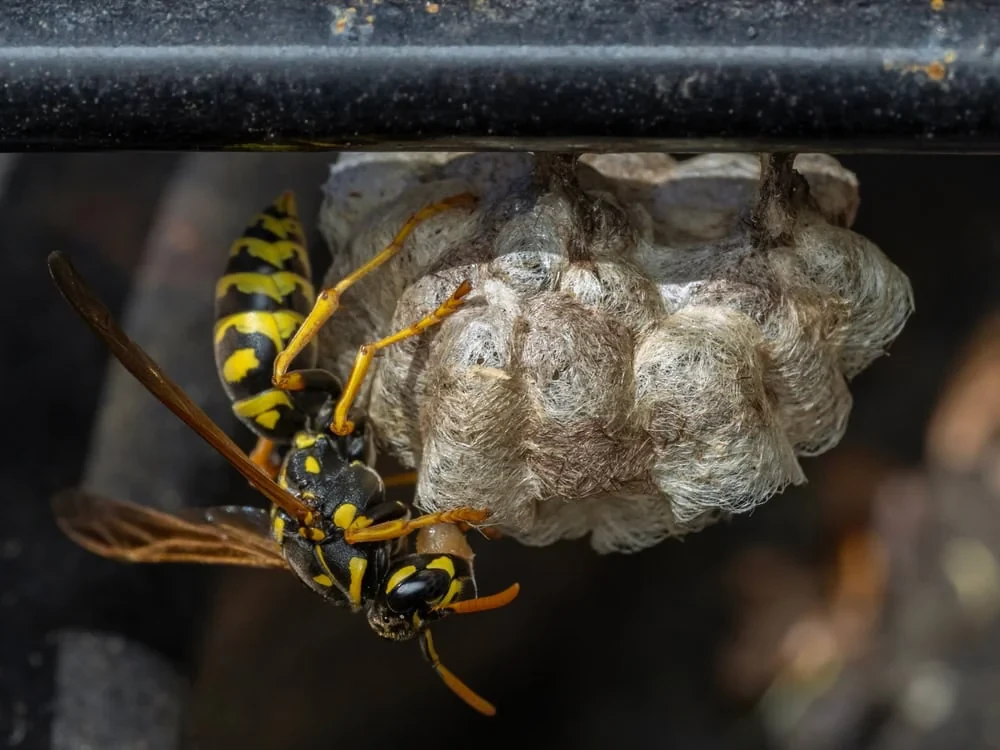
The first thing that happens is an inspection — a real one, not a glance at the obvious spot and a quote. Yellow jackets in the Nicholson area show up in a few different ways depending on the species. Eastern Yellowjackets tend to build ground nests in open lawn areas, field edges, and along fence lines — the kind of nest you find by accident while mowing a large rural lot. German Yellowjackets go into structures: wall voids, attic spaces, gaps in soffit boards, holes around pipes on older farmhouses and outbuildings. Treating the wrong nest type the wrong way doesn’t just fail — it can push the colony deeper into the structure or scatter workers into your living space.
Once the species and nest location are confirmed, we apply targeted treatment to what’s actually there. Our IPM-certified approach means the goal is the most effective, most precise treatment — not the broadest chemical application. After treatment, we address entry points so the same gap in your siding or foundation isn’t an open door for next year’s queen.
You’ll get clear guidance on when it’s safe to re-enter treated areas — important on properties with kids, dogs, or farm animals. And the work is backed by a one-year service guarantee. If yellow jacket activity comes back within the guarantee period, we return at no additional charge.
Ready to get started?
Every yellow jacket job starts with a proper inspection — not a drive-by assessment. On rural properties in the Nicholson and Conway Township area, that means accounting for the full scope of what’s on your land: the main house, any detached garages, barns, sheds, and the surrounding yard and field edges. Older agricultural properties near Nicholson Road and Chase Lake Road often have multiple potential nesting sites, and a thorough inspection is the only way to make sure treatment addresses the actual source and not just the most visible entry point.
From there, our service includes species-specific treatment, entry point sealing where accessible, and re-entry guidance tailored to your household — including any livestock or pets on the property. We serve both residential and commercial customers in the Nicholson area, which matters for Conway Township operations that have outbuildings or farm structures involved. There are no binding contracts, and we’ll match any reasonable competitor’s rate serving the Livingston County market.
Seniors, veterans, and first responders receive discounts — a straightforward acknowledgment that Nicholson and Conway Township are working communities where those discounts actually get used, not just listed on a website. If you’re not sure whether your situation qualifies or what the service will cost, call and ask. You’ll get a real answer from a real person.
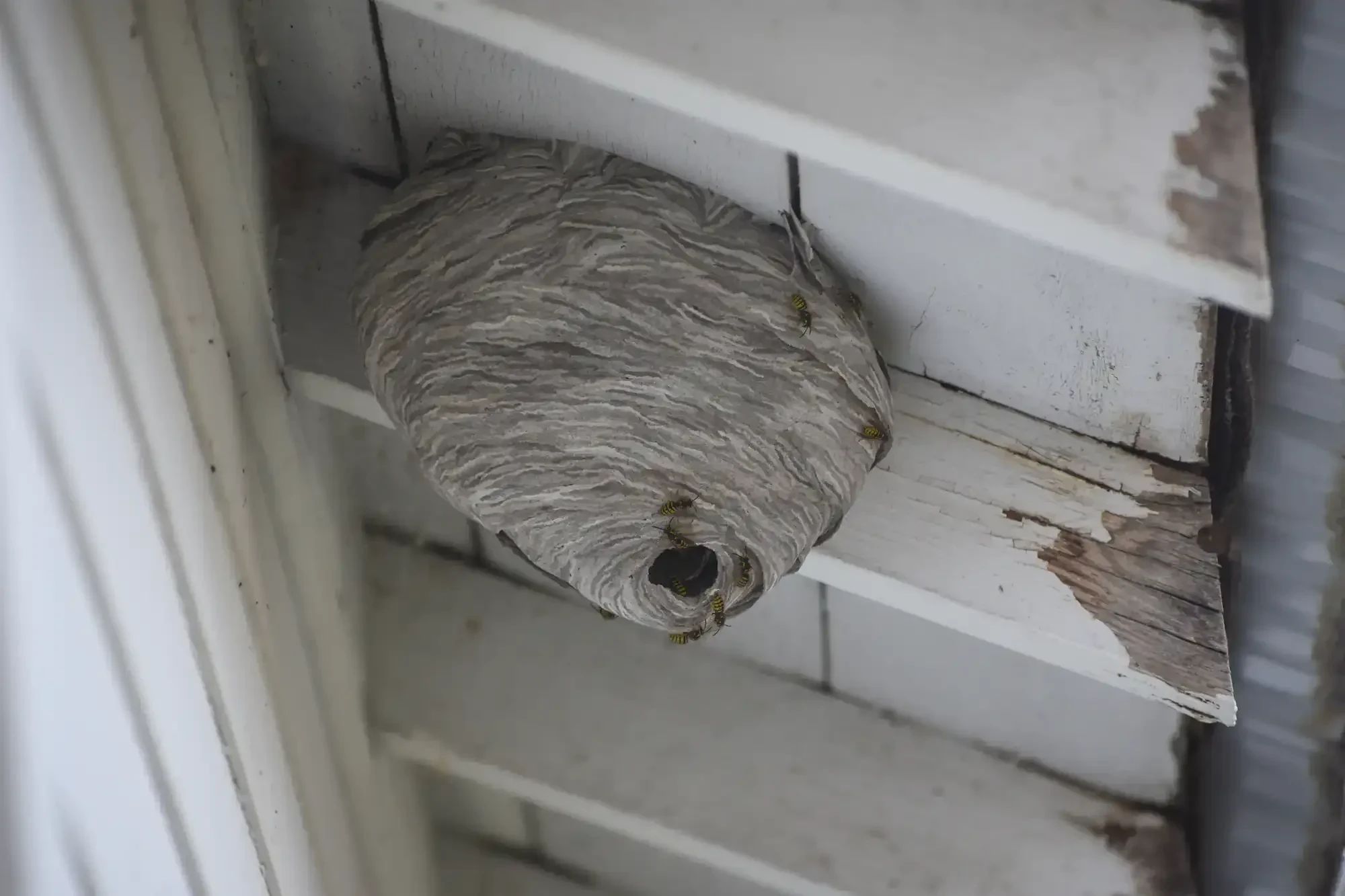
Yes — and it’s one of the most underestimated risks of leaving a wall-void nest untreated. German Yellowjackets, which are the species most commonly found inside the walls of older homes in the Nicholson area, actively chew through insulation and drywall to expand their nest as the colony grows. By late summer, a colony that started with one queen in April can have several thousand workers, all contributing to that expansion.
Beyond the nest itself, the dead colony material left behind after the season ends attracts rodents and flesh flies looking for food and shelter — exactly what you don’t want inside your walls heading into a Michigan winter. The entry point also stays open after the colony dies, which means next spring’s queen has a ready-made location to start over. We treat the nest, seal the entry point, and remove accessible nest material when possible — the only way to fully close out the problem.
This is one of the most common calls we get. Store-bought sprays can knock down foragers at the entry point, but they rarely penetrate deep enough into a wall void or ground nest to reach the queen and the core of the colony. Without killing the queen, the colony rebuilds. In some cases, spraying the entry point causes workers to find or chew a secondary exit — sometimes into your living space rather than outside.
Timing also matters. Yellow jackets are most active and aggressive during daylight hours, which is when most homeowners attempt treatment — and the most dangerous time to be near the nest. Professional treatment is typically done in the early morning or evening when forager activity is lower and more of the colony is inside the nest. On larger rural properties around Nicholson with ground nests hidden in field edges or lawn areas, locating the actual nest entrance — not just where the workers are flying — requires inspection experience that a can of spray can’t replace.
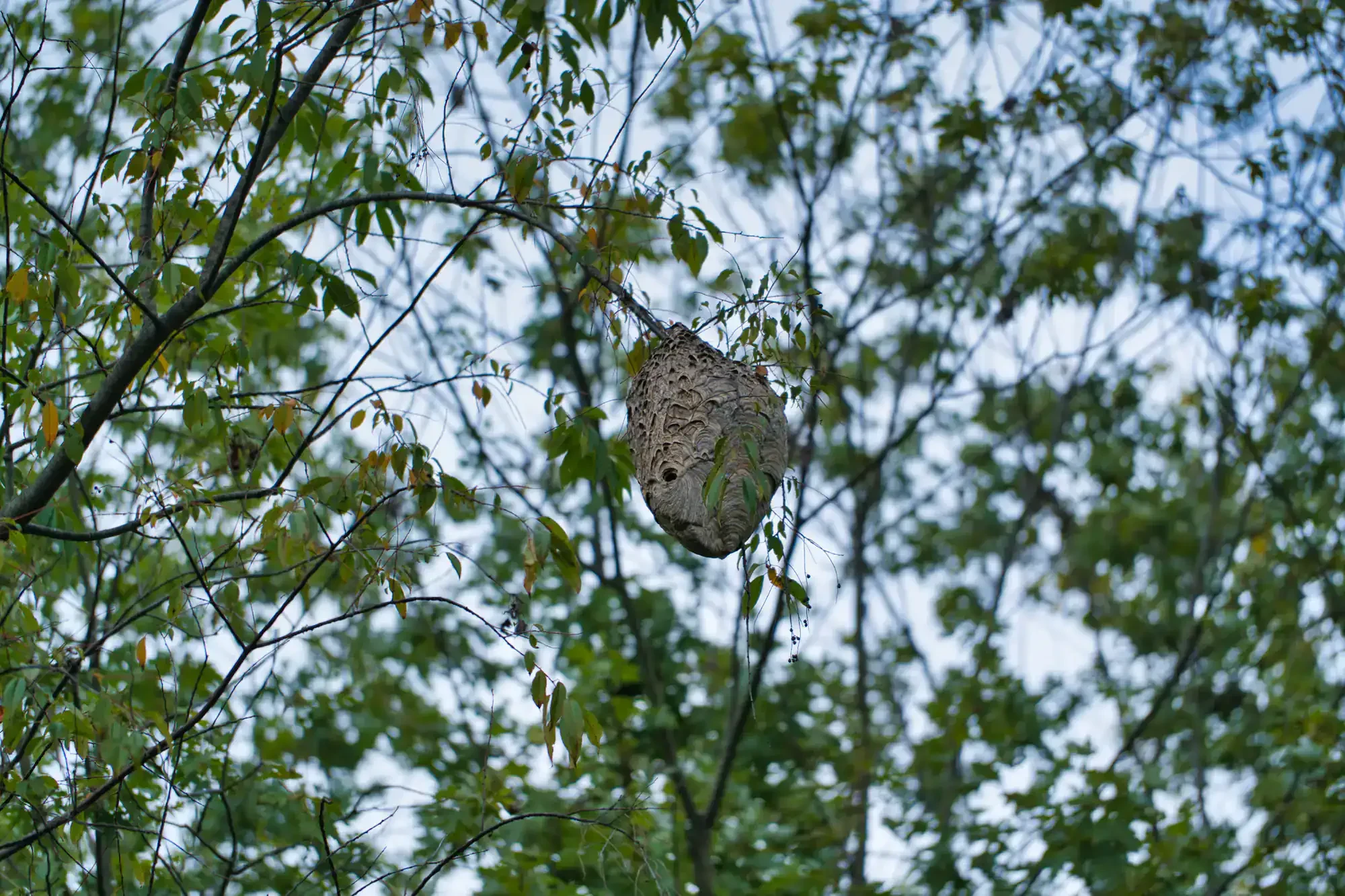
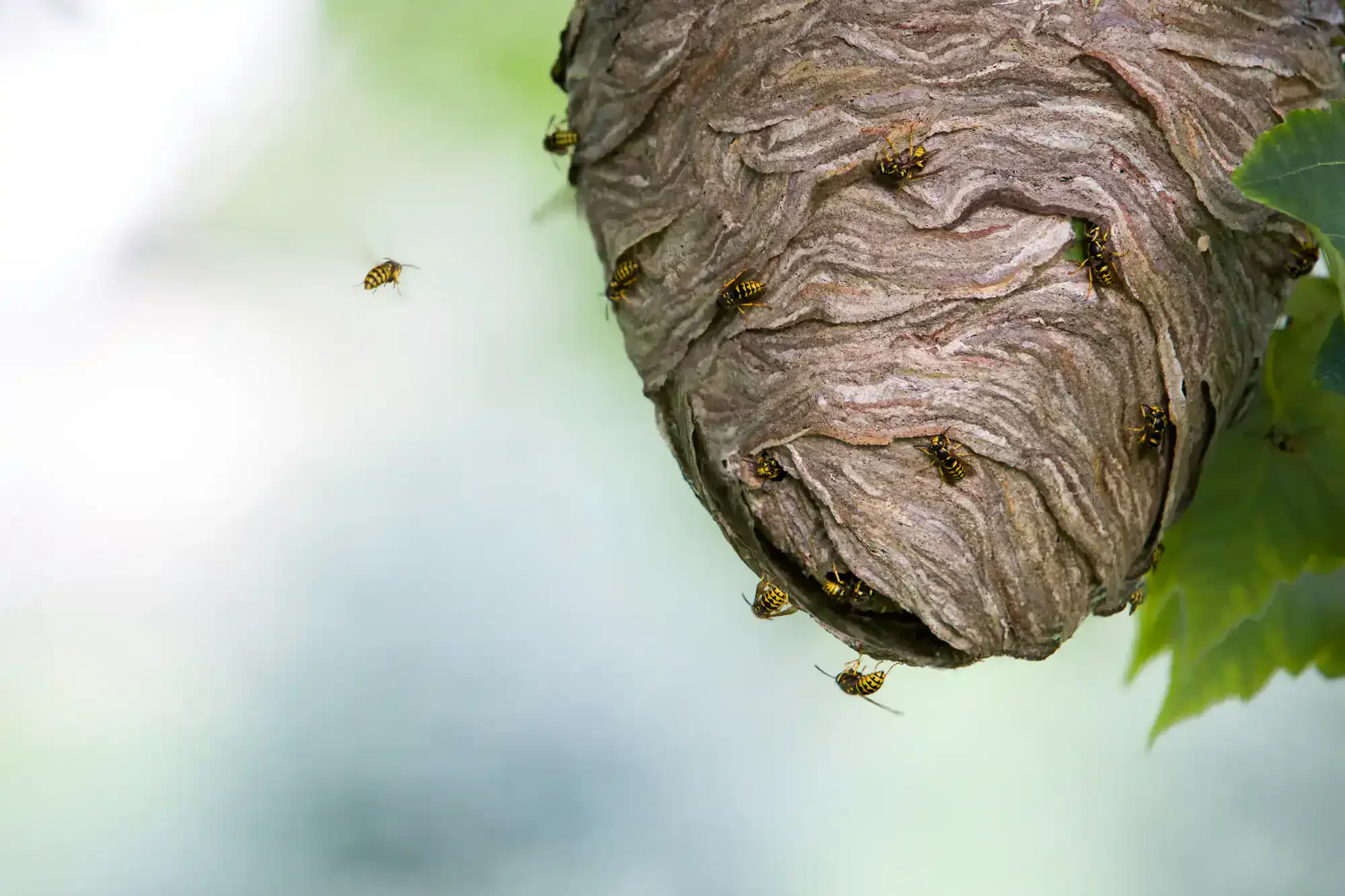
It’s a fair question, and the identification actually matters for treatment. Yellow jackets are smooth-bodied, black and yellow, and move with a fast, direct flight pattern. They’re more aggressive than most other stinging insects, especially in late summer when the colony is large and food sources are getting scarce. Hornets — specifically bald-faced hornets — are larger, black and white, and typically build the large papery aerial nests you’ll see hanging from tree branches or eaves. Honeybees are fuzzy, slower-moving, and far less aggressive; they’re also protected and should be relocated rather than exterminated when possible.
In the Nicholson and Conway Township area, the two yellow jacket species you’re most likely to encounter are the Eastern Yellowjacket, which nests in the ground, and the German Yellowjacket, which prefers wall voids and structural cavities in buildings. Older farmhouses and outbuildings common to the Nicholson area are particularly attractive to German Yellowjackets. If you’re not sure what you’re dealing with, don’t try to get close enough to find out — call for an inspection and let a professional make the call before any treatment decisions are made.
The honest answer is: as soon as you find it, but the earlier in the season the better. Yellow jacket colonies in Michigan start with a single overwintered queen in late March or April. By May and June, the colony is growing but still relatively small — treatment at this stage is faster, less complex, and involves fewer workers. By August and September, you’re dealing with a colony at full size, workers that are actively aggressive around food sources, and a nest that may have already caused damage inside a wall or expanded significantly underground.
That said, late-season treatment is still absolutely worth doing. Waiting until winter — hoping the colony dies off on its own — leaves the nest material in place, the entry point open, and the structure vulnerable to secondary pest activity. In Michigan’s climate, colonies typically die off by November, but the problems they leave behind don’t. Treating in fall before the colony fully dies gives you the best shot at addressing the entry point and nest material while the location is still identifiable.
Yes, when it’s done correctly and you follow the re-entry guidance you’re given. After treatment, there’s a window — typically a few hours, depending on the product used and the location of the nest — where you’ll want to keep people and animals away from the treated area. Your technician will give you a specific timeframe based on what was used and where, not a generic “wait a while and you’ll be fine.”
For rural properties in the Nicholson area with dogs, outdoor cats, or farm animals, this guidance matters more than it does on a suburban lot where the nest might be in a shrub near the driveway. If the nest is in a barn or outbuilding that animals access, that area specifically needs to be off-limits until the treatment has fully settled. Our IPM approach uses targeted treatment rather than broad-spectrum applications wherever possible, which keeps chemical exposure focused on the nest site rather than spread across the surrounding area. If you have specific concerns about a particular animal or a child with allergies, bring it up when you call — it affects how we plan the job.
Yes — we offer discounts for seniors, veterans, and first responders. Nicholson and Conway Township have a strong base of long-term homeowners, many of whom have lived and worked on their properties for decades, and a meaningful number of veterans and active first responders who serve the broader Livingston County area. These discounts aren’t a footnote — they’re applied at the time of service, and you don’t have to jump through hoops to use them.
If you’re not sure whether you qualify, just mention it when you call. We also match reasonable competitor rates for customers in the Nicholson service area, so if you’ve already gotten a quote from another pest control provider serving Livingston County, bring it up. The goal is to make sure cost isn’t the reason someone leaves a yellow jacket nest untreated on their property — because the longer it stays, the more expensive and complicated the fix becomes.
Useful Links