Hear from Our Customers
When yellow jackets are gone, you stop planning your day around them. You mow without watching your step. You work in the garden without glancing over your shoulder. You let the kids and the dog out without running a mental checklist first. That’s not a small thing — especially on a rural Barry County property where you’re outdoors more than most.
Russellville’s mix of hardwood lots, older farmhouses, and working outbuildings gives yellow jackets more places to hide than a typical suburban yard. Ground nests form in abandoned burrows along wooded edges and near foundations. Wall voids in older siding become home to colonies that can swell to thousands of workers before anyone notices. By the time late summer hits and they start getting aggressive around your harvest work or outdoor meals, the colony is already well-established.
Getting ahead of that — or eliminating it once it’s there — means you’re not dealing with a growing problem every August. It means the structural damage that comes from an untreated wall-void nest stops before it reaches your drywall. And it means the people on your property, whether that’s family, farmhands, or guests, aren’t at risk from a colony that’s been left to grow unchecked.
First Choice Pest Control was founded on May 31, 2005 — which means this year marks 20 years of continuous service to Michigan homeowners, including families throughout Barry County and Russellville. This isn’t a franchise with rotating technicians and a call center three states away. Roger Chinault, the owner, has 26 years of hands-on pest management experience and built this company around a straightforward idea: the same technician who treats your property this year should be the one who comes back next year.
That matters in a community like Russellville, where properties have history. Older farmhouses along the rural roads off M-43 have pest pressure that a first-time visitor won’t catch. A technician who knows your property — where the previous nest was, which outbuilding has the gap in the siding, which corner of the yard sees the most activity — is going to do a better job than someone working from a clipboard on their first visit.
We hold MDARD Pesticide Application Business License #250081, have completed Integrated Pest Management training, and carry a 4.7 out of 5 rating on Angi from verified Michigan customers. No binding contracts. Discounts for seniors, veterans, and first responders.
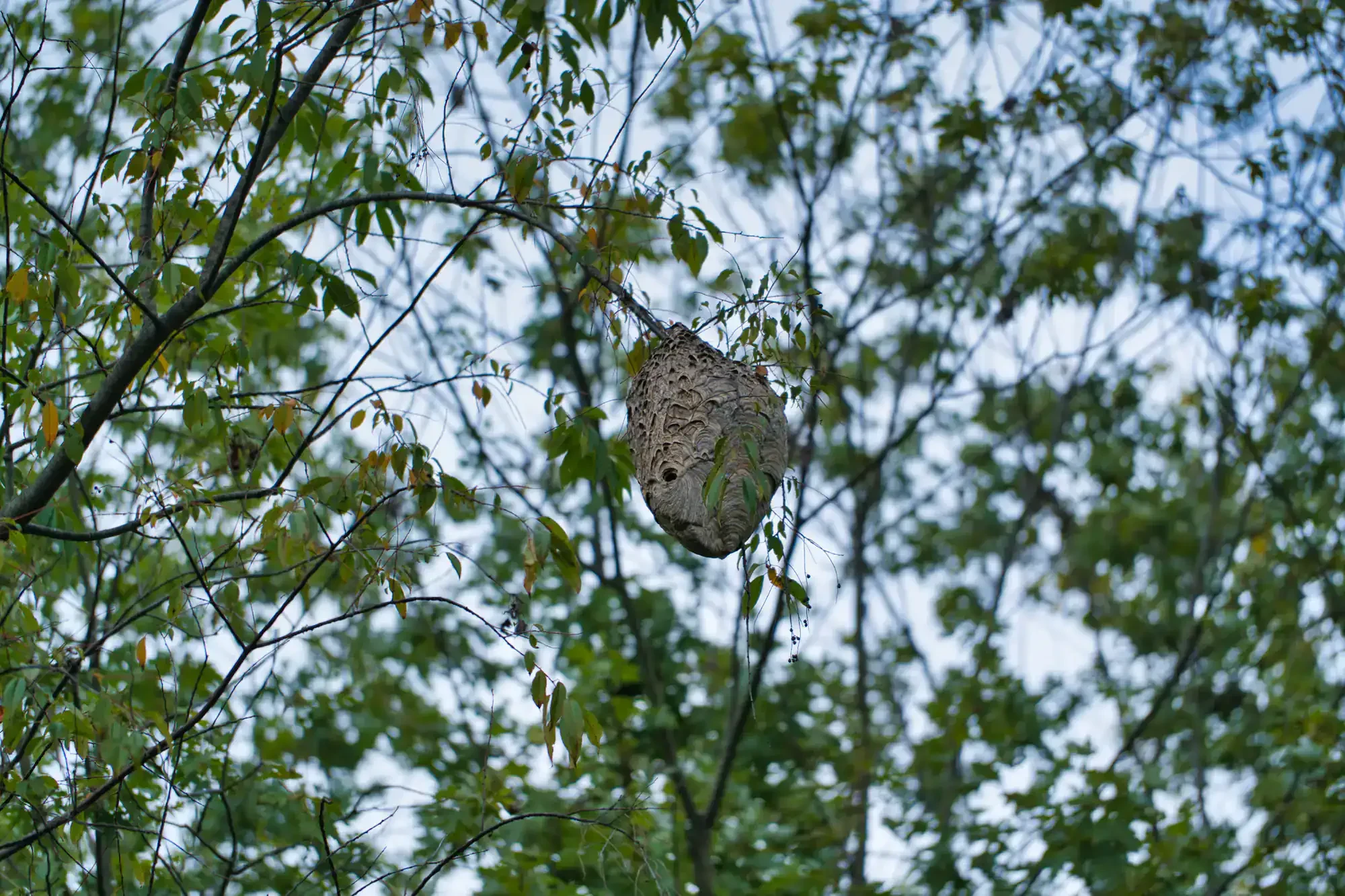
It starts with a call or inquiry, and we get back to you fast — typically within minutes. From there, a trained technician schedules a visit to your Russellville property and begins with a thorough inspection. On rural Barry County lots, that means checking more than just the obvious spots. Ground nests near the foundation, activity around outbuildings and barns, entry points in aging siding or soffits, and under decking where it’s dark and undisturbed — these are the locations that get checked first because they’re the ones that get missed most often.
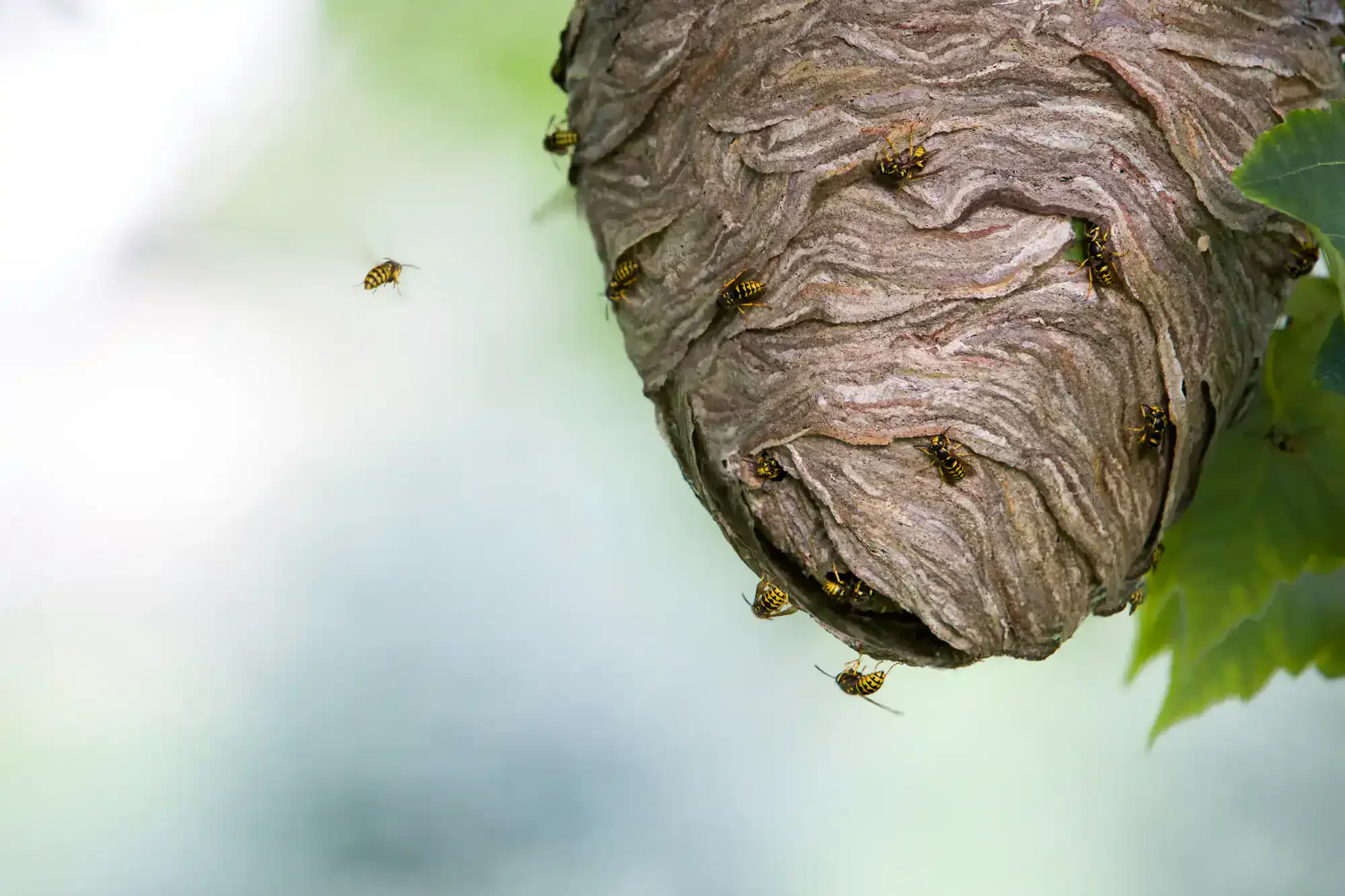
Species identification comes before any treatment decision. The German Yellowjacket — the one most likely to be inside the walls of an older Barry County farmhouse — requires a completely different approach than the Eastern Yellowjacket nesting underground in an open field. Getting that wrong doesn’t just mean a failed treatment. It can drive the colony deeper into your structure or force workers to chew through drywall into your living space. That’s why correct identification isn’t a formality — it’s the foundation of an effective job.
Once the nest is located and identified, we apply treatment directly to the colony using the appropriate method for that nest type and location. After treatment, you’ll get clear guidance on what to expect in the following days and what to watch for. We back every yellow jacket nest extermination with a service guarantee — if activity returns within the covered period, so does the technician.
Ready to get started?
Yellow jacket pest control near Russellville covers the full scope of what rural Michigan properties actually deal with — not just the easy ground nest in the open yard. We handle ground nests, wall-void infestations, attic yellow jacket removal, structural nests in barns and outbuildings, and under-deck colonies. Each situation gets assessed individually because the treatment that works for one nest type can make another significantly worse.
Barry County properties present specific challenges that generic pest control approaches don’t account for. Older farmhouses common to the Russellville area have more entry points — deteriorating soffits, gaps around utility penetrations, aging foundation sills — that give yellow jackets easy access to wall cavities. Attic yellow jacket removal in these structures requires locating the actual nest cavity, not just spraying the exterior. Sealing the entry point before treatment is one of the most common and costly mistakes a homeowner can make — it traps the colony inside and forces them to find a new exit, often through your ceiling or interior walls.
There are no binding contracts required to use our services. We serve both residential and commercial properties. Pricing is straightforward, and if you’ve received a quote from another provider, we’ll match any reasonable competitor’s rate. Seniors, veterans, and first responders receive additional discounts — ask when you call.
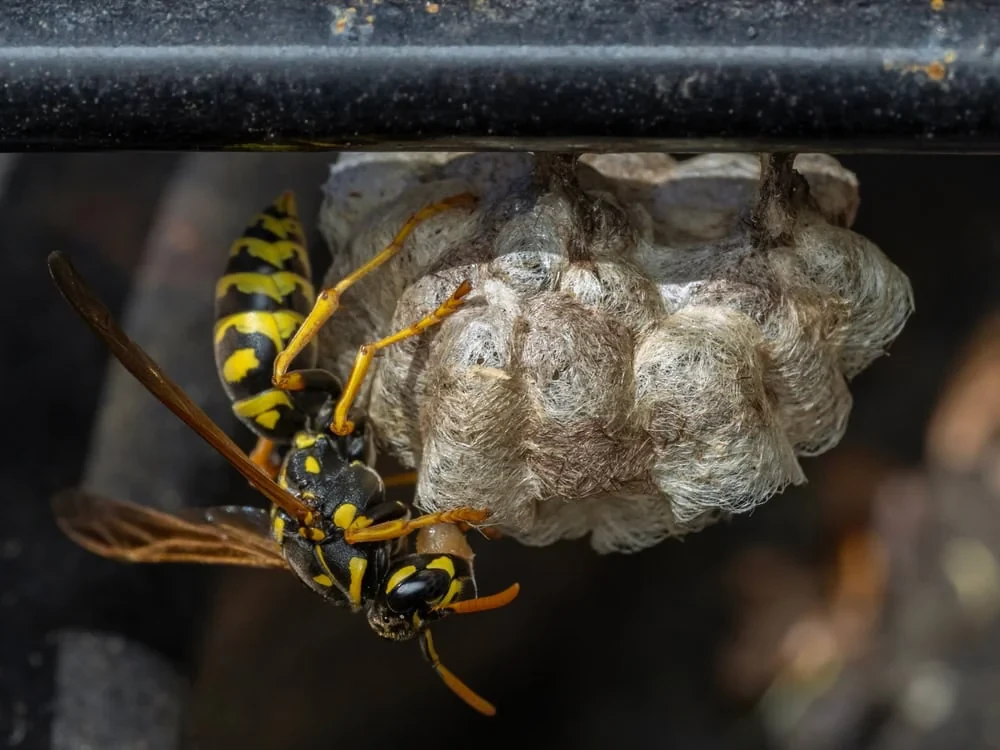
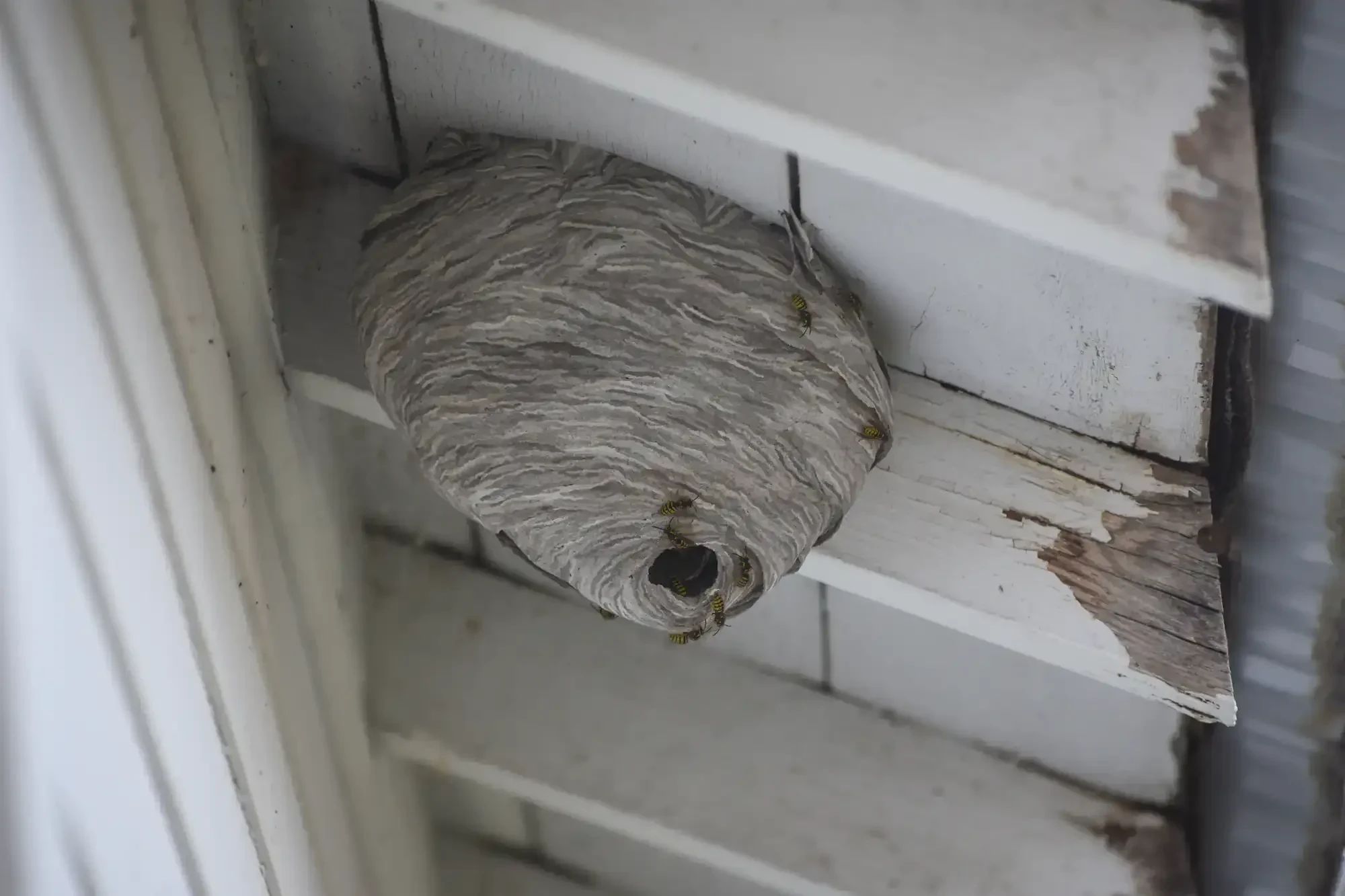
The most common sign is a consistent line of yellow jacket traffic entering and exiting a single point on your exterior — usually around a utility penetration, a gap in siding, or a soffit joint. You might also hear a faint chewing or buzzing sound from inside a wall, especially in a quieter part of the house. In some cases, yellow jackets will start appearing inside the home near a light fixture or ceiling seam, which usually means the colony has grown large enough to press against interior surfaces.
In older Barry County farmhouses — which make up a significant portion of the housing stock around Russellville — these entry points are more common because building envelopes weren’t as tight as modern construction. If you’re noticing heavy wasp activity near your roofline, around window frames, or along the base of your siding, it’s worth having a technician take a look before assuming it’s just outdoor traffic. A wall-void colony left untreated through fall can cause real structural damage as the nest expands, and the entry points remain open for new queens the following spring.
Yellow jacket colonies in Barry County follow Michigan’s seasonal pattern closely, but the rural character of the Russellville area extends the high-risk window in ways that suburban homeowners don’t always deal with. Queens emerge in late March or April and start building. By June, worker populations are climbing. August is when things get serious — colonies can reach 1,500 to 5,000 workers, and as natural insect prey starts to decline, yellow jackets shift to scavenging. That’s when they start showing up aggressively around outdoor meals, garbage, garden harvests, and livestock feed.
For Russellville-area residents who are outside doing farm chores, late-summer canning, or property maintenance during this same window, the overlap of peak colony aggression and peak outdoor activity is a real problem. September can be just as bad. The good news is that colonies die off naturally by late fall — but only the nest. Entry points in older structures stay open, and new queens will use the same favorable sites again next spring. Addressing the problem in late summer or early fall, rather than waiting it out, prevents that cycle from repeating.
DIY treatment is possible for small, accessible ground nests that are clearly isolated — but it comes with real risk, and the margin for error shrinks fast once a colony is established. Yellow jackets are significantly more aggressive than bees, and unlike bees, they can sting repeatedly. A disturbed colony near a barn, outbuilding, or the side of a house can mobilize hundreds of workers almost instantly. If anyone in your household has a known sensitivity to stings, or if the nest is in a wall void, attic, or enclosed structure, professional treatment isn’t just the safer option — it’s the one that actually works.
The other issue with DIY is product selection and application method. Over-the-counter sprays are designed for surface contact and don’t reach deep into a colony. Applying the wrong product to a wall-void nest, or spraying without knowing where the actual colony is located, often drives the colony further into the structure. On rural Barry County properties where nests can be in barn walls or under shed flooring, that kind of partial treatment usually means a bigger problem two weeks later. A licensed technician with the right equipment and species knowledge gets it done in one visit.
An untreated wall-void or attic colony will keep expanding through late summer, sometimes reaching several thousand workers before the colony dies off in fall. As the nest grows, the workers chew through insulation, wood framing, and in some cases drywall to make room. That structural damage doesn’t reverse itself when the colony dies — it stays, and it creates conditions that attract other pests. Dead nest material draws rodents and flesh flies. The entry points used by this year’s colony remain open for next year’s queens.
In the older farmhouses and rural structures common around Russellville, this kind of damage can be expensive to repair. Replacing insulation, patching drywall, and sealing structural gaps in an aging exterior can run into the thousands of dollars depending on how far the nest has spread. Catching the infestation early — or treating it before the colony reaches peak size in August — is almost always less disruptive and less costly than dealing with the aftermath of a colony that was left to run its course. If you’re already seeing yellow jackets inside the house, the time to call is now.
Yellow jacket extermination typically runs between $500 and $1,300 nationally, with the final cost depending on nest type, location, and how accessible the colony is. Ground nests in open areas are generally on the lower end. Wall-void infestations, attic yellow jacket removal, and nests inside barn structures or enclosed outbuildings tend to cost more because they require more time, more precise application, and sometimes follow-up access work.
For Russellville-area homeowners, it’s worth putting that number in context. A single emergency room visit for a severe allergic reaction runs $1,000 or more. Structural repair from an untreated wall-void colony — drywall, insulation, exterior patching — can easily reach $2,000 to $5,000 or beyond depending on the extent of the damage. Professional treatment is the more expensive option compared to a can of store spray, but it’s the option that actually eliminates the colony rather than aggravating it. We also offer price matching for reasonable competitor quotes, so if you’ve already gotten another estimate, bring it to the conversation.
Yes — we offer discounts for senior citizens, military veterans, and first responders. Barry County is home to a lot of long-time residents and families with deep roots in the area, and many of them are on fixed incomes or have served in ways that deserve recognition. These discounts aren’t a complicated process — just mention it when you call and ask what’s currently available for your situation.
Beyond the discount itself, we don’t require a contract, which means you’re not locked into anything. You get the service, you see the results, and you decide from there. For a senior homeowner in Russellville dealing with a yellow jacket nest in a barn or an older farmhouse wall, that combination of fair pricing, no obligation, and a technician who actually knows rural Michigan properties makes the decision a straightforward one. Call to ask about current discount availability and get a quote for your specific property.
Useful Links