
Hear from Our Customers
Yellow jackets don’t give you a warning. One wrong step near a ground nest in your lawn edge or a colony buried in your wall void and you’re dealing with a swarm — fast. In St. Charles, where the eastern edge of the village borders 20,000 acres of Shiawassee Flats bottomland and wetland forest, forager workers don’t stay out there. They range into residential yards, gardens, and outdoor spaces all summer long, and by August, a mature colony can have up to 5,000 workers that are aggressive, territorial, and not interested in being ignored.
The other thing most homeowners in St. Charles don’t realize is that the older housing stock common throughout the area — homes with aging siding, worn soffit panels, and gaps around trim — gives German Yellowjackets exactly what they need to move inside a wall or attic. That’s a completely different problem than a ground nest, and it requires a completely different approach. Treating the wrong nest the wrong way doesn’t just fail — it can drive the colony deeper into your home’s structure.
When the nest is gone, what you get back is simple: your yard, your peace of mind, and the ability to use your outdoor space again without watching every corner. That’s the outcome. That’s what this is about.
We’re a family-owned company that’s been operating in Michigan since May 31, 2005 — twenty years of protecting homes across Saginaw County and beyond. Roger, our founder, has 26 years of hands-on experience in pest control. That’s not a company stat. That’s a person who has personally identified, treated, and resolved more yellow jacket situations than most exterminators will see in a career.
What makes us different from calling a regional chain is straightforward: you get the same technician every time. Not a rotating seasonal hire. Not someone reading off a checklist. Someone who learns your property, understands your specific situation, and shows up knowing what they’re walking into. For families near the Bad River corridor or residents on the eastern side of St. Charles closer to the wildlife refuge, that kind of consistency matters — especially when yellow jacket pressure returns the following season.
We hold MDARD Pesticide Application Business License #250081 and are IPM-certified, meaning every service starts with correct species identification before any treatment is applied. No guessing. No wasted money. Just the right fix, done right.
The first thing that happens when you call is a real conversation — not a form submission that disappears into a queue. You’ll describe what you’re seeing, where the activity is, and how long it’s been going on. That information matters because the approach for a ground nest in a lawn edge near a field margin is completely different from a German Yellowjacket colony that’s established itself inside a wall void of an older St. Charles home.
Once on-site, our technician identifies the exact species before anything else. This is the step most DIY attempts skip — and it’s the reason they fail. Eastern Yellowjackets build in the ground, often in abandoned mammal burrows. German Yellowjackets go inside structures. Each requires a targeted treatment method, and applying the wrong one doesn’t just waste your time — it can make the colony more defensive and harder to eliminate. St. Charles’s mix of agricultural margins, wetland-adjacent properties, and aging residential structures means both species show up here regularly.
After treatment, you’ll get clear guidance on what to expect in the following days, how to monitor for residual activity, and — critically — what entry points need to be sealed to prevent a new queen from using the same location next spring. That last part is where most one-and-done services fall short. We back the work with a 1-year service guarantee, so if yellow jackets return within the coverage period, so does the technician.
Ready to get started?
Yellow jacket pest control in St. Charles isn’t a one-size situation, and our service reflects that. Every job starts with a proper inspection — not a glance from the driveway. Our technician walks the property, locates the nest or nests, identifies the species, and assesses all potential entry points. In a village where homes along the Bad River corridor and near the Shiawassee Flats face consistent pressure from both ground-nesting and structure-nesting species, that inspection step is what separates a real fix from a temporary one.
Treatment is targeted and applied based on what’s actually there. Ground nests, wall-void infestations, attic colonies — the method changes depending on what’s been found and where. For structural infestations in older homes, that includes identifying and treating all active entry points, not just the most obvious one. Sealing recommendations are provided after treatment so you’re not starting over next season with the same gap in your soffit that started the problem.
We serve both residential and commercial customers throughout the St. Charles area and broader Saginaw County. Seniors, veterans, and first responders receive discounts — and if you’ve been quoted by another licensed provider, we’ll match any reasonable competitor’s rate. There are no binding contracts. The work either holds up or we come back. That’s the guarantee.
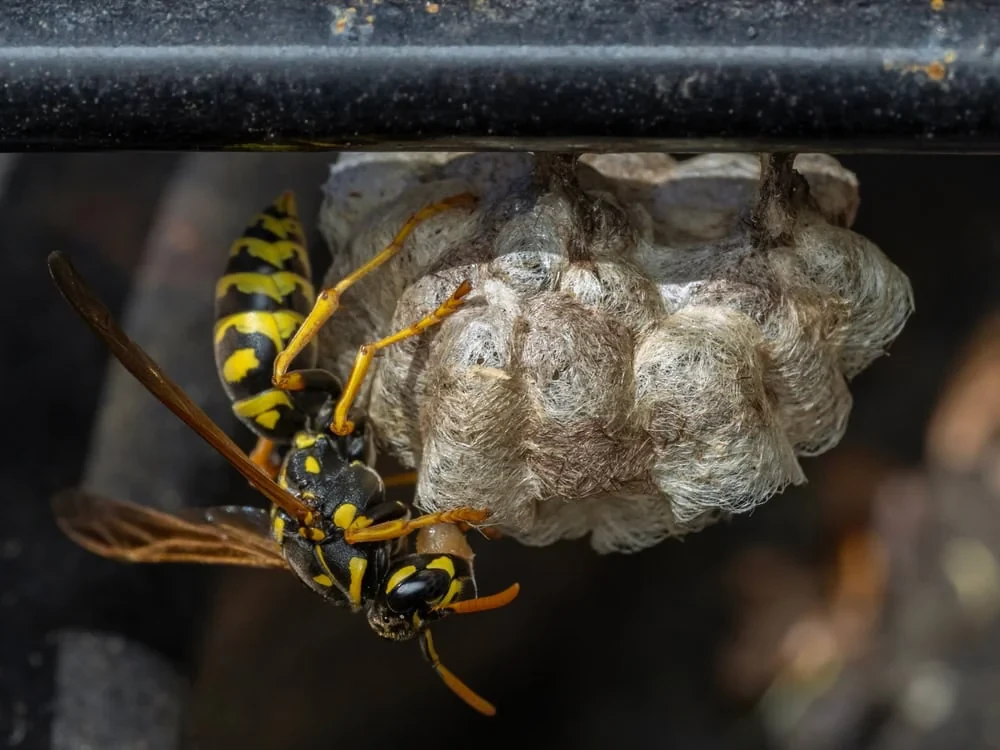
The Shiawassee Flats — the 20,000-acre state game area on the eastern edge of St. Charles — and the adjacent Shiawassee National Wildlife Refuge create ideal yellow jacket habitat: bottomland hardwood forest, wetland margins, abundant insect prey, and decaying wood that colonies use to build their papier-mâché nests. That’s not a minor background factor. It means St. Charles sits directly adjacent to one of the most yellow jacket-friendly environments in Saginaw County.
What happens in late July and August is that mature colonies — which can reach 1,000 to 5,000 workers — start sending foragers well beyond the nest in search of sugary food sources. Those foragers end up in residential yards, near outdoor dining areas, and around anything sweet or protein-rich. Residents on the eastern side of St. Charles, near the Flats, tend to see the earliest and most aggressive activity each season. The Bad River corridor running through the village adds another layer of riparian habitat that supports ground-nesting colonies along its banks and margins. It’s not bad luck — it’s geography.
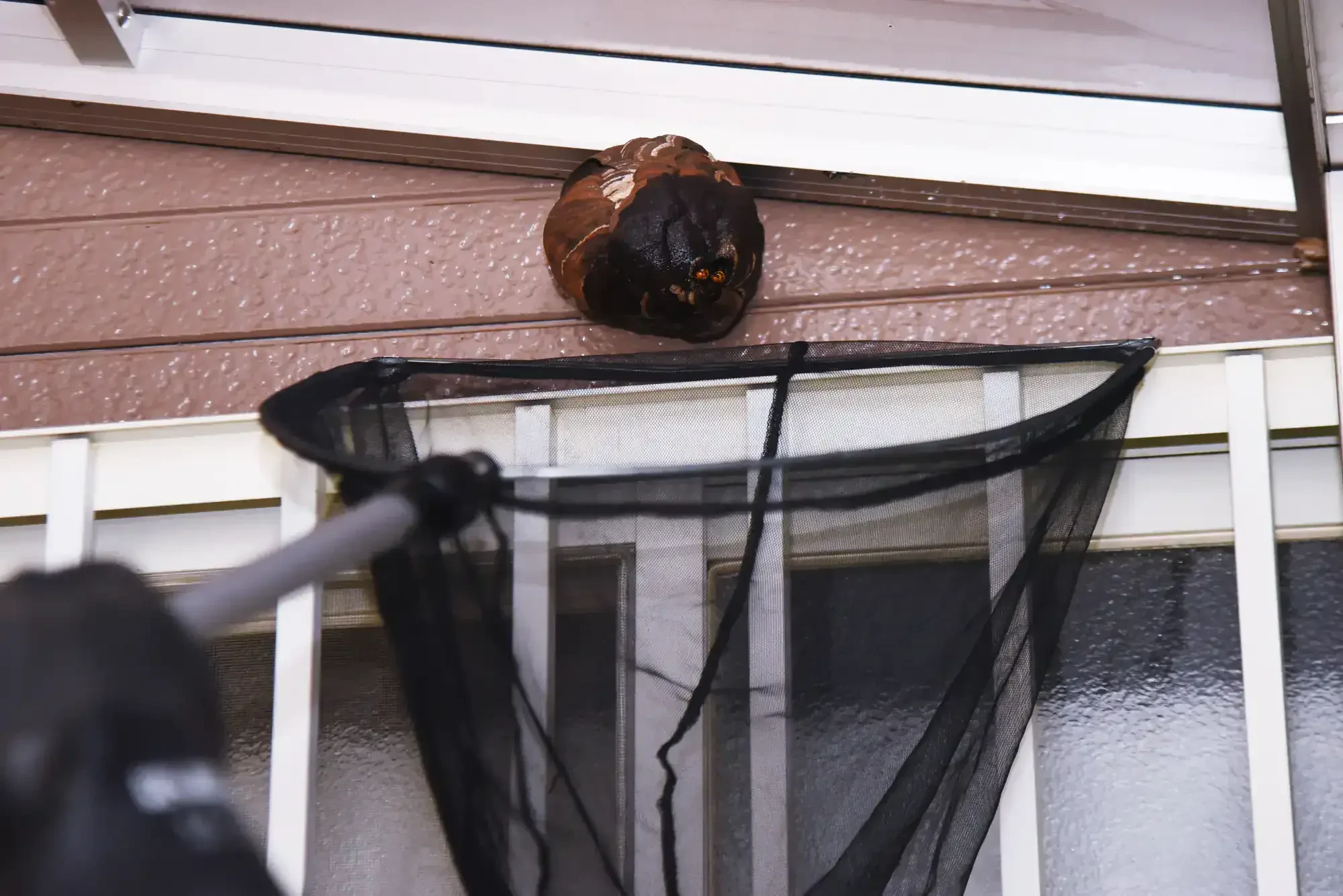
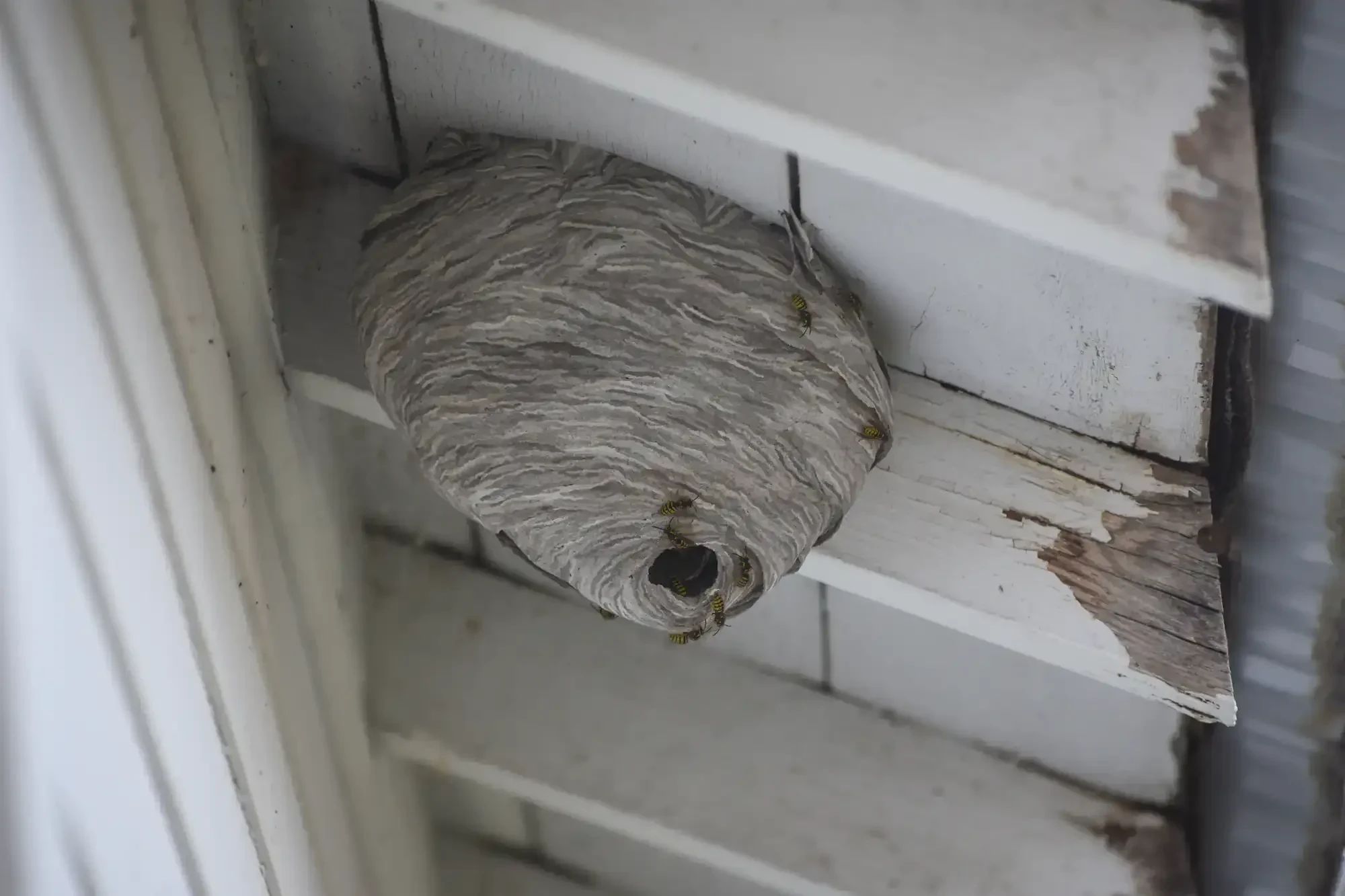
The clearest sign of a wall-void infestation is consistent yellow jacket traffic going in and out of a specific gap — a crack in siding, a space around a utility line, a gap near a soffit or eave — rather than insects flying generally around the yard. If you’re seeing them disappear into your home’s exterior rather than hovering around a ground-level opening, there’s a strong chance you’re dealing with a German Yellowjacket colony that’s established itself inside the structure.
In St. Charles, this is a common scenario specifically because of the age of the local housing stock. Older homes with weathered wood siding, deteriorated trim, and worn soffit panels give German Yellowjackets easy access points that newer construction typically doesn’t have. The colony will chew through insulation and drywall as it grows, which means the longer it’s left alone, the more structural damage accumulates — and the harder it becomes to treat. If you’re hearing a faint buzzing inside a wall or ceiling, or noticing yellow jacket activity near a specific exterior gap, don’t wait. Wall-void nests require a different treatment approach than ground nests, and getting a professional inspection is the only way to know for certain what you’re dealing with.
The honest answer is: it depends on the nest size, the location, and whether anyone in your household has a known or unknown allergy to stinging insect venom. A very small, newly established nest discovered early in the season — before the colony has grown — is a different situation than a mature August colony with thousands of workers. By late summer in Michigan, yellow jacket colonies are at maximum size and at their most defensive. A single disturbed ground nest can trigger a mass stinging response in seconds.
In St. Charles specifically, the combination of agricultural margins and wetland-adjacent properties means ground nests are often larger and more established than homeowners expect before they’re discovered — frequently during lawn mowing or gardening, which puts you in immediate close contact with the colony. For wall-void or attic nests, DIY spray treatments almost never reach the actual colony through enclosed structural cavities, and the attempt can drive workers deeper into the home. Given the medical risk from multiple stings to any household member, the risk calculation for most families in St. Charles strongly favors professional treatment.
Yellow jacket activity in St. Charles typically peaks between late July and mid-September. That’s when colonies have reached full size, when the natural food supply that sustained them through summer starts to shift, and when workers begin aggressively seeking sugary food sources — which is why late-summer barbecues, outdoor gatherings, and any open food or drink containers become flashpoints for stinging incidents.
Michigan’s humid continental climate and Saginaw County’s rich agricultural and wetland landscape support larger colonies than drier regions of the country, because the food supply through spring and early summer is abundant. By the time most St. Charles homeowners discover a nest — often after someone gets stung, or after mowing disturbs a ground nest — the colony is already well-established and at its most dangerous. The window from late March through May, when overwintered queens are just starting to build new colonies, is the ideal time for prevention and inspection. But if you’re finding active yellow jackets in August or September, that’s a same-season problem that needs to be addressed now, not in the fall.
Worker yellow jackets do die off as temperatures drop in late fall — only newly mated queens survive winter to start new colonies the following spring. So in one sense, waiting until winter eliminates the immediate danger. But there are a few problems with this approach that most homeowners don’t think through.
First, if the nest is inside a wall, attic, or other enclosed structure, the colony continues to expand and cause physical damage to insulation, drywall, and wood framing right up until it dies. That damage doesn’t repair itself over winter. Second — and this is the more important point — the entry points the colony used to access your home remain open. A new queen emerging in spring can find the same gap in your siding or soffit and start the cycle again in the same location. Without sealing those entry points after treatment, you’re likely dealing with the same problem next July. Third, if the nest is in a location that puts your family at risk — near a door, a play area, or a frequently used part of the yard — waiting several months with an active colony of thousands of aggressive workers is a real safety issue, not a minor inconvenience.
Yes. We offer discounts for seniors, veterans, and first responders. In a community like St. Charles — where a meaningful portion of residents are retirees on fixed incomes, and where the local population includes veterans and first responders who serve the broader Saginaw County area — those discounts aren’t a footnote. They’re a real reduction in what you pay, applied at the time of service.
We also offer price matching for reasonable competitor rates. If you’ve already received a quote from another licensed pest control provider serving the St. Charles area, bring it to the conversation. The goal isn’t to be the cheapest option on the market — it’s to make sure cost isn’t the reason you end up with a less experienced company handling a yellow jacket nest in or around your home. There are no binding contracts, and the service is backed by a 1-year guarantee. If yellow jackets return within the coverage period, the technician comes back at no additional charge. Ask about current discount availability when you call.
Useful Links