
Hear from Our Customers
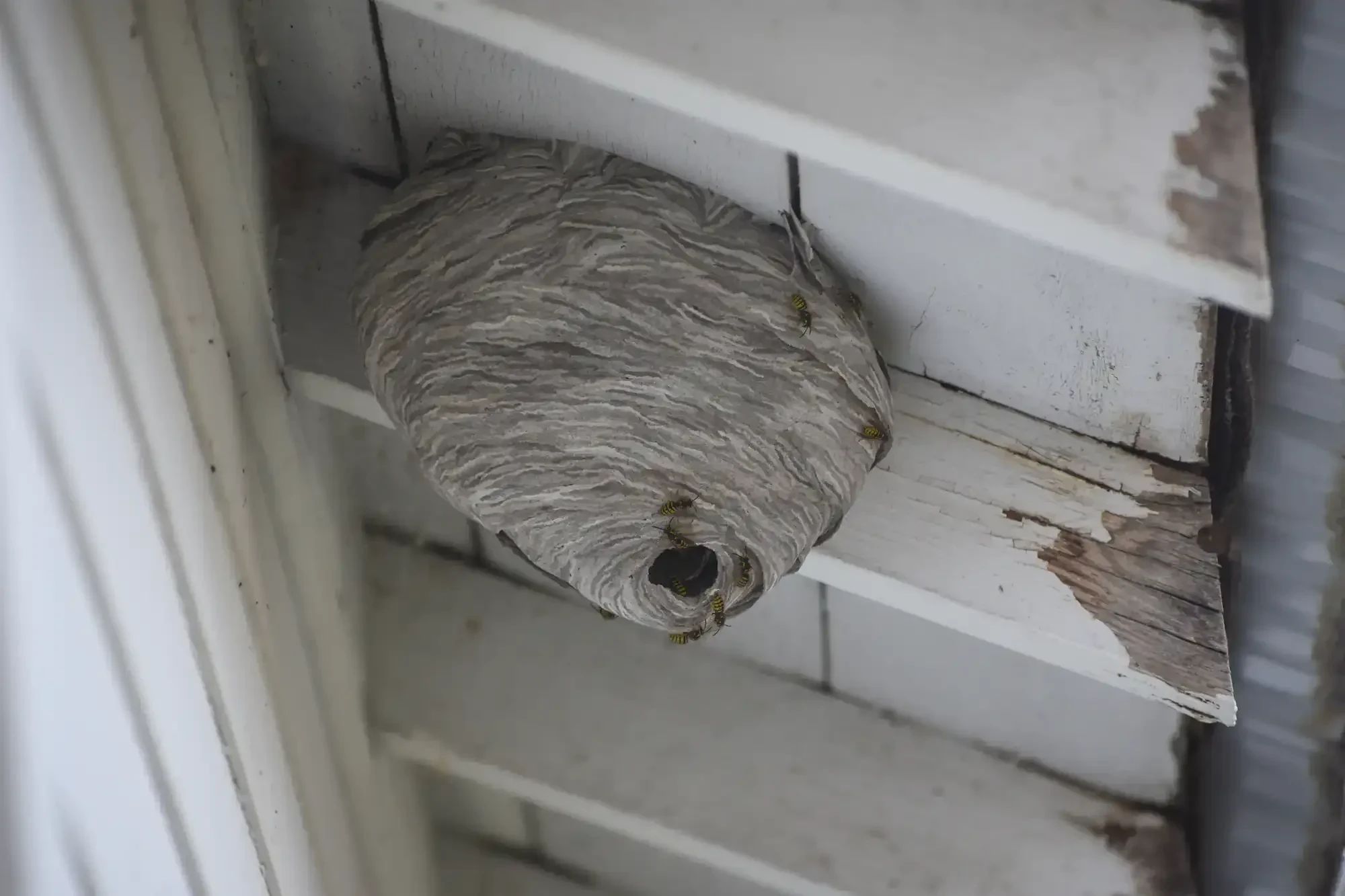
You stop guessing where they’re coming from. That matters more than it sounds — because in Vernon’s older homes along M-71 and throughout the township, yellow jackets don’t always announce themselves with an obvious nest on the porch. They get into wall voids through gaps in aging siding, soffit boards that have shifted over decades, and small openings around utility lines. By the time you notice them, the colony has usually been growing inside your walls since early spring.
Once the nest is properly eliminated — not just sprayed at — the activity stops. No more workers emerging from a gap near the roofline. No more yellow jackets appearing inside the house when the colony chews through drywall. No more second-guessing whether it’s safe to let your kids or grandkids play in the backyard. For Vernon Township’s rural properties with wooded edges and open fields, that also means the ground nests in your yard — the ones you can’t see until you’ve already stepped too close — are gone at the colony level, not just treated at the surface.
The goal isn’t to knock down activity temporarily. It’s to eliminate the colony so the problem doesn’t come back in the same location a few weeks later. That’s what a correct treatment actually does.
First Choice Pest Control was founded on May 31, 2005, by Roger Chinault, who brings 26 years of hands-on pest control experience to every job. This isn’t a franchise. There’s no national call center routing your request to whoever is available. We’re a family-owned company based out of Swartz Creek — about 20 minutes from Vernon via I-69 — and we’ve been operating continuously in mid-Michigan ever since.
Roger holds MDARD Pesticide Application Business License #250081 and has completed Integrated Pest Management training, which means every job starts with a proper inspection and identification — not a one-size-fits-all spray. We’ve earned awards from both Angie’s List and HomeAdvisor, and carry a verified 4.7 out of 5 rating on Angi from real customers.
Shiawassee County’s mix of older rural homes, agricultural land, and wooded properties is exactly the kind of environment we’ve been working in for two decades. Vernon residents aren’t getting a technician who’s never seen a wall-void nest in a 1960s farmhouse. You’re getting someone who has.
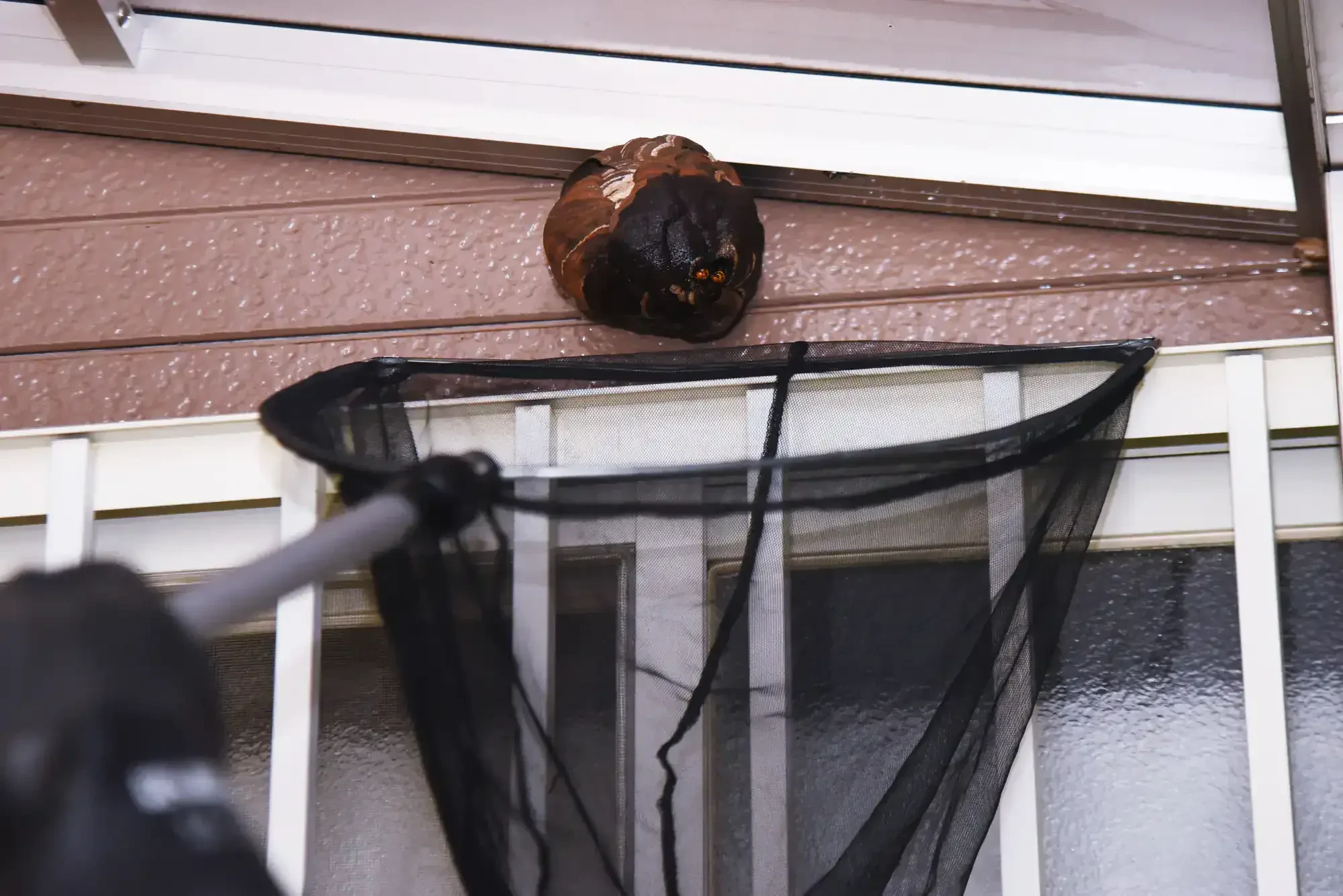
It starts with an inspection, not a treatment. Before anything gets applied, our technician identifies the species, locates the nest, and finds all entry points. This step is what most DIY attempts skip — and it’s exactly why those attempts fail. A German Yellowjacket colony inside a wall void in one of Vernon’s older homes requires a completely different approach than an Eastern Yellowjacket ground nest in a rural backyard. Treating the wrong type the wrong way doesn’t just fail — it can drive the colony deeper into the structure or scatter workers in a way that makes them significantly more aggressive.
Once the species and nest location are confirmed, the correct treatment is applied directly to the colony — not just at the entry point. For structural nests common in Vernon’s aging housing stock, that means reaching the core of the colony inside the wall or attic, not just the workers near the gap. For ground nests on rural properties throughout the township, it means treating the underground colony itself so it doesn’t simply relocate nearby.
After treatment, you’ll know what was found, what was done, and what to watch for. If yellow jacket activity returns within the guarantee period, we come back at no additional charge. Michigan’s yellow jacket season peaks hard in August and September — late summer is when colonies are largest and most aggressive — so timing matters, and prompt service matters more than most people realize until they’re dealing with a full-scale infestation.
Ready to get started?
Every yellow jacket service from First Choice begins with a full property inspection. In Vernon and throughout Shiawassee County, that inspection accounts for the specific vulnerabilities that come with the area’s housing stock and landscape — aging soffits, gaps around utility penetrations, deteriorating fascia boards, and the kind of structural openings that develop in homes that have been through decades of mid-Michigan winters. The inspection isn’t a formality. It’s what determines whether the treatment will actually work.
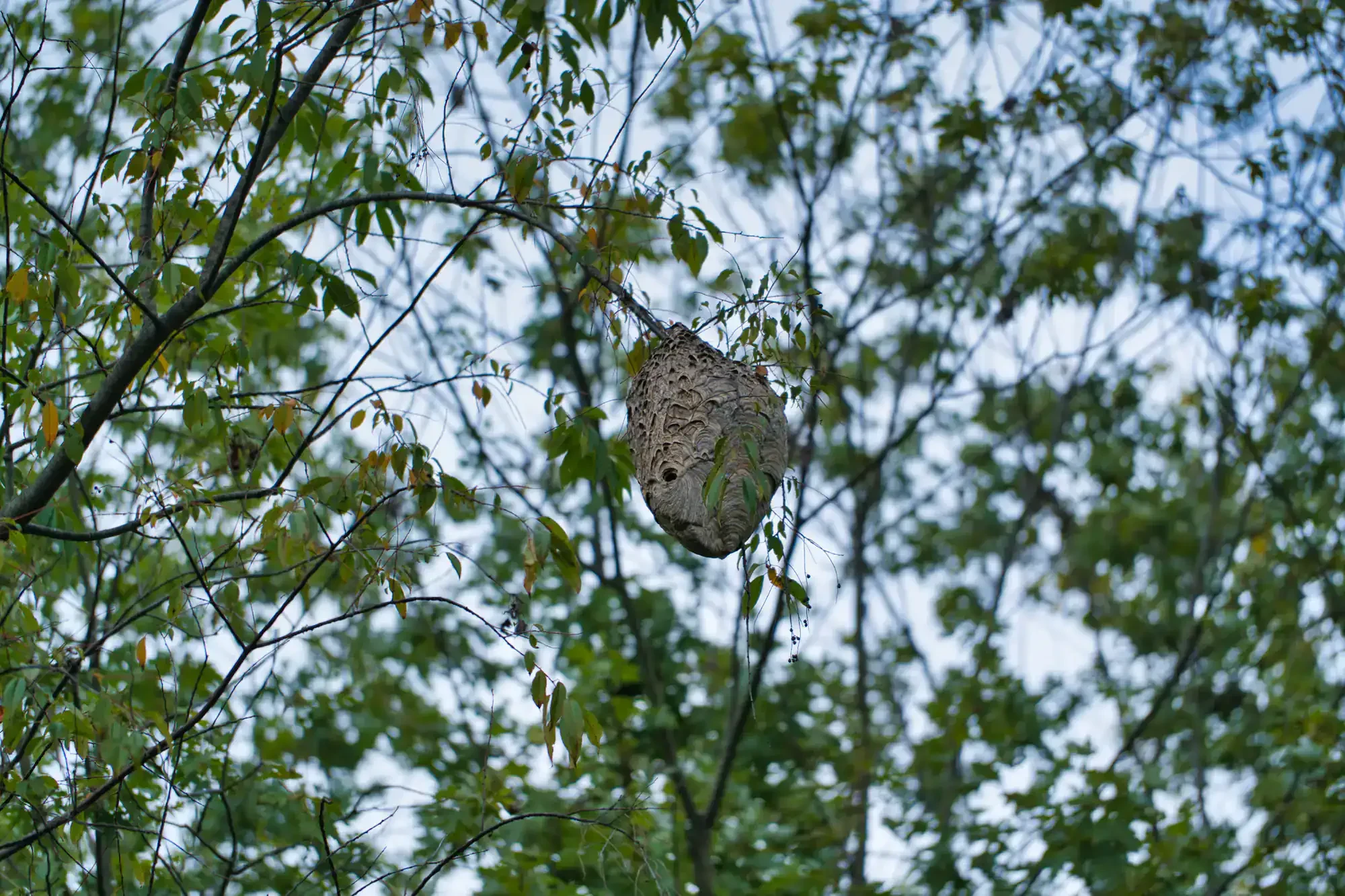
Treatment is species-specific and nest-specific. German Yellowjackets building inside wall voids or attics get a different approach than Eastern Yellowjackets nesting underground along a wooded property line or in an open field. Vernon Township’s rural character — the rolling farmland, creek edges, and wooded lots — means ground nests are a real and recurring issue for homeowners with larger properties, not just a secondary concern.
We serve both residential and commercial customers in the Vernon area with no binding contracts required. Seniors, veterans, and first responders receive discounts — relevant in a community where the median age is over 52 and many residents have served in the military or as first responders. Price matching is available for reasonable competitor rates. The same technician is assigned to your property year after year, so whoever handles your home this season will know your property if you ever need service again.
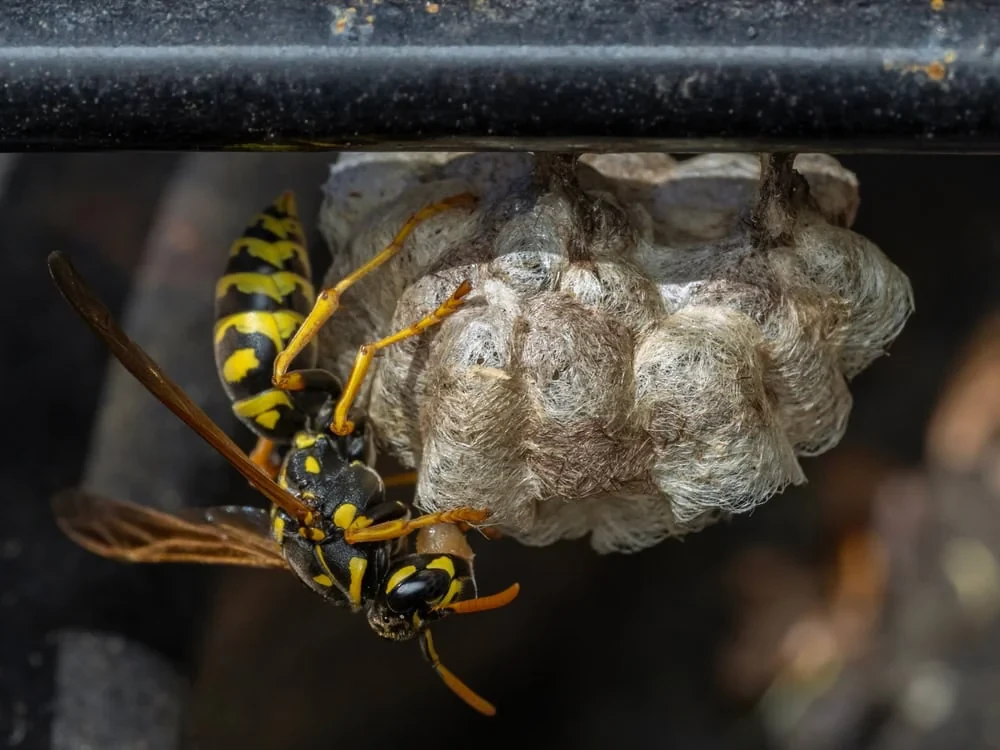
The most common sign is workers appearing inside the house — coming through light fixtures, electrical outlets, or gaps around window frames — without an obvious exterior nest nearby. In older Vernon homes, yellow jackets often enter through small gaps in siding, deteriorating soffit boards, or openings around utility penetrations, and build their nest entirely within the wall cavity. You might hear a faint buzzing or chewing sound from inside the wall, and you may notice increased activity around one specific exterior point even if you can’t see a nest.
The danger with wall-void nests is that they’re easy to misread. Homeowners often spray a gap with an over-the-counter product, see activity slow down briefly, and assume the problem is handled. What actually happened is the workers near the entry were killed, but the colony — and the queen — are still active deeper in the wall. The surviving workers become more aggressive, and in some cases the colony expands through the wall cavity and workers begin emerging inside the living space. A proper inspection identifies the full extent of the nest before any treatment is applied.
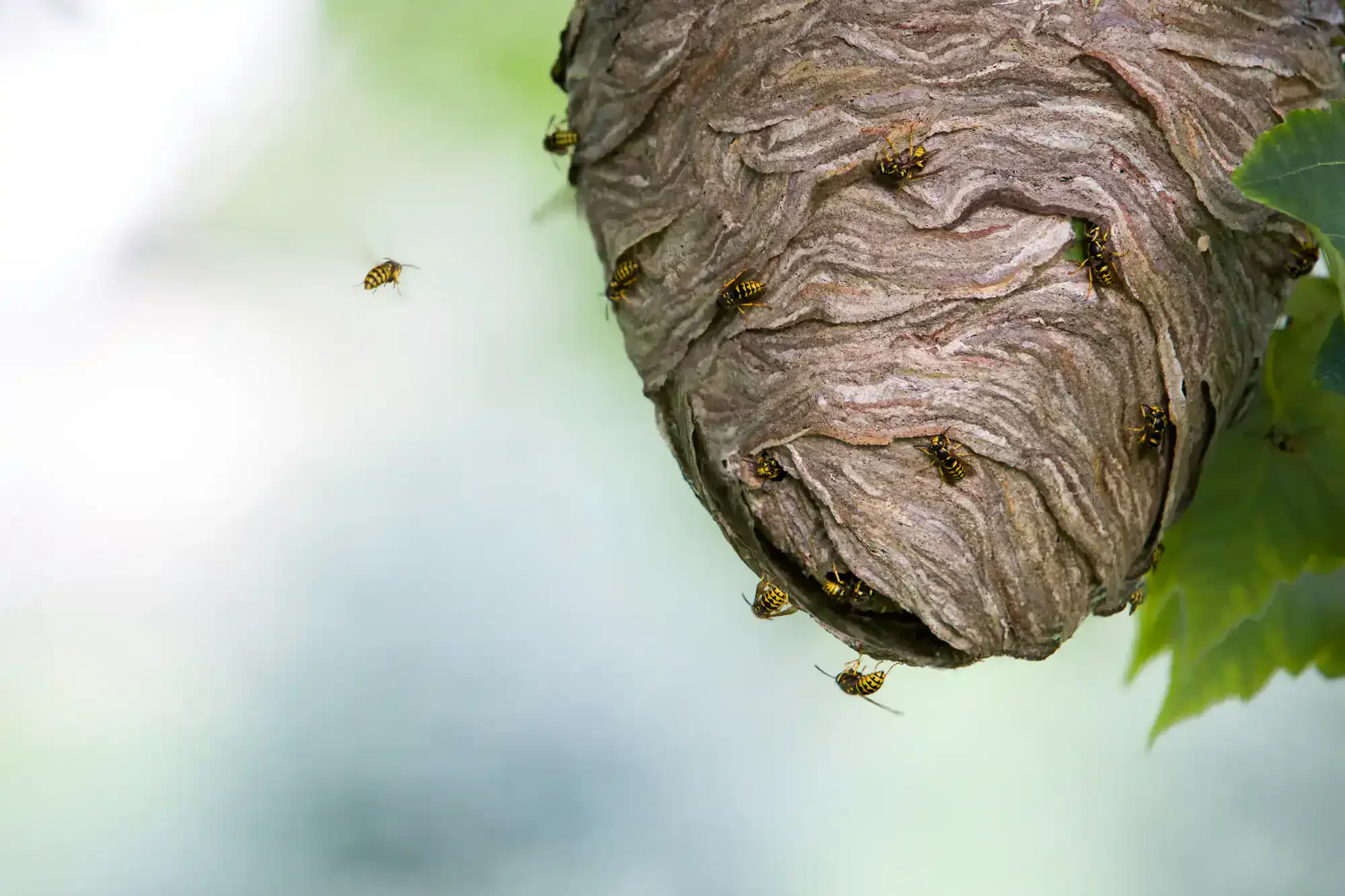
For a small, newly established nest that’s fully visible and away from the house — early in the season, before the colony has grown — some homeowners manage it without incident. But that scenario is the exception, not the rule. By mid-to-late summer, which is when most Vernon residents notice yellow jacket problems, a mature colony can have anywhere from 1,000 to 5,000 workers. At that size, disturbing the nest — even slightly — triggers a coordinated defensive response that can result in dozens of stings in seconds.
The risk is compounded with structural nests, which are common in Vernon’s older housing stock. You can’t see the full colony, you can’t reach the queen with a store-bought spray, and the treatment you apply at the entry point often makes the surviving colony more defensive without eliminating it. Stinging insects send more than 500,000 people to the emergency room every year in the United States. If there’s any chance of an allergic reaction in your household — or if the nest is inside a wall, attic, or crawlspace — professional removal isn’t optional, it’s the right call.
Yellow jackets are technically a type of wasp, but the distinction matters a lot when it comes to treatment. Paper wasps — the ones that build the open, umbrella-shaped nests under eaves — are generally less aggressive and easier to treat because the nest is visible and accessible. Yellow jackets are more aggressive by nature, build enclosed nests that are often hidden from view, and defend their colonies far more intensely when disturbed. They’re also the species most likely to sting repeatedly, since they don’t lose their stinger the way honeybees do.
Michigan State University Extension identifies yellow jackets as the most troublesome wasp pests in Michigan specifically because of how they nest in and around homes and structures. In Vernon and throughout Shiawassee County, the two species you’re most likely to encounter are the German Yellowjacket — which nests in wall voids, attics, and enclosed cavities — and the Eastern Yellowjacket, which nests underground in abandoned mammal burrows. These two species require different treatment strategies, and correctly identifying which one you’re dealing with is the first step in actually solving the problem.
Yellow jacket colonies in mid-Michigan start small. A queen emerges in late March or early April, finds a nesting site, and begins building. Through spring and into summer, the colony grows steadily but is still relatively small — which is why most homeowners don’t notice a problem until late July or August. By that point, a colony that started with one queen and a handful of workers has grown to potentially several thousand. That’s also when yellow jackets shift from primarily hunting insects to seeking sugars and proteins, which is why they become so aggressive around outdoor food and garbage in late summer.
For Vernon residents, August and September are the months when yellow jacket pressure is highest. It’s also when the risk of a serious sting reaction is greatest, because the workers are at peak numbers and maximum defensiveness. The first hard frost — which typically arrives in the Shiawassee County area in mid-to-late October — begins killing off the worker population, but by that point a structural nest inside a wall void may have been expanding for six months. Don’t wait until the colony is at full size to make the call.
Cost depends on the nest type, location, and size of the infestation. A straightforward, accessible ground nest is generally on the lower end of the range. A structural nest inside a wall void or attic — especially one that has been growing through spring and summer — involves more time, more precise application, and sometimes follow-up, which affects the total. Most professional yellow jacket treatments fall somewhere in the range of a few hundred dollars, with more complex structural jobs running higher depending on what’s involved.
The more useful comparison isn’t treatment cost versus doing nothing — it’s treatment cost versus what happens if you don’t act. A severe sting reaction that requires an emergency room visit averages over $1,000 out of pocket. A yellow jacket colony that expands through a wall void and requires drywall repair and remediation can easily run $2,000 or more. We offer price matching for reasonable competitor rates, so you don’t have to spend time calling around to feel confident you’re getting a fair price. Discounts are also available for seniors, veterans, and first responders — a meaningful consideration for many Vernon Township households.
Yes. We serve residential and commercial customers throughout Vernon Township and the surrounding Shiawassee County area — not just the village itself. Rural properties along the township roads, hobby farms, and larger lots with outbuildings, wooded edges, or open fields are exactly the kind of properties where yellow jacket pressure tends to be highest. Eastern Yellowjackets nest underground in abandoned mammal burrows, and the undisturbed ground common on rural Shiawassee County properties — along fence lines, wooded lot edges, creek banks, and unmowed areas — provides ideal nesting habitat.
Ground nests on rural properties are particularly dangerous because they’re invisible until you’re already too close. There’s no visible nest to avoid. You’re mowing, gardening, or walking a fence line and suddenly you’ve disturbed a colony of thousands. We locate and eliminate these nests at the colony level — not just treating the surface — so the problem doesn’t simply re-establish a few feet away. The same technician will be assigned to your property each time, which matters on larger rural parcels where knowing the land makes a real difference in finding and treating nests that aren’t obvious from the driveway.
Useful Links