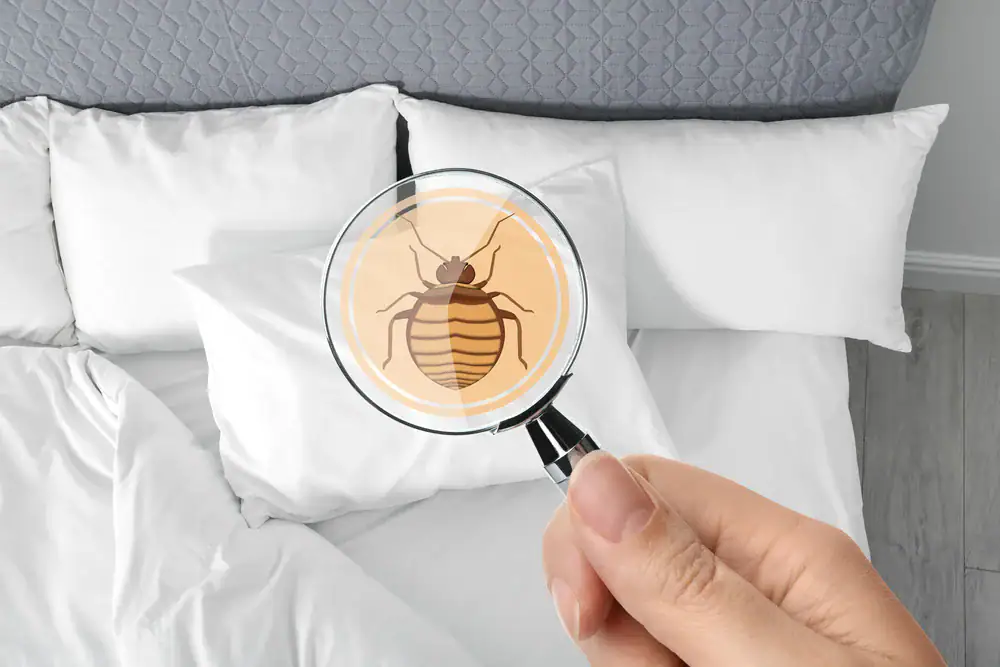
You haven’t seen a bug. You’re not sure you even have them. But something has been biting you at night, and the internet rabbit hole you fell into at 2 a.m. has you second-guessing everything. That’s actually the best time to act — not after you’ve confirmed a full infestation, but right now, when you’re not sure. A canine bed bug inspection is built exactly for this moment. It can detect a single bug or viable egg that no human eye would ever find. And catching it this early is the difference between a manageable fix and a months-long ordeal.
Bed Bug Early Stage: What’s Actually Happening Before You Notice Anything
The early stage of a bed bug infestation is almost invisible by design. These insects are flat, fast, and instinctively hide in tight spaces — mattress seams, box spring folds, behind baseboards, inside electrical outlets. A beginning infestation might involve just two or three bugs. No smell. No visible stains. No obvious bites for everyone in the house.
That’s the trap. By the time most people are certain they have bed bugs, the population has already had weeks — sometimes months — to grow. A single female bed bug can lay hundreds of eggs in her lifetime. What starts as a few bugs in one room becomes a multi-room problem that costs dramatically more to treat.
Beginning Stage of Bed Bugs: Where They Hide and Why You Won’t Find Them
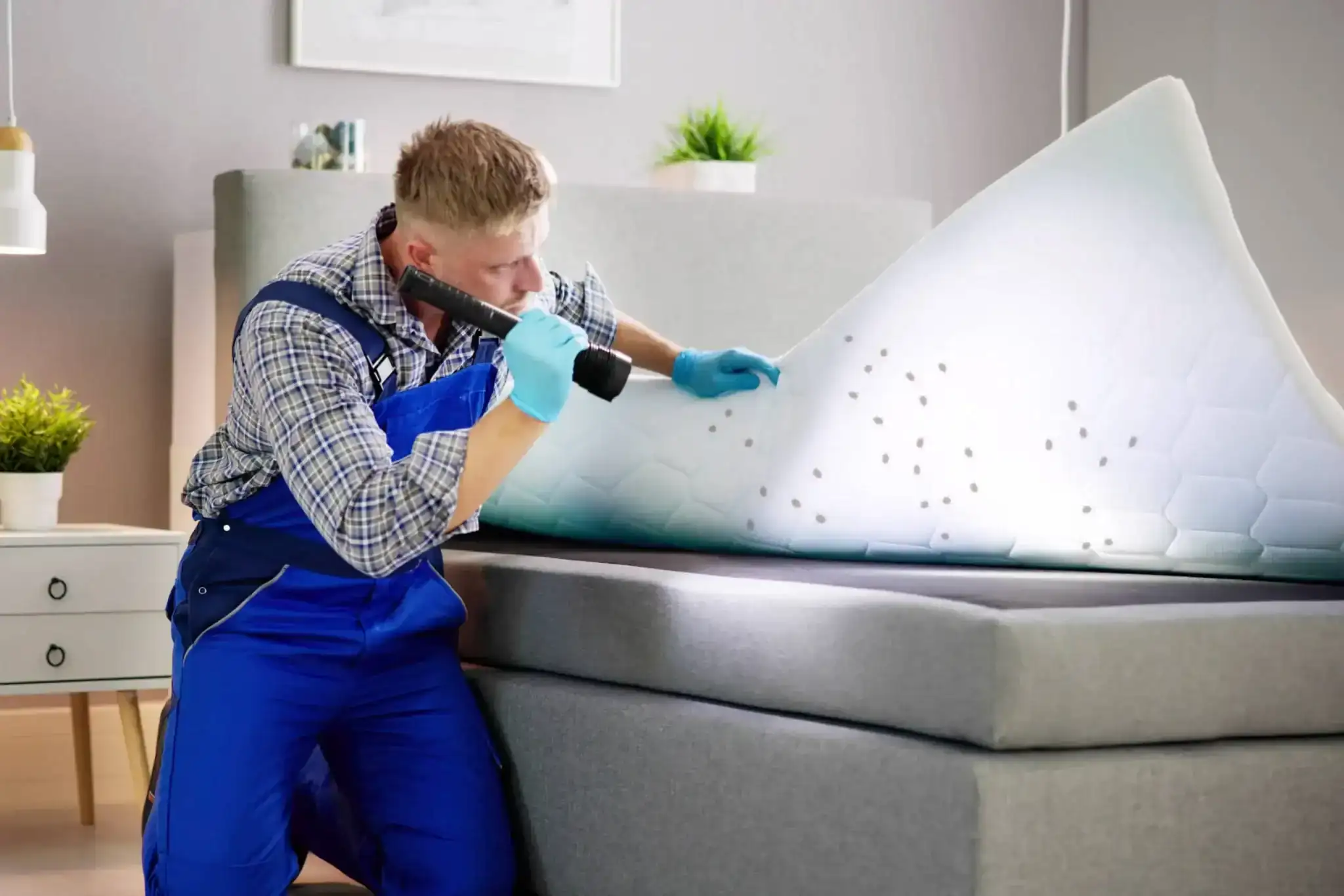
In the beginning stage of a bed bug infestation, the bugs aren’t spread throughout your home — they’re concentrated in one tight area, usually within a few feet of where you sleep. The mattress seam is the most common starting point. After that, the box spring, the headboard, and the gap between the mattress and the bed frame. If you have a couch you sleep on regularly, that’s another common entry point.
The reason most people miss them at this stage is simple: there isn’t much to see. A beginning infestation doesn’t leave the rust-colored staining or heavy fecal spotting that shows up in photos online. You might find one tiny dark spot that looks like a speck of pepper. You might find nothing at all.
Human visual inspections — even thorough ones — catch bed bugs at this stage somewhere between 30 and 60 percent of the time. That’s not a knock on anyone’s effort. It’s just a limitation of what human eyes can do when they’re looking for a few flat, brown insects hiding inside a mattress seam in a dimly lit bedroom.
A certified detection dog operates on a completely different mechanism. Dogs don’t look for bugs — they smell them. Bed bugs produce a specific chemical scent that a trained dog can detect even through walls, under carpet, and inside furniture voids. That’s why canine detection reaches accuracy rates of 97 percent or higher in controlled studies, compared to the 30 to 60 percent range for visual inspection alone.
The practical difference is significant. If you have two or three bugs hiding in your box spring right now, a visual inspection might miss them entirely. A trained dog will find them in minutes — and you’ll know exactly where the problem is before it spreads anywhere else.
Early Stage Bed Bug Bites: How to Tell If What You’re Seeing Is Actually Bed Bugs
Bites are often the first thing people notice — but they’re also one of the least reliable ways to confirm a bed bug problem. Early stage bed bug bites tend to appear in small clusters or a rough line pattern, usually on skin that was exposed while you slept: arms, shoulders, the back of the neck, ankles. They’re red, slightly raised, and itchy. They look a lot like mosquito bites, flea bites, or a mild allergic reaction.
Here’s what makes them tricky: about 30 percent of people have no visible skin reaction to bed bug bites at all. So if two people share a bed and only one is waking up with marks, that doesn’t mean the other person isn’t being bitten. It just means their body isn’t reacting visibly. You can have a real infestation in your home and never develop a single noticeable welt.
The timing also confuses people. Bed bug bites can take anywhere from a few hours to two weeks to show up on the skin after the bite occurs. That delay makes it nearly impossible to connect the dots between when you were bitten and where you were sleeping. You might assume it happened at a hotel when the bugs were already in your home — or vice versa.
This is why bites alone aren’t a reliable diagnostic tool, and why waiting for more obvious signs before getting an inspection tends to backfire. By the time the bites are frequent enough, clustered enough, and consistent enough to feel like clear evidence, the infestation has usually grown well beyond its beginning stage. A canine inspection removes the guesswork entirely. You get a definitive answer — not a suspicion based on skin reactions that could have a dozen other explanations.
First Signs of Bed Bugs in Genesee County: What Most Homeowners Miss
Flint ranked 16th on Orkin’s 2025 list of the top 50 most bed bug-infested cities in the United States. Detroit was third. Grand Rapids was seventh. Four Michigan cities made the top 50 — which means if you live in Genesee County or Shiawassee County, you’re in one of the highest-risk regions in the country for this exact problem.
The first signs of bed bugs aren’t always dramatic. Most people expect to find a bug crawling across their pillow. What they actually find — if they find anything at all — is a small rust-colored stain on a pillowcase, or a few dark specks along a mattress seam that look like ground pepper. Those specks are fecal deposits. That stain is dried blood from a crushed bug. Easy to miss. Easy to dismiss.
In Genesee County, where older housing stock is common and many homes have the kinds of gaps, cracks, and wall voids that give bed bugs easy places to spread, a small infestation can become a large one faster than it would in a newer build. The same goes for multi-unit housing throughout Flint, Burton, and Swartz Creek — apartments, duplexes, and rental properties where bugs can move between units through shared walls and utility penetrations.
What Does a Canine Bed Bug Inspection Actually Involve?
A canine bed bug inspection is straightforward from the homeowner’s perspective. We bring our certified dog through your home room by room, moving methodically along the walls, furniture, and flooring. The dog works quickly — typically five to seven minutes per room — and signals when it detects the scent of live bed bugs or viable eggs. Our handler reads that alert and marks the location.
If the dog alerts on a specific area, the next step is always a visual confirmation. A positive canine alert by itself doesn’t trigger a treatment recommendation. Our handler examines the flagged area to confirm what’s there before anything else happens. That’s an important detail, because it means you’re never pushed toward treatment based on a single signal that hasn’t been verified.
The whole process for a typical home takes significantly less time than a thorough manual inspection — and produces a far more reliable result. Because the dog is detecting scent rather than looking for visible evidence, it can identify bugs in places a human inspector would have to physically disassemble furniture or tear up carpet to access. Wall voids, inside electrical outlets, beneath hardwood flooring — these are all within range for a trained detection dog.
We’re one of fewer than 100 companies in the United States currently offering certified canine bed bug detection. That’s not a number we throw around for effect — it reflects the real cost and commitment involved in training and maintaining a certified detection team. The training alone runs between $8,000 and $15,000 per dog, and ongoing certification requires regular testing to maintain accuracy standards. Most pest control companies simply don’t offer it, which is why it matters that we do.
Is a Canine Bed Bug Inspection Worth the Cost? Here’s the Math.
This is the question most people are actually asking when they’re weighing whether to call. The honest answer is: it depends on what you find — but the math tends to work out strongly in favor of early detection.
Catching a bed bug infestation in its beginning stage, when it’s limited to one area and a small number of bugs, typically puts treatment costs around $1,000. A severe infestation that has spread to multiple rooms, furniture, and wall voids — the kind that requires heat treatment across the entire home — can run $4,000 to $6,000 or more. The difference between those two outcomes is often just timing.
If you’re a landlord or property manager in Genesee County, the case for regular canine inspections between tenants is even stronger. We’ve worked with property owners across Flint and the surrounding area who’ve made this part of their turnover process, and it’s saved them thousands in emergency treatments and tenant disputes down the line.
There’s also the question of certainty. A lot of people sit on a suspected problem for weeks because they’re not sure enough to spend money on treatment. A canine inspection resolves that uncertainty quickly. If there’s nothing there, you know. If there is something, you know exactly where it is and how contained it still is. That information has real value — especially when the alternative is waiting until the evidence becomes undeniable, which usually means the problem has already grown.
We’ve been doing this work in Genesee and Shiawassee counties since 2005. That’s not a talking point. It’s just what two decades of the same job in the same area teaches you: the homeowners who act on a suspicion early spend far less — and deal with far less disruption — than the ones who wait for certainty that comes too late.
How to Get a Canine Bed Bug Inspection in Genesee County, MI
If something has been bothering you — unexplained bites, a suspicious spot on your sheets, a recent hotel stay or used furniture purchase — the smartest move is to get a straight answer before the situation changes. A canine bed bug inspection gives you that. Not a maybe, not a “keep an eye on it.” A clear result, fast, with confirmation before any treatment is ever recommended.
Early detection is almost always cheaper, faster, and less disruptive than treating a problem that’s had time to spread. In a region that consistently ranks among the most bed bug-affected in the country, that window matters more than most people realize.
If you’re in Genesee County or Shiawassee County and you want to know for certain what you’re dealing with, reach out to First Choice Pest Control. We’ll give you a straight answer — and if there’s a problem, we’ll take care of it.