You probably didn’t go looking for a hornet nest. More likely, you found out it was there the hard way — taking out the trash, mowing the back half of the yard, or just walking past the shed. One sting is enough to change how you feel about your own property.
The good news is that hornet problems are very solvable. The less good news is that they don’t solve themselves, and the hardware store spray usually makes things worse before it makes them better. This page covers what you’re dealing with, what actually works, and what to expect when you call in a professional — specifically here in Farrandville and Jossman Acres, where the terrain creates some conditions worth knowing about.
What Hornet Removal Actually Involves — and Why It’s Not a One-Spray Fix
A lot of people assume hornet removal means spraying the nest and calling it done. That’s understandable, but it’s also why so many DIY attempts fail — or turn a manageable situation into a genuinely dangerous one.
A mature hornet colony can contain 400 to 700 workers, all capable of stinging repeatedly. When you disturb the nest without eliminating the colony, you trigger a defensive response from hundreds of insects at once. That’s not a risk worth taking without the right training, equipment, and approach.
Professional removal means identifying the species, locating every nest on the property (not just the obvious one), treating at the right time of day, and sealing entry points so the problem doesn’t come back next season. It’s a process, not a single event.
How Do You Know If You Have Hornets or Yellow Jackets in Michigan?
This is one of the most common questions we get, and it’s worth answering clearly because the two insects behave differently and nest differently.
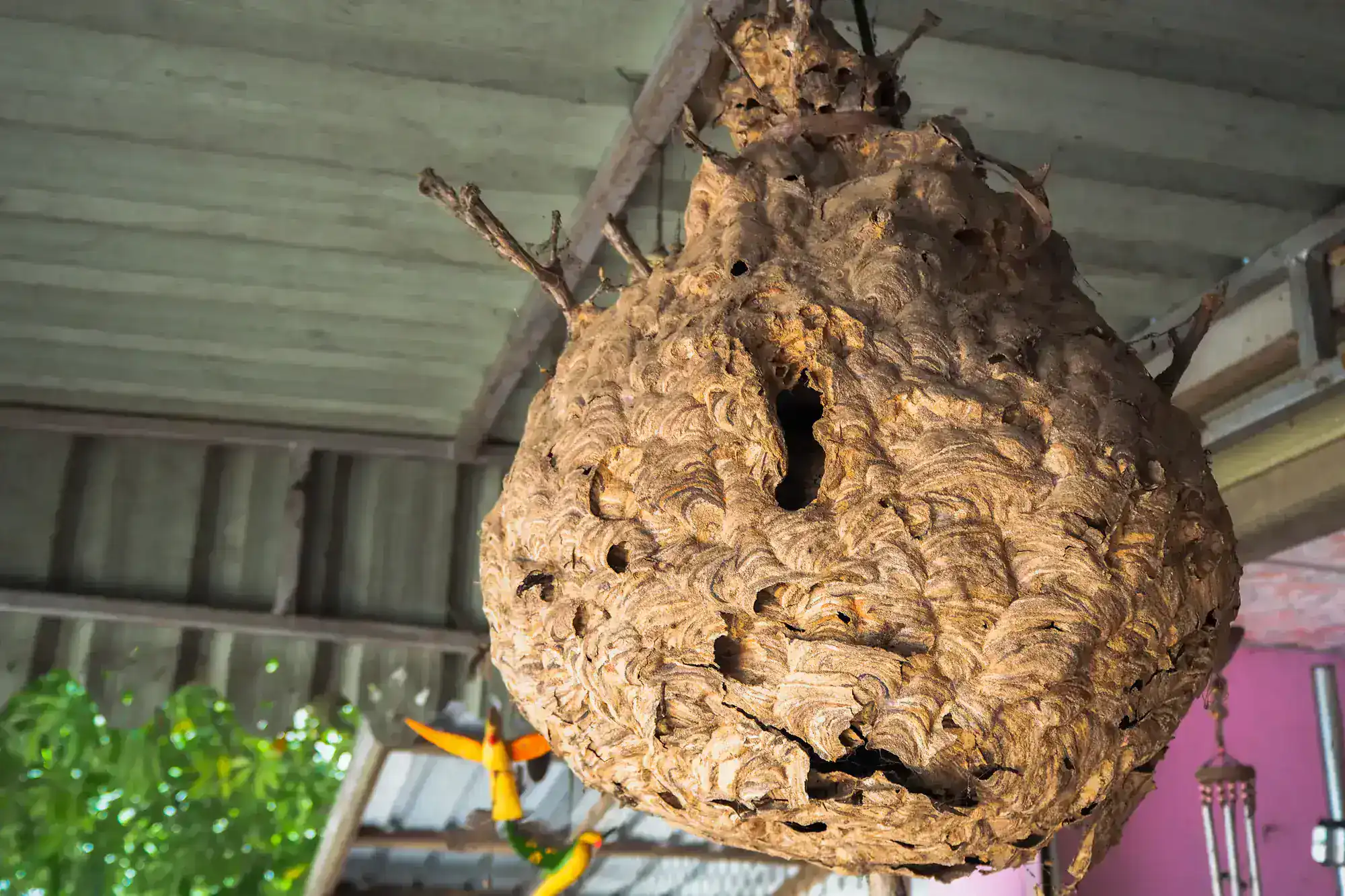
Bald-faced hornets — the most common “hornet” in Michigan — are black with white or off-white markings. They build large, gray paper nests that hang from tree branches, shrubs, and eaves. By late summer, these nests can reach the size of a basketball. They’re highly aggressive when their nest is threatened, and they don’t need much provocation. If you’ve seen a large gray paper structure anywhere on your property, that’s almost certainly a bald-faced hornet nest.
Yellow jackets are smaller, with the familiar yellow-and-black pattern. They often nest underground or inside wall voids, which makes them harder to spot until you’ve accidentally disturbed them. They’re also extremely aggressive in late summer and fall, when their colony is at peak size and food sources start to shift. If you’ve been stung near the ground, near a wood pile, or close to an outbuilding without seeing a visible nest, yellow jackets are a likely culprit.
Then there’s the European hornet — the only stinging insect in Michigan that actively stings at night. If you’re finding hornets inside your home after dark, or getting stung in the evening hours, that’s a specific situation that requires a specific approach.
In the wooded, semi-rural terrain around Farrandville and Jossman Acres, all three of these species are active throughout the warm season. Mature trees, overgrown borders, detached garages, and older outbuildings give them plenty of places to establish colonies that go unnoticed until they’re well-established. Knowing what you’re dealing with before you treat matters — and it’s one of the first things we assess before we do anything else.
Why Store-Bought Hornet Spray Usually Falls Short
The sprays you can buy at a hardware store are designed to kill hornets on contact. That sounds like it should work, and sometimes it does — if the nest is very small, very accessible, and you can soak the entire entrance without getting swarmed. In practice, those conditions rarely exist together.
The bigger issue is what the spray doesn’t reach. Contact insecticides don’t penetrate deep into the nest structure, which means eggs, larvae, and the hornets inside the nest body often survive. The colony can rebuild. And in the meantime, you’ve disturbed a colony of hundreds of defensive insects, many of which are now actively looking for the source of the threat.
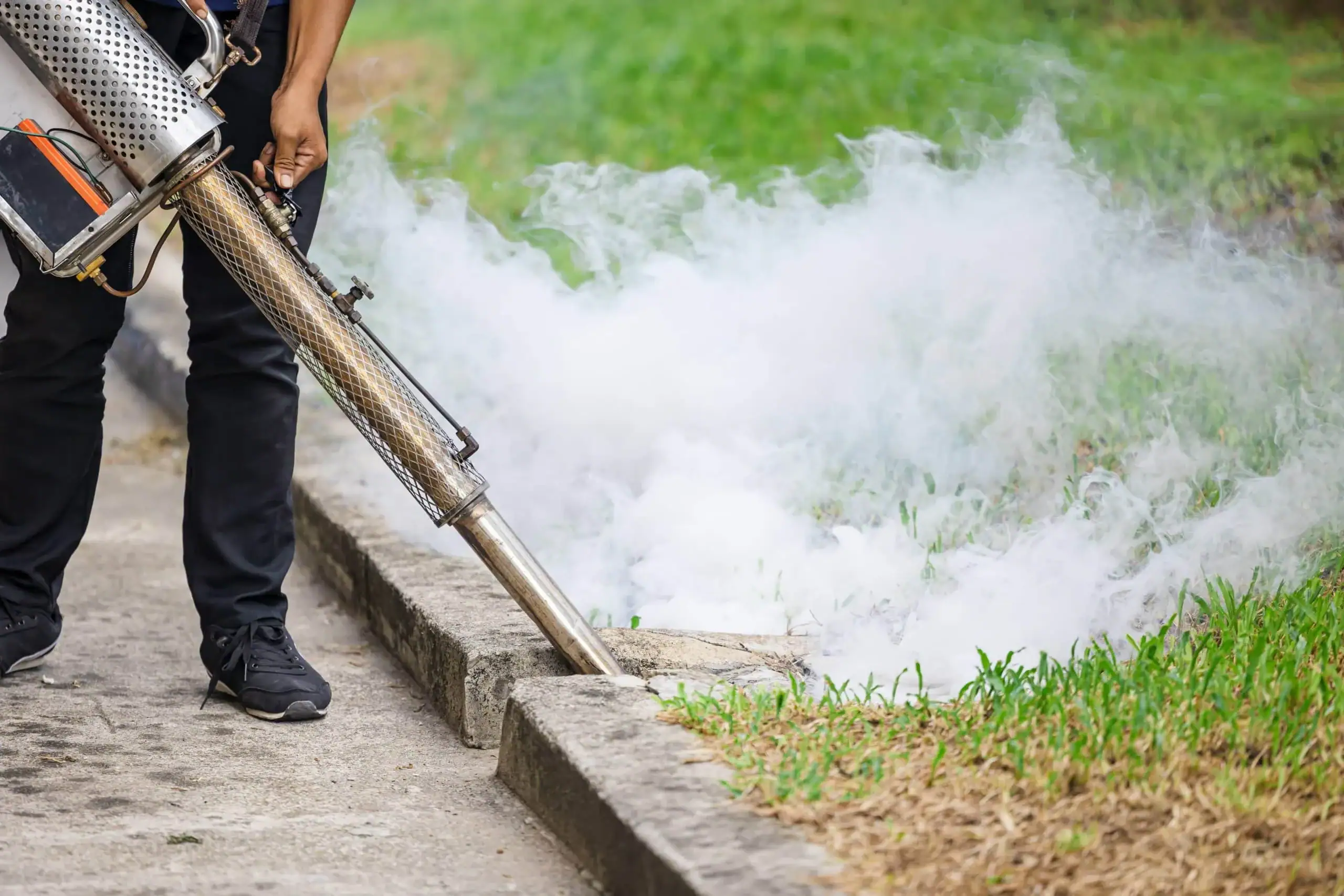
We use insecticide dust applied directly into the nest entrance — a method that gets carried through the colony by the hornets themselves, reaching areas a surface spray never could. After the colony is eliminated, the nest is physically removed and the entry point is sealed to prevent re-infestation. That’s a meaningfully different outcome than a can of spray from the home improvement store.
There’s also a timing factor that most homeowners don’t think about. Hornets are significantly less active after dark, which is when professional removal is most effectively performed. Treating at night means the majority of the colony is inside the nest — which is exactly where you want them when you’re applying treatment. It’s a detail that sounds small but makes a real difference in how completely the colony is eliminated.
We’ve had customers call us after a previous pest control company couldn’t get rid of their yellow jacket problem. It’s not unusual. Getting to the right treatment method, at the right time, with the right product, takes experience — and that experience is something that accumulates over years of working in Michigan specifically.
Hornet Season in Farrandville and Jossman Acres — When to Act and What to Expect
Michigan’s warm, humid summers are ideal conditions for hornet colonies to grow fast. Queen hornets emerge in spring and start building immediately. By mid-summer, what started as a golf-ball-sized nest can be housing hundreds of workers. By late August, you’re dealing with a colony at maximum size and maximum aggression.
The homeowners who have the easiest time are the ones who call in spring, when nests are small and colonies haven’t hit their stride yet. The ones who wait until September are dealing with a much bigger, much more defensive situation. Both are solvable — but earlier is always easier and lower-risk.
Where Hornets Nest on Wooded Properties Near Farrandville and Jossman Acres
The property types in Farrandville and Jossman Acres create some specific nesting conditions that are worth knowing about. Farrandville sits in Genesee County — the same county where we’re based in Swartz Creek — and the rural character of the area means larger lots, older structures, and plenty of undisturbed corners where a colony can establish itself without anyone noticing for weeks.
Jossman Acres, out in Springfield Township in Oakland County, has a more wooded, lake-adjacent character. Mature trees are everywhere, and that’s exactly what bald-faced hornets prefer for their aerial nests. The branches and shrub lines along property edges are prime real estate for a colony that wants to go undetected.
In both areas, outbuildings are one of the most common surprise locations. Sheds, detached garages, and storage structures have wall voids, eave gaps, and attic spaces that hornets find ideal. Homeowners often don’t discover a nest in an outbuilding until they open the door one August afternoon and find out the hard way. Dock structures and waterfront outbuildings on lake properties in the Jossman Acres area add another layer — these are spots that don’t get checked regularly, which gives colonies a long runway to grow.
A thorough property inspection doesn’t just treat the nest you already know about. It looks at all of these locations — the obvious ones and the ones you haven’t thought to check. Finding a secondary nest that would have been missed is one of the most common things that happens when we walk a property for the first time.
Is Hornet Removal Safe for Kids and Pets — and What Happens After Treatment?
This is the question most parents and pet owners want answered before they agree to anything. The short version is yes — when removal is done correctly, using a targeted approach, your family and pets are not at risk from the treatment itself.
We use Integrated Pest Management principles, which means we apply the least toxic, most targeted method that will actually eliminate the colony. We’re not blanketing your yard with chemicals. The treatment goes where the hornets are, not everywhere else. After treatment, we walk you through any precautions specific to your situation — which in most cases are minimal and short-lived.
What happens after the colony is eliminated matters as much as the treatment itself. The nest gets physically removed. Entry points get sealed so the same spot doesn’t become a new nest next spring. And if you’re on a property with the kind of wooded borders and outbuildings common in Farrandville and Jossman Acres, we’ll talk through what to watch for going forward. Hornet queens overwinter near where they nested — in leaf litter, under bark, in structural gaps — and they’ll start the whole cycle again in spring if the conditions are right.
One thing worth knowing: between 1.6% and 5.1% of people have experienced life-threatening allergic reactions to stinging insect venom. Many of those people didn’t know they were allergic until it happened. Even people without known allergies can have serious reactions to multiple stings from a large colony. The risk isn’t limited to people with a documented allergy — which is part of why treating a mature colony without professional gear is genuinely dangerous, not just uncomfortable.
We also want to be straightforward about cost. Professional hornet removal in Michigan typically ranges from $100 to $1,300 depending on nest size, location, and accessibility. We offer price matching on reasonable competitor quotes, and we have discounts available for seniors, veterans, and first responders. There are no binding contracts — you’re not locked into anything. If you want a quote, we’ll give you one before anything happens.
Ready to Get Your Yard Back? Here’s How to Get Started with Hornet Removal Near You
Hornet problems don’t get smaller on their own. A colony that’s manageable in May is a serious situation by August, and the longer it goes, the more aggressive the insects get as the season shifts. If you’ve already been stung, or you’ve spotted a nest somewhere on your property, the right move is to have someone take a look before it gets worse.
We’ve been doing this in southeast Michigan since 2005 — twenty years of working in the same communities, with the same technicians, on properties just like yours in Farrandville and Jossman Acres. We know what Michigan hornets do, when they do it, and what it takes to get rid of them completely.
If you’re in Farrandville, Jossman Acres, or anywhere in the surrounding area and you’re ready to stop sharing your yard with a hornet colony, reach out to First Choice Pest Control. We’ll tell you exactly what you’re dealing with and what it takes to fix it.