
Hear from Our Customers
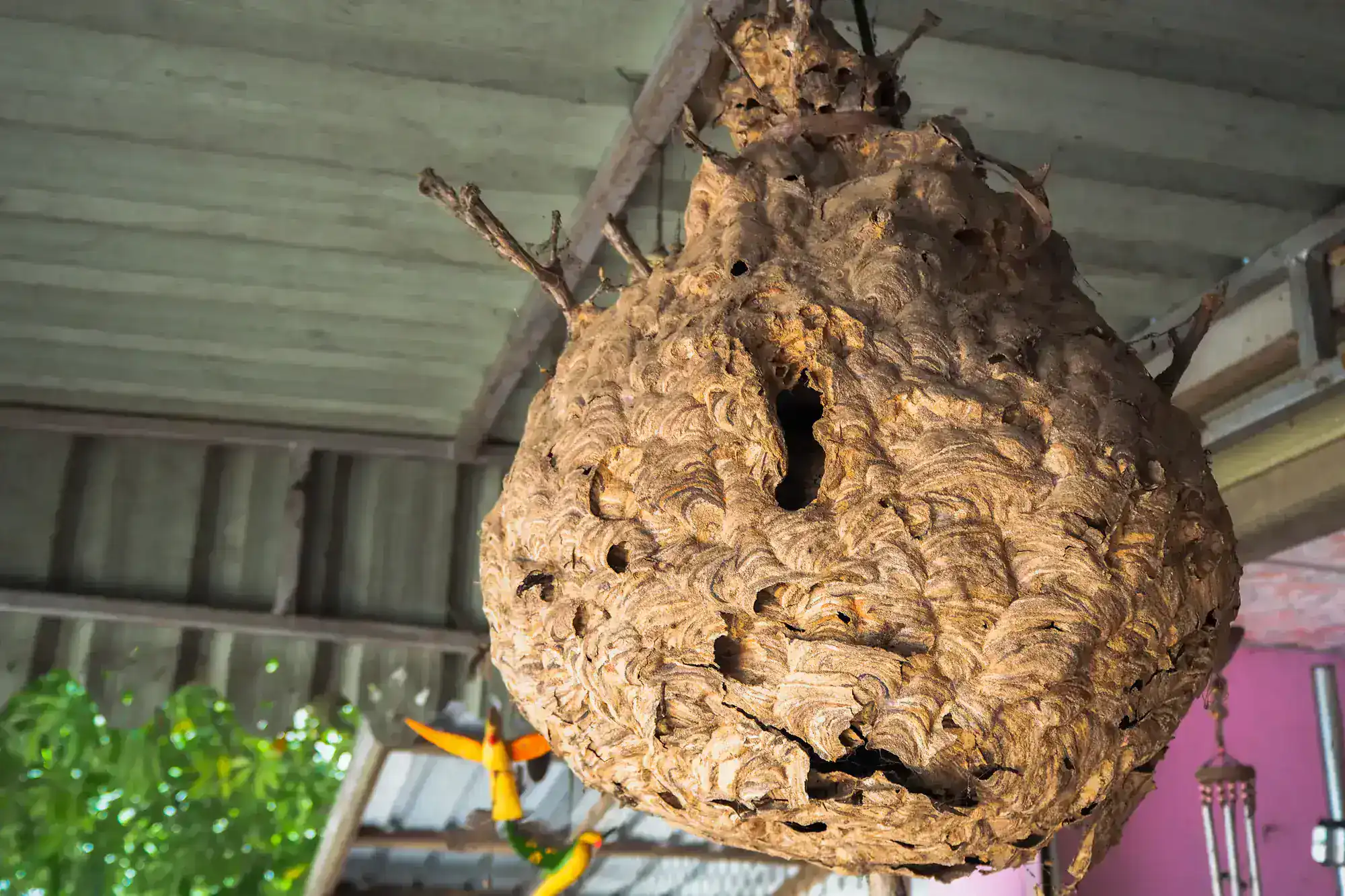
Once the nest is gone, you stop planning your day around it. No more checking the eaves before you let the dog out. No more steering the kids away from the back corner of the yard. That’s what hornet removal actually does — it gives you your property back.
Bayport Park’s rural, lake-adjacent character means hornets have no shortage of places to build. Wooded lots, boat sheds, detached garages, overhanging trees near Buell Lake — these are prime nesting spots, and they tend to go unnoticed until the colony is already large. By late summer, a nest that started small in May can hold several hundred workers, all capable of stinging repeatedly. Catching it early costs less and carries far less risk.
For families spending time near the water or out on their property through the warmer months, a hornet nest nearby isn’t just an inconvenience — it’s a genuine safety concern. An average of 62 deaths per year in the U.S. result from hornet, wasp, and bee stings. That’s a reason to call a professional instead of reaching for a can of hardware store spray and hoping for the best.
We founded First Choice Pest Control on May 31, 2005, and have been serving Genesee County homeowners ever since. That’s two full decades of hornet nests, wasp problems, and stinging insect calls across properties just like yours — rural lots, older homes, outbuildings, and lake-adjacent structures throughout Thetford Township and Bayport Park.
Roger, who leads our company, brings 26 years of personal pest control experience to every job. This isn’t a franchise operation where someone reads from a checklist. When we show up at your Bayport Park property, you’re getting a trained, experienced technician — not a rotating summer hire. Our policy is consistent: the same technician returns to your property year after year, learning your land and building a real understanding of where problems tend to develop.
We hold Michigan Pesticide Application Business License #250081, IPM training certification from MDARD, and have earned recognition from both Angie’s List and HomeAdvisor. We’re also BBB accredited. The credentials are real, and they’re verifiable — because in a community like Bayport Park, reputation is everything.
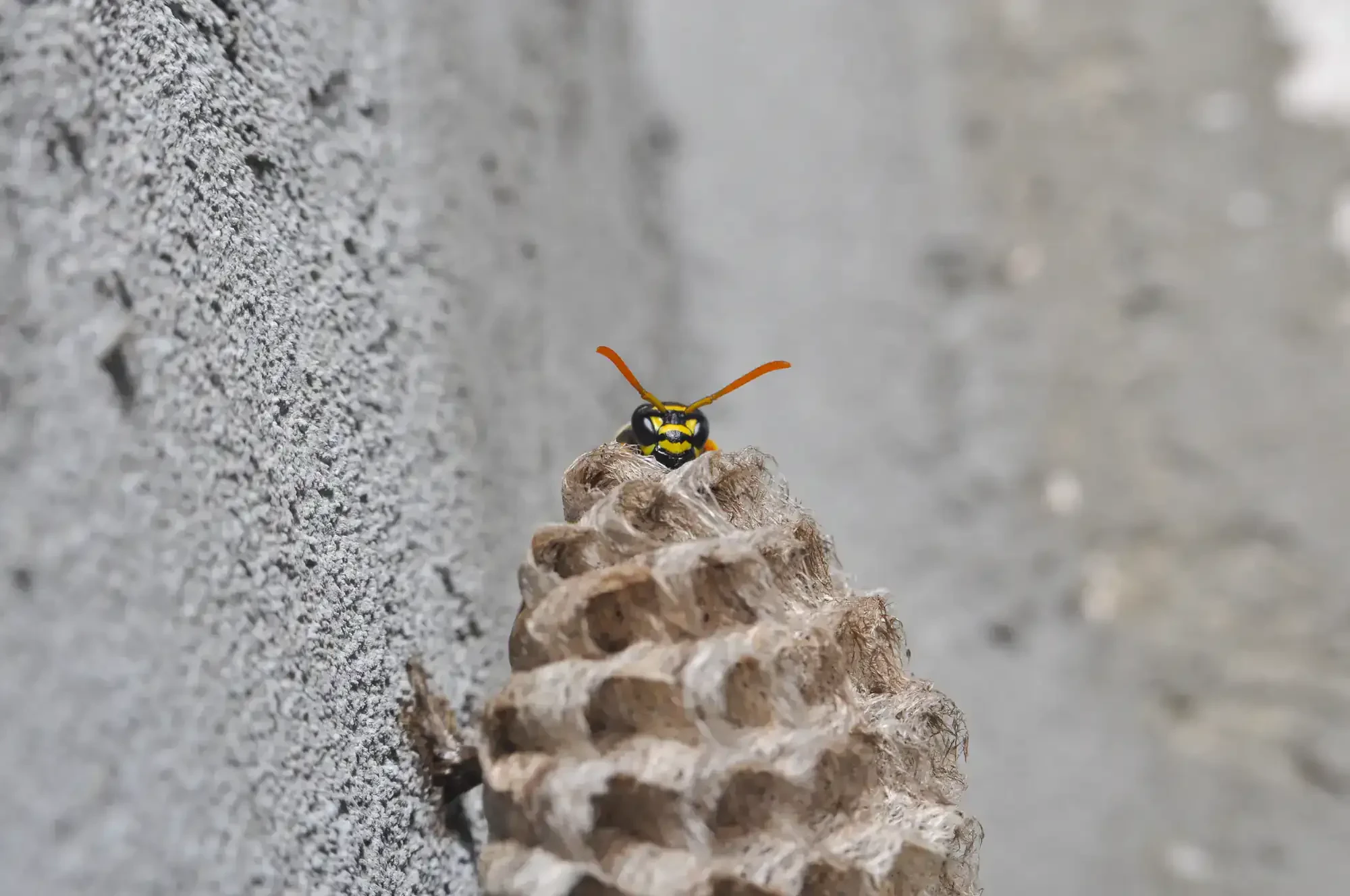
It starts with a call. You describe what you’re seeing — where the nest is, how much activity there is, whether it’s in a tree, under an eave, in a wall, or somewhere you can’t quite locate. That information matters. A nest in a shrub along your fence line gets treated differently than one inside a wall void that’s buzzing through your siding. Knowing the situation before our technician arrives means they show up prepared, not guessing.
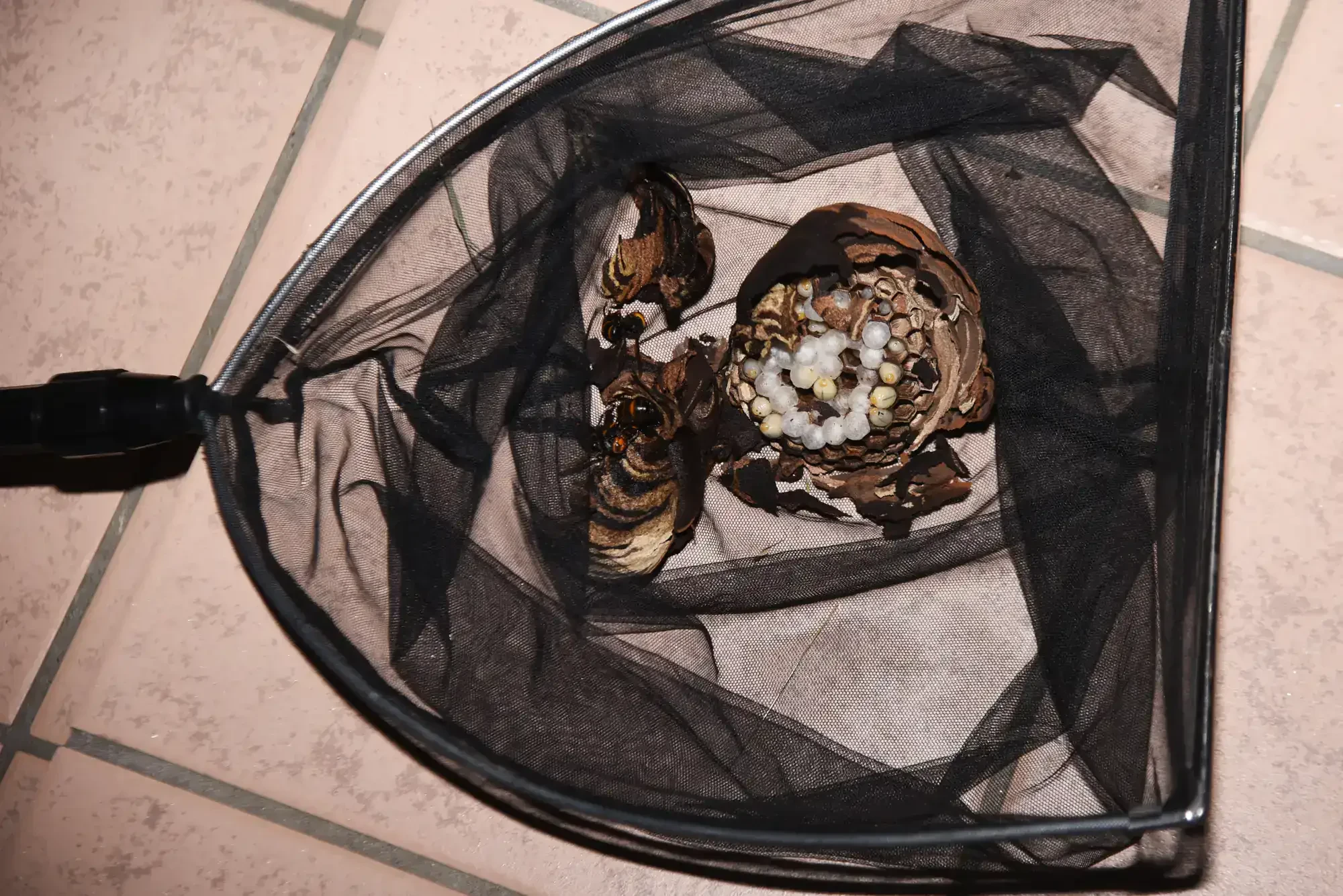
On-site, we do a thorough inspection first. In Thetford Township, that often means checking more than just the obvious spot — older rural homes with wooden siding, detached garages, boat sheds near the water, and tree lines along property edges are all common secondary nesting sites. The inspection catches what a quick glance misses. Treatment is then applied directly and specifically — not a blanket spray across your yard, but a targeted application to the nest and its entry points, using methods consistent with our IPM certification from MDARD.
After treatment, our technician walks you through what to expect over the next 24 to 48 hours and what signs would warrant a follow-up. If a return visit is needed to confirm full elimination, we come back at no additional cost. Michigan’s climate means hornet colonies are most aggressive in August and September — if you’re calling during peak season, expect us to treat accordingly, with the understanding that large late-summer colonies may require a follow-up confirmation.
Ready to get started?
Every hornet removal service we provide starts with a full property inspection — not just a look at the nest you already found. In Bayport Park, where properties often include multiple outbuildings, tree lines, and structures near the water, a single visible nest is sometimes just part of the picture. The inspection is how our technician confirms the full scope before treatment begins.
Treatment covers the nest and all active entry points, using targeted methods that are safe for the surrounding environment — important for families with kids, pets, or animals on the property. Our IPM-certified approach means the goal is precision, not volume. For Genesee County homeowners with horses, dogs, or gardens, that distinction matters. You’re not getting a chemical blanket across your yard. You’re getting a focused treatment on the actual problem.
Our service includes a follow-up visit at no additional charge if needed, upfront flat-rate pricing so you know the cost before anyone arrives, and price matching for reasonable competitor quotes. We offer discounts for seniors, veterans, and first responders — and in a community like Bayport Park, where a lot of residents have served or are raising families on working-class incomes, that’s a straightforward acknowledgment of real value. No hidden fees, no surprise charges, no pressure to add services you didn’t ask for.
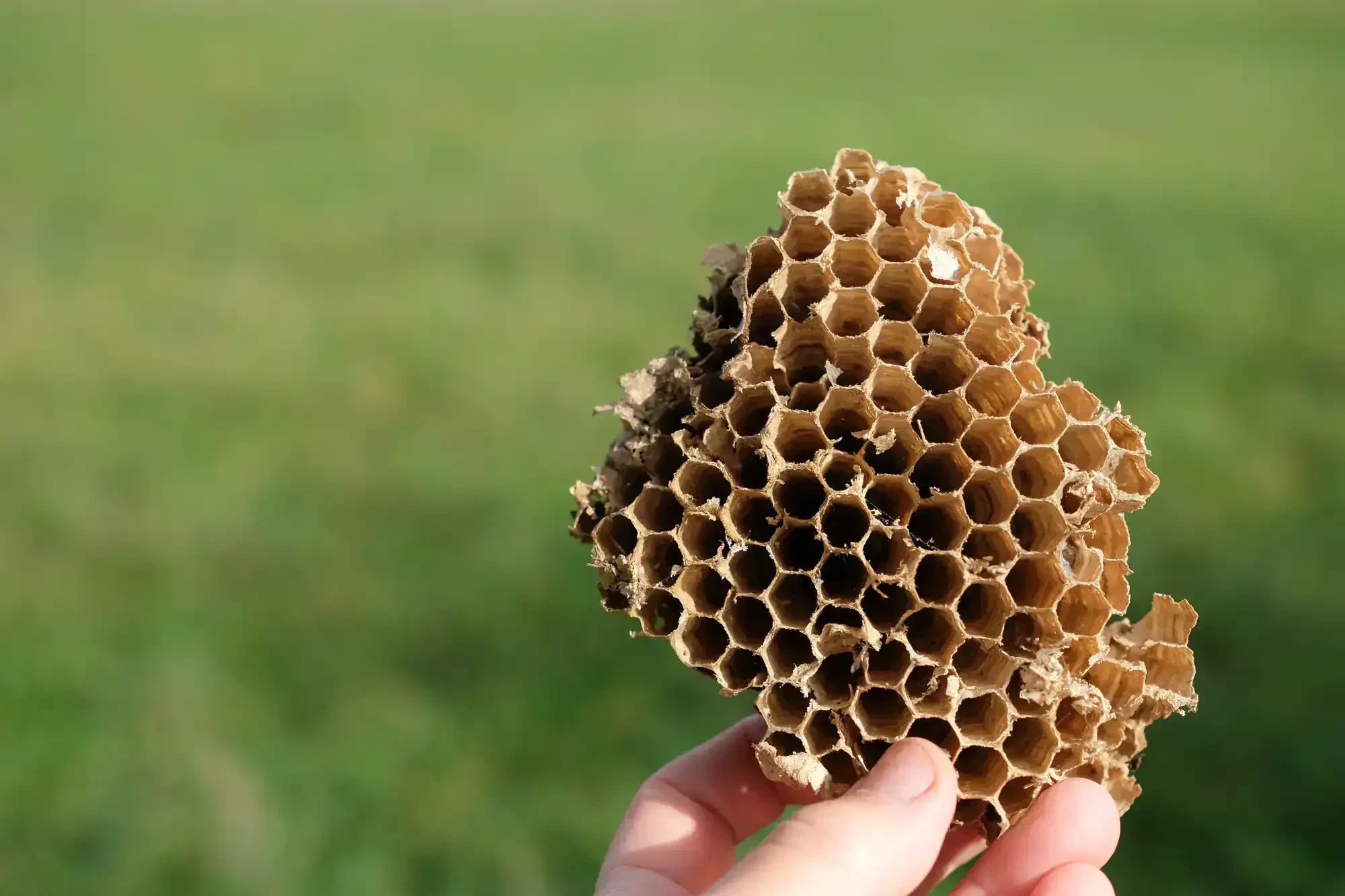
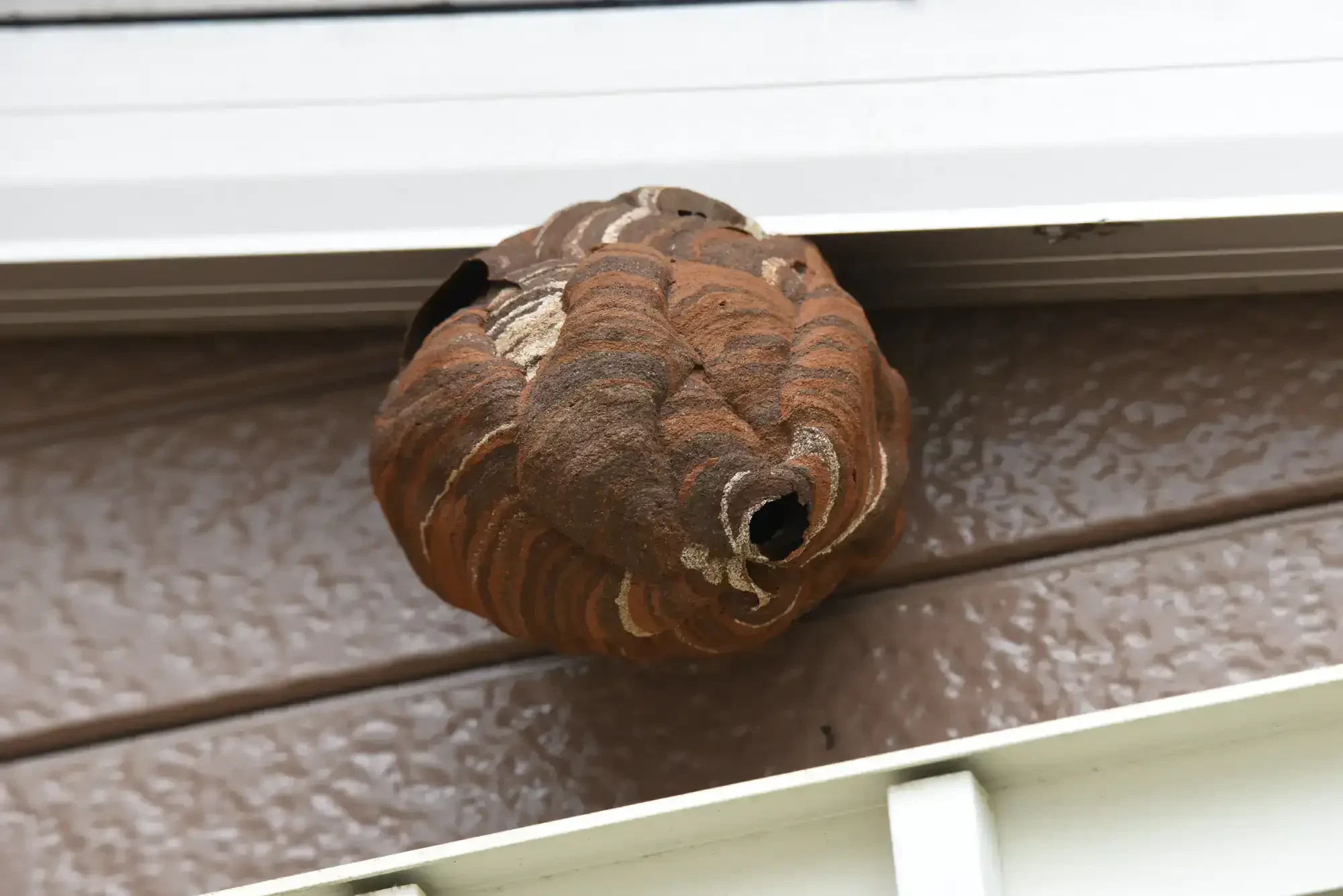
It depends on the nest size, location, and species — but for most homeowners in Bayport Park, the honest answer is no, it’s not worth the risk. A small, newly formed nest in an accessible spot with minimal activity is one thing. But by the time most people notice a nest on their property, it’s already well-established. Bald-faced hornets — the most common species in Michigan — build enclosed paper nests that can hold several hundred workers by midsummer, and they are aggressive defenders. One wrong move with a can of store-bought spray can trigger a mass stinging event that puts you, your kids, or your pets in serious danger.
The bigger issue with rural properties like those around Thetford Township is that nests often develop in locations that make DIY treatment genuinely hazardous — high up in trees, inside wall voids, in the eaves of a detached garage or boat shed. Reaching those spots without the right equipment and protective gear dramatically increases your exposure. A licensed technician has both, along with the training to treat the nest correctly the first time without agitating the colony unnecessarily.
Hornet removal costs in the Genesee County area generally range from around $200 to $600 or more, depending on the size of the colony, the location of the nest, and how accessible it is. A small early-season nest is significantly less expensive to treat than a large late-summer colony inside a wall void or high up in a tree. Bald-faced hornet removal tends to run higher than standard wasp removal because of where those nests are typically built and how large they get.
The most important thing to understand about cost is timing. A nest that costs $200 to $300 to remove in May can easily triple that investment by August when the colony is at full strength and the treatment is more complex. For Bayport Park homeowners who notice activity early in the season — even if the nest seems small — calling sooner rather than later is almost always the more cost-effective decision. We offer flat-rate upfront pricing and price matching for reasonable competitor quotes, so you know exactly what you’re paying before anyone shows up.
The two you’re most likely to encounter on rural Thetford Township properties are bald-faced hornets and European hornets. Bald-faced hornets are by far the most common in Michigan. They build the large, enclosed, football-shaped paper nests you’ll typically see hanging in trees, along fence lines, under eaves, or on the exterior of outbuildings. They’re highly aggressive when the nest is disturbed and can sting repeatedly. On wooded, lake-adjacent properties like those in the Bayport Park area, they have plenty of mature trees and structures to nest in, which is why they show up so consistently.
European hornets are less common but worth knowing about — they’re the only true hornet species in North America, they’re larger than most people expect, and they’re active at night. If you’re noticing large, wasp-like insects flying around your porch light or hearing buzzing inside a wall after dark, European hornets may be the culprit. Both species require professional treatment. The approach differs based on nest location and species, which is part of why a proper inspection before treatment matters.
Hornets don’t reuse old nests — each colony builds a new one every spring. But that doesn’t mean your property is off the hook. The same conditions that made your yard, shed, or eave attractive to hornets this year will attract a new queen next spring. Fertilized queens survive Michigan winters by hibernating in protected locations — often inside wall voids, under loose bark, or in attic insulation — and emerge in April or May to start building. If those entry points and harborage spots aren’t addressed after removal, you’re likely looking at the same problem again next season.
For Bayport Park properties with older homes, wooden outbuildings, or structures near the water, this is a real recurring issue. The technician who treats your property can identify the structural gaps and conditions that are inviting repeat infestations and walk you through what preventative steps make sense. Sealing entry points and addressing conditions that attract hornets is the difference between a one-time fix and the same call every August.
The clearest sign of a wall void infestation is consistent activity around a single entry point — usually a gap in siding, a crack around a window frame, or an opening near a utility line — combined with an audible buzzing or chewing sound coming from inside the wall, especially on warm afternoons. If you’re seeing hornets entering and exiting a spot in your exterior wall rather than flying to and from a visible nest, there’s a strong chance the colony is established inside the structure.
Wall void infestations are the most difficult type to treat and the most dangerous to attempt yourself. Spraying into the entry point without proper treatment can trap hornets inside, cause them to chew through interior drywall, or force them into the living space. Older homes in the Bayport Park area — particularly those with wooden siding, aging trim, or gaps around older utility entry points — are especially prone to this type of infestation. A licensed technician treats wall void nests with specialized dust applications that reach the colony without requiring you to open up the wall, and without driving the infestation further into the structure.
Yes — we offer discounts for seniors, veterans, and first responders. Bayport Park is a community where a lot of people have put in real years of work, service, or both, and the discount reflects that. It’s applied straightforwardly when you call to schedule — just mention it and it’s taken care of.
Beyond the discount, our pricing structure itself is built around transparency. You get a flat-rate quote before our technician arrives, and that number doesn’t change when they get there. We also match reasonable competitor rates, so if you’ve already gotten a quote from another licensed company in the area, it’s worth asking. The goal is a fair price for work that’s done right — not the lowest number on paper followed by a bill that looks different than what you were told. For homeowners in Genesee County who are managing a budget and want to know exactly what they’re spending before they commit, that combination of upfront pricing and available discounts removes a lot of the uncertainty from the process.
Useful Links