
Hear from Our Customers
A hornet nest doesn’t stay small for long. What looks like a minor problem in May can turn into a colony of several hundred workers by August — and in Beecher, where homes sit close together on tree-lined streets, that nest is rarely far from where your kids play or where you park your car. The mature trees throughout Beecher give bald-faced hornets exactly what they’re looking for: high branches, dense canopy, and undisturbed space to build. Once a colony is established, you’re not just dealing with one nest — you’re dealing with a yard you can’t safely use.
The mid-century homes common throughout Beecher also create a specific vulnerability that newer construction doesn’t have. Aging soffits, deteriorating eaves, and small structural gaps in ranch-style and colonial homes are exactly where hornets push through to establish wall void nests. That’s a different problem than a nest in a tree — it requires professional dust treatment, not a can from the hardware store. Getting it handled correctly the first time means no repeat infestations, no structural damage from an untreated void, and no guessing about whether the colony is actually gone.
We’ve been serving Genesee County communities since May 31, 2005 — that’s twenty years of solving real pest problems for real homeowners throughout Beecher and Mount Morris Township. Roger, who founded First Choice Pest Control and still leads it, brings 26 years of hands-on pest control experience to every job. This isn’t a franchise operation with a rotating cast of seasonal hires. It’s a family-owned business where the same technician comes back to your property year after year, learns your specific situation, and treats it accordingly.
We hold Michigan Pesticide Application Business License #250081 and are IPM-training certified through MDARD — meaning treatments are targeted, not blanket chemical applications. We’ve earned awards from both Angie’s List and HomeAdvisor, maintain a 4.7-star Google rating, and offer discounts for seniors, veterans, and first responders. In a community like Beecher, where trust and accountability matter, that track record isn’t just a credential — it’s the whole point.
When you call us for hornet removal in Beecher, MI, the first step is a thorough inspection. We identify the nest location, the species, and the size of the colony — because a bald-faced hornet nest in a tree canopy requires a different approach than a yellow jacket colony in a wall void of an older ranch home. In Beecher, where the housing stock skews mid-century and the tree canopy is dense, that assessment step matters more than most people expect. What looks like one problem from the outside is sometimes two.
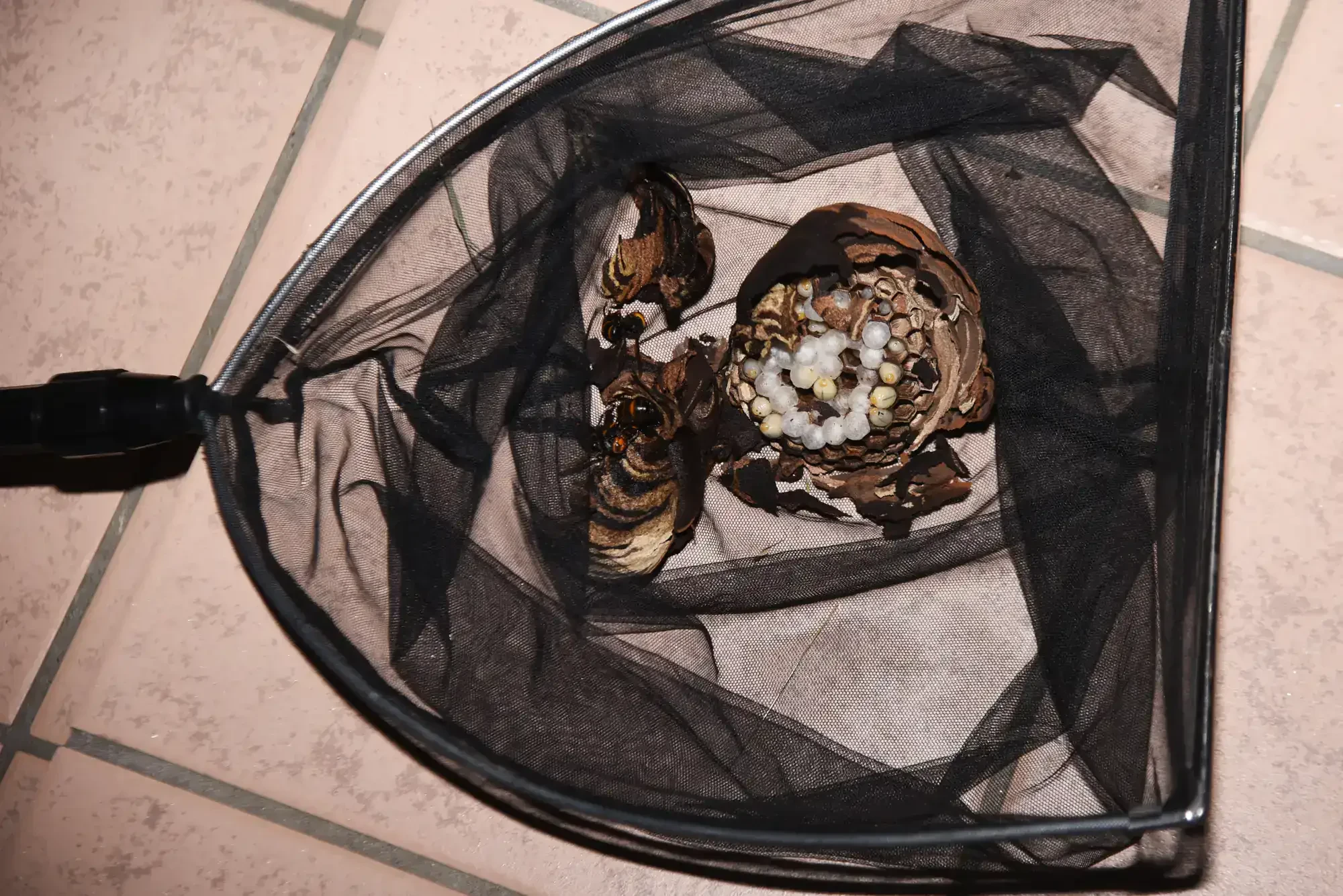
From there, we apply treatment directly to the nest using the method appropriate for that specific situation — whether that’s a liquid treatment for an exposed nest, a dust application for a wall void, or a foam treatment for a structural gap. The goal is full colony elimination, not just surface disruption. Once the nest is treated, we walk you through what to expect in the hours and days following — including normal die-off activity and any follow-up steps. If the problem isn’t fully resolved, we come back at no additional charge. That’s not a policy buried in fine print — it’s how we operate.
Ready to get started?
Hornet pest control in Beecher, MI isn’t one-size-fits-all — and we don’t treat it that way. The combination of mature trees, aging home exteriors, and dense residential streets throughout Beecher means hornets have more entry points and nesting options than in newer suburban developments. Our service accounts for that. Whether the nest is in a tree along your property line, tucked under a deteriorating eave, or inside a wall void in a home built decades before current construction standards, we match the treatment approach to the actual situation — not a generic protocol.
We serve both residential and commercial customers throughout Beecher and Mount Morris Township, including properties along Saginaw Street and Clio Road. We’re licensed under Michigan Pesticide Application Business License #250081, and all treatments follow IPM protocols — meaning the least invasive, most targeted method that actually solves the problem. Pricing is flat-rate and communicated upfront before work begins, with price matching available for reasonable competitor quotes. Seniors, veterans, and first responders qualify for additional discounts. If you’re a renter dealing with a nest your landlord hasn’t addressed, we can work with you directly — you don’t need to wait on someone else to make the call.
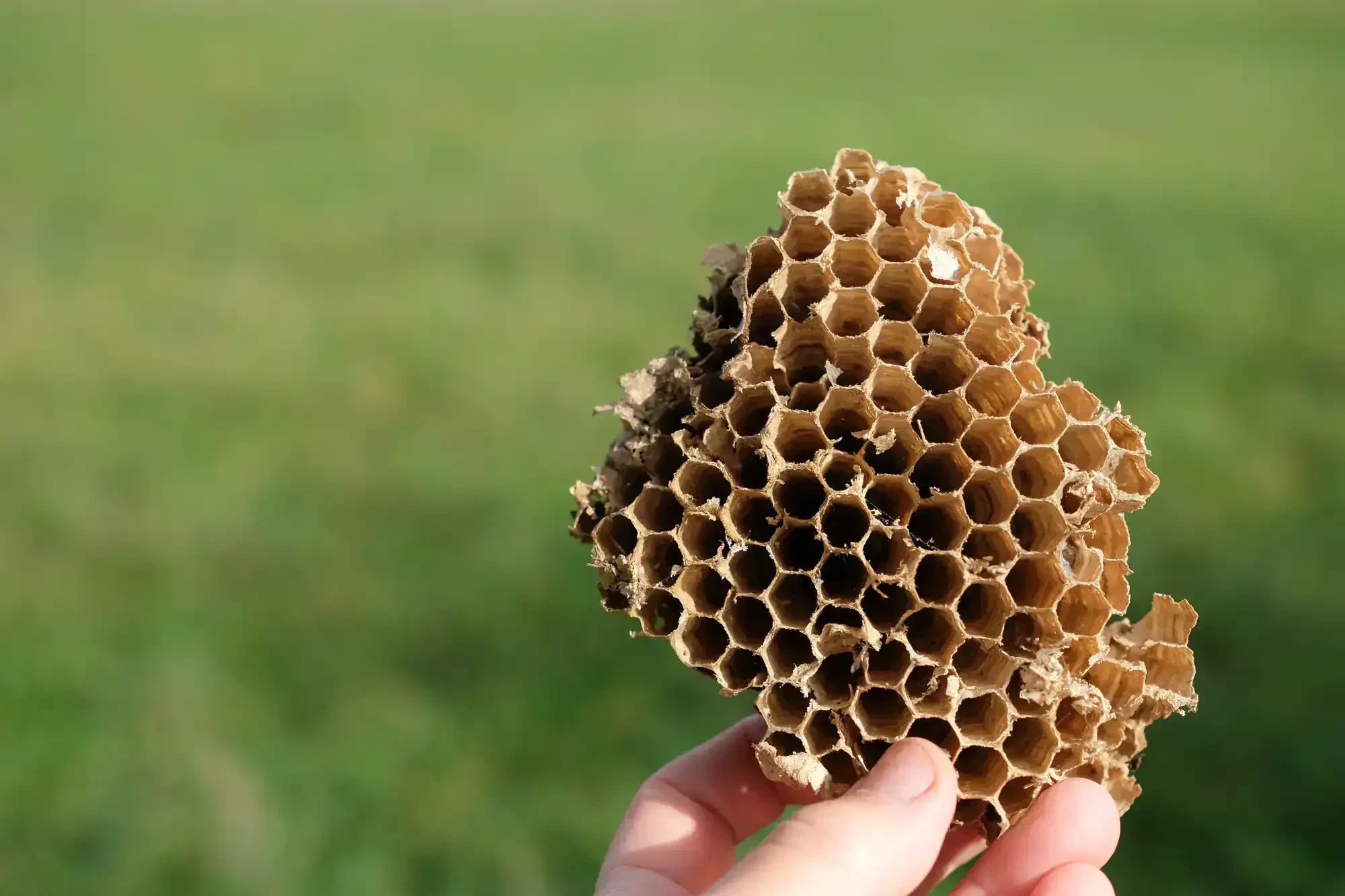
Professional hornet removal typically runs between $300 and $700 depending on the size of the colony, the nest location, and how accessible it is. In Beecher specifically, wall void nests — which are more common in the area’s older ranch and colonial homes — tend to sit at the higher end of that range because they require professional dust application and sometimes involve accessing the void through the structure. A nest in an accessible tree or under an eave is generally faster and less involved to treat.
The most important thing to understand about cost is that timing matters. A small spring nest treated in April or May is significantly cheaper to handle than that same colony in August when it’s grown to full size. We offer upfront, flat-rate pricing before any work begins — no surprises after the job is done. Seniors, veterans, and first responders receive additional discounts, and we’ll match reasonable competitor quotes. Call to get a clear number before you commit to anything.
Technically, you can attempt DIY hornet removal — but the situations where it actually works are limited. A small, early-season nest that’s fully exposed and easily accessible from a distance is the only scenario where a hardware store spray has a reasonable shot. The moment a nest is elevated, inside a wall, under a tight overhang, or larger than a softball, the risk of an incomplete treatment goes up fast. Incomplete treatment doesn’t eliminate the colony — it agitates it.
In Beecher, the housing stock creates conditions where DIY attempts frequently make things worse. Older homes have more hidden access points, and hornets that feel threatened inside a wall void will push deeper into the structure or find secondary exits — sometimes into the living space. If you’ve already tried a store-bought spray and the activity didn’t stop, that’s a strong sign the colony is established somewhere you can’t reach. At that point, a professional with the right equipment and treatment method is the only real path forward.
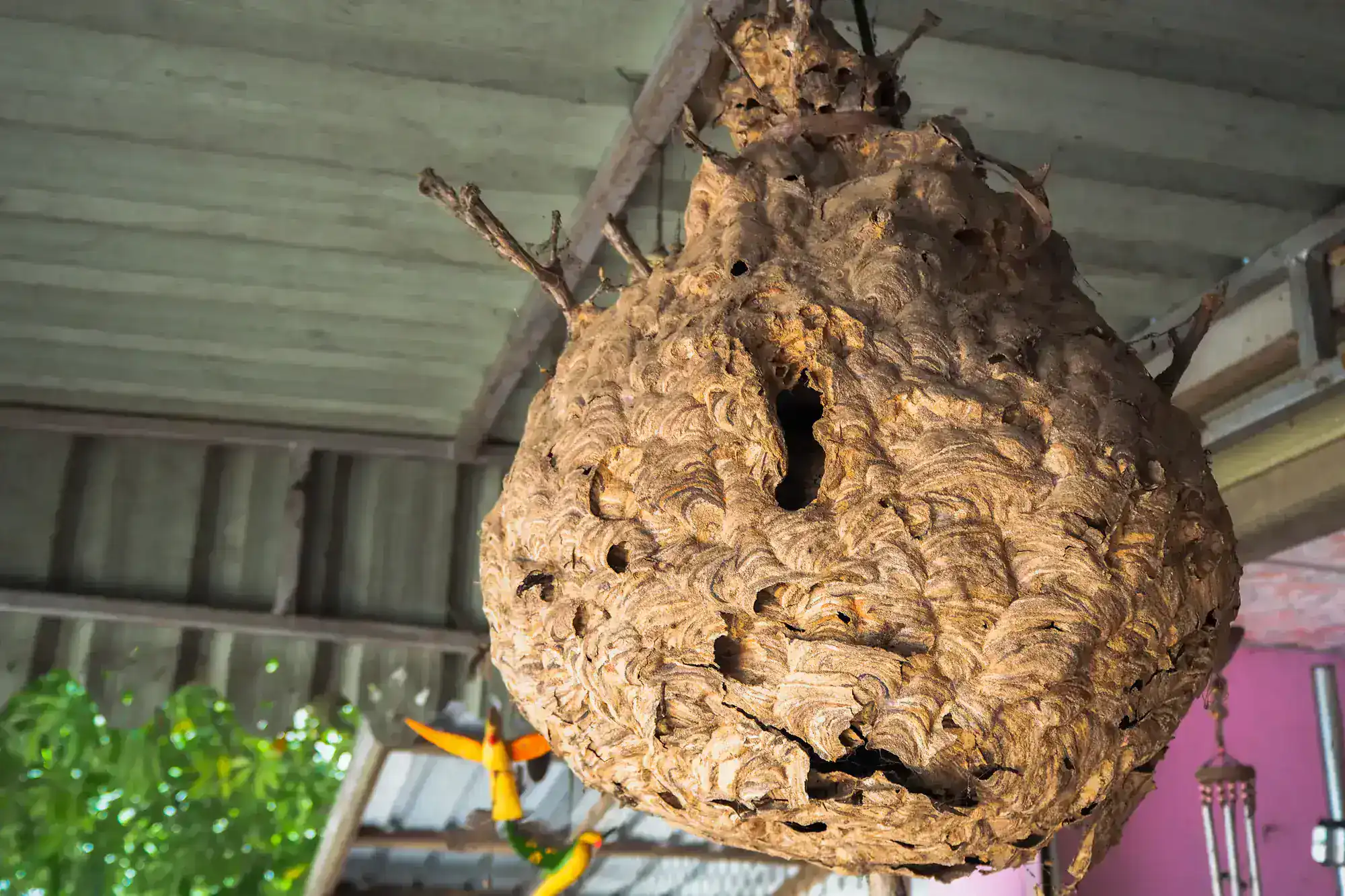
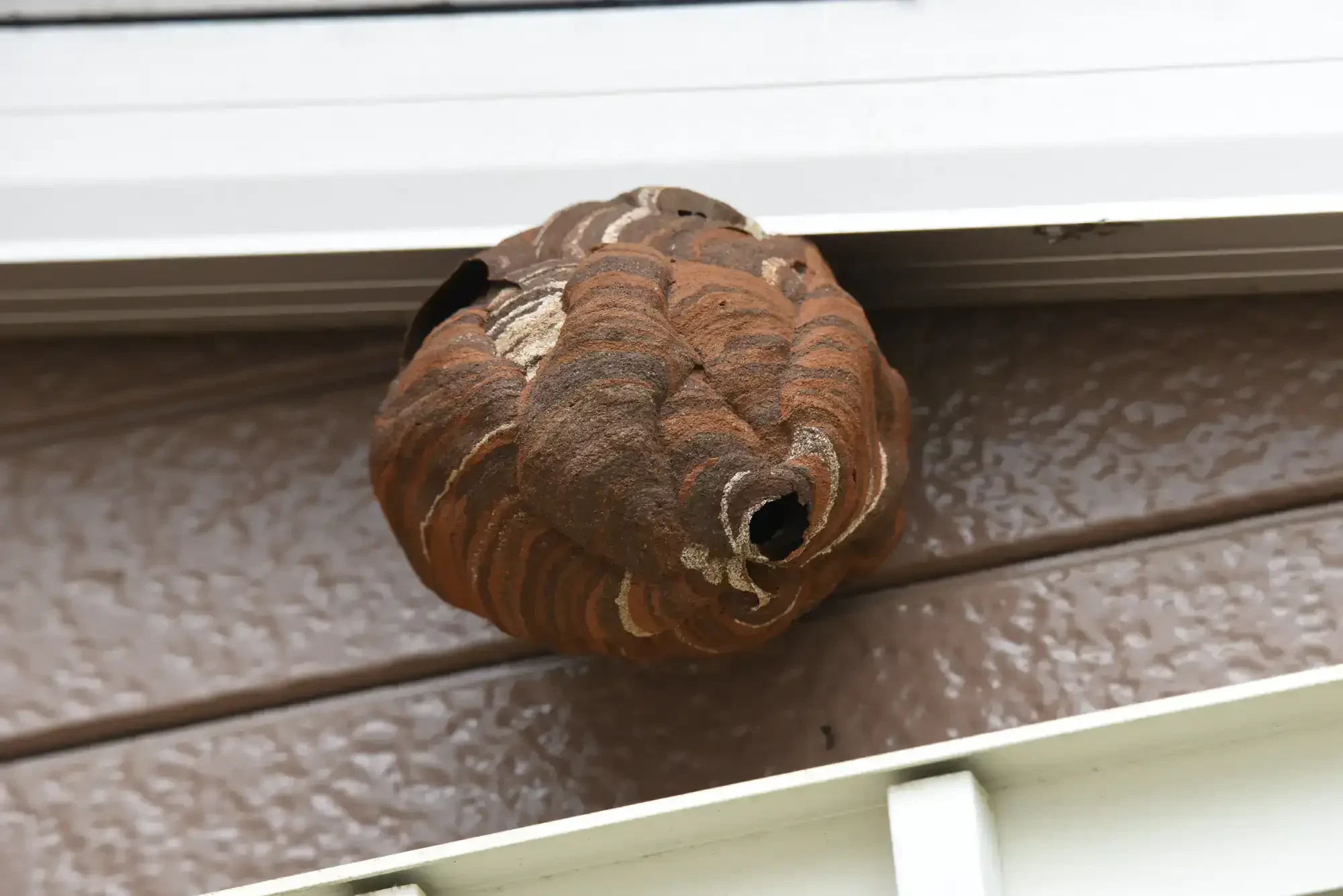
The most common hornet in Beecher and throughout Genesee County is the bald-faced hornet. Despite the name, it’s technically a close relative of yellow jackets — but it behaves more aggressively and builds large, enclosed paper nests that look like a gray football hanging from a tree branch or tucked under an overhang. Bald-faced hornets are particularly well-suited to Beecher’s environment: they prefer tall trees and elevated structures, both of which are abundant throughout the neighborhood.
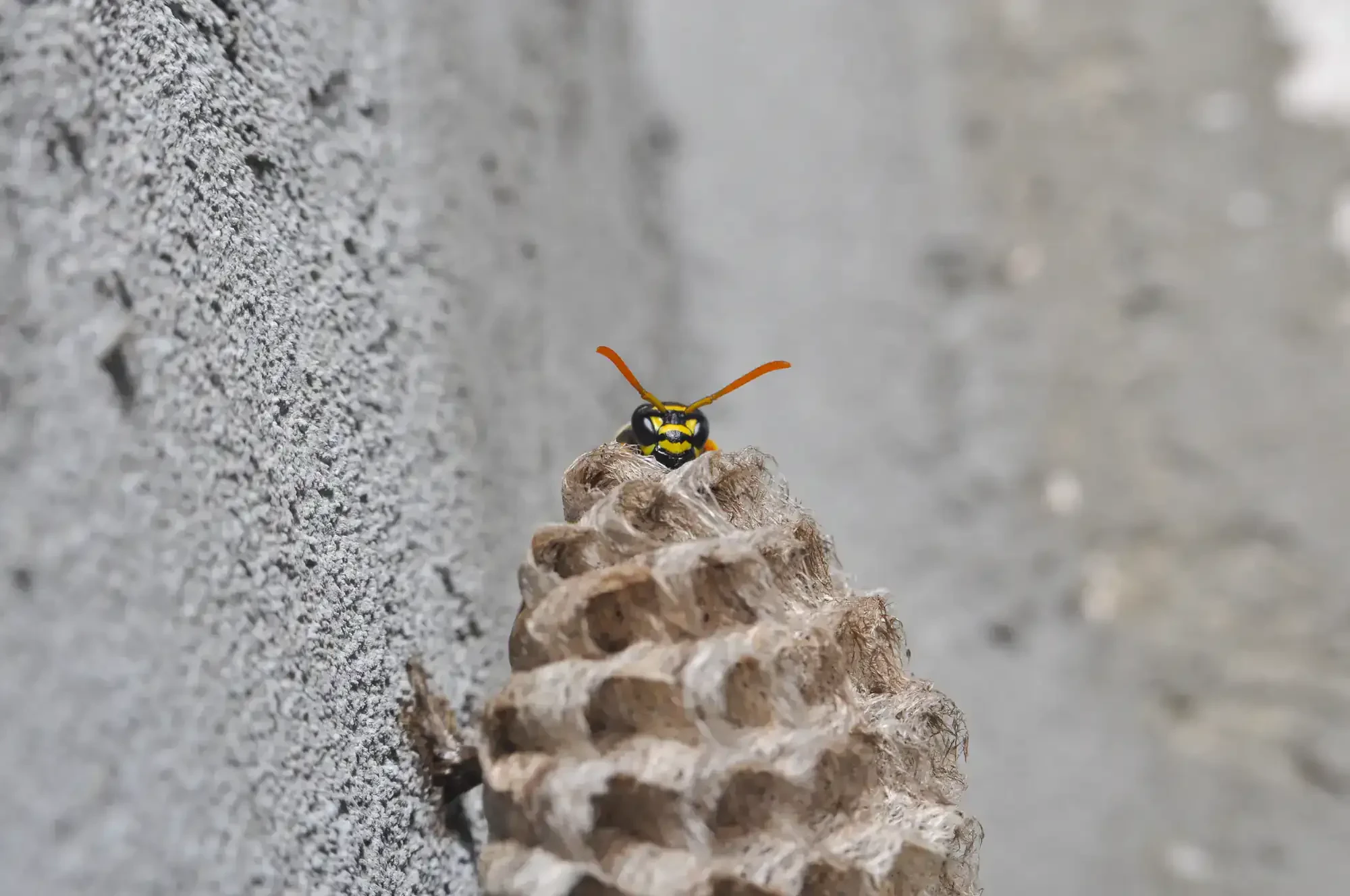
European hornets are also present in Michigan and tend to build nests inside wall voids, tree hollows, and attic spaces — which aligns with the structural characteristics of many older Beecher homes. Yellow jackets, while technically wasps rather than hornets, are also common and frequently nest in ground-level voids or inside walls. The reason species identification matters is that treatment methods differ. A bald-faced hornet nest in a tree is treated differently than a European hornet colony inside a wall. A proper inspection by a trained technician is the only way to confirm what you’re dealing with and treat it correctly.
The colony itself won’t come back — once the nest is treated and the workers are eliminated, that specific colony is done. But new queens that were produced late in the season overwinter and emerge in spring looking for a place to build. They’re drawn back to the same general areas, and sometimes the same structure, where successful colonies were established before. This is especially relevant in Beecher, where the combination of mature trees and older homes with structural gaps gives new queens plenty of options close to where last year’s nest was.
The practical answer is that removal without any follow-up attention can mean the same problem the next year. Our technicians note structural vulnerabilities during treatment — gaps in soffits, deteriorating eaves, or access points in the exterior — that you can address to reduce the likelihood of a new colony establishing in the same spot. Treating early in the season when a new queen is just getting started is also significantly easier and less expensive than waiting until the colony is at full size in August.
Most hornet removal jobs take between 30 minutes and an hour from the time the technician arrives, depending on nest location and size. A straightforward nest on an exterior eave or in a tree is typically on the faster end. A wall void treatment takes longer because the technician needs to locate the entry point, apply the dust treatment correctly, and confirm the access is sealed or flagged for follow-up.
Whether you need to leave depends on the nest location and treatment method. For exterior nests away from doors and windows, you generally don’t need to vacate. For wall void treatments or situations where the nest is near a primary entry point, the technician will let you know what’s safest. Pets and children should be kept away from the treatment area during and immediately after the job — your technician will give you a specific re-entry window based on the product used. We communicate all of this before the work begins so there are no surprises on the day of service.
Yes — we offer discounts for seniors, veterans, and first responders. In a community like Beecher, where a lot of working families, longtime residents, and people who’ve served their community call this neighborhood home, those discounts reflect something real about how we operate. They’re not a footnote — they’re a standing part of how we price our work for the people we serve.
We also match reasonable competitor quotes. If you’ve gotten a price from another licensed local provider and it’s within a fair range, we’ll work with you on pricing. The goal is straightforward: remove the barrier that keeps someone from getting a dangerous hornet problem handled correctly. Flat-rate, upfront pricing means you know the number before anyone shows up — no estimates that balloon after the fact, and no pressure to add services you didn’t ask for. Call to ask about your specific situation and what the job will cost before you commit.
Useful Links