
Hear from Our Customers
A hornet nest doesn’t stay small for long. What looks like a golf ball-sized problem in May can turn into a colony of several hundred workers by August — and in Bridgeport, where wooded lots along the Cass River corridor give hornets plenty of sheltered, elevated places to build, that timeline moves fast. By the time most homeowners call, the nest is already big enough to be dangerous.
When the job is done right, you stop planning your day around where the nest is. You mow without watching your back. Your kids play outside again. Your patio is yours.
Bridgeport’s older housing stock adds another layer to this. Wide eaves, wooden soffits, aging trim, attic vents — these are the features hornets exploit to get inside wall voids where a can of hardware store spray can’t reach them. A hidden colony inside a wall is a different problem entirely, and treating it wrong can push workers deeper into the structure or into your living space. Getting it handled correctly the first time isn’t just more convenient — it’s genuinely safer.
We’ve been serving homeowners across Bridgeport and mid-Michigan since May 31, 2005. That’s 20 years of hornet seasons, Saginaw County summers, and customers who call back because the job actually got done. Roger, our owner, has 26 years of hands-on pest control experience — and this is still a family-run operation, not a franchise with rotating seasonal staff.
One thing that sets us apart in Bridgeport is consistency. You get the same technician assigned to your property year after year. They learn your home — the eave where the nest showed up last summer, the corner of the garage that’s always an issue. That kind of continuity doesn’t happen at national chains, and it makes a real difference when you’re dealing with a recurring problem.
We hold Michigan Pesticide Application Business License #250081, carry BBB Accreditation, and have earned awards from Angie’s List and HomeAdvisor. Discounts are available for seniors, veterans, and first responders — because the people who give the most to this community deserve straightforward pricing.
It starts with a call. You describe what you’re seeing — where the nest is, how long it’s been there, whether you’ve noticed increased activity. From there, a technician is scheduled to come out and do a proper inspection before anything gets treated. That inspection matters more than most people realize. A visible nest in a tree or under an eave is one scenario. A hidden colony inside a wall void or soffit is a completely different one, and the treatment approach has to match the situation.
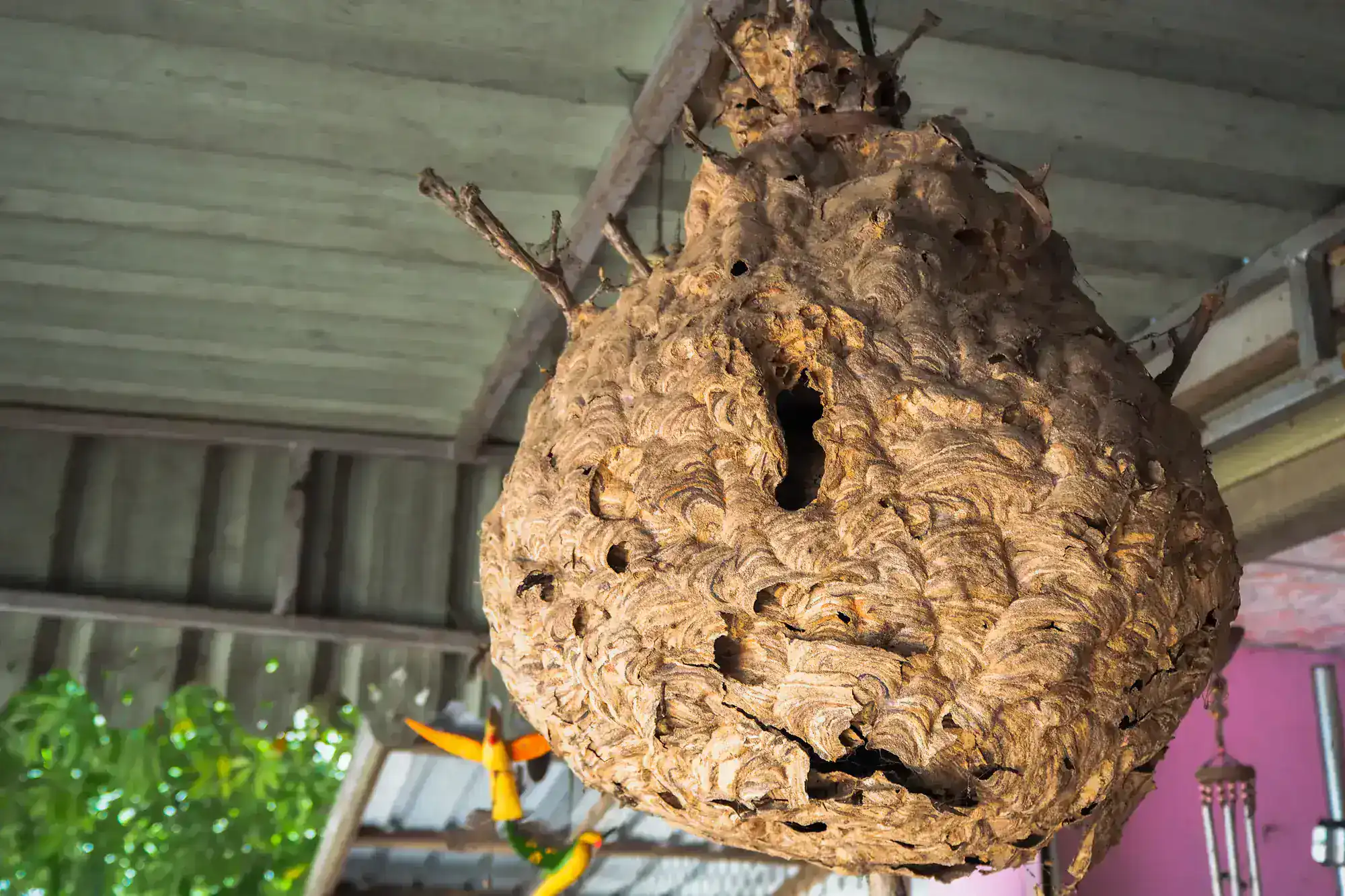
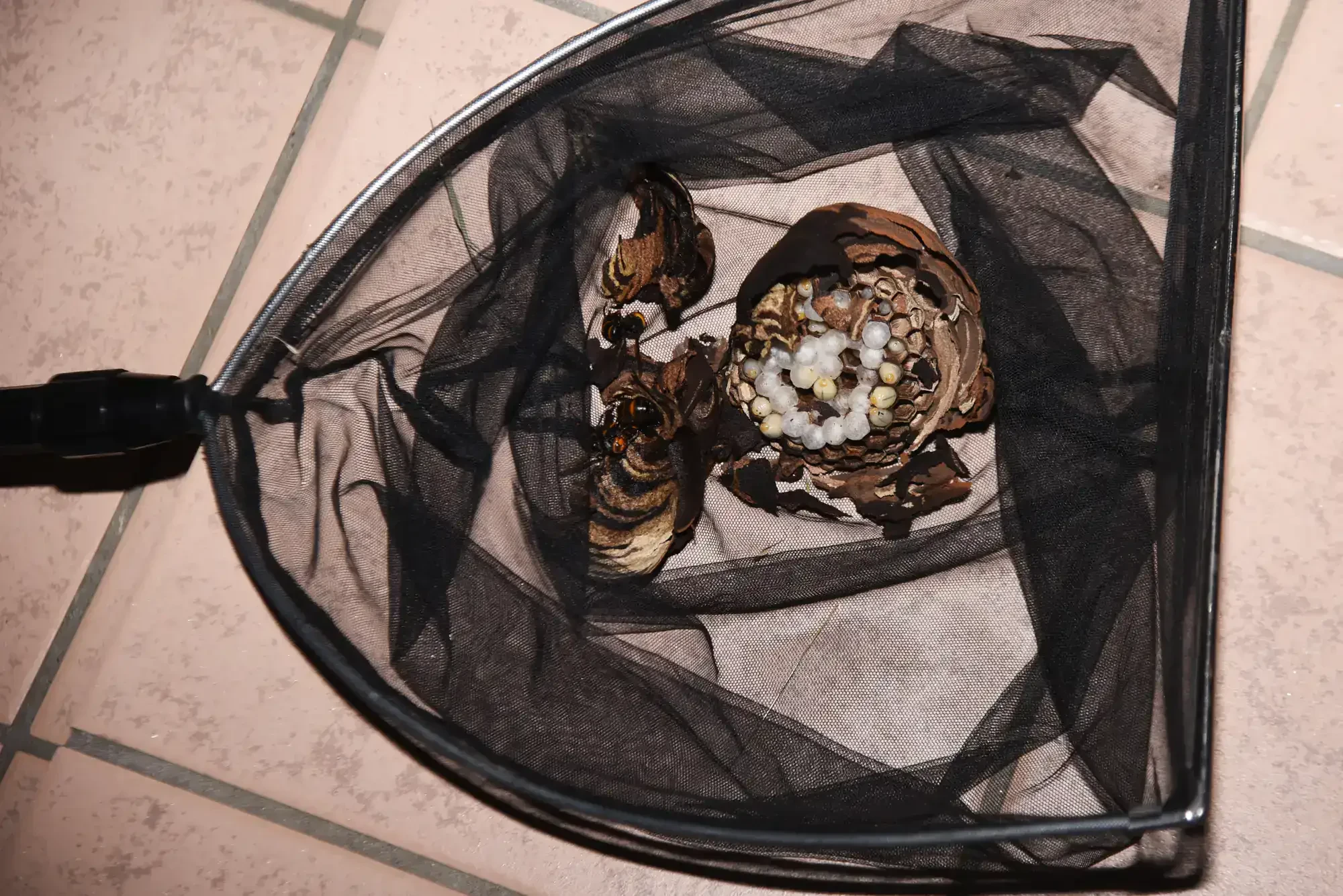
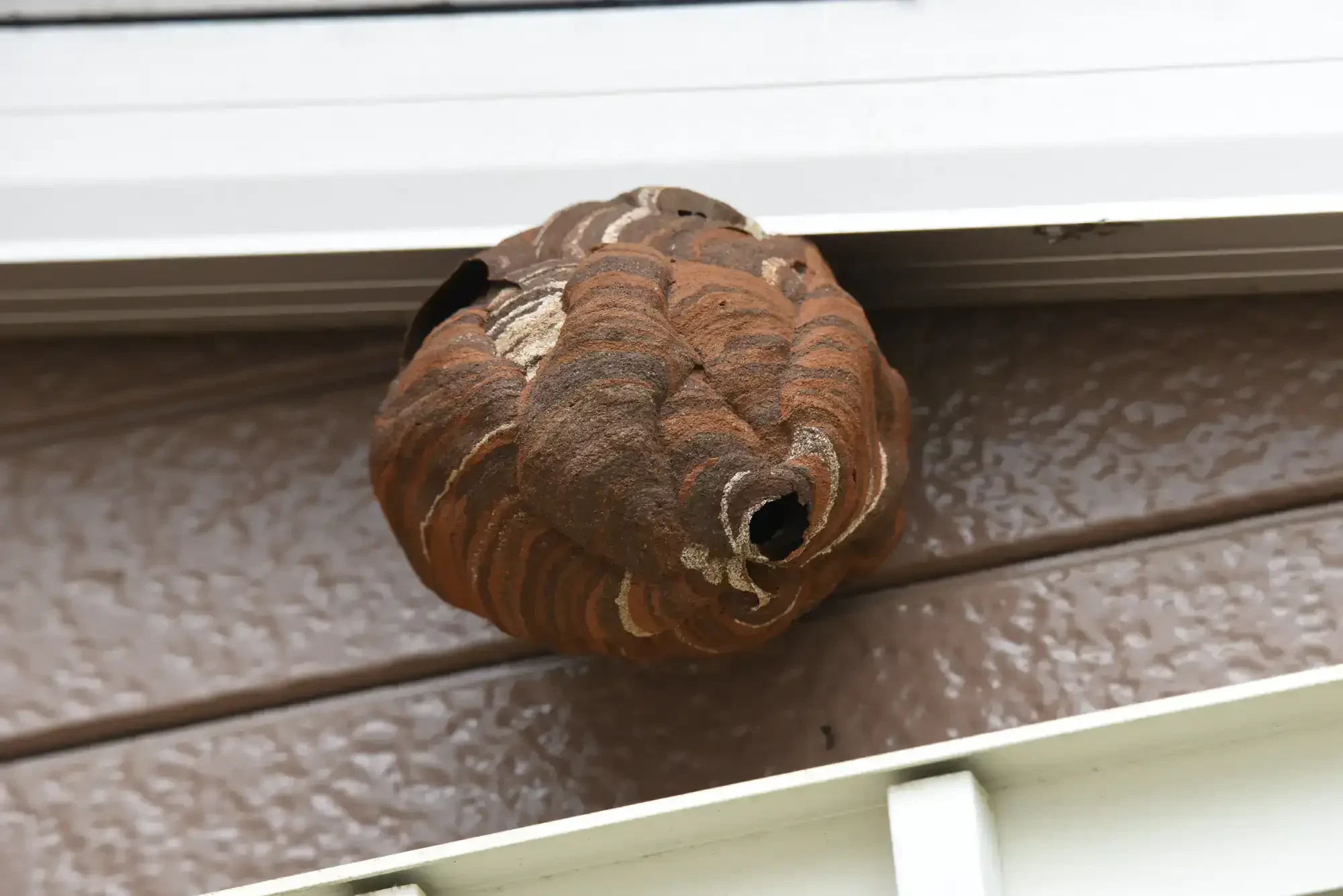
For aerial nests — the large, gray, paper-like ones you’ll often find in trees or attached to eaves on older Bridgeport homes — treatment is typically direct and fast. For wall void infestations, we use professional-grade dust treatments that penetrate the cavity without requiring unnecessary structural damage to your home. Either way, the goal is full colony elimination, not just knocking down what’s visible.
Michigan’s hornet season peaks in late summer, and timing matters. A nest treated in June is a fraction of the size — and cost — of one left until September. We use IPM (Integrated Pest Management) methods certified through MDARD, meaning treatment is targeted and chosen specifically for your situation, not a blanket chemical application. If a follow-up visit is needed to confirm the colony is gone, that’s included — no additional charge.
Ready to get started?
Every hornet removal service we provide starts with a full inspection — not just a glance at the visible nest, but a real assessment of the property. In Bridgeport, that means checking the areas most likely to harbor hidden activity: the eaves and soffits on older homes, attic vents, gaps around utility penetrations, detached garages, and any wooded or overgrown areas along the property line. River-adjacent lots near the Cass River corridor tend to see higher insect pressure overall, and hornets are no exception.
Treatment is selected based on what’s actually found — not a one-size-fits-all spray. Aerial nests get direct treatment. Wall void colonies get dust applications that reach the full cavity. After treatment, the technician walks you through what to expect over the next 24 to 72 hours, including any residual activity as the colony dies off. If the situation requires a return visit, we come back at no additional cost — that’s a standing commitment, not a promotional offer.
We also handle bald-faced hornets, European hornets, yellow jackets, and other stinging insects common to Saginaw County. And if you’re already dealing with mosquitoes on top of a hornet problem, our mosquito program includes flea and tick treatment at no extra charge — a bundled value that makes sense for Bridgeport properties with larger yards or wooded lots. Flat-rate, upfront pricing applies to every service, and we’ll match reasonable competitor quotes.
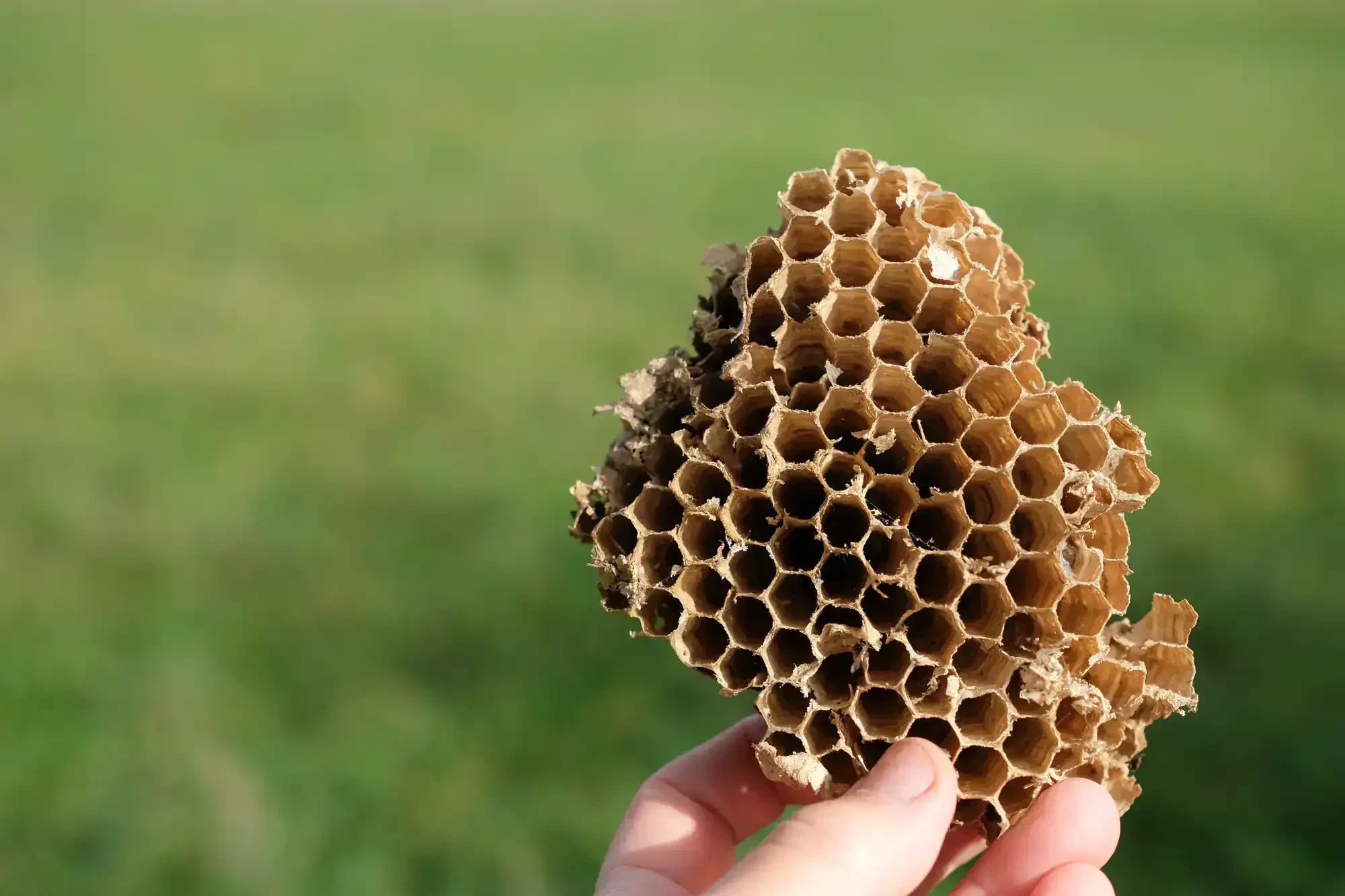
The most common signs of a wall void infestation are a buzzing or humming sound coming from inside a wall, repeated hornet activity near a single entry point on the exterior — usually a gap in siding, a crack around a window frame, or a space near a utility line — and hornets appearing inside the home itself. In Bridgeport, older homes along the township’s residential streets are particularly susceptible because aging exterior trim, deteriorating soffits, and gaps around utility penetrations give hornets easy access to wall cavities.
The tricky part is that wall void nests aren’t visible from the outside. By the time you’re hearing buzzing or finding hornets indoors, the colony may already be well-established. This is not a situation where a hardware store spray helps — disturbing a wall void nest without proper treatment can push workers deeper into the structure or cause them to emerge inside the living space. A professional inspection is the right first step, and it costs far less than dealing with the damage from a mishandled DIY attempt.
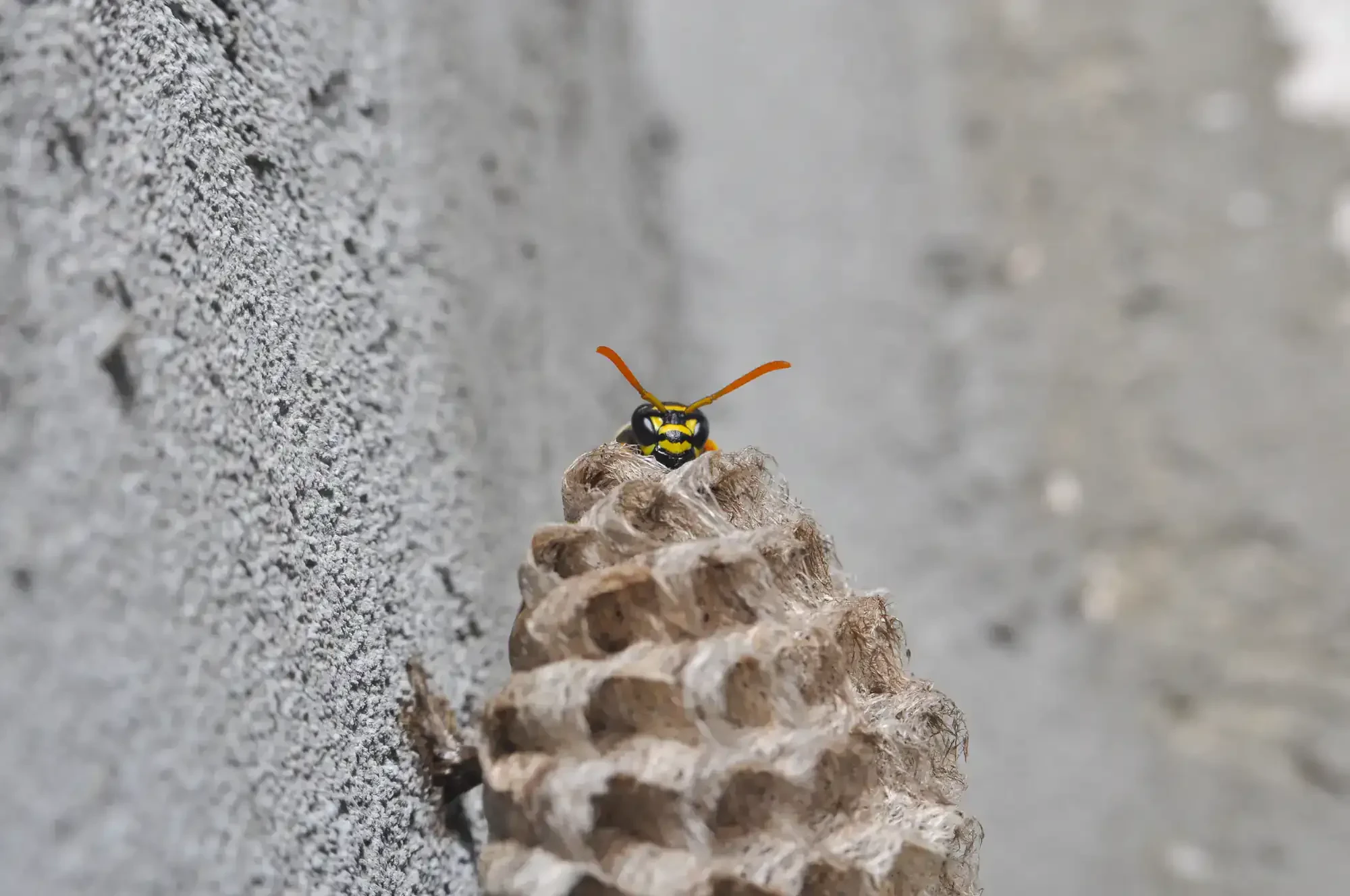
The honest answer is: as early as you spot the problem. Michigan’s hornet season starts when queens emerge in April and May to begin building new nests. At that stage, the colony is small, the workers are less aggressive, and the job is simpler. A spring nest can often be handled quickly and at lower cost than one that’s been growing through a full Saginaw County summer.
By August — which is peak season for hornet colonies in Michigan — a single nest can hold anywhere from a few hundred to 700 workers. The colony is at its most defensive, the nest is at its largest, and the treatment is more involved. If you’re in Bridgeport and you’ve noticed a nest forming anywhere on your property, don’t wait to see how big it gets. The cost of early removal is almost always lower, and the risk to your family is significantly reduced. If you’ve already missed that window and it’s late summer, that’s fine too — call anyway. It still needs to go before queens overwinter and the cycle starts again next spring.
DIY hornet removal works in very limited circumstances — a small, newly formed nest in an accessible outdoor location, caught early in the season before the colony has grown. Outside of that narrow window, the risk increases significantly. Hornets don’t lose their stingers the way honey bees do, which means a single worker can sting multiple times, and a disturbed colony can mobilize quickly. The CDC documented an average of 62 deaths per year in the US from hornet, wasp, and bee stings — and many of those incidents involved people who didn’t realize how large or aggressive the colony was until it was too late.
For anything inside a wall, under a soffit, in an attic, or in a hard-to-reach elevated location — which describes a significant portion of the hornet problems found on Bridgeport’s older housing stock — a professional is the right call. The equipment, the treatment products, and the training to handle a wall void infestation safely are not things you can replicate with a can of foam spray. The cost of professional removal is a fraction of what an ER visit or structural repair costs if something goes wrong.
The two species you’re most likely to encounter in Saginaw County are the bald-faced hornet and the European hornet. Bald-faced hornets build the large, gray, football-shaped paper nests you’ll often see attached to trees, eaves, or the sides of structures. They’re highly defensive and will aggressively protect the nest if disturbed. European hornets are larger — the only true hornet species native to North America — and tend to nest in hollow trees, wall voids, or attic spaces. They’re also active at night, which catches a lot of homeowners off guard.
It does matter which one you’re dealing with, because the nesting behavior, colony size, and treatment approach differ between species. Bald-faced hornet nests are often visible and accessible but require careful handling due to the colony’s aggression. European hornet nests inside structures require a different strategy entirely. A proper inspection identifies the species and informs the treatment plan — which is one of the reasons a licensed technician’s assessment is worth more than a guess based on what you found online.
They can, and it’s more common than most people expect. Here’s why: when a colony dies off in fall, only the fertilized new queens survive by finding protected overwintering sites — often in or near the same structure where the nest was built. The following spring, those queens emerge and begin building new nests, frequently in the same general area because the conditions that made it attractive the first time haven’t changed.
In Bridgeport, properties with wooded lots, mature trees, river-adjacent land near the Cass River corridor, or older homes with accessible eaves and wall voids tend to see repeat activity year after year. Removing the nest is the right first step, but it doesn’t eliminate the underlying conditions that drew hornets there. A follow-up conversation with your technician about preventative measures — sealing entry points, treating known harborage areas in early spring — is worth having if you’ve had recurring problems. We assign the same technician to your property year after year, so that continuity of knowledge actually applies when it comes to preventing repeat infestations.
Yes — we offer discounts for seniors, veterans, and first responders. Bridgeport has a meaningful population of retirees and working families, and a fair number of residents who have served in the military or work in public safety roles. These discounts reflect a straightforward acknowledgment that the people who contribute most to a community like this one should get a fair deal when they need a service.
Beyond the discounts, we operate on flat-rate, upfront pricing — you know what you’re paying before the technician arrives, and there are no hidden charges after the job is done. If you’ve already gotten a quote from another company and it’s reasonable, we’ll match it. There are no binding contracts, either. The pricing model is built around earning your trust through results, not locking you into an agreement. If you’re a senior, veteran, or first responder in Bridgeport or anywhere in Saginaw County, ask about your discount when you call to schedule.
Useful Links