
Hear from Our Customers
You stop avoiding your own property. That corner of the yard near the old oak, the side door to the outbuilding, the stretch of fence line you’ve been walking around for two weeks — you get it back. That’s what professional hornet removal in Farmers Creek, MI actually delivers. Not just a dead nest, but your land back under your control.
The older housing stock along Farmers Creek Road creates specific conditions that make hornet problems worse than they look. Gaps in weathered soffits, unfinished attic spaces in converted farm buildings, and hollow spots in mature trees are exactly where European hornets and bald-faced hornets establish colonies — and once they’re in, they don’t leave on their own. A nest that started small in May can house several hundred workers by August, which is exactly when you’re outside mowing, maintaining outbuildings, or just walking the property.
When the job is done right, we’re not just treating the visible nest. We’re addressing the conditions that made your property attractive in the first place. For Farmers Creek homeowners with five, ten, or more wooded acres, that distinction matters — because a missed secondary nest or an untreated void means you’re back to square one before the season’s over.
First Choice Pest Control has been serving southeast Michigan since May 31, 2005. That’s 20 years of real pest control work — not call center dispatching, not seasonal crews, not a franchise running a territory. Roger, who founded the company and brings 26 years of hands-on experience, has treated hornet nests in exactly the kind of rural Lapeer County properties that define Farmers Creek: wooded acreage, 19th-century farmhouses, converted barns, outbuildings that haven’t been fully sealed in decades.
We hold Michigan Pesticide Application Business License #250081 and have earned recognition from both Angie’s List and HomeAdvisor through verified customer reviews. Our technicians are IPM-certified through MDARD — which means treatment decisions are based on identification and targeting, not blanket spraying. We also offer discounts for seniors, veterans, and first responders, because this is a community-first operation, not a volume-first one.
One thing that sets us apart: you get the same technician every time. They learn your property, your layout, and your history. That continuity is rare in this industry — and on a rural property near Farmers Creek, it’s genuinely useful.
It starts with a proper inspection. Before any treatment happens, our technician identifies the species — bald-faced hornet, European hornet, or yellow jacket — because each one nests differently and responds to different treatment methods. On rural Farmers Creek properties with mature tree canopy and older structures, that identification step matters more than it does on a standard suburban lot. A nest in a wall void requires dust treatment that penetrates the cavity. A nest 30 feet up in an oak tree requires a completely different approach than one tucked under a deck eave.
Once the nest location and species are confirmed, we apply treatment using the most targeted method available. Our technicians are IPM-trained, which means we’re not reaching for the broadest chemical option by default — we’re selecting what works for the specific situation in front of them. For Farmers Creek homeowners with children, dogs, or horses on the property, that matters.
After treatment, our technician walks you through what to expect — how quickly activity will stop, whether the nest needs to be physically removed, and what signs to watch for. If the problem isn’t fully resolved, we come back at no additional charge. That’s not a marketing line — it’s a documented practice reflected in our customer reviews and a 4.7-star Google rating across 67 verified reviews.
Ready to get started?
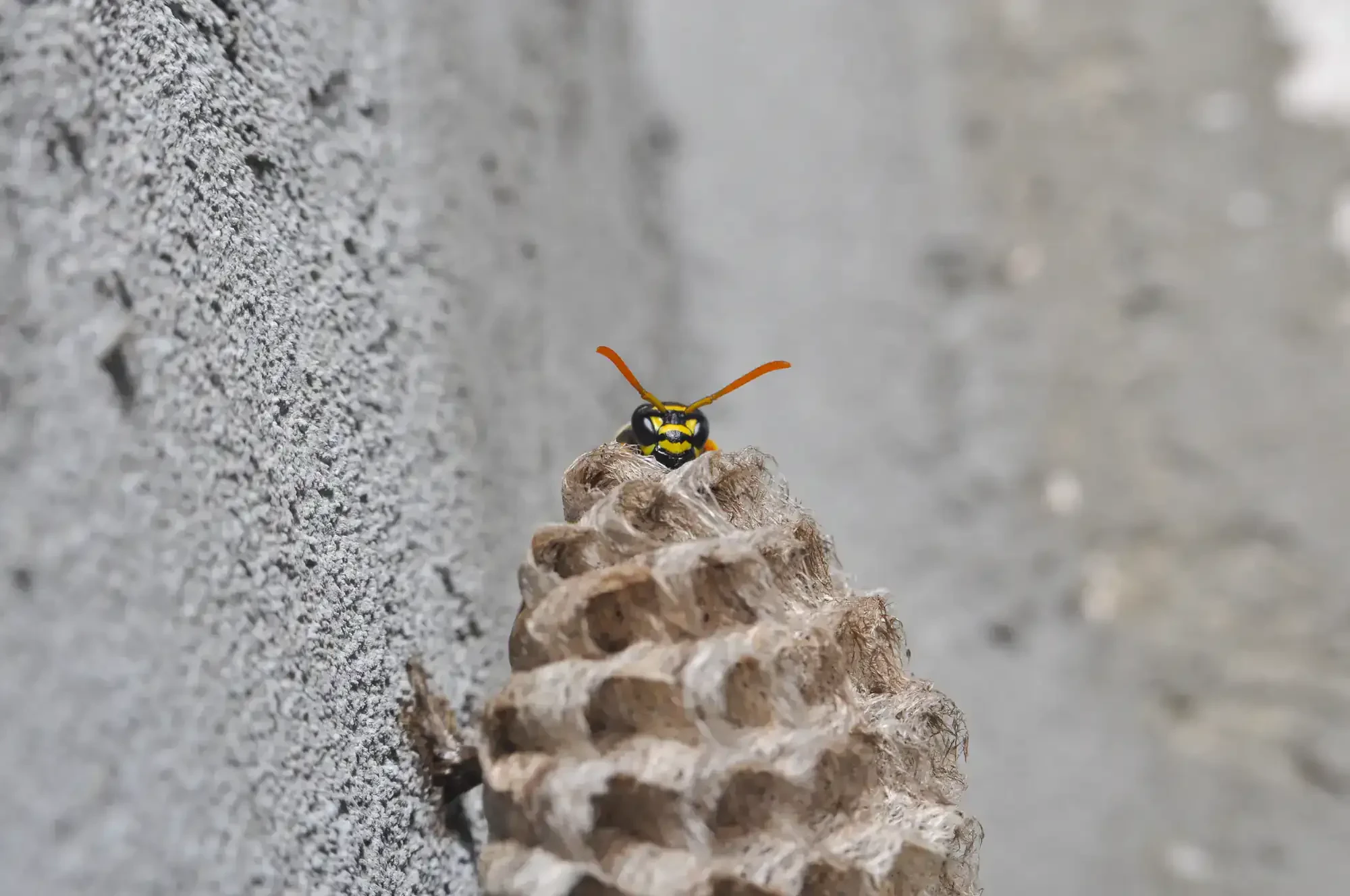
Hornet control in Farmers Creek, MI looks different than it does in a subdivision. The properties here — farmhouses on wooded acreage, converted agricultural buildings, estates with mature tree canopy along Farmers Creek Road — come with nesting scenarios that don’t fit a standard service template. We handle them all: bald-faced hornet nests high in trees, European hornets inside wall voids or attic spaces, yellow jackets in underground burrows on rural lots, and paper wasp colonies under eaves and deck overhangs.
Every service call includes a full property inspection, species identification, targeted treatment using professional-grade products, and a follow-up commitment if the problem persists. There are no hidden charges, no surprise fees when our technician arrives, and no upsell pressure. Pricing is flat-rate and upfront, and we will match a reasonable quote from another licensed competitor if you have one.
Because Farmers Creek sits across Metamora Township and Hadley Township with no municipal pest control ordinances, all work is governed by Michigan state licensing requirements — and we hold License #250081 from MDARD. You’re not hiring an unlicensed handyman with a hardware store product. You’re hiring a state-licensed, 20-year operation that has treated hornet problems on properties that look exactly like yours.
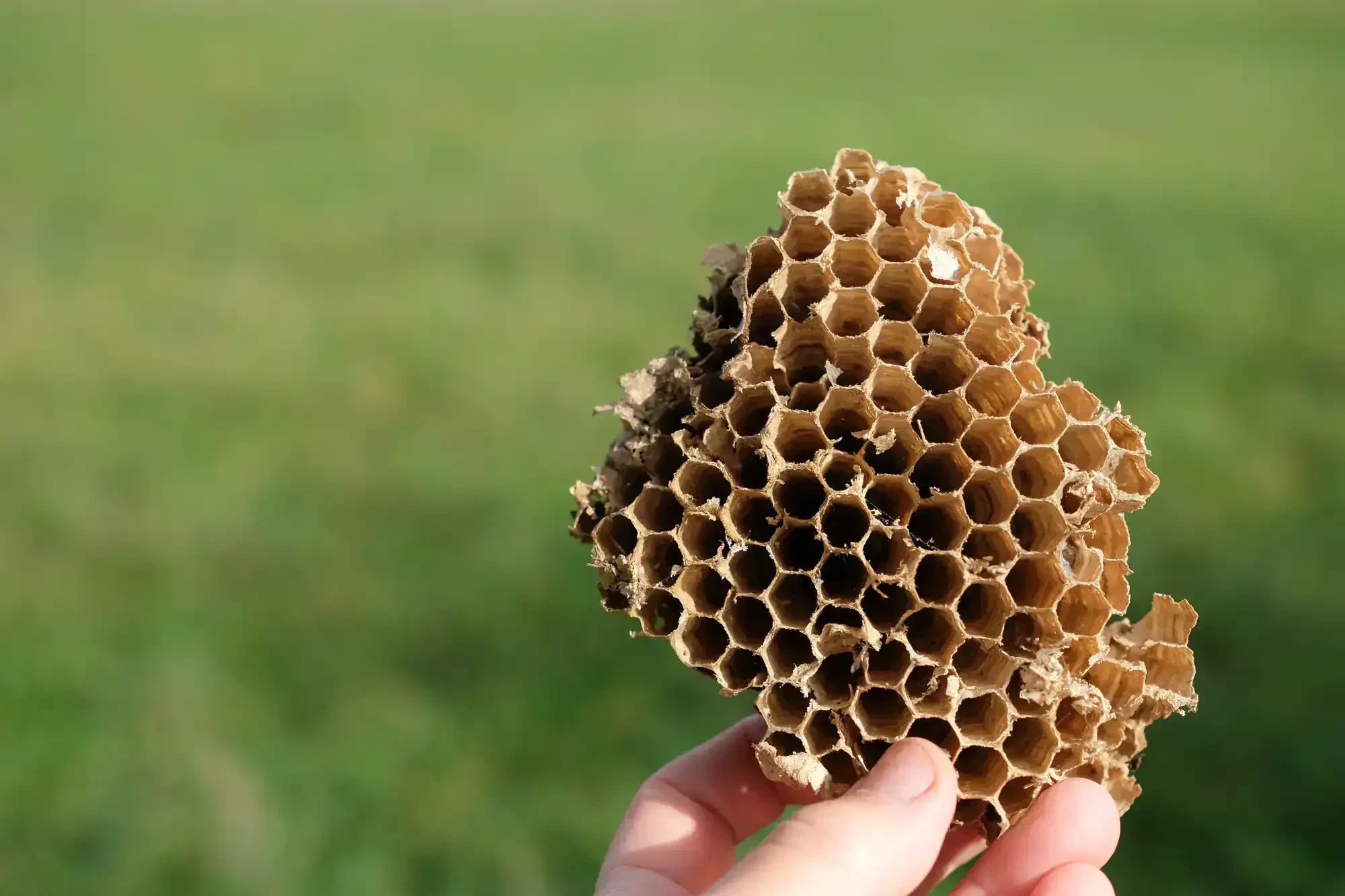
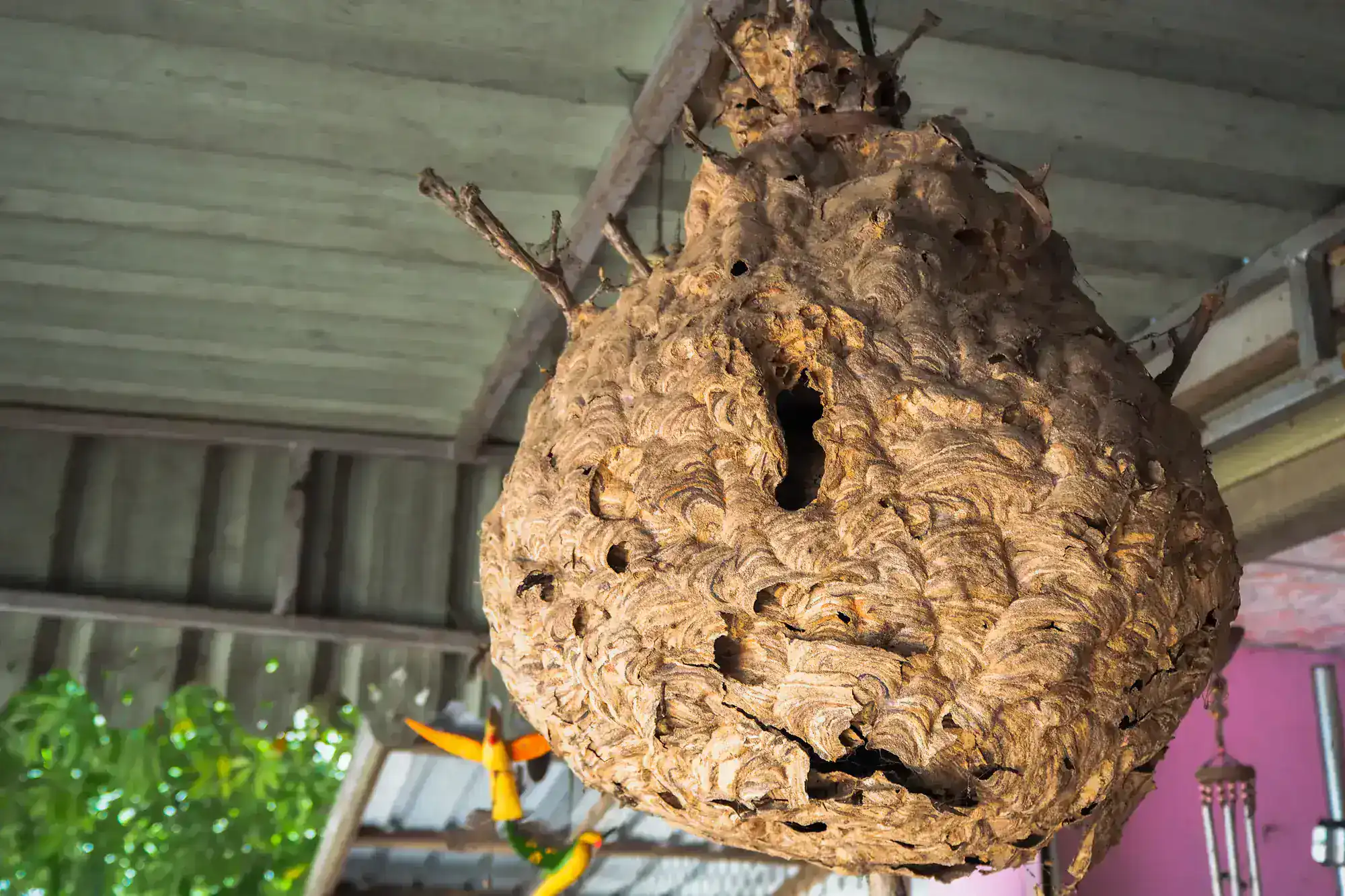
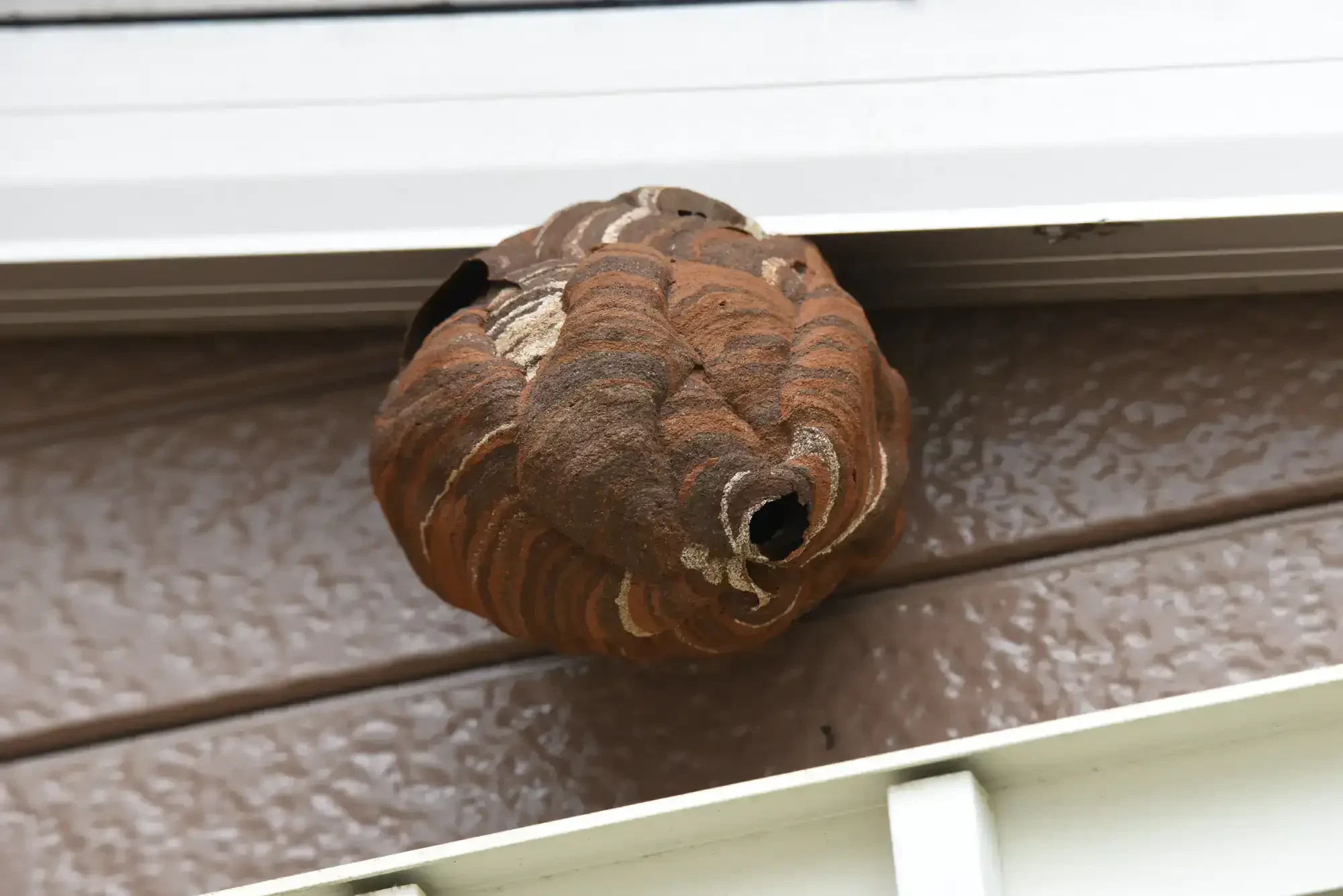
The two you’re most likely dealing with in Farmers Creek are bald-faced hornets and European hornets. Bald-faced hornets — technically a yellow jacket species, despite the name — build large, enclosed paper nests that hang in tree canopies, under eaves, or attached to outbuilding walls. Their colonies can reach 400 to 700 workers by late summer, and they are aggressively defensive when the nest is disturbed. On a wooded Lapeer County property around Farmers Creek, you may not even spot a bald-faced hornet nest until it’s the size of a football.
European hornets are the only true hornets in North America, and they prefer hollow trees, wall voids, and attic spaces — exactly the features common in older farmhouses and converted agricultural buildings throughout the Farmers Creek area. They’re larger than yellow jackets, active at night, and capable of chewing through wood and soft materials to expand a nesting cavity. If you’re hearing buzzing inside a wall or noticing large, brownish insects flying in and out of a gap in your siding or soffit, European hornets are a likely explanation.
The honest answer is: it depends on the nest, and most people underestimate what they’re dealing with. A small paper wasp nest under a deck rail with a handful of workers is a different situation than a bald-faced hornet colony in an oak tree or a European hornet nest inside a wall void. The problem with DIY on rural properties is that the nests most likely to cause serious injury — the ones high in tree canopies, deep inside wall cavities, or in outbuildings you don’t regularly access — are also the ones least suited to a hardware store spray and a flashlight.
Bald-faced hornets are among the most aggressive stinging insects in Michigan. They will pursue a perceived threat well beyond the nest perimeter, and a colony of several hundred workers in late summer is not something to approach without proper protective equipment and the right treatment method. Beyond the physical risk, improper treatment of a wall void nest can drive hornets deeper into the structure or cause them to emerge through interior walls. A licensed hornet exterminator in Farmers Creek, MI handles these scenarios with the right tools and the experience to know which approach fits which situation.
The most common signs are audible buzzing or chewing sounds coming from inside a wall, ceiling, or soffit — especially in older structures where the framing has gaps and voids that hornets can access from outside. You may also notice a steady line of large insects flying in and out of a small opening in your siding, eave, or foundation, particularly in the morning and late afternoon when foraging activity peaks. European hornets are especially prone to wall void nesting in older farmhouses, and they’re active at night, so you might hear them after dark when the house is quiet.
In the Farmers Creek area, older farmhouses and converted farm buildings are particularly vulnerable because original construction methods left natural gaps and voids that modern vinyl-sided homes simply don’t have. If you’re seeing hornets entering a structure but can’t locate a visible exterior nest, there’s a strong chance the colony is inside the wall or attic. This is not a situation for exterior spray — it requires dust treatment applied directly into the void, which is a method that professional hornet removal technicians use specifically for enclosed infestations.
The earlier in the season, the better — and that’s not just a scheduling preference, it’s a cost and safety reality. Queen hornets emerge from winter dormancy in April and May and begin building new nests. In those early weeks, a colony might have a dozen workers at most. Treatment is straightforward, the risk of defensive swarming is low, and the cost is significantly less than treating a fully established colony in August.
By late summer, Lapeer County’s warm, humid climate has accelerated colony growth to the point where a bald-faced hornet nest can hold several hundred workers — all of them defensive and all of them capable of stinging multiple times. That’s the scenario most Farmers Creek homeowners are dealing with when they finally call, because rural properties with wooded acreage often hide nests until they’re fully established. If you spot a nest forming in spring, call then. If you’ve already found an August nest the size of a basketball, call now — just know that it requires a more involved treatment and that professional handling is genuinely important at that colony size.
The colony itself won’t survive winter — workers and the original queen die off once temperatures drop. But the fertilized queens that were produced in late summer will overwinter in sheltered locations, and they often return to the same general area the following spring to establish new nests. On a Farmers Creek property with mature trees, older structures, and outbuildings, “the same general area” can mean the same tree, the same wall void, or the same eave where the previous nest was located.
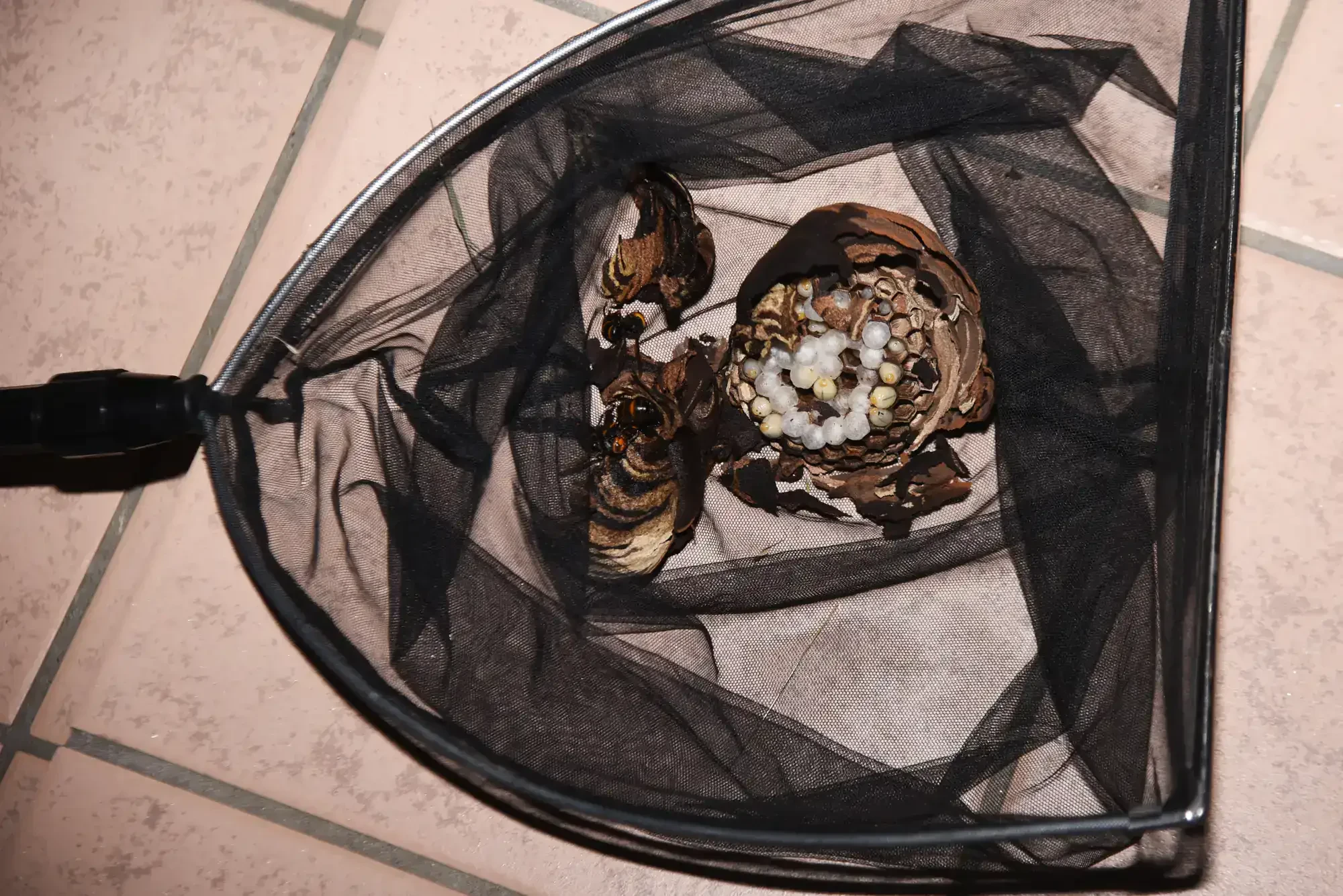
This is why nest removal — not just treatment — matters for long-term control. A dead nest left in place doesn’t attract returning queens directly, but the same structural features and habitat conditions that made your property attractive once will make it attractive again. After a professional hornet removal service, our technician can identify the specific conditions on your property that are most likely to draw nesting activity in future seasons. We assign the same technician to your property year over year, which means they’re building real knowledge of your land and its pest history — not starting from scratch every spring.
Yes — we offer discounts for senior citizens, military veterans, and first responders. In a rural community like Farmers Creek, where a lot of residents have long histories here and many have served in some capacity, these discounts reflect something real about how we operate. We’re a family-owned business that has been in southeast Michigan for 20 years, and the people running it understand who our customers are.
If you’ve already received a quote from another licensed pest control company for hornet removal in Farmers Creek, MI, we will also match a reasonable competitor price. The goal isn’t to be the cheapest option — it’s to make sure cost isn’t the reason someone ends up with a less experienced crew on their property. Between the discount programs and the price-match commitment, most customers find that getting the most qualified team for the job doesn’t require paying a premium over what they’ve already been quoted elsewhere. Call to ask about current availability and which discounts apply to your situation.
Useful Links