
Hear from Our Customers
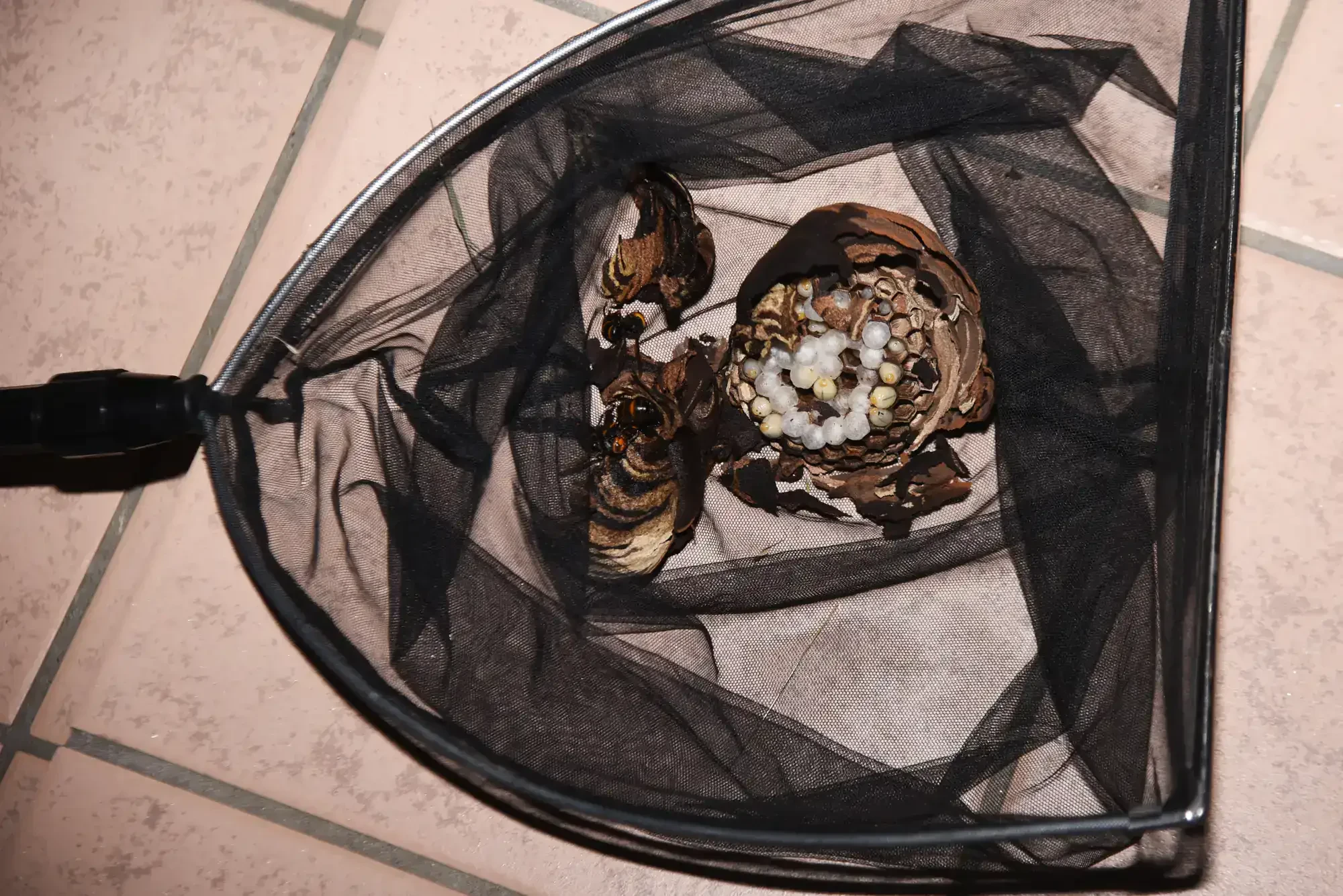
When you find a hornet nest on your property, the clock starts ticking. A colony that’s golf-ball-sized in May can hold several hundred workers by August. The longer it sits, the more aggressive the colony gets — and the harder it is to treat safely. Getting ahead of it isn’t just smart, it’s the difference between a straightforward removal and a serious situation.
Farrandville’s housing stock makes this more relevant than most people realize. The ranch-style homes built throughout Vienna Township in the 1950s through the 1980s commonly have aging fascia boards, gap-prone soffits, and unscreened attic vents — exactly the entry points hornets use to get inside walls and eave structures. A nest you can’t see is harder to find, harder to treat, and a lot more stressful to deal with. Knowing what you’re working with before anything is touched matters.
The semi-rural character of this area also means more outbuildings. Detached garages, sheds, and older barn structures on larger lots give hornets additional nesting options that homeowners sometimes don’t discover until the colony is well-established. When the problem gets resolved completely — nest located, colony eliminated, entry points identified — you stop reacting and start enjoying your property again.
We’ve been serving Genesee County homeowners since May 2005 — twenty consecutive years without a rebrand, a change in ownership, or a gap in service. That kind of track record doesn’t happen by accident in a region where people talk to their neighbors and bad service gets remembered. In Farrandville and the surrounding Vienna Township communities, we’ve built our reputation one job at a time.
Roger, our founder and owner, brings 26 years of hands-on pest control experience to every job. This isn’t a franchise where the owner is removed from the work. The same level of care that built our company’s reputation across Farrandville, Clio, and the surrounding Genesee County communities is the same standard we apply to every hornet removal call today.
We hold Michigan Pesticide Application Business License #250081, have earned awards from both Angie’s List and HomeAdvisor, and are IPM-certified through MDARD. We offer discounts for seniors, veterans, and first responders — because this community has earned it.
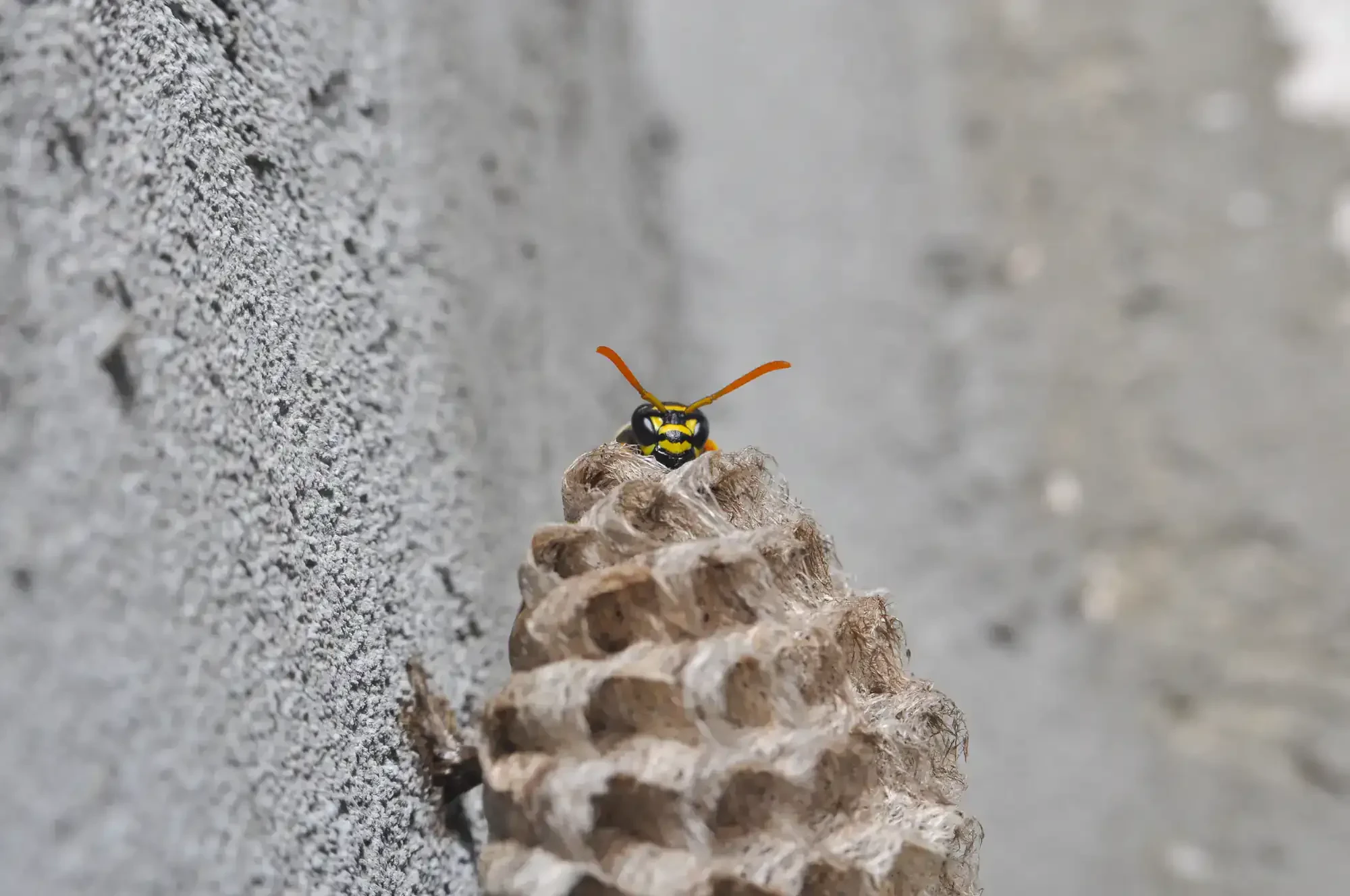
It starts with a call. You describe what you’re seeing — where the nest is, how long it’s been there, whether anyone’s been stung — and that information shapes everything that follows. No guessing, no one-size-fits-all approach. The technician we assign to your property comes prepared for the specific situation you’ve described.
On-site, the first step is a thorough inspection. In Farrandville, that means checking not just the visible nest but also the surrounding structure — eave lines, soffit panels, attic vents, and any outbuildings on the property. Older homes along the M-54 corridor through Vienna Township frequently have entry points that aren’t obvious at first glance, and a nest treated without identifying the full picture often leads to a callback. The inspection is where the real work begins.
Treatment is targeted to the nest type and location. Nests inside wall voids or structural cavities require a different approach than aerial nests on tree branches or overhangs — specifically, a dust treatment that penetrates the void and eliminates the colony without unnecessary damage to your home. Once treatment is complete, you’ll know what was found, what was done, and what to watch for going forward. Michigan’s climate means queens overwinter and return to the same areas in spring, so understanding the follow-up picture is part of the job, not an afterthought.
Ready to get started?
Hornet removal in a semi-rural area like Farrandville isn’t the same as treating a subdivision home in a newer development. The properties here tend to be older, the lots tend to be larger, and the pest pressure tends to be higher — proximity to farmland, wooded acreage, and mature trees creates exactly the foraging and nesting habitat that bald-faced hornets and European hornets thrive in. Treatment has to account for all of it.
Our approach is built around IPM — Integrated Pest Management — which means the treatment we apply to your property is the right one for the specific pest, the specific location, and the specific conditions present. For Farrandville homeowners with vegetable gardens, pets, and neighbors whose properties may include livestock or pollinators, that targeted approach isn’t just a preference. It’s the responsible way to do the job. No blanket chemical applications. No unnecessary risk to what you’ve built on your property.
Every service comes with the same technician assigned to your account year after year — not a rotating crew of unfamiliar faces. That consistency means your tech learns your property, knows where previous activity occurred, and can spot new issues before they become expensive problems. We don’t require contracts, our pricing is flat and upfront, and if a reasonable competitor has given you a lower quote, we’ll match it.
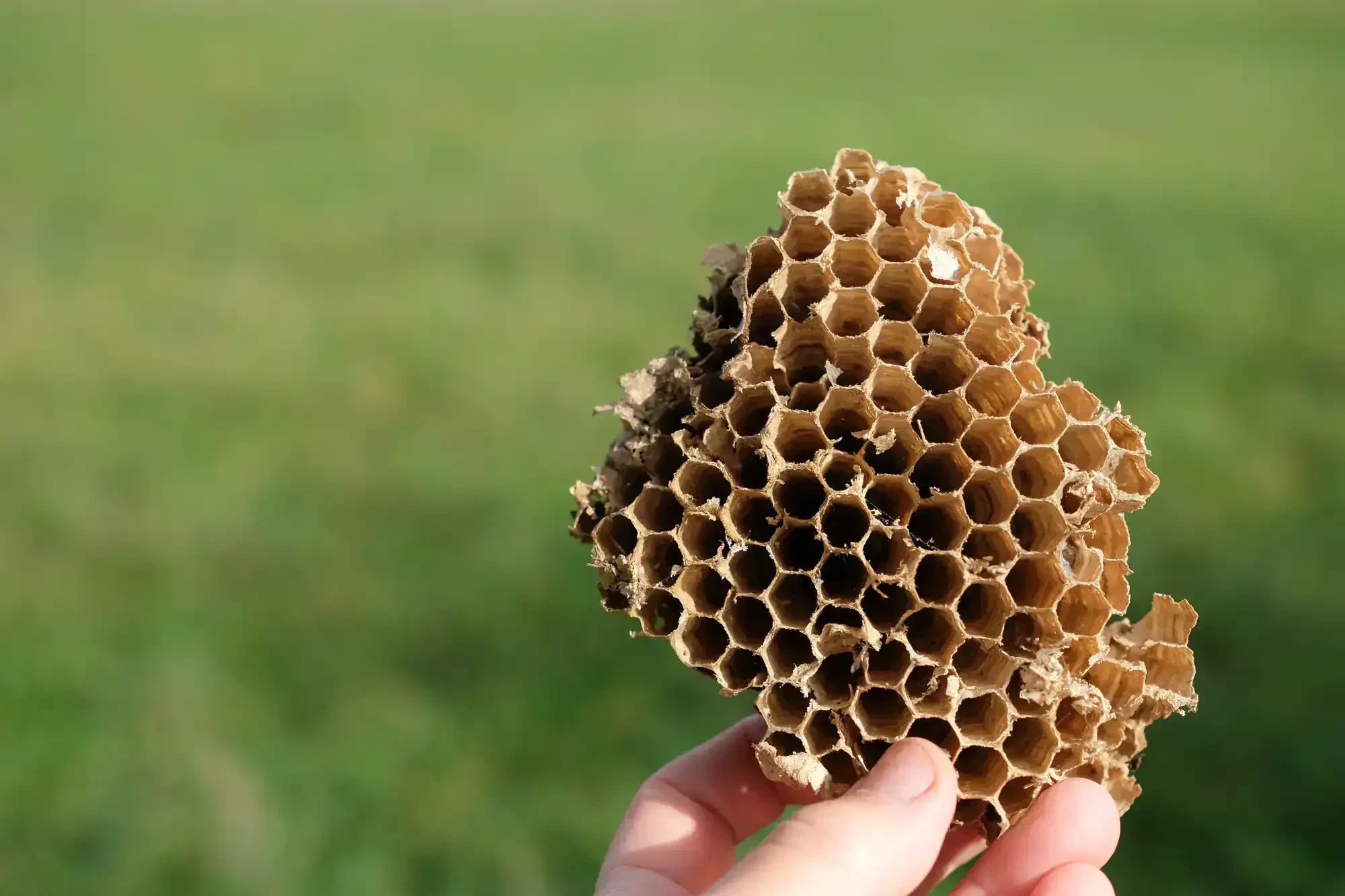
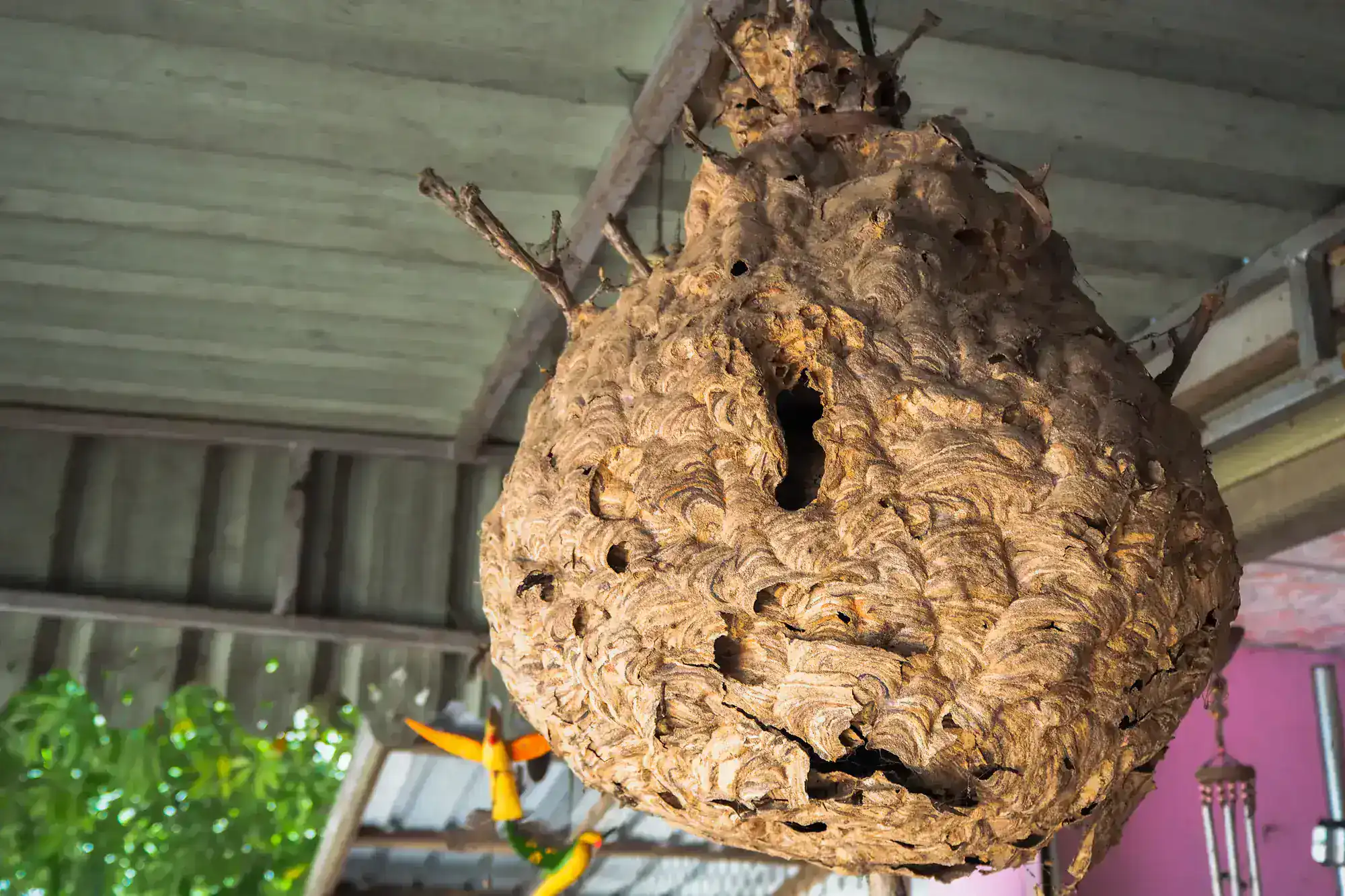
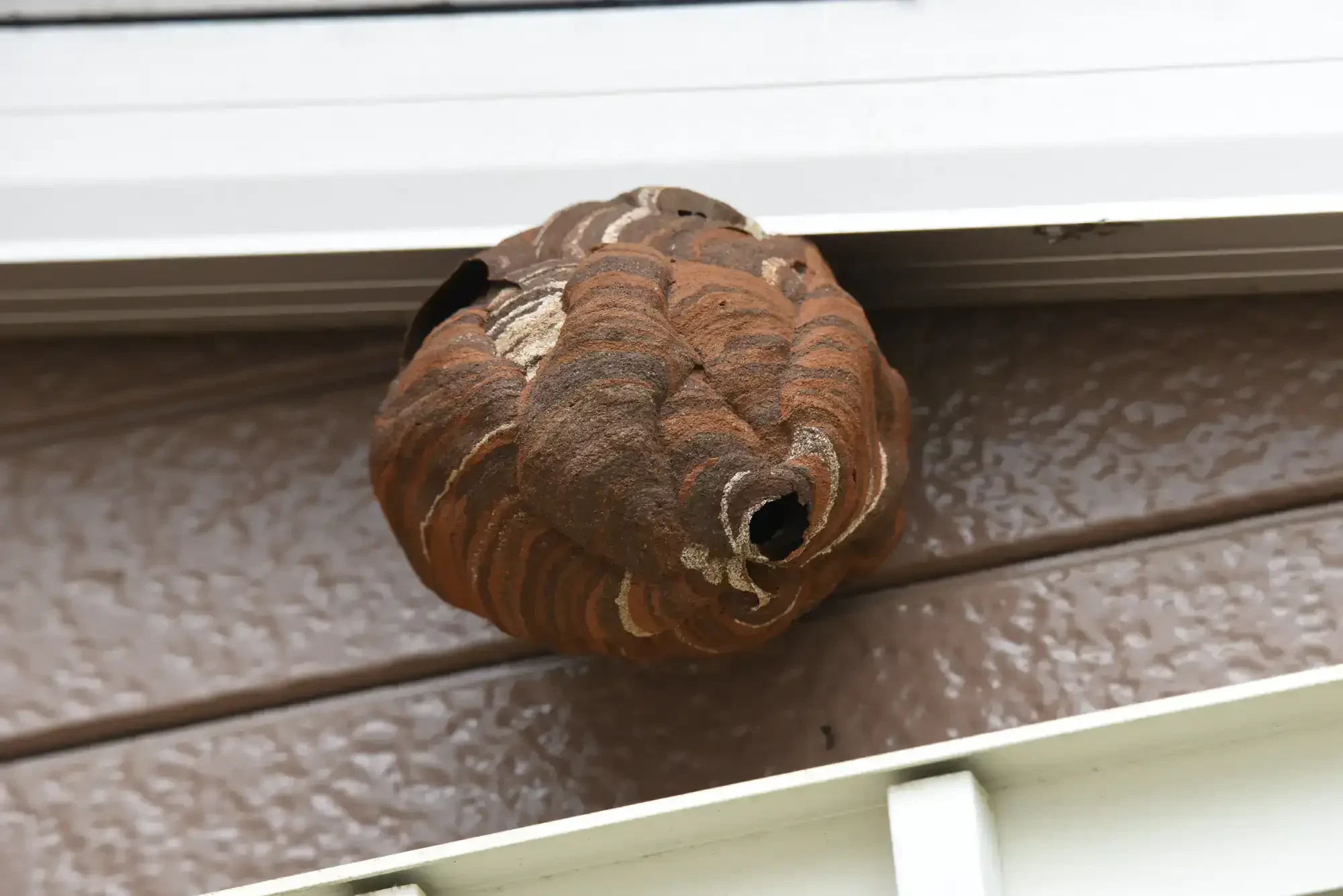
The two species you’re most likely dealing with in the Farrandville area are bald-faced hornets and European hornets. Bald-faced hornets build the large, enclosed paper nests you typically see attached to tree branches, under eaves, or hanging from overhangs — they’re aggressive defenders and will sting repeatedly if the nest is disturbed. European hornets are larger, can fly at night, and tend to nest in hollow trees, wall voids, and attic spaces, which makes them harder to detect on older properties.
Given the semi-rural character of Vienna Township — mature trees, larger lots, older structures with gap-prone eaves and unscreened vents — both species have plenty of options when it comes to nesting sites. Bald-faced hornets in particular favor elevated locations, which is why nests in tree canopies and upper eave lines are common on Farrandville properties with significant tree cover. Knowing which species you’re dealing with affects how the nest is approached, which is why a proper inspection always comes before treatment.
The short answer is that it’s rarely a good idea, and the conditions common to Farrandville properties make it riskier than most homeowners expect. Store-bought sprays require you to get close to an active colony, and they can’t penetrate wall voids or structural cavities where nests are often hidden inside older ranch-style homes throughout Vienna Township. Disturbing a nest without eliminating it doesn’t solve the problem — it often makes the colony more aggressive and can drive them deeper into the structure.
There’s also the physical risk. A bald-faced hornet colony at peak summer size can hold several hundred workers, all of which will defend the nest simultaneously if threatened. The CDC reports an average of 62 deaths per year in the U.S. from hornet, wasp, and bee stings. On a rural property where you might be working alone, away from the house, that’s a scenario worth taking seriously before picking up a can of spray.
Professional hornet removal typically runs between $300 and $700, with the final cost depending on where the nest is located, how large the colony has grown, and whether the nest is accessible or inside a structural cavity. Bald-faced hornet removal tends to run on the higher end — around $600 or more — because the nests are often elevated and require more careful access.
Timing matters more than most people realize. A nest treated in spring, when the colony is small and the queen is just getting started, costs significantly less than the same nest treated in August when the colony has reached full size. Waiting through the summer to see if the nest “goes away on its own” almost never works out — hornets don’t abandon an established nest mid-season. We offer flat-rate, upfront pricing with no hidden fees, and will match a reasonable competitor’s quote if you’ve received one from another licensed provider in the Genesee County area.
If you’re hearing activity inside a wall, that’s a sign the nest is established inside a structural void — and it’s one of the more serious situations to deal with correctly. The older housing stock throughout Vienna Township, including the ranch-style homes common to the Farrandville area, frequently has deteriorating soffit panels, aging fascia boards, and gaps around eave returns that give hornets easy access to wall cavities and attic spaces. Once they’re inside, a surface spray won’t reach the colony.
The right approach for a wall void nest is a dust treatment — a specialized method where insecticidal dust is injected directly into the void, reaching the colony where it lives. This eliminates the colony without requiring you to open up your walls. What you want to avoid is sealing the entry point before the colony is dead. If hornets are blocked from exiting, they’ll chew through drywall or interior surfaces to find another way out — which turns a pest problem into a structural repair. A licensed technician who’s familiar with this type of infestation will handle the sequence correctly.
It’s a fair concern, and the honest answer is that it depends on a few factors. Hornets don’t reuse old nests — the physical structure is abandoned after the colony dies off in late fall. But the queen that produced that colony overwinters in a protected location and will return to the same general area the following spring to start a new nest. In Michigan’s climate, that cycle repeats every year, and properties that have had active nests before tend to see renewed activity the following season.
What this means practically is that removal alone addresses the current problem, but it doesn’t prevent a new queen from scouting your property in April or May. For Farrandville homeowners with older structures that have known entry points — gaps in soffits, unscreened vents, aging fascia — preventative treatment in early spring is the most cost-effective way to stay ahead of the cycle. Your technician can walk you through what that looks like for your specific property after the initial removal is complete.
Yes. We offer discounts for seniors, veterans, and first responders throughout the Genesee County service area, including Farrandville and the surrounding Vienna Township communities. A significant portion of the homeowners in this part of the county are long-term residents — people who have owned and maintained their properties for decades, raised families here, and contributed to the fabric of this community. Recognizing that with a real discount on a service they actually need is a straightforward way to give something back.
When you call to schedule, just mention that you qualify and ask about the available discount before your appointment is booked. We also offer price matching for reasonable competitor quotes, so if you’ve already gotten a quote from another licensed pest control provider in the area, bring it up on the call. The goal is to make sure cost isn’t the reason a Farrandville homeowner puts off dealing with a hornet problem that’s only going to get bigger.
Useful Links