
Hear from Our Customers
The back door stops being a risk. The kids can play in the yard again. You stop flinching every time someone walks past the eave. That’s what professional hornet removal in Flint, MI actually delivers — not just a dead nest, but a property you can move around freely again.
Here’s what most people don’t realize about Flint specifically: your neighbor’s vacant lot isn’t just an eyesore. It’s a hornet incubator. With more than 24,000 vacant properties across the city — many of them overgrown and unmaintained — well-kept homes in neighborhoods like Mott Park, Civic Park, and Floral Park face constant hornet pressure that originates next door or down the alley. Treating your own nest without addressing the conditions that drew them in just means a new colony moves in next spring.
Flint’s housing stock adds another layer. The brick bungalows and aluminum-sided homes built during the city’s automotive peak in the 1920s through 1950s are full of the gaps, aging soffits, and deteriorating fascia that hornets exploit for wall void nesting. A hardware store spray can’t reach a nest inside your wall. Professional treatment can — and it does it without tearing your house apart.
We’ve been serving Genesee County homeowners and businesses since May 31, 2005. That’s two decades of treating homes along Dort Highway, across the College Cultural neighborhood, and throughout every corner of Flint — not as a franchise, not as a national chain, but as a family-owned business headquartered right in Swartz Creek, just outside Flint’s southwest border.
Roger, our owner, brings 26 years of personal pest control experience to the company he built. He doesn’t run it from a distance. The same technician comes to your property year after year — someone who knows your home, knows your neighborhood, and knows what Flint’s specific conditions bring every season. No rotating roster of unfamiliar faces, no part-time seasonal workers.
We hold Michigan Pesticide Application Business License #250081 and IPM training certification recognized by MDARD. We’ve earned recognition from Angie’s List and HomeAdvisor, maintain a 4.7-star Google rating, and are a BBB Accredited Business. Discounts are available for seniors, veterans, and first responders — because we’re part of this community, not just passing through it.
It starts with a thorough inspection. Our technician identifies the nest location, the species, and how the colony is accessing your home. In Flint, that often means checking inside wall voids, behind siding panels, under soffits, and in the mature trees that line older residential streets. If you’re near the Flint River Trail or a city park, foraging territory gets factored in too — hornets can range up to 1,000 feet from their nest, which means the visible activity near your door doesn’t always tell you where the colony actually lives.
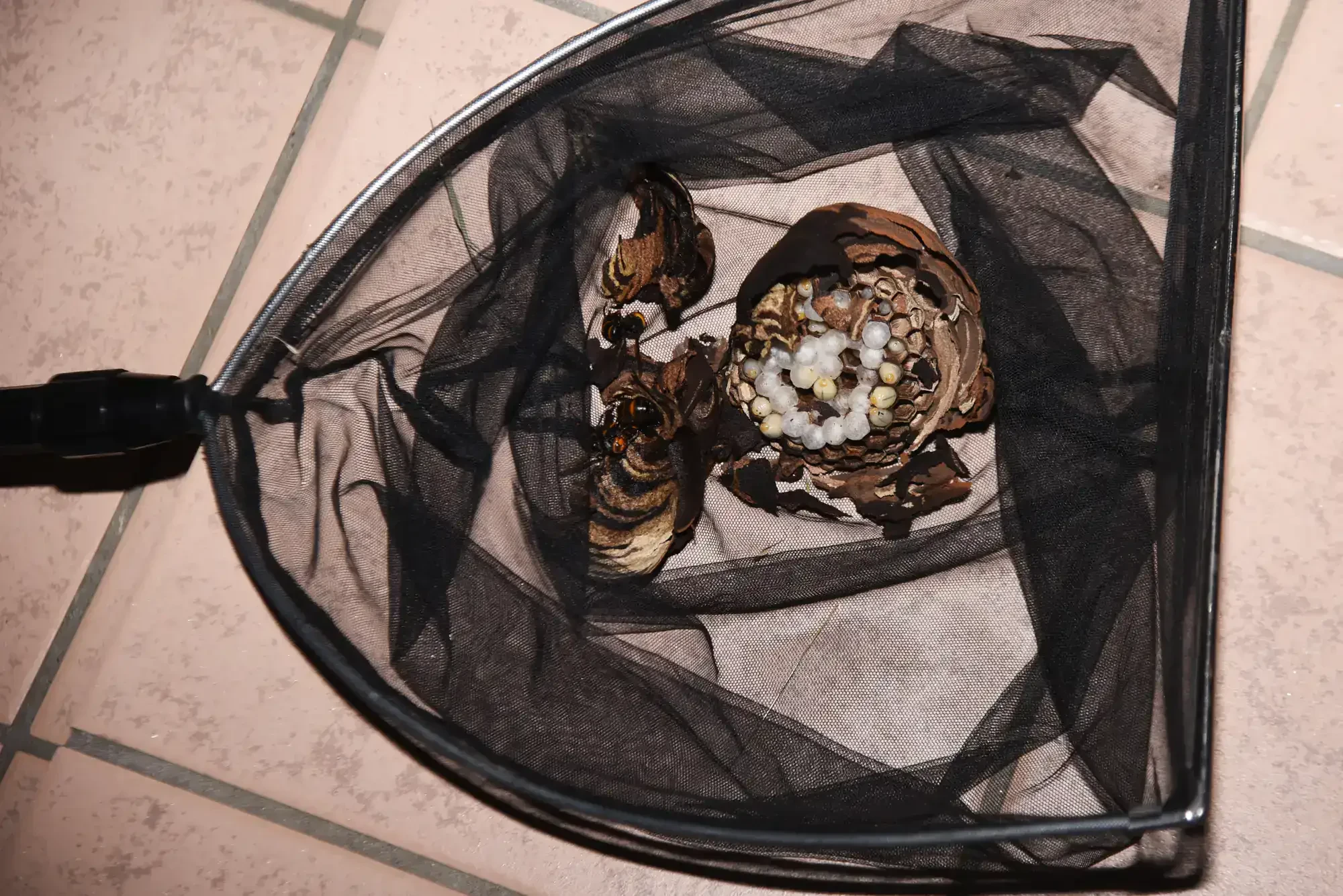
Once the nest is located, we apply treatment using the method that fits the situation. Exposed aerial nests get a direct application. Hidden wall void nests — which are common in Flint’s older housing stock — get a professional dust treatment that penetrates the cavity and reaches the colony without structural damage to your home. This is the step that separates a professional service call from a hardware store attempt.
After treatment, our technician walks you through what to watch for and how to reduce the conditions that attract hornets back. Timing matters in Flint: the optimal window for removal is spring, when colonies are small and workers are few. But late-summer emergency calls are handled too — because when a bald-faced hornet colony is at full population in August and someone in your household is allergic, waiting isn’t an option.
Ready to get started?
Our hornet removal in Flint, MI covers the full job — inspection, treatment, and a follow-up visit at no additional cost when the situation calls for it. That guarantee matters most in the scenarios Flint homeowners run into most often: large late-summer colonies, nests hidden inside wall voids behind aging siding, and recurring infestations driven by activity on neighboring vacant properties.
The two hornet species you’re most likely dealing with in Genesee County are the bald-faced hornet and the European hornet — the only true hornet species in North America. The European hornet is especially active at dusk and is drawn to artificial lights, which means Flint residents in denser neighborhoods often notice them buzzing around porch lights and security fixtures at night before they ever spot the nest during the day. Knowing the species changes the treatment approach, which is why inspection comes before anything else.
Pricing is upfront and flat — you’ll know the cost before our technician starts. If you’ve received a reasonable quote from a competitor for hornet removal in Flint, MI, we’ll match it. Seniors, veterans, and first responders qualify for a discount — ask when you call. We serve residential and commercial properties, from single-family homes in Woodcroft Estates to commercial buildings along Miller Road and Dort Highway.
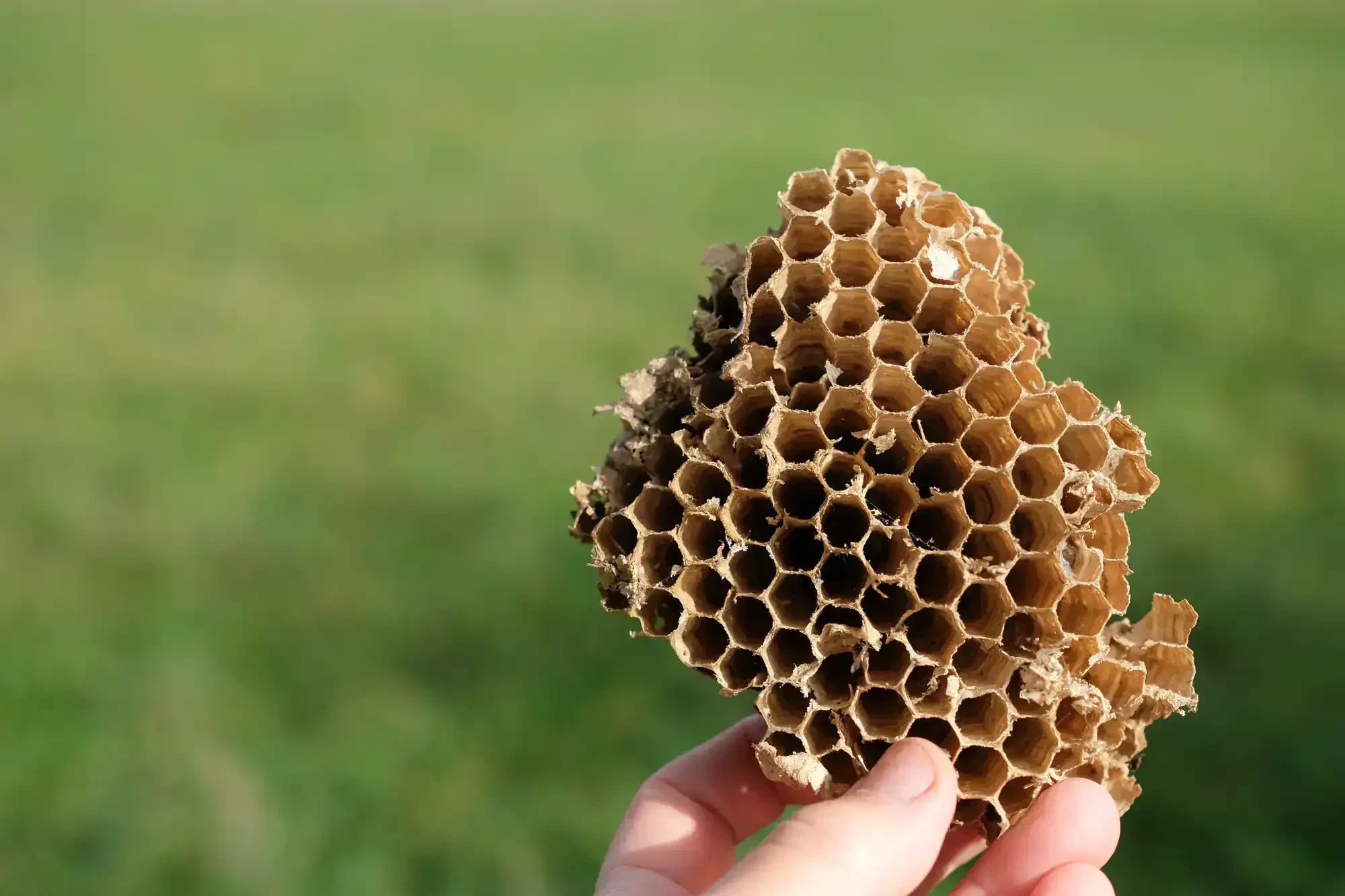
The most common sign is hearing a faint buzzing or chewing sound coming from inside a wall, especially near a soffit, eave, or exterior gap. You might also notice hornets consistently entering and exiting a small crack in the siding or trim — not flying around randomly, but making deliberate, repeated trips to the same spot. In Flint’s older neighborhoods, this happens frequently in homes with aging aluminum siding, deteriorating fascia, or gaps around attic vents that haven’t been properly screened.
Wall void nests are the most dangerous scenario because the colony is hidden, protected, and often much larger than you’d expect by the time anyone notices it. If you’re seeing that kind of behavior, don’t try to seal the entry point yourself. Trapping hornets inside a wall void makes them more aggressive and can force them to chew through into your living space. Call us — we can treat the cavity directly.
For a small, accessible aerial nest early in the season — say, April or May when the colony has fewer than 20 workers — some homeowners handle it themselves with a store-bought aerosol applied at night. That’s the low-risk window. By July or August, a mature bald-faced hornet colony can hold 400 to 700 workers, all of which will defend the nest aggressively when disturbed. At that point, a DIY attempt is genuinely dangerous, especially for anyone with a bee or wasp allergy.
The bigger issue is location. If the nest is inside a wall void, behind siding, or in a hard-to-reach eave, a spray can won’t reach it. You’ll agitate the colony without eliminating it, and you may drive them deeper into the structure. Our professional hornet removal in Flint, MI uses dust treatments and targeted applications that reach the colony regardless of where it’s hidden — and the work is backed by a return visit guarantee if the first treatment doesn’t fully resolve the problem.
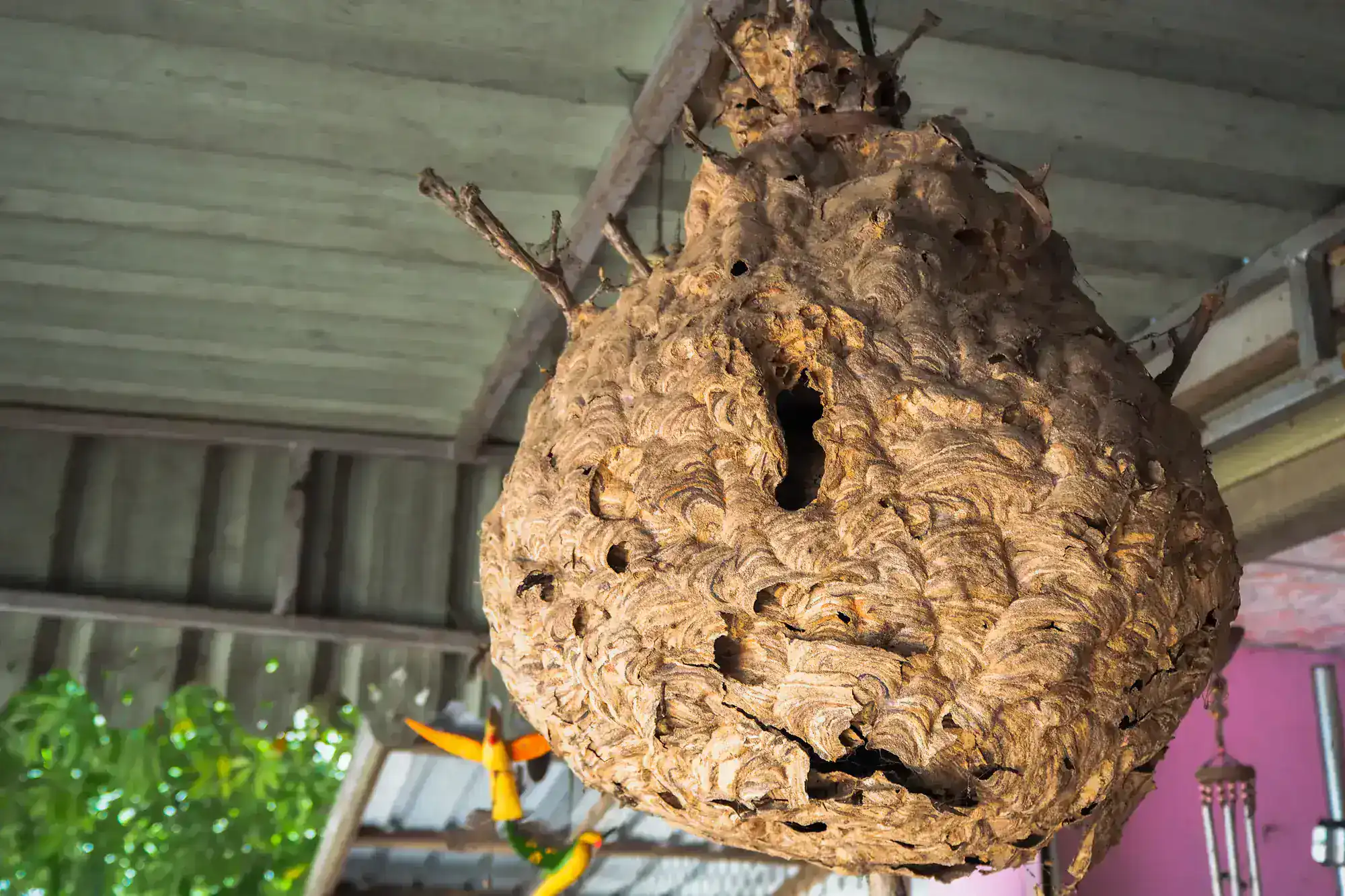
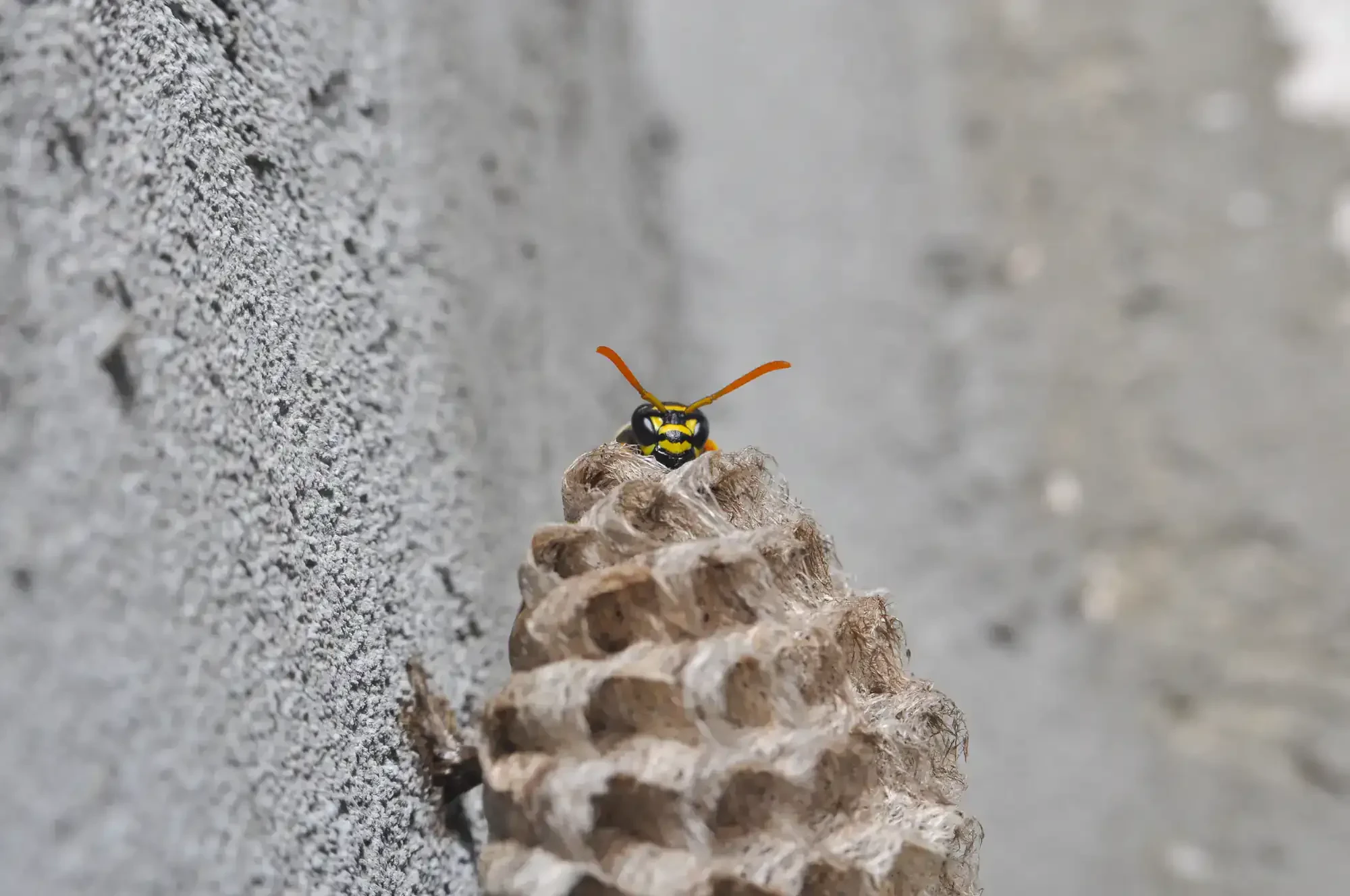
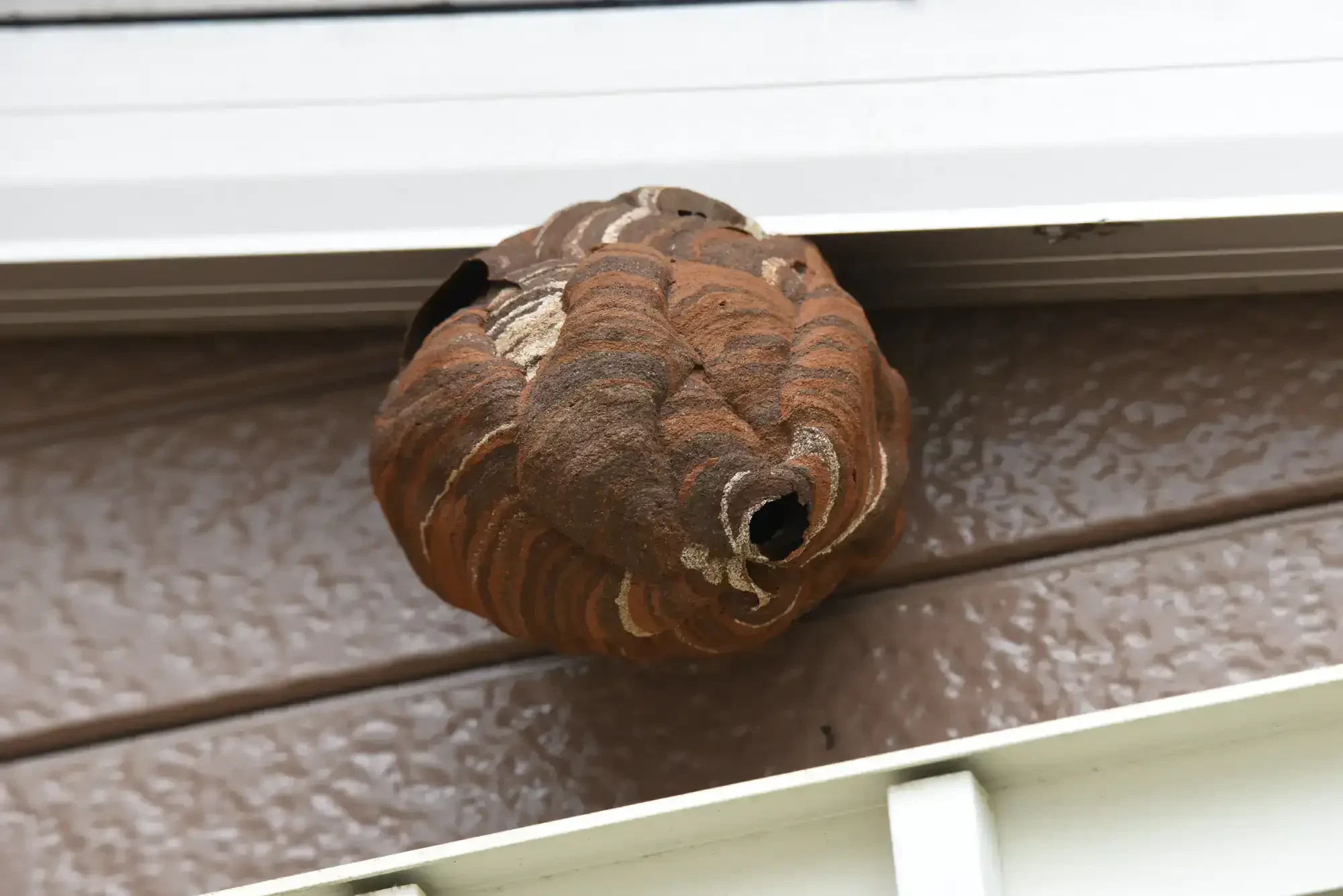
The two you’re most likely to encounter in Genesee County are the bald-faced hornet and the European hornet. Bald-faced hornets build the large, papery gray nests you’ve probably seen hanging from tree branches or tucked under eaves — they’re black and white, aggressive when disturbed, and reach peak population in late summer. European hornets are the only true hornet species in North America, growing up to an inch and a half long with a yellow-striped abdomen and a reddish thorax.
The European hornet has a behavioral quirk that catches a lot of Flint homeowners off guard: they’re most active at dusk and are strongly attracted to artificial light. In Flint’s denser urban neighborhoods, residents often notice them circling porch lights or security fixtures at night well before they locate the actual nest. Both species can sting multiple times and will defend their colony aggressively — neither one is something to approach without knowing what you’re dealing with.
Spring is the ideal window — specifically April through early June, before colonies have had time to grow. In Flint’s climate, queen hornets overwinter and begin establishing new nests as temperatures climb into the 50s and 60s in April. At that stage, colonies are small, workers are few, and treatment is both easier and less expensive. If you spotted a nest last fall, scheduling a spring inspection before the new colony gets established is the smartest move you can make.
That said, most calls come in during July and August when colonies are at full size and aggression is at its peak — Flint summers regularly hit the upper 70s and low 80s, which is exactly the temperature range that drives rapid hornet colony growth. Emergency removal during that window is absolutely handled, and it’s often the reality for families with kids in the yard or anyone who discovers a wall void nest mid-season. Don’t wait if the situation is active and urgent.
Hornets don’t reuse old nests — each colony builds a new one from scratch every spring. But they do return to the same locations because the conditions that made that spot attractive haven’t changed. A gap in the soffit, a void behind the siding, a sheltered eave with southern exposure, a mature tree with a hollow branch — these are structural and environmental features that draw new queens to the same areas year after year.
In Flint, the problem is compounded by what’s happening on neighboring properties. If there’s a vacant lot, an overgrown yard, or an abandoned structure nearby — and in Flint, there often is — new colonies establish themselves in those spaces every spring and forage into maintained yards and homes. Treating the nest on your property solves this year’s problem. Identifying and addressing the structural entry points and nearby habitat conditions is what prevents next year’s. A thorough inspection from us covers both.
Yes — we offer discounts for senior citizens, military veterans, and first responders. In a city like Flint, where a significant portion of residents in established neighborhoods like Mott Park and Civic Park are long-term homeowners on fixed incomes, and where the veteran and first responder community is a meaningful part of the fabric of the city, those discounts reflect something real about how we operate. It’s not a footnote — it’s a line item that affects the actual cost of your service call.
When you call to schedule hornet removal in Flint, MI, just mention your status and the discount gets applied. Pricing is flat and upfront regardless — you’ll know what you’re paying before our technician arrives. And if you’ve received a reasonable quote from another local hornet removal company in Flint, MI, we’ll match it. The goal is straightforward: give Flint residents access to professional, accountable pest control at a price that makes sense for their situation.
Useful Links