
Hear from Our Customers
A hornet nest on a rural property in Rogersville isn’t the same problem it is in a tighter suburban neighborhood. Out here, nests hide in tree canopies, get buried in the eaves of older outbuildings, and grow for weeks before anyone notices them. By the time you spot it, you’re often not dealing with a small colony anymore.
The wooded lots and older building stock common throughout the Richfield Township area — farmhouses, detached garages, sheds that have been standing for decades — give hornets exactly the kind of undisturbed space they need to establish large, aggressive colonies. A nest inside a wall void in an older structure isn’t something a hardware store spray can touches. It needs the right treatment, applied correctly, the first time.
When the job is done, you get your outdoor space back. Kids can play in the yard again. You can walk to the garage without watching where you step. For properties near Richfield County Park or along the Holloway Reservoir corridor, where natural areas push pest pressure right up against residential land, that peace of mind isn’t a small thing — it’s the whole point.
We’ve been serving Genesee County homeowners since May 31, 2005. That’s twenty years of showing up, solving problems, and earning repeat calls from Michigan families — including customers throughout Rogersville, Richfield Township, and the communities around it.
Roger, our owner, has 26 years of hands-on pest control experience. This isn’t a franchise operation running seasonal crews through unfamiliar territory. The technician who comes to your Rogersville property knows Genesee County’s building stock, understands the pest pressure that comes with wooded rural lots, and has seen the specific conditions that make hornet problems here different from what you’d find in a newer subdivision down the road.
We’re also one of the few companies in this area holding MDARD Integrated Pest Management certification — which means every treatment is targeted and appropriate, not a blanket chemical application across your property. Licensed under Michigan Pesticide Application Business License #250081, award-recognized through Angie’s List and HomeAdvisor, and BBB accredited. The credentials are real, and so is the track record.
It starts with a call. You describe what you’re seeing — where the nest is, how long it’s been there, whether anyone’s been stung. That information matters, because the approach for a nest under a porch eave is different from one inside a wall void of an older farmhouse, and both of those are different from a colony that’s established high in a tree on a wooded lot.
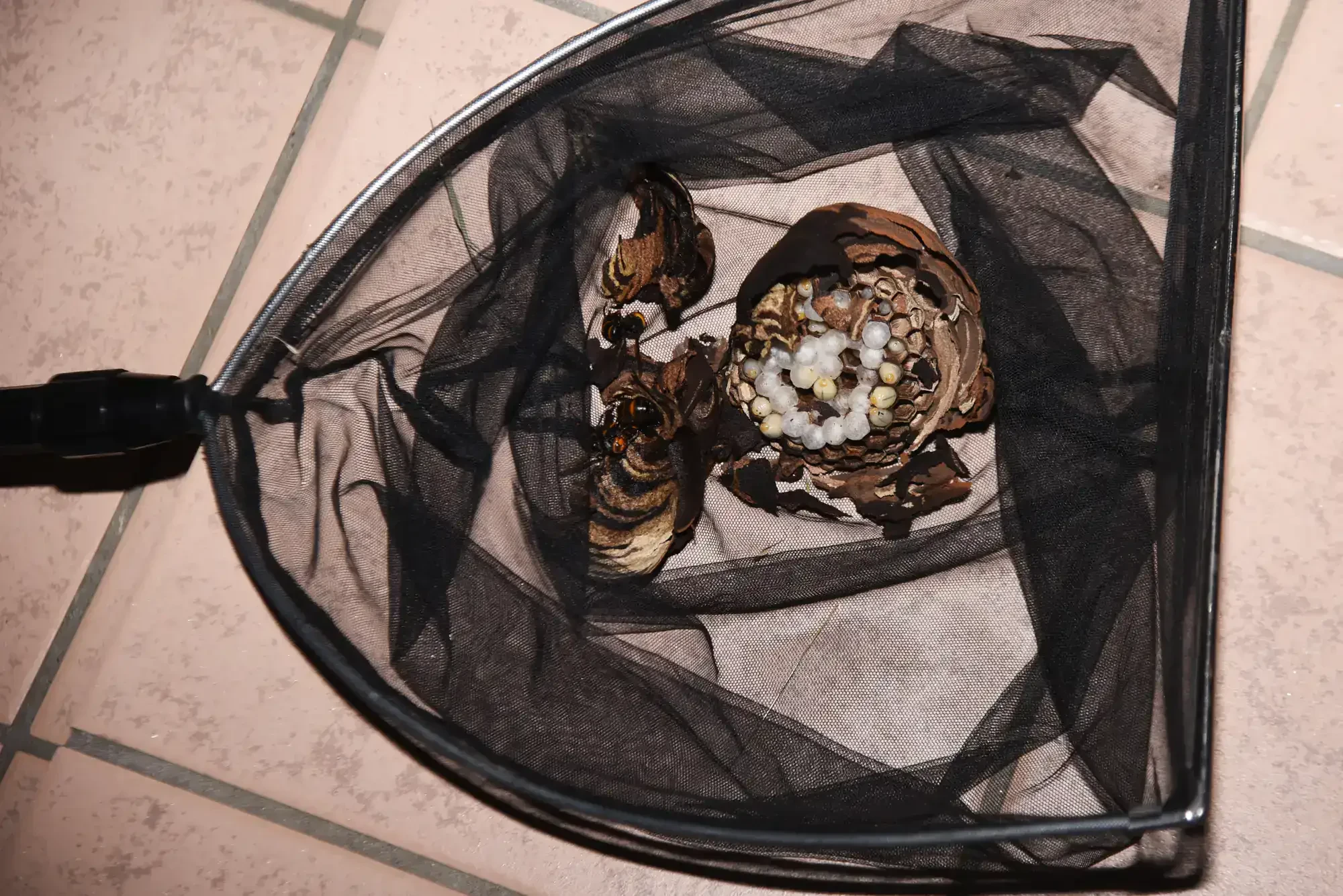
When our technician arrives, the first step is a proper inspection. On rural Richfield Township properties around Rogersville, that means checking beyond the obvious nest — looking at outbuildings, rooflines, and any gaps in older structures where European hornets could be nesting inside a wall or attic space. The treatment is then applied based on what’s actually there, not a one-size-fits-all spray routine. For concealed nests in wall voids, that typically means a professional dust treatment that reaches the colony without tearing open the structure.
After treatment, you’ll know what was found, what was done, and what to watch for. If the problem isn’t fully resolved and a follow-up is needed, we come back at no additional charge. Michigan’s pest season runs hard from late spring through fall, and the window between a small nest in May and a colony of several hundred workers by August is short. Getting ahead of it early — before the colony peaks — is always the better outcome for everyone.
Ready to get started?
Hornet removal in Rogersville covers the full range of what rural Genesee County properties actually deal with — bald-faced hornets in trees and on structure overhangs, European hornets nesting inside wall voids and attic spaces of older homes, and the kind of large, well-established colonies that develop when a nest goes undetected on a wooded lot for most of the summer.
Every service starts with a real inspection, not an assumption. On properties near the Richfield County Park corridor or along the wooded stretches of Richfield Township, pest pressure doesn’t stay contained to one corner of the yard. Foraging workers range far from the nest, and satellite activity can show up in places you wouldn’t expect. The inspection accounts for that. Treatment is applied with IPM certification guiding every decision — meaning the right product, in the right place, at the right concentration.
We also serve commercial customers, not just residential. If you’re managing a property, a rental, or a rural business in the Rogersville area, the same standards apply. Seniors, veterans, and first responders receive a discount on service — and if you’ve received a reasonable quote from another company, we’ll match it. The goal is straightforward: get the problem handled, get it handled right, and make sure it stays handled.
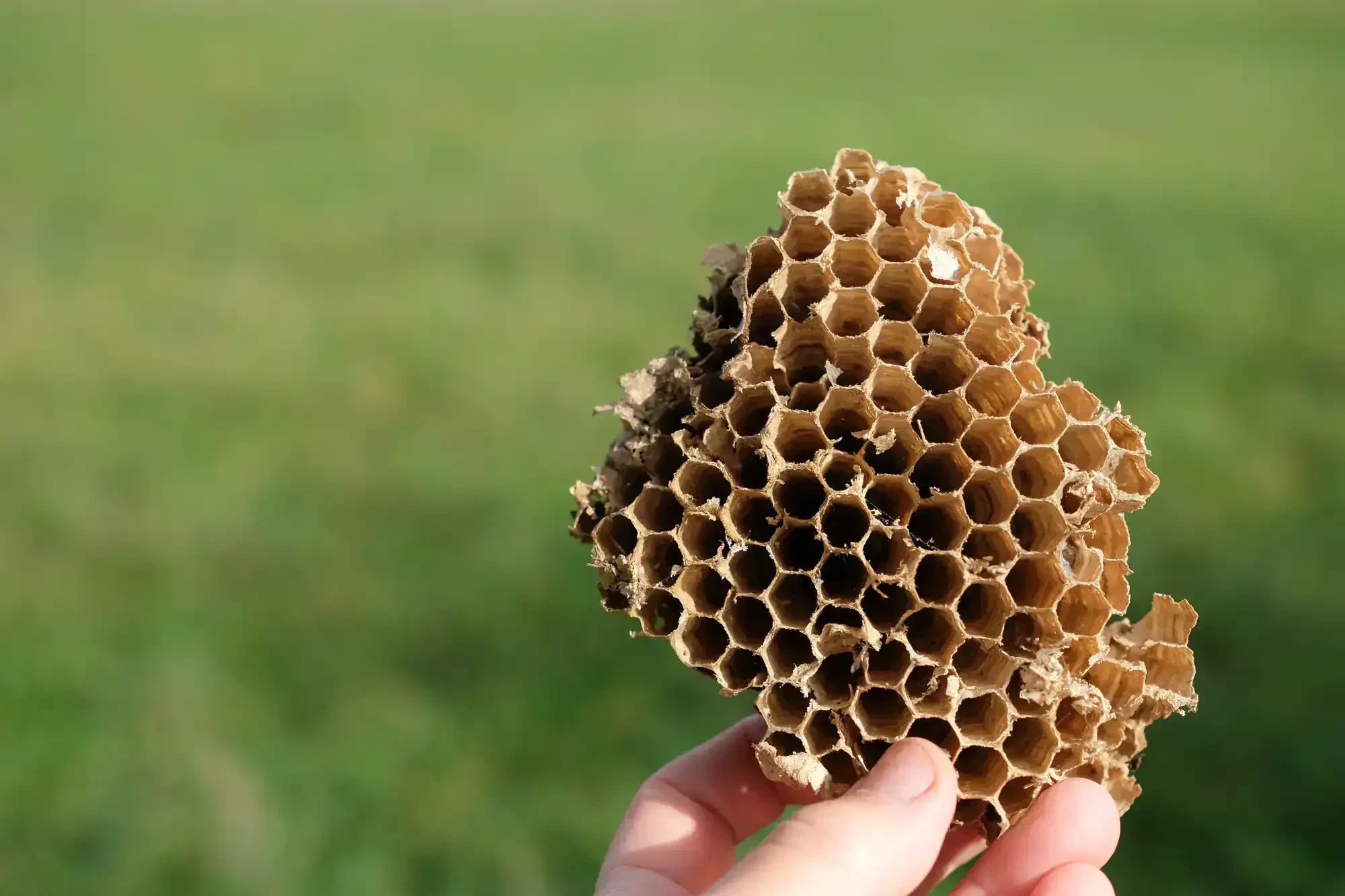
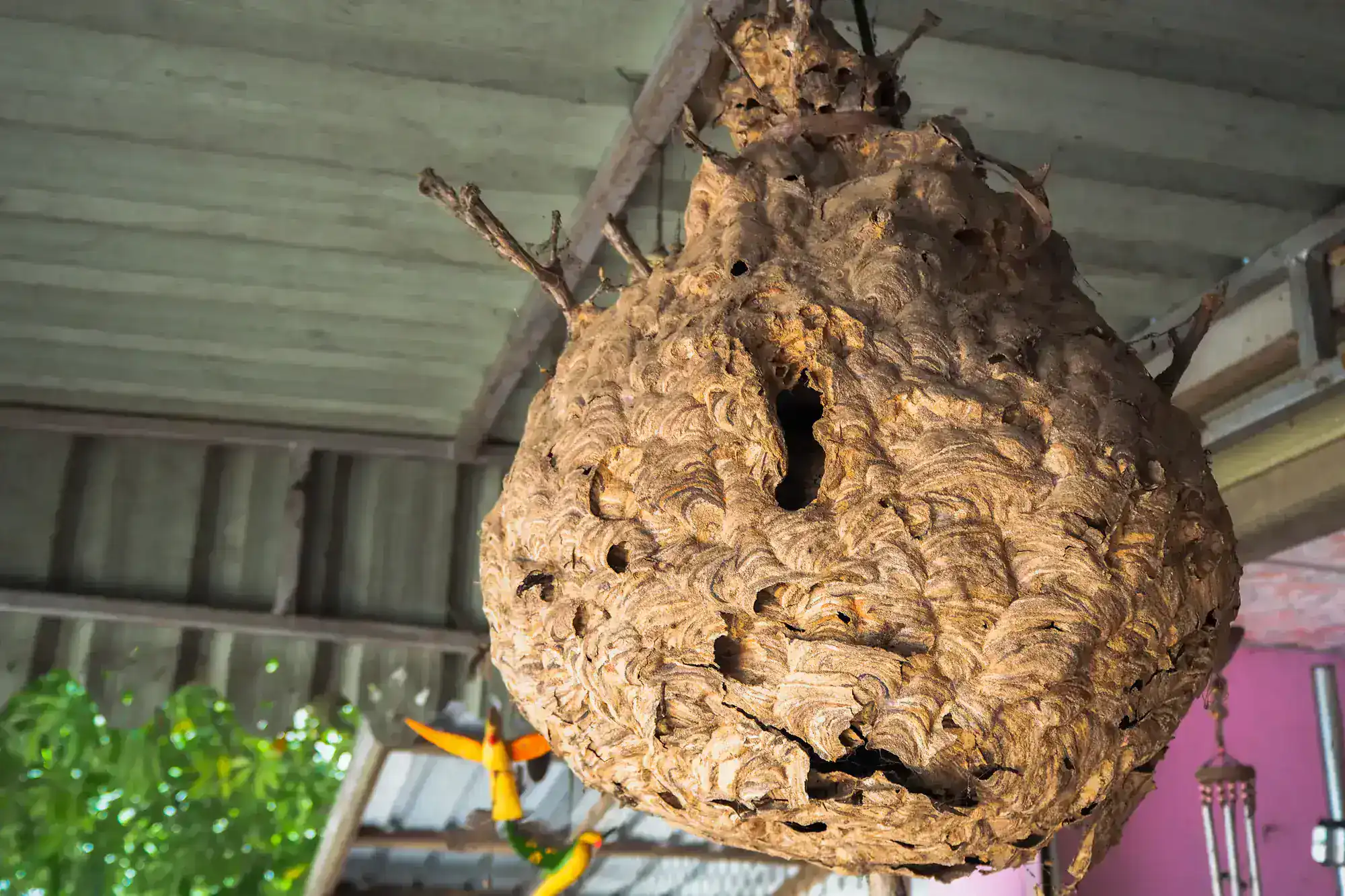
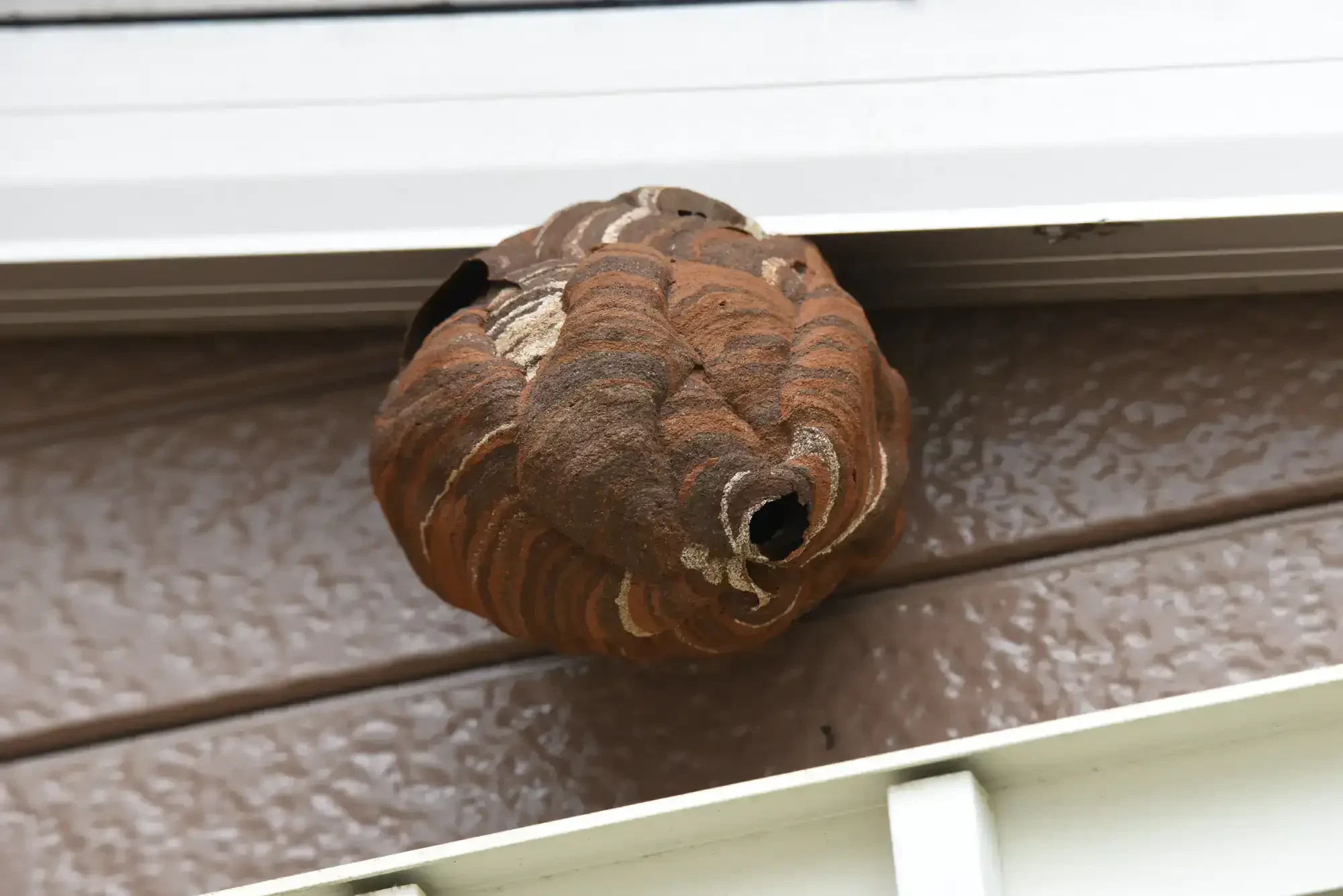
The two you’re most likely dealing with in the Rogersville area are bald-faced hornets and European hornets. Bald-faced hornets are the ones that build those large, enclosed paper nests — the football-shaped ones you’ll find hanging in trees, attached to eaves, or tucked under the overhangs of outbuildings. They’re black and white, highly defensive, and a colony can reach several hundred workers by late summer. On wooded rural lots like many in Richfield Township, these nests can grow for weeks before a homeowner even spots them.
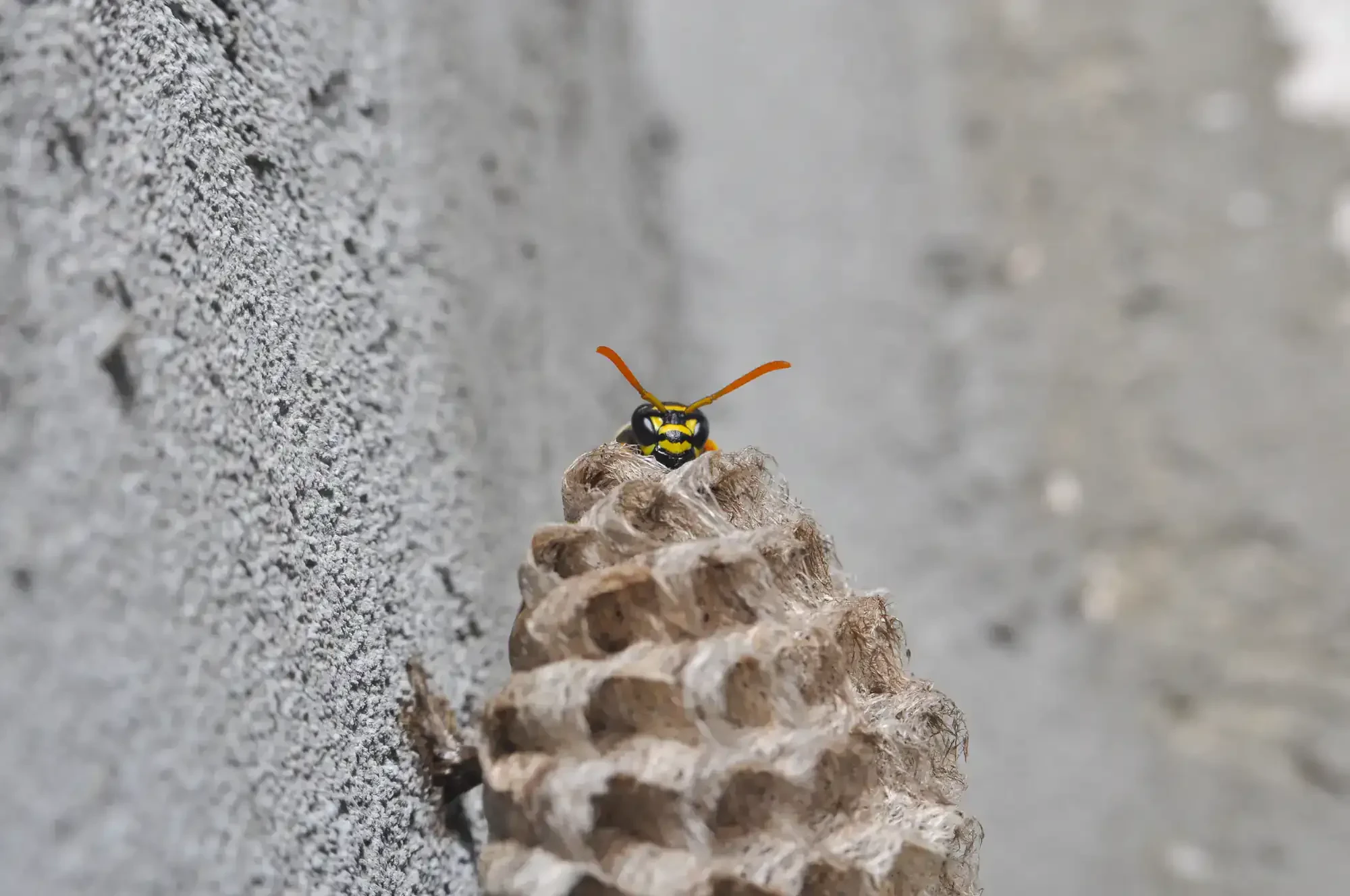
European hornets are the only true hornet species in North America, and they behave differently. They prefer enclosed, darker spaces — hollow trees, wall voids, attic spaces — which makes them harder to find and harder to treat without the right equipment. Older farmhouses and outbuildings common in the Rogersville area give them exactly the kind of structure they look for. If you’re hearing buzzing inside a wall or noticing large, brownish hornets flying at dusk, there’s a good chance you’re dealing with European hornets nesting somewhere inside the structure itself.
Most people who call us have already tried. A can of wasp spray from the hardware store, a late-night attempt when the colony is less active — it’s a reasonable instinct, but it usually makes the situation worse before it gets better. Disturbing a hornet nest without fully eliminating the colony causes the workers to scatter and become significantly more aggressive. On a rural property where you might be working near a tree line, an outbuilding, or an older structure with gaps and voids, that aggression has nowhere contained to go.
The bigger risk with DIY attempts on Rogersville properties specifically is concealed nests. If hornets are nesting inside a wall void or attic space — which is common in the older building stock throughout this area — a surface spray does nothing to reach the colony. It just agitates the workers while the queen and the core of the nest stay completely untouched. A professional treatment uses the right products in the right places to eliminate the colony, not just the visible entry point. The CDC reports an average of 62 deaths per year in the U.S. from hornet, wasp, and bee stings. If anyone in your household has a known allergy, this is not a situation to test twice.
The honest answer is as early as possible — and most people wait too long. In Michigan, overwintering queens emerge in April and May and start building nests immediately. At that stage, a nest is small, the colony is minimal, and removal is straightforward. That early-season window is also when treatment costs the least and the risk of stings during the process is lowest.
By August, a bald-faced hornet colony in Genesee County can hold anywhere from 100 to 700 workers. The nest is large, the workers are aggressive, and if it’s been growing on a wooded lot or inside an outbuilding all summer, it’s now a significant removal job. Fall makes things worse — workers become erratic and defensive as the colony cycle winds down, and they forage more intensively around outdoor living spaces. If you’ve noticed a nest this season and you’re on the fence about calling, the colony is not going to shrink on its own. The right time to call is when you first see it.
There are a few reliable signs. The most common is hearing a low, persistent buzzing coming from inside a wall, especially during the warmer parts of the day when the colony is most active. You might also notice a consistent flight pattern — hornets entering and exiting through a small gap, a crack in the siding, or a space around a window or door frame. Sometimes you’ll see staining or soft spots on drywall as the nest expands inside the void.
In the Rogersville area, this is more common than most homeowners expect. Older farmhouses and rural structures throughout Richfield Township often have gaps in the building envelope that newer construction doesn’t — places where siding has shifted, where foundation venting isn’t sealed, or where utility penetrations were never fully closed. European hornets specifically seek out these enclosed, dark spaces for nesting. Treating a wall void nest requires professional dust treatment that penetrates the cavity and reaches the colony without opening up the wall. It’s not a complicated process when done correctly, but it does require the right product and the right application method — not a surface spray.
Yes. If the problem isn’t fully resolved after the initial treatment, we come back at no additional charge. That’s not a vague promise — it’s documented in verified customer reviews. One Angi reviewer specifically noted that their wasp and hornet problem covered a large area, required a second visit, and that the return trip came at no extra cost.
For rural properties in the Rogersville area, this matters more than it might on a standard suburban lot. Wooded properties, larger parcels, and older structures can have multiple nesting sites — a primary colony that’s visible and satellite activity happening elsewhere on the property. A guarantee that covers follow-up visits means you’re not paying again if the first treatment didn’t catch everything. The goal is a resolved problem, not a completed invoice.
We offer discounts for senior citizens, military veterans, and first responders. In a rural community like Rogersville and the broader Richfield Township area — where a lot of households include retirees on fixed incomes, veterans who’ve settled in Michigan’s quieter rural areas, and local first responders serving a spread-out township — those discounts reflect something real about how we think about the people we work for.
Beyond the discounts, we also match reasonable competitor quotes. If you’ve already gotten a price from another company and it’s fair, bring it up when you call. The pricing is upfront and flat-rate, so there are no surprises when the invoice comes. For a working household in Richfield Township trying to make a smart decision about a pest problem, that combination — transparent pricing, price matching, and service-based discounts — removes most of the reasons to keep shopping and most of the risk of getting burned by a company that undersells and overcharges.
Useful Links