
Hear from Our Customers
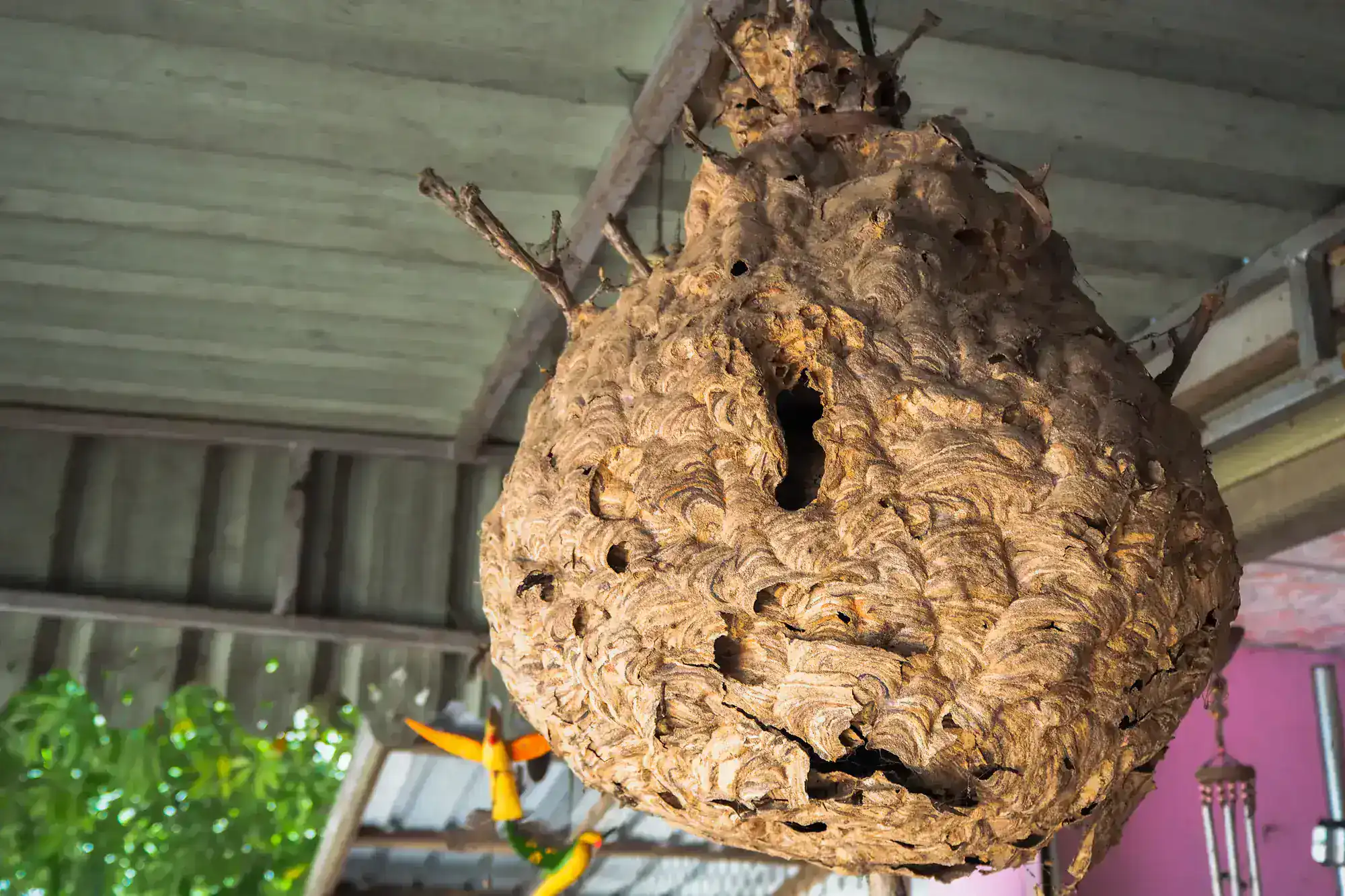
When a hornet nest shows up under an eave, in a tree line, or inside the wall of a 1960s ranch house, the problem does not sit still. Colonies grow fast. A nest that looked manageable in June can hold 400 to 700 workers by late August — and bald-faced hornets, the most common species on Thetford Center properties, do not need much of a reason to sting.
The wooded, large-lot character of Thetford Township means nests often go unnoticed until they are already a serious hazard. A nest tucked into the back corner of a barn, hanging from a mature oak on the east side of your lot, or buzzing inside the wall of an older home is not something a hardware store spray can handle safely. Disturbing an established colony without the right approach makes the situation worse — fast.
Once the nest is properly treated and removed, you get your outdoor space back. Kids and pets can use the yard again. You can open the shed without checking over your shoulder. And with a professional who understands how Genesee County’s freeze-thaw seasons drive overwintering queens back to the same locations year after year, you are not just solving today’s problem — you are getting ahead of next spring’s.
We founded First Choice Pest Control on May 31, 2005, and have been serving Thetford Center and the surrounding Genesee County area for 20 years. Roger, our owner, brings 26 years of hands-on pest control experience to every job — and this is still a family-owned, owner-accountable operation, not a franchise with rotating staff and a call center.
What that means for you is simple: the technician who shows up at your property on Center Road or Vienna Road is trained, experienced, and assigned to your account year after year. No part-time seasonal hires. No strangers. The same professional who knows your property, your history, and what actually works.
We hold Michigan Pesticide Application Business License #250081, carry IPM training certification from MDARD, and have earned awards from both Angie’s List and HomeAdvisor based on verified customer reviews. Seniors, veterans, and first responders receive discounts — because the people who give the most deserve a company that gives something back.
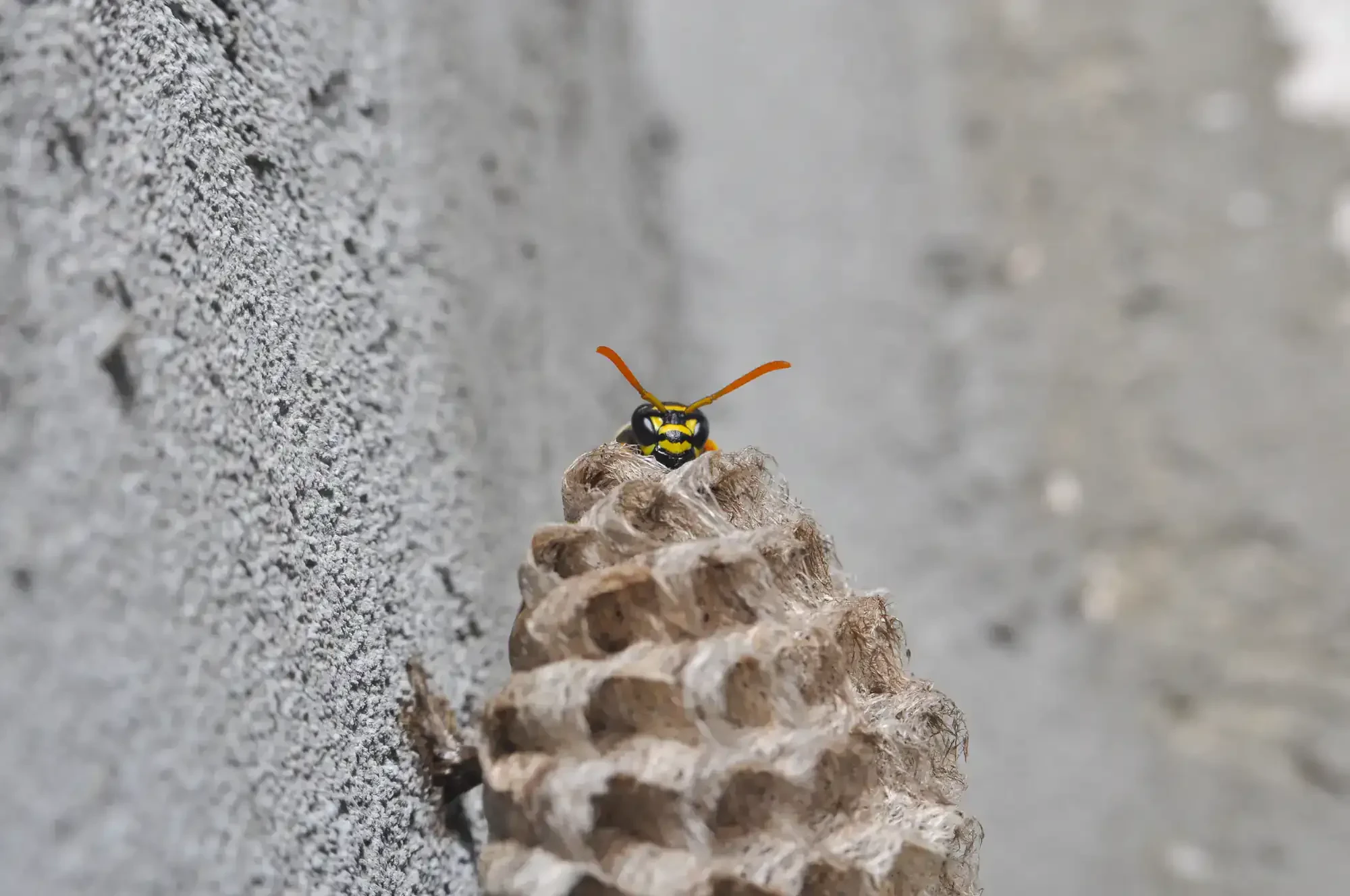
The first thing our trained technician does is identify exactly what you are dealing with. Bald-faced hornets, European hornets, and yellow jackets all behave differently and require different treatment approaches. On Thetford Center properties — where nests can be in mature trees, under aging soffits, inside outbuilding walls, or tucked into structural gaps in homes built decades ago — that identification step matters more than most people realize.
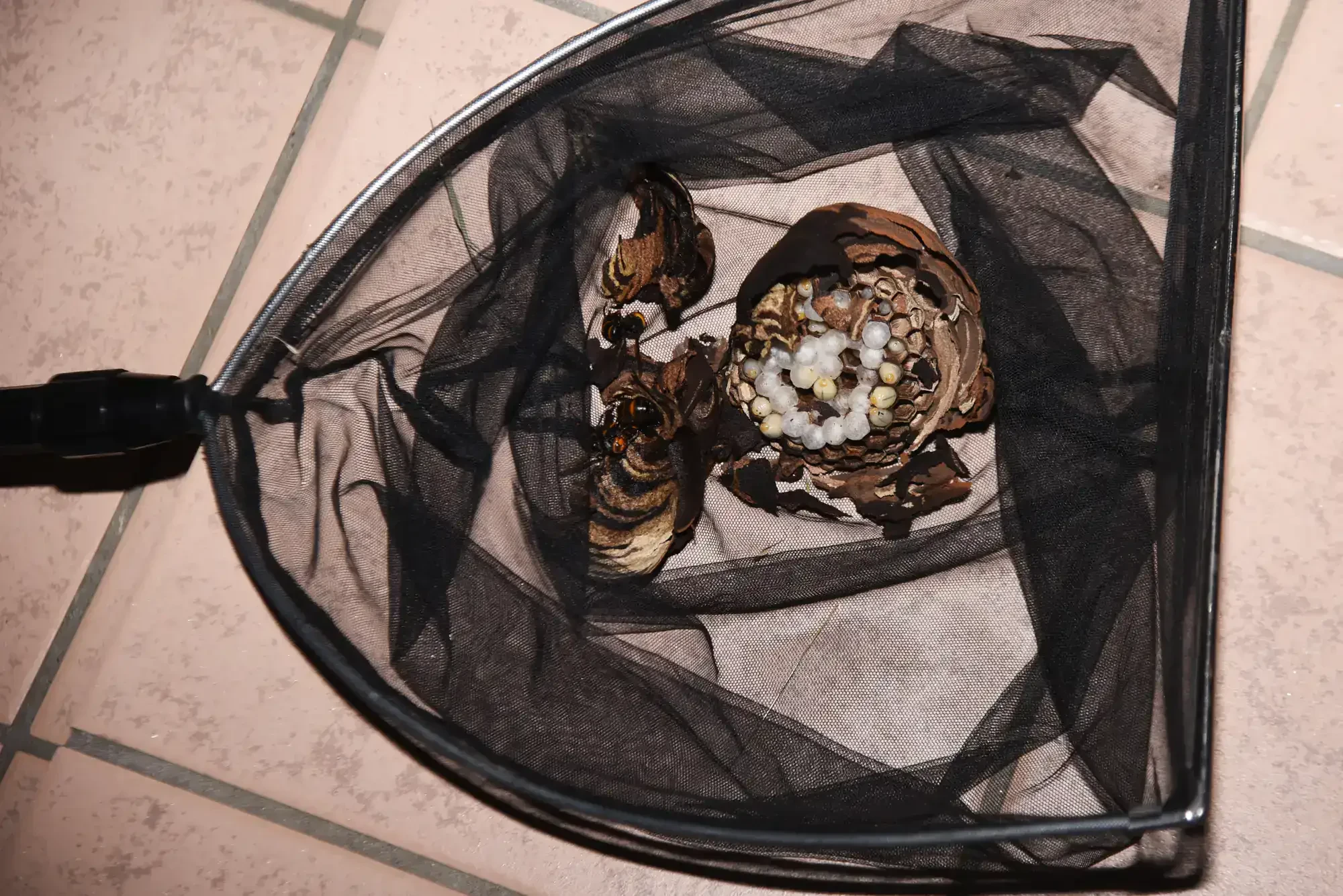
Once the species and nest location are confirmed, treatment is applied directly and precisely. For accessible nests on eaves or in trees, that typically means a targeted insecticide application at dusk when the colony is least active. For wall void nests — common in the older housing stock throughout Thetford Township — we apply a professional dust treatment through small entry points, reaching the colony where no spray can ever could. This is where DIY attempts most often fail, and where the wrong move can drive a colony deeper into your walls.
Michigan’s pest season runs from spring queen emergence through late fall, and Genesee County’s cold winters do not eliminate the problem — they just pause it. Overwintering queens return to the same locations the following spring. After treatment, your technician will walk through what to watch for and whether a follow-up visit makes sense for your specific property. If one is needed, we come back at no additional cost.
Ready to get started?
Every hornet removal service from us starts with a proper inspection — not a quick glance and a spray. On rural Thetford Center properties, that means checking the areas homeowners often miss: the back side of outbuildings, the eave lines of older homes, hollow sections of mature trees, and the structural gaps that are common in homes built between the 1950s and 1980s. If there is more than one nest, you will know before the technician leaves.
Treatment is species-specific and applied by a licensed, IPM-certified professional operating under Michigan Pesticide Application Business License #250081. That certification is not just a credential — it means the treatment chosen is targeted to the actual pest, in the actual location, without unnecessary chemical exposure to the rest of your property. For Thetford Center families with children, dogs, horses, or other animals on large rural lots, that matters.
We also offer price matching for reasonable competitor quotes — so if you have received an estimate from another area provider, bring it. Flat-rate, upfront pricing means no surprises on the invoice. And because we serve both residential and commercial customers across Genesee County, property owners with outbuildings, farm structures, or commercial operations in Thetford Township can get comprehensive coverage under one provider they already trust.
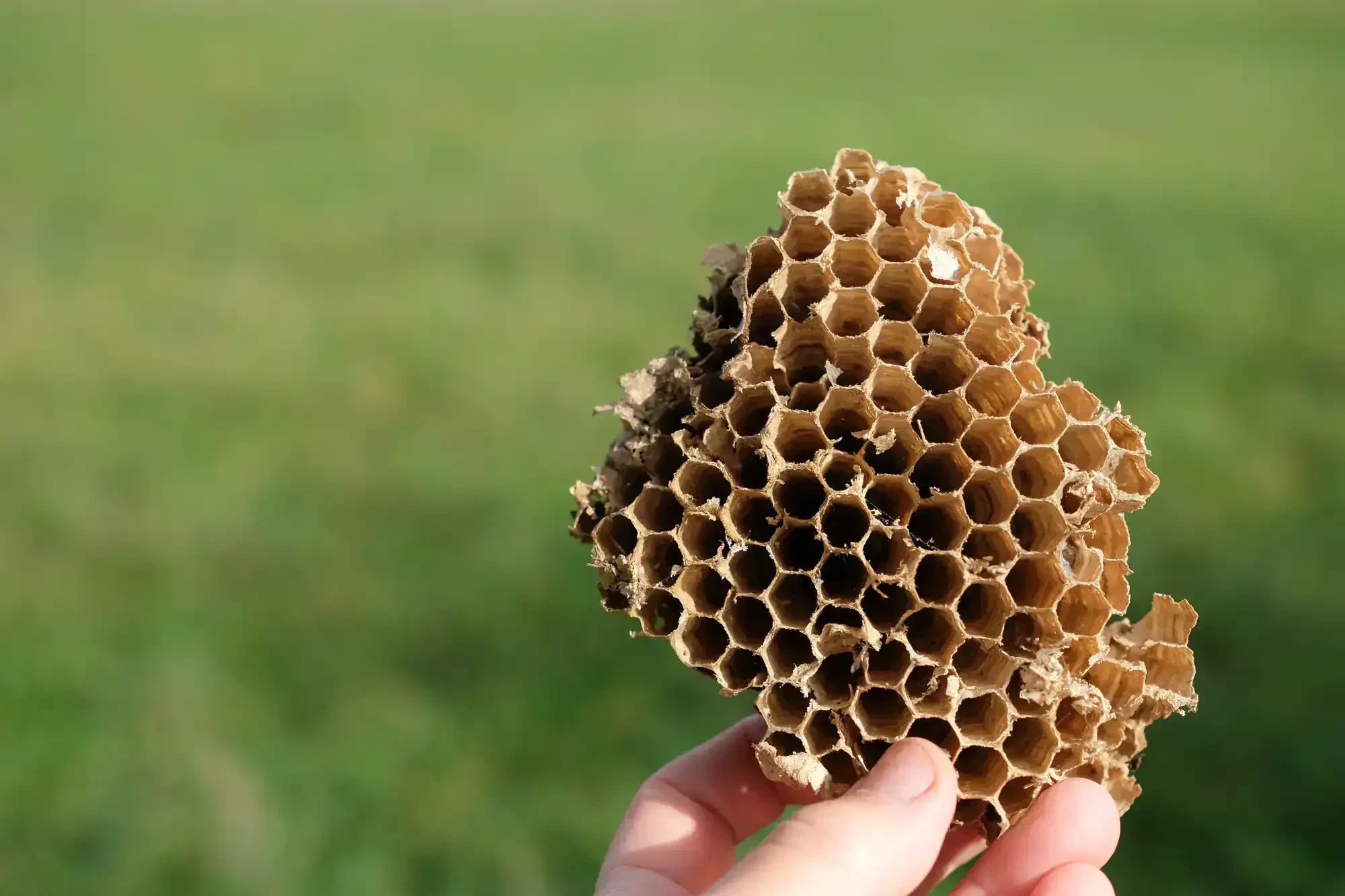
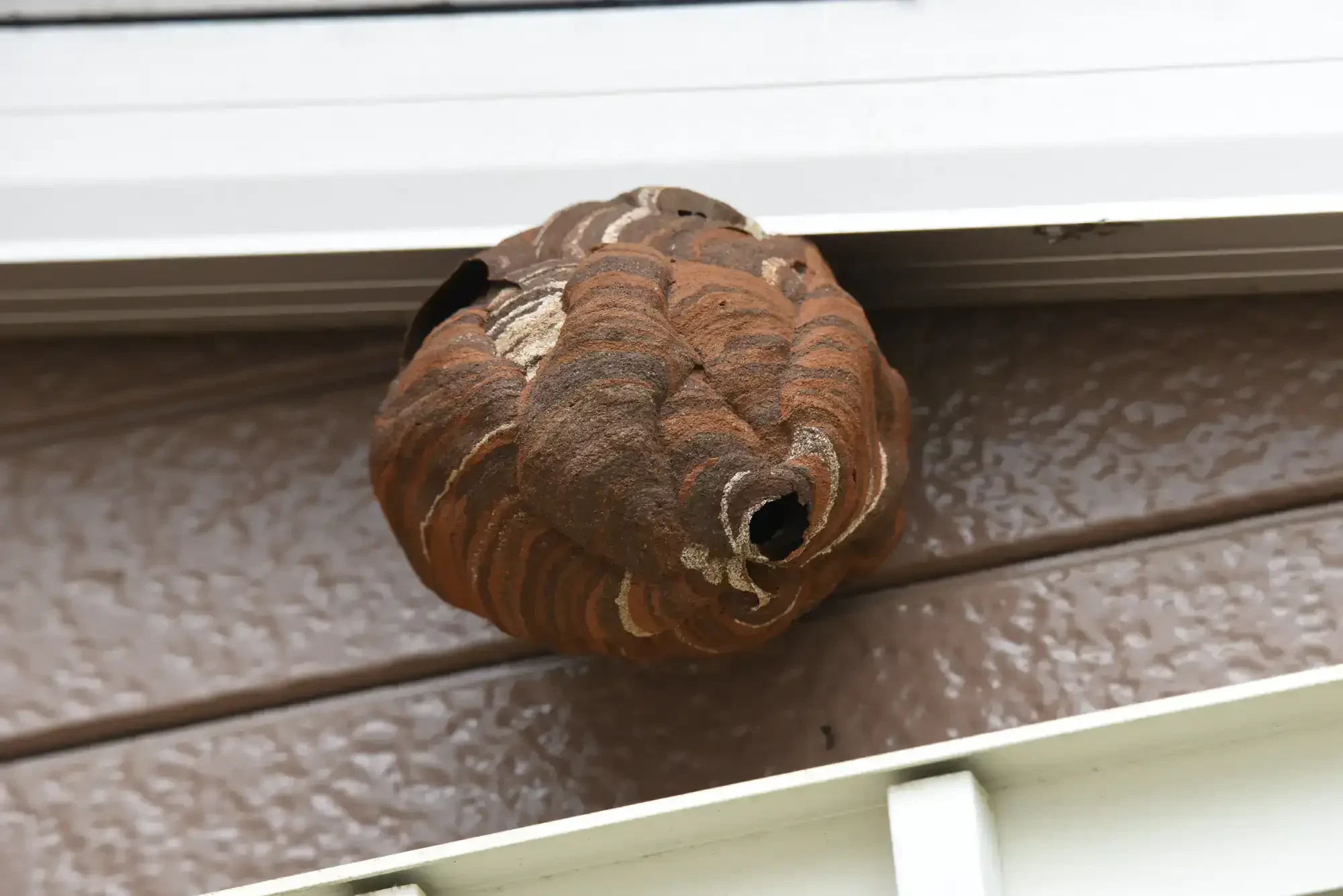
The most common stinging insect on Thetford Center properties is the bald-faced hornet. Despite the name, it is technically a yellow jacket — but it builds the large, enclosed paper nests that most people picture when they think of a hornet nest, and it is widely considered the most aggressive stinging insect in Michigan. Colonies can reach 400 to 700 workers at peak population in late summer, and unlike honey bees, bald-faced hornets can sting repeatedly without losing their stinger.
European hornets — the only true hornet species in North America — are also present in Genesee County. They are larger, measuring up to an inch and a half, and they are most active at night, which is why homeowners in Thetford Center sometimes discover them inside their homes before they ever spot a nest. On our area’s rural, wooded properties, European hornets commonly nest in hollow trees, wall voids, and attic spaces. Both species require professional treatment — the approach differs depending on which one you are dealing with and where the nest is located.
This is one of the most common calls we get. A partial spray treatment agitates the colony without eliminating it, and the hornets respond by becoming significantly more aggressive. In some cases — particularly with wall void nests, which are common in the older homes throughout Thetford Township — a failed DIY attempt can drive the colony deeper into the structure, making professional treatment more involved than it would have been originally.
The good news is that our trained technician can still handle it. The approach shifts slightly: the inspection will assess how the colony has responded, whether there is evidence of a secondary location, and what treatment method makes the most sense given the current state of the infestation. For wall void situations in older ranch-style or split-level homes, that typically means a professional dust treatment applied through targeted entry points — something that reaches the colony where spray products cannot. Do not spray again before the technician arrives. Leave the area alone and let us assess it fresh.
Most professional hornet removal jobs fall somewhere between $300 and $700, depending on the species, the size of the colony, and where the nest is located. A small, accessible nest treated early in the season is on the lower end of that range. A large bald-faced hornet nest in a mature tree, or a wall void infestation in an older home, will cost more — both because the treatment is more involved and because larger colonies require more product and time to fully eliminate.
The most important thing to understand about cost is what happens when you wait. A nest that costs $200 to $300 to treat in May can easily triple in scope by August. Thetford Center’s rural property profile — large lots, mature trees, and outbuildings that do not get checked regularly — means nests often go undetected until they are already at peak population. We offer flat-rate, upfront pricing so you know exactly what you are paying before the work begins, and price matching is available if you have received a quote from another licensed provider in the area.
Yes, and this is one of the most important things to understand about hornet control in Michigan. Colonies do not survive the winter — but fertilized queens do. They overwinter in sheltered spots like tree bark, dead wood, and structural gaps, and in the spring they emerge and begin building new nests, often in the same general areas where previous colonies were successful. On Thetford Center properties — with mature trees, old outbuildings, and aging soffits — those sheltered overwintering spots are everywhere.
Removing the nest eliminates this year’s colony. It does not guarantee a queen will not return to the same eave or tree next spring. The best way to reduce recurrence is a combination of proper nest removal, a follow-up inspection the following spring, and addressing any structural entry points that made the location attractive in the first place. Your First Choice technician can walk you through what to watch for on your specific property and whether any preventive measures make sense given what they observed during the removal.
When treatment is done correctly by a licensed, IPM-certified professional, yes — it can be done safely around children, pets, and livestock. IPM, or Integrated Pest Management, means the technician selects the most targeted treatment for the specific pest and location rather than applying broad chemical coverage across your property. For Thetford Center families with dogs, horses, chickens, or children playing on large rural lots, that targeted approach matters significantly.
Your technician will let you know how long to keep people and animals away from the treatment area — this varies depending on the product used and the location of the nest. For most exterior nest treatments, that window is relatively short. For wall void treatments in a home, the guidance will be specific to the room or area involved. We hold Michigan Pesticide Application Business License #250081 and operate under MDARD’s regulatory framework, which sets clear standards for how and where licensed applicators can use pest control products. You will get clear, honest guidance before, during, and after the job.
We offer discounts for seniors, veterans, and first responders. Thetford Township has a strong working-class community with deep roots in public service and military service, and those discounts reflect a straightforward commitment to the people in this area who have given the most. If you qualify, just mention it when you call — there is no paperwork process or hoop to jump through.
Beyond that, we offer price matching for reasonable competitor quotes. If you have already gotten an estimate from another licensed provider serving the Thetford Center area, bring it. The goal is to make sure cost is not the reason someone ends up with a less experienced technician or a company that does not know this area the way we do after 20 years in Genesee County. Flat-rate, upfront pricing applies to every job — no surprise charges, no add-ons after the fact, and no binding contracts.
Useful Links