
Hear from Our Customers

Living near the creek is one of the best things about this neighborhood. The shade, the quiet, the space — that’s why people put down roots in Hunters Creek. But that same creek corridor that makes this area feel like home is also why your mosquito problem is worse than most. Low-lying moisture, dense riparian vegetation, and shaded banks create exactly the conditions mosquitoes need to breed in large numbers. A store-bought spray doesn’t fix that. A professional seasonal barrier program does.
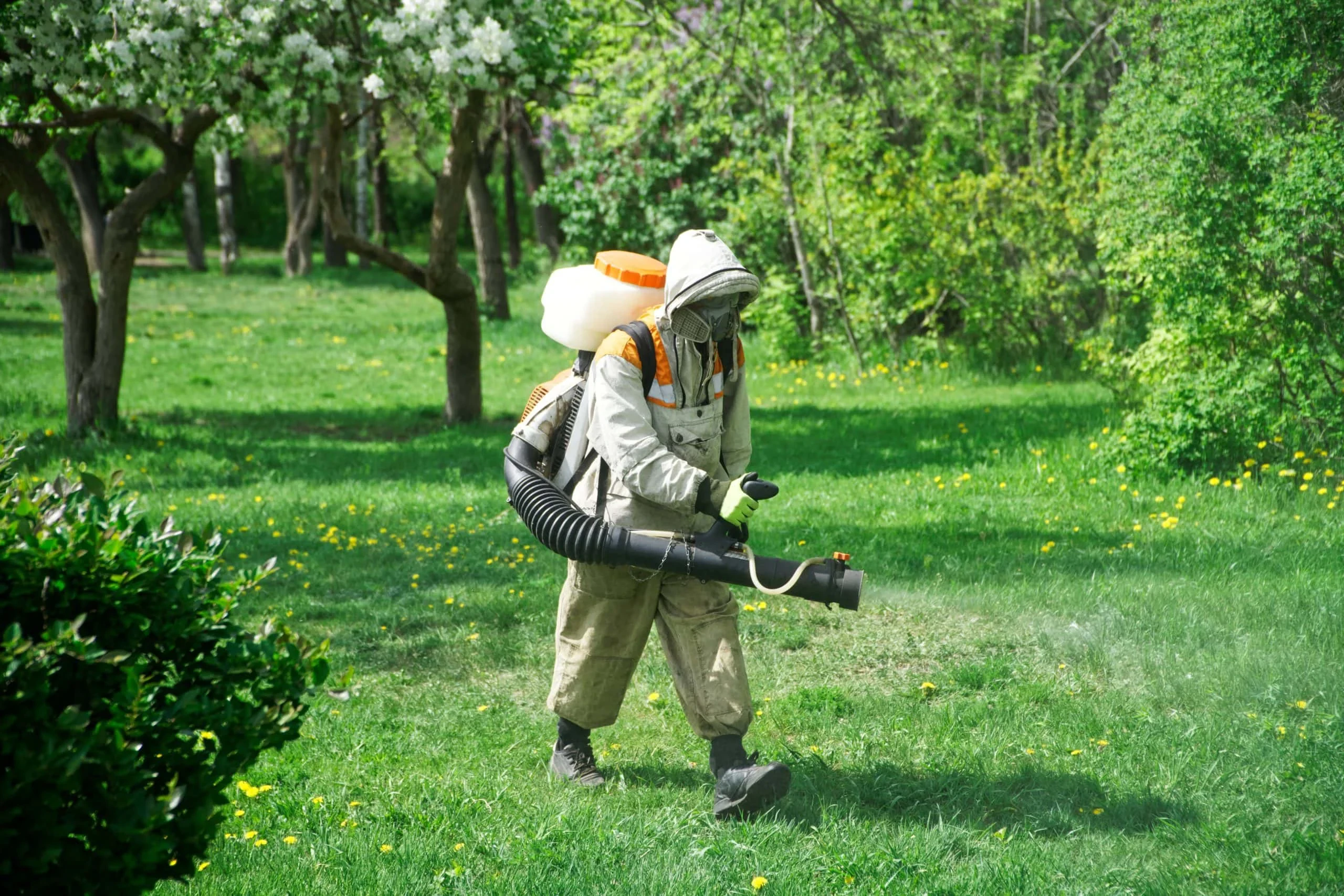
When a treatment is applied correctly, it targets adult mosquitoes resting in your trees, shrubs, and ground cover — not just the ones flying around your face at dusk. The result is up to a 90% reduction in mosquito activity on your property, and that protection holds for around 21 days per application. For a property in Hunters Creek with mature trees and creek-adjacent terrain, that’s the difference between actually using your outdoor space and retreating inside every evening.
And because mosquitoes, fleas, and ticks all live in the same shaded, wooded habitat that surrounds most homes in this area, every mosquito program we offer includes flea and tick treatment at no additional charge. One visit, three pests handled — because that’s just the right way to treat a property like yours.
We’ve been treating Michigan properties since May 31, 2005 — that’s 20 summers, 20 Lapeer County mosquito seasons, and two decades of learning exactly what it takes to keep a yard protected through a full Michigan season. Roger, who leads every aspect of our operation, brings 26 years of hands-on pest control experience to every job. That’s not a credential on a wall — it’s 26 seasons of real-world work across southeast Michigan, including properties right here in Lapeer County and Hunters Creek with the same creek corridors, wooded lots, and documented West Nile history that residents in this area deal with.
We hold Integrated Pest Management certification, Angie’s List and HomeAdvisor recognition, and all required Michigan MDARD licensing — including the specific Category 7F certification for mosquito management that not every pest control company carries. You get the same trained technician every visit, not a rotating crew. Over time, that technician learns your property — your tree line, your problem spots near the creek edge, your yard’s specific layout — and that familiarity makes the treatment more effective, not less.
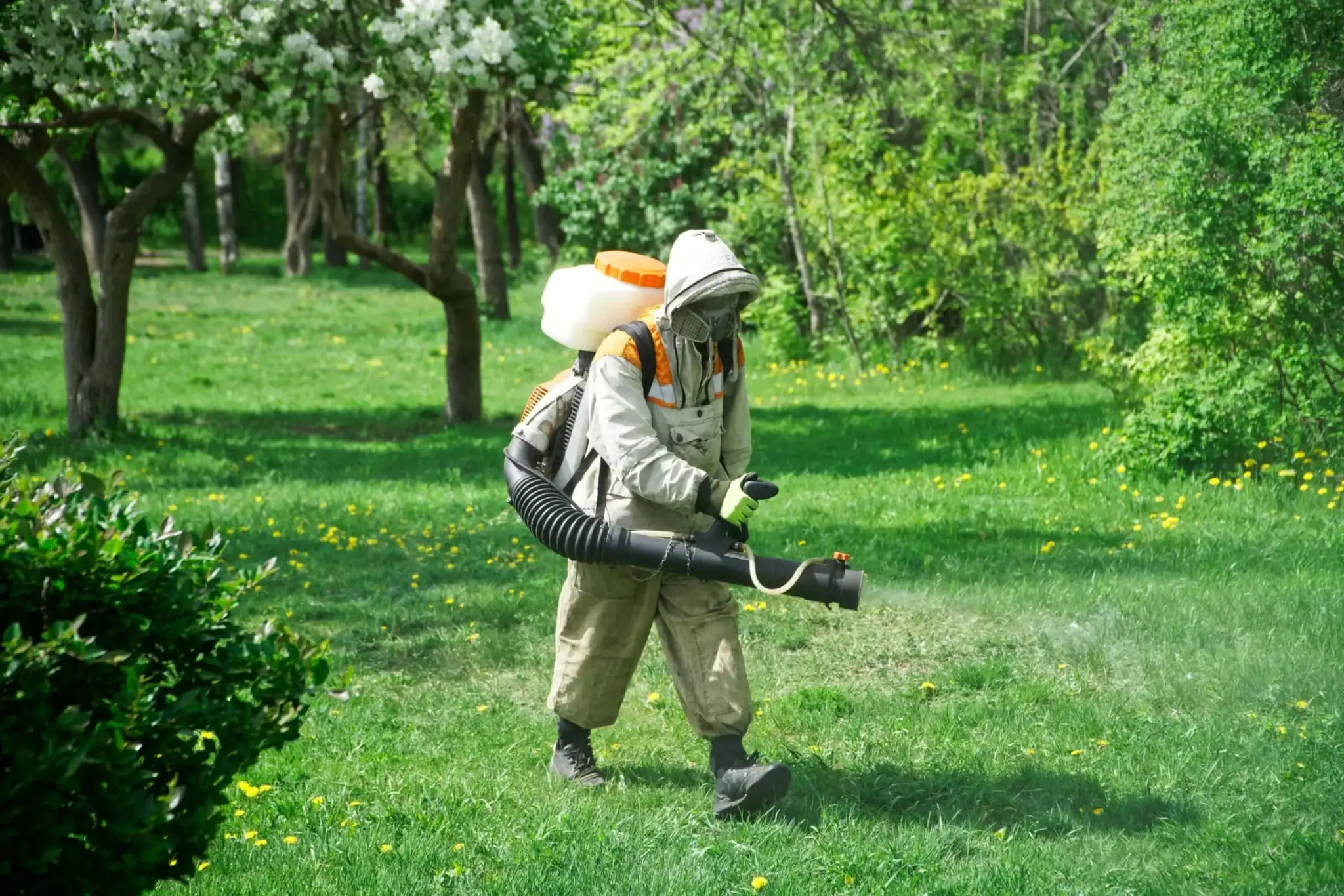
The process starts with a property assessment. Before anything gets sprayed, your technician walks the yard and identifies where mosquitoes are actually living — resting sites in dense shrubs and tree canopy, low-lying areas near the creek that stay moist, any standing water in gutters, containers, or ground depressions that could be supporting breeding. For properties in Hunters Creek, that creek-adjacent terrain and heavy shade canopy are almost always part of the picture, and we account for both in the treatment plan.
From there, a barrier spray is applied to the vegetation where adult mosquitoes rest during the day — tree lines, shrub beds, ground cover, shaded fence lines. The products we use are EPA-registered and applied using IPM principles, meaning the right amount in the right places, not a blanket chemical dump across your entire yard. That matters if you have kids, dogs, or a garden you care about.
Treatments are scheduled every 21 days throughout the active mosquito season, typically from May through September in Lapeer County. Michigan’s compressed warm season means mosquito pressure builds fast in spring and can hold into early fall, especially near the creek where ambient moisture stays consistent even during dry stretches. If a heavy rain event creates new breeding conditions between visits, we address that directly. The program is built to keep your yard protected continuously — not just right after a treatment.
Ready to get started?
Every mosquito control program we offer includes flea and tick treatment as part of the same visit, at no extra cost. This isn’t a bonus feature — it’s just how the service should work. Mosquitoes, ticks, and fleas share the same habitat: tall grass, leaf litter, wooded edges, and shaded ground cover. In a neighborhood like Hunters Creek, where large lots meet wooded surroundings and creek-side terrain, all three pests are present. Treating one without addressing the others leaves real gaps in your protection, and most companies either skip tick treatment entirely or charge separately for it. We don’t.
Lapeer County has a documented history of mosquito-borne disease activity, including West Nile virus detections and EEE-positive mosquito pools confirmed in the county across multiple surveillance seasons. For families with kids playing in the yard, retirees spending evenings on the porch, or anyone with pets that roam a wooded property, professional mosquito control in Hunters Creek is a health decision as much as a comfort one.
If you find a reasonable competitor offering a lower rate for comparable service, we’ll match it. Discounts are also available for seniors, veterans, and first responders — because the people who’ve invested the most in this community deserve to enjoy their backyards without compromise.
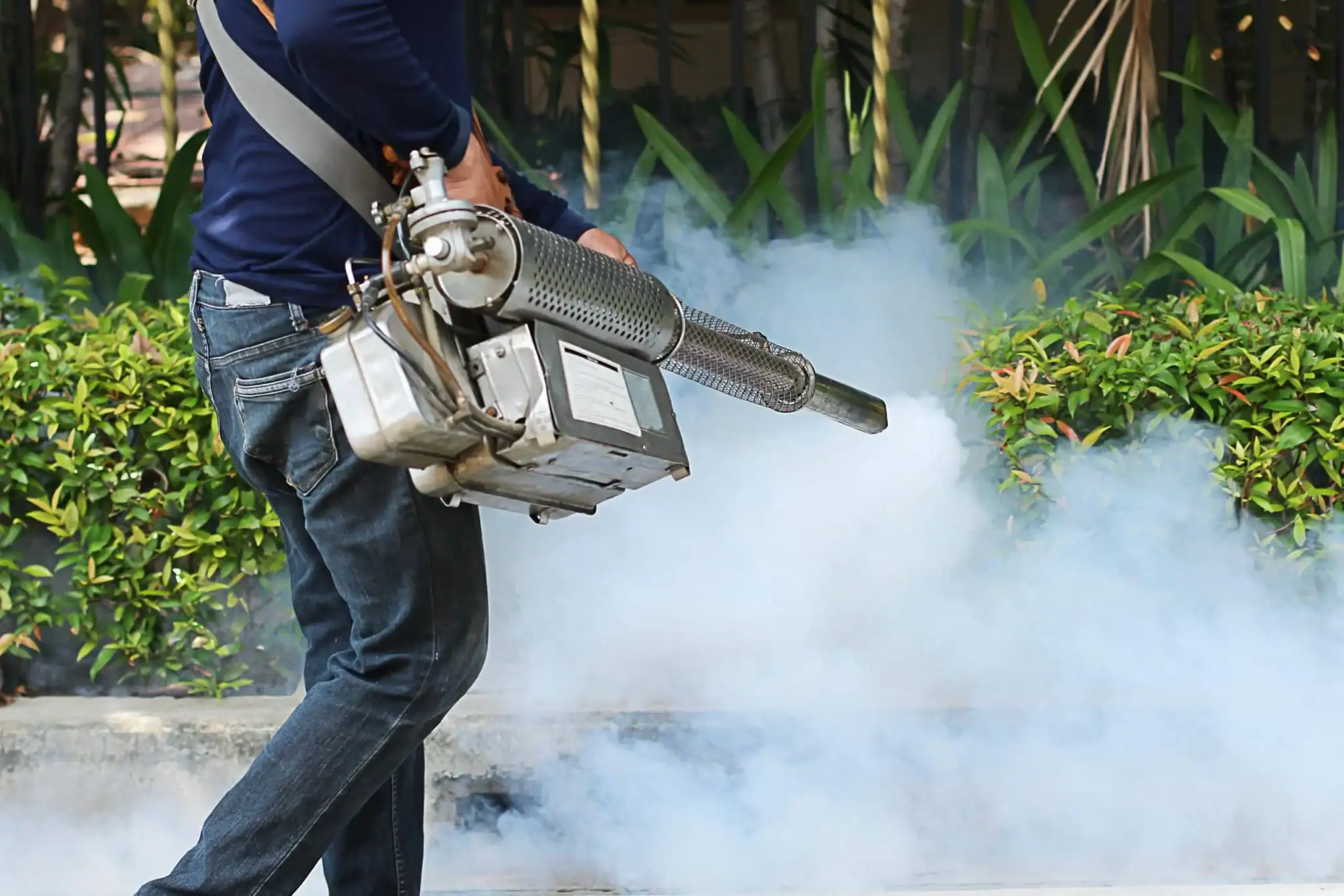
Yes — and creek-adjacent properties are exactly where professional treatment makes the biggest difference. The issue with living near Hunters Creek, the waterway, is that the conditions driving your mosquito problem are persistent. The shaded banks, slow-moving or pooling water, and dense riparian vegetation create a continuous breeding environment that replenishes itself. A DIY spray can knock back what’s already flying around your yard, but it doesn’t address the resting sites in your tree canopy or the breeding activity happening along the creek corridor.
Our professional barrier program targets both. Your technician applies treatment to the vegetation where adult mosquitoes rest during the day — tree lines, shrub beds, ground cover — while also identifying and addressing any standing water on your property that’s contributing to breeding. The result is a meaningful, sustained reduction in mosquito activity, not just a short-term knockdown. For creek-adjacent properties in Lapeer County, this approach is the only one that holds across a full Michigan season.
A complete seasonal program typically runs five to six treatments, scheduled every 21 days from May through September. That schedule is built around how long a single barrier treatment stays effective — roughly three weeks — and Michigan’s active mosquito season, which runs from late spring through early fall in Lapeer County.
The timing matters here because Michigan’s warm season is compressed. Mosquito populations build quickly once temperatures rise and standing water from spring snowmelt and rain events is available. Near Hunters Creek, that moisture window extends longer than in drier, more open neighborhoods, which means pressure can persist later into the season than you might expect. Starting your program in May intercepts the first generation before populations have a chance to peak, and maintaining consistent 21-day intervals keeps protection continuous through the summer. Skipping treatments or starting late typically means playing catch-up for the rest of the season.
The products we use are EPA-registered and applied using Integrated Pest Management principles, which means they’re targeted to where mosquitoes actually live — not broadcast across every surface of your yard. Once the treatment has dried, typically within 30 to 45 minutes under normal Michigan summer conditions, the treated areas are safe for children and pets to re-enter.
That said, you should keep kids and animals out of the yard during the application itself and for the drying window immediately after. If you have specific concerns — a vegetable garden, a koi pond, a dog that rolls in the shrubs — mention it when you schedule. Your technician will note those areas and adjust the application accordingly. IPM-based treatment is about precision, not volume, and a good technician accounts for the specific layout of your property before we start.
Because mosquitoes, fleas, and ticks all live in the same places. In a neighborhood like Hunters Creek, with large wooded lots, creek-adjacent terrain, and mature tree canopy, the habitat that produces your mosquito problem is the same habitat where ticks and fleas thrive. Treating for mosquitoes while ignoring ticks leaves a real gap — especially for families with kids or dogs spending time in the yard.
Most companies either skip tick treatment entirely or charge for it as a separate service. We include it in every mosquito program because it’s the complete approach, not an upsell opportunity. You’re already treating the vegetation, the ground cover, and the shaded edges where all three pests rest and breed. Handling all three in one visit is more effective, more efficient, and more honest about what a property in this area actually needs. Lapeer County has documented tick activity, and with the wooded surroundings common to most Hunters Creek properties, that’s not a risk worth leaving unaddressed.
Lapeer County has confirmed activity for both West Nile virus and Eastern Equine Encephalitis. The first West Nile virus detection in Michigan in 2020 was reported in a captive hawk from Lapeer County, and WNV-positive mosquito pools have been confirmed in the county across multiple surveillance seasons. Lapeer County was also included in the state’s aerial EEE treatment program, which covered more than 557,000 acres across 14 Michigan counties. A horse in Lapeer County died from West Nile virus, and a second horse in the county died from a mosquito-borne disease — both documented by local health officials.
These aren’t distant or abstract risks for Hunters Creek residents. If you spend time outdoors in the evening, have kids playing in the yard, or own animals that are outside regularly, the disease history in this county is a legitimate reason to take professional mosquito control seriously. Reducing the mosquito population on your property by up to 90% through a seasonal barrier program is one of the most direct ways to lower your household’s exposure risk.
Yes. We offer discounts for seniors, veterans, and first responders. Hunters Creek has one of the higher retirement-age populations in the Lapeer County area — it consistently ranks as one of Michigan’s better neighborhoods for retirement living — and a significant number of residents in the community are on fixed incomes or have served in the military or public safety roles. The discounts exist because those residents deserve access to quality pest control without having to absorb a premium price, not as a promotional gimmick.
If you’re a senior homeowner dealing with a mosquito problem that’s keeping you off your porch, a veteran with a large wooded lot near the creek, or a first responder who doesn’t have time to deal with repeated DIY failures, call and ask about what’s available. We also offer price matching against reasonable competitor rates, so if you’ve already gotten a quote from another company in the Lapeer area, bring it up — there’s no reason cost should be the thing standing between you and a yard you can actually use.
Useful Links