
Hear from Our Customers

You didn’t buy a waterfront home in Seven Harbors to spend summer indoors. The canals, the inlets, the lake margins along White Lake and Duck Lake — they’re beautiful, and they’re also a continuous mosquito breeding system that no citronella torch is going to fix. Our barrier treatment changes that equation in a real, measurable way. Most customers see up to 90% reduction in mosquito activity on their property, and that number holds through the full Michigan season when treatments are applied consistently every 21 days.
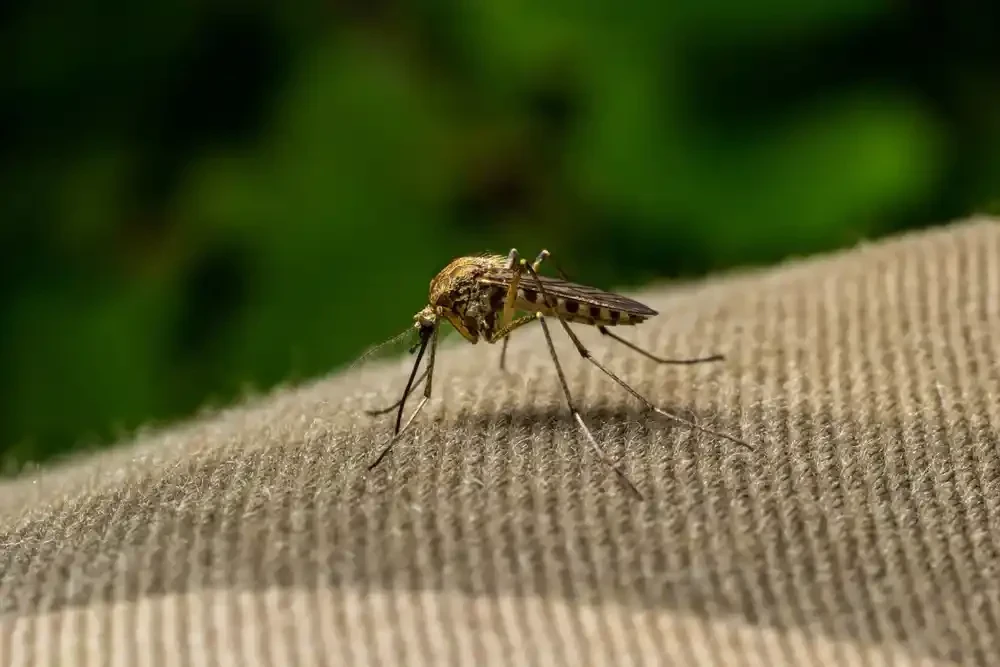
What makes Seven Harbors different from a typical suburban yard is the source. The mosquitoes aren’t just coming from a forgotten bucket or a low spot in the lawn. They’re coming off the water — the canal edges, the shaded dock areas, the organic matter that builds up along the shoreline. The Highland State Recreation Area’s 5,900 acres of marshes and wetlands sit right on the edge of this community, which means reinfestation pressure is constant. A properly applied barrier treatment creates a perimeter that intercepts that pressure before it reaches your patio.
And it’s not just mosquitoes. The same dense shoreline vegetation and wooded lots that feed the mosquito population also harbor ticks. That’s why every mosquito program we offer includes flea and tick treatment at no extra charge — because in Seven Harbors, where outdoor living defines the season, the threats don’t arrive one at a time.
We’ve been operating in Michigan since May 31, 2005 — twenty mosquito seasons, twenty summers of West Nile surveillance in Oakland County, and twenty years of learning what actually works in communities like Seven Harbors. Roger Chinault, who leads our company, brings 26 years of hands-on pest experience to every job. That’s not a marketing number. That’s someone who has worked through heavy rain years, WNV spikes, and the specific challenges that come with lakefront pest pressure in western Oakland County.
What you won’t get with us is a rotating cast of seasonal workers showing up to your Seven Harbors property every few weeks. The same trained technician comes to your home, every visit. They learn your yard — where the canal edges stay damp longest, where the shaded dock areas hold moisture into August, where the mosquitoes are worst on a still evening. That familiarity produces better results than starting over with a new face every treatment cycle.
With a 4.7-star rating from over 363 verified customers, Angie’s List and HomeAdvisor recognition, and IPM certification, our track record speaks clearly.
It starts with a property assessment. Before anything gets applied, our technician walks the property to identify where mosquitoes are breeding and resting — canal edges, dense vegetation along the shoreline, shaded areas under docks and decks, low spots in the yard that hold water after rain. In Seven Harbors, that assessment takes the water into account in a way a generic suburban treatment plan wouldn’t. The canal and inlet system that defines this community creates breeding conditions that need to be understood before they can be treated effectively.
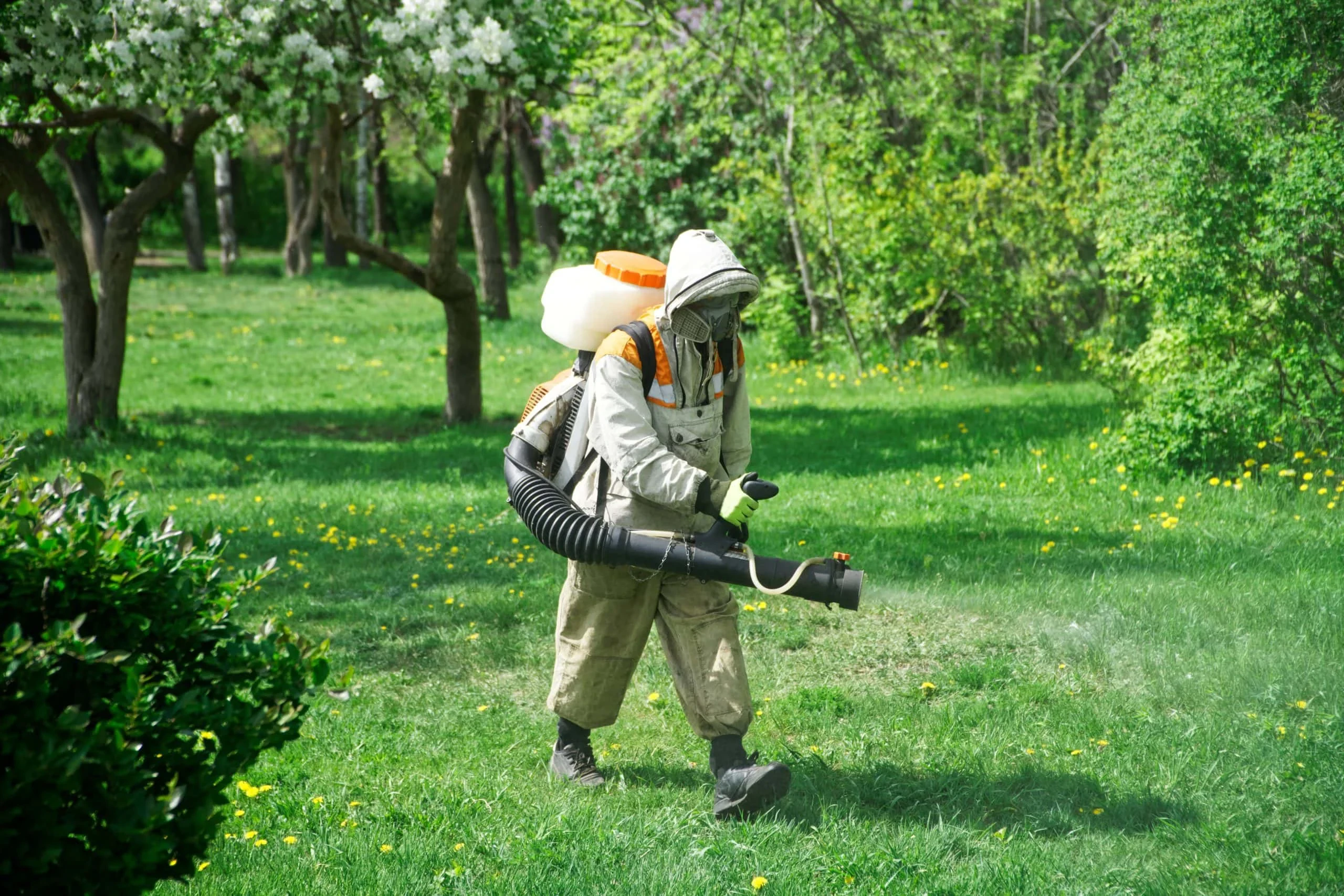
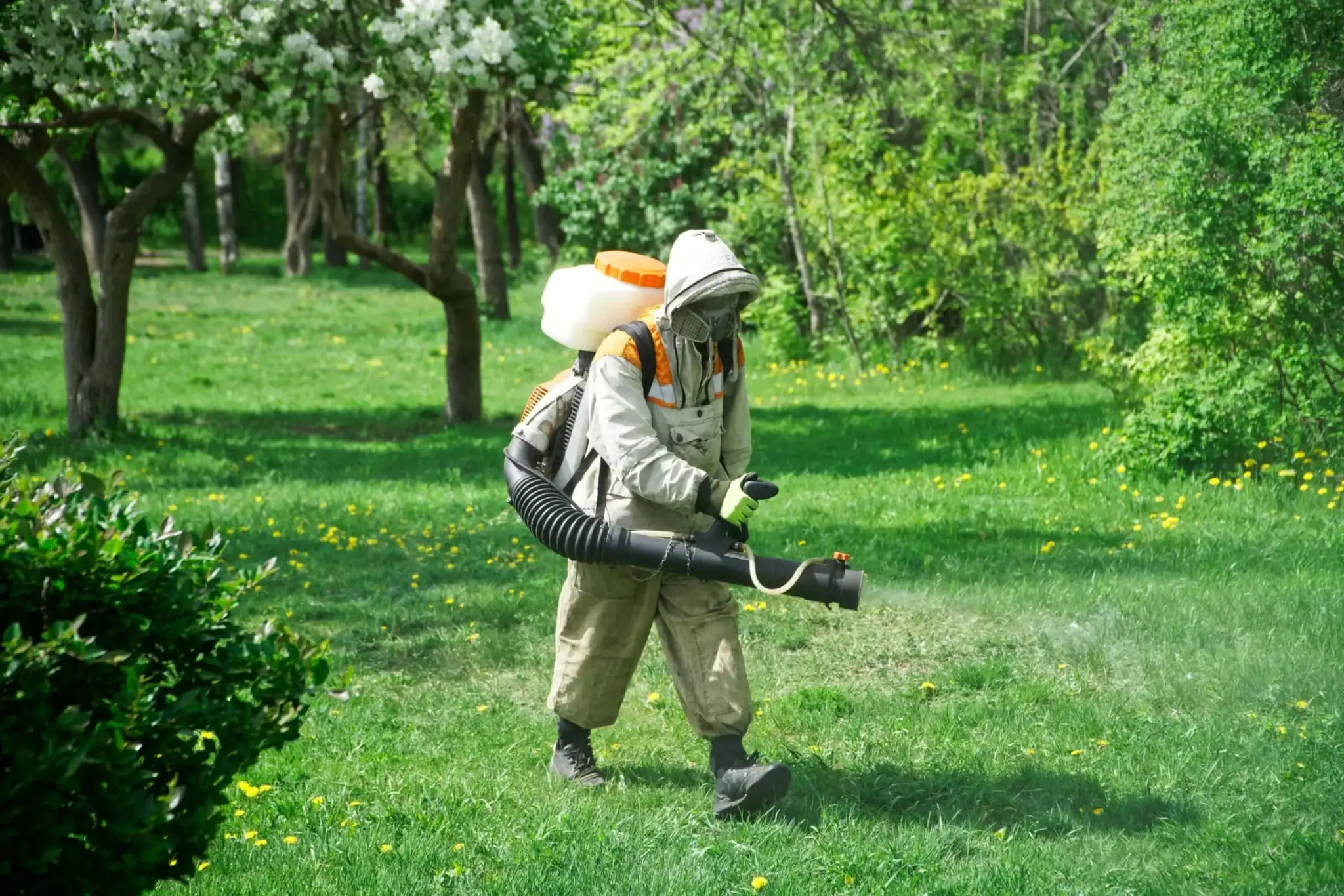
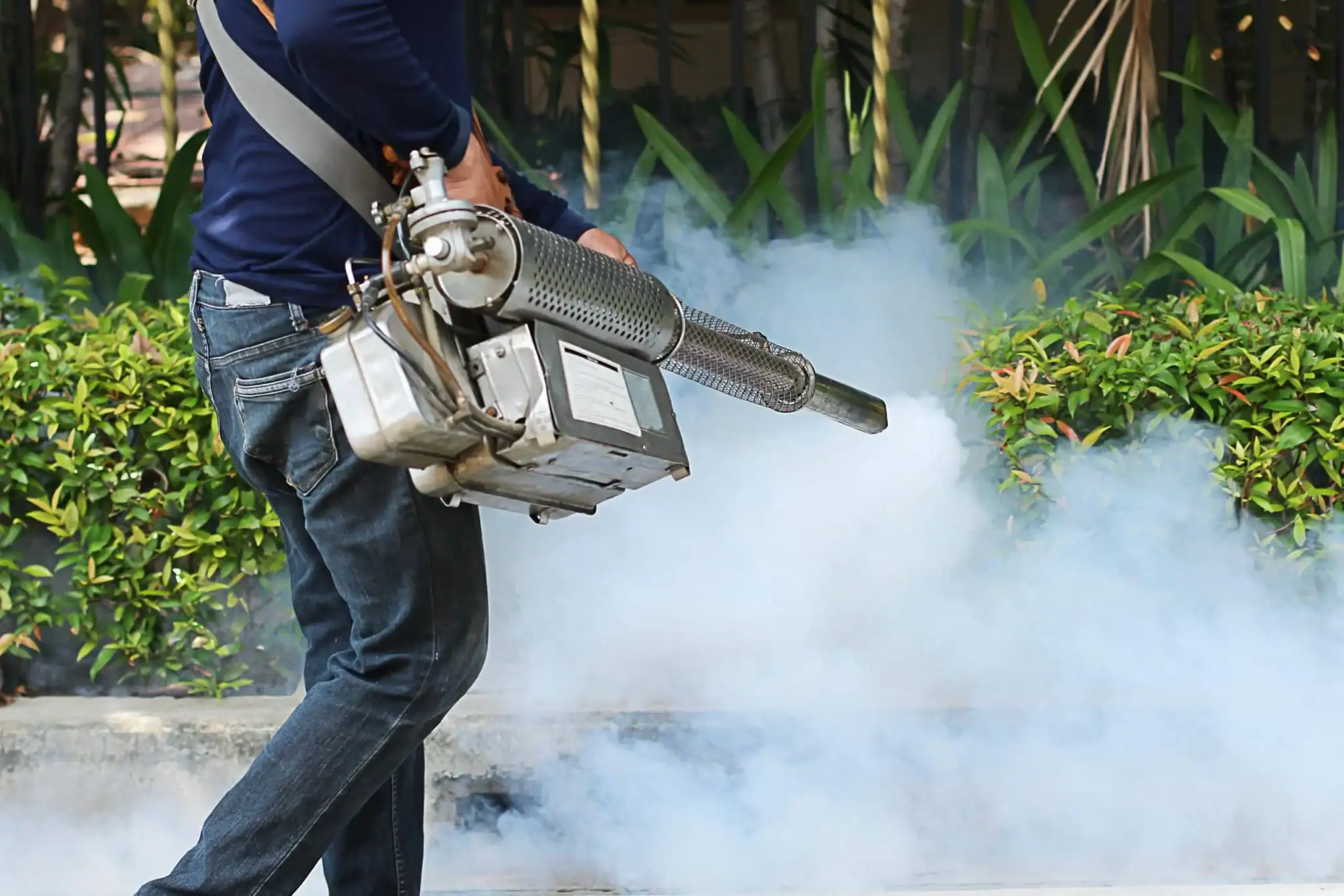
From there, a barrier treatment is applied to the areas where mosquitoes rest during the day — the underside of leaves, shrubs, tall grass, and the perimeter of the property. Michigan’s mosquito season typically runs from late April or early May through September, with peak pressure in June, July, and August. Treatments are applied on a 21-day cycle to maintain that up-to-90% reduction throughout the active season. Because Seven Harbors sits in a high-density water environment, consistent reapplication matters more here than it does in a drier inland community.
Each visit includes flea and tick treatment at no additional charge. Michigan applicators working in mosquito management hold a Category 7F: Mosquito Management certification from MDARD — a specific credential that not every company operating in the Highland Township area carries. We do.
Ready to get started?
Our mosquito program covers your full property perimeter with EPA-registered products applied by an IPM-certified technician. IPM — Integrated Pest Management — means the approach is science-based and targeted. Products go where mosquitoes actually live and breed, not blanketed across the yard indiscriminately. For Seven Harbors homeowners who care about White Lake and Duck Lake water quality, that distinction matters. The treatment is designed to protect your outdoor living space without creating environmental concerns for the waterfront you’re trying to enjoy.
Every program includes flea and tick treatment at no extra charge. That’s not a promotional add-on — it’s the right approach for a community where wooded lots, shoreline vegetation, and proximity to the Highland State Recreation Area create tick habitat right alongside mosquito habitat. Most competitors either ignore ticks or charge separately. We include it because it should be.
If a reasonable competitor offers a lower price for comparable service, we’ll match it. Discounts are available for seniors, veterans, and first responders — because the people who built and protected this community deserve to use their backyards and lakefronts without getting eaten alive. The same technician comes to your Seven Harbors property every visit, every season, so nothing gets missed and nothing has to be re-explained.
It does, but the approach has to account for what makes a lakefront property different from a standard suburban yard. In Seven Harbors, mosquitoes aren’t just breeding in a neglected corner of the lawn — they’re coming off the canal edges, the lake margins of White Lake and Duck Lake, and the wetland areas adjacent to the Highland State Recreation Area. No single treatment eliminates the source entirely, because the source is the water itself.
What our barrier treatment does is create a treated perimeter around your property that intercepts mosquitoes before they reach your living space. Applied every 21 days through Michigan’s active season, that barrier maintains up to 90% reduction in mosquito activity on the treated property. It doesn’t stop every mosquito from flying in from the canal — but it dramatically reduces what survives long enough to ruin your evening on the dock. Consistency is the key factor in a high-pressure environment like Seven Harbors, which is why a seasonal program outperforms one-time treatments by a wide margin.
This is one of the most common questions from homeowners in Seven Harbors, and it’s the right one to ask. The short answer is yes — when applied by an IPM-certified professional using EPA-registered products, mosquito barrier treatments are designed to be targeted, not broadcast. Products are applied to the areas where mosquitoes rest and breed: the underside of leaves, shrubs, tall grass, and the perimeter of the property. They are not sprayed directly into water or onto open lake surfaces.
We hold Integrated Pest Management certification, which means the approach is built around using the right product, in the right place, at the right time — and using the minimum amount necessary to achieve results. That’s especially relevant for a waterfront community like Seven Harbors, where residents have a real stake in the health of White Lake and Duck Lake. Michigan also maintains a Pesticide Notification Registry for sensitive residents near application sites, and all products we use meet MDARD and EPA approval requirements for residential mosquito management.
The mosquito season in Oakland County typically opens in late April or early May, with populations ramping up quickly as temperatures stabilize and standing water from spring rains creates breeding conditions. In Seven Harbors specifically, the canal system and lake margins mean that standing water is present continuously — unlike purely inland communities where breeding habitat may dry up between rain events. That makes the early-season window more important here than in drier areas.
Starting your first treatment in late April or early May gives the barrier time to establish before peak pressure hits in June. By the time July arrives and the canals are warm and the evenings are still, you want a program that’s already been running for six to eight weeks — not one you’re just starting. Highland Township distributed free mosquito repellent to residents in April 2024 specifically because of early-season West Nile virus concerns in Oakland County. That’s not a coincidence. The season starts earlier than most people expect, and getting ahead of it is always easier than trying to catch up.
Oakland County is in Michigan’s historically highest-activity zone for West Nile virus, alongside Macomb and Wayne counties. Michigan has seen WNV activity every summer since 2002, and Oakland County has been among the most consistently affected counties in the state. In 2024, the Oakland County Health Division confirmed WNV in three birds and the county’s first positive mosquito pool of the season. In 2023, Oakland County mosquito pools tested positive for WNV as part of a statewide detection across 98 pools.
Also in 2023, two Michigan residents — one from Oakland County and one from Macomb County — were confirmed as the state’s first human cases of Jamestown Canyon virus that year, another mosquito-borne illness. These are not national statistics pulled from a press release. They are documented, county-level cases in the specific county where Seven Harbors is located. The mosquitoes on your dock and in your yard are the same species that carry these viruses. Professional mosquito control in Seven Harbors, MI is a health decision as much as a comfort one.
The most direct difference is who shows up and how long they’ve been doing it. National franchise operations serving Highland Township cycle through seasonal workers, and their technicians may have little familiarity with the specific conditions of a canal-access community like Seven Harbors. We send the same trained technician to your property every visit, every season. They learn your yard — the canal edges, the shaded dock areas, the spots that hold moisture longest — and that knowledge compounds over time into better results.
We’ve been operating in Michigan since 2005. Roger Chinault, who leads our company, has 26 years of hands-on pest experience in this state. That’s not a franchise talking point — it’s a person who has worked through 26 Michigan mosquito seasons, including the heavy rain years and the WNV spikes that hit Oakland County hardest. We also hold IPM certification and Michigan’s Category 7F: Mosquito Management credential, carry a 4.7-star rating from over 363 verified customers, and include flea and tick treatment in every mosquito program at no extra charge — something most franchise competitors charge separately for, if they offer it at all.
Yes. We offer discounts for seniors, veterans, and first responders. Highland Township has a strong community identity — it’s home to people who have served, contributed, and put down real roots here. Recognizing that with a concrete discount on service is a straightforward way to reflect what we actually value, not just what we say we value.
If you’re comparing prices and find a reasonable competitor offering a lower rate for comparable service, we’ll also match it. The goal isn’t to be the cheapest option in the Highland area — it’s to be the most dependable one, with a track record and a process that justify the investment. Between the price-match guarantee, the senior and veteran discounts, and the flea-and-tick inclusion at no extra charge, most Seven Harbors homeowners find the total value of our program compares favorably to anything else available in Oakland County. Reach out for a quote and see where it lands for your specific property.
Useful Links