
Hear from Our Customers
There’s a window every summer in Birch Run where a wasp nest goes from a minor annoyance to a genuine hazard. By August, yellow jacket colonies in Saginaw County can hold thousands of workers — and they’re not hunting insects anymore. They’re scavenging. That means your backyard BBQ, your kids’ play area, your dog running through the grass — all of it becomes contested territory. That’s not an exaggeration. That’s just what late-season yellow jackets do.
For homeowners on larger lots in Birch Run Township and the surrounding agricultural areas of Taymouth Township, the risk is higher than most people realize. Undisturbed ground, outbuildings, wooden fences, overgrown perimeters — these are exactly the conditions ground-nesting yellow jackets look for. You don’t always see the nest until you’ve already walked over it.
Professional wasp nest removal doesn’t just eliminate the immediate colony. We remove the nest structure, seal the entry point, and break the cycle that brings a new queen back to the same spot next spring. That’s the difference between a one-time fix and actually solving the problem.
We founded First Choice Pest Control on May 31, 2005 — which means this year marks 20 years of protecting Michigan homes and businesses from exactly this kind of problem. Our company is led by Roger Chinault, who brings 26 years of hands-on pest control experience to every service call. This isn’t a franchise with a rotating crew. It’s a family-owned operation where you get the same technician year after year — someone who already knows your Birch Run property, your outbuildings, and your situation before we even pull into the driveway.
Birch Run sits right along the I-75 corridor that our technicians travel regularly, serving communities across Genesee and Saginaw Counties. We’re fully licensed through Michigan’s Department of Agriculture and Rural Development, award-recognized through Angie’s List and HomeAdvisor, and trained in Integrated Pest Management — meaning treatments are targeted and applied where they’re actually needed.
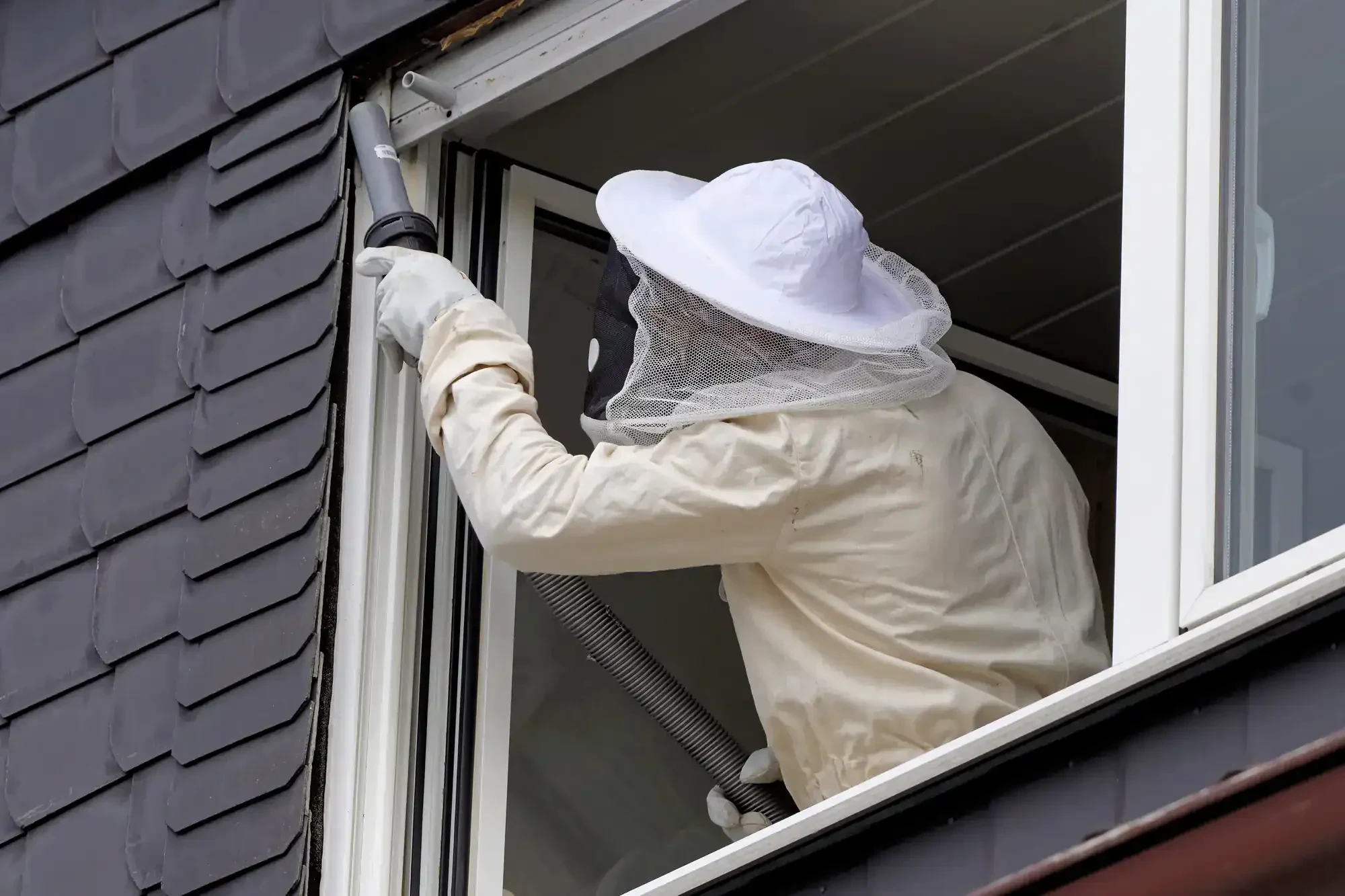
It starts with an inspection. Our technician walks your property and identifies what species you’re dealing with, where the nest is located, how accessible it is, and whether there are secondary nesting sites nearby. In Birch Run and the surrounding township areas, that often means checking more than just the eaves — ground nests near outbuildings, wall voids in older structures, and activity near deck railings are all common findings that get missed when someone’s just doing a quick visual scan.
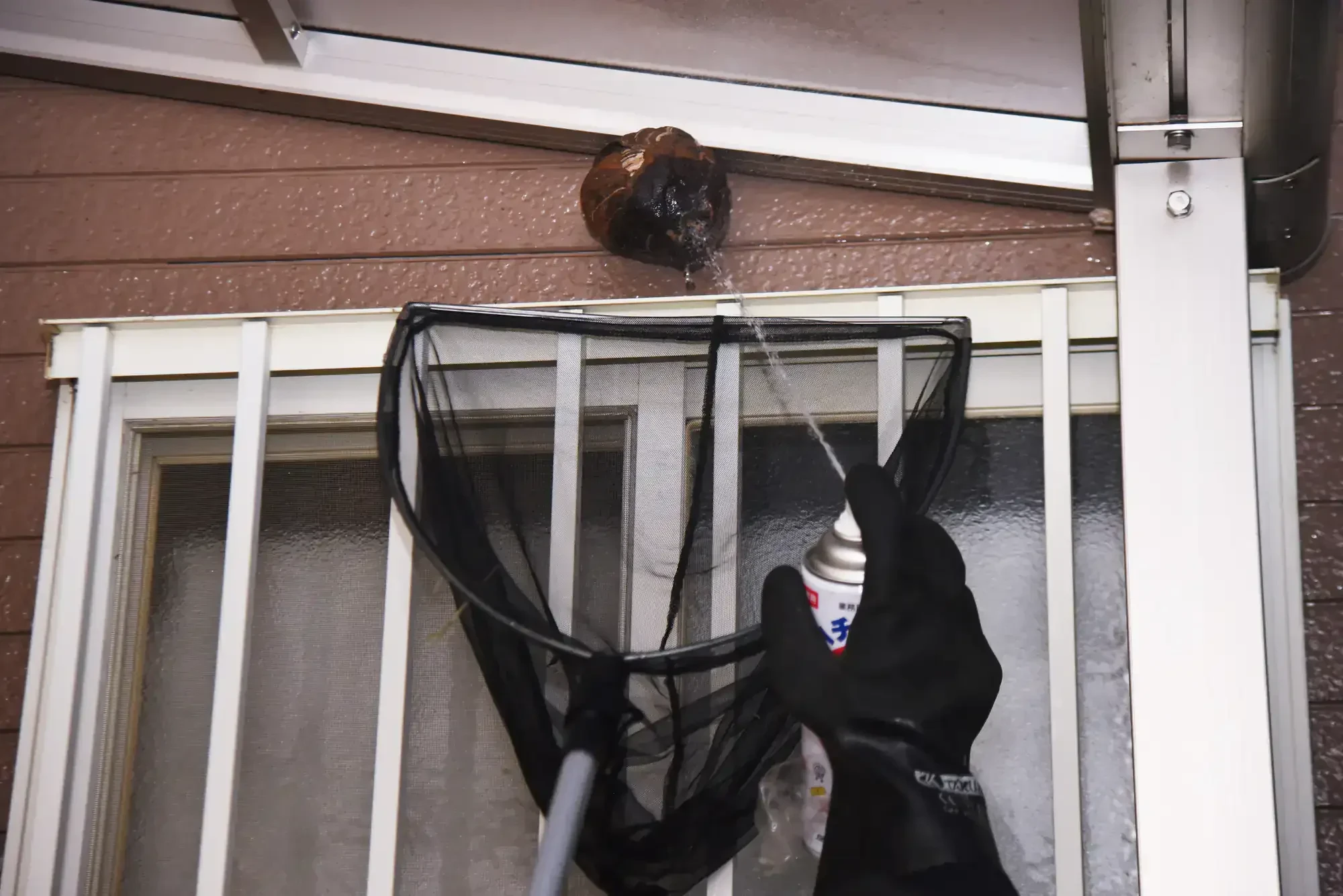
From there, we apply treatment directly to the nest using targeted methods consistent with Integrated Pest Management — not a broad chemical sweep across your yard. Timing matters here. In Saginaw County, the safest and most effective treatment window is early morning or evening, when foragers are back at the nest and the colony is contained. Our technician knows this and plans accordingly.
Once the colony is eliminated, we remove the nest structure and seal the entry point. That last step is critical — Michigan State University Extension specifically warns against sealing a nest opening before treatment, because it traps wasps inside wall voids where they can push through into living spaces. We do this in the right order, every time. And if wasps return after treatment, so does your technician — that’s our callback guarantee.
Ready to get started?
When you schedule wasp nest removal in Birch Run, MI with us, the service covers the full scope — inspection, targeted treatment, nest removal after the colony is eliminated, and entry point sealing to prevent the same location from being used again next season. There are no hidden steps that cost extra and no vague “we’ll spray and see” approach.
For Birch Run homeowners, that often means addressing the specific conditions common to this area — ground nests in the undisturbed soil of rural residential lots, paper wasp colonies under the eaves of detached garages and outbuildings, and occasionally wall-void infestations in older homes where gaps in exterior siding give queens an easy entry point in early spring. Each situation gets assessed individually, not handled with a one-size-fits-all spray.
We also offer price matching for reasonable competitors’ rates, so you’re not choosing between quality and affordability. Discounts are available for senior citizens, military veterans, and first responders — and in a community with an active VFW Auxiliary Post 7542, that’s not a footnote. There are no binding contracts. You’re not locked into anything. The work earns the next call, or it doesn’t.
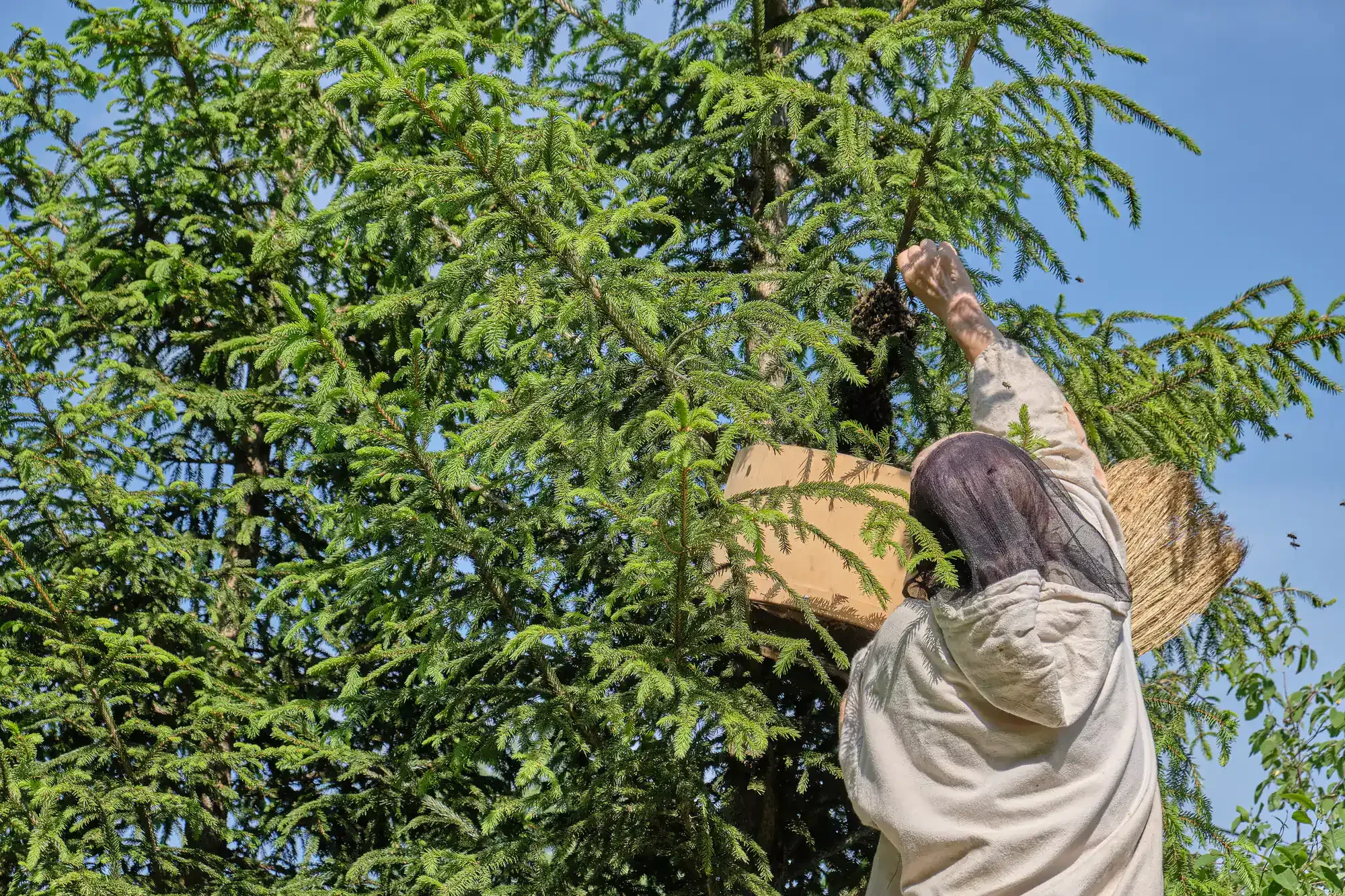
The honest answer is that the urgency depends on where the nest is and what time of year it is — but in Birch Run, August is the window where most people go from “I’ll deal with it” to “I need someone here now.” That’s when yellow jacket colonies across Saginaw County hit their peak population, sometimes reaching 5,000 to 15,000 workers, and when their behavior shifts from hunting insects to scavenging anything sweet or protein-rich near human activity.
If the nest is near a door, a play area, a deck, or anywhere your family or pets spend time, that’s an urgent situation regardless of the month. If it’s in a low-traffic corner of your Birch Run yard and it’s still June, you have a little more time — but not as much as most people think. Colonies grow fast. A nest that’s manageable in early summer is a different situation entirely by late July.
Ground nests — almost always yellow jackets in this part of Michigan — are easy to miss until you’ve already disturbed them. The most common sign is a steady stream of wasps flying in and out of a small hole in the ground, usually near the base of a structure, along a fence line, or in an area of undisturbed grass or soil. On the larger rural and semi-rural lots common in Birch Run Township and Taymouth Township, these nests often go undetected until someone walks over them while mowing.
If you notice wasps flying low to the ground in a specific area, or if you’ve seen unusual activity near an outbuilding or along a wooded perimeter, treat it as a potential ground nest until proven otherwise. Do not attempt to pour water, gasoline, or any liquid into the opening — this agitates the colony immediately and significantly raises the risk of being stung. A professional inspection is the right first move.
Yes — but there’s a specific re-entry window, and our technician will give you the exact timeframe based on what was applied and where. It’s not a vague “give it a few hours.” We use targeted treatments consistent with Integrated Pest Management principles, which means the product is applied directly to the nest and the immediate surrounding area — not broadcast across your yard or garden.
For most standard exterior treatments, re-entry for children and pets is safe within a relatively short window after the product has dried. Wall-void or interior-adjacent treatments may require a longer wait and additional ventilation steps, which our technician will walk you through before they leave. If you have specific concerns about a particular pet or a child with sensitivities, mention that when you call — it affects how the treatment is planned, and we take those details seriously.
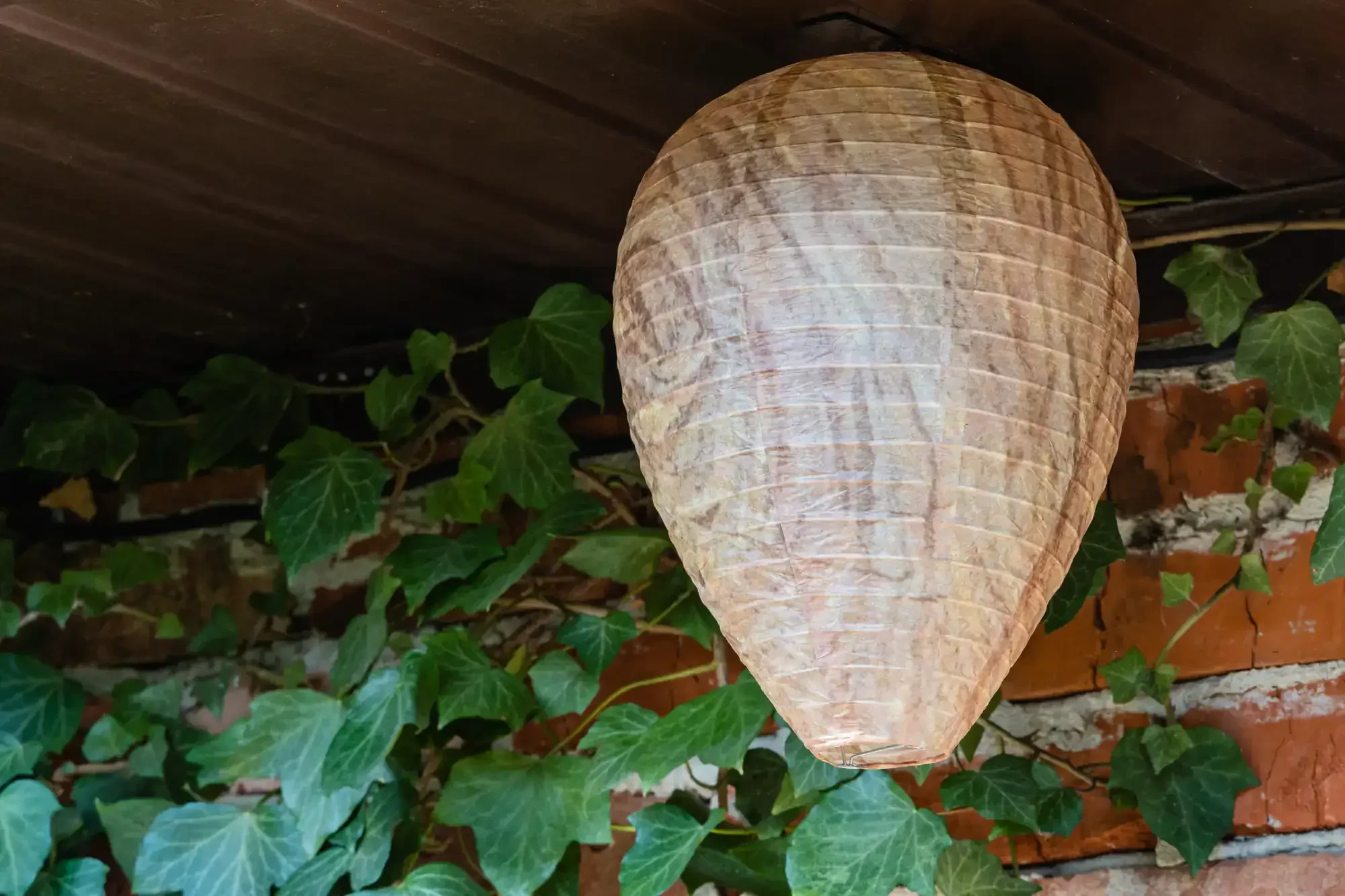
These three get lumped together constantly, and the distinction actually matters for treatment. Paper wasps are the ones most Birch Run homeowners encounter first — they build the open, umbrella-shaped nests under eaves, deck railings, and garage door frames. They’re defensive but not typically aggressive unless the nest is directly threatened. Yellow jackets are a different situation entirely. They’re smaller, faster, and significantly more aggressive, especially in late summer. They nest in the ground or inside wall voids, and they sting repeatedly without provocation when they feel the colony is threatened.
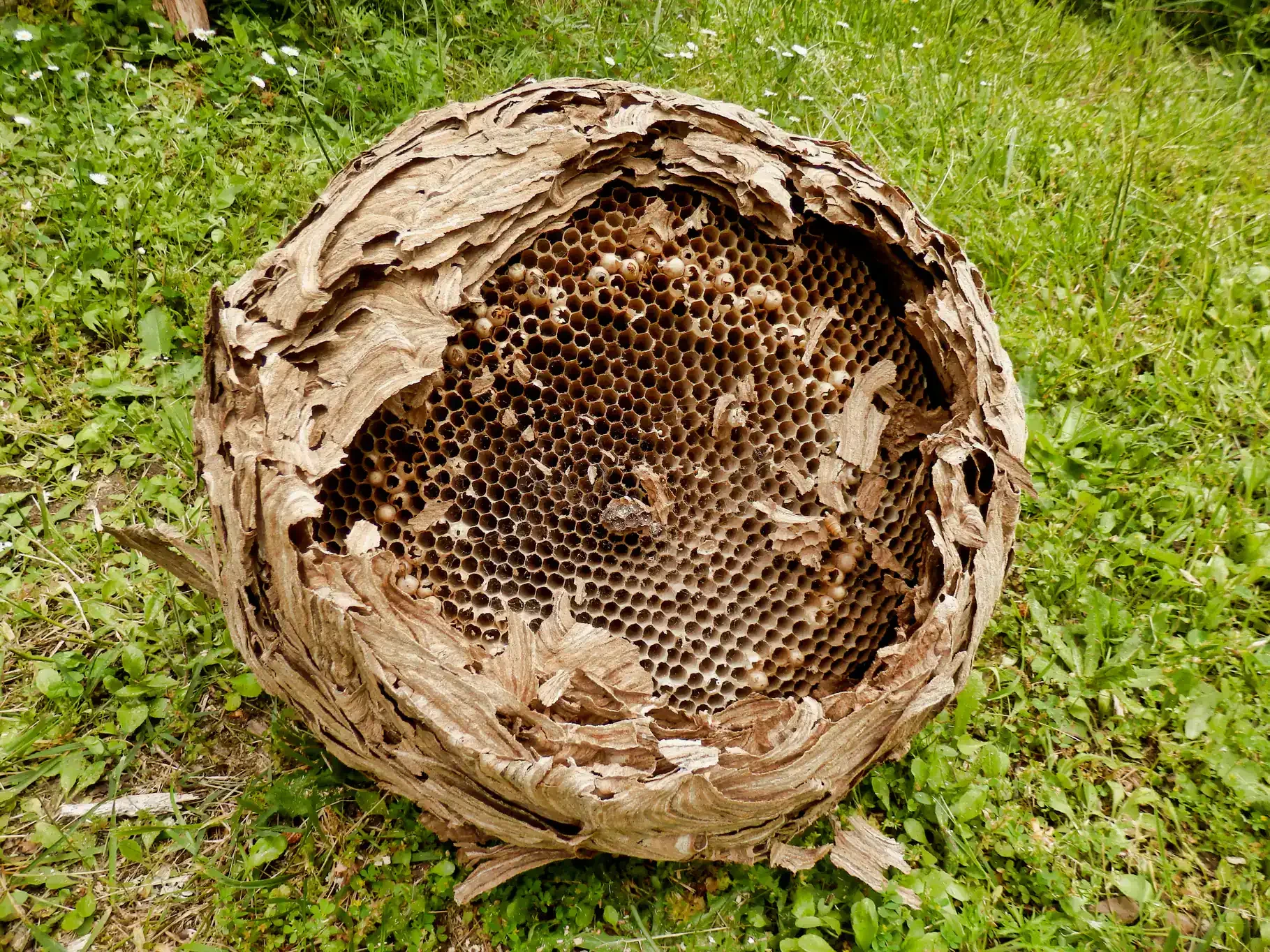
Bald-faced hornets are the large black-and-white variety that build the papery, football-shaped aerial nests you sometimes see in trees or on the sides of structures. They’re highly defensive within about three feet of the nest and should not be approached without protective equipment. Knowing which species you’re dealing with changes the treatment approach, the timing, and the level of protective measures required — which is one reason a professional inspection matters before any treatment begins.
For a small paper wasp nest on an accessible eave — fewer than a dozen wasps, early in the season, away from high-traffic areas — a hardware store spray used at night can work. That’s a realistic scenario where DIY is reasonable. But most of the calls we get in the Birch Run area are not that scenario. They’re ground nests discovered mid-mow, wall-void infestations that have been growing since spring, or aerial nests near doors that someone already tried to spray and made worse.
The common mistake that turns a manageable situation into a serious one is attempting treatment during peak forager activity, or sealing a nest opening before treatment — which traps wasps inside a wall where they can eventually push through into living spaces. Michigan State University Extension specifically warns against this. If you’re not certain what you’re dealing with, where the full nest is located, or whether the colony has secondary access points, a professional assessment is the safer and usually more cost-effective path.
We offer discounts for senior citizens, military veterans, and first responders. Birch Run has a meaningful retiree population and an active veterans community — VFW Auxiliary Post 7542 has been part of this area for years — so these discounts reflect who actually lives here, not just a line on a website. If you qualify, mention it when you call and it’ll be applied to your service.
Beyond the discounts, we also match reasonable competitors’ rates on wasp control services in Birch Run, MI. There are no binding contracts, so you’re not committing to anything beyond the service you’re scheduling. The pricing is straightforward, the estimate is upfront, and there are no fees that show up after the fact.
Useful Links