
Hear from Our Customers
Living along M-15 and Glass Road with mature trees, wooded lot lines, and the Ortonville Recreation Area right next door means your Brandon Gardens property is surrounded by some of the best wasp nesting conditions in Oakland County. That’s not an exaggeration — it’s just the reality of living near 5,400 acres of dense forest where yellow jackets, paper wasps, and bald-faced hornets establish colonies every season and forage well beyond the tree line.
When a nest gets handled the right way, the difference is immediate. The deck is usable again. Your kids can play in the yard without you scanning every corner first. The dog can run the fence line without you holding your breath. That outdoor space you specifically chose Brandon Gardens for stops feeling like a liability.
Most homeowners don’t realize that a wasp nest left alone through July becomes a colony of thousands by August — right when you’re trying to use your outdoor space the most. The homes along these wooded corridors in Brandon Township tend to have more nesting sites than a typical suburban lot: longer eave runs, outbuildings, wood piles, ground-level root systems near mature trees. Getting ahead of it, or getting it handled fast when it shows up, is the only move that actually works.
We’ve been handling pest problems across Oakland County and the surrounding region since May 31, 2005 — that’s 20 years of Michigan summers, 20 seasons of watching how wasp pressure builds in wooded, rural-residential areas like Brandon Gardens. Roger Chinault founded First Choice Pest Control and still leads it, bringing 26 years of hands-on field experience to every job.
What sets us apart in a community like Brandon Township is consistency. You get the same technician assigned to your property year after year — someone who knows your lot, remembers where the yellow jackets showed up last August, and doesn’t need a re-briefing every time you call. No rotating crews, no part-time seasonal hires, no strangers showing up at your door. Just a career professional who knows northern Oakland County’s pest environment and treats your home accordingly.
We hold full MDARD licensing, carry insurance, and are trained in Integrated Pest Management — meaning treatments are targeted, not blanket chemical applications. That matters when you’re on a wooded lot near the Ortonville Recreation Area with kids and pets in the yard.
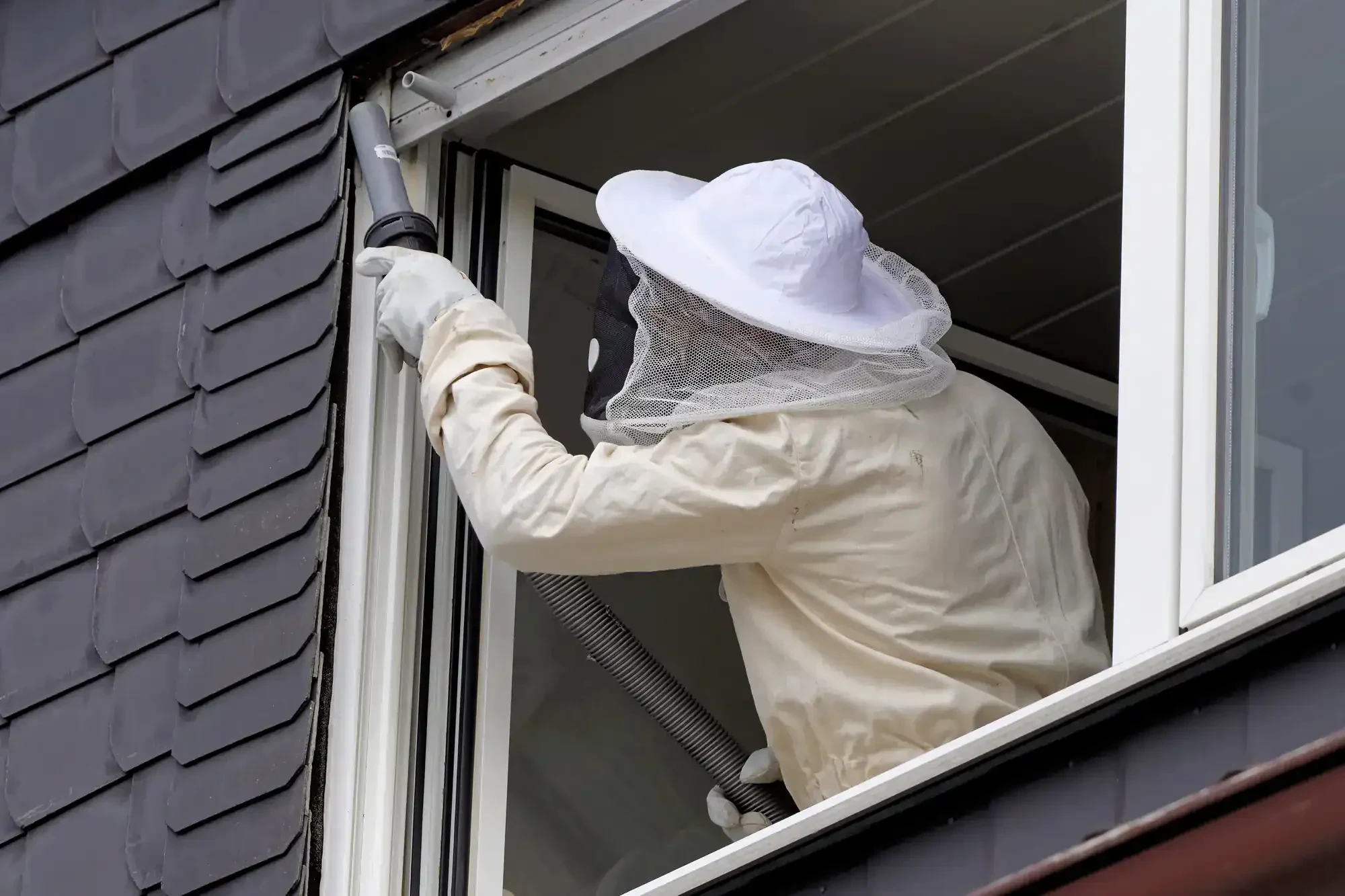
It starts with a property assessment. Before any treatment happens, your technician walks the property and locates every active nest — not just the obvious one you called about. In Brandon Gardens, that often means checking eave overhangs, deck railings, detached garages, wood piles, and ground-level areas near tree roots and fence lines where yellow jackets commonly establish underground colonies. Properties near the riparian corridors of Brandon Township’s Flint River headwaters area are especially prone to ground nesting, so that gets checked too.
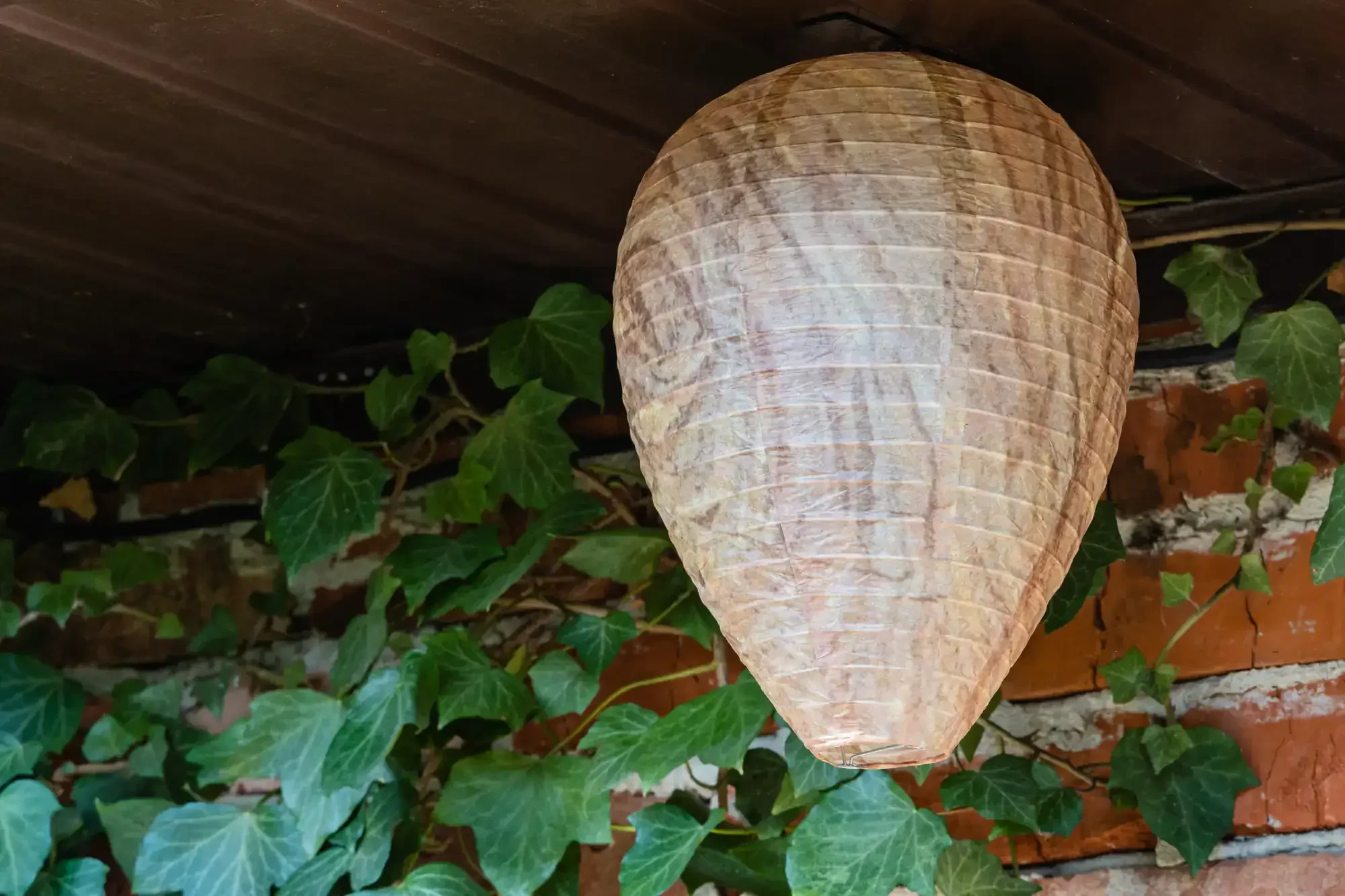
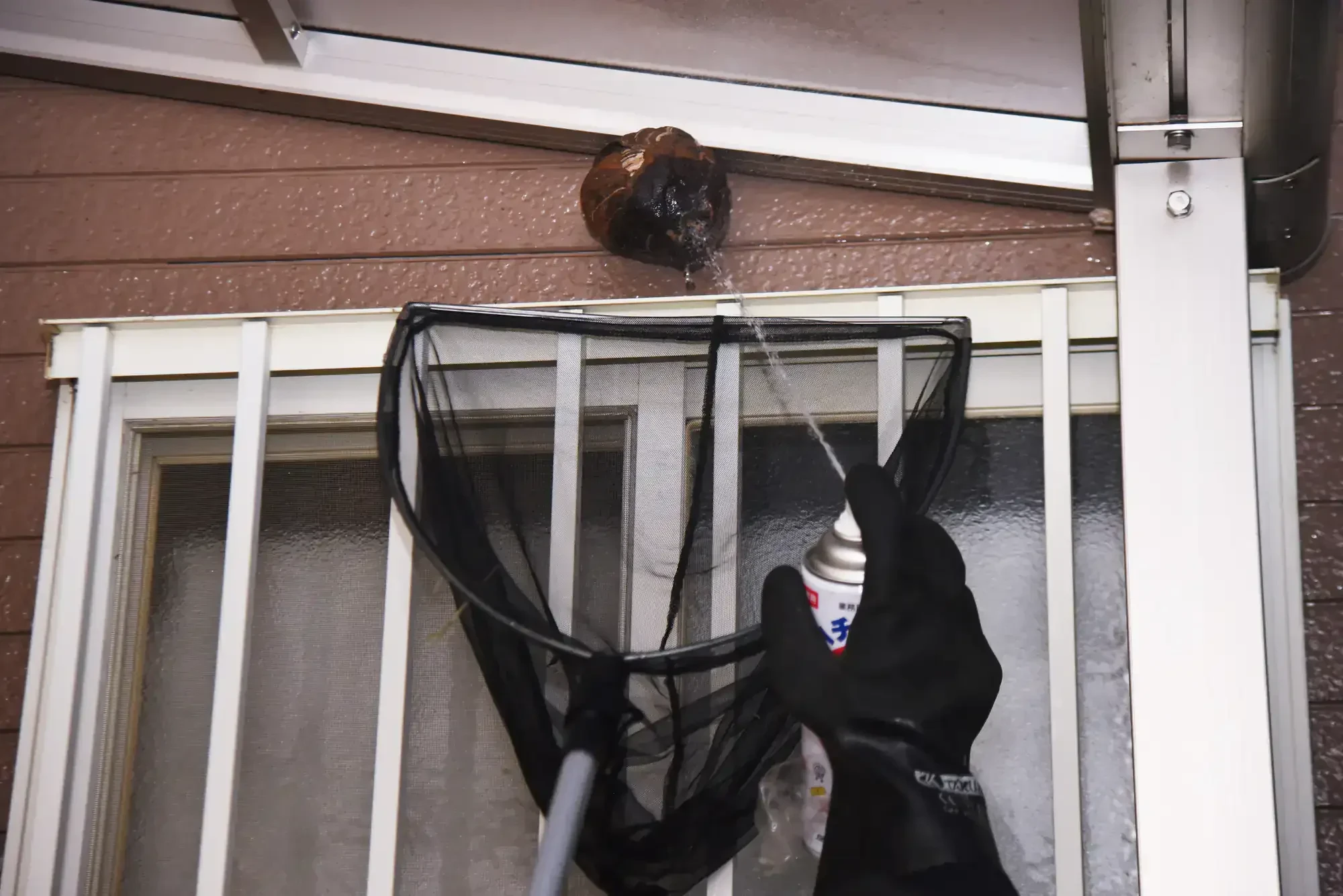
Once nests are located and the species is identified — because yellow jackets, paper wasps, and bald-faced hornets each behave differently and require different treatment approaches — your technician applies the appropriate treatment directly to the nest. This isn’t a spray-and-hope situation. The treatment is targeted, timed, and calibrated to eliminate the colony at the source, including the queen.
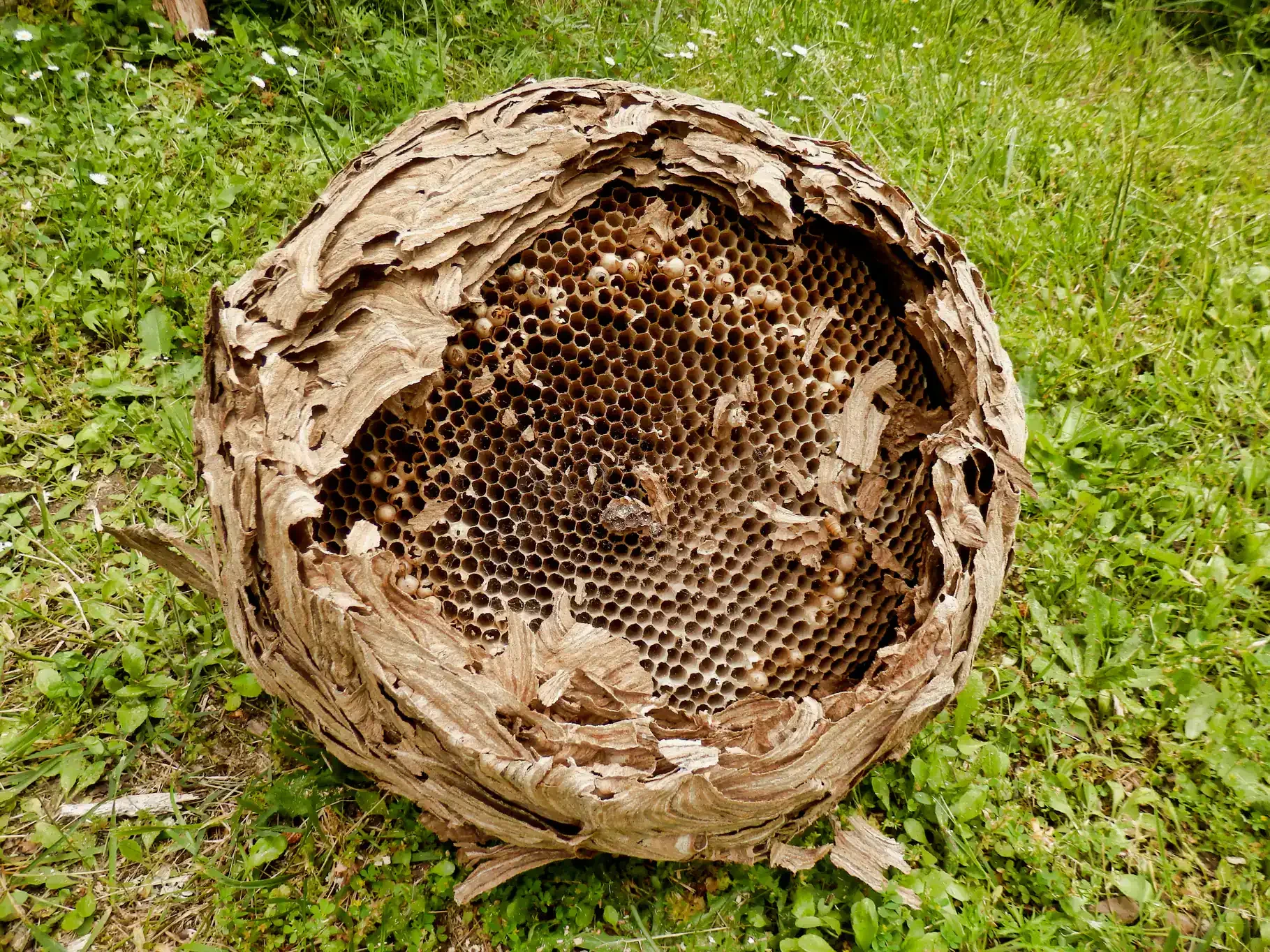
After the colony is eliminated, the nest structure is physically removed and entry points are sealed to prevent re-establishment in the same location. You’ll get clear communication about what was found, what was treated, and what to watch for going forward. If anything comes back after treatment, we come back too — no runaround, no additional service call fee for a callback on the same issue.
Ready to get started?
Wasp nest removal in Brandon Gardens isn’t a one-size situation. The wooded, larger-lot character of properties throughout Brandon Township means nests show up in more places — and in more species configurations — than on a typical suburban quarter-acre lot. We handle the full range: aerial nests under eaves and in trees, ground nests in yards and along fence lines, wall-void infestations where wasps have worked their way into the structure of the home, and nests in outbuildings and detached garages.
Every service includes the property walkthrough, species identification, targeted treatment, physical nest removal after colony elimination, and entry point sealing. For ground nests — which are especially common in the root-dense, moisture-rich soil near Brandon Township’s wooded lots — treatment goes into the nest entrance directly to reach the colony underground. These are the nests that catch people off guard because there’s no visible structure above ground, just a hole in the yard that suddenly has hundreds of aggressive workers defending it.
We also offer price matching for reasonable competitor rates, and discounts are available for seniors, veterans, and first responders — a genuine offering for a community like Brandon Gardens where a number of residents are retired or have served. No binding contracts, no pressure to sign up for anything beyond the job you called about.
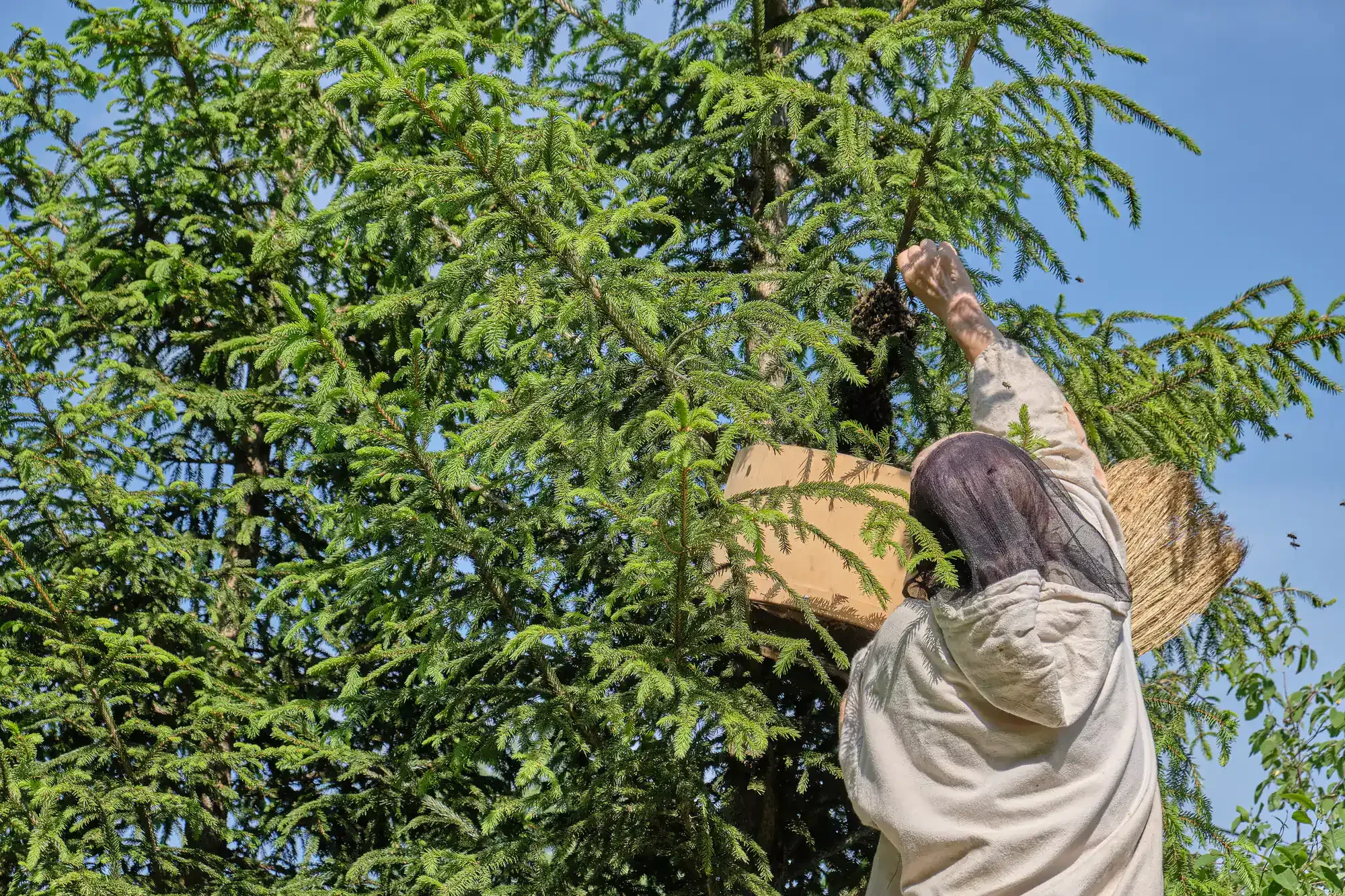
The short answer is location. Brandon Gardens sits right along the edge of the Ortonville Recreation Area — 5,400 acres of dense, wooded habitat that produces wasp colonies every spring. Those colonies don’t stay contained to state land. Yellow jackets, paper wasps, and hornets forage across property lines, and your wooded lot with mature trees, eave overhangs, and ground-level vegetation gives them exactly what they’re looking for when they’re ready to establish a satellite colony.
The longer answer involves your property’s specific conditions. Homes along M-15 and Glass Road in Brandon Gardens tend to sit on larger lots with more linear feet of eave, more outbuildings, and more mature tree cover than a typical subdivision home. That means more viable nesting sites per property. Combined with the foraging pressure from the adjacent recreation area, it creates a situation where wasp activity is a recurring seasonal reality, not a one-time fluke. The best approach is early-season inspection in May or June before colonies grow, and fast professional removal if a nest is discovered later in the summer.
For a small, newly formed paper wasp nest that’s easy to see and reach — maybe a golf ball-sized structure under a single eave — a hardware store spray can work if you apply it at night when workers are inside and you’re able to retreat quickly. The risk is manageable in that scenario, though it’s still not zero.
The problem is that most people aren’t dealing with that scenario by the time they call. By mid-summer in Brandon Township, yellow jacket colonies can have 5,000 to 15,000 workers. Ground nests are invisible until you’re standing on top of them. Wall-void nests have no external structure to aim at. In those situations, a can of Raid doesn’t reach the queen, doesn’t collapse the colony, and often agitates workers enough to make the situation significantly worse. If you’ve already tried a DIY approach and it didn’t work — or if you’re not certain where the nest is or what species you’re dealing with — that’s the point to call a professional. The cost of a sting-related ER visit, especially for anyone with an unknown sensitivity to venom, is a lot higher than a professional removal service.
The clearest sign of a wall-void nest is consistent traffic — workers entering and exiting through a single gap, crack, or hole in the siding, soffit, or foundation, usually at a steady pace throughout the day. If you’re seeing wasps flying in and out of a specific point on your home’s exterior rather than just foraging nearby, there’s a very good chance there’s an active colony inside the wall cavity.
Wall-void nests are common in Brandon Gardens’ older ranch homes and two-story colonials, particularly where siding has small gaps near utility penetrations, soffit seams, or window frames. These nests are more complex to treat than aerial nests because you can’t simply remove the structure — the colony has to be eliminated inside the wall first, and the entry point needs to be sealed afterward to prevent workers from chewing through drywall into living spaces. If you’re hearing activity inside a wall or noticing wasps appearing inside the house near windows, that’s a strong indicator the nest is already established in the structure. Don’t wait on that one — wall-void colonies get large fast and the removal process gets more involved the longer it’s left.
August and early September are consistently the most dangerous weeks of the Michigan wasp season, and that’s especially true for Brandon Gardens residents who spend time outdoors. By late summer, yellow jacket colonies that started with a single queen in April have grown to thousands of workers. At the same time, their natural food sources — insects and protein — start declining, which pushes them toward scavenging. That means outdoor gatherings, backyard barbecues, open beverages, and kids eating outside become active targets for foraging workers.
What makes this window particularly risky in Brandon Gardens specifically is that this is also peak outdoor living season for a community that chose this area for exactly that reason. The deck, the fire pit, the yard — those are in full use right when wasp aggression is at its highest. Yellow jackets in the ground near a patio or a nest tucked under a deck railing that went unnoticed all summer can produce an extremely fast, extremely aggressive response to any perceived disturbance. If you’ve been watching a nest grow since June and thinking you’d deal with it later, August is not the time to wait any longer.
Yellow jackets don’t reuse the same physical nest from one year to the next — each colony starts fresh in spring with a new queen. But they absolutely return to the same favorable locations if the conditions that made that spot attractive in the first place haven’t changed. A south-facing eave overhang that stays warm and dry, a gap in the soffit that leads to an insulated wall cavity, a section of ground near tree roots with loose, moisture-retaining soil — these spots get used repeatedly, season after season, because they’re genuinely good nesting sites.
The way to break that cycle is to seal entry points after the colony is eliminated, not just treat the active nest. We include entry point sealing as part of the removal process for exactly this reason. On wooded Brandon Gardens properties with older homes and more exterior surface area to manage, this step matters more than it would on a newer construction home with tighter building envelope standards. If you’ve had a nest in the same general area two or three summers in a row, that’s a sign the location itself needs to be addressed — not just the nest.
Yes — we offer discounts for seniors, veterans, and first responders. Brandon Gardens has a meaningful population of retirees, and NeighborhoodScout identifies it as a particularly retiree-favorable community, so this comes up regularly. If you or someone in your household qualifies, just mention it when you call and it gets applied to your service.
Beyond the discount programs, we also match reasonable competitor rates. If you’ve already gotten a quote from another company and you’re comparing options, bring it up — if it’s a fair market price for the same scope of work, we’ll match it. There are no binding contracts attached to any of this. You’re hiring for a specific job, the work gets done, and you decide from there whether you want to continue with any kind of ongoing pest management. No pressure to sign anything, no fine print that locks you in.
Useful Links