
Hear from Our Customers
A wasp nest doesn’t stay small for long. What starts as a small paper structure under your eave or a few yellow jackets near the back steps can turn into a colony of thousands by late August — right when you want to be outside most. In Burton, that window hits hard. Summers here are short, and nobody wants to spend them watching where they step.
Burton’s housing stock adds another layer to the problem. Older homes along Lapeer Road, Dort Highway, and the Belsay corridor often have aging aluminum siding, loose soffits, and small gaps around fascia boards that yellow jackets use as entry points into wall voids. Once they’re inside the wall, a hardware store spray isn’t going to cut it. You need someone who knows what they’re looking for and has the tools to actually reach the colony.
Then there’s the proximity to For-Mar Nature Preserve — 383 acres of wetlands, fields, and forest right here in Burton on N. Genesee Road. That’s prime wasp habitat, and as the season progresses, colonies that establish in those natural areas expand their range into the neighborhoods around them. Professional wasp nest removal, done right, means the problem is gone — not just temporarily disrupted.
We founded First Choice Pest Control on May 31, 2005, and have been serving Genesee County ever since — including Burton and the surrounding communities. That’s 20 years of Michigan seasons, 20 years of local pest patterns, and 20 years of showing up for homeowners across Burton without a national call center in between.
Roger, our founder, brings 26 years of hands-on pest control experience to every job. We built this company around a simple idea: send a real professional, keep the same technician with the same customer year after year, and let the results do the talking. No part-time college students. No rotating strangers. The same person who knows your property, your yard, and your history with pest problems.
We hold Integrated Pest Management training, have earned recognition from Angie’s List and HomeAdvisor, and are fully licensed and insured through the Michigan Department of Agriculture and Rural Development. Discounts are available for seniors, veterans, and first responders — because this community has earned it.
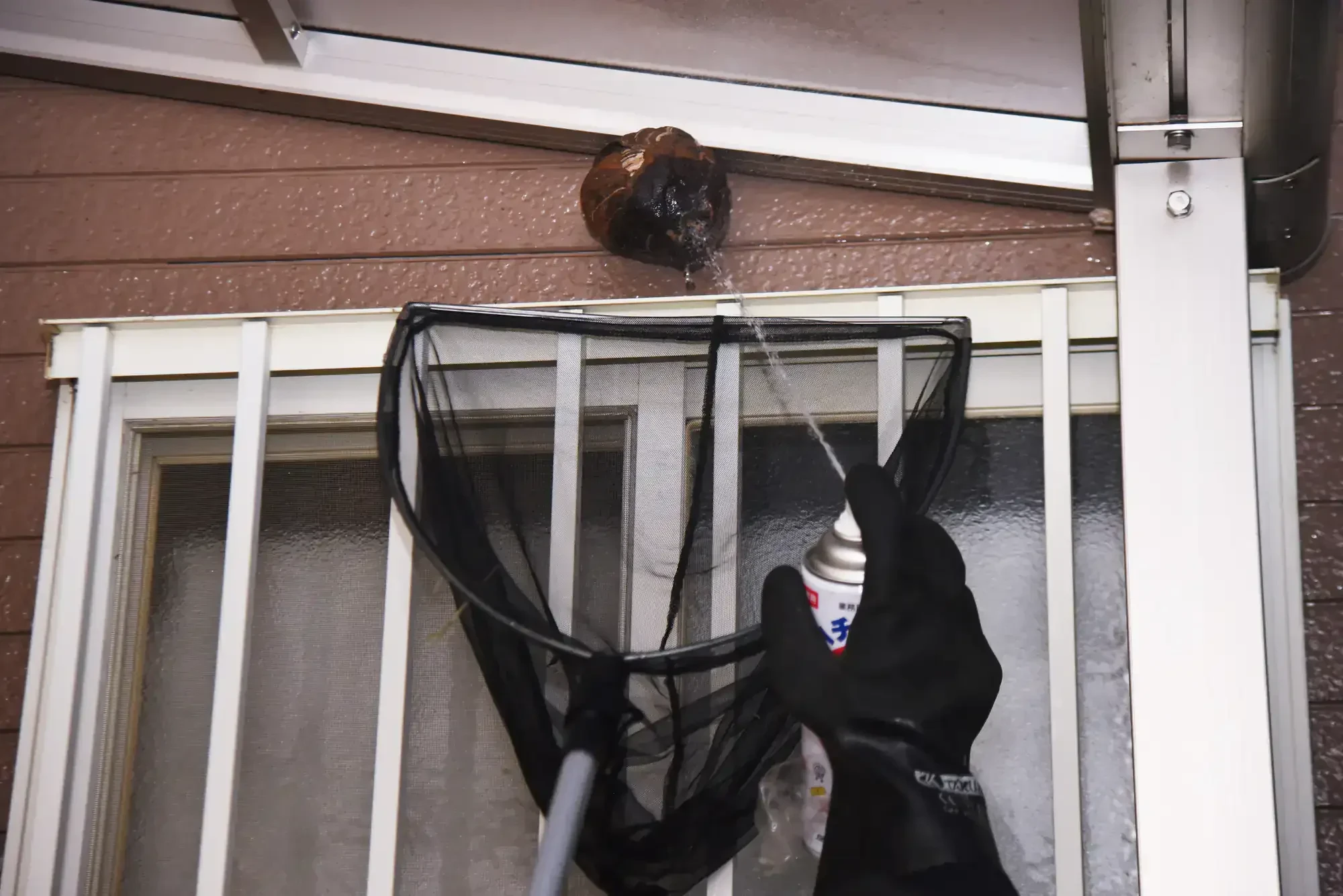
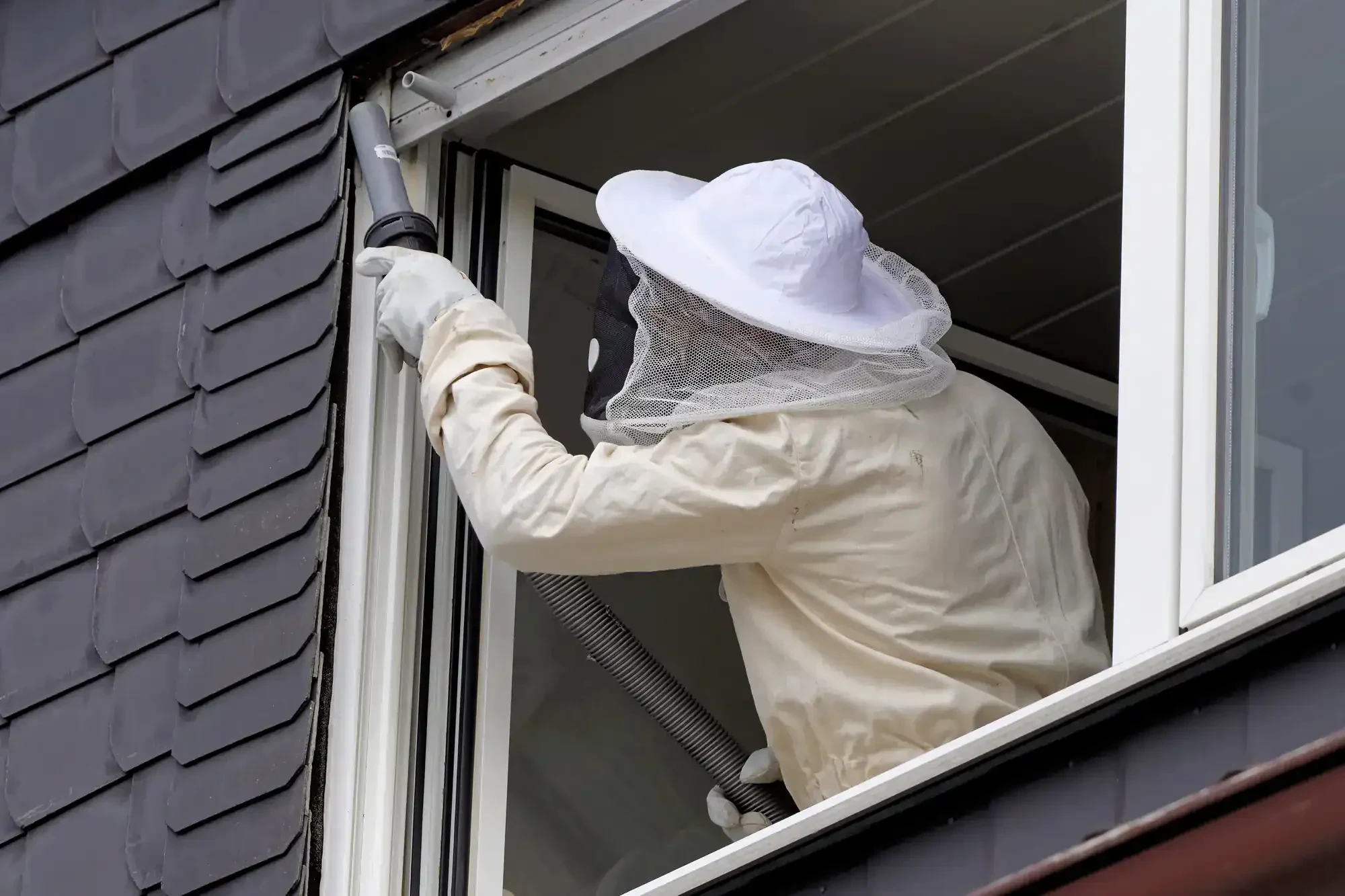
When you call First Choice for wasp nest removal in Burton, the first thing that happens is a real assessment — not a quick glance and a spray. Our technician identifies the species, locates the nest, and evaluates how accessible it is. That matters more than most people realize, because yellow jackets nesting inside a wall void require a completely different approach than a paper wasp nest hanging from a deck rafter.
We apply treatment using professional-grade products that reach the queen and the full colony — not just the workers visible on the surface. After the colony is eliminated, we remove the nest structure and seal the entry point to prevent a new queen from moving in next season. In Burton, where older homes along corridors like M-54 and Lapeer Road commonly have gaps in siding and deteriorating soffits, that sealing step isn’t optional — it’s what separates a lasting fix from a temporary one.
Once the work is done, you’ll know exactly when it’s safe for your kids and your pets to be back outside. That’s not a vague reassurance — it’s a specific answer, explained clearly before our technician leaves your property. Michigan’s peak yellow jacket aggression window runs August through September, so timing matters. The sooner the nest is handled, the more of your summer you get back.
Ready to get started?
Our wasp nest removal service covers the full job — not just the spray. That means species identification, targeted treatment that reaches the entire colony, physical nest removal after elimination, and entry point sealing to reduce the chance of re-nesting. Every service is built around what’s actually happening at your property, not a one-size-fits-all package that ignores the specifics.
In Burton, those specifics matter. Ground-level yellow jacket nests are common on larger lots in the city’s newer subdivisions, where there’s more open yard and landscaping for colonies to establish. Eave and soffit nests are more typical in the older neighborhoods closer to Dort Highway and the Belsay area, where aging construction gives wasps easy access to wall voids. We adjust our approach based on what’s actually there — not what’s easiest.
We serve both residential and commercial customers throughout Burton and Genesee County. There are no binding contracts, and we offer price matching against reasonable competitors’ rates — so if you’ve already gotten a quote from another local provider, bring it. Seniors, veterans, and first responders receive discounts, and every job is backed by our licensed, insured team that has been working this county for two decades.
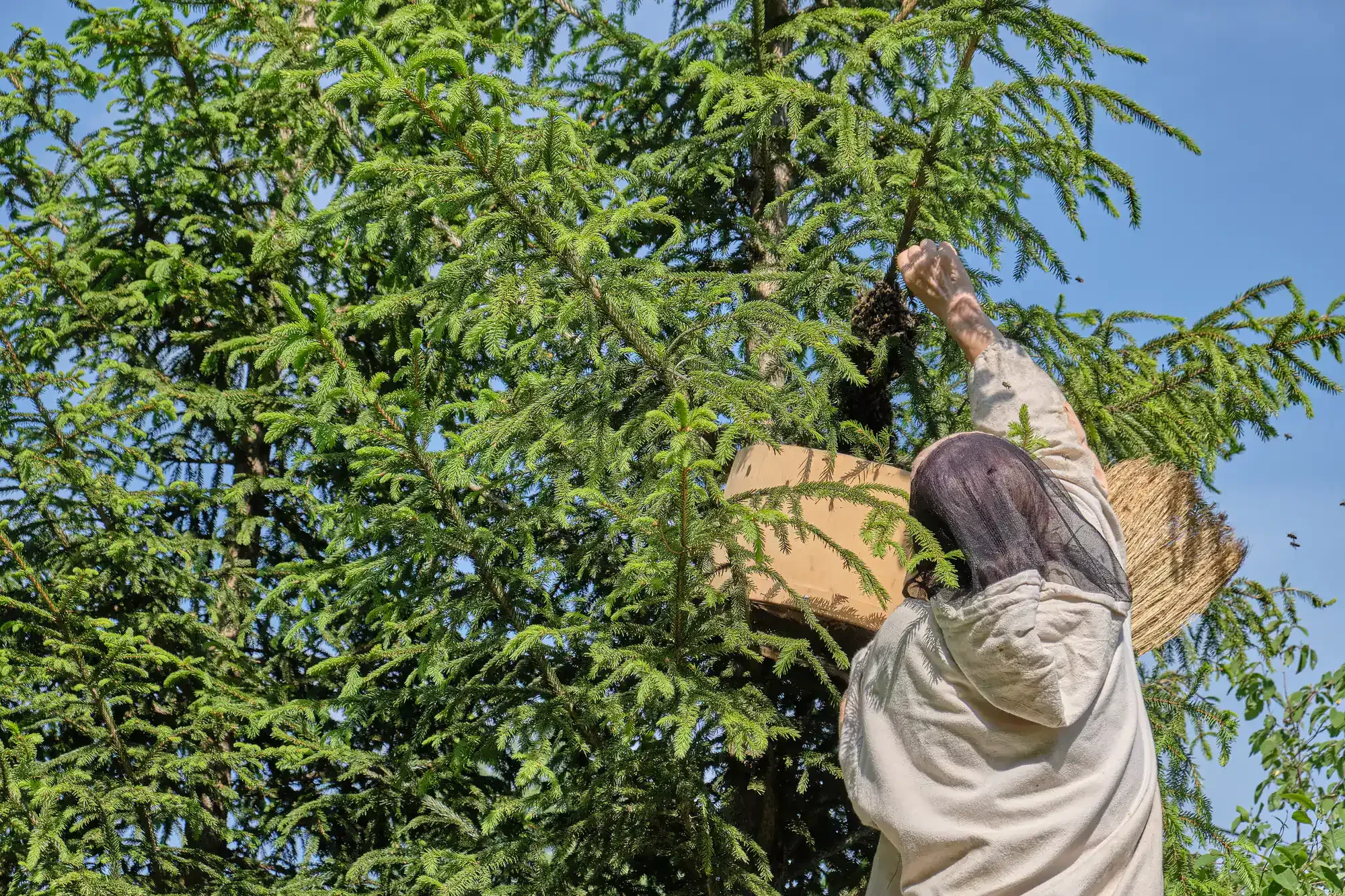
The most common sign is a steady stream of wasps entering and exiting a small gap — usually around siding seams, soffit edges, or where utility lines enter the house. You might also hear a faint buzzing or chewing sound from inside the wall, especially in late summer when colonies are at full size. In Burton, this is a well-documented problem in older homes along Lapeer Road and the Belsay corridor, where aging aluminum siding and deteriorating fascia boards give yellow jackets easy entry points.
If you’re seeing wasps going in and out of your siding but can’t find a visible nest, don’t assume the problem is small. By August, a yellow jacket colony inside a wall void can contain several thousand workers. Attempting to seal the entry point yourself without treating the colony first will trap them inside — and they will chew through drywall to find another way out. This is a job for a licensed professional with the right equipment to treat the colony at its source.
For a small, exposed paper wasp nest early in the season — say, a golf ball-sized structure under a deck rail in May — some homeowners handle it without incident. But most of the calls we get in Burton aren’t that situation. They’re late-summer yellow jacket nests that are already large, already aggressive, and often in a location that’s hard to reach or impossible to see clearly. That’s where DIY attempts go wrong fast.
Hardware store sprays are designed to kill on contact, but they don’t reach the queen deep inside the nest structure. Workers that survive come back angrier. If the nest is inside a wall void or under siding, the spray may not reach the colony at all — you’re just agitating them. Professional treatment uses products and application methods that penetrate the nest and eliminate the colony at the source, including the queen. That’s the difference between solving the problem and making it worse.
In Genesee County, the danger window runs from late July through September. Queen wasps emerge in spring and start building new nests, but colonies are still relatively small through June and early July — small enough that many homeowners don’t notice them or decide to wait. By August, those colonies can hold anywhere from a few hundred to several thousand workers depending on the species, and that’s when yellow jackets become genuinely aggressive, especially around outdoor food sources, garbage areas, and high-traffic entry points.
The first hard frost — typically arriving in October in the Burton area — will kill off the workers, but waiting it out means two or three months of restricted outdoor living and real sting risk for your family. For anyone with a known allergy, that wait isn’t just inconvenient — it’s dangerous. Getting the nest removed in July or early August gives you the rest of summer back.
If the job is done correctly — colony eliminated, nest removed, entry point sealed — the same colony won’t come back. Wasps don’t rebuild in a treated, sealed location. What can happen, however, is that a new queen the following spring scouts the same area and decides it’s a good spot to start a new nest. That’s a separate event, not a sign the original treatment failed.
In Burton, re-nesting risk is higher on properties near For-Mar Nature Preserve or with older construction that hasn’t been fully sealed. The preserve’s 383 acres of natural habitat supports a large natural wasp population, and foraging queens in spring will explore nearby residential properties for nesting sites. Keeping up with minor structural maintenance — sealing gaps around soffits, fascia, and siding — reduces that risk significantly. If you’ve had a nest in the same spot two years in a row, that’s a sign the entry point wasn’t sealed after the first removal, and it’s worth having a professional assess the full perimeter.
In the Burton market, most professional wasp nest removal services fall somewhere between $175 and $399 for an initial treatment, depending on the nest size, species, location, and accessibility. A visible paper wasp nest on an eave is a straightforward job. A yellow jacket colony inside a wall void that requires drilling, treatment, and sealing is more involved — and more expensive. The price reflects the actual work, not a flat rate that ignores what’s really there.
We offer price matching against reasonable competitors’ rates, so if you’ve already gotten a quote from another licensed provider in Genesee County, bring it. There are no binding contracts, no hidden fees, and no pressure to sign up for services you don’t need. Seniors, veterans, and first responders also receive discounts. The goal is a fair price for a job done right — not the cheapest number on the phone followed by a callback that never comes.
Yes. We serve all of Burton, MI, including the Belsay and Lapeer Heights neighborhoods, properties along Dort Highway and Lapeer Road, and the newer subdivisions developing in the city’s outer areas. As a Genesee County-based company headquartered in Swartz Creek — just west of Burton along I-69 — the drive to your property isn’t a long haul from a distant regional office. It’s a neighbor coming to help.
Burton is the second largest city in Genesee County, and we’ve been working this county since 2005. That means residential customers near For-Mar Nature Preserve on N. Genesee Road, families in established neighborhoods near Kelly Lake Park, and homeowners throughout the city’s 23.5 square miles are all within our regular service area. If you’re not sure whether your address is covered, call and ask — but the answer is almost certainly yes.
Useful Links