
Hear from Our Customers
A wasp nest doesn’t announce itself. One day you’re grilling in the backyard, and the next you’re keeping the kids inside because something’s built a colony under the eave you hadn’t checked since last fall. That’s how it goes in Elsie — and in a community where summer means being outside, that’s not a small inconvenience.
What changes after professional wasp nest removal isn’t just that the nest is gone. It’s that you stop second-guessing whether it’s safe to let the dog out, stop eyeing the corner of the garage every time you walk past, and stop wondering if that buzzing near the garden is the same colony you thought you dealt with last week. That mental weight lifts fast when the job is done properly.
Elsie’s older homes — many of them built well before mid-century — have the kind of aging fascia boards, unscreened attic vents, and weathered soffits that yellow jackets treat like an open invitation. Add the wooded margins along the Maple River corridor nearby and the field edges that border a lot of residential properties in Duplain Township, and you’ve got more nesting pressure than most suburban homeowners deal with. Professional wasp pest control in this area isn’t overkill. It’s just the right call.
First Choice Pest Control was founded on May 31, 2005 — which means in 2025, we’re marking 20 years of protecting homes across mid-Michigan. We’re led by Roger Chinault, who brings 26 years of hands-on pest control experience to every service call. This isn’t a franchise. There’s no rotating crew of seasonal workers. You get a career professional who knows what they’re looking at the moment they arrive at your property.
We serve residential and commercial customers throughout the region, including communities across Clinton County and the neighboring areas of Shiawassee County to the east — which puts Elsie squarely in our territory. The same technician who handles your job this summer will know your property next spring. That’s not an accident — it’s how we’ve always operated, because familiarity with a property matters when you’re dealing with recurring pest pressure in older rural homes like those throughout Elsie.
No binding contracts. No part-time college students learning on your dime. We offer discounts for seniors, veterans, and first responders. And if wasps come back after we treat, we come back too.
When you reach out to us, you’re not going to sit on hold or get bounced between departments. You’ll talk to someone who can actually answer your questions — including what species you’re likely dealing with, how urgent the situation is, and what the treatment is going to look like on your specific property.
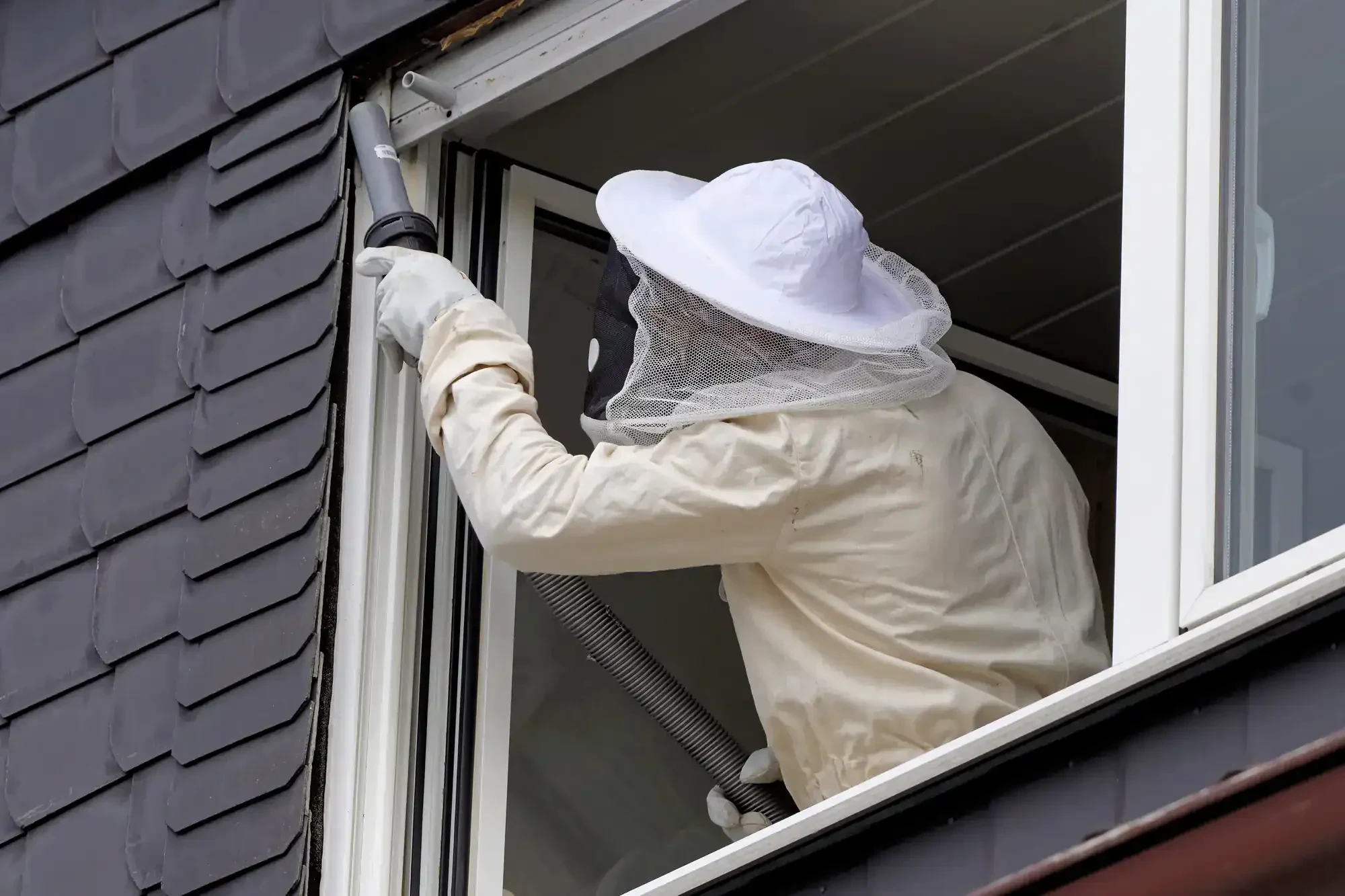
When our technician arrives, the first thing we do is assess — not just the visible nest, but the surrounding structure. In Elsie’s older homes, that matters a lot. A nest under the eave is obvious. A yellow jacket colony that’s been working its way into a wall void through a gap in aging siding is not. We look for both. If there’s a hidden infestation behind the exterior, you’ll know before we start treatment — not after.
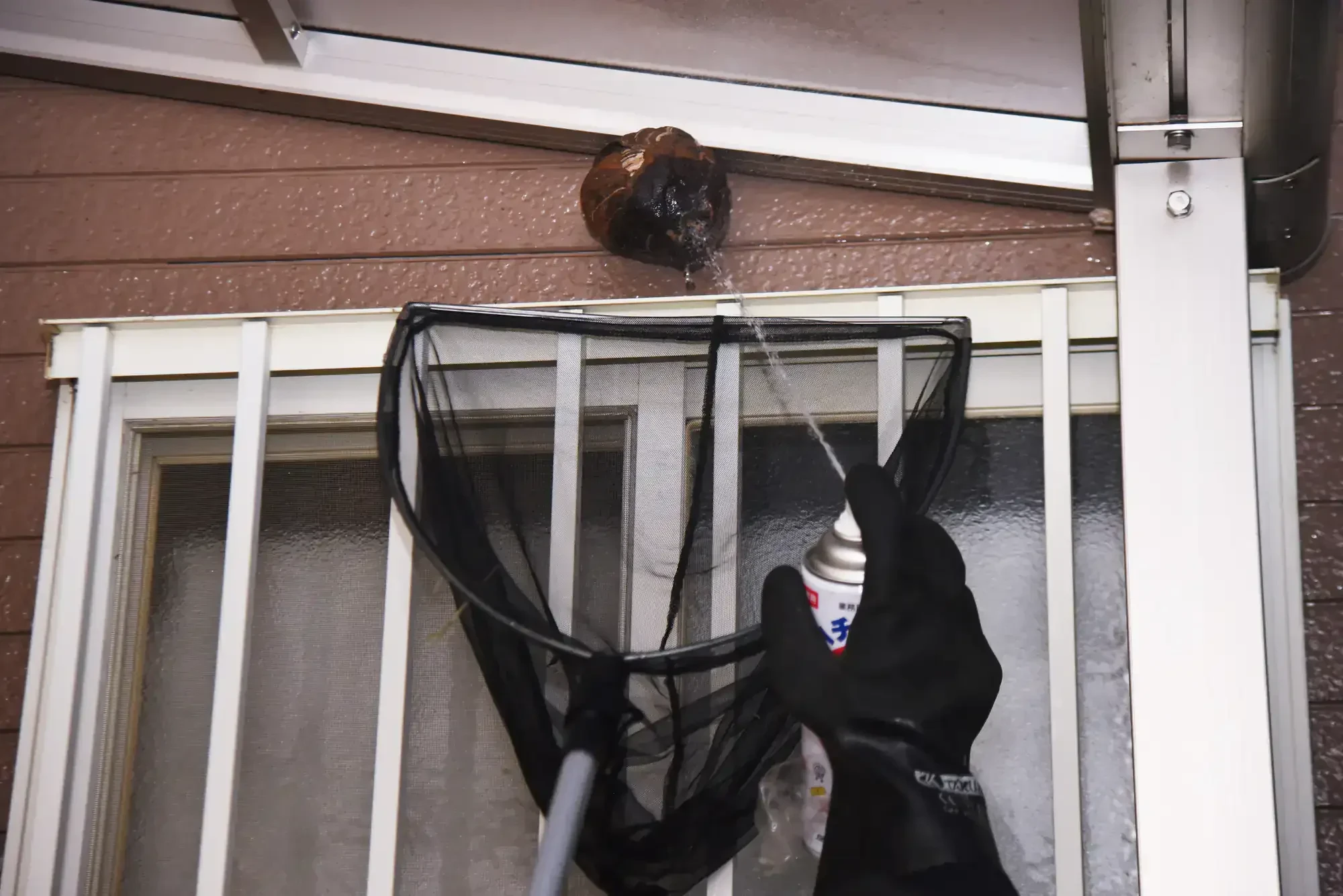
Treatment targets the colony directly using professional-grade products that aren’t available at the hardware store, applied in a way that accounts for where kids play, where pets roam, and where your garden sits. After the colony is eliminated, we remove the physical nest and seal entry points to reduce the chance of re-nesting in the same spot. August and September are peak season in Clinton County — colonies that started in April can reach thousands of workers by late summer. If you’re calling in July, you’re still ahead of the worst of it. That timing matters, and we’ll tell you exactly what you’re working with.
Ready to get started?
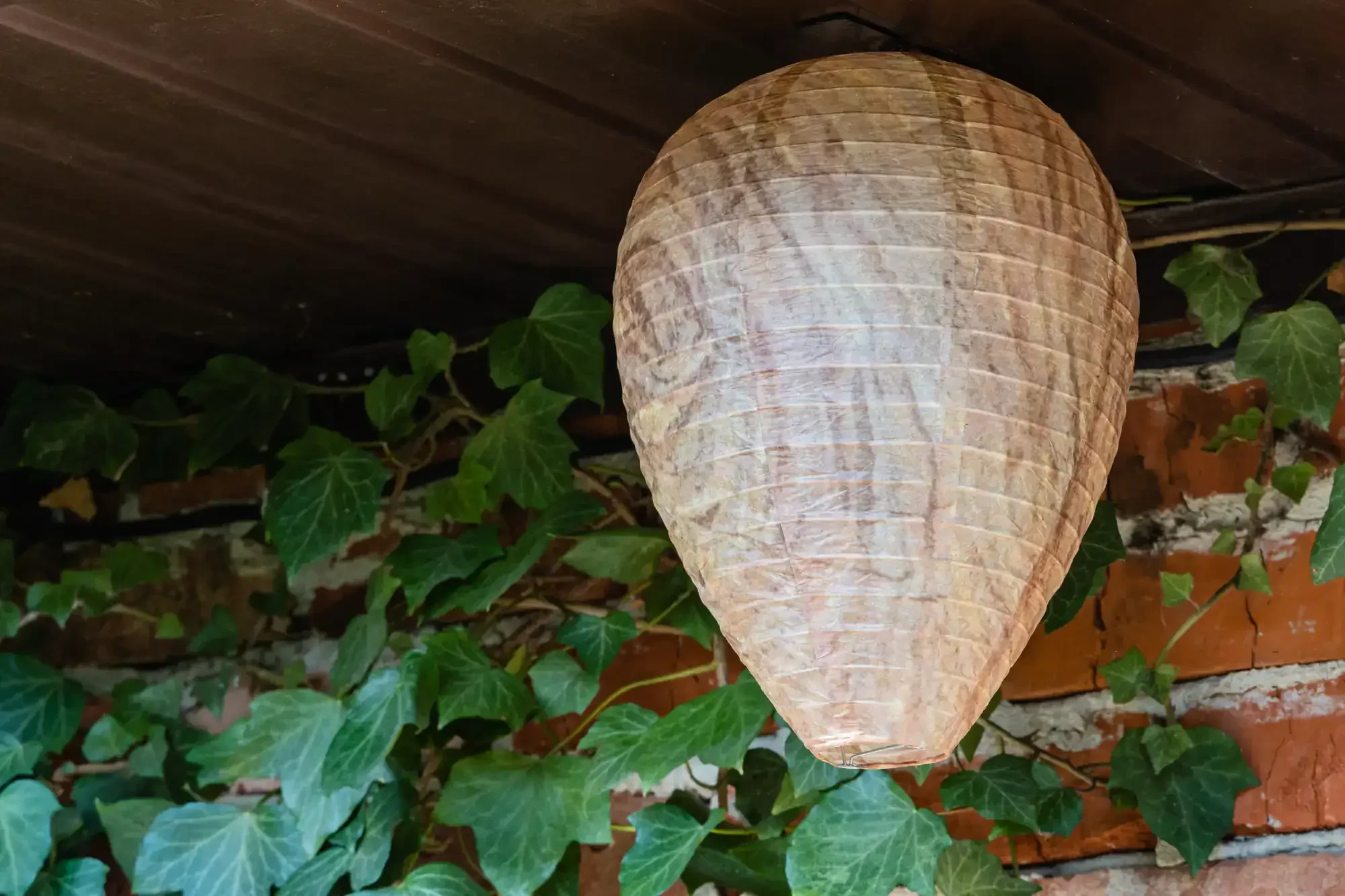
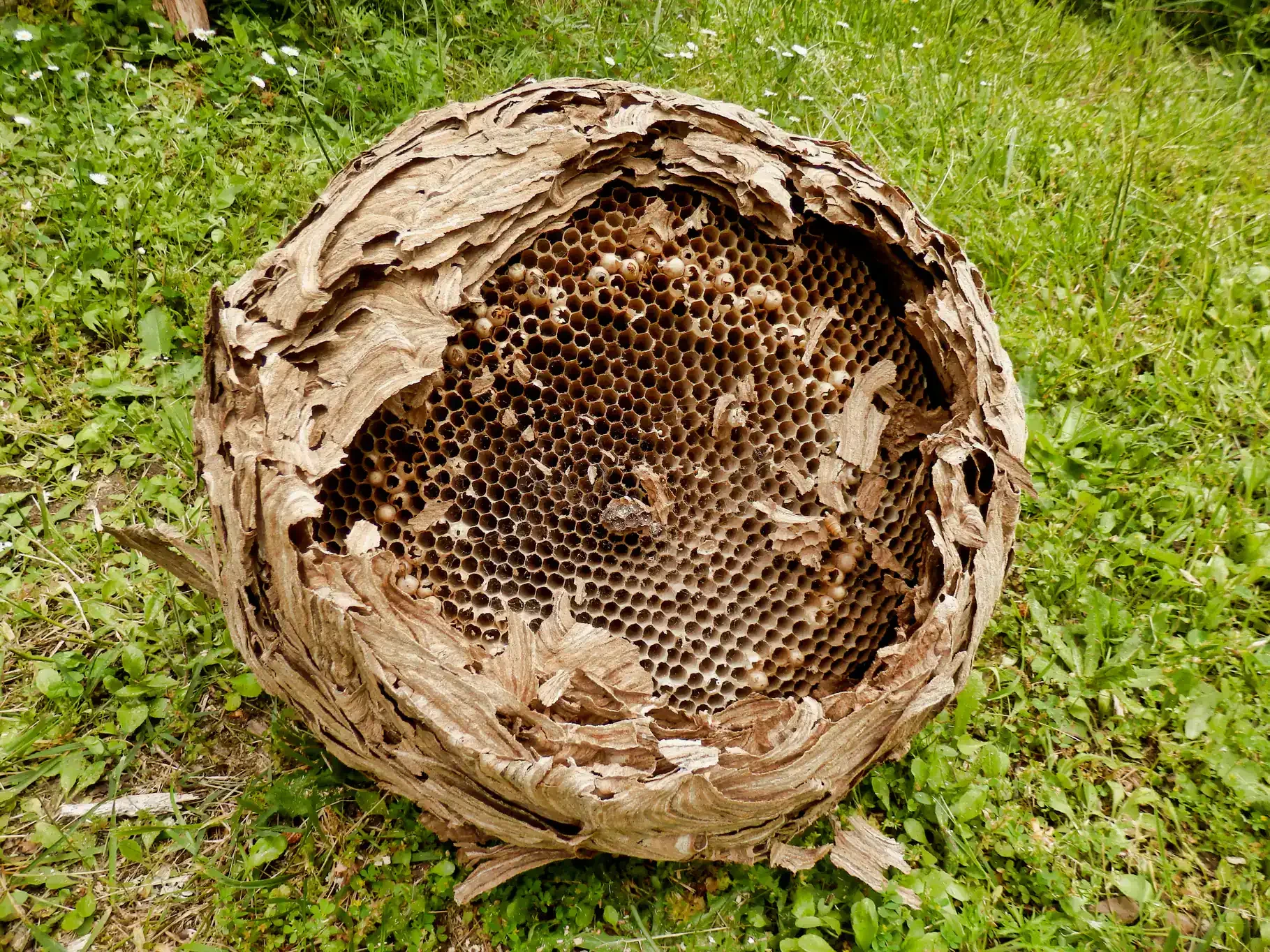
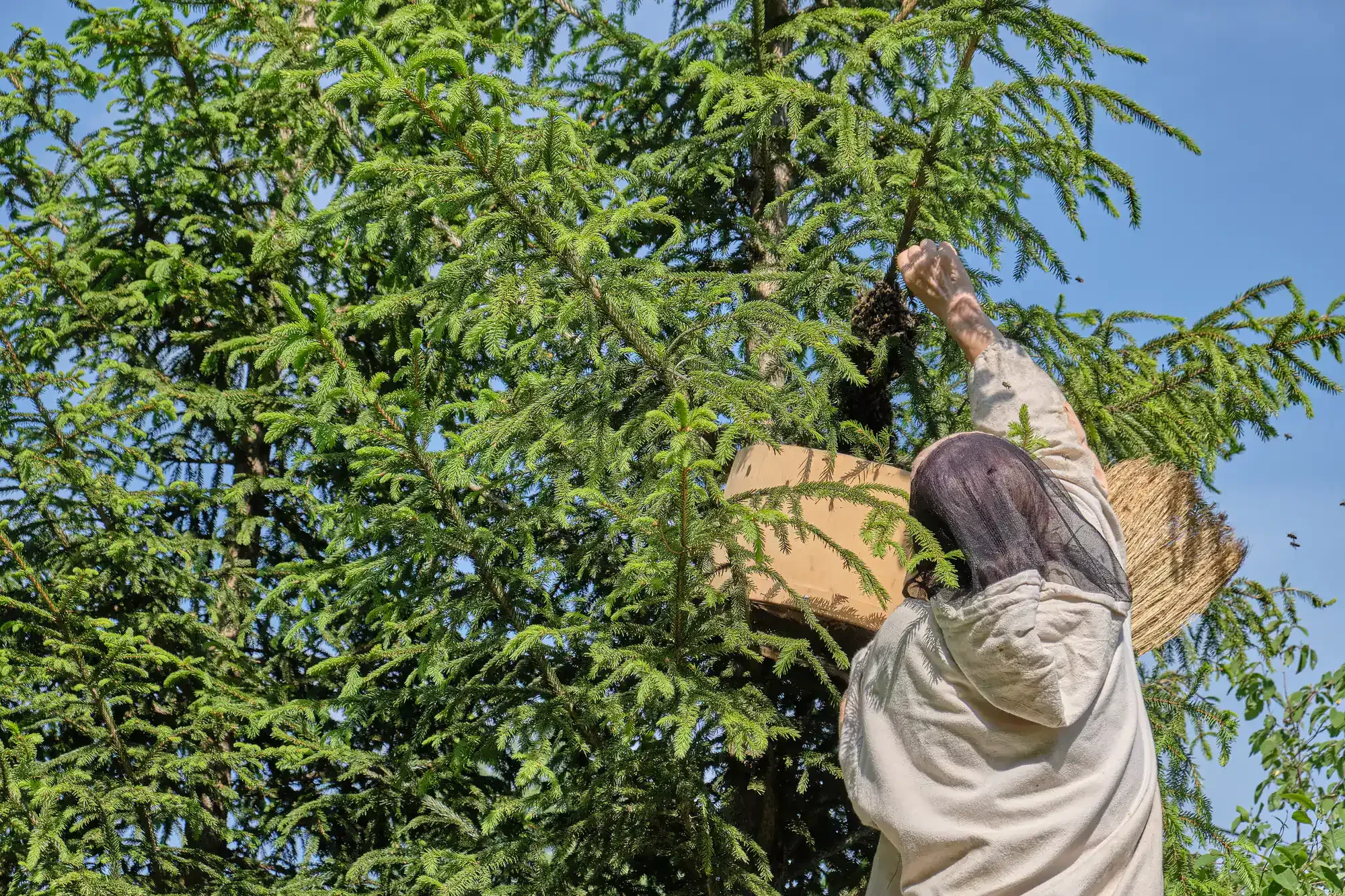
Wasp nest removal in Elsie isn’t a one-size situation. Paper wasps build open, honeycomb-style nests under eaves, on porch ceilings, and along fence lines — common on the older wood-framed structures throughout the village. Bald-faced hornets build large, enclosed paper nests in trees and shrubs, often along wooded property edges or near the riparian corridors that run through Duplain Township. Yellow jackets are the most aggressive and the most unpredictable — they nest underground in garden beds and lawn edges, inside wall voids, in attic spaces, and in outbuildings and detached garages.
We handle all of these scenarios. Our inspection process is built to catch what a surface-level look misses, because in this area, the hidden nest is often the real problem. Properties adjacent to active farmland or with outbuildings face elevated pressure from yellow jackets disturbed by mowing, tilling, or seasonal ground disturbance — something that’s genuinely common in the rural residential areas surrounding Elsie.
Every service is backed by our callback guarantee — if the problem returns after treatment, we come back. We also match reasonable competitor rates, so if you’ve gotten a quote from another licensed provider, bring it to us. We’re licensed and insured through the Michigan Department of Agriculture and Rural Development (MDARD), and our technicians hold Integrated Pest Management training, which means treatment is targeted and applied with your household’s safety in mind from start to finish.
The most common sign is a consistent line of wasp traffic going in and out of a single small gap — usually around a window frame, a gap in siding, a weep hole in brick, or a crack near a soffit. You’ll notice wasps disappearing into the exterior rather than flying away from it. In Elsie’s older homes, those entry points are easy to miss because the gaps are small and the activity often happens on a side of the house you don’t walk past every day.
Inside, you might hear a faint buzzing or scratching in the wall — especially in late summer when colonies are at peak size. Some homeowners notice a soft spot or staining on drywall, which can happen when a large colony has been active inside a wall for an extended period. If you’re seeing wasps inside the house with no obvious open window or door, that’s another strong indicator of an interior nest. Don’t try to seal the entry point yourself before treatment — trapping an active colony inside a wall forces workers to push through into your living space. Call us first, seal after.
For a small, exposed paper wasp nest early in the season — say, April or May, when the colony is just getting started — a hardware-store aerosol can work if you apply it at dusk when activity is lowest and you can reach the nest without putting yourself in a bad position. That’s a realistic DIY scenario for a lot of Elsie homeowners who are used to handling things themselves.
The problem is that most people don’t call until the colony is already established, and by mid-summer, the math changes fast. A yellow jacket colony in August can have 5,000 to 15,000 workers, and store-bought sprays don’t penetrate deep enough to reach the queen in an underground or wall void nest. You’ll knock back the foragers, the colony will compensate, and you’ll be dealing with the same problem — except now the workers are more agitated. Our professional-grade products reach deeper into the nest structure and are applied in a way that accounts for the full colony, not just what’s visible at the surface. If you’ve already tried a spray and it didn’t hold, that’s a clear sign it’s time to bring in professional wasp removal.
Late July through September is peak season across Clinton County, and Elsie is no exception. Yellow jacket colonies that started with a single queen in April grow steadily through spring and early summer, but the real surge happens in August. By then, natural food sources start declining and workers shift from hunting insects to scavenging — which is why you start seeing them around outdoor meals, garbage cans, and anywhere food or sweet drinks are present.
That shift in behavior is also when stings become most likely, because the colony is larger, food competition is higher, and workers are quicker to defend their territory. The timing is worth knowing because it affects your decision window. If you’re noticing wasp activity in June or early July, you’re still ahead of the worst of it — treatment is faster, the colony is smaller, and the risk to our technician and your household is lower. Waiting until late August because you’re hoping they’ll die off on their own is a common mistake. They won’t — not until the first hard frost, and by then you’ve spent two months managing the situation instead of resolving it.
Underground yellow jacket nests are the most dangerous removal scenario, and they’re genuinely common in the rural residential properties around Elsie. Yellow jackets excavate or take over existing rodent burrows in lawn edges, garden beds, and anywhere the soil has been disturbed — which includes areas near infrastructure work, like the pipe replacement and water system upgrades currently underway in the village. Ground disturbance is a known trigger for uncovering or agitating underground colonies.
Treatment for underground nests requires direct application into the nest entrance, usually at night when forager activity is lowest and most workers are inside. The entry point is then sealed after treatment to prevent surviving workers from re-establishing. This is not a job where you want to be standing over an active colony with a flashlight and a can of spray — underground nests have multiple exit points, and disturbing them without the right approach triggers a mass defensive response fast. We handle the timing, the application depth, and the post-treatment sealing in a way that minimizes your exposure throughout the process.
Most wasp nest removal jobs at a residential property in Elsie take between 30 minutes and an hour, depending on the nest type, location, and whether there’s a hidden infestation that requires additional inspection. An exposed paper wasp nest under an eave is a faster job than a yellow jacket colony inside a wall void or underground in a garden bed, where our technician needs to assess access points and apply treatment carefully.
After treatment, the standard recommendation is to keep children and pets away from the treated area for a minimum of a few hours — long enough for any applied product to dry and for worker activity to subside. Our technician will give you a specific window based on exactly what was used and where. If the nest was in a wall void or an area your kids or pets don’t directly access, the restriction is more limited. The goal is always to get your yard back to normal as quickly as safely possible, and our technician will walk you through exactly what to expect before they leave your property.
Yes — we offer discounts for seniors, veterans, and first responders, and those discounts apply to customers in Elsie and throughout the surrounding Clinton County area. In a community like Elsie, where a lot of longtime homeowners have been in their homes for decades and are dealing with the kind of aging housing stock that creates real pest pressure, that discount is a straightforward way to make professional wasp nest removal more accessible for the people who’ve put the most into their properties.
If you’re a veteran, a retired resident, or a first responder and you’re dealing with a wasp problem this season, just mention it when you call. There’s no complicated qualification process. We also match reasonable competitor rates from other licensed pest control providers, so if you’ve already gotten a quote, it’s worth a conversation before you book. The combination of experience, our same-technician model, and a callback guarantee means you’re getting real value — not just the lowest number on a quote sheet.
Useful Links