
Hear from Our Customers
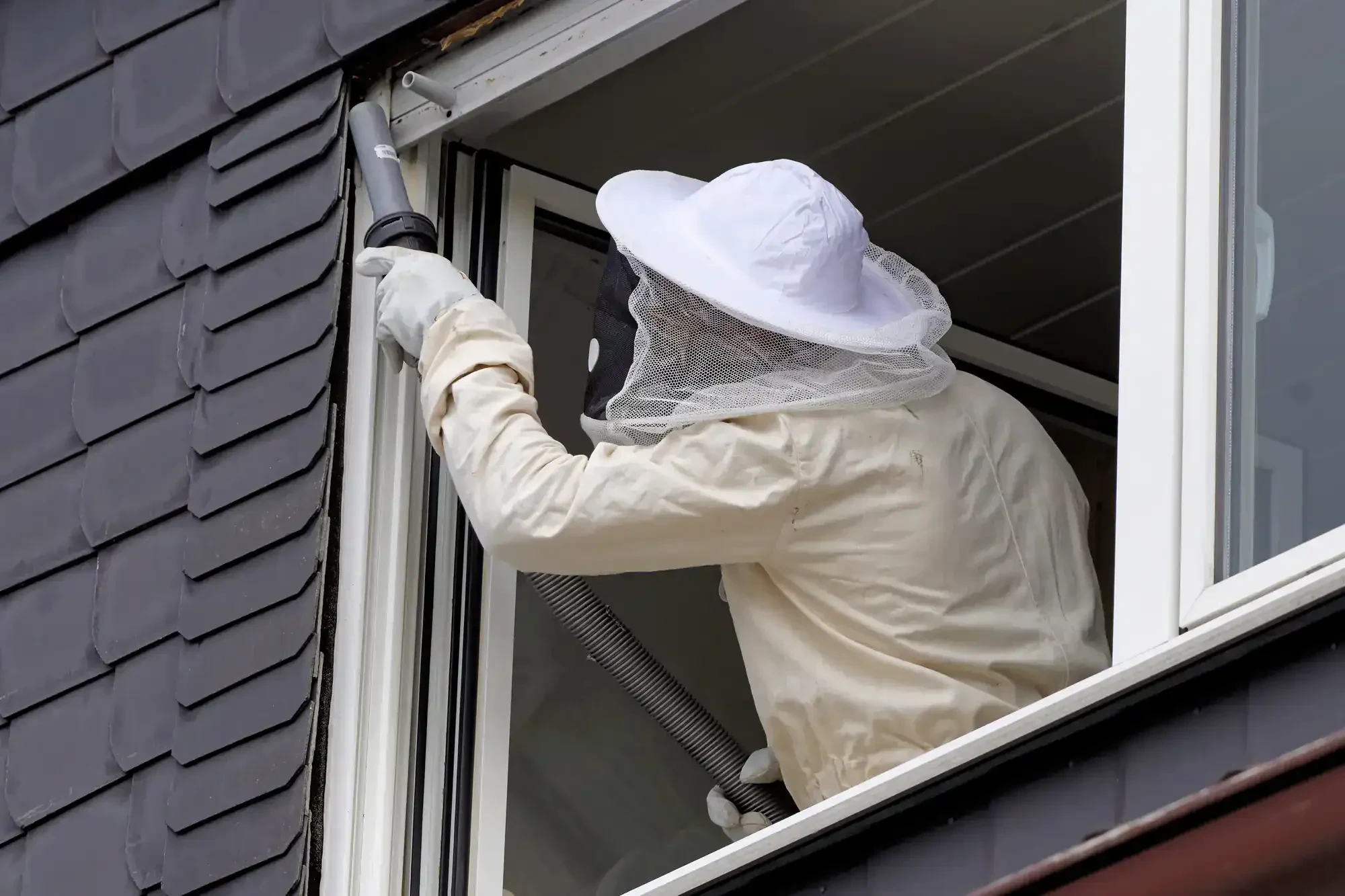
When a wasp nest shows up near your back door, your deck, or your kids’ play area, the outdoor season you planned for suddenly feels off-limits. That is not a small thing in Fenton, where the whole point of being here — the lakes, the river trail, the backyard barbecues near Silver Lake — depends on actually being able to go outside. A nest that gets ignored in May does not stay small. By August, what started as a handful of workers can grow into a colony of several thousand, and yellow jackets in particular get significantly more aggressive as summer peaks.
The wooded lots and water-adjacent properties that make Fenton one of the most desirable communities in Genesee County also create ideal nesting conditions for paper wasps, bald-faced hornets, and ground-nesting yellow jackets. Properties near Seven Lakes State Park, along the Shiawassee River corridor, and around the Lake Fenton area deal with this pressure every season — it is not random, and it does not go away on its own. Professional wasp nest removal eliminates the active colony, addresses the specific nesting site, and gives you a clear answer on when it is safe for your family and pets to go back outside.
We were founded on May 31, 2005 — which means 2025 marks 20 years of serving Genesee County homeowners, including families across Fenton and the surrounding lake communities. Roger Chinault, our founder, brings 26 years of hands-on pest control experience to every job. This is not a national franchise routing calls through a regional office. We are a family-owned, owner-operated company based in Swartz Creek, about 10 miles north of downtown Fenton on US-23, and the difference shows in how we work.
Every customer gets the same technician year after year — not a rotating crew of seasonal workers, and not part-time college students filling summer schedules. The person who treats your Fenton property this August will know your home, your yard, and your pest history when spring rolls around again. We hold MDARD licensing, IPM training, and have earned recognition from both Angie’s List and HomeAdvisor. We also offer discounts for seniors, veterans, and first responders — because those are the kinds of neighbors worth taking care of.
It starts with a call. You describe what you are seeing — where the nest is, how long it has been there, whether anyone has already been stung — and we give you a straight answer on what the situation likely involves and what to expect next. Scheduling is straightforward, and response time is a priority, because a wasp nest near an entryway or outdoor living area is not the kind of problem that improves with time.
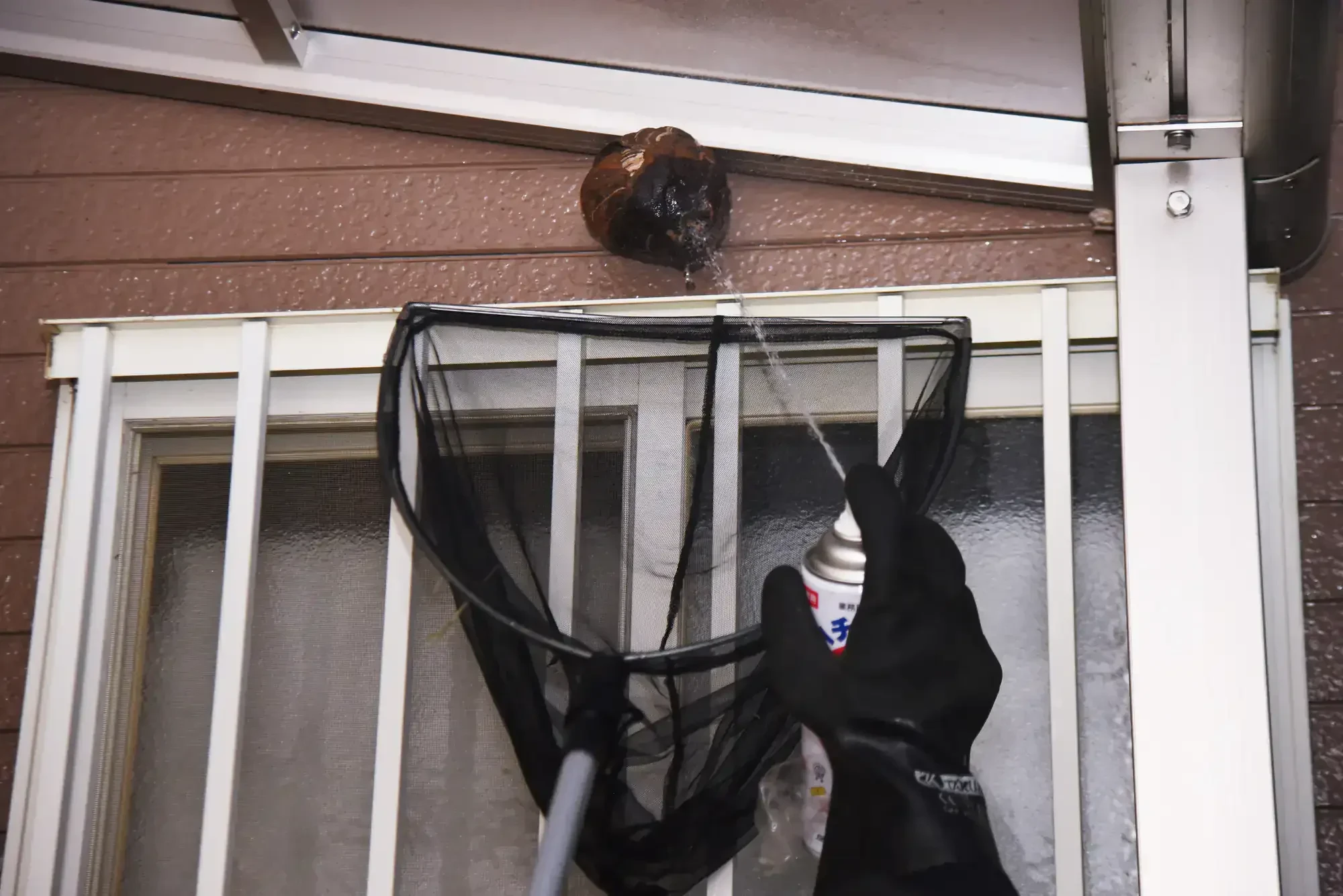
When our technician arrives, the first step is a thorough inspection of the nest site and the surrounding structure. In Fenton, that often means checking eaves and soffits on older homes in and around the historic downtown corridor, looking for ground-level entry points in yards adjacent to wooded lots, or identifying aerial nests tucked into the tree lines that border properties near Seven Lakes State Park. The treatment approach is matched to the specific species and nesting location — yellow jackets in a ground burrow require a different method than a paper wasp nest under a deck railing, and an IPM-trained technician knows the difference.
After treatment, you will get a clear, specific answer on re-entry timing — not a vague estimate, but an honest window based on what was applied and where. If activity returns, we come back. That is not a footnote — it is our standard.
Ready to get started?
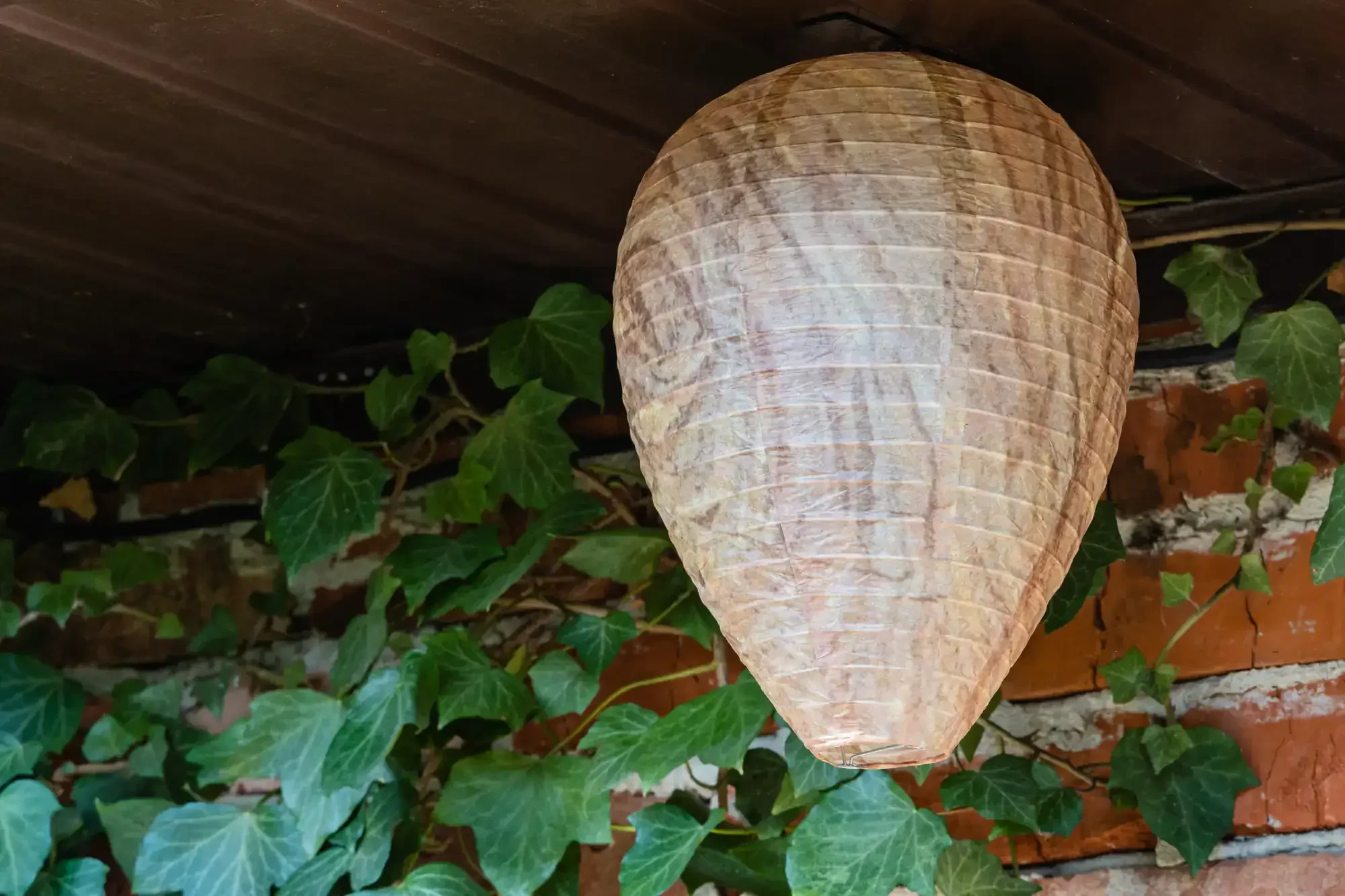
Fenton properties deal with a wider range of stinging insect scenarios than most people expect. Paper wasps tend to build open, umbrella-shaped nests under eaves, porch ceilings, and deck railings — common on both older homes in the downtown historic district and newer construction on the city’s outskirts. Bald-faced hornets build large, enclosed aerial nests in trees and shrubs, and they defend them aggressively. Yellow jackets are the most unpredictable — they nest underground, inside wall voids, and in structural gaps, and they are the species most likely to sting repeatedly and without much warning.
Each of these situations gets treated based on what is actually there, not a one-size approach. We use targeted treatments that are effective against the active colony without unnecessary application around the Shiawassee River corridor or near the water-adjacent properties common throughout the Fenton area. All work is performed by MDARD-licensed applicators under Michigan’s pesticide control standards — no unlicensed operators, no guesswork.
There are no binding contracts for one-time wasp nest removal in Fenton. You call, the problem gets handled, and if you need us again — for wasps, mosquitoes, rodents, or anything else — we will be there. We offer price matching for reasonable competitor quotes, so if you have already been shopping around, bring the number and we will work with it.
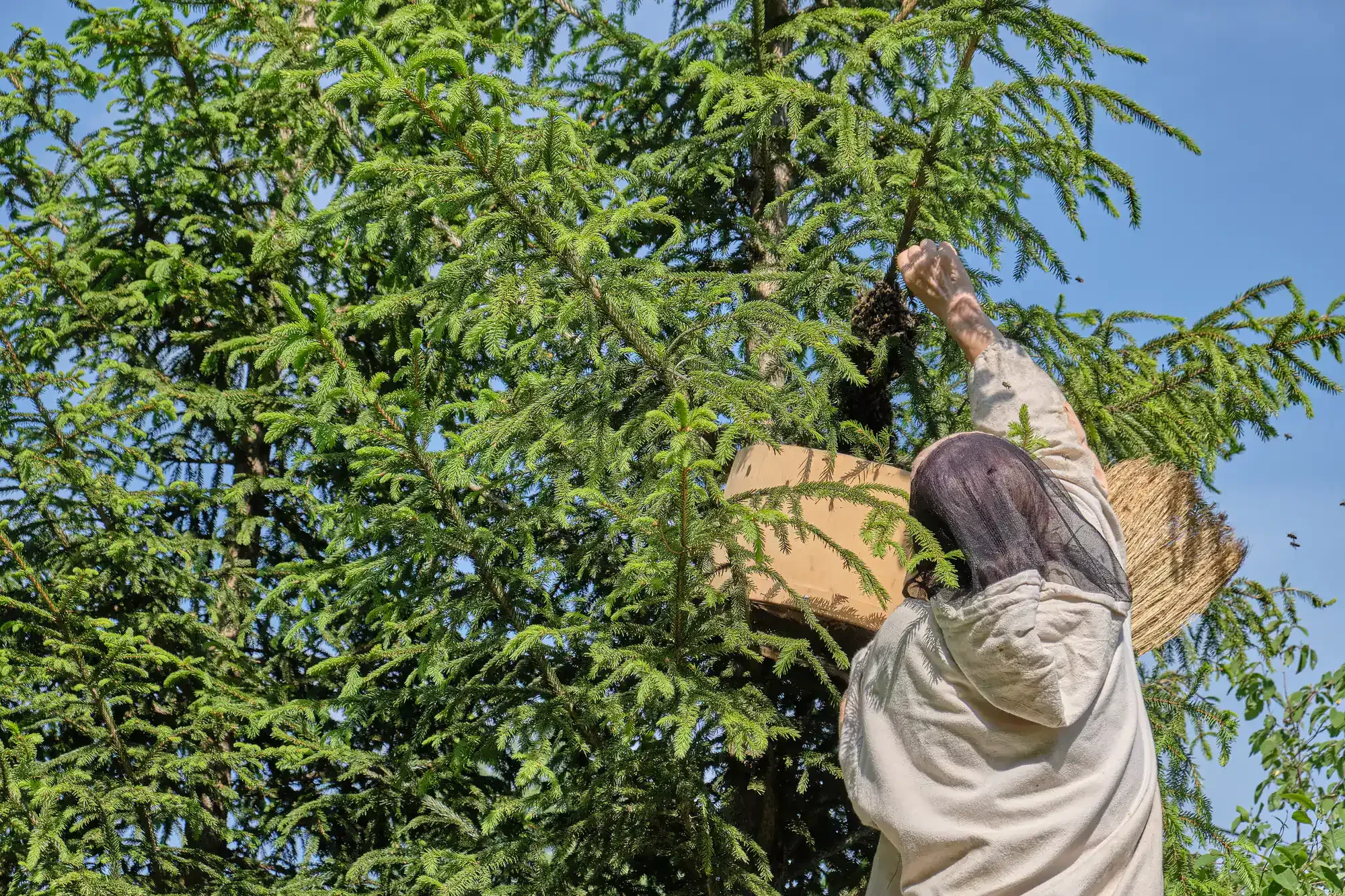
Fenton’s geography creates near-perfect nesting conditions for several species of stinging insects. The 58 lakes within a 10-mile radius, the Shiawassee River running through the center of the city, and the wooded corridors bordering neighborhoods near Seven Lakes State Park all provide the sheltered, semi-wooded habitat that wasps — especially yellow jackets and paper wasps — actively seek out for nest establishment. Riparian environments along riverbanks and lake margins are particularly attractive because they offer both cover and proximity to the food sources wasps forage for throughout the summer.
On top of that, Fenton’s mix of older historic structures downtown and newer construction on the city’s outskirts gives wasps a wide variety of entry points and nesting cavities to exploit. Aging soffits, loose siding, deteriorating eave gaps, and fresh lumber in new builds all present opportunities. If your property backs up to a wooded lot, borders a lake, or sits near the Shiawassee River trail, annual wasp pressure is not unusual — it is something to plan for, not be surprised by.
It matters quite a bit. Paper wasps build the open, honeycomb-style nests you typically see hanging under eaves, porch overhangs, and deck railings. They are defensive but not particularly aggressive unless the nest is directly disturbed. Treatment is usually straightforward — apply at the right time, wait for the colony to collapse, remove the nest structure.
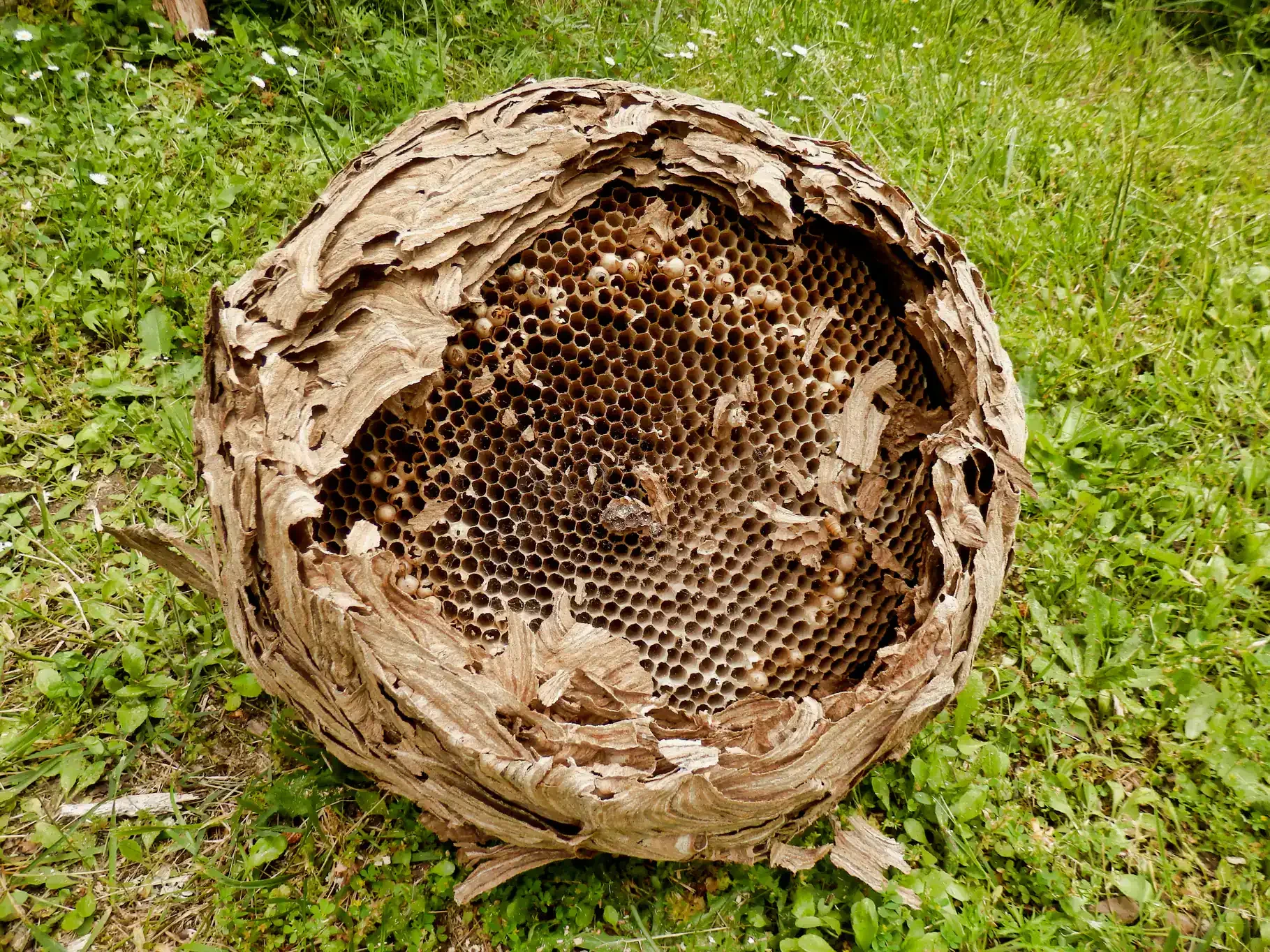
Yellow jackets are a different situation. They nest underground, inside wall voids, and in structural cavities, which means you often do not see the nest itself — you just notice a steady stream of insects coming in and out of a hole in the ground or a gap in your siding. They are significantly more aggressive than paper wasps, especially in August and September when colony size peaks and workers shift from hunting insects to scavenging food near humans. In Fenton, yellow jacket ground nests are common in yards adjacent to wooded areas and along property lines bordering natural corridors. Treating a yellow jacket nest incorrectly — or sealing the entry point without treating first — can drive the colony deeper into a wall void or cause a major interior infestation. This is one of the clearest cases where professional wasp nest removal in Fenton is worth every dollar.
The best time is the moment you find it — and that is not a throwaway answer. In Michigan, wasp queens emerge from overwintering in April and May and start building nests almost immediately. A colony that is treated in late spring might have 50 to 100 workers. That same colony in August can have several thousand, and the workers are at peak aggression because the colony’s food-gathering behavior shifts toward scavenging sugary food sources — exactly what ends up at your backyard barbecue or on your dock near Lake Fenton.
Early-season treatment is faster, less expensive, and far safer than an emergency call in the middle of peak summer. That said, if you are finding a nest in August or September, do not wait it out hoping the cold will solve the problem. Workers die off after the first hard frost, but queens overwinter and will return to the same favorable location the following spring. Treating the active colony now and sealing entry points afterward is the approach that actually breaks the cycle. We handle both — active removal and post-treatment follow-up to reduce the chance of recurrence next season.
DIY wasp nest removal works sometimes — usually when the nest is small, easy to access, and involves a less aggressive species like a small paper wasp colony early in the season. The problem is that most people do not find a nest until it is already well-established, and by that point the risk calculus changes significantly. A yellow jacket colony with thousands of workers defending an underground nest is not something a can of store-bought spray handles safely, and attempting to seal the entry point without treating first is one of the more reliable ways to make the situation much worse.
The other factor worth considering is what happens if something goes wrong. Stinging insect allergies are not always known in advance — some people discover a severe reaction the hard way. A single ER visit for anaphylaxis costs far more than professional wasp nest removal in Fenton. If the nest is near an entryway, a play area, a deck, or anywhere your family spends regular time, the professional route is the one that makes sense. Our technicians are licensed, trained, and equipped to handle the full range of stinging insect scenarios common to Genesee County properties — including the ones that look simple but are not.
Cost varies based on the species, the location of the nest, and how accessible it is. General wasp nest removal — paper wasps, aerial hornet nests — typically falls in the $375 to $525 range nationally. Yellow jacket nest removal, which often involves underground or wall void nesting and requires more involved treatment, averages closer to $725. Those are national benchmarks, and actual pricing in Fenton will depend on the specifics of your situation.
What affects cost most is complexity. A paper wasp nest under a deck railing is a straightforward job. A yellow jacket colony inside a wall void of an older home near downtown Fenton — or a ground nest in a wooded backyard bordering Seven Lakes State Park — takes more time, more precision, and a different treatment approach. We offer price matching for reasonable competitor quotes, so if you have already received a number from another licensed provider serving the Fenton area, bring it to the conversation. You are not going to be asked to choose between quality and affordability.
Yes — we offer discounts for senior citizens, military veterans, and first responders. Fenton is a tight-knit community where a lot of the people keeping things running — the retirees who have been here for decades, the veterans who came back and put down roots, the first responders who cover Genesee County — are the same people calling about a wasp nest near their back door in August. The discounts reflect that. It is not a promotional add-on; it is how a family-owned company in this county chooses to do business with the people who have given the most to the communities they serve.
If you are not sure whether you qualify, just ask when you call. The process is straightforward, and there is no paperwork maze to navigate. We keep things simple — no binding contracts, honest pricing, and a callback guarantee if the problem is not fully resolved after treatment.
Useful Links