
Hear from Our Customers
Finding a wasp nest changes how you use your own property. You stop going near certain areas. The kids stay inside. The dog gets rushed back in after every trip out. That’s not a minor inconvenience — that’s your home being taken over by something that stings without much warning and gets more aggressive as summer wears on.
Grand Blanc’s established neighborhoods — from Indian Hill to Kings Pointe — are full of mature trees, older eaves, and wooden decks that paper wasps and bald-faced hornets treat like prime real estate. And in the newer subdivisions throughout the township, ground disturbance from years of active construction has made yellow jacket underground nesting a real and common problem. These aren’t just nuisances. A disturbed ground nest near a play area or a colony above a frequently used door is a genuine risk — especially for anyone in the household with a known or unknown sensitivity to stings.
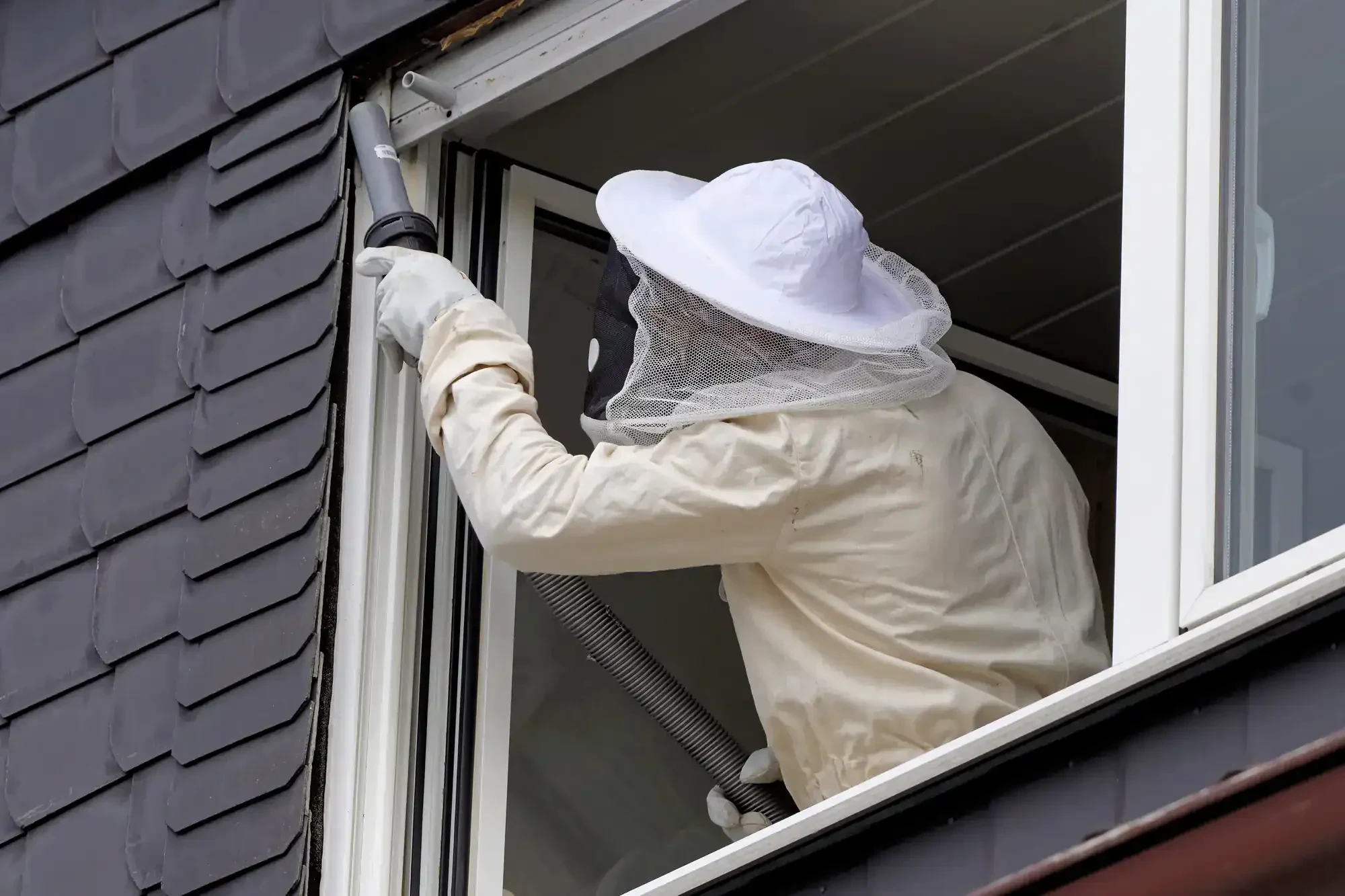
Professional removal eliminates the colony, not just the visible nest. That means the activity stops, the nest structure comes down, and the entry points get addressed so you’re not dealing with the same problem again in six weeks. When it’s done right, you get your backyard back — and you stop worrying every time your kids head outside.
We founded First Choice Pest Control in 2005 and are headquartered in Swartz Creek — less than ten miles from Grand Blanc via I-75. Roger Chinault, our founder and president, has 26 years of hands-on pest control experience in Genesee County. That’s not a number pulled from a marketing sheet. It means we’ve treated wasp nests in this specific part of Michigan across every season, every species, and every type of housing stock — from the older homes near Dort Highway to the newer builds going up across Grand Blanc Township’s 60-plus active subdivisions.
We hold all required licensing through the Michigan Department of Agriculture and Rural Development, carry Integrated Pest Management training, and have earned recognition from both Angie’s List and HomeAdvisor. There are no binding contracts here. You’re not locked in — you stay because the work holds up. And the same technician who handles your property this season will be the one who knows it next year, which is exactly how it should work.
It starts with identifying exactly what you’re dealing with. Paper wasps, yellow jackets, and bald-faced hornets all behave differently, nest differently, and require different treatment approaches. A ground nest in a Grand Blanc yard needs a completely different method than an aerial hornet nest in a mature oak or a paper wasp colony tucked under a second-story eave. Getting that identification right is what separates a treatment that works from one that just moves the problem.
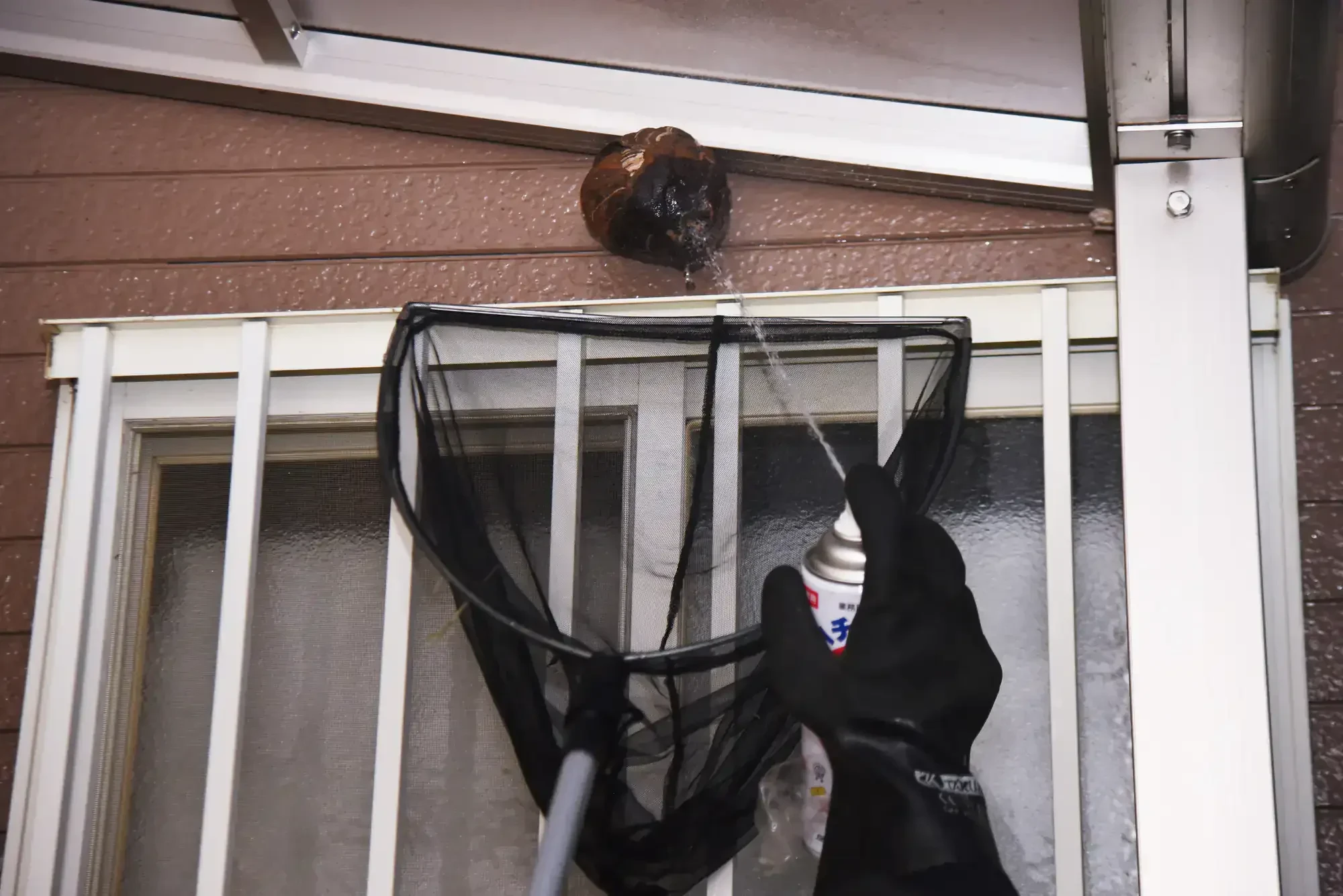
Once the nest type and location are confirmed, we apply treatment directly and precisely — targeting the colony at its source. For aerial and structural nests, that means eliminating the workers and queen, then removing the nest itself. For underground yellow jacket nests, treatment reaches into the tunnel system where the colony lives, not just the surface entrance. If the nest is in or near a structure — something worth noting for homeowners in neighborhoods that sustained eave or soffit damage from the February 2024 tornado — we identify entry points and address them as part of the process.
After treatment, you’ll get a clear answer on when it’s safe to return to the area — specific timing, not a vague “give it some time.” We’re licensed through MDARD, which means every product we use meets Michigan’s commercial pesticide application standards. If activity returns, the job isn’t done.
Ready to get started?
Our wasp nest removal service covers the full scope — inspection, treatment, nest removal, and a straight answer on what comes next. There’s no partial job where you’re left wondering if the colony is actually gone. The goal is complete elimination, not temporary suppression.
Grand Blanc’s mix of housing types matters here. Established neighborhoods like the Commons and Indian Hill tend to have older eave structures, wooden decks, and mature landscaping — all of which are common nesting sites for paper wasps and bald-faced hornets. Newer subdivisions across the township are more likely to produce yellow jacket ground nests, particularly in yards where lots were recently graded or landscaped. Both scenarios are well within scope, and we match the approach to what’s actually there — not a one-size-fits-all spray.
We serve both residential homeowners and commercial properties throughout Grand Blanc and the surrounding Genesee County area. Discounts are available for seniors, veterans, and first responders — a straightforward acknowledgment of the people in this community who’ve earned it. If you’ve already gotten a quote from another local company, we’ll match any reasonable competitor’s rate. No contracts, no pressure, and the same technician on your account year after year.
The most common sign is a steady stream of wasps flying in and out of a small hole in the ground — often near a landscaping border, a tree root, or an area of disturbed soil. You might also notice increased wasp activity in a specific part of your yard without an obvious visible nest. In Grand Blanc, ground nests are particularly common in newer subdivisions where lot grading and construction activity have left disturbed soil that yellow jackets favor for nesting.
The tricky part is that ground nests are often discovered accidentally — by mowing over the entrance or stepping too close. That’s when the colony responds fast and in numbers. If you’re seeing low-flying wasp activity near the ground in your yard, don’t probe the area or try to treat it yourself. Underground colonies in Genesee County can reach several thousand workers by midsummer, and disturbing an active nest without the right equipment and treatment approach makes the situation significantly worse. A professional inspection will confirm what you’re dealing with and get it handled correctly the first time.
Yes — but the timing depends on where the nest was, what product we used, and the treatment method. A nest treated on an exterior eave or in a tree will typically have a shorter re-entry window than one treated inside a wall void or in a confined structure. We give you a specific timeframe after every treatment, not a vague estimate. You’ll know exactly when the yard or the area near the nest is safe for your kids and your dog.
This is one of the most common questions from Grand Blanc families, and it’s a fair one. With 52% of households in the township having children under 18 and a community that genuinely invests in outdoor living — decks, play areas, backyard spaces — the answer matters. All products we use meet Michigan Department of Agriculture and Rural Development standards for licensed commercial pest control. That means the chemistry has been reviewed and approved for residential use, applied by a trained professional, not off a hardware store shelf with a guess at the dosage.
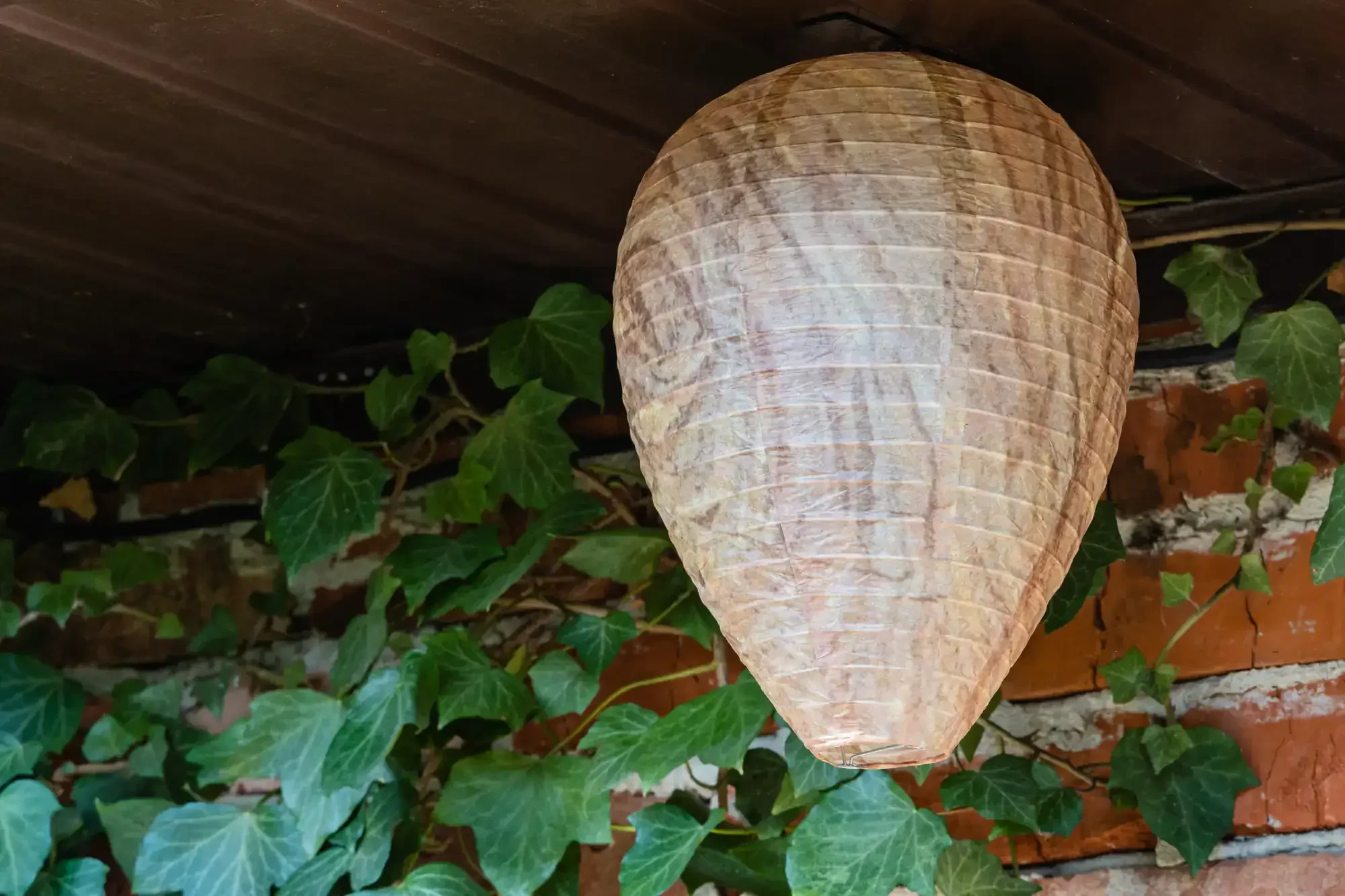
It does matter, and the three you’re most likely to encounter in Grand Blanc are paper wasps, eastern yellow jackets, and bald-faced hornets. Paper wasps build the open, umbrella-shaped nests you’ll typically find under eaves, in porch ceilings, or along deck railings — they’re common in Grand Blanc’s older established neighborhoods where those structural features are abundant. Eastern yellow jackets are the primary ground-nesting species and are responsible for most of the unexpected sting incidents that happen during yard work.
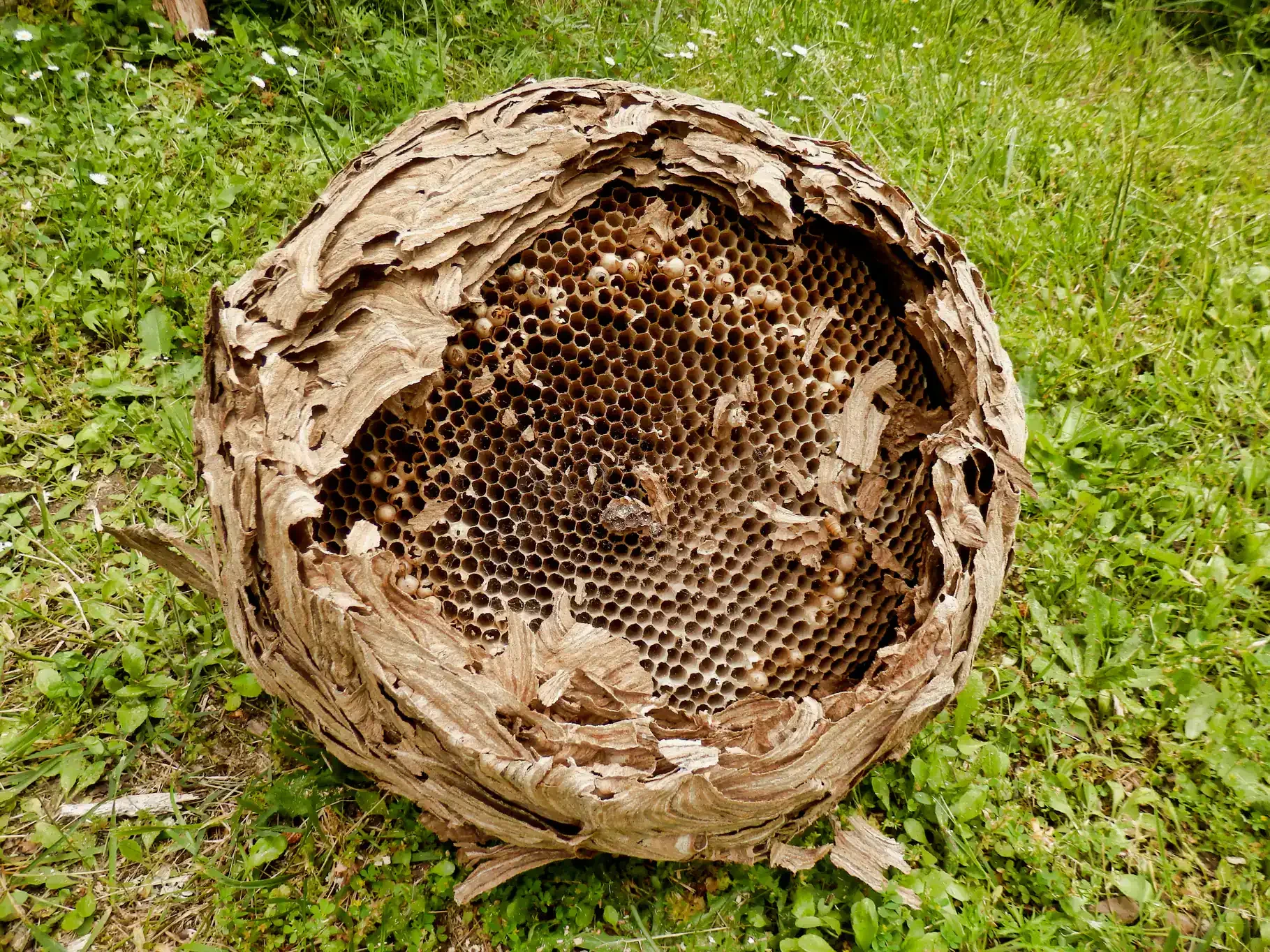
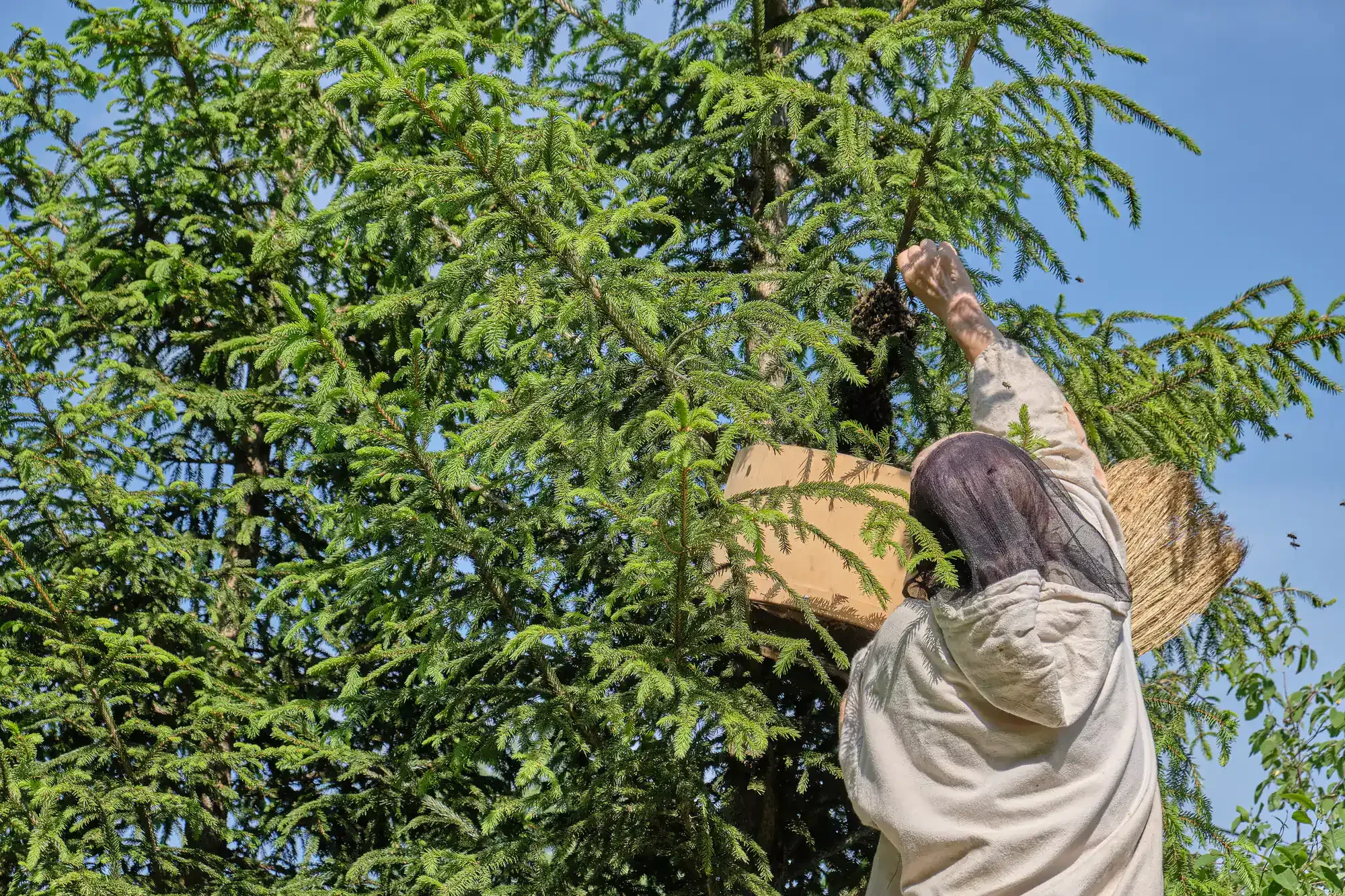
Bald-faced hornets build the large, gray, enclosed aerial nests that show up in trees and shrubs — they’re more aggressive than paper wasps and will defend the nest from a significant distance. Each species requires a different treatment approach and different timing. Treating a bald-faced hornet nest the same way you’d treat a paper wasp nest under an eave won’t get the job done. Knowing which species you’re dealing with before treatment begins is part of what makes the difference between a resolved problem and a repeat call.
For a small, newly established paper wasp nest in an easy-to-reach location, some homeowners do handle it themselves — usually with a can of aerosol wasp spray applied at night when activity is low. That can work in limited situations. But for anything underground, inside a wall, inside a soffit, or in an aerial hornet nest, DIY treatment carries real risk and a high failure rate. Hardware store sprays don’t penetrate underground tunnel systems, and disturbing an active colony without eliminating it typically makes the wasps more aggressive, not less.
In Grand Blanc specifically, homeowners in neighborhoods that had structural damage from the February 2024 EF-2 tornado should be especially cautious. Compromised eaves, cracked soffits, and patched exterior walls can create hidden entry points where wasps establish nests inside the structure itself — spots that are difficult to identify and nearly impossible to treat safely without professional equipment. If there’s any doubt about where the nest is, how large the colony has gotten, or whether someone in the household has a venom sensitivity, calling a licensed professional is the straightforward answer.
Late summer — August through early October — is when wasp colonies in Genesee County are at their largest and their most aggressive. A yellow jacket colony that started with a single queen in April can have anywhere from 5,000 to 15,000 workers by August. At the same time, natural food sources start declining, which pushes yellow jackets toward human food and garbage. That combination of peak population and food-seeking behavior is why late-summer stinging incidents spike.
The practical takeaway is that timing your call matters. A nest treated in June is smaller, less defended, and faster to eliminate than the same nest in August. If you spot wasp activity near your deck, your eaves, or your yard early in the season, it’s worth addressing it before the colony reaches full size — not because it’s urgent in the same way a large August nest is, but because early treatment is genuinely easier, less expensive, and safer for everyone involved. We serve Grand Blanc throughout the active pest season, and early-season calls are just as welcome as the mid-August emergencies.
Yes — we offer discounts for seniors, veterans, and first responders. Grand Blanc has a meaningful population of all three, including the healthcare workers at McLaren and Henry Ford Genesys Hospital who often serve as first responders in their own right, the veterans who make up a consistent part of Genesee County’s homeowner community, and the older residents in the township’s established neighborhoods who’ve owned their homes for decades. These discounts aren’t a promotional footnote — they reflect a straightforward decision to charge less to the people in this community who’ve given the most.
Beyond the discounts, we also match reasonable competitor rates. If you’ve already gotten a quote from another Grand Blanc-area pest control company, bring it to the conversation. There are no binding contracts on any service, which means you’re not committing to a recurring program you didn’t ask for — you’re hiring for the job in front of you, and the work either earns your trust for next time or it doesn’t. That’s how we’ve operated in Genesee County for 20 years, and it’s not changing.
Useful Links