
Hear from Our Customers
You stop planning your day around a wasp nest. You stop telling the kids to stay away from the shed. You stop wondering whether that ground nest near the fence line is going to become a problem at the worst possible moment — because it already is one, and now it’s gone.
For Montrose homeowners and property owners, that relief hits differently than it does in a subdivision. A lot of properties here have barns, outbuildings, and older wood-framed structures that have been accumulating potential nesting sites for decades. Wall voids, gaps in deteriorated fascia, uninsulated attic spaces — these are the places yellow jackets move into quietly and build out fast. By the time you notice the traffic, the colony is already established.
The Flint River corridor adds another layer. Wooded riverbanks and moisture-retaining soil along the river create ideal habitat for bald-faced hornets and ground-nesting yellow jackets that wouldn’t be a factor on a drier, more developed property. If your land touches that corridor — or if you’re near the orchard and farm roads off Seymour or Morrish — you’re dealing with a pest pressure that’s genuinely different from what most suburban Genesee County homeowners face. What you get after professional wasp nest removal isn’t just a treated nest. It’s a sealed entry point, a removed structure, and a yard your family can actually use again.
First Choice Pest Control has been serving Genesee County since May 31, 2005. That’s twenty years of Michigan summers, twenty years of yellow jacket season, and twenty years of earning repeat business without a single binding contract. We’re led by Roger Chinault, who brings 26 years of hands-on pest control experience to every job — not a management title, actual field experience.
What makes First Choice different for Montrose residents isn’t a tagline. It’s the fact that the same technician who treats your property this year will be the one who comes back next year. They’ll already know your barn layout, your yard’s history, and where the problem spots tend to be. That kind of continuity matters on a rural property. It also means you’re never explaining your situation to someone new who’s reading your file for the first time.
We hold Integrated Pest Management (IPM) training credentials, have earned recognition from both Angie’s List and HomeAdvisor, and offer discounts for seniors, veterans, and first responders — because that’s who makes up a big part of this community.
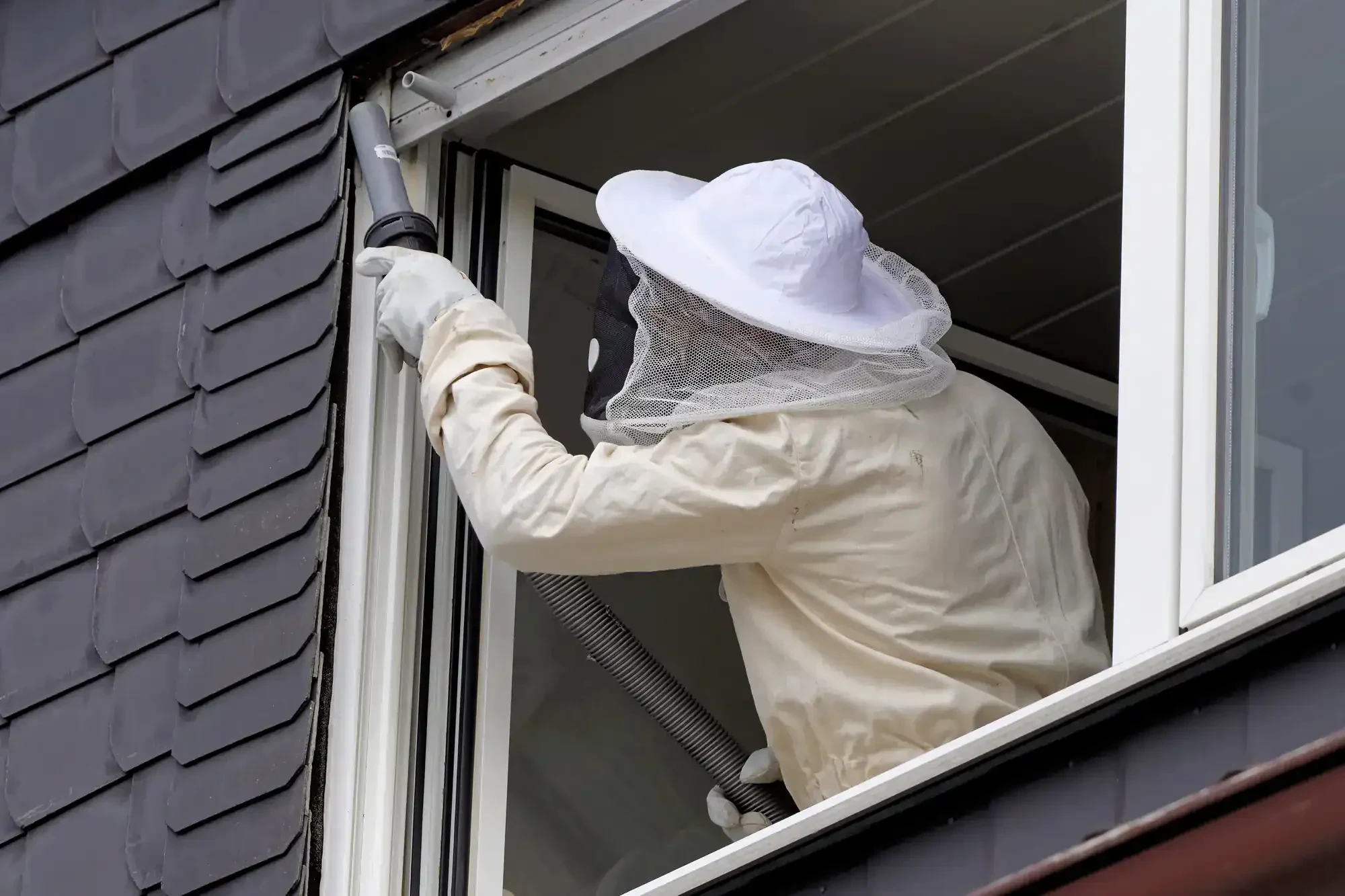
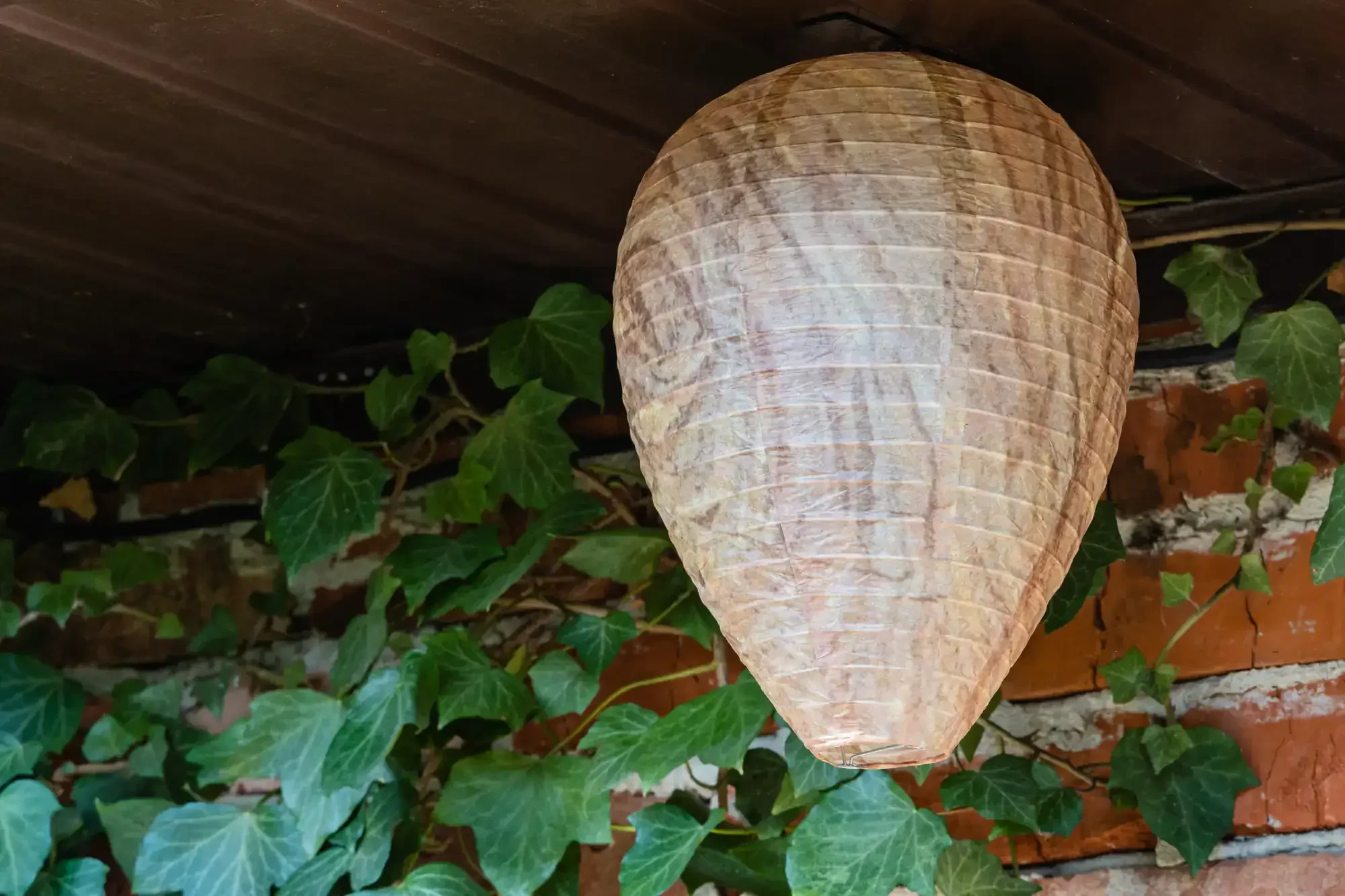
It starts with a real assessment, not a quick glance and a quote. When one of our technicians arrives at your Montrose property, we’re looking at the full picture — the nest location, the species, the size of the colony, and how the structure around it affects treatment. A paper wasp nest under the eaves of a farmhouse is handled differently than a yellow jacket colony buried in a ground void near a pasture fence or packed into a wall cavity of an older outbuilding. The approach changes based on what’s actually there.
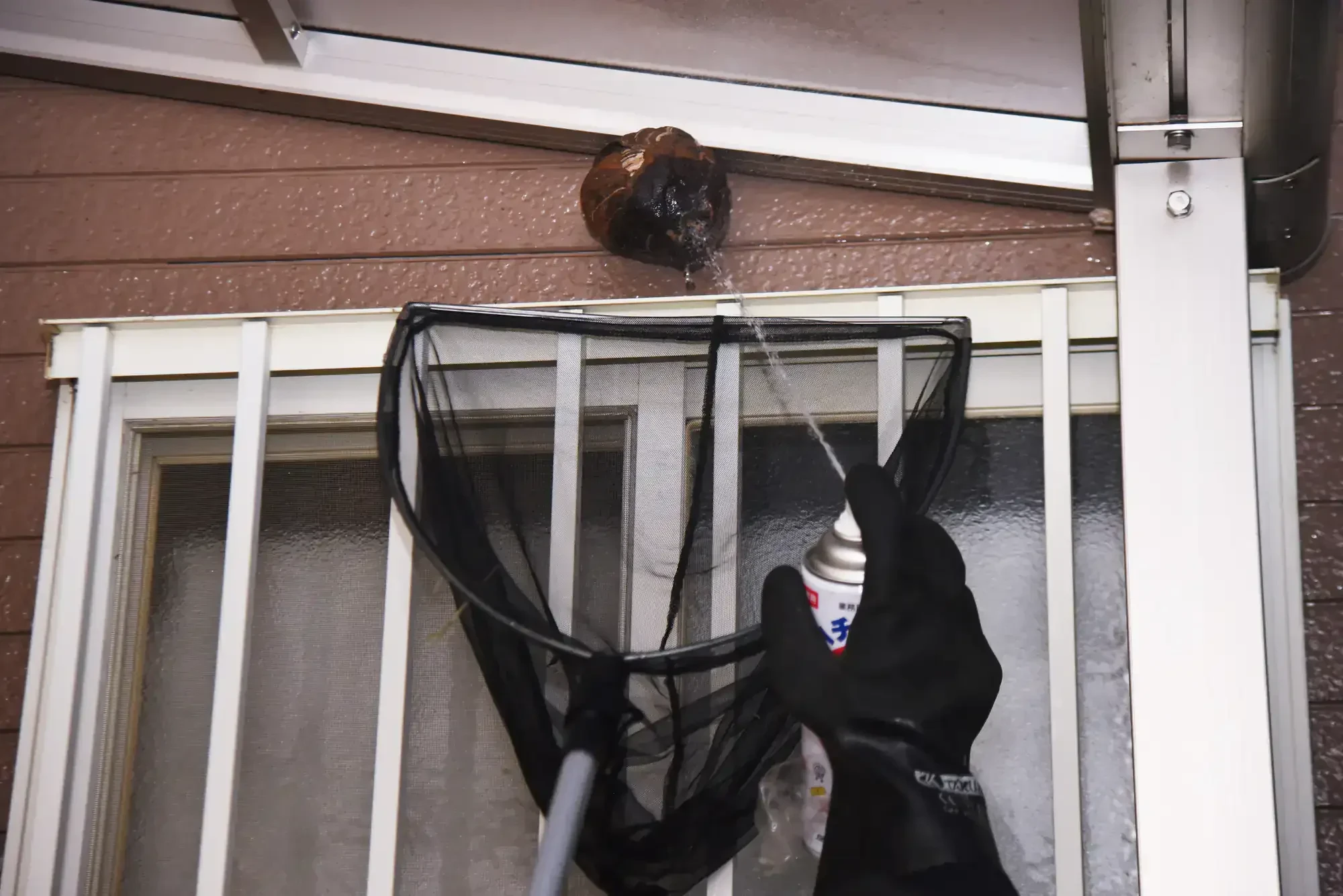
Treatment uses professional-grade products that aren’t available at hardware stores. For most nests, that means direct colony elimination followed by physical removal of the nest structure once the colony is neutralized. For wall void or ground nests — which are common on the older agricultural properties throughout Montrose Township — insecticidal dust is often the right tool, applied in a way that reaches the full nest rather than just the entry point.
After treatment, entry points get sealed to cut off re-nesting access. This is the step most DIY attempts skip, and it’s the reason wasps come back after a store-bought spray. Timing matters here too — in Michigan, late summer is when yellow jacket colonies peak at thousands of workers, which means a nest that felt manageable in June is a different situation entirely by the time the Blueberry Festival rolls around in August. If there’s any question about results, we come back. That’s not a policy buried in fine print — it’s just how we operate.
Ready to get started?
Professional wasp nest removal from First Choice covers the full job — not just the spray. That means colony elimination using commercial-grade products, physical removal of the nest after treatment, and entry point sealing to prevent the same spot from becoming a problem again next season. Every technician is MDARD-licensed and fully insured, which matters when you’re comparing options and one of them is an online aggregator routing calls to a national network that doesn’t know Montrose from Mount Morris.
For residential properties in the city of Montrose and throughout Montrose Charter Township, our service covers the full range of stinging insect situations — paper wasps under eaves, yellow jacket ground nests in yards and pastures, bald-faced hornet aerial nests in trees along the Flint River corridor, and wall void infestations in older homes and outbuildings. We also serve commercial and agricultural properties, which is relevant for the farm operations and orchard properties in this area where wasp pressure during harvest season is a genuine occupational concern, not just a backyard nuisance.
We also offer price matching for reasonable competitor rates, so if you’ve already gotten a quote, bring it. Seniors, veterans, and first responders receive discounts — no hoops to jump through. And because there are no binding contracts, you’re not locked into anything. The service just has to earn the next call, which is exactly how we’ve operated for two decades.
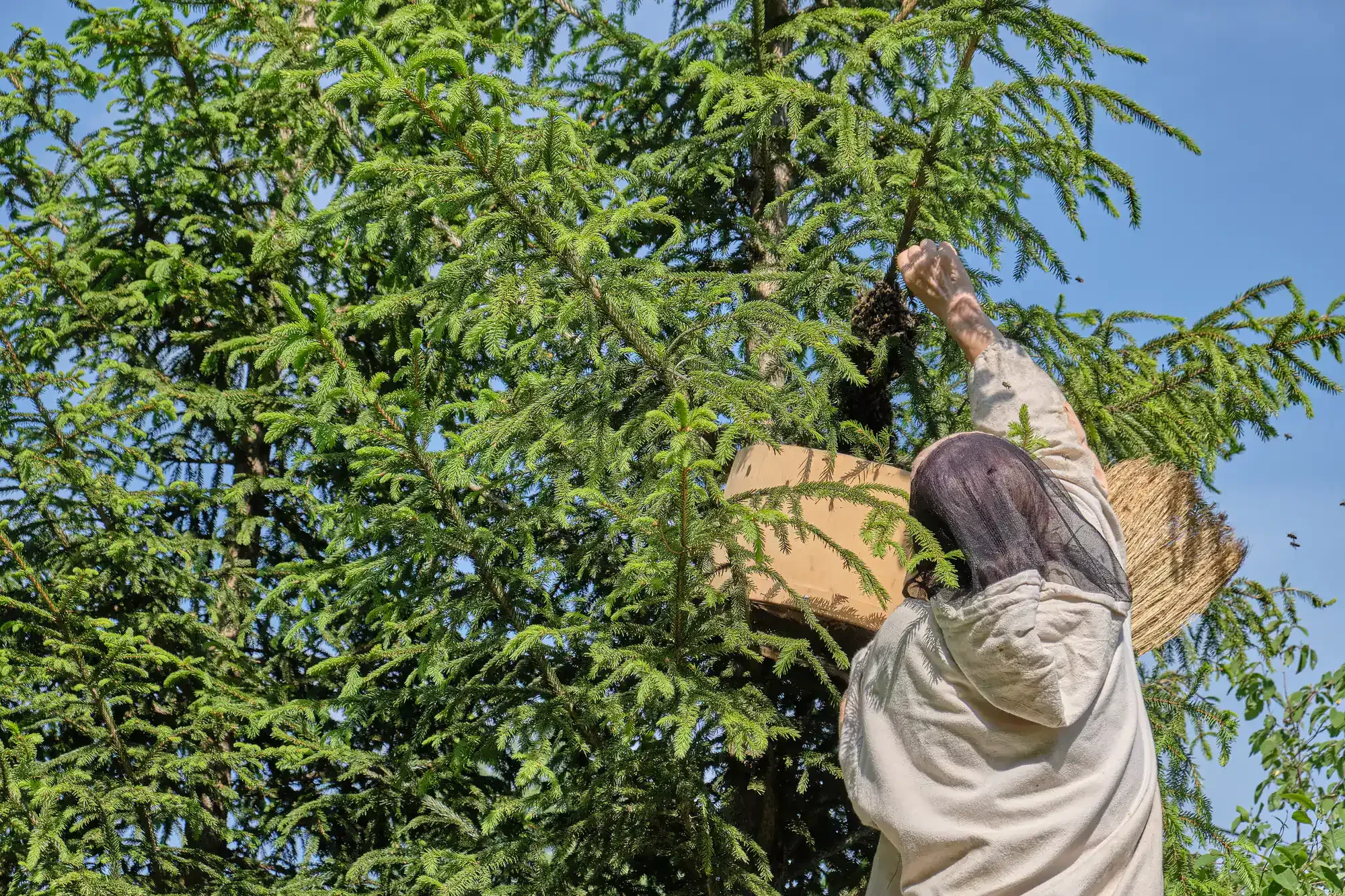
In Michigan, yellow jacket colonies start small in spring — a single queen building a starter nest in April or May. By June and July, the colony is growing steadily and workers are foraging across your yard, garden, and outbuildings. But August and September are when things get genuinely dangerous. That’s when colonies can reach anywhere from 5,000 to 15,000 workers, and as natural food sources start to decline, yellow jackets become significantly more aggressive. They’re not just defending the nest — they’re competing for anything sugary or protein-rich they can find.
For Montrose residents, that peak window hits right alongside the annual Blueberry Festival, orchard harvest season at places like Montrose Orchards on Seymour Road, and the last stretch of summer when families are spending the most time outside. A nest that seemed like a minor issue in late June is a completely different animal by Labor Day. If you’ve spotted activity on your property, earlier treatment is always easier, cheaper, and safer than waiting until the colony is fully established.
Store-bought aerosols can knock down visible workers, but they rarely penetrate deep enough to reach the queen or eliminate the full colony — especially with ground nests or wall void nests, which are both extremely common on the older rural properties throughout Montrose Township. If the queen survives, the colony rebuilds. And if the entry point isn’t sealed after treatment, a new colony can move into the same space the following season.
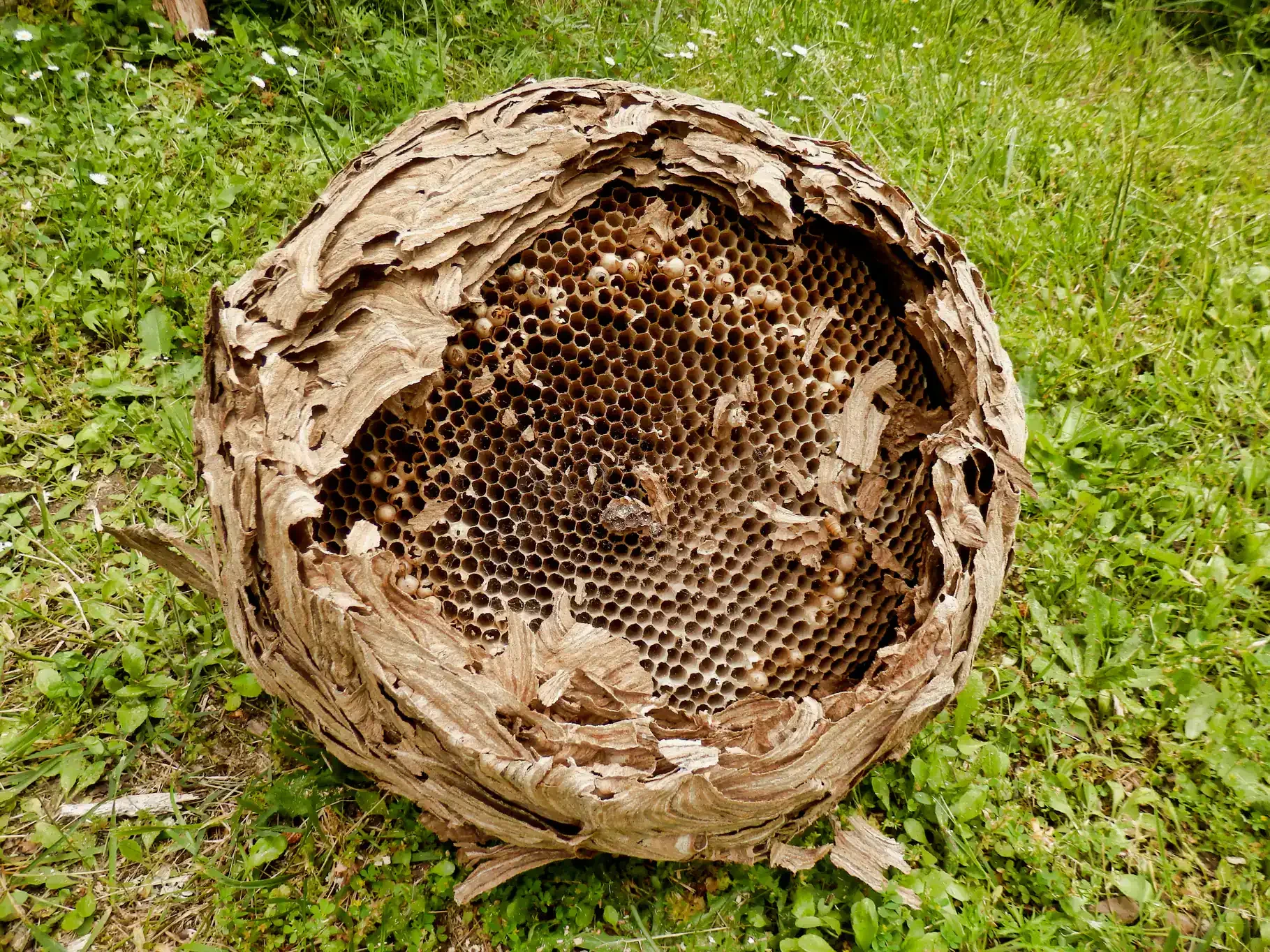
Professional treatment works differently. Our commercial-grade products reach the full nest structure, not just the opening. After the colony is eliminated, the physical nest is removed — which matters because an abandoned nest can still attract new queens looking for a ready-made structure to reuse. Entry points are then sealed to close off access. That combination — elimination, removal, and sealing — is what separates a permanent fix from a temporary setback. It’s also why most people who’ve tried the DIY route more than once end up calling a professional anyway.
Wall void infestations are easy to miss until the colony is well established, and they’re particularly common in the older housing stock throughout Montrose and Montrose Charter Township — farmhouses, older ranch-style homes, and outbuildings with deteriorated siding or gaps in the fascia that have opened up over years of Michigan winters. The signs are usually consistent: you see workers entering and exiting a small gap or crack in the exterior, often near a roofline, window frame, or utility penetration. You might hear a low buzzing or crackling sound inside the wall during peak activity hours. In some cases, workers will push through interior gaps and appear inside living spaces.
If you’re seeing any of those signs, don’t try to seal the entry point yourself before treatment — that traps the colony inside and can force workers deeper into the wall or into your living area. One of our licensed technicians will treat the void with insecticidal dust, which distributes through the cavity and reaches the full nest, then seal the entry point after the colony is eliminated. Wall void treatments require a different approach than exposed nests, and getting it wrong can make the situation significantly worse.
Cost depends on the type of nest, where it’s located, and how large the colony is. For a standard exposed nest — paper wasps under eaves, a small aerial nest in a shrub — professional removal typically runs in the $150 to $300 range. Yellow jacket ground nests and wall void infestations are more complex and can run higher, often in the $300 to $500 range or more depending on the scope of the job.
For Montrose-area properties with barns, outbuildings, or agricultural structures, the job scope can vary more than it would on a standard residential lot — there are simply more potential nesting sites and more structural complexity involved. We offer price matching for reasonable competitor rates, so if you’ve already received a quote, it’s worth a call to compare. The goal isn’t to be the cheapest option — it’s to make sure you’re not paying more than you should for work that’s done completely and correctly the first time.
This is a fair and important question, especially on properties where animals are present — and on Montrose’s rural and agricultural properties, that’s a real consideration. Our technicians are trained in Integrated Pest Management (IPM), which means treatment is targeted to the specific problem rather than a broad chemical application across the property. Products are applied directly to the nest and entry points, not broadcast across your yard or fields.
After treatment, there is a re-entry window that your technician will communicate clearly before they leave — typically a few hours for the treated area to dry or off-gas, depending on the product used. Once that window has passed, the treated area is safe for children, pets, and livestock under normal conditions. If you have specific concerns about a particular animal or a sensitive area of your property — a chicken coop near a ground nest, for example, or a well within close proximity — bring that up when you schedule. The approach can be adjusted based on what’s actually on your property, and that conversation is part of the job, not an afterthought.
Yes — we offer discounts for senior citizens, military veterans, and first responders. In a community like Montrose, where a meaningful portion of residents have served in the military, work in public safety, or are retired on fixed incomes, those discounts reflect something real about who we choose to work with and how we think about the people we serve. It’s not a promotional add-on — it’s just built into how we do business.
Beyond the discounts, we also offer price matching for reasonable competitor rates. So if you’ve already gotten a quote from another pest control company serving the Montrose area, bring it to the conversation. There are no binding contracts, no annual service agreements you have to opt out of, and no hidden fees layered onto the final invoice. You pay for the work, the work gets done right, and if something isn’t resolved, we come back. That’s the standard — not the exception.
Useful Links