
Hear from Our Customers
If you’ve found a nest tucked under a barn eave, inside a wall void of an older outbuilding, or buried in the ground along a fence line, you already know the problem isn’t going away on its own. Wasps don’t relocate. They expand. And by August, a colony that started with a few dozen workers in June can hold thousands — all of them defending that exact spot.
Out here in Pine Run, properties aren’t just houses with tidy backyards. They’re acreage. Pole buildings. Detached garages. Drainage ditches along field edges. That’s exactly the kind of environment where yellow jackets thrive — and where a ground nest can go completely unnoticed until someone mows too close or a dog runs through the wrong patch of grass. That’s not carelessness. That’s just how rural property works.
Once the nest is handled, you get something back that’s easy to underestimate until it’s gone: the ability to use your own property without planning around it. Kids can go back outside. You can mow the full perimeter again. The back of the barn stops being off-limits. That’s what professional wasp removal actually delivers — not just a dead nest, but the space and safety you’re supposed to have on your own land.
We’ve been serving mid-state Michigan since May 31, 2005 — and the way we operate hasn’t drifted from what made it work in the first place. Roger Chinault founded First Choice Pest Control, leads it, and brings 26 years of hands-on pest control experience to every service. This isn’t a franchise routing your call through a regional hub. We’re locally rooted, based in Swartz Creek, about 20 miles down I-75 from Pine Run — close enough to be your neighbor in every practical sense.
What sets us apart isn’t a slogan. It’s structure. The same technician comes back to your property year after year, which means they already know your barn layout, your entry points, and your history before they pull into the driveway. We’re fully licensed through the Michigan Department of Agriculture and Rural Development, carry full insurance, hold Integrated Pest Management training, and have earned recognition from both Angie’s List and HomeAdvisor. No binding contracts. No part-time seasonal temps. Just consistent, professional service from people who know this region and treat it like home — because it is.
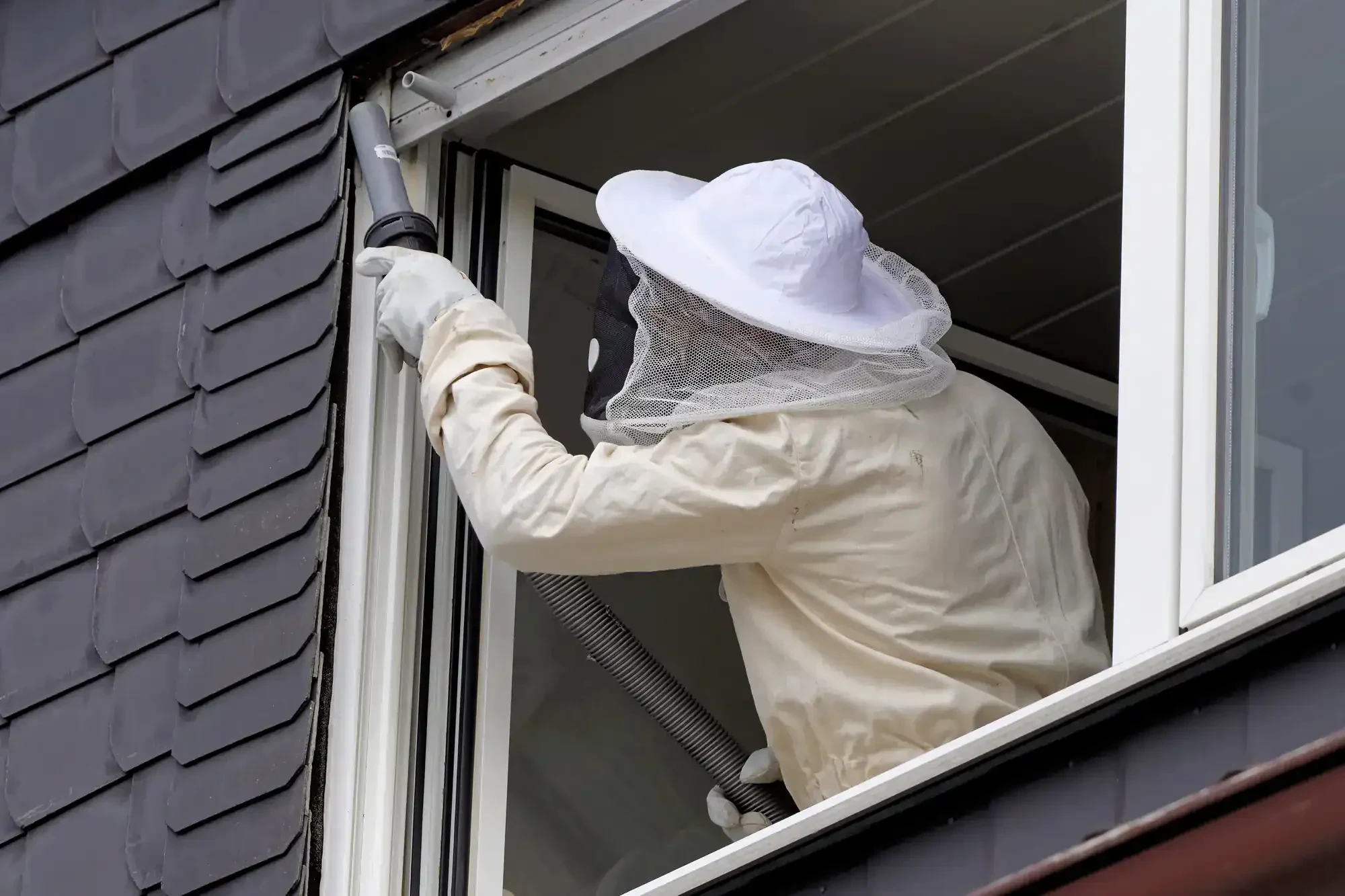
It starts with a thorough inspection of your property — not just the obvious spots, but the places that rural Saginaw County properties are known for: barn rafters, wall voids in older outbuildings, ground-level burrows along fence lines and drainage ditches, and tree canopies where bald-faced hornets build large aerial nests by late summer. We’re looking for every active nest, not just the one you already spotted.
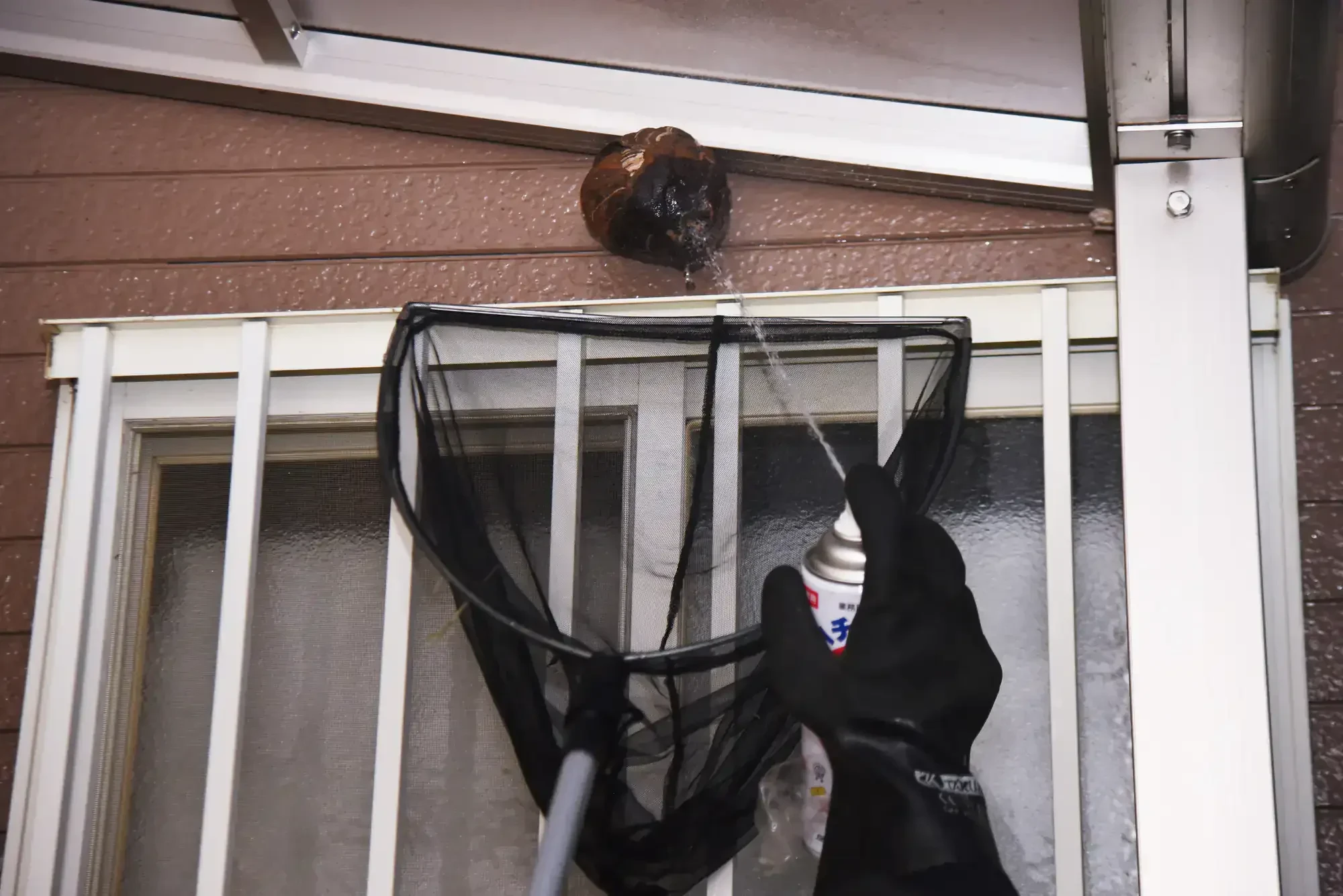
Once the nests are located and the species confirmed — because yellow jackets, paper wasps, and hornets each require a slightly different approach — we apply treatment directly and precisely. We use Integrated Pest Management methods, meaning the treatment targets the problem without unnecessarily broad chemical application across your property. That matters when you have dogs, outdoor animals, or agricultural land nearby.
After treatment, we physically remove the nest and seal the entry points. That last step is the one most people don’t think about — but it’s the one that actually prevents a new queen from moving into the same spot next spring. You’ll also get a clear answer on when it’s safe to re-enter the treated area, specific to your property and what was used. No vague timelines. If you have livestock or outdoor pets, that conversation happens before we leave.
Ready to get started?
Our wasp nest removal service covers the full job — inspection, targeted treatment, physical nest removal, and entry point sealing. There’s no partial service where you get a spray and a handshake and figure out the rest yourself. The process is complete because a half-finished job just resets the clock on the same problem.
For Pine Run properties specifically, that often means addressing more than one nesting site in a single visit. It’s common out here to find paper wasps under the front eave, a yellow jacket colony in a wall void of the detached garage, and a ground nest somewhere along the back fence line — all active at the same time. Our inspection accounts for that. If there’s more than one nest, you’ll know before treatment begins, not after.
We also offer price matching for reasonable competitor rates, so if you’ve already gotten a quote from another local provider — Beck’s, Prudential, or anyone else serving the Saginaw County area — bring it. Discounts are available for seniors, veterans, and first responders, because those aren’t marketing categories here, they’re neighbors. There are no binding contracts. You’re not signing up for a program. You’re getting a specific problem solved by a licensed, insured professional who has been doing this work in this region for two decades.

This is one of the most common questions from Pine Run homeowners, and it’s the right one to ask. The short answer is yes — but the specifics matter. The products we use are applied in targeted, controlled amounts that are very different from what’s in an off-the-shelf hardware store can. We use Integrated Pest Management methods, which means the treatment is precise and the application is deliberate, not a broad chemical spray across your entire property.
Before treatment begins, our technician will walk through what’s being used, where it’s being applied, and what the re-entry window looks like for different animals. For dogs, that’s usually a matter of hours. For chickens or other outdoor livestock near the treatment area, we’ll give you a specific timeline based on what was applied and how close the nest is to where your animals spend time. The goal is to solve the wasp problem without creating a new one — and that conversation happens before anything is touched.
The behavior is usually the first clue. Yellow jackets are the ones that show up at your outdoor meals, hover around garbage cans, and get aggressive when you’re anywhere near their nest — especially in August and September when their colony is at full size and natural food sources start running low. They nest in the ground, in wall voids, and in enclosed spaces like the inside of a barn wall. If you’ve been stung without warning while mowing or working near a fence line, yellow jackets are the most likely culprit.
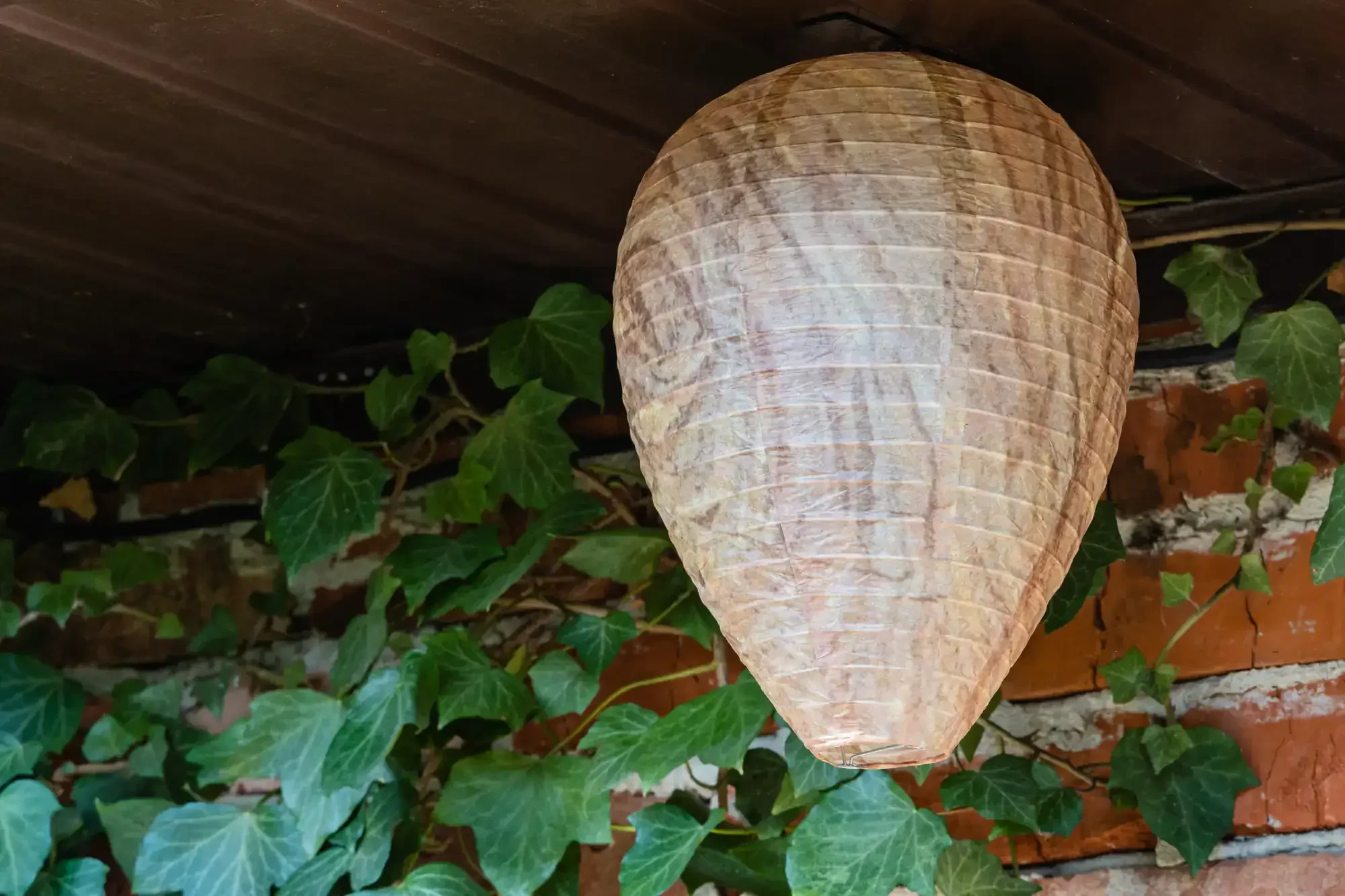
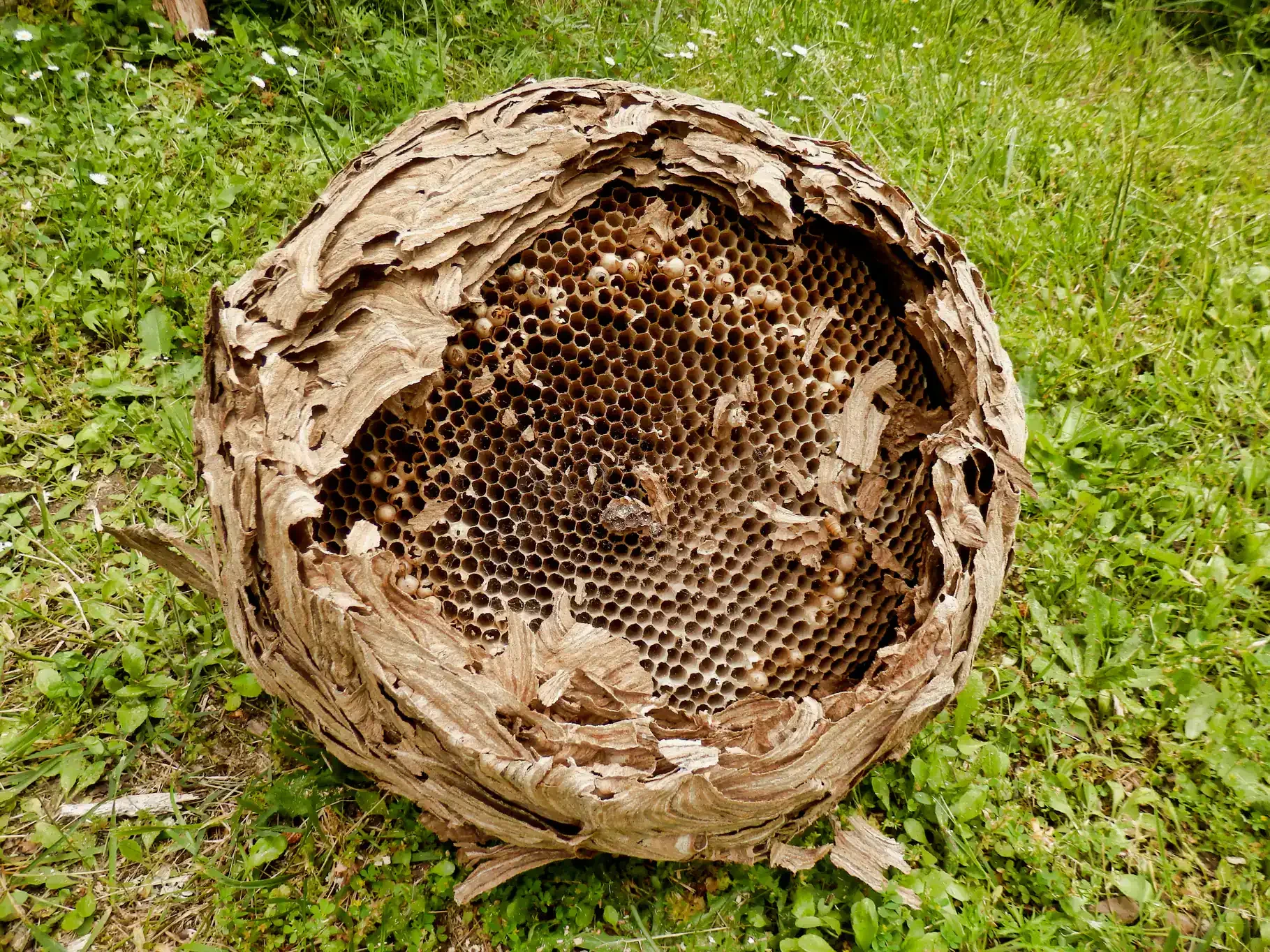
Paper wasps are calmer by comparison and build the open, umbrella-shaped nests you’ll see hanging under eaves, in rafters, and on the underside of deck boards. Bald-faced hornets build the large, gray, football-shaped nests in trees and on building overhangs — and they’re extremely defensive when disturbed. Each species responds differently to treatment, which is why a proper inspection matters before anything is applied. We can confirm what you’re dealing with and approach it correctly the first time, rather than agitating a colony with the wrong method.
August and September are the most dangerous months in Saginaw County, and that’s not a coincidence. Yellow jacket colonies spend the entire summer growing — by late August, a single colony can hold anywhere from 5,000 to 15,000 workers. At the same time, their natural food sources start declining, which pushes them toward human activity: outdoor meals, garbage, and anything sweet. That’s when most stings happen, and when most emergency calls come in.
There’s also a locally specific factor worth knowing about if you live in or near Pine Run: Saginaw County’s sugar beet harvest runs through September and into October. Heavy equipment moving through fields, disturbed soil, and increased activity near field edges all raise the chances of hitting a ground nest without warning. If you work on or near agricultural land in the Pine Run area, the fall harvest season adds real risk on top of an already elevated time of year. The first hard frost — typically late September to mid-October in this part of Michigan — is when workers die off and colonies collapse. But waiting until frost isn’t a strategy when the nest is 15 feet from where your kids play.
You can attempt it — plenty of people do. But there are a few situations where DIY removal goes wrong quickly, and rural properties in Pine Run tend to check several of those boxes at once. Ground nests are the most dangerous to treat yourself because you often can’t see the full extent of the colony, and disturbing it without the right protective equipment and the right product application method can trigger a mass defensive response from thousands of workers before you can get away.
Wall void nests are another category where DIY attempts tend to backfire. Spraying into a wall void without knowing the full nest location often agitates the colony without eliminating it — and in older homes and outbuildings common to this area, those voids can extend further than expected. If the nest is in an accessible, open location and the colony is small, some homeowners manage it fine. But if it’s in a hard-to-reach spot, involves yellow jackets, or is near an area where children, pets, or animals spend time, the risk-to-reward calculation shifts pretty clearly toward calling a professional. The cost of a sting incident — especially for anyone with an allergy — is a lot higher than the cost of a service call.
For a standard wasp or paper wasp nest removal, costs typically run between $375 and $525. Yellow jacket removal tends to cost more — closer to $725 on average — because of the colony size, the species’ aggression, and the more complex treatment process, especially for ground nests or wall void infestations.
What affects your specific cost in the Pine Run area is the number of nests, where they’re located, and how accessible they are. A single paper wasp nest under an eave is a straightforward job. A yellow jacket colony inside a barn wall with multiple entry points is a different scope entirely. We offer price matching for reasonable competitor rates, so if you’ve already gotten a quote from another licensed provider in the Saginaw County area, it’s worth a call. There are no hidden fees and no contracts — you’ll know what the job costs before anything starts.
Yes — we offer discounts for seniors, military veterans, and first responders. In a rural community like Pine Run, those groups aren’t a demographic checkbox. They’re the people who’ve spent careers taking care of others, and the discount is a straightforward way of returning that. If you or someone in your household qualifies, just mention it when you call.
Beyond the discounts, we also match reasonable competitor rates. So if you’ve already spoken with another pest control company serving the Birch Run Township area and have a quote in hand, bring it to the conversation. The goal isn’t to be the cheapest option — it’s to make sure cost isn’t the reason a qualified, experienced professional doesn’t get the call. Twenty years of consistent service in mid-state Michigan means the work speaks for itself, and the pricing should reflect that without being a barrier for the people who need it most.
Useful Links