
Hear from Our Customers
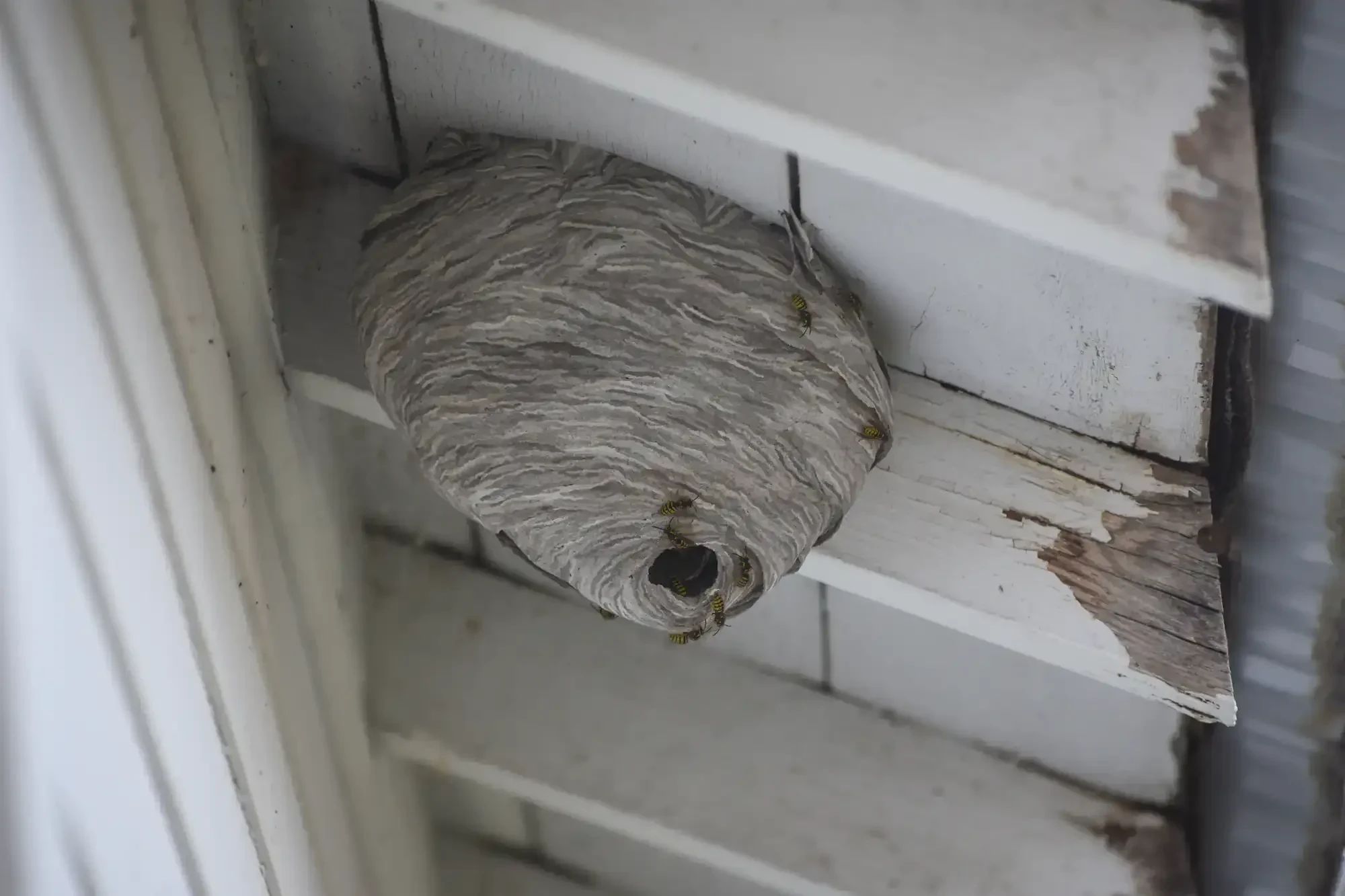
By the time most Davison homeowners call us, they’ve already tried the store-bought spray. Maybe it worked for a day. Maybe it made things worse. What you actually need is someone who can locate where the colony is living — not just where it’s showing up — and treat it in a way that doesn’t drive thousands of workers deeper into your wall or further under your lawn.
That matters more in Davison than most people realize. The post-war housing stock here — the Colonials and ranch homes lining the streets off M-15 and Lapeer Road — was never built to stay sealed forever. Decades of Michigan freeze-thaw cycles open up gaps that German Yellowjackets are very good at finding. A colony in a wall void or attic space isn’t just a nuisance. It’s a structural problem that gets worse the longer it sits, and one that a can of foam from the hardware store isn’t going to solve.
If your property backs up to Black Creek or Kearsley Creek, or you’ve got wooded edges near the yard, ground nests are a separate issue entirely. Eastern Yellowjackets build underground in abandoned burrows along those riparian corridors, and they don’t announce themselves until someone steps too close. Whether it’s in the wall, under the eaves, or out in the yard — the fix starts with correctly identifying what you’re dealing with before anything gets sprayed.
We’ve been operating out of Swartz Creek since May 31, 2005 — right down I-69 from Davison, the same stretch of highway most of you drive every day. Roger Chinault founded the company and still leads every job with 26 years of hands-on pest control experience behind him. This isn’t a franchise. There’s no call center, no rotating roster of whoever’s available that week, and no part-time college students doing field work. When you book with us, the same trained technician comes back year after year — someone who actually knows your property.
We hold MDARD Pesticide Application Business License #250081, have completed Integrated Pest Management training, and carry a 4.7 out of 5 rating on Angi backed by verified reviews. We offer discounts for seniors, veterans, and first responders — and in a community like Davison, with one of the highest concentrations of Vietnam-era veterans in the region, that’s not a line item. It’s a genuine acknowledgment of the people who live here.
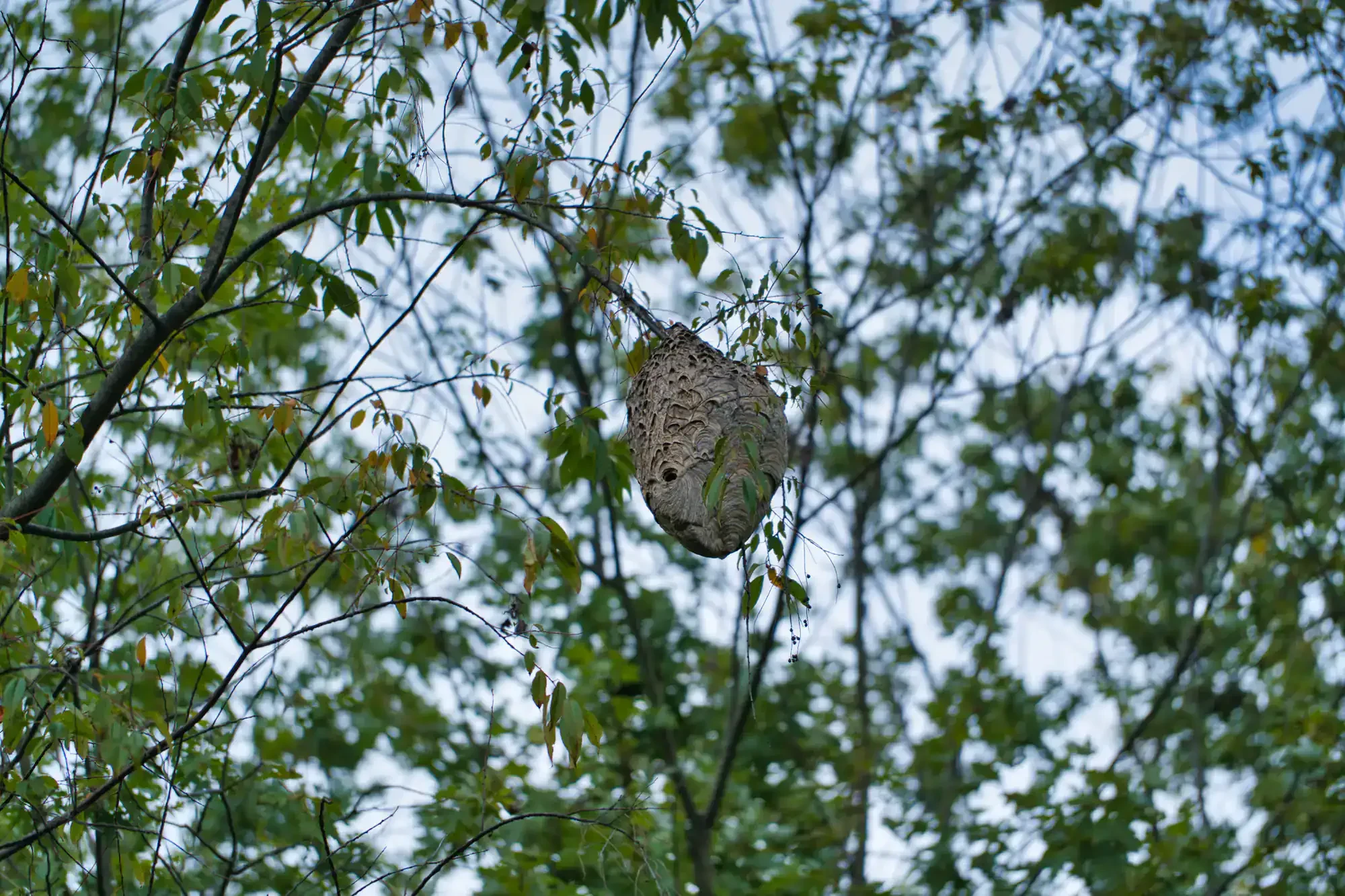
It starts with a call — not a form that sits in a queue. You describe what you’re seeing, where you’re seeing it, and when it started. From there, we schedule an inspection at your Davison property and do the thing that matters most before any treatment begins: species identification. Davison has both German Yellowjackets, which prefer to nest inside structures, and Eastern Yellowjackets, which go underground. Treating one like the other is a common mistake that makes the infestation worse. That doesn’t happen here.
Once the species and nest location are confirmed, we apply treatment correctly for that specific situation. Wall-void and attic colonies in Davison’s older homes typically require insecticide dust applied directly at the entry point — not a surface spray that scatters workers without eliminating the colony. Ground nests require a different approach entirely. After treatment, you’ll get clear guidance on what to expect over the following 24 to 72 hours as the colony collapses, and the technician will walk through any structural entry points that need to be addressed to keep a new queen from moving in next spring.
The entire process is covered by a one-year service guarantee. If yellow jacket activity returns within that window, we come back and re-treat at no charge. In a town where the same structural gaps that invited this year’s colony can welcome a new one next April, that guarantee isn’t a formality — it’s the part that actually protects your investment.
Ready to get started?
Yellow jacket pest control in Davison, MI isn’t one-size-fits-all, and we don’t treat it that way. For attic and wall-void infestations — the kind most common in Davison’s 1940s through 1960s housing stock — treatment involves locating the entry point, applying professional-grade insecticide dust directly into the cavity, and sealing the access after the colony has collapsed. This is the approach that actually works in older structures where colonies can be several feet inside a wall by the time anyone notices them.
For ground nests along creek corridors, wooded lot edges, or open yard areas near places like Lake Callis or Abernathy Park, the process shifts to direct nest treatment with appropriate residual product, followed by monitoring to confirm full colony elimination. Both scenarios are covered under our yellow jacket bee removal service, and both come with the same one-year guarantee regardless of nest type or location.
We also offer price matching against reasonable competitor rates, so if you’ve gotten a quote from another Genesee County pest control company, bring it. You shouldn’t have to choose between quality and staying in your budget — especially when the work comes with 26 years of experience and a guarantee that stands behind it.
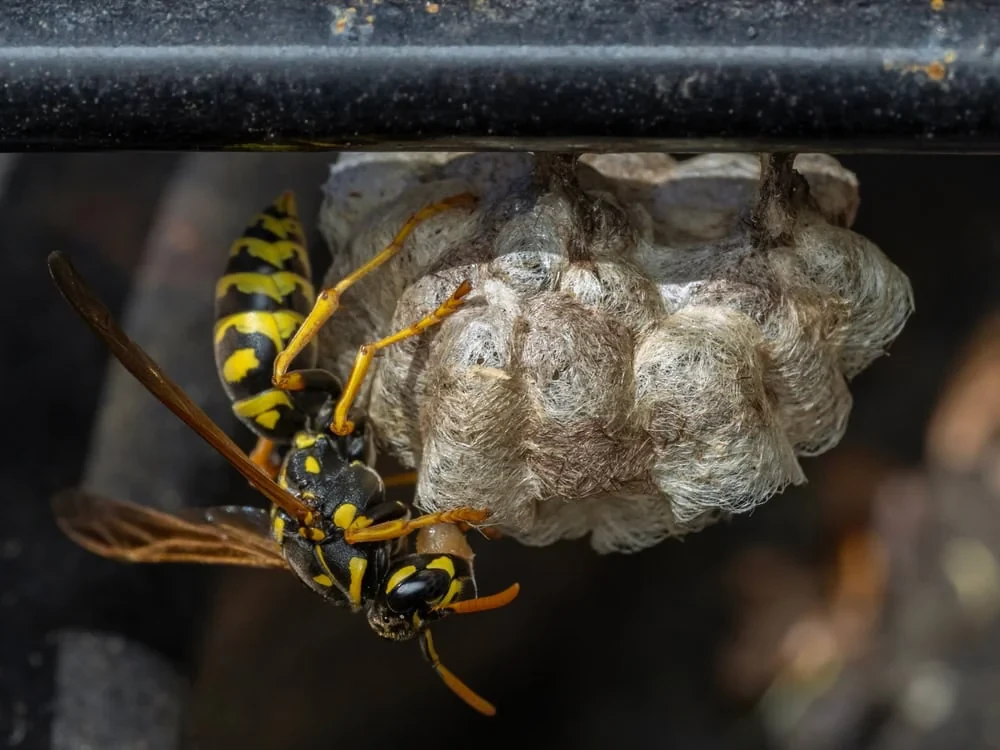
This is one of the most common calls we get from Davison homeowners, and the answer almost always comes back to the age of the home. Houses built in the 1940s, 50s, and 60s — which make up nearly half of Davison’s housing stock — have had decades of Michigan winters working on them. Soffits loosen. Fascia boards pull away from the roofline. Brick mortar cracks. These gaps are small enough that most homeowners never notice them, but they’re exactly the size a German Yellowjacket queen needs to get inside and start a colony in a wall void or attic space.
Once inside, the colony grows through the summer and can reach several thousand workers by August or September. At that point, workers often chew through drywall or insulation as the nest expands, which is when Davison homeowners start noticing yellow jackets appearing inside the living space. The fix isn’t sealing the gap from the outside — that traps workers inside and drives them further into the structure. The colony has to be eliminated first, then the entry point sealed after the nest has fully collapsed.
Store-bought sprays can work on small, exposed nests that you can reach safely and treat completely in one shot. The problem is that most yellow jacket situations in Davison don’t look like that. If the nest is inside a wall, under a soffit, in an attic, or underground in the yard, a can of retail spray is unlikely to reach the colony core — and agitating a nest without eliminating it tends to make the workers significantly more aggressive for the next 24 to 48 hours.
Yellow jackets are also different from honeybees in one important way: they can sting repeatedly. A colony with thousands of workers defending a nest inside your wall is a genuine medical risk, especially for children or anyone with a history of allergic reactions. Between 0.5% and 4% of people are at risk of anaphylaxis from stinging insect venom, and many people don’t know they’re in that group until after a serious reaction. If you’re not certain where the nest is, how large it is, or whether you can treat it completely in one attempt, a professional call is the right move.
In Davison and the rest of Genesee County, yellow jacket colonies start building in late spring and grow steadily through the summer. By July, workers are active and territorial. By August and September, the colony hits its peak — potentially thousands of workers — and the insects shift their diet from protein to sugar, which is why they start crashing your backyard barbecue, hovering around soda cans, and showing up at outdoor events at places like Abernathy Park or Lake Callis.
That August through September window is when the vast majority of service calls come in from Davison residents, and it’s also when yellow jackets are at their most aggressive. Davison’s humid continental climate — with summer highs in the low to mid-80s and enough warmth to sustain large colonies well into fall — means the season runs longer than people expect. October colonies are still active. If you’re waiting for cold weather to solve the problem, understand that the workers will die off, but the structural entry point stays open all winter, and a new queen will be looking for that same gap come spring.
Nationally, yellow jacket extermination runs anywhere from $500 to $1,300 depending on nest location, colony size, and how accessible the nest is. Wall-void and attic nests — the type most common in Davison’s older housing stock — tend to be on the higher end of that range because they require more specialized treatment than an exposed outdoor nest. Ground nests vary depending on depth and location.
What’s worth keeping in mind is the cost of not treating it correctly the first time. An untreated or partially treated wall-void colony can chew through drywall and insulation as it expands, leading to structural repair costs that dwarf the price of professional extermination. An emergency room visit for a serious allergic reaction runs over $1,000 before any treatment. We offer price matching against reasonable competitor rates, so if you’ve received another quote from a Genesee County pest control company, bring it to the conversation. The goal is to get you the right treatment at a fair price — not to be the cheapest option that leaves you calling someone else in three weeks.
Yellow jackets don’t reuse old nests, but they absolutely reuse old entry points. A fertilized queen emerging from her overwintering site in early spring is looking for a protected cavity to start a new colony — and if the gap in your soffit or the crack in your mortar joint is still open, it’s available real estate. This is especially relevant in Davison’s older homes, where the same structural vulnerabilities that allowed this year’s colony to establish can invite a new queen the following April without any additional wear or damage.
That’s why our process doesn’t stop at treatment. After the colony has collapsed, the technician walks through the entry points and provides guidance on sealing them before the next season. The one-year service guarantee also covers this scenario — if yellow jacket activity returns within the guarantee period, we come back and re-treat at no additional charge. In a home with aging construction, that guarantee is the difference between a one-time fix and a recurring annual problem.
Yes — we offer discounts for seniors, veterans, and first responders. Davison has one of the highest concentrations of Vietnam-era veterans of any community in the region, and a lot of the homeowners calling about yellow jackets are either veterans themselves or adult children helping aging parents deal with a problem in a home that’s been in the family for decades. The discount is straightforward — ask about it when you call and someone will walk you through what’s available.
We also offer price matching against reasonable competitor rates, which applies to any Davison or Genesee County pest control quote you’ve already received. There are no binding contracts, no annual commitments, and no pressure to sign up for a program you don’t need. The goal is to make it easy to get the right help without feeling like you’re being locked into something — which is exactly the kind of straightforward approach that tends to work well in a community like Davison, where people do their research and don’t respond well to the runaround.
Useful Links