
Hear from Our Customers
Yellow jackets in Middletown don’t just show up at the wrong moment — they show up at the worst one. Late August barbecue, kids playing in the backyard, someone mowing near the edge of the lot where the grass meets the field. By the time you realize there’s a nest, the colony is already thousands of workers strong and looking for a reason to use them.
What changes after a proper treatment isn’t just that the nest is gone. It’s that you stop planning your day around where they are. You stop steering the grandkids away from the back corner of the yard. You stop wondering if that buzzing in the wall is getting louder because it is. That’s what this is really about — getting your property back to normal without the anxiety that comes with leaving it alone.
The older housing stock along M-71 and throughout Caledonia Township is exactly the kind of environment where German yellowjackets establish themselves inside wall voids and soffits before anyone notices. The agricultural land surrounding Middletown gives ground-nesting species like the Eastern yellowjacket plenty of undisturbed soil to work with, sometimes just feet from a back door. These aren’t generic yellow jacket conditions — they’re the specific ones that come with living here, and they require someone who understands that difference.
We’ve been a family-owned, family-operated business since May 31, 2005 — which means this year marks 20 years of serving homeowners across Shiawassee County and the surrounding region, including Middletown and the communities along the M-71 corridor. Roger Chinault, who founded the company and still leads it today, brings 26 years of personal pest control experience to every job. That’s not a number pulled from a brochure — it’s the kind of experience that tells you immediately whether you’re dealing with a wall-void infestation or a ground nest, and exactly how to treat each one.
We hold MDARD Pesticide Application Business License #250081, have completed Integrated Pest Management training, and have earned recognition from both Angie’s List and HomeAdvisor. We actively serve residential and commercial properties throughout Shiawassee County, including the communities along the M-71 corridor between Owosso and Corunna. When you call, you’re not reaching a dispatch center — you’re reaching people who know this area and take the work personally.
It starts with a proper inspection — not a quick glance and a spray. Before any treatment goes down, we confirm the nest location, identify the species, and map the entry points. That matters more than most people realize. A German yellowjacket colony living inside the wall of an older Middletown home near M-71 requires a completely different approach than an Eastern yellowjacket ground nest discovered at the back edge of a rural lot. Treating the wrong way doesn’t just fail — it can make things significantly worse.
Once the inspection is done, we apply treatment directly to the nest using the method that matches the species and the situation. For wall-void or attic nests — common in Middletown’s older housing stock — that means targeted application through entry points, not a surface spray that misses the colony entirely. For ground nests, it means treating at the source so the entire colony is addressed, not just the foragers you can see.
After treatment, you’ll get a clear picture of what was found, what was done, and what to watch for. If yellow jacket activity returns within the guarantee period, we come back — no argument, no extra charge. The 1-year service guarantee is part of every job, not an upsell. For Middletown homeowners dealing with recurring pressure from the agricultural surroundings or the riparian habitat along the Shiawassee River just north of town, that follow-through matters.
Ready to get started?
Every yellow jacket service from us covers the full scope: inspection, species identification, targeted treatment, and a 1-year guarantee on the work. There are no half-measures. If the nest is in the attic, the wall, the ground, or under a deck, we treat it at the source — not managed from a distance. For homeowners in Caledonia Township dealing with the kind of older construction that gives German yellowjackets easy access through gaps in soffits, original siding, or aging utility penetrations, that thoroughness is the difference between a problem solved and a problem delayed.
We also match reasonable competitor rates, so if you’ve already gotten a quote from another provider in the Owosso area, it’s worth a call before you book. Seniors, veterans, and first responders receive additional discounts — and in a community like Middletown, where a significant portion of residents are retirees or have served, that’s applied without hesitation.
The same technician comes back year after year. We don’t rotate staff or send whoever’s available — your property gets someone who already knows it. No part-time seasonal hires, no unfamiliar faces. Just a trained professional who has been doing this work long enough to get it right the first time, and accountable enough to stand behind it if anything needs a follow-up.
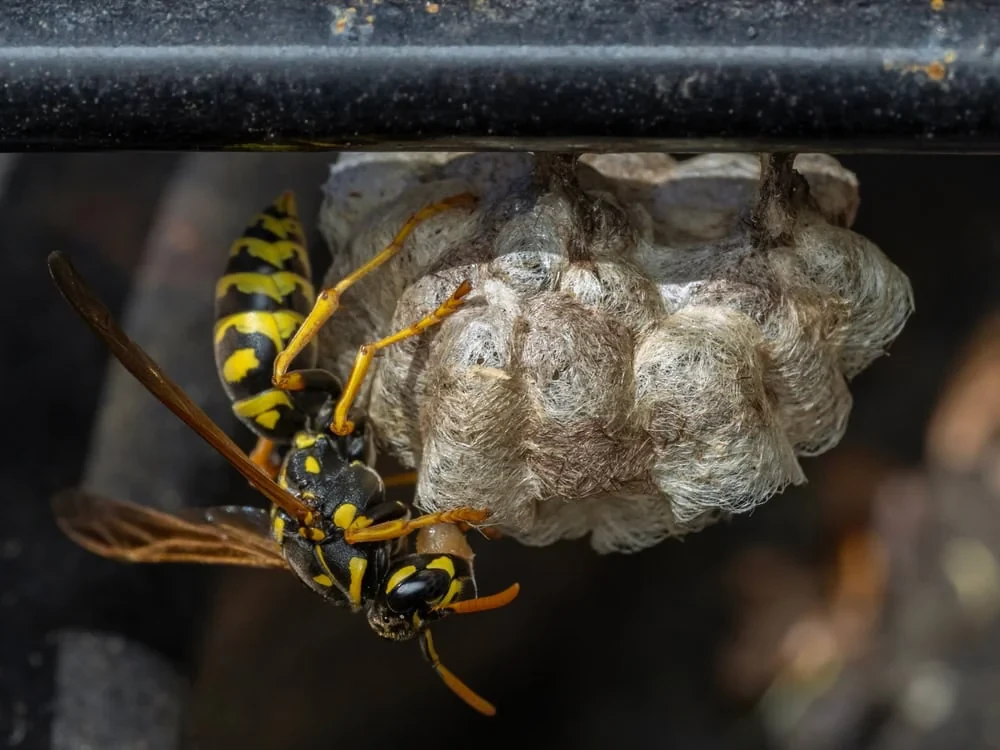
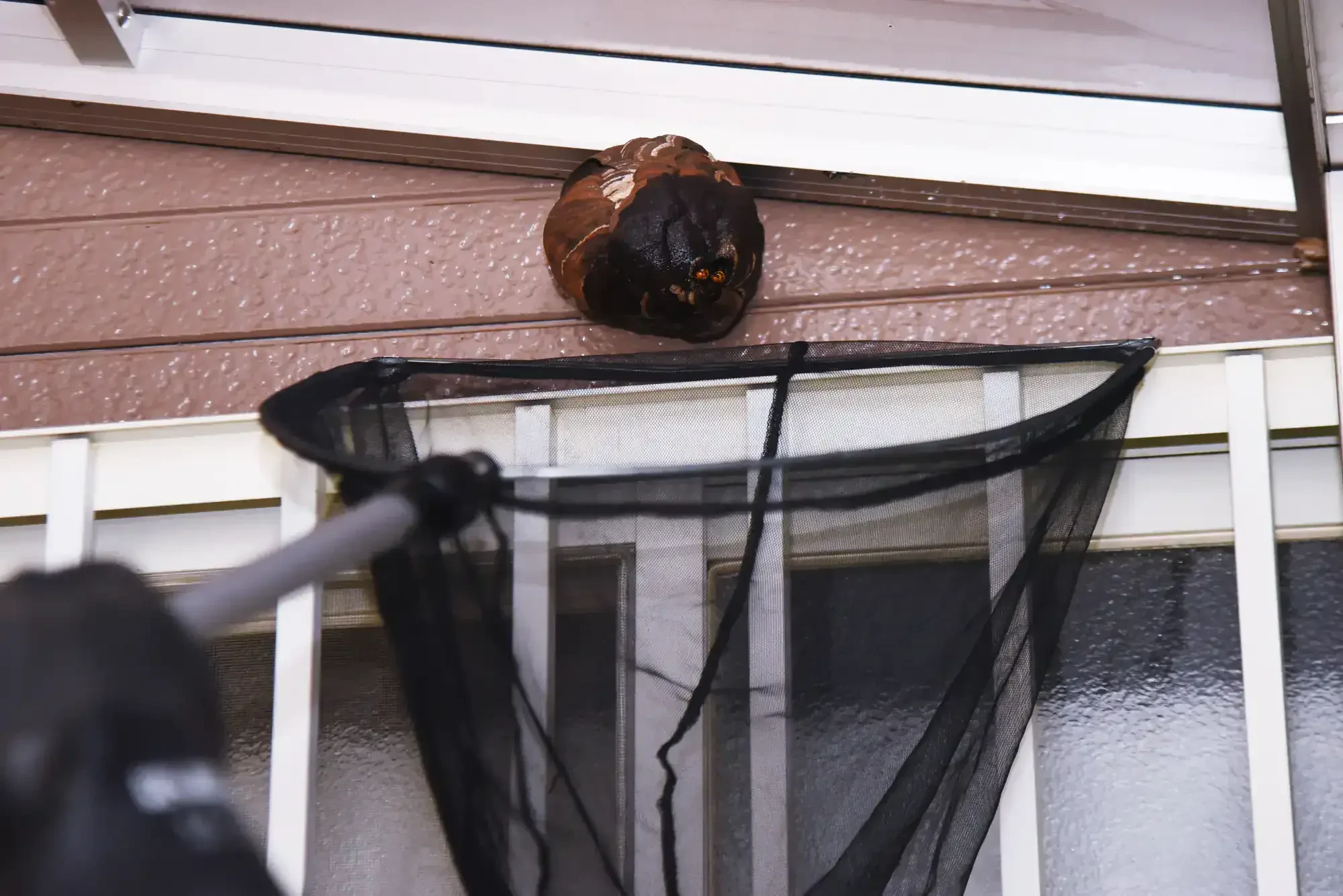
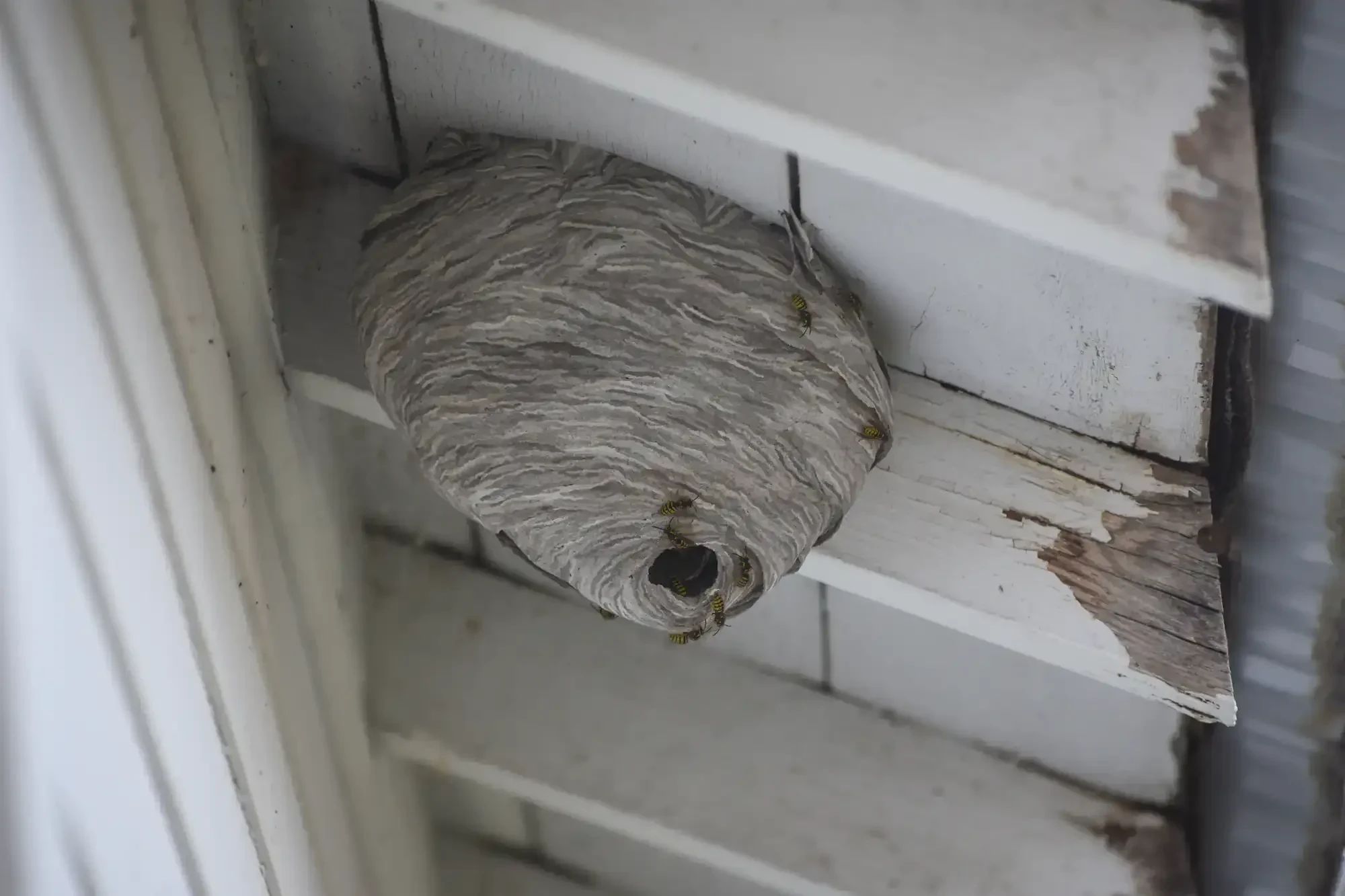
The most common sign is a consistent entry and exit point — usually a small gap in the siding, soffit, or around a window frame — with yellow jackets moving in and out in a steady stream. You may also hear a faint buzzing or chewing sound from inside the wall, especially in a quiet room. In some cases, workers will start appearing inside the home through electrical outlets or light fixtures as the colony expands and chews through interior surfaces.
This scenario is particularly common in Middletown’s older homes, where original wood siding, aging mortar, and gaps around utility penetrations give German yellowjackets easy access. If you’re noticing activity near your roofline, eaves, or exterior walls and can’t locate an obvious outdoor nest, there’s a good chance the colony has established itself inside the structure. That’s not a situation to wait on — wall-void colonies grow quickly through late summer, and the damage they do to insulation and drywall compounds the longer they’re left in place.
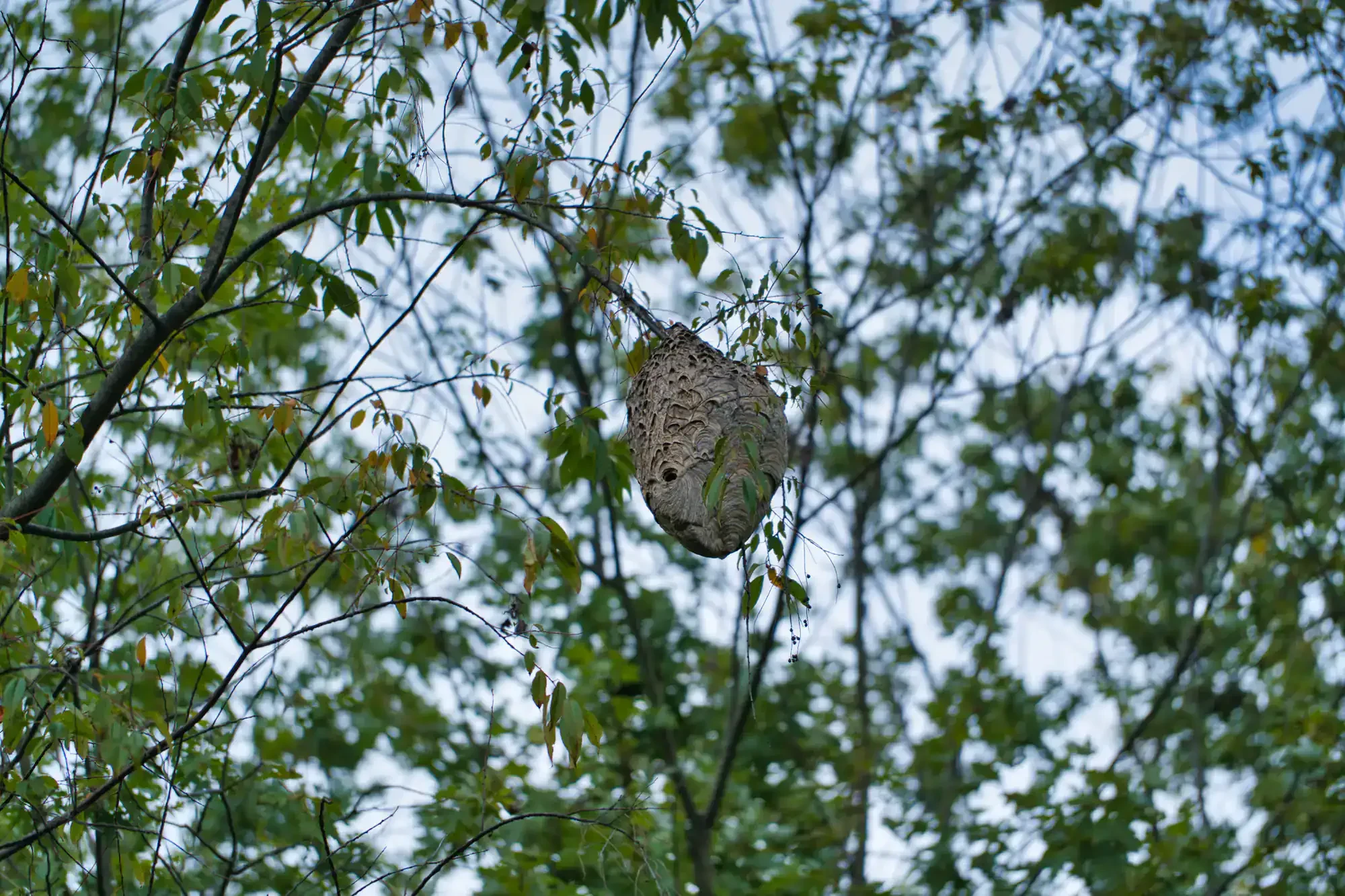
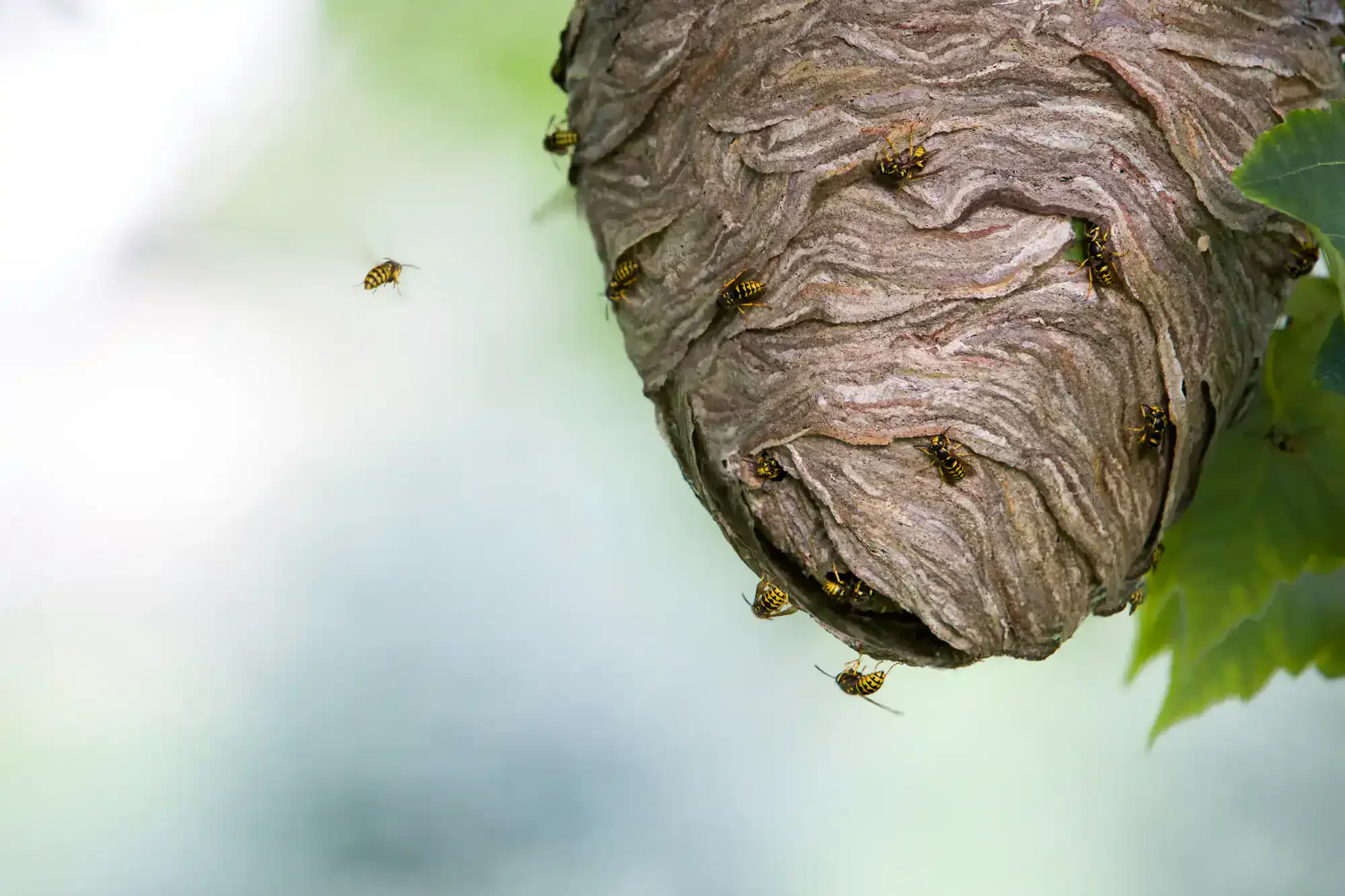
It matters quite a bit, actually. Yellow jackets are a specific type of wasp — but the species within that group behave differently, nest differently, and respond to treatment differently. The German yellowjacket, which is the species most likely to show up inside the walls or attic of a home in Middletown, builds paper nests in enclosed cavities and can produce colonies of several thousand workers by late summer. The Eastern yellowjacket prefers to nest underground, often in old animal burrows — which is why ground nests are so common on rural lots and along the agricultural edges of Caledonia Township.
Treating a wall-void nest the same way you’d treat a ground nest doesn’t work. And treating either one without correctly identifying the species first is how you end up with a failed treatment and a significantly angrier colony. That’s why the inspection and identification step isn’t optional — it’s where the right approach is determined, before anything else happens.
Late August through September is when yellow jacket colonies in Middletown reach their peak population — anywhere from 1,000 to 5,000 workers depending on the species and how long the nest has been established. That’s also when their behavior shifts. Earlier in the season, they’re primarily hunting insects and mostly leave people alone. By late summer, the colony’s food focus moves toward sugars and proteins, which is why they show up aggressively around outdoor meals, open trash cans, and anything sweet.
If you’re noticing heavy activity around your yard or entry points during this window, calling sooner rather than later makes a real difference. Colonies don’t shrink on their own in August — they grow. And the more workers are present, the higher the risk of a serious sting incident, especially for anyone in your household who spends time outdoors. Michigan’s cooler fall temperatures will eventually kill off the active colony, but wall-void nests and entry points left open through winter become prime real estate for next spring’s queens.
For a small, exposed nest early in the season — maybe a starter nest under a porch railing in May — some homeowners manage it without incident. But by midsummer, and certainly by August, the risk profile changes entirely. A mature yellow jacket colony will defend aggressively when disturbed, and unlike honeybees, yellow jackets can sting repeatedly. A ground nest that gets accidentally hit by a lawn mower, or a wall-void nest that gets poked at with a can of store-bought spray, can trigger a response involving hundreds of workers in seconds.
The other issue with DIY treatment is that over-the-counter products typically don’t reach the core of the nest — especially in wall-void or attic situations. You may kill the foragers you can see while the queen and the majority of the colony remain intact and increasingly agitated. For homeowners in Middletown dealing with nests in or near the structure of an older home, a failed DIY attempt can make a professional treatment more complicated and more expensive than if it had been called in from the start.
Yes — we actively serve residential and commercial properties throughout Shiawassee County, which includes Middletown and the surrounding Caledonia Township communities along the M-71 corridor. We’re based in Swartz Creek and have been serving the broader Central Michigan region, including Shiawassee County, for 20 years. This isn’t a service area that was recently added to a coverage map — it’s a region we have genuine experience working in.
If you’re in Middletown, Owosso, Corunna, or anywhere else in Caledonia Township and you’re dealing with yellow jacket activity — whether it’s a ground nest in the yard, a wall-void infestation in an older home, or something you haven’t been able to locate yet — we can get out to you. Call to discuss what you’re seeing and get a clear picture of what the service involves before you commit to anything.
We offer discounts for seniors, veterans, and first responders — and given the makeup of Middletown and the broader Shiawassee County community, those discounts get applied regularly. If you or someone in your household qualifies, just mention it when you call. There’s no complicated process or paperwork involved.
We also match reasonable competitor rates. If you’ve already gotten a quote from another pest control provider in the Owosso area and it’s lower, it’s worth bringing that up before you book. The goal is to make sure cost isn’t the reason someone leaves a yellow jacket nest untreated — especially when the alternative is a late-summer sting incident or structural damage from a wall-void colony that keeps growing. Between the price matching and the community discounts, most Middletown homeowners find that professional treatment is more accessible than they expected.
Useful Links