
Hear from Our Customers
Yellow jackets don’t give you a lot of warning. One afternoon you’re outside, and the next you’re dealing with a nest that’s been quietly growing in your wall, your soffit, or somewhere along the ground near your property line. By late August, a mature colony can hold anywhere from 1,000 to 5,000 workers — and they’re not passive at that point. If you’ve got kids playing outside, a dog running the yard, or anyone in your household with an unknown allergy, that’s not a situation to watch and wait on.
In Taymouth Township around Morseville, the conditions that drive yellow jacket pressure are specific. The Flint River corridor creates exactly the kind of disturbed riverbank soil and abandoned burrow activity that Eastern Yellowjackets look for when they’re building ground nests in spring. At the same time, the older housing stock along Morseville Road and Burt Road — with aging soffits, loose siding, and gaps around pipe penetrations — gives German Yellowjackets easy access to wall voids and attic spaces that most homeowners don’t discover until the colony is already well established.
Getting this handled means more than just spraying a nest. It means identifying the right species, treating it correctly, and closing the door on a repeat infestation. When we leave your Morseville property, yellow jacket activity stops — and you’ve got a one-year service guarantee backing that up.
We’ve been serving homes across Genesee and Saginaw Counties since May 2005. That’s twenty years of Michigan pest control — not a franchise, not a call center, not a rotating crew of seasonal hires. Roger Chinault founded this company and has 26 years of hands-on experience treating the exact conditions you’re dealing with here in Morseville: ground nests along rural riverbanks, wall-void infestations in older township homes, and attic colonies in outbuildings that farm properties throughout Taymouth Township tend to have.
One thing that sets us apart is simple: you get the same technician year after year. Your technician learns your property — the gap on the north soffit, the outbuilding near the fence line, the low spot along the back yard where ground nesters have shown up before. No retraining a stranger every season. We hold MDARD Pesticide Application Business License #250081, have completed Integrated Pest Management training, and have earned awards from both Angie’s List and HomeAdvisor. Our 4.7 out of 5 rating on Angi reflects what customers actually experience — not what we say about ourselves.
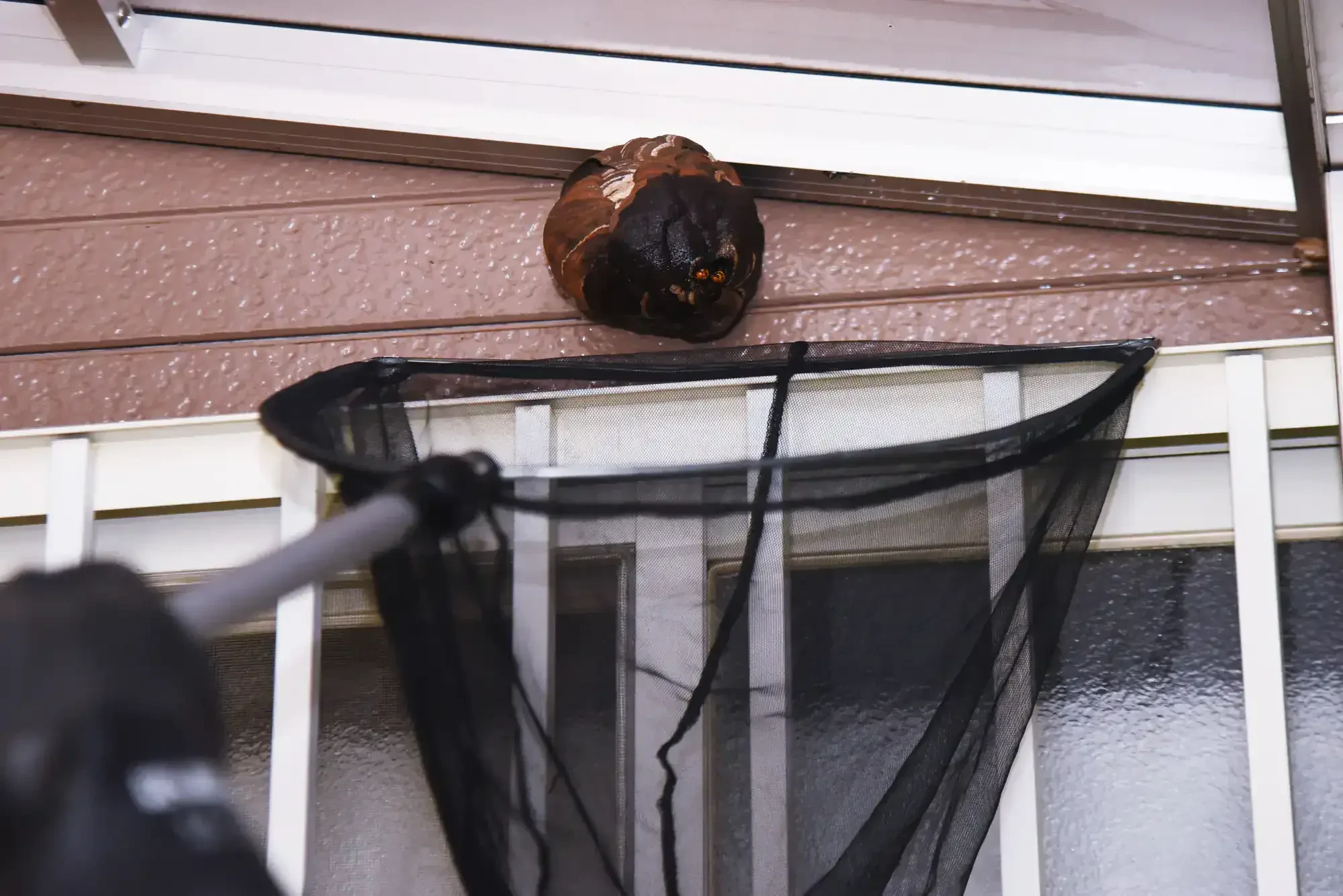
It starts with a call. We respond quickly — that’s something customers consistently mention in reviews — and get you scheduled without the long wait that rural Saginaw County homeowners are used to dealing with from larger regional providers. When your technician arrives, the first thing we do is identify exactly what you’re dealing with. That matters more than most people realize. A German Yellowjacket nesting inside your wall requires a completely different approach than an Eastern Yellowjacket ground nest near the Flint River side of your property. Treating the wrong species the wrong way doesn’t just fail — it can drive the colony deeper into your structure or make workers more aggressive.
Once the species and nest location are confirmed, we apply treatment with precision. We use an Integrated Pest Management approach, which means targeted treatment — not a blanket chemical application that ignores what’s actually happening on your specific property. For wall-void or attic nests common in older Taymouth Township homes, that includes addressing the entry point, not just the colony itself. For ground nests in agricultural areas or along the riverbank, the treatment accounts for the depth and structure of the burrow.
After treatment, your technician walks you through what was found, what was done, and what to watch for. If yellow jacket activity returns within the guarantee window, we come back — no charge, no argument.
Ready to get started?
Every yellow jacket exterminator service through us includes species identification, targeted nest treatment, and a one-year service guarantee. There are no binding contracts and no pressure to sign up for something you don’t need. If a competitor in the Saginaw County area offers a lower rate for the same scope of work, we’ll match it — so you don’t have to spend a week making calls to compare quotes.
For Morseville-area homes specifically, our service accounts for the structural realities of older rural properties. German Yellowjackets that have accessed a wall void through a soffit gap or deteriorating window frame aren’t just a pest problem — they’re a structural one. Left untreated, a colony inside a wall will chew through insulation and drywall to expand. We address the nest and flag the entry point so you know what needs to be sealed to prevent next season’s queen from doing the same thing over again.
Seniors, veterans, and first responders in Taymouth Township qualify for discounts — ask when you call. We serve both residential and commercial properties throughout the area, and all work is performed under MDARD Pesticide Application Business License #250081. This isn’t a company that sends whoever’s available. It’s the same trained professional, accountable to a 20-year reputation built right here in Michigan.
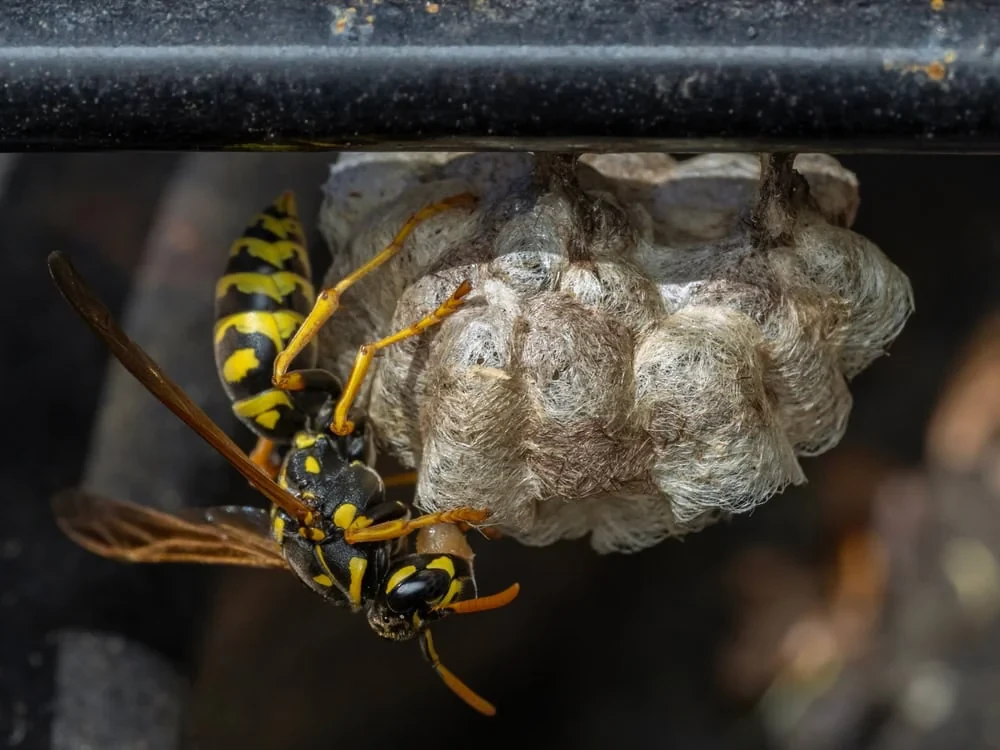
Yes, and it’s not a coincidence. The Eastern Yellowjacket — one of Michigan’s two dominant yellow jacket species — builds ground nests in abandoned mammal burrows. Riverbanks like those along the Flint River near Morseville and Burt Road create ideal conditions for this: disturbed soil, high rodent activity, and plenty of available burrows for queens to colonize each spring. If your property backs up to the river corridor, borders a farm field, or has low-traffic areas with overgrown brush, your yellow jacket risk is higher than the average suburban lot.
This doesn’t mean every ground nest near the river is inaccessible or impossible to treat — it means the technician needs to know what they’re looking for. We identify the nest location and species before treatment begins, which is the only way to make sure the treatment actually works and the colony doesn’t relocate further into the ground or onto a neighboring property.
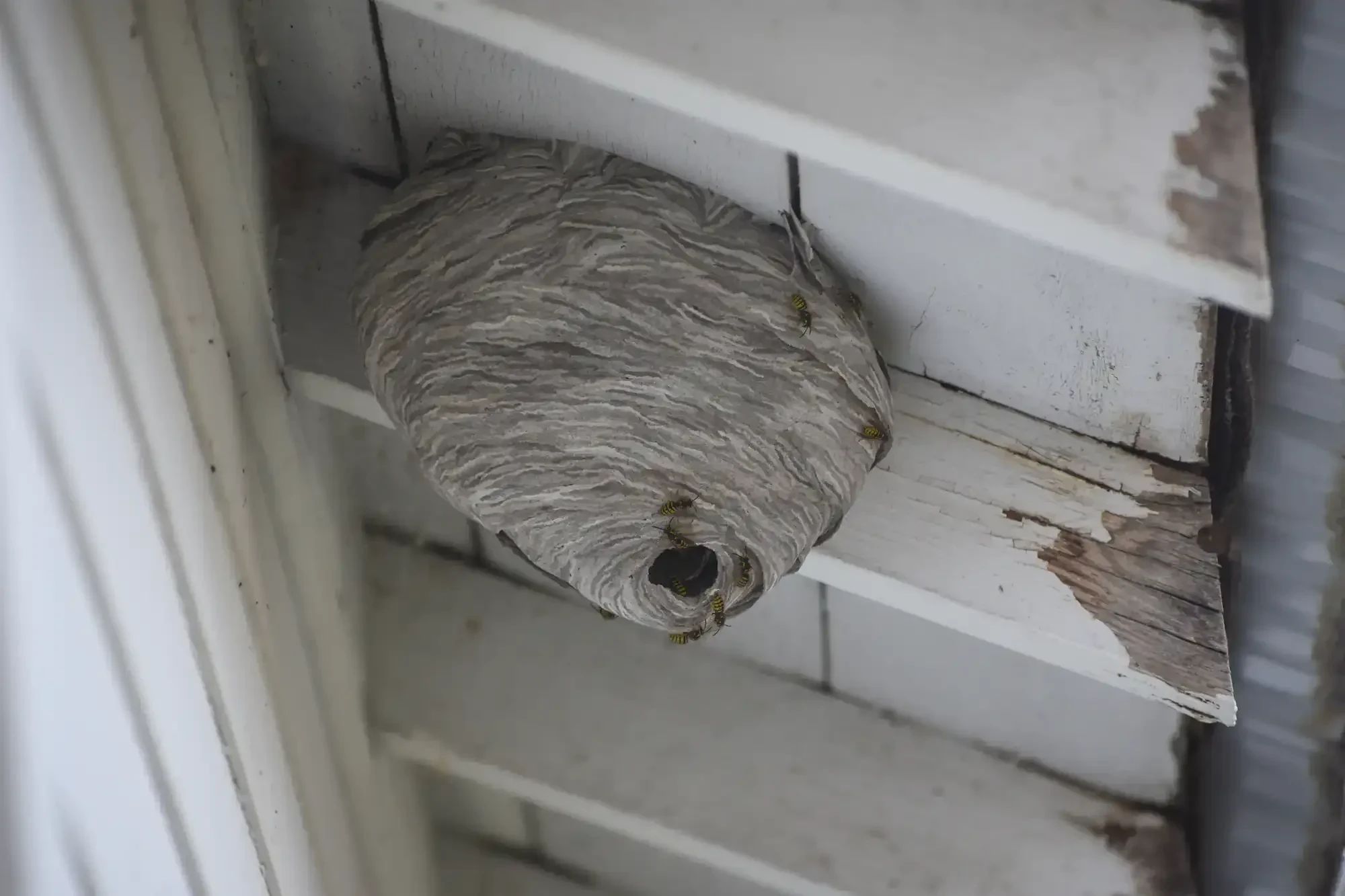
The clearest sign of a wall-void infestation is repeated yellow jacket activity around a single entry point — usually a gap in a soffit, a crack near a window frame, or an opening around a pipe penetration. If you’re seeing yellow jackets consistently entering and exiting the same spot on your home’s exterior, there’s almost certainly a nest on the other side of that wall. In older homes throughout Taymouth Township and Morseville, these entry points are common because aging siding, deteriorating soffits, and gaps around utility penetrations are part of the housing stock.
Inside the home, you might hear buzzing inside walls or notice yellow jackets appearing through interior gaps — around light fixtures, electrical outlets, or baseboards. Some homeowners don’t notice anything until the colony has chewed through drywall to expand. If you’re at that stage, the nest is already large and the structural risk is real. Don’t wait to call. The longer a wall-void colony goes untreated, the more damage it can do to insulation and interior surfaces.
DIY treatment fails more often than people expect, and it usually makes things worse before it gets better. If you spray a ground nest without fully penetrating the colony, or if you treat a wall-void nest from the exterior without addressing the interior population, the surviving workers become significantly more aggressive. They’re defending a compromised nest, and they’ll sting anything nearby without much provocation. If the colony is inside a wall, improper treatment can also drive workers deeper into the structure — further from the entry point and harder to reach with a follow-up treatment.
The other common mistake is misidentifying the species. Michigan has two primary yellow jacket species that require different treatment strategies. Treating an Eastern Yellowjacket ground nest the same way you’d treat a German Yellowjacket wall-void infestation won’t produce the results you need. We identify the species first, then apply the right treatment for that specific nest type — which is the only approach that produces reliable, lasting results.
August and September are the peak months, and the shift in behavior during that window is noticeable. Earlier in the season — May through July — yellow jacket workers are focused on feeding larvae and are less likely to bother you unless you disturb the nest directly. By late summer, colonies have reached their maximum size and workers transition from hunting insects to aggressively seeking sugary foods. Outdoor activity near the Flint River, in gardens, at backyard gatherings, or around farm outbuildings in Taymouth Township becomes significantly riskier during this window.
This is also when the calls come in fastest, and the wait for a pest control appointment gets longer if you’re using a large regional provider. Our response time is something customers consistently mention as a differentiator — you’re not waiting two weeks while the colony grows larger and more aggressive. If you’re noticing increased yellow jacket activity around your Morseville property in late summer, that’s the right time to call, not after someone gets stung.
Waiting out the season is a common instinct, but it comes with a real cost for homeowners — especially those with older homes along Morseville Road or Burt Road. Yes, the colony will die off in late fall. But if German Yellowjackets have been nesting inside your wall or attic all summer, the nest itself doesn’t disappear. The comb, the debris, and the entry point all remain. Dead nest material inside a wall attracts rodents and flesh flies. And the structural entry point that the colony used stays open for next spring’s overwintering queens to find and use again.
Treating in the fall before the colony fully dies off — or sealing entry points after — is a far better outcome than assuming the problem resolved itself. If you had yellow jacket activity in or around your home this season, that entry point is still there. We can confirm whether the nest has been vacated and advise on what needs to be sealed to prevent a repeat infestation next year.
Yes. We offer discounts for seniors, veterans, and first responders. In a community like Taymouth Township — where a significant portion of homeowners are long-term residents, many of whom have served or are on fixed incomes — this is a straightforward acknowledgment of who actually lives here and what matters to them. It’s not a complicated process: mention it when you call and the discount gets applied.
Beyond the discount, we also price match reasonable competitor rates. So if you’ve already gotten a quote from another Saginaw County provider, bring it up. You don’t need to choose between a company with a 20-year track record and a lower price — we’ll work to give you both. There are no binding contracts, no pressure, and no hidden fees. You pay for the service, the problem gets handled, and the one-year guarantee makes sure it stays that way.
Useful Links