
Hear from Our Customers
Yellow jackets in New Lothrop aren’t a minor nuisance. The farmland and open fields surrounding Hazelton Township are prime territory for Eastern Yellowjackets, which nest underground in abandoned rodent burrows — the kind that are everywhere in farm country. One wrong step with the mower and you’re dealing with a full swarm. That’s not a situation you want to handle with a can of spray from the hardware store.
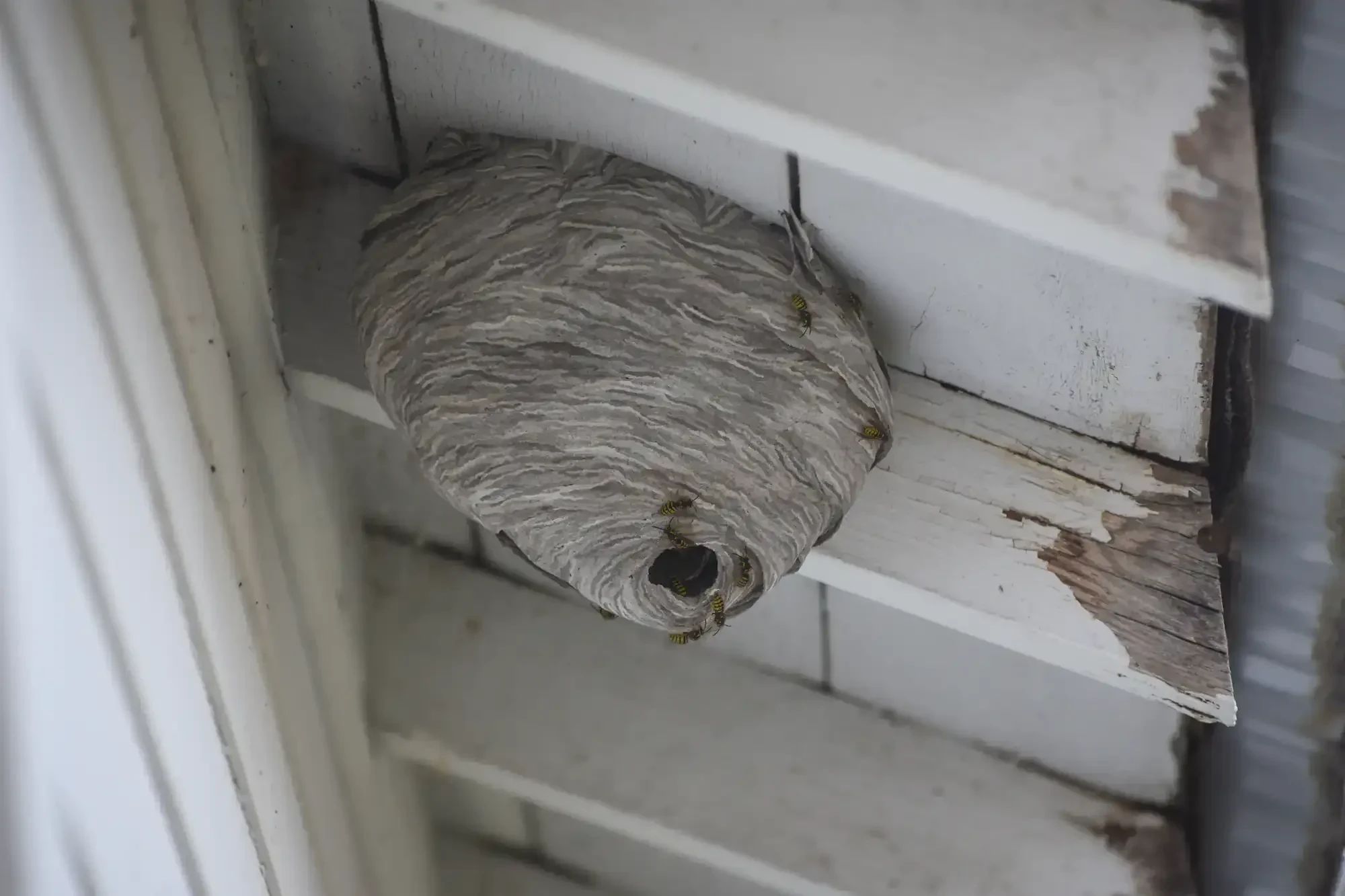
Then there’s what happens inside the walls. Older homes in the village — the kind built when New Lothrop was still a mill town along Misteguay Creek — have aging soffits, loose fascia boards, and foundation gaps that German Yellowjackets find immediately. By late summer, a colony inside a wall void can be the size of a watermelon, chewing through insulation and drywall the entire time. The structural repair bill makes the cost of professional treatment look like nothing.
When the nest is gone and the entry points are sealed, outdoor life comes back. Kids play in the yard again. You eat outside without swatting. You mow without watching the ground for movement. That’s what yellow jacket pest control in New Lothrop actually delivers — not just a dead nest, but a property you can use again.
We’ve been in business since May 31, 2005 — that’s 20 years of treating yellow jacket nests, wall-void infestations, and ground colonies across mid-Michigan. Roger Chinault, who leads our company, brings 26 years of personal hands-on experience to every service call. This isn’t a franchise operation running on corporate scripts. It’s an owner-operated business where the standards don’t change based on who’s watching.
New Lothrop sits right at the northeastern edge of Shiawassee County, and we operate out of Swartz Creek — just across the Genesee County line. That proximity matters. We know the agricultural character of Hazelton Township, the older housing stock in the village, and the seasonal pest patterns that come with living this close to working farmland. You’re not explaining your situation to someone reading off a service area map.
We hold MDARD Pesticide Application Business License #250081, have completed Integrated Pest Management training, and carry awards from both Angie’s List and HomeAdvisor. Our Angi rating sits at 4.7 out of 5. Those numbers come from real customers, not a marketing department.
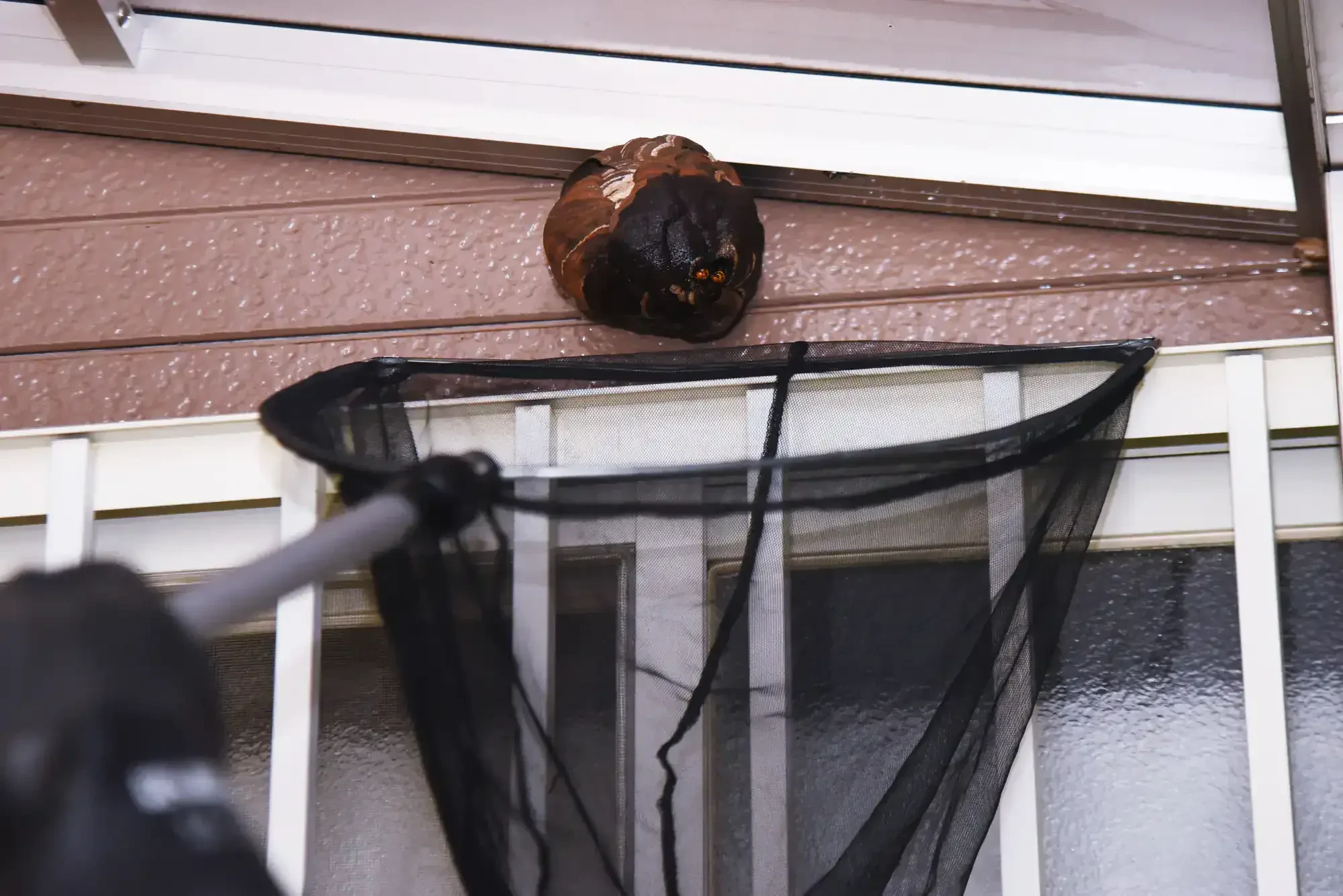
It starts with a thorough inspection. Before anything gets treated, our technician identifies the species — because treating a German Yellowjacket wall-void colony the same way you’d treat an Eastern Yellowjacket ground nest doesn’t work. It drives the colony deeper, makes them more aggressive, and leaves the queen alive to rebuild. Correct identification first is non-negotiable, and it’s where a lot of DIY attempts and under-qualified services fall apart.
Once the species and nest location are confirmed, we apply treatment directly and precisely. For ground nests common in the agricultural surroundings of Hazelton Township, that means treating the entry point and the tunnel system where the colony lives. For wall-void or attic infestations — which are especially common in New Lothrop’s older housing stock — treatment goes into the void itself, reaching the nest rather than just the entry hole. Timing matters here too. Michigan’s yellow jacket season peaks between July and September, when colonies hit 1,000 to 5,000 workers and become genuinely dangerous. If you’re calling during that window, urgency is real and our response reflects that.
After treatment, you’ll get a clear explanation of what was found, what was done, and what to watch for. Entry points that allowed the colony in get identified so you can seal them before next spring. Our work is backed by a one-year service guarantee — if yellow jackets return within the guarantee period, we come back at no additional charge.
Ready to get started?
Yellow jacket pest control in New Lothrop covers the full range of infestation types that actually show up here. Ground nests in lawn and garden areas are common along the rural properties and farm-adjacent yards throughout Hazelton Township. Attic yellow jacket removal is a frequent call in the village itself, where older homes give German Yellowjackets easy access through deteriorating soffits, chimney gaps, and aging exterior trim. Wall-void infestations are treated with targeted applications that reach the nest — not just the surface — because surface-only treatment on a wall colony is a temporary fix that makes the problem worse before it gets better.
Every service we provide includes species identification before treatment, targeted application based on nest type and location, and post-treatment guidance on sealing entry points. We hold MDARD Pesticide Application Business License #250081, which means every technician operating on your property is state-licensed and accountable. Our IPM-certified approach keeps chemical use targeted and appropriate — important in a community where properties sit close to agricultural land, gardens, and natural waterways like Misteguay Creek.
We offer discounts for seniors, veterans, and first responders — because this community has people in all three categories who shouldn’t have to overpay for necessary home protection. We also offer price matching against reasonable competitor rates, including the free removal services that operate in mid-Michigan. If you’ve seen a lower price from a licensed, insured provider, bring it up. Our goal is to make the right choice easy.
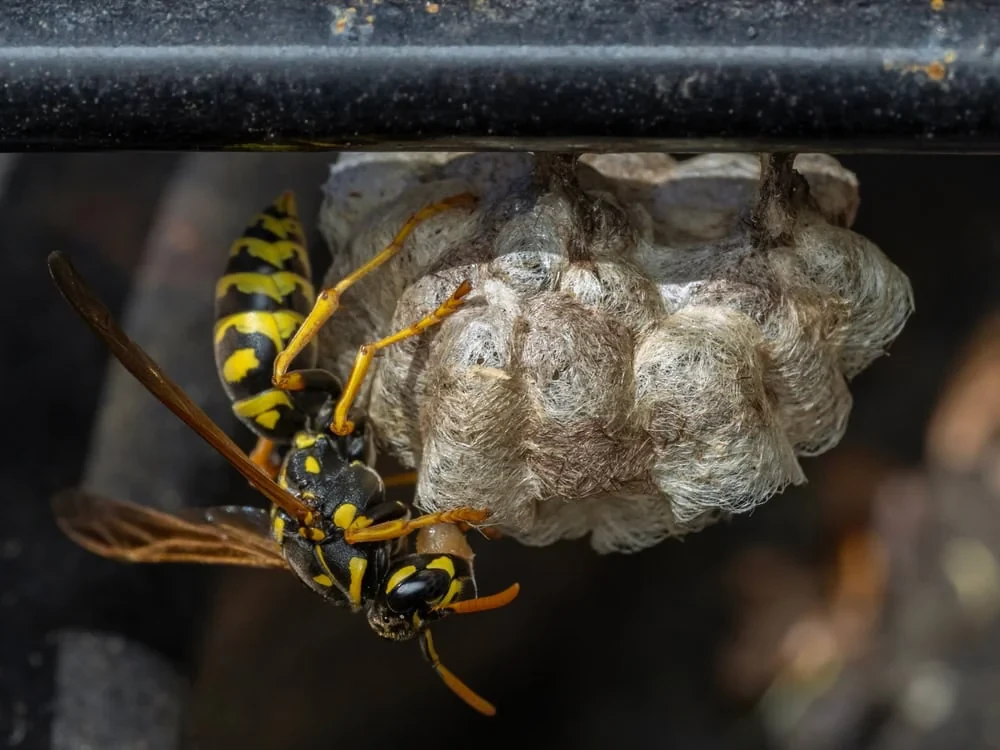
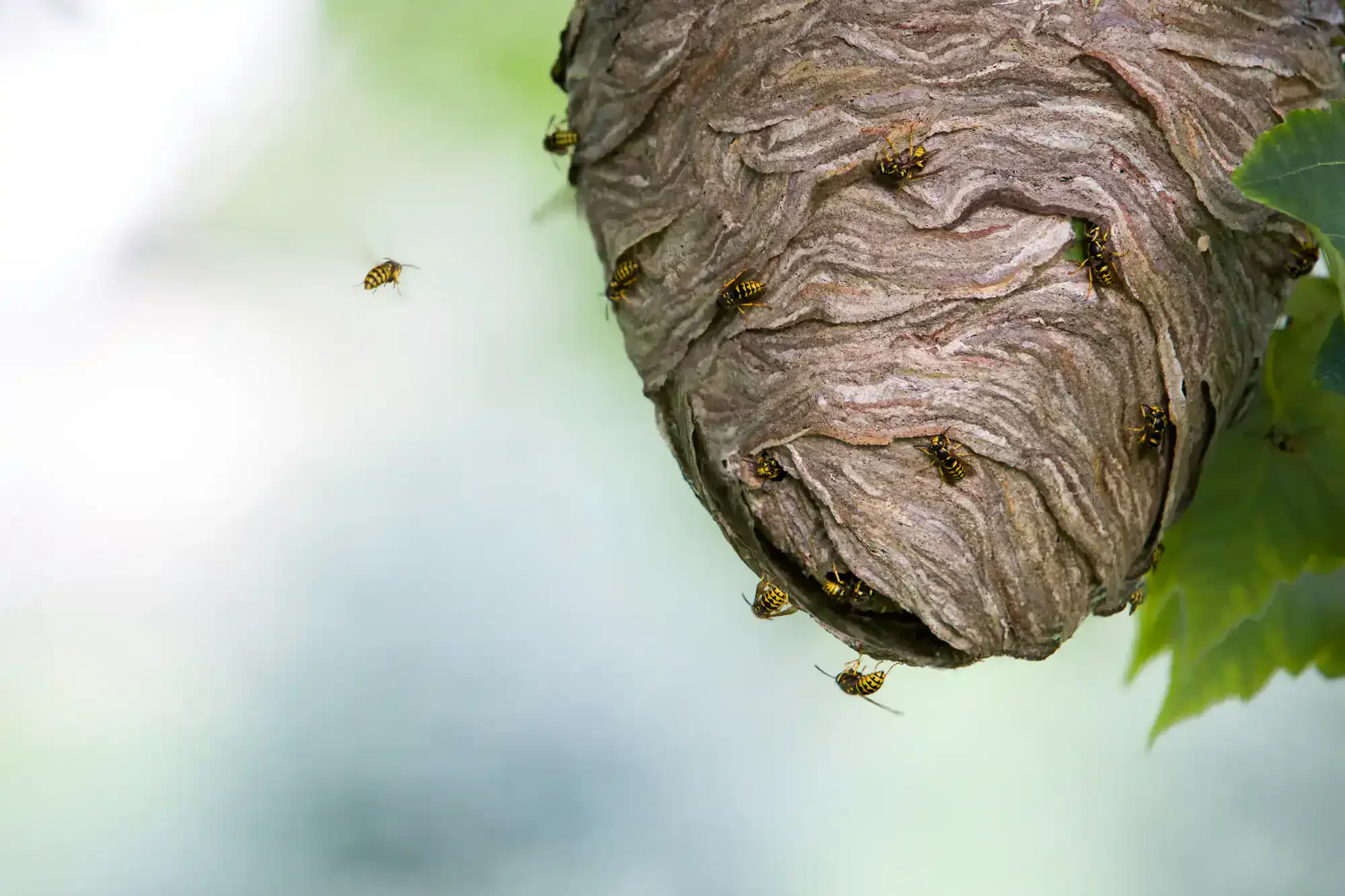
Yellow jackets are often confused with bald-faced hornets and paper wasps, and the distinction matters because each requires a different treatment approach. Yellow jackets are typically about half an inch long, with bright yellow and black banding and a smooth, narrow waist. They move fast and are noticeably more aggressive than paper wasps, especially in late summer when food competition increases. If you’re seeing stinging insects entering and exiting a gap in your siding, a hole in the ground near the garden, or a soffit on your home, there’s a good chance you’re dealing with yellow jackets.
In New Lothrop, the two species you’re most likely dealing with are the Eastern Yellowjacket — which nests underground in the abandoned rodent burrows common in agricultural settings around Hazelton Township — and the German Yellowjacket, which prefers enclosed cavities like wall voids and attics in our older village homes. The safest way to confirm what you have is to let a trained technician take a look. Misidentifying the species and treating incorrectly doesn’t just fail — it can make the colony significantly more aggressive and harder to eliminate.
Waiting on a wall-void infestation is one of the more expensive mistakes a New Lothrop homeowner can make. A yellow jacket colony inside a wall doesn’t stay contained — workers chew through insulation, drywall, and wood framing as the nest expands. By peak season in August, that colony can be the size of a large watermelon, and the structural damage it’s caused by then can cost thousands of dollars to repair — well beyond what professional treatment would have run in May or June.
There’s also the safety side. Yellow jackets in a wall void will find their way into the living space, especially as the colony grows and pressure builds. In a home with children or anyone with a stinging insect allergy, that’s a genuine medical risk. For New Lothrop homeowners in older village homes where wall entry points are common, getting this looked at quickly — not next weekend — is the right call.
Michigan’s yellow jacket season follows a predictable pattern, and Shiawassee County is no exception. Queens emerge in early spring and start building small nests — often in the same locations used the previous year. Through May and June, the colony is growing but still manageable, and yellow jackets during this period are actually beneficial predators of other insects. That’s why many homeowners hold off, which is understandable but often a mistake.
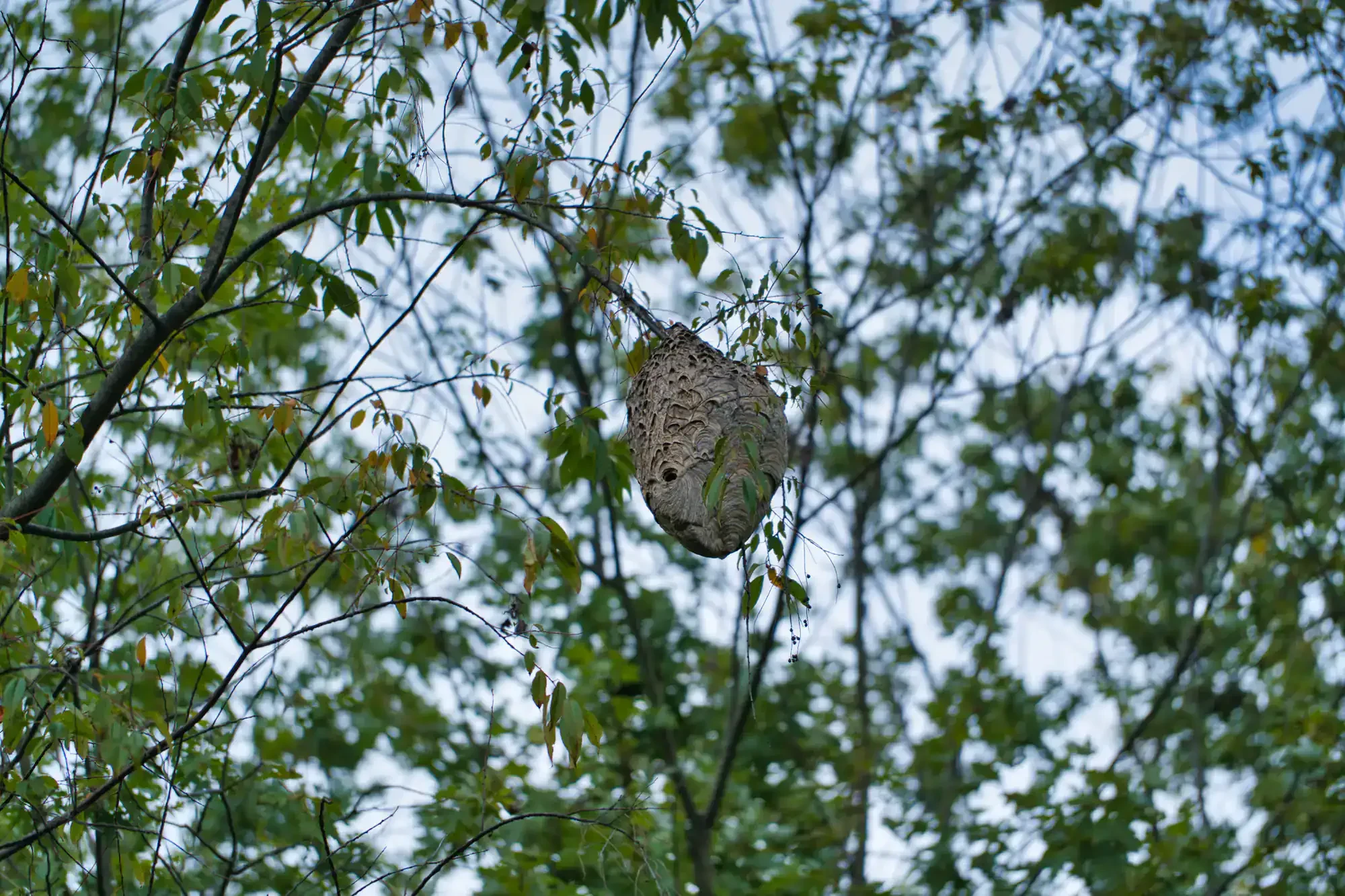
By July and August, the colony hits its peak. A mature nest can house 1,000 to 5,000 workers, and as summer progresses, yellow jackets shift from hunting insects to seeking sugary foods — which is when they start crashing your outdoor meals, hovering around garbage cans, and becoming aggressive near beverages. For homeowners in Hazelton Township with yards adjacent to farmland and open fields, this window is when ground nest encounters during mowing become most dangerous. Treating in spring is ideal. Treating in late summer is urgent.
Yellow jacket exterminator service nationally averages around $725, with wall-void and attic infestations typically running between $500 and $1,300 depending on nest location, accessibility, and colony size. Ground nest removal tends to be on the lower end of that range. The variables that affect cost most are how deep the nest is, how long it’s been established, and whether structural access is needed to treat a wall-void or attic colony.
For New Lothrop homeowners, it’s worth framing that cost against the alternatives. An emergency room visit for a severe sting reaction runs $1,000 or more before treatment. Structural repair for drywall and insulation damaged by a wall-void colony can run $2,000 to $10,000 depending on the extent of the damage. We offer price matching against reasonable competitor rates — including the free removal services operating in mid-Michigan — and discounts for seniors, veterans, and first responders. Our one-year service guarantee also means you’re not paying again if yellow jacket activity returns within the guarantee period.
Yes — and this is one of the most important things to understand about yellow jacket control in an agricultural area like Hazelton Township. Yellow jacket colonies don’t survive winter, but the queens do. A fertilized queen will overwinter in a protected location — a woodpile, leaf litter, a gap in the exterior of your home — and emerge in spring looking for a nesting site. She’s strongly drawn to locations where colonies have successfully nested before, which means the same wall void, the same attic cavity, or the same underground burrow near your garden shed is at elevated risk the following season.
Effective treatment addresses this. After the active colony is eliminated, identifying and sealing the entry points that allowed the colony in is critical to breaking the cycle. We walk you through what to seal and where before leaving your property. Our one-year service guarantee provides a second layer of protection — if yellow jackets do return within the guarantee period, a technician comes back at no additional charge. In a community with ongoing agricultural surroundings and older housing stock like New Lothrop, that kind of coverage isn’t just a nice extra. It’s practical.
New Lothrop is a small, tight-knit community — the kind of place where people look out for each other. The discounts for seniors, veterans, and first responders aren’t a promotional add-on. They reflect the fact that these groups make up a real portion of the homeowning population in communities like this one, and that pest control — especially for a stinging insect infestation that requires immediate attention — shouldn’t be a financial barrier for people who’ve spent their lives contributing to the community.
If you or someone in your household qualifies, mention it when you call. The discount applies straightforwardly, and combined with our price matching policy, it means you’re not choosing between a quality, licensed, guaranteed service and an affordable one. We hold MDARD Pesticide Application Business License #250081 and back every yellow jacket treatment with a one-year service guarantee. Our goal is to make the right call the easy call for every homeowner in New Lothrop.
Useful Links