
Hear from Our Customers
Yellow jackets on a 2.5-acre wooded lot in Oakwood aren’t the same problem as a wasp nest on a suburban porch. You’ve got more ground to cover, more places for a colony to hide, and more time between you and the nest before you even realize it’s there. By the time most homeowners in the Brandon Township and Oxford Township area call us, the colony is already deep into the season — and deep into the property.
When the nest is gone and the treatment is done, you get your outdoor space back. The deck, the fire pit, the yard where your kids play after school — all of it becomes usable again without the anxiety of walking past an active colony. That’s not a small thing when you chose this area specifically for the outdoor lifestyle it offers.
Wall-void and attic infestations are a different situation entirely. German yellow jackets will chew through insulation and drywall as the colony expands. Left alone, that’s not just a pest problem — it becomes a repair bill. Treating it early and completely is the difference between a one-time service call and a contractor showing up to fix your walls.
We’ve been operating in Southeast Michigan since May 2005 — that’s 20 years of treating properties across northern Oakland County, including the rural and wooded communities around Oakwood, Brandon Township, and Oxford Township. Roger Chinault founded this company and still leads it, bringing 26 years of hands-on pest control experience to every job.
This isn’t a franchise. There’s no rotating crew of seasonal hires. When you call First Choice Pest Control, you get the same trained technician year after year — someone who learns your property, knows the specific conditions on your land, and doesn’t need a refresher every spring. That continuity matters on a large rural lot near the Bald Mountain State Recreation Area corridor, where nesting conditions are complex and consistent.
We hold MDARD Pesticide Application Business License #250081, carry IPM training certification, and have earned awards from both Angie’s List and HomeAdvisor. No binding contracts. We match prices on reasonable competitor rates. Discounts for seniors, veterans, and first responders.
It starts with a call. When you reach out to us, you’re not going into a queue or waiting for a callback tomorrow. Response time matters — especially when yellow jackets are getting into your house or your kids can’t go outside. We move quickly because we know the situation usually isn’t something you want to sit on.
When our technician arrives, the first step is identification — not treatment. There are two primary yellow jacket species in the Oakwood area that behave very differently. Eastern yellow jackets nest underground, often in abandoned groundhog or mole burrows, which are common on large wooded properties throughout northern Oakland County. German yellow jackets nest in wall voids, attics, and structural cavities. The treatment approach for each is different, and using the wrong method on the wrong species makes the problem worse, not better. Getting the identification right first is what separates a real fix from a temporary one.
Once the species and nest location are confirmed, treatment is targeted and thorough — not a blanket spray. After the job is done, we’ll give you a clear explanation of what was found, what was treated, when it’s safe for children, pets, or livestock to be back in the area, and what to watch for to prevent a repeat situation next season. The 1-year service guarantee means if activity returns within the coverage period, we come back — at no additional charge.
Ready to get started?
Yellow jacket nest removal in Oakwood covers more ground than it does in most Michigan communities — literally. Properties in this area regularly sit on 2.5 acres or more, with wooded edges, brush lines, and undisturbed soil that create ideal conditions for ground-nesting colonies. Eastern yellow jackets exploit every abandoned burrow on a property like this, and on a large wooded lot, there can be several active nests before a homeowner realizes what’s happening.
Structural infestations are just as common here. Older homes throughout the Brandon Township and Oxford Township area — some rebuilt after the 1896 storm that devastated this part of Oakland County — often have gaps around soffits, loose fascia, and aging siding that give German yellow jackets easy access to wall voids and attic spaces. Once inside, they build fast. A colony that enters through a small gap in June can be chewing through drywall by August. We treat the full infestation, not just the visible entry point, and seal the conversation about prevention so you’re not dealing with the same entry point next spring.
Whether it’s yellow jacket removal from a ground nest at the edge of your tree line, attic yellow jacket removal from a void above your living space, or yellow jacket pest control near your deck or outbuilding — the process is the same: identify correctly, treat completely, and back it with a guarantee.
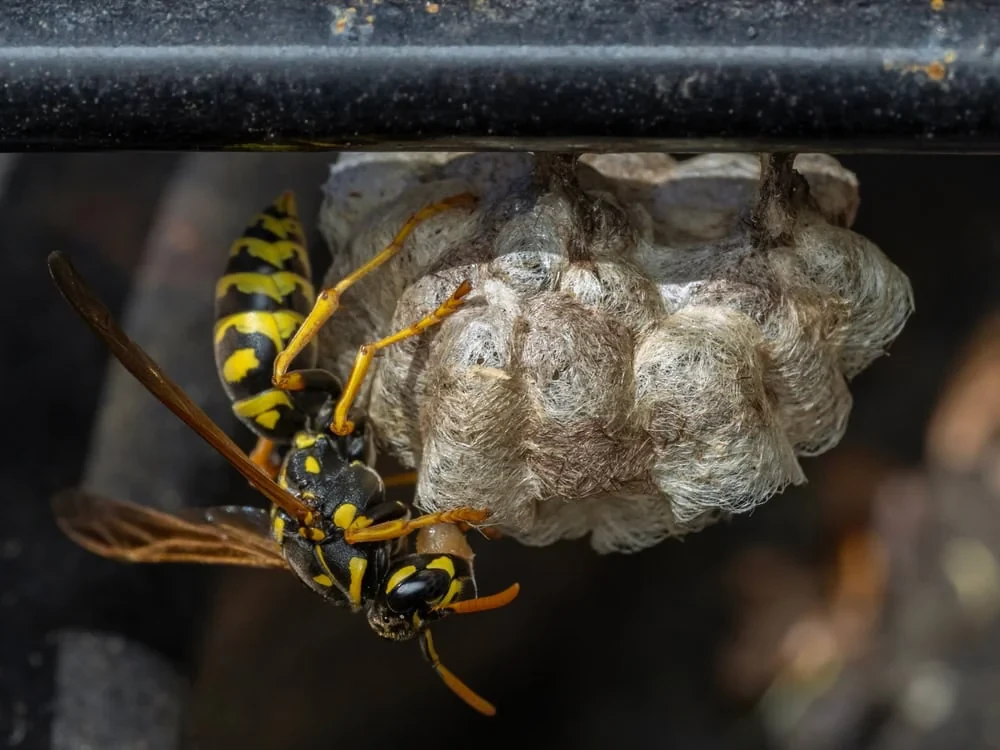
The most common sign is flight pattern — yellow jackets flying in and out of the same spot repeatedly, especially near the ground, a wall, a soffit, or a roofline. On large wooded properties in Oakwood, ground nests are often discovered by accident: you step near one while mowing, walk a dog through tall grass, or notice a cluster of yellow jackets near a brush pile or old tree stump. Because lots here are large and heavily vegetated, a colony can establish and grow for weeks before it’s noticed.
If yellow jackets are appearing inside your home — coming through a wall, a ceiling, or a vent — that’s a strong indicator of a structural nest in a wall void or attic. Don’t seal the entry point yourself before treatment. Trapping the colony inside forces workers to find another exit, which is often directly into your living space. Call us first, get the colony treated, and then address the entry point after.
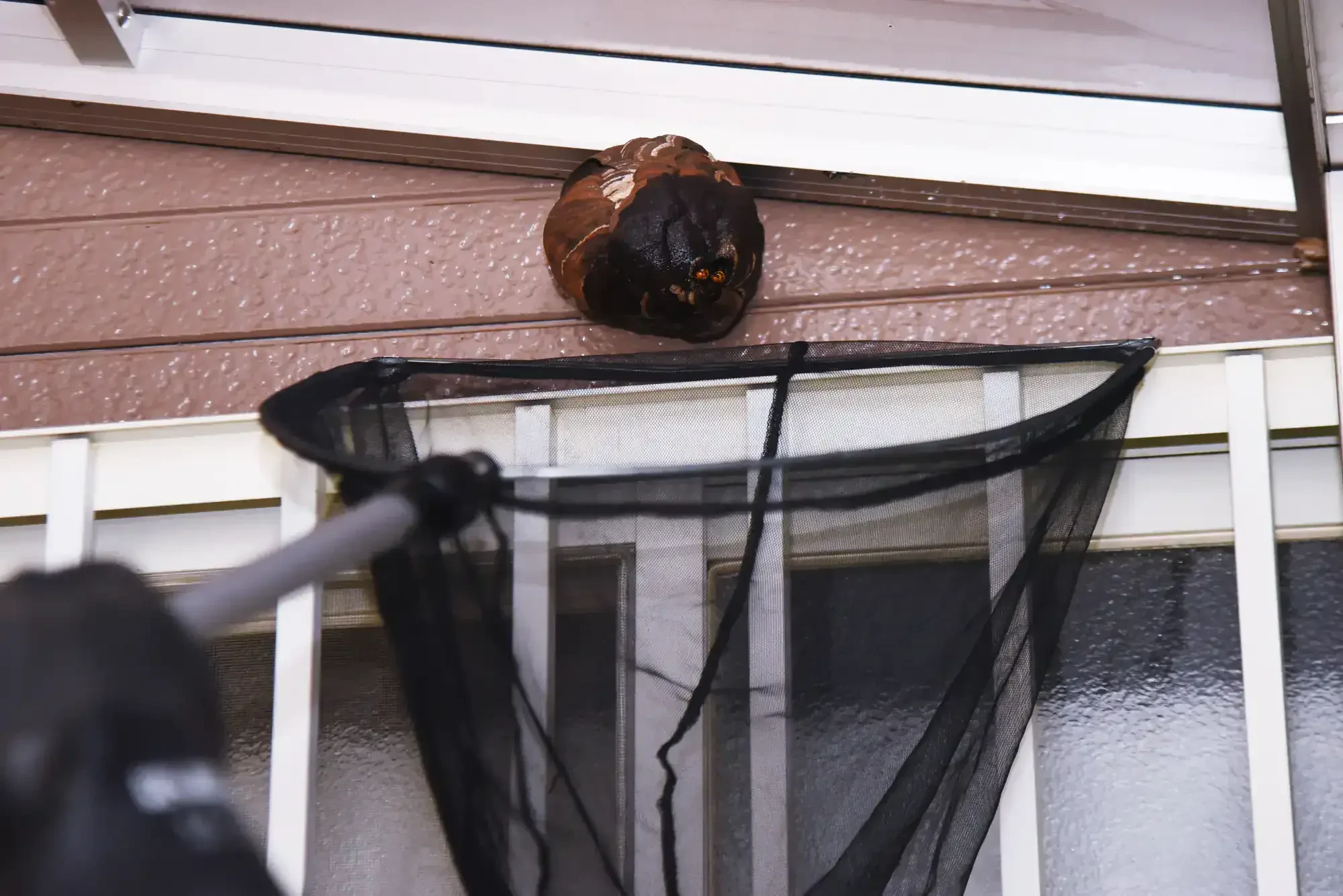
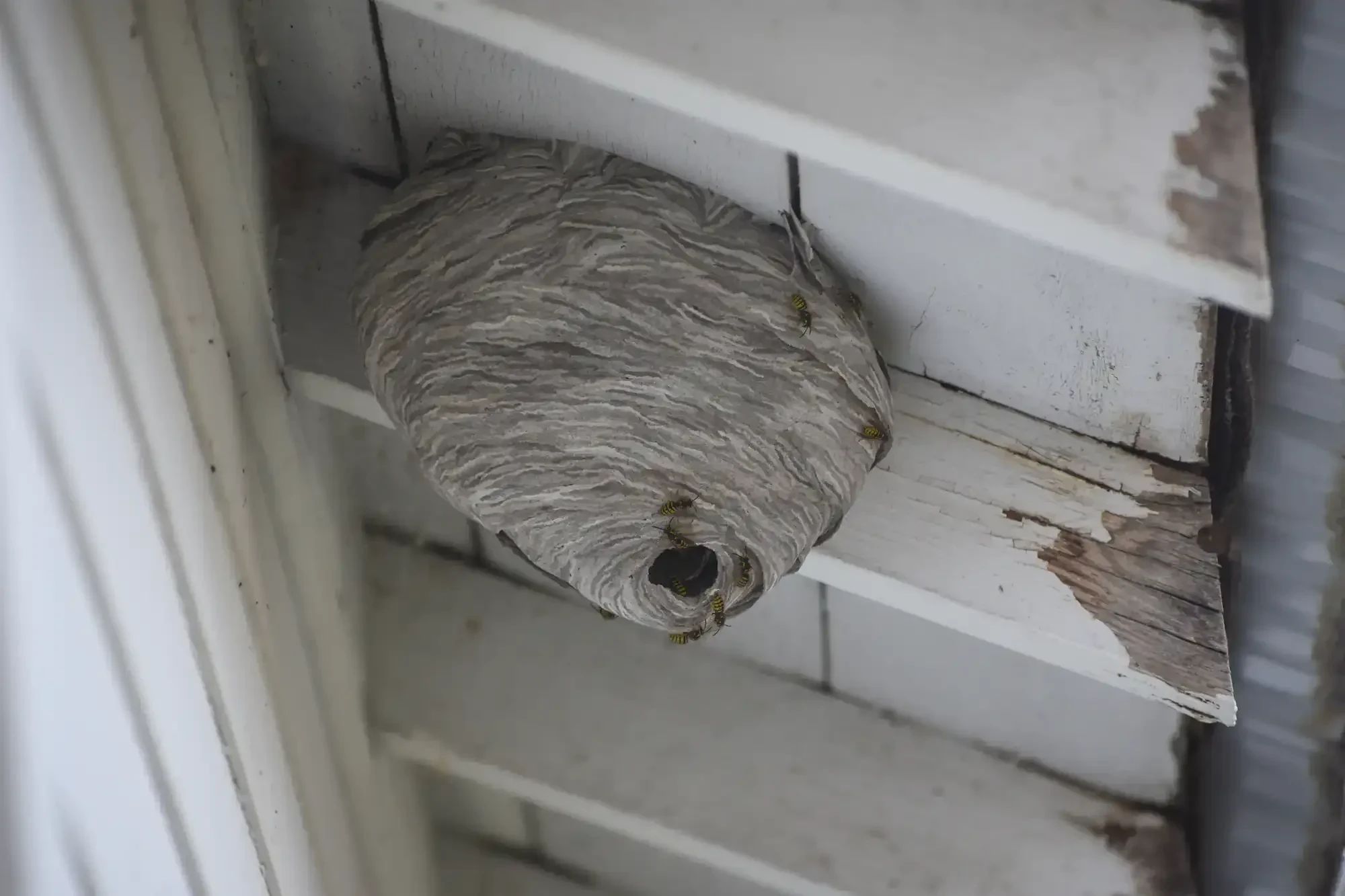
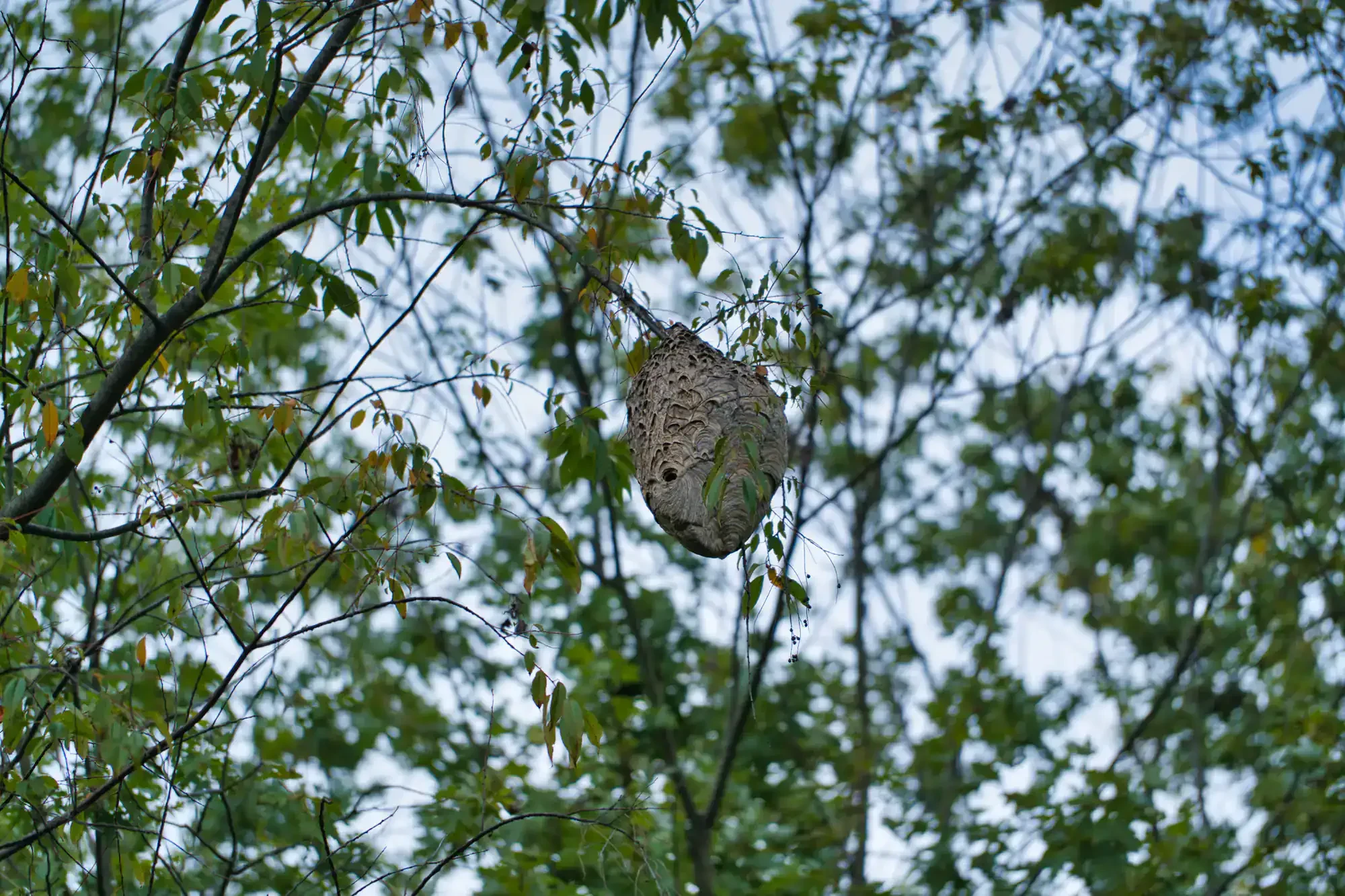
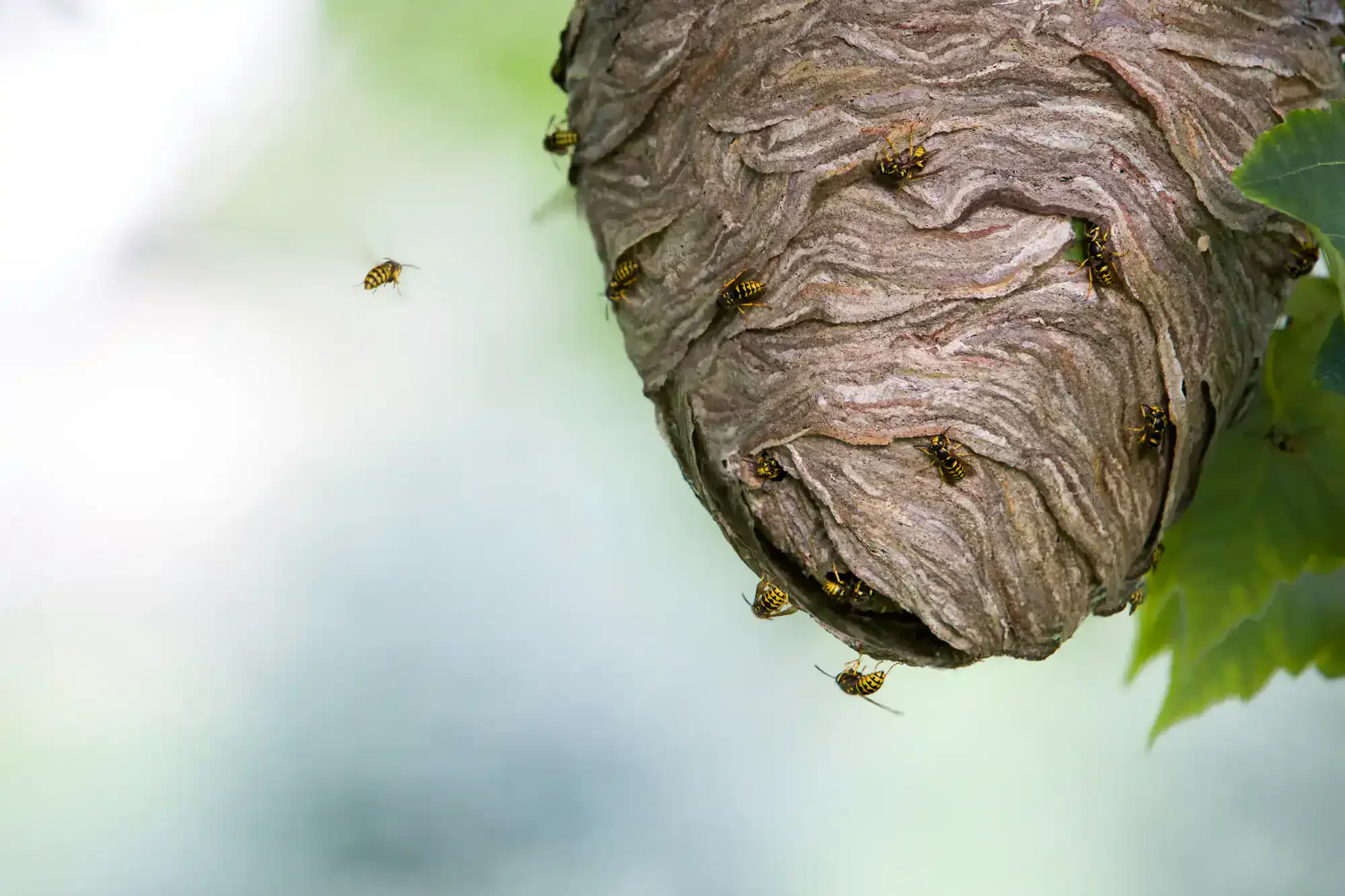
It matters a lot, actually — because the treatment approach changes depending on what you’re dealing with. Yellow jackets are ground and void nesters. Bald-faced hornets build the large paper nests you see hanging from tree branches or eaves. Paper wasps build open-comb nests under overhangs and decks. Each species has different nesting behavior, different aggression triggers, and responds differently to treatment.
Yellow jackets are the most dangerous of the three in terms of sting volume. They have smooth stingers — meaning they can sting repeatedly — and when one stings, it releases a pheromone that signals the rest of the colony to attack. A mature colony in late summer can contain 1,000 to 5,000 workers. On a rural property in northern Oakland County where you might be a long way from your car or your back door, that’s a serious risk. Correct identification before treatment isn’t a formality — it’s what makes the treatment work.
Late July through September is the window when yellow jacket problems peak in Oakwood and the surrounding Oakland County area. Colonies that started with a single queen in April have been building all spring and early summer. By August, a mature nest can hold thousands of workers, and the colony’s diet shifts from hunting insects to scavenging sugary foods — which is exactly when outdoor gatherings, kids playing in the yard, and pets near the property line become high-risk situations.
The elevation and wooded character of northern Oakland County — Oakwood sits at just over 1,000 feet — doesn’t dramatically change the timing compared to more southern parts of the state, but the abundance of wildlife habitat here means colonies have more undisturbed nesting opportunities and tend to establish earlier and in more locations per property. Early fall is also when yellow jackets in wall voids are most likely to chew through into living spaces as the colony reaches maximum size. If you’re noticing increased activity in August or September, that’s not the colony dying off — that’s peak season.
Store-bought wasp spray works on small, exposed nests that you can reach safely from a distance. It does not work reliably on ground nests, wall-void infestations, or any colony that’s been established for more than a few weeks. The most common DIY mistake is treating the entry point without reaching the nest itself — the colony retreats, workers find a secondary exit (sometimes into the house), and the problem gets worse before it gets better.
On a large wooded property in Oakwood, ground nests are often deeper and more established than they look from the surface. A colony in a wall void or attic is almost impossible to treat completely without knowing where the nest is actually located inside the structure. Professional treatment uses the right product, the right delivery method, and the right approach for the specific species — and it comes with a 1-year guarantee. If you’ve already tried a DIY approach and it didn’t work, that’s not unusual. It just means the nest is more established than a can of spray can handle.
Yellow jacket exterminator services nationally average around $725, with straightforward ground nest removal on the lower end and wall-void or attic infestations typically running between $500 and $1,300 depending on nest size, location, and accessibility. Properties in the Oakwood area — with larger lots, wooded terrain, and older home structures — sometimes involve more complex treatment scenarios than a standard suburban job, which can affect the final cost.
We match any reasonable competitor’s rate, so if you’ve gotten another quote for yellow jacket pest control near Oakwood, bring it. You don’t have to choose between the lowest price and a company that actually knows what they’re doing. It’s also worth considering what the alternative costs: a single ER visit for a severe allergic reaction runs $1,000 or more, and structural repairs from an untreated wall-void colony — drywall, insulation, framing — can easily reach several thousand dollars. Professional treatment is the more cost-effective option when you factor in what’s at risk.
Yes — we offer discounts for seniors, veterans, and first responders. The Oakwood area, like much of rural northern Oakland County, has a strong community of long-term homeowners, retired residents, and people who have spent years serving others in some capacity. These discounts are a straightforward acknowledgment of that. When you call, just mention which discount applies to you and ask about current availability.
Beyond the community discounts, there are no binding contracts and no surprise fees. The price you’re quoted is the price you pay, and if yellow jacket activity returns within the guarantee period after treatment, we come back at no additional charge. For a homeowner managing a large property in Brandon Township or Oxford Township — where yellow jacket pressure is a recurring seasonal reality — that kind of straightforward, backed service is worth more than a one-time low bid from a company you’ve never heard of.
Useful Links