
Hear from Our Customers
You moved to Ortonville for a reason. The space. The lakes. The wooded lots and the kind of outdoor life that most people only talk about. When yellow jackets take that over — hovering around the fire pit, crashing every meal on the deck, making the dock feel like a no-go zone — it’s not just an annoyance. It’s a real loss, and it can turn into a real emergency fast.
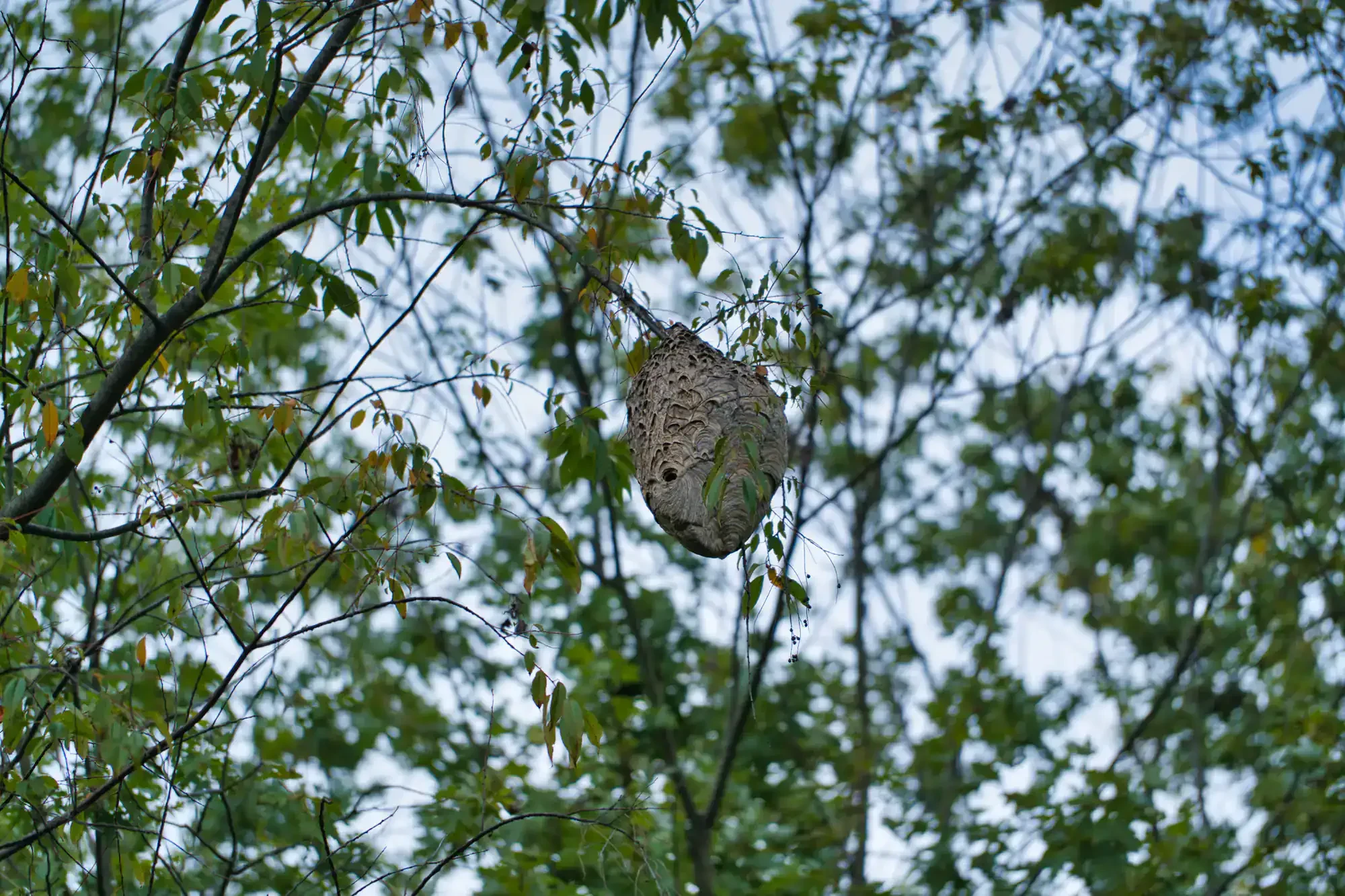
In northern Oakland County, the wooded terrain around Brandon Township and the proximity to the Ortonville State Recreation Area creates sustained yellow jacket pressure that flat suburban yards simply don’t see. Those 5,400 acres of wooded hills are ideal ground-nesting habitat, and when colonies establish themselves in undisturbed land nearby, they don’t stay there. They find their way into your yard, your siding, your attic — and by August, you’re dealing with thousands of workers at peak aggression right when you want to be outside the most.
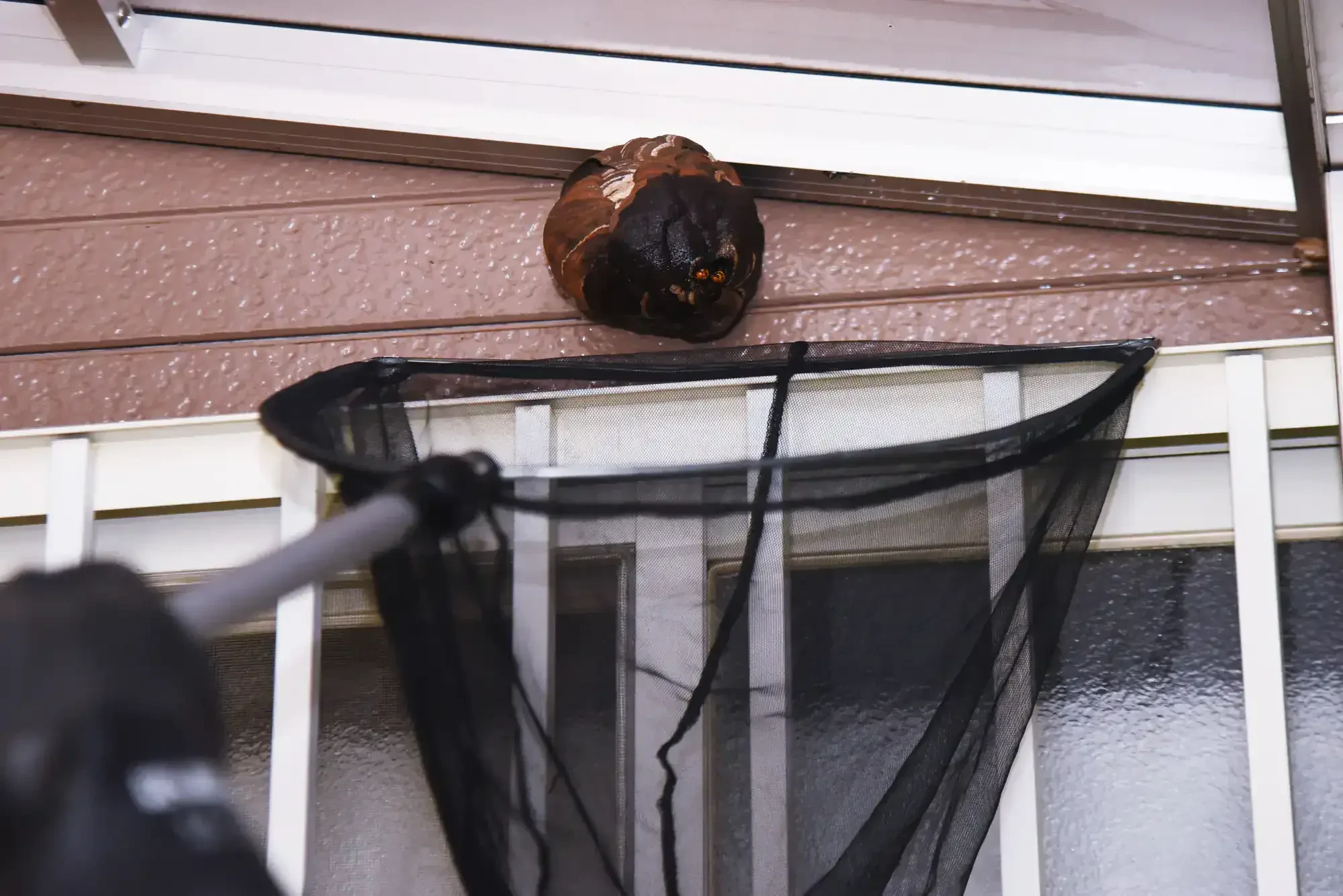
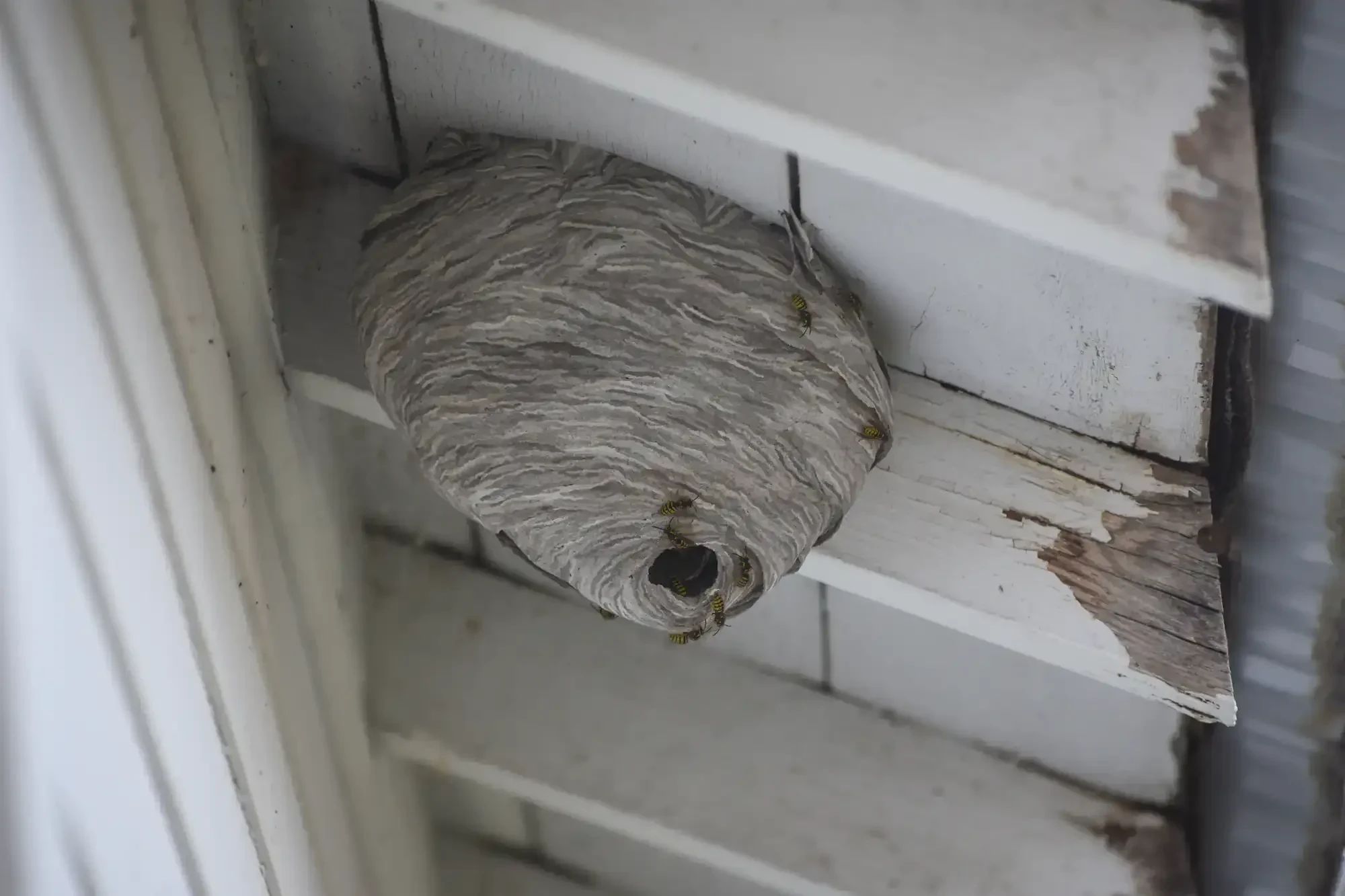
The older homes throughout Ortonville and Brandon Township add another layer to this. Pre-1980 construction with aging soffits, weathered fascia, and gaps in the siding gives yellow jackets exactly what they’re looking for: a warm, enclosed cavity to build inside. A colony in your wall doesn’t just sting — it grows quietly for months, chewing through insulation and drywall, until workers start showing up inside your living space. Getting that treated correctly — the first time — is what keeps a manageable problem from becoming a structural one.
We’ve been operating in Michigan since May 31, 2005 — twenty years of real work, real results, and a reputation built entirely on what happens after we show up. Roger Chinault founded this company and still leads it, bringing 26 years of hands-on pest control experience to every job. That’s not a number pulled from a marketing sheet. That’s two-plus decades of knowing what a German Yellowjacket colony looks like inside a 1960s ranch wall, and knowing exactly what it takes to get rid of it without making things worse.
We hold MDARD Pesticide Application Business License #250081 and have completed Integrated Pest Management training — a science-based framework that prioritizes correct identification and targeted treatment over broad chemical application. For homeowners near Kearsley Creek, adjacent to the recreation area, or on lake properties around Bald Eagle Lake and Perry Lake, that matters. You’re not getting a spray-and-go approach on land that backs up to protected natural terrain. You’re getting a licensed professional who knows the difference between a ground nest and a wall-void infestation — and treats each one accordingly.
It starts with a call, and it starts fast. When you reach out to us, you’re not going into a queue at a national call center — you’re getting a response from a Michigan-based team that knows northern Oakland County and can get to Ortonville via M-15 without needing directions. The first step is identifying exactly what you’re dealing with. That matters more than most people realize.
Michigan has two primary yellow jacket species, and they behave very differently. Eastern Yellowjackets build ground nests — often in the abandoned burrows of small animals, common in the wooded, hilly properties throughout Brandon Township and along the edges of the Ortonville State Recreation Area. German Yellowjackets prefer enclosed cavities: wall voids, attics, soffits, and crawl spaces — exactly the structural features found in the older homes that make up much of Ortonville’s housing stock. Applying the wrong treatment to the wrong species doesn’t just fail — it can drive the colony deeper into the structure and make the workers more aggressive. Correct identification happens before anything else.
Once the species and nest location are confirmed, we apply treatment directly and precisely. After the job is done, you’ll get clear guidance on re-entry timing, what to expect in the days that follow, and how to reduce the conditions that attracted yellow jackets in the first place. The same technician who treats your property is the one who comes back if anything resurfaces — no rotating strangers, no starting over from scratch.
Ready to get started?
Yellow jacket pest control in Ortonville isn’t a single-size service, because yellow jacket problems aren’t single-size either. A ground nest in the yard of a lake property on Seymour Lake is a different job than a German Yellowjacket colony that’s been building inside the wall of a 1970s colonial on a wooded lot off M-15 for two months. We handle both — and everything in between.
Every service includes a thorough inspection to locate the nest and identify the species before any treatment begins. From there, treatment is applied based on nest type and location — whether that’s a ground nest in your yard, a colony inside a wall void or attic, or a nest in an outbuilding or detached garage on a larger rural parcel. Attic yellow jacket removal in older Ortonville homes often requires a more involved approach given the structural complexity, and that’s accounted for in how the job is scoped and priced. Every treatment comes with a 1-year service guarantee: if yellow jacket activity returns within the guarantee period, we come back at no additional charge.
We also offer price matching for reasonable competitor quotes, and discounts are available for seniors, veterans, and first responders — a straightforward acknowledgment of the people who’ve put in the work in communities like this one. We welcome both residential and commercial customers throughout Ortonville and Brandon Township.
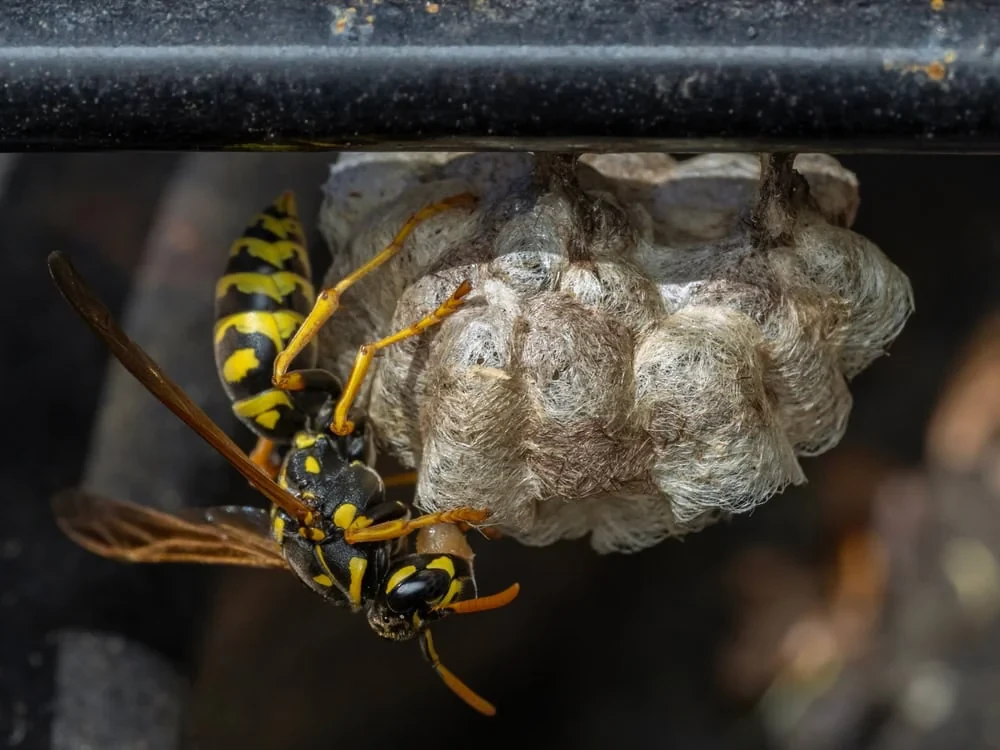
The most common sign is worker activity around a specific entry point on the exterior — a gap in the siding, a crack near the soffit, or an opening around a utility line — combined with a noticeable increase in yellow jacket traffic in and around that spot. If workers are appearing inside the house, especially in a room that shares a wall with the exterior, that’s a strong indicator the colony is already established inside the wall cavity.
Throughout Ortonville and Brandon Township, this scenario is particularly common in homes built before 1980. Older siding, aging fascia boards, and gaps that develop around windows and utility penetrations over time give German Yellowjackets easy access to the enclosed spaces they prefer for nesting. By the time most homeowners notice the problem, the colony has been growing for weeks. A professional inspection will locate the entry point, confirm the species, and determine the extent of the infestation before any treatment is applied — which is the only way to make sure the treatment actually works.
For a small, visible ground nest in an open area away from foot traffic, some homeowners do attempt DIY treatment — usually with a store-bought foam or dust applied at night when the colony is less active. In those limited situations, the risk is lower. But it’s still a risk, and the margin for error is small.
Where DIY almost always makes things worse is with wall-void and attic infestations — the type most commonly found in the older homes throughout Ortonville and Brandon Township. Spraying into a wall cavity without knowing the colony’s full extent typically doesn’t reach the queen, which means the colony survives, the workers become more defensive, and in some cases they begin chewing through drywall to escape into the interior living space. If you’ve already tried a store-bought product and noticed more activity, not less, that’s a sign the colony is responding defensively. At that point, a licensed professional isn’t just the better option — it’s the necessary one.
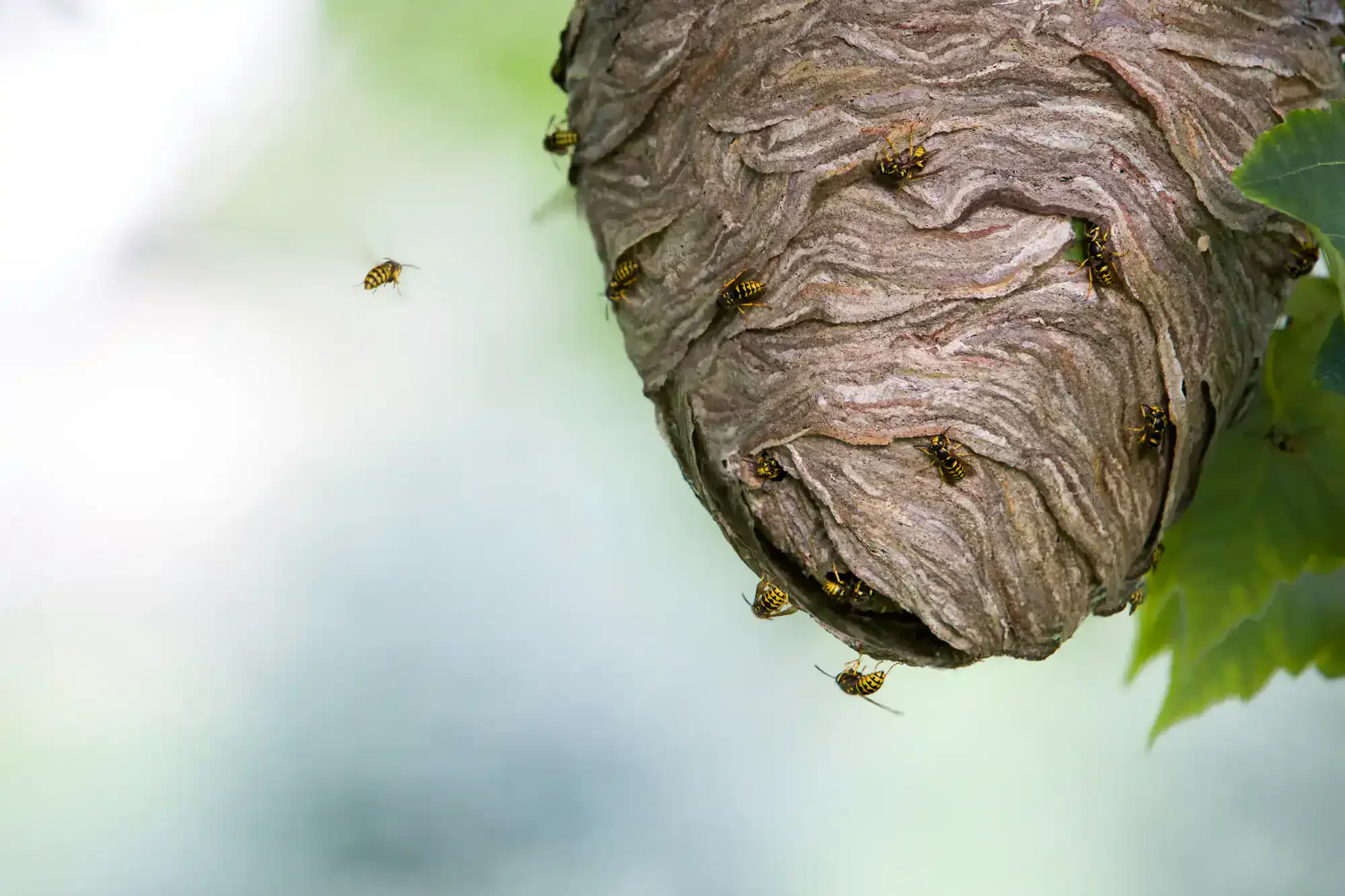
August and September are the peak danger months — and that timing hits especially hard in Ortonville. That’s the same window as end-of-summer outdoor gatherings, Creekfest, and the last stretch of warm weather before the Brandon School District’s back-to-school period. Yellow jacket colonies that have been quietly growing since spring reach their maximum population during this stretch — anywhere from 1,000 to 5,000 workers — and their behavior shifts. They stop hunting insects and start targeting sugars: your soda, your fruit, your grilling food, your garbage cans.
The wooded terrain around Brandon Township and the proximity to the Ortonville State Recreation Area means colonies in undisturbed ground nearby are feeding this seasonal surge. Queens emerge in late March or April, and by early summer the colony is large enough to be noticeable but not yet at its most aggressive. If you’re seeing yellow jacket activity in June or July, it’s worth getting it addressed before August — because the same colony that’s a manageable problem in July becomes a genuine safety risk by late summer.
The national average for yellow jacket extermination runs around $725, with straightforward ground nest removal on the lower end and wall-void or attic infestations typically falling in the $500–$1,300 range depending on nest location, colony size, and structural complexity. For Ortonville homeowners dealing with a German Yellowjacket colony inside an older home’s wall or attic, the upper end of that range is more realistic — not because the service is overpriced, but because the job genuinely requires more work to do correctly.
It’s worth framing that cost against the alternatives. An emergency room visit for an anaphylactic reaction runs $1,000 or more. Repairing drywall, insulation, and structural framing damaged by an untreated wall-void colony can cost $2,000–$10,000 depending on how long the nest has been active. We offer price matching for reasonable competitor quotes, so if you’ve received another estimate, bring it to the conversation. You’ll get the same licensed, guaranteed service either way.
A correctly treated colony will not rebuild in the same nest — yellow jackets don’t reuse old nests. But that doesn’t mean the risk disappears entirely, especially on properties in northern Oakland County where the surrounding wooded terrain and undisturbed ground provide ongoing habitat for new queens each spring. A new queen looking for a nesting site the following season may find the same structural gap or ground opening that the previous colony used, particularly if the entry point wasn’t sealed after treatment.
The most effective long-term approach combines professional treatment with exclusion work — sealing the entry points that gave the colony access in the first place. On older homes throughout Brandon Township, that often means addressing gaps in aging siding, damaged soffits, or openings around utility penetrations. Our 1-year service guarantee covers you if activity returns within the guarantee period. If it does, we come back — no additional charge, no debate.
Yes. We offer discounts for senior citizens, military veterans, and first responders. Ortonville is the kind of community where those categories aren’t abstractions — they’re neighbors, longtime residents, and people who’ve contributed to the area for decades. The discount is a straightforward acknowledgment of that, and it applies to yellow jacket extermination service just like any other job.
Beyond the discount programs, we also offer price matching for reasonable competitor rates. So if you’ve already gotten a quote from another provider and it came in lower, bring it up when you call. The goal is to make sure cost isn’t the reason someone puts off a service that genuinely affects their family’s safety — especially during peak yellow jacket season when the risk of a serious sting reaction is at its highest. Reach out to confirm current discount availability and to get a clear picture of what your specific job will involve before any work begins.
Useful Links